




Florida
Renovating in an Orlando HOA: What to Know First
06.26.2026
04.03.2026


In This Article
Miami has more reasons than most cities to care about sustainable building. Sea level rise is a daily conversation, not an abstract future concern. Energy bills in South Florida can be punishing when your AC runs 10 to 12 months a year. And the city’s tropical ecosystem, from Biscayne Bay to the Everglades, is directly affected by how its built environment manages water, waste, and energy.
For homeowners planning a renovation, eco-friendly remodeling in Miami isn’t just about values. It’s about making practical choices that reduce utility costs, improve indoor comfort, and protect a home’s long-term value in a market where environmental resilience is increasingly part of the conversation.
This guide covers the most impactful green remodeling strategies for Miami homes, from energy-efficient systems and sustainable materials to water conservation and improved indoor air quality.
In South Florida, energy efficiency and eco-friendly remodeling are almost the same conversation. Your AC system is the single largest energy consumer in a Miami home, often accounting for 40 to 50% of your electric bill. Any renovation that reduces your cooling load pays for itself faster here than almost anywhere else in the country.
Impact-rated windows and doors don’t just protect against hurricanes. They’re also significantly more energy-efficient than older single-pane or non-impact windows. The insulated glass reduces heat transfer, which means your AC doesn’t have to work as hard to maintain a comfortable temperature. Many Miami homeowners see a noticeable drop in their electric bills after upgrading to impact windows.
Insulation is another area where older Miami homes underperform. Many homes built before the 1980s have minimal wall and attic insulation. Adding spray foam or blown-in insulation during a renovation (when walls are open) can reduce cooling costs by 15 to 25%.
If your Miami home has an AC system that’s more than 10 years old, replacing it with a high-efficiency unit (16 SEER or higher) is one of the most impactful green upgrades you can make. Variable-speed systems adjust output based on demand rather than cycling on and off, which reduces energy consumption and provides more consistent comfort.
Smart thermostats (Nest, Ecobee) add another layer of efficiency by learning your schedule and adjusting temperature automatically. In a Miami home where AC runs almost year-round, the cumulative savings are significant.
Miami averages over 240 sunny days per year, making it one of the best markets in the country for residential solar. Florida’s net metering policy allows homeowners to sell excess energy back to the grid, and there’s no state income tax on the savings. Federal tax credits further reduce the upfront cost.
A renovation is an ideal time to add solar because electrical work is already part of the scope. Your contractor can coordinate panel installation with roof work, electrical upgrades, and any structural reinforcement needed to support the array.
When talking to Miami homeowner Brittany Foster about her decision to install solar panels, she noted, “We kept putting it off because the upfront cost felt like a lot. Then our AC unit died the same summer FPL raised rates again, and we just did everything at once. I wish we hadn't waited. The payback math is different in Miami than people realize—you're not running solar four months a year like in Ohio. This thing works every single day."
The generic green materials list—bamboo flooring, recycled glass tile, low-VOC paint—applies to any remodel in any city. Miami deserves a more specific conversation.
The materials question in South Florida isn't just about sustainability in the abstract. It's about what holds up. Miami's combination of heat, humidity, salt air, and the occasional hurricane puts pressure on building materials that most other markets never experience.
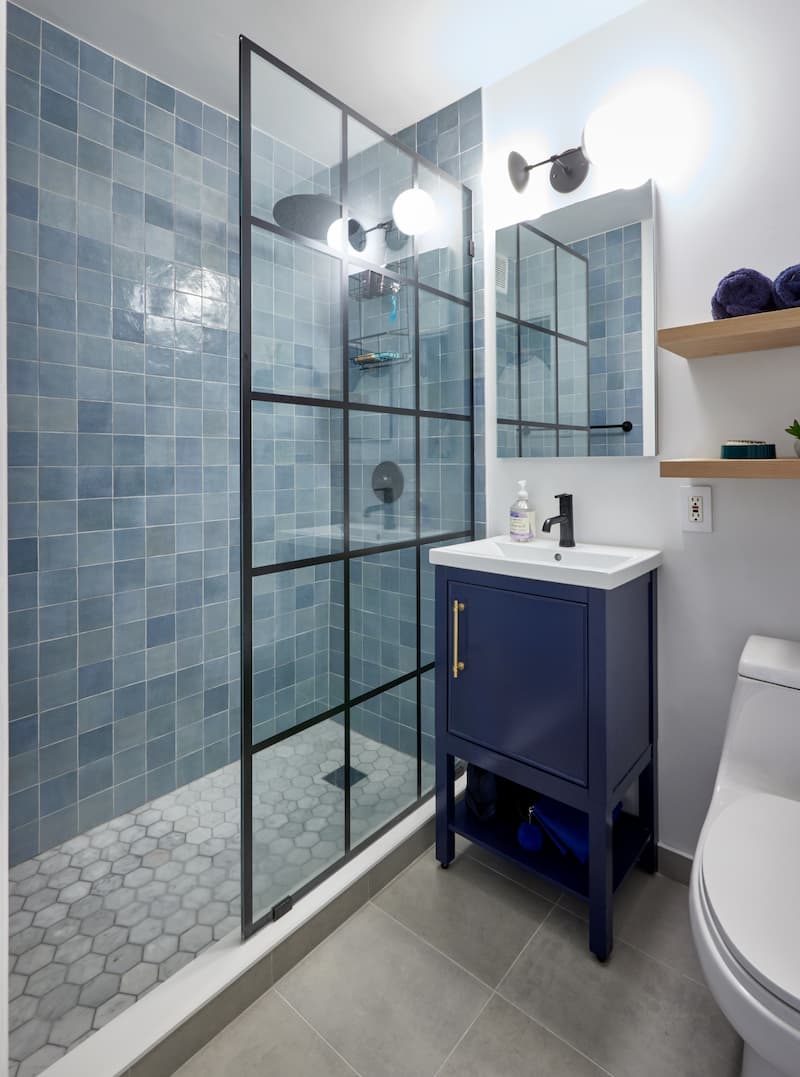
For eco-friendly bathroom ideas specifically, there are additional strategies around water-saving fixtures, sustainable shower materials, and green ventilation that can make a significant impact on Miami's humidity.
South Florida’s water supply comes primarily from the Biscayne Aquifer, and conservation is an ongoing priority for Miami-Dade County. A renovation is the natural time to upgrade to fixtures and systems that use water more efficiently.
High-impact water conservation upgrades:
Miami homes are sealed tightly against heat and humidity, which means indoor air quality depends heavily on the materials and systems you install during a renovation.
Steps that make the biggest difference:
Miami homeowners pursuing eco-friendly remodeling have access to several financial incentives that can offset the cost of green upgrades:
Your contractor should be familiar with which upgrades qualify for incentives and can help you plan the scope to take full advantage of what’s available.
Many eco-friendly upgrades cost the same as or only marginally more than their conventional equivalents. Low-VOC paint, for instance, is priced comparably to standard paint. WaterSense fixtures are widely available at every price point.
Where green choices add cost is in higher-performance systems: solar panels ($15,000 to $30,000 before credits), high-efficiency HVAC ($6,000 to $15,000), and impact windows ($15,000 to $40,000+). But these investments typically pay for themselves through energy savings and insurance reductions within 5 to 10 years in Miami’s climate.
For a broader picture of how these upgrades fit within a total project, overall renovation costs in Miami provide context for budgeting both the green and conventional components of your remodel.
Not every contractor has experience with sustainable building practices. Eco-friendly remodeling in Miami requires familiarity with high-performance systems, sustainable materials, and the specific energy and moisture challenges of South Florida construction.
Block Renovation connects Miami homeowners with vetted, licensed contractors who can execute green remodeling projects with the same quality and attention they bring to any high-end renovation. You’ll receive detailed proposals you can compare side by side, with guidance from a project planner who can help you balance sustainability goals with your overall budget.
Remodel with confidence through Block

Connect to vetted local contractors
We only work with top-tier, thoroughly vetted contractors
Get expert guidance
Our project planners offer expert advice, scope review, and ongoing support as needed
Enjoy peace of mind throughout your renovation
Secure payment system puts you in control and protects your remodel

Renovate confidently with Block
Easily compare quotes from top quality contractors, and get peace of mind with warranty & price protections.
Florida
Renovating in an Orlando HOA: What to Know First
06.26.2026

Florida
Planning a Jacksonville Home Addition? Start Here
06.09.2026
Florida
The Contractor Shortlist for Miami and Fort Lauderdale
05.29.2026
.png?width=640&name=u5821215421_A_bright_open-concept_bathroom_in_a_city_apartmen_1728a26f-2551-4daf-aa9f-8b48513e3949_2%20(1).png)
Florida
Tampa Condo and Apartment Renovations: Smart Spending in a Market That Rewards It
04.23.2026

Florida
Miami Condo Renovations: Upgrading Your Unit in a Changing Regulatory Landscape
04.21.2026