


Mixing Two or More Countertops in Kitchen

Galley kitchen with wood and marble tops and a copper tap.

In This Article

    A kitchen with two different countertop materials used to feel like a design oversight. Now it's often a deliberate, thoughtful choice—and one that can make a kitchen feel far more considered and personal than an all-matching approach ever could.

    The logic behind having two or more countertops is simple: different surfaces do different things well. Stone holds up beautifully around a sink. Wood brings warmth to an island where people gather. A dramatic dark material on one run of cabinetry can anchor a space that would otherwise feel too light and uniform. Mixing countertops lets you match material to function while adding visual depth that a single surface can't quite achieve.

    That said, pulling it off well requires some intention. The combinations that feel cohesive all share something in common—a clear relationship between the materials, a logic to where each one lives, and an understanding of how they'll age and perform over time.
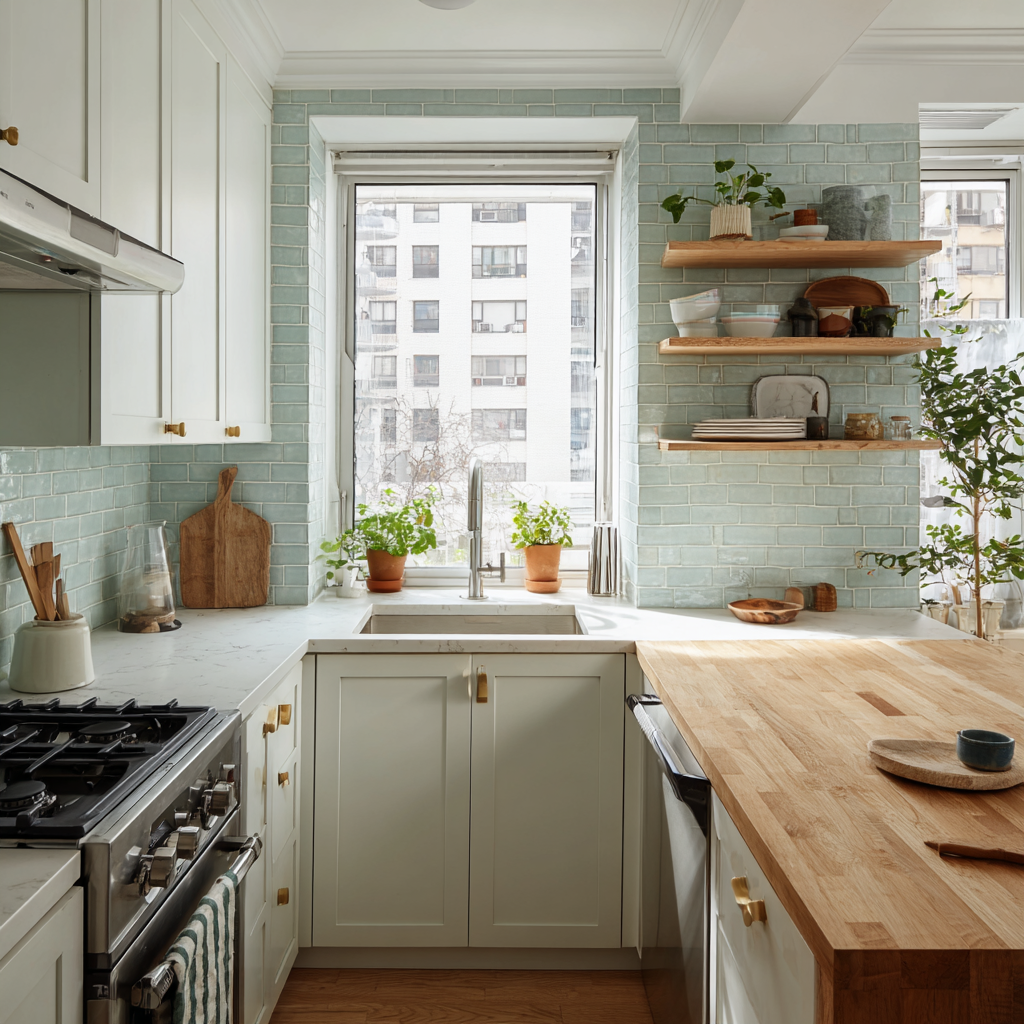
    U-shaped kitchen with mint tile and wood island counter.

    The case for mixing countertop materials

    Beyond aesthetics, there are practical reasons to use more than one material in a kitchen. A stone or quartz surface near the stove and prep area can handle the heat, moisture, and daily wear that cooking demands. A butcher block island, by contrast, is a pleasure to work on for rolling dough or chopping vegetables—and brings a warmth that stone rarely matches.

    Putting the right material in the right place isn't a compromise; it's a smart use of each surface's strengths.

    There's also a design benefit that's easy to underestimate: variation creates a sense of layout. In an open kitchen or a larger space, two countertop materials can signal where one zone ends and another begins—the cooking wall versus the prep island, the perimeter versus the peninsula.

    And from a budget standpoint, mixing materials can give you access to premium surfaces where they matter most without applying them across the entire kitchen. A marble waterfall island is a significant investment. Pairing it with a more durable (and less expensive) quartz on the perimeter run is a reasonable way to get the look you want without overspending.

    How to mix countertops that complement one another

    The combinations that work best aren't random—they share at least one visual thread that ties the materials together.
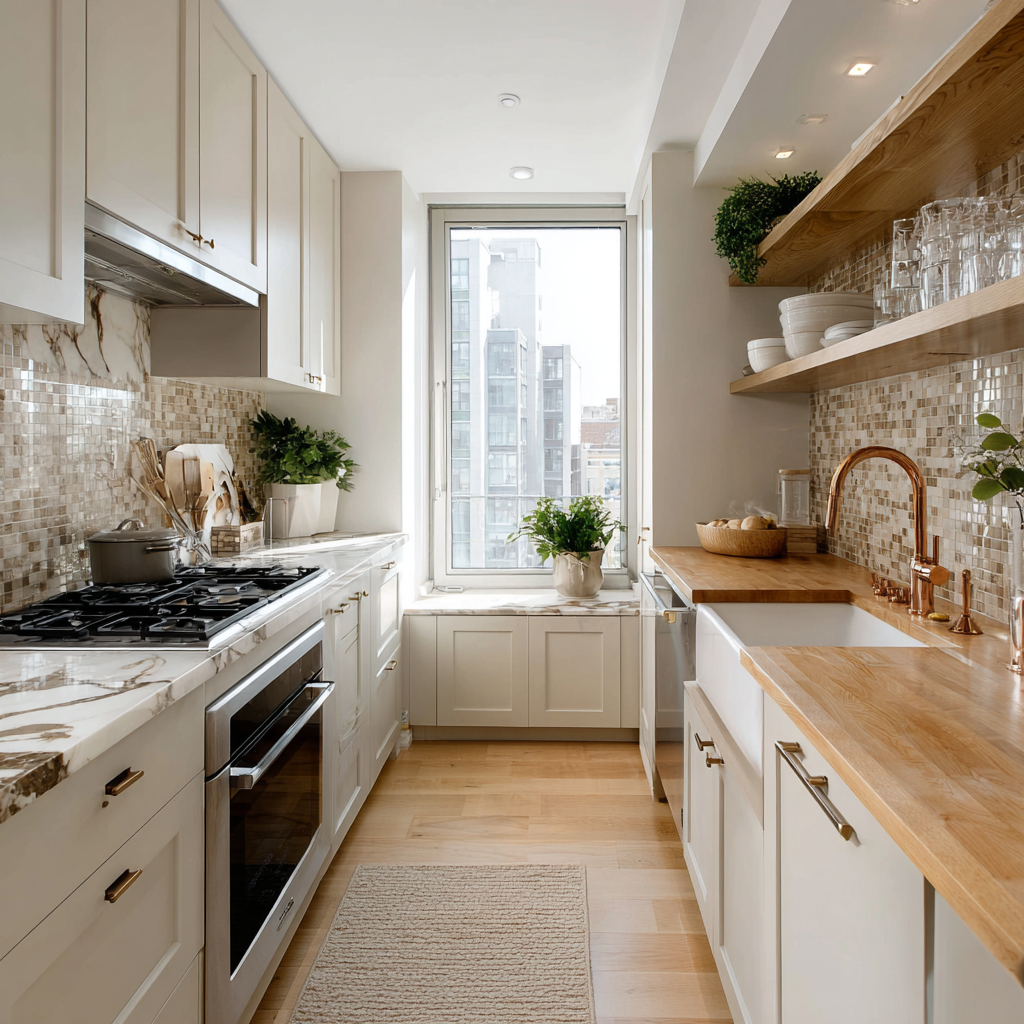
    A galley kitchen featuring a marble counter on the left and a wood one on the right.

    Match undertones, not just colors

    Two very different countertops can still feel harmonious if they share an undertone. Warm-toned materials—think honey butcher block, golden quartzite, creamy limestone—pair naturally with each other, even if their textures and finishes are completely different. Cool-toned materials, like gray concrete, blue-veined marble, or pale quartz, work the same way. Mixing a warm and a cool material is harder to pull off and usually requires a more neutral third element—like white cabinetry or raw wood shelving—to bridge the two.
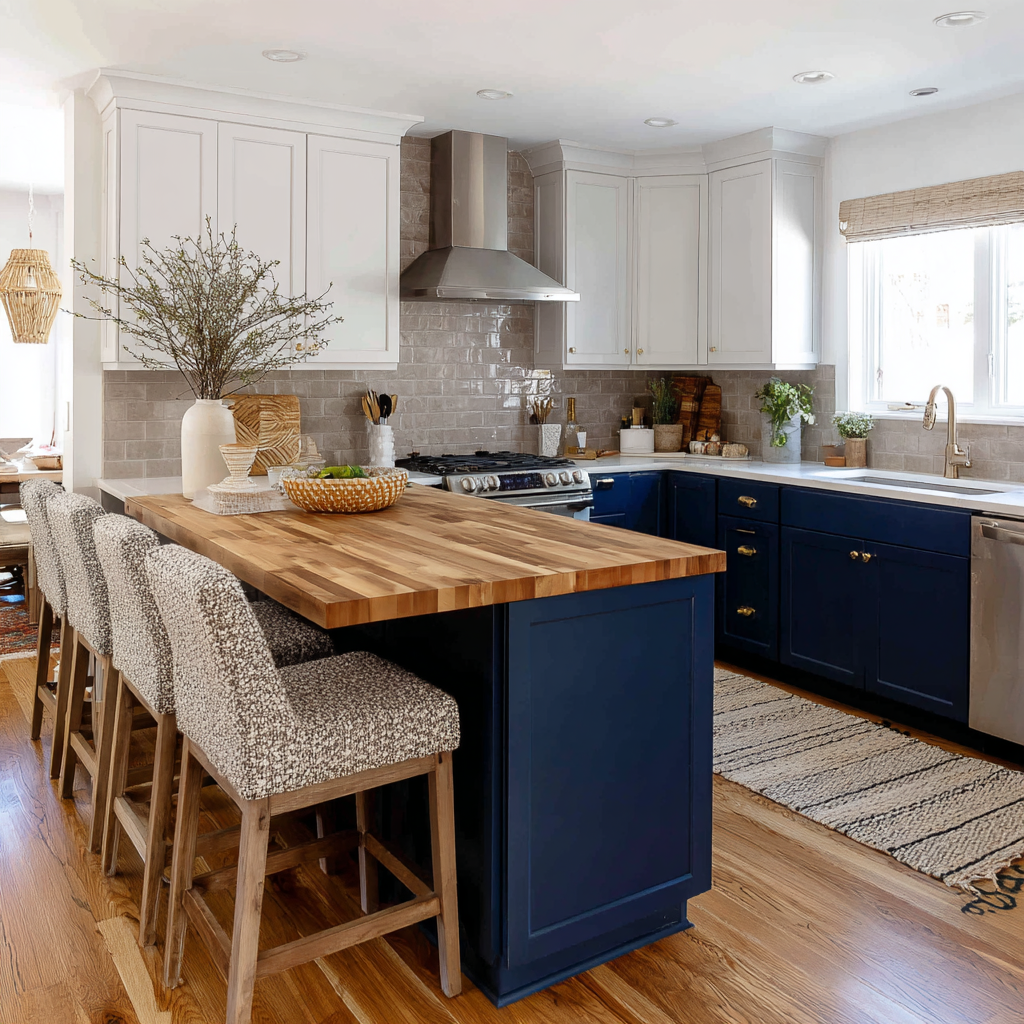
    Navy kitchen with wood island, gold taps, and woven stools.

    Consider finish and texture as part of the equation

    A matte soapstone next to a honed marble can look intentional and layered. A matte soapstone next to a high-polish quartz can feel like a mismatch—not because the colors clash, but because the finishes compete. As a general rule when mixing countertops, pair materials with similar finishes (both matte, both honed, both leathered). The result is more cohesive than mixing very glossy and very flat surfaces in the same eyeline.

    Think about movement and pattern

    A countertop with dramatic veining or bold grain already brings a lot of visual energy to a space. Pairing it with something quieter and more uniform—a solid concrete, a simple butcher block—lets the standout material breathe. When both surfaces have strong pattern or movement, they tend to compete for attention rather than complement each other.
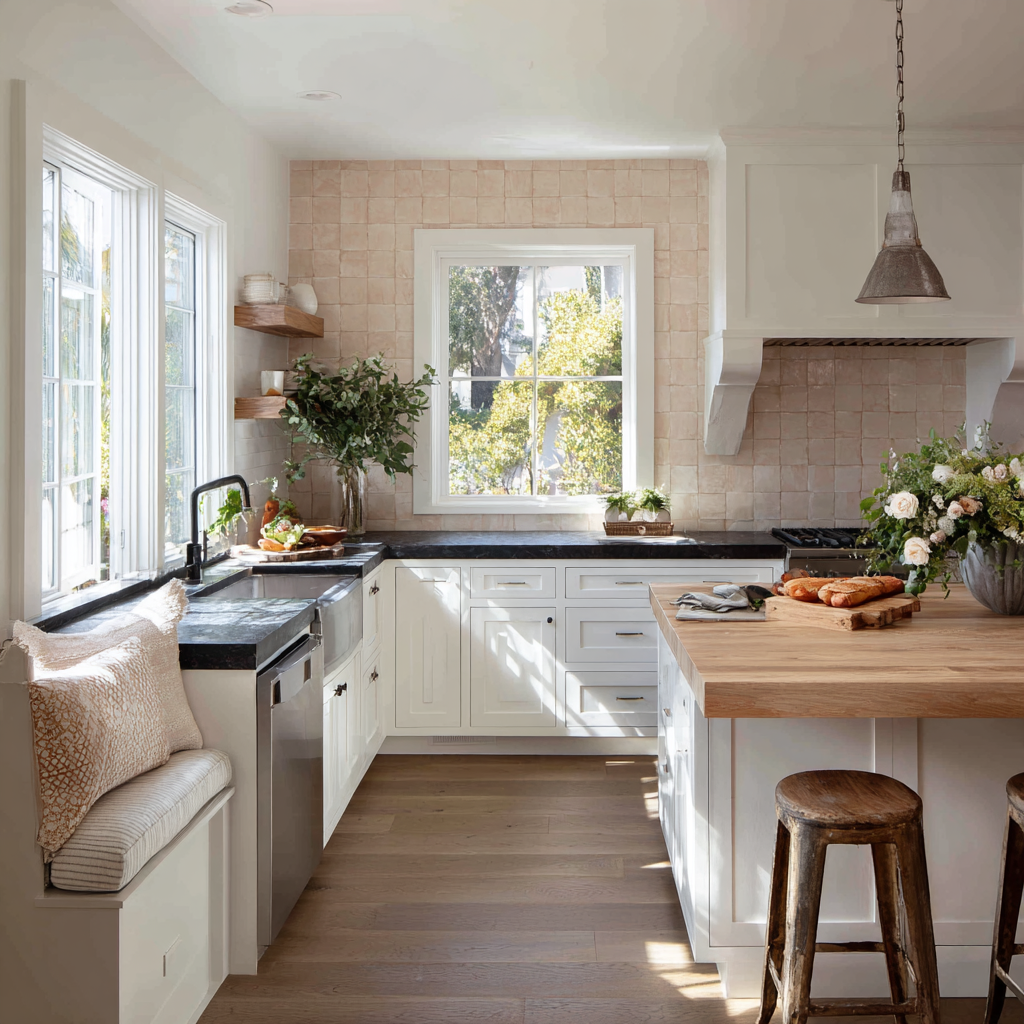
    White kitchen with wood island, black counters and pink tile.

    Let one material lead

    In most successful mixed-countertop kitchens, one surface reads as the primary material and the other as the accent. The perimeter countertops cover more ground, so they often set the dominant tone. The island, peninsula, or a secondary run becomes the opportunity to introduce contrast or warmth. Flipping this—a bold material across all perimeter runs and a quieter one on the island—can also work, but requires more confidence in the bolder choice.

    Where to place each material

    The placement of your countertops matters as much as the materials themselves. The most natural approach is to divide surfaces by zone or function.
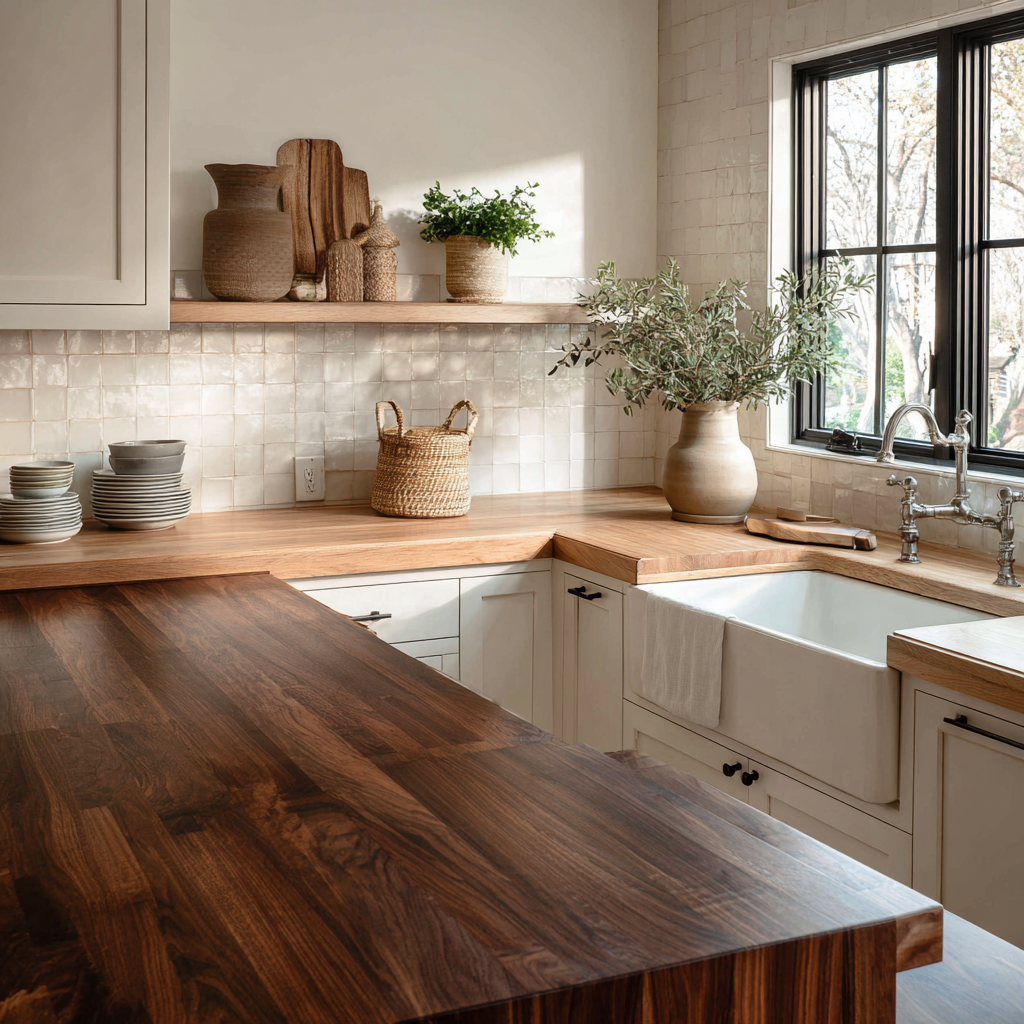
    A bright, welcoming kitchen with wood cabinets, white uppers, gold pulls, and globe light.

    Island versus perimeter

    This is the most common arrangement, and it's intuitive: the perimeter counters (where the sink, stove, and most prep work happen) get one material, and the island gets another. Because the island is often where people gather, pull up stools, and linger, it's a natural place for a warmer or more expressive surface—butcher block, marble, a richly veined stone.
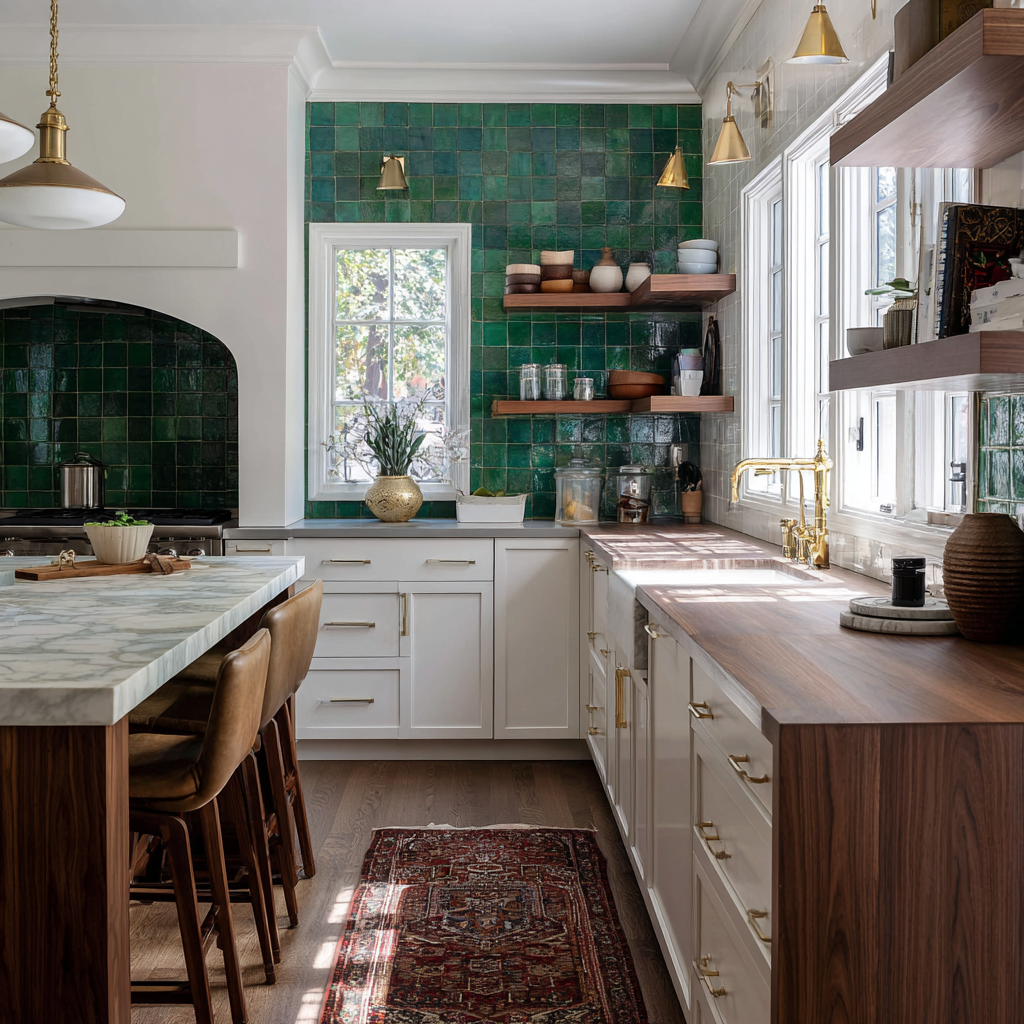
    White kitchen with wood tops, gold taps and green tile.

    Sink area as a distinct zone

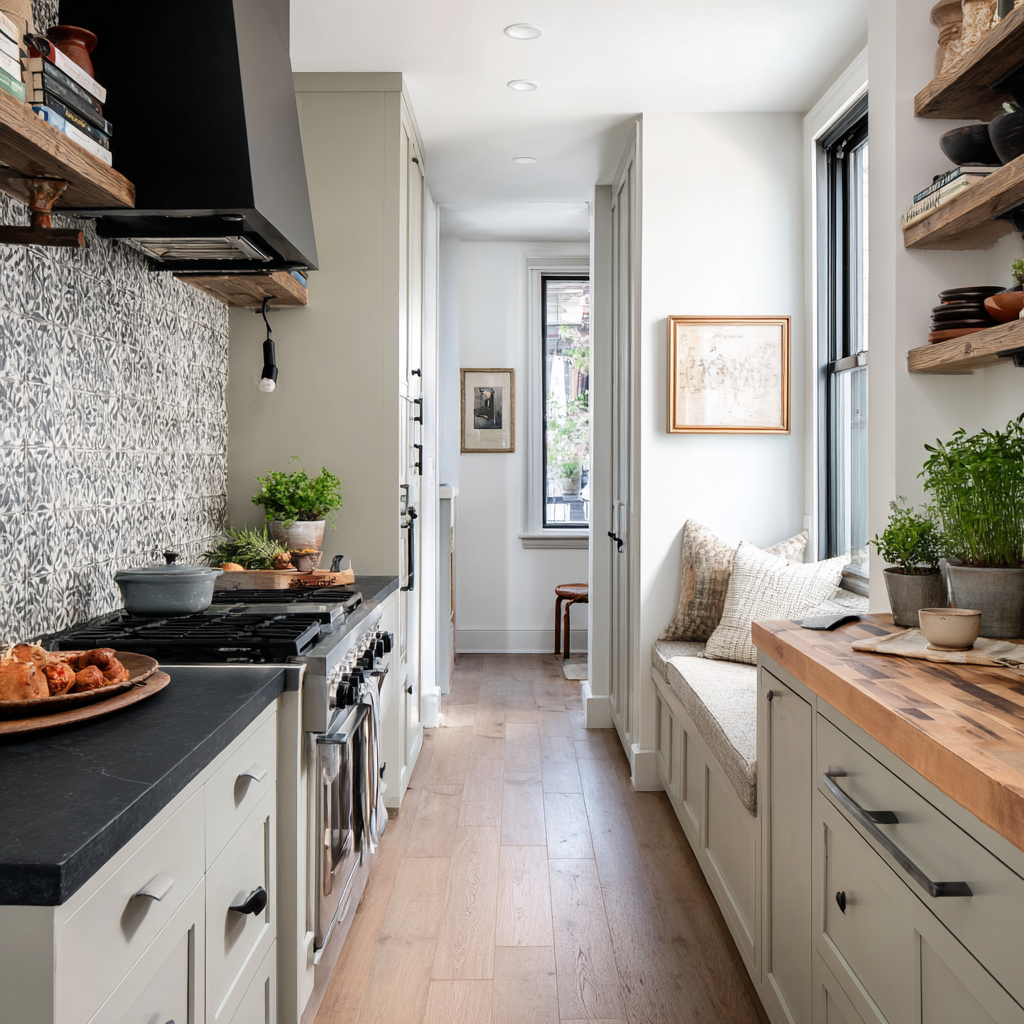
    Carving out the sink run as its own material zone is another approach that works particularly well in galley kitchens or kitchens where one side of the room reads differently from the other. In a galley layout, for instance, the cooking side might feature a durable dark stone, while the sink side uses something lighter and more refined. This kind of contrast—anchored by a clear spatial logic—keeps the kitchen from feeling chaotic even with two very different surfaces in close proximity.

    Using two different countertops to highlight specialty zones

    A dedicated baking corner with a marble or cool stone insert makes practical sense: marble stays cold, which is ideal for pastry work. A built-in breakfast nook with a butcher block surface creates a casual counterpoint to more formal stone elsewhere in the kitchen. When a second countertop material marks a clear purpose, the mix feels earned rather than arbitrary.

    Design a Home That’s Uniquely Yours

    Block can help you achieve your renovation goals and bring your dream remodel to life with price assurance and expert support.

    Get Started

    Which kitchen styles this works well with mixing countertops

    Mixed countertops aren't tied to one aesthetic—but some styles lend themselves to the approach more naturally.
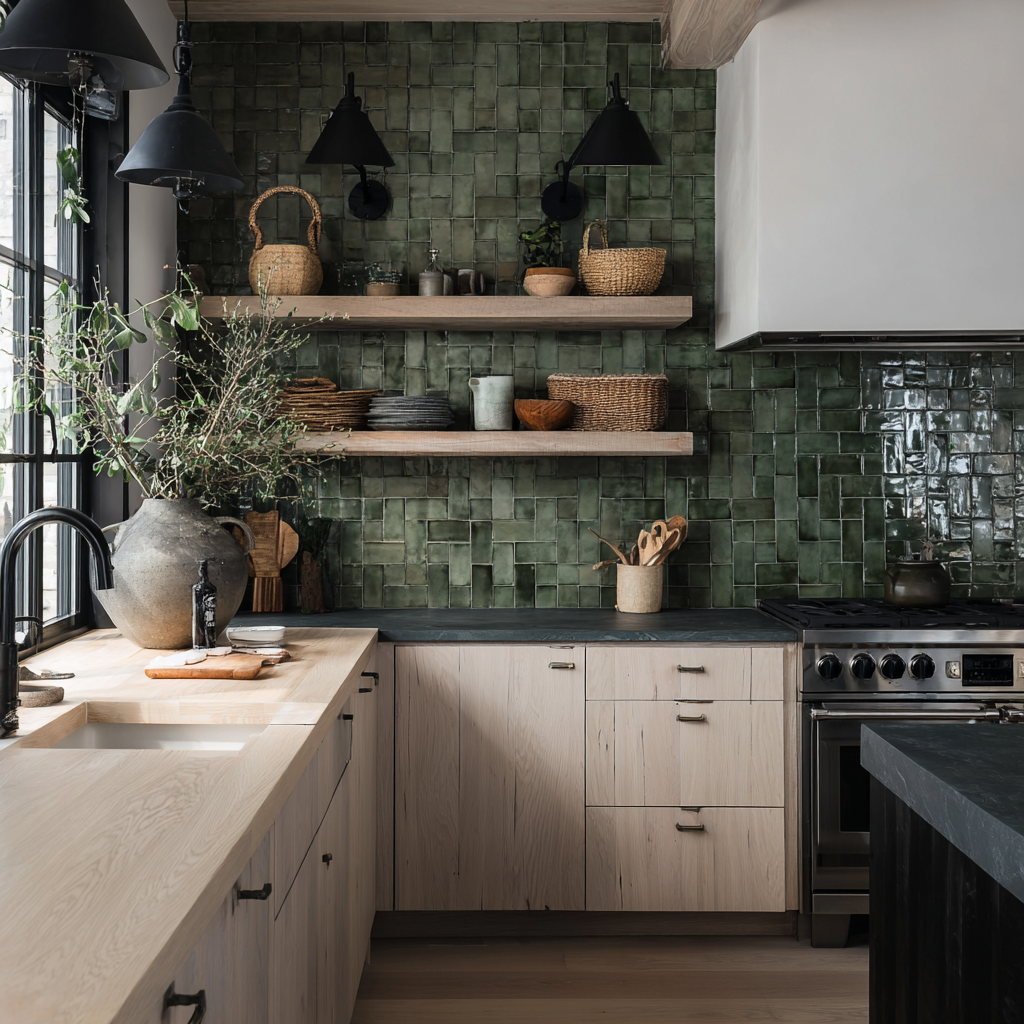
    • Rustic and farmhouse kitchens. This style practically invites mixing. The inherent warmth and texture of these spaces makes a pairing like soapstone with butcher block feel organic—two natural materials that belong together rather than compete. Imperfect edges, varied grain, and uneven surfaces are part of the character, not a liability.
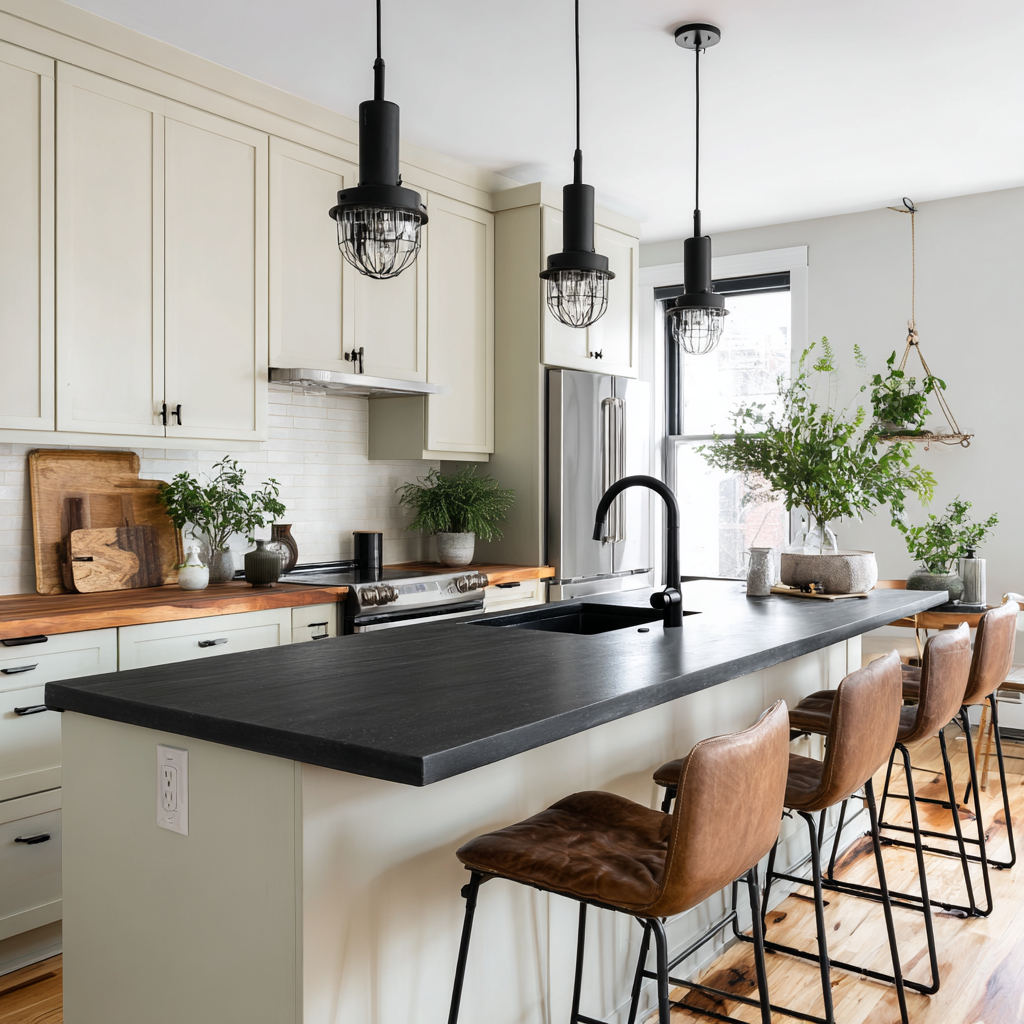
    • Modern and industrial kitchens. Pairing a matte black or dark concrete island with a lighter perimeter stone creates strong visual definition. In one kitchen, a large island featuring matte black stone sits opposite perimeter runs with warm wood countertops—the contrast is deliberate and confident, grounded by neutral cabinetry and consistent hardware throughout. The darker island functions as a visual anchor for the whole space.
    • Transitional and classic kitchens. tend to be the most forgiving. White or cream cabinetry acts as a neutral backdrop that lets two different countertop materials coexist without either looking out of place. A marble island alongside a simple quartz perimeter, or a butcher block island next to honed white stone, fits naturally into this style's balance of the familiar and the refined.
    • Eclectic and collected kitchens. In a kitchen with open shelving, varied textures, and a layered, lived-in quality, two different countertop materials feel like a natural extension of the overall approach. The key, even here, is intention—selecting materials that share some visual quality, rather than simply layering surfaces without a clear connection between them.

    White kitchen with wood tops, gold taps and green tile.

    What to think through before committing to mixing countertops

    A few practical considerations are worth addressing before finalizing your material selections.
    • Maintenance compatibility. Some materials require more upkeep than others, and mixing a high-maintenance surface with a low-maintenance one is worth thinking through honestly. Natural stone often needs periodic sealing. Butcher block requires oiling. Concrete can stain. Quartz, by contrast, is almost entirely maintenance-free. If you're not prepared for the upkeep that a particular material demands, it may not be the right choice regardless of how good it looks. To learn more about how different materials compare to one another, read popular guides that compare slate vs. soapstone and solid surface vs. granite.
    • How the materials will age together. Over time, countertop materials develop patina in different ways. Soapstone darkens and softens with use. Butcher block deepens in color. Marble may show etching or staining. Some homeowners love this kind of lived-in quality; others find it frustrating. Before choosing materials that age visibly, consider whether their long-term character aligns with how you actually use your kitchen.
    • Transitions between materials. Where two countertop materials meet—or don't—matters. If they're on completely separate surfaces (island versus perimeter), there's no issue. If they're on the same continuous run of cabinets, you'll need to think about how the transition is handled. A simple butt joint, a small gap, or a deliberate break at a corner can all work. What doesn't tend to work is an awkward mid-run seam that calls attention to itself without adding anything.
    • Talk to your contractor early. Material selection decisions are best made before the project begins, not partway through construction. Your contractor can help you understand how different materials will be installed, where seams will fall, and whether the combination you have in mind is as practical as it looks in a design rendering. Knowing your must-haves before demolition starts—not after—keeps the project on track and avoids costly changes down the line.

    Light wood kitchen with green tile, gold taps and dark island.

    Want a more conservative approach? Same material different colors

    If mixing two distinct countertop materials feels like too big a commitment, there's a middle path worth considering: using the same material in two different colors. You get the visual contrast and the sense of defined zones without the added complexity of managing different textures, finishes, maintenance routines, and installation requirements.

    A few combinations that work well:
    • Quartz in two colorways. Because quartz is manufactured rather than quarried, it's available in a consistent range of colors—meaning you can pair a warm cream quartz on the perimeter with a charcoal quartz on the island and know that both surfaces will behave identically over time.
    • Porcelain slab in two shades. Many porcelain slab lines span a broad color range within the same collection, making it straightforward to find two tones that are clearly distinct but visually related. Staying within one product family also makes transitions easier to detail cleanly, since edge profiles, thickness, and finish will match exactly.
    • Butcher block in two wood tones. Butcher block comes in a range of species—maple, walnut, oak, cherry—each with its own color and grain character. Using a lighter maple on the perimeter and a richer walnut on the island, for instance, creates genuine contrast while keeping the warmth and texture consistent throughout. Both surfaces will age and develop patina in a similar way, which helps the kitchen feel cohesive over time rather than growing apart as the materials weather differently.

    Light kitchen with black island, wood tops and caged lamps.

    Find the right kitchen contractor with Block Renovation

    A great countertop combination starts with a contractor who understands your vision and can execute it well. Block Renovation connects you with vetted, experienced kitchen contractors who can guide your material selections, manage installation, and help you get the result you're after.

    Remodel with confidence through Block

    Happy contractor doing an interview

    Connect to vetted local contractors

    We only work with top-tier, thoroughly vetted contractors

    Couple planning their renovation around the Block dashboard

    Get expert guidance

    Our project planners offer expert advice, scope review, and ongoing support as needed
    Familty enjoying coffee in their newly renovated modern ktchen

    Enjoy peace of mind throughout your renovation

    Secure payment system puts you in control and protects your remodel

    Get Started

    Frequently asked questions

    Can you mix two-tone cabinets and mixed countertops in the same kitchen?

    Yes, but it requires more coordination than either choice does on its own. Two-tone cabinets and mixed countertops each introduce variation into the space—layering both means you're managing four materials at once. That's entirely doable, but every element needs to feel connected to at least one other element in the room, or the kitchen starts to feel visually scattered.

    Does mixing countertops cost more?

    It depends on the materials you choose. In some cases, mixing can actually help manage costs—using a premium stone on the island while opting for a more budget-friendly material on the perimeter runs, for instance. The added complexity of working with two materials may add slightly to labor costs, so it's worth discussing with your contractor upfront.

    How do I know if my combination will actually work before committing?

    Bring large samples of both materials into your kitchen at the same time and look at them together in your actual lighting—not just in a showroom. Lighting has a significant effect on how undertones read, and what looks harmonious under fluorescents may feel off in natural light, or vice versa.

    Does this work better in larger or smaller kitchens?

    Larger kitchens have more room to absorb variation, so the combination tends to be easier to pull off. In a smaller kitchen, the same number of materials feels more concentrated—which can work beautifully if the relationships between them are tight, but can quickly feel chaotic if they're not. When in doubt in a smaller space, let one element lead and keep the others quieter.

    Can I mix countertop materials in a small kitchen?

    Yes, though it requires more restraint. In a smaller space, the contrast between two materials is more pronounced, so the relationship between them needs to be clear. Keeping one material dominant and the other minimal—a butcher block island top in an otherwise all-stone kitchen, for instance—tends to work better than an even split.