




Building Your Custom Home in Oklahoma City: What Should You Know?

Budget your upcoming Oklahoma City custom home build with help from Block
How we get your estimate
Fill out the form above to either connect with contractors for a personalized quote or estimate your costs with Block's Renovation Studio.
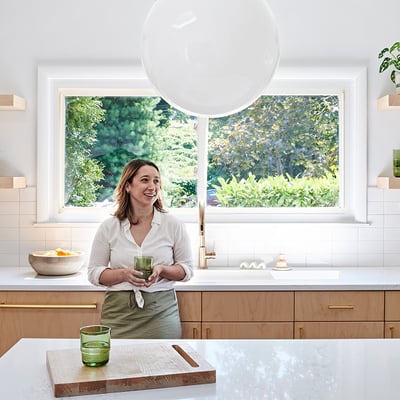
Modern black kitchen with wood counters and white subway tile.

In This Article

    Oklahoma City has quietly become one of the most appealing places to put down roots in the South-Central U.S. A diverse economy built on energy, aerospace, healthcare, and technology, plus a revitalized core around Bricktown and Scissortail Park, continues to draw new residents and young families. Areas like Nichols Hills, Edmond, and Yukon are expanding, and the overall cost of living is still well below that of many larger metros, which makes OKC a practical place to consider a custom home. With its ample land, strong job base, and authentic community feel, the city offers a solid foundation for a long-term investment in a new build.

    At the same time, building a custom home in OKC isn’t as simple as picking a lot and a floor plan. The local climate—from winter ice storms to intense summer heat and tornado risk—demands careful decisions about construction methods and where you choose to build. On top of that, you’re dealing with multiple city and suburban jurisdictions, each with its own permitting and zoning rules, which can complicate even a straightforward project.

    Turn your renovation vision into reality

    Get matched with trusted contractors and start your renovation today!

    Find a Contractor

    Do you really need an architect for your custom home?

    In Oklahoma City, bringing in a licensed architect usually makes the most sense when you want a truly custom home—not just a tweaked stock plan. If you’re picturing unusual structural elements, a distinctive exterior, or an unconventional interior layout, an architect is the person who can pull all of that together into a clear, buildable set of plans. They coordinate structural engineering, energy performance, and local code requirements in ways that a standard design-build package may not fully address. Given Oklahoma’s wind resistance and severe weather standards, detailed architectural drawings can also help you avoid expensive mid-project changes.

    If you’re working with a semi-custom builder who offers existing plans with some flexibility, you may not need a full architectural engagement. In those situations, a skilled designer or draftsperson can often handle plan modifications at a lower fee. Where architects unquestionably earn their keep is on lots and goals that are out of the ordinary—irregularly shaped parcels, locations near flood-prone areas, or a homeowner’s desire for something that looks and lives differently in a market dominated by similar suburban-style construction.

    Cost and timeline overview for future Oklahoma City homeowners

    Understanding what drives building costs in Oklahoma City—and how long the process actually takes—is essential before signing any contracts or committing to a lot. Without a clear picture of local benchmarks, even a well-intentioned budget can unravel quickly.

    In Oklahoma City and its surrounding suburbs, custom home construction typically runs between $150 and $250 per square foot for standard to mid-range builds, with high-end finishes and complex designs pushing costs to $300 or more per square foot. Regional labor costs are generally lower than coastal markets, which can offset higher material prices when supply chains are tight. OKC's energy industry heritage also means there's strong local expertise in mechanical systems, which can work in a builder's favor. Land values vary considerably—lots in Edmond or Nichols Hills command premiums, while emerging areas on the city's south and northwest sides offer more budget-friendly options without sacrificing access.

    What drives costs in either direction here comes down to a few consistent factors: the size and complexity of the floor plan, the quality of materials chosen, and whether a homeowner is starting from raw land or an infill lot with existing utility infrastructure. Homes with storm shelters, reinforced roofing, and whole-home generators—all practical necessities in Oklahoma—add meaningfully to the budget but are widely considered non-negotiable by experienced local builders. Architectural scale also matters; sprawling single-story ranch plans common in OKC require more foundation and roofing work per square foot than two-story equivalents.

    Lot selection plays a significant role in total project cost. Infill lots in established OKC neighborhoods like Crown Heights or Mesta Park are scarce and expensive, but they come with existing utility connections and neighborhood context. Raw acreage on the metro's edge offers more square footage for less money but can require substantial investment in well, septic, or utility extension. Hillside lots, less common here than in other regions, still appear in areas like Luther and Guthrie and introduce grading and drainage costs that flat-lot builds avoid entirely.

    Loose timelines for custom home builds in Oklahoma City

    A realistic timeline for a custom home build in Oklahoma City typically runs 12 to 18 months from initial design to move-in, though complex builds or lots with site challenges can stretch to 24 months. Pre-construction phases—including design, permitting, and site prep—usually account for three to five months before a single board is framed.

    Oklahoma's weather is the single biggest timeline wildcard. Severe thunderstorm season in spring can halt exterior work for days at a time, and the region's periodic ice storms can delay material deliveries and freeze jobsite progress in winter. Municipal permitting timelines vary: the City of Oklahoma City has streamlined some processes, but suburban jurisdictions like Edmond and Moore operate on their own schedules. Material lead times for custom cabinetry, windows, and roofing systems—particularly impact-resistant options that meet local insurance requirements—continue to run longer than pre-pandemic norms.

    How do you choose the right site in Oklahoma City for a custom home?

    When you’re evaluating land, an Oklahoma City builder who knows the area can be a huge asset. They look past the listing details and see what the lot will actually take to build on—costs, complications, and all. Many buyers focus almost entirely on location and purchase price, while underestimating how much site conditions can influence the total budget and schedule.

    • Soil quality and site stability. Much of Oklahoma City sits on red clay, sandy loam, and expansive Permian-era soils that move as moisture levels change. Those expansive soils—especially common through central and western parts of the metro—can lead to foundation movement if they’re not properly addressed as part of the design and build. Most reputable OKC builders will insist on a geotechnical report before finalizing foundation specs, and post-tension slabs are now common where soil expansion is known to be an issue. A lot that appears simple and flat can still require soil remediation or even pier-and-beam construction once the soil report comes back.
    • Utilities access. In older OKC neighborhoods and close-in suburbs, connections for water, sewer, electric, and gas are typically already available from the street or alley. In newly platted subdivisions at the edges of the metro, utilities might be stubbed to the property line but not extended to the specific build area, which adds time and cost. More rural properties outside city limits—frequent around places like Luther, Harrah, or Tuttle—often need new well and septic systems, which can add $25,000 to $50,000 or more, depending on depth and soil conditions.
    • Zoning and restrictive covenants. Oklahoma City’s zoning rules cover items like setbacks, lot coverage, and allowed uses, but many established neighborhoods layer on deed restrictions or HOA covenants that go further. Nichols Hills, for instance, has its own overlay standards that influence exterior materials, fencing, and more. You’ll want to understand both the city’s rules and any private restrictions before you buy, because together they can rule out certain design ideas even when the lot itself seems ideal.
    • Lot slope and drainage. The landscape in OKC is generally flat to gently rolling, but drainage is a real concern in many areas, especially those hit hard during events like the 2019 Memorial Day floods. Lots near creeks or drainage easements may fall into FEMA floodplains, which affects insurance and can require building higher, adding cost. Even where the slope is minimal, getting water to drain away from your foundation is essential given the intense rainstorms the region sees.
    • Proximity to amenities. Because Oklahoma City is so spread out, access to good schools, grocery options, and medical care can vary widely. Families building in Edmond often zero in on the Edmond Public Schools district, which is among the state’s top-rated, while those looking farther south or west may accept a different school district in exchange for lower land prices and newer roads and utilities.
    • Environmental concerns or hazards. With OKC’s long history in oil and gas, some lots—especially those in older industrial areas or near past pump sites—may carry environmental concerns that warrant additional checks before you buy. The metro is also firmly in Tornado Alley, so it’s worth thinking about how the lot sits relative to typical storm paths and how easily a safe room or shelter can be integrated into your design. In recent decades, increased seismic activity tied to wastewater injection has also led some structural engineers to factor that into foundation recommendations for new homes.
    • View, orientation, and privacy. While sweeping views are uncommon on Oklahoma’s generally flat terrain, smart orientation can still make a noticeable difference. South-facing main living spaces can capture winter sun and reduce summer heat load, which matters in a climate with both hot summers and cold winters. Privacy depends on lot depth and how close future neighbors or roads might be; understanding how a subdivision will build out over time helps you anticipate what your surroundings will feel like once everything is completed.

    For a lot of OKC buyers, school district lines are still one of the biggest deciding factors, especially for families planning to stay in their homes for many years. Quick access to major highways, commutes to hubs like the Energy Corridor or the medical district, and the quality of nearby shopping and dining all play a role in how happy you’ll be long term—and how well the home will resell. A lot that checks those boxes, even with a slightly higher upfront price, often proves to be a stronger long-term bet than cheaper raw acreage that’s less connected.

    Renovate with confidence every step of the way

    Step 1: Personalize Your Renovation Plan

    Step 2: Receive Quotes from Trusted Contractors

    Step 3: Let Us Handle the Project Details
    Get Started

    What custom home styles and trends are popular in Oklahoma City?

    When you look at custom homes around Oklahoma City, you see a mix of regional tradition and modern expectations. Homeowners here generally want something that feels rooted in the local landscape, but with the comfort, convenience, and efficiency that only a new build can really deliver.

    • Ranch-style single-story plans remain the dominant footprint. Because OKC has plenty of land and relatively flat terrain, sprawling single-story homes are more feasible here than in many denser cities. Many buyers are thinking ahead to aging in place and prefer layouts without stairs. Large covered porches, deeper front setbacks, and attached three-car garages are common asks that work well with the ranch style and support the metro’s very car-oriented lifestyle.
    • Storm shelters and safe rooms are effectively standard features in new OKC custom homes. Most builders now plan for below-grade shelters or FEMA-rated safe rooms from the very beginning instead of treating them as add-ons later. Many homeowners double up on the use of that space by using it as extra storage or a secondary utility area. Insurance discounts for certified shelters add a financial benefit on top of the obvious safety advantage.
    • Brick and stone exteriors dominate the local aesthetic and hold up well to Oklahoma's climate extremes. Full-brick construction is still a point of pride in many Oklahoma City neighborhoods, valued for its resilience against hail, wind, and big temperature swings. Buyers here often equate brick with quality and durability, which helps resale. Stone accents—such as Oklahoma limestone or ledger stone—offer warmth and a sense of place without committing to full stone for the entire exterior.
    • Open kitchen-to-living floor plans with dedicated butler's pantries are consistently popular. In OKC, hosting tends to happen at home, so many homeowners want kitchens that connect smoothly to large living spaces, with a separate scullery or walk-in pantry to hide prep work and supplies. Oversized islands that seat six or more aren’t considered an indulgence anymore; they’ve become an expected feature in many custom builds.
    • Energy efficiency upgrades are gaining traction given OKC's hot summers and cold winters. More and more buyers—especially those who have owned older, less efficient homes—are asking for spray foam insulation, high-SEER HVAC, and solar-ready panels. Some builders now offer geothermal systems as an upgrade, which align well with local geology and can significantly cut long-term utility costs.
    • Dedicated home offices with soundproofing and separate entrances are now a frequent design request. With remote and hybrid work here to stay for many people, Oklahoma City homeowners are thinking beyond the simple “office/bedroom” and requesting more complete work-from-home setups. A separate exterior entrance means clients or colleagues can come and go without walking through the rest of the house, which adds flexibility and perceived value.
    • Outdoor living spaces are increasingly elaborate, with covered patios built to function year-round. The regional climate supports comfortable outdoor living for much of the year, so many custom buyers invest heavily in exterior spaces—outdoor kitchens, built-in fire features, and covered or insulated patios that extend use into cooler evenings and seasons. Pools are still common in the custom market, and it’s now typical to see resort-style landscaping that relies on native plants able to handle occasional drought.

    How can you keep your custom home build in Oklahoma City low-stress?

    Building a custom home is a major financial and emotional commitment, and the Oklahoma City market—busy, competitive, and frequently interrupted by weather—has some predictable stress points. Knowing where projects often run into trouble can help you head off those issues before they start.

    • Build a genuine contingency into your budget from the start. In Oklahoma City, a 10 to 15 percent contingency is a realistic starting point for custom home budgets. Soil test surprises, storm damage during construction, and swings in material prices all happen. If you treat that contingency as already committed to the project—rather than a pool for upgrades—you’ll be better prepared when unexpected costs inevitably pop up.
    • Get your builder's subcontractor relationships in writing. With a hot construction market, some builders say yes to more projects than their core trade partners can support. Ask prospective builders who their main subs are—framers, electricians, plumbers—and verify that these are long-standing relationships. A builder relying on unfamiliar subs for a project of this size is a warning sign worth noting.
    • Understand your permit timeline before committing to a move-in date. Permits in the OKC metro don’t all move at the same speed. The city itself has made progress with digital permitting, but suburbs like Edmond, Yukon, and Moore follow their own processes and can have different backlogs. Make those timelines part of your initial planning, and try not to set a move-in deadline based on best-case permit scenarios.
    • Document every decision and change order in writing. Over the 12 to 18 months that a custom build can take, it’s easy to lose track of verbal agreements. A straightforward change order system—where both you and the builder sign off before changes move forward—helps protect everyone and makes final billing conversations much simpler.
    Danny Wang

    “Adding small changes mid‑construction snowballs quickly. Scope creep is one of the fastest ways to inflate costs.”

    How can Block help you find the right Oklahoma City custom home builder?

    Block connects Oklahoma City homeowners with vetted local builders who understand what it takes to build here—whether that means dealing with expansive clay soils, meeting tornado-resistant construction standards, or managing permits across different suburban jurisdictions. Instead of relying only on personal referrals or online reviews, Block’s matching process focuses on pairing your project size, budget, and timing with builders who have a proven record delivering similar work in the OKC area.

    That vetting happens before you ever get introduced. Block reviews licensing, insurance, references, and past projects so you aren’t starting from scratch. For anyone who has heard stories about contractor relationships going wrong, having that pre-screening in place can make the entire process feel more manageable.

    Block Renovation also offers protections intended to support homeowners through the full build. Payments are tied to clear milestones, with funds released in stages based on verified progress instead of just the builder’s billing schedule. That structure helps keep financial risk in check at every step. To see exactly how Block’s payment system and contractor protections work, visit How it Works.

    Additional articles to help prepare you for the home building process

    • Costs & Considerations When Planning a Luxury Kitchen Remodel — This guide breaks down what drives costs in high-end kitchen projects, from custom cabinetry to appliance selection. For Oklahoma City homeowners designing a custom home kitchen from scratch, it provides a useful framework for understanding where the money goes and how to prioritize upgrades.
    • Guest House Remodeling: Building Costs & Other Insights — Building a guest suite or casita on a larger OKC lot is a popular addition that adds both function and long-term value. This article covers cost ranges and design considerations that apply whether you're planning a detached structure or an attached in-law suite.
    • How Much Does it Cost to Build a Garage? — With Oklahoma City's car-dependent layout and large lot sizes, garages—often three-car and sometimes oversized for trucks and recreational vehicles—are a significant part of many custom home budgets. This guide helps homeowners understand how size, finish level, and features affect garage construction costs.

    Remodel with confidence through Block

    Happy contractor doing an interview

    Connect to vetted local contractors

    We only work with top-tier, thoroughly vetted contractors

    Couple planning their renovation around the Block dashboard

    Get expert guidance

    Our project planners offer expert advice, scope review, and ongoing support as needed

    Familty enjoying coffee in their newly renovated modern ktchen

    Enjoy peace of mind throughout your renovation

    Secure payment system puts you in control and protects your remodel

    Get Started

    Frequently asked questions

    What role would an interior designer play in a custom home build?

    An interior designer in an Oklahoma City custom build typically gets involved after the architectural drawings are substantially complete, focusing on the finish selections and spatial details that determine how the home looks and feels to live in day-to-day. Their scope commonly includes flooring materials, tile layouts, cabinetry styles and hardware, paint palettes, lighting fixtures, and sometimes furniture planning for key rooms. In a market like OKC, where custom homes often skew toward large square footage and open floor plans, a designer's ability to create visual cohesion across a lot of connected space is genuinely valuable—without that discipline, large homes can feel disconnected or generic despite significant spend. Designers also help homeowners avoid costly material selections they'll regret: tile that doesn't hold up to Oklahoma's temperature swings, or flooring that conflicts with the home's architectural character. Many OKC builders have established relationships with local design studios and can facilitate introductions, though homeowners are generally free to bring their own designer as long as communication channels are established early.

    What custom home features should I incorporate to boost resale value?

    In the Oklahoma City market, the features that consistently support resale value are the ones local buyers have come to expect in the custom segment—and the ones that address the region's practical realities. A properly integrated storm shelter or FEMA-certified safe room is close to non-negotiable for serious buyers in this market and will become more so over time. Brick or stone exteriors hold their value better than synthetic alternatives in a climate that punishes lesser materials, and high-efficiency HVAC systems are increasingly scrutinized by buyers who understand OKC's utility cost landscape. Oversized garages—particularly three-car configurations that accommodate trucks and SUVs, which dominate the local vehicle market—add meaningful resale appeal. In the kitchen, quality appliances and durable countertops matter more than trendy finishes that date quickly; quartz surfaces and integrated appliance panels tend to photograph well and age gracefully. Finally, outdoor living spaces with covered patios and built-in amenities continue to add disproportionate perceived value relative to their construction cost.

    What are ideas for weatherproofing my new Oklahoma City home?

    Oklahoma City's climate demands a more comprehensive approach to weatherproofing than most other U.S. markets—you're designing for tornado-force winds, ice storms, intense summer heat, and occasional flooding, sometimes all within the same year. Starting from the outside in, impact-resistant roofing materials—Class 4 shingles or metal roofing—can meaningfully reduce insurance premiums and withstand hail damage that's common during severe storm seasons. Exterior walls built with full-brick or reinforced masonry perform significantly better than wood-framed vinyl-sided construction in high-wind events, and house wrap systems beneath exterior cladding add another layer of moisture resistance. Windows and doors should be specified to meet Oklahoma's wind load requirements, with low-E glazing that reduces solar heat gain in summer without sacrificing winter light. Proper attic ventilation and insulation—ideally closed-cell spray foam at the roof deck rather than blown-in at the floor—keeps summer heat out more effectively than traditional systems in this climate. A whole-home generator, while not strictly a weatherproofing measure, has become a near-standard request among OKC custom home buyers after repeated extended outages following ice storms and severe weather events.

    Is it realistic to move into the home while part of it is still being built?

    In most cases, moving into an unfinished custom home in Oklahoma City is not practical and carries more risk than it's worth—certificate of occupancy requirements mean that the home must meet minimum habitability standards before it can legally be occupied, which already sets a floor on what 'unfinished' can mean. Even if the occupied portions of the home are complete, active construction in adjacent spaces creates real problems: dust infiltration into finished areas, safety hazards for children or pets, and the logistical friction of living around an active jobsite. There's also a subtler issue: once a homeowner moves in, the dynamic with the builder shifts, and punch list items and remaining finish work often slow down significantly as the builder's urgency decreases. If timeline pressure is real—a lease expiring, a school year starting—a better option is negotiating a phased completion schedule with your builder that front-loads the spaces you need first, like bedrooms, bathrooms, and the kitchen, so the home is genuinely livable even if the bonus room or guest suite finishes later.
