





California
Sacramento ADU Costs 2026: Types, Value, and Budget
06.29.2026

04.14.2026


In This Article
Sacramento is having a moment. Bay Area equity migration has transformed the capital city's renovation market over the past decade, bringing higher budgets, more demanding buyers, and a genuine appetite for the kind of design-forward work that Sacramento's stock of mid-century modern homes was built to support. The city has its own distinct architectural identity: Craftsman bungalows in Curtis Park and Boulevard Park, Spanish Revival homes in Land Park, Victorian-era homes in Alkali Flat, and a remarkable concentration of Streng Brothers and Eichler mid-century moderns in South Land Park Hills, Carmichael, and the American River corridor. Each of these housing types comes with a different garage story, and California's progressive ADU legislation has added a financial dimension to that story that makes garage renovation decisions here more consequential than they are almost anywhere else in the country.
Design a Home That’s Uniquely Yours
Block can help you achieve your renovation goals and bring your dream remodel to life with price assurance and expert support.
Get Started
Sacramento sits at the more affordable end of California's renovation cost spectrum relative to the Bay Area and Los Angeles, though it is still California — labor rates are high by national standards, Title 24 energy compliance adds specification requirements that affect project costs, and the city's active housing market keeps contractor demand elevated. Costs below apply to Sacramento proper and inner suburbs like Carmichael, Rancho Cordova, and Citrus Heights; outer Sacramento County communities typically run 5 to 10 percent lower.
California's streamlined ADU legislation has made garage conversion the defining renovation project across Sacramento's residential neighborhoods, and the economics are compelling in a rental market that has tightened considerably alongside Bay Area migration. A permitted one-bedroom ADU conversion of a detached two-car garage — windows, HVAC, insulation, plumbing rough-in and finish, electrical upgrade to a dedicated panel, drywall, flooring, kitchen, and bathroom — runs $70,000 to $140,000 in Sacramento. High-finish conversions in premier neighborhoods like East Sacramento and Land Park approach $160,000 to $185,000. Title 24 energy compliance, which California requires for permitted ADUs, adds specifications around insulation, glazing, and mechanical that raise costs modestly but produce spaces that perform well in Sacramento's extreme summer heat. Monthly rental income on a permitted one-bedroom ADU in Sacramento's mid-range neighborhoods runs $1,400 to $2,200 — a return profile that has made ADU conversion the most financially significant home improvement decision available to Sacramento homeowners on eligible properties.
The Streng Brothers and Eichler homes of South Land Park Hills, Carmichael, and the Shelfield neighborhood along the American River present a specific renovation context: attached or detached garages that were designed with the clean lines and indoor-outdoor orientation of 1950s and 1960s California modernism, but built without insulation or climate management for a climate that sends temperatures above 105 degrees in July and August. A full renovation of a mid-century garage — polyaspartic floor coating, spray foam insulation, mini-split, LED lighting, and appropriate door replacement — runs $14,000 to $28,000 in Sacramento. The mid-century context demands material and design sensitivity: aluminum-frame garage doors or clean-panel composite doors that respect the architecture's horizontal emphasis serve these homes better than carriage-house styles that contradict the period.
Sacramento's summers are genuinely extreme — the Central Valley delivers sustained 100-plus-degree heat through July and August — and an uninsulated garage door on any structure used for more than vehicle storage is a thermal failure point. A standard insulated steel door for a two-car opening runs $1,400 to $3,600 installed in Sacramento; aluminum doors with clean-lined profiles appropriate for mid-century modern homes run $4,000 to $8,500. For homes in Sacramento's Historic Preservation Overlay Zones — Curtis Park, Boulevard Park, Alkali Flat, and portions of East Sacramento — the city's Historical Resources Commission reviews exterior modifications to contributing structures, and replacement door style and material are subject to Certificate of Appropriateness review. Getting that review started before finalizing a door selection is the timeline decision that prevents delays.

“Rushed renovations often cost more—late planning can force homeowners to pay premiums or make compromises just to meet a deadline.”
Sacramento's garages trace the city's residential development from its Victorian-era core through the postwar mid-century boom and into the contemporary suburban communities of the outer county.
The bungalow corridors of Curtis Park, Boulevard Park, Land Park, and East Sacramento — developed primarily between 1910 and 1940 — established what remains the city's most architecturally celebrated residential fabric. Nearly every bungalow and Spanish Revival home in these neighborhoods has a detached garage at the rear of the lot, typically single-car, accessed from an alley. Wood-framed and built without insulation, these structures are simultaneously the most historically significant and the most structurally variable garage type in the Sacramento market.
California's ADU law has transformed the conversation about these structures. A well-executed ADU conversion in Curtis Park or East Sacramento can generate $1,600 to $2,200 per month in rental income, and the permitting pathway through the City of Sacramento has become substantially more streamlined since the state's 2020 ADU legislation updates. For homeowners who want to preserve the garage as a garage, insulation, electrical upgrade, and floor coating are the three highest-return improvements in that order. Historic resource review for exterior changes in designated overlay zones is required; working with a contractor who has done this review process before shortens the timeline significantly.
Sacramento's postwar suburban expansion produced enormous quantities of ranch homes and the distinctive Streng Brothers mid-century moderns across South Land Park Hills, North Sacramento, Arden-Arcade, and Carmichael. Streng Brothers homes in particular — designed by architect Carter Sparks and built in large numbers across the region — have attached or semi-attached garages that are integral to the home's architectural composition, typically featuring flush-panel doors, low-profile rooflines, and the horizontal orientation that defines California mid-century modernism. These homes have attracted strong appreciation driven partly by buyers who specifically seek out that design vocabulary.
The renovation challenge on Streng and Eichler garages is preserving architectural integrity while addressing the thermal and functional deficits of their era. Original single-pane garage doors, no insulation in the roof deck, and concrete slabs without vapor barriers are standard conditions on these properties. Replacing a door with a period-correct aluminum panel or clean composite alternative, spray-foaming the ceiling and shared walls, and coating the floor transforms the space functionally without compromising the design language. Sacramento's high summer temperatures make ceiling insulation particularly important on these homes — the roof deck absorbs heat all afternoon, and without insulation, that heat radiates into the garage and the living space below until well after sunset.
Elk Grove, Roseville, Folsom, and the newer communities north and south of Sacramento proper feature homes with large attached garages as standard — two-car configurations dominate, with three-car arrangements on premium homes. These structures are modern construction, code-compliant, typically pre-finished, and equipped with insulated doors. They arrive ready to be finished rather than repaired.
Finishing packages for these garages — polyaspartic floor coating, overhead storage platforms, wall-mounted organization, LED lighting upgrades, and EV circuit — run $6,000 to $13,000 for a two-car configuration. HOA exterior-change requirements are active in most master-planned communities in the outer suburbs; interior work does not require HOA review. EV infrastructure is a natural add-on in Sacramento, where California's EV incentive programs and the state's push toward zero-emission vehicles have driven adoption rates well above national averages. Adding a dedicated 240V circuit while an electrician is already on-site for other garage work costs $600 to $1,200 and eliminates a scheduling and cost step that grows more expensive as a standalone project.
Renovate with confidence every step of the way
Step 1: Personalize Your Renovation Plan
Step 2: Receive Quotes from Trusted Contractors
Step 3: Let Us Handle the Project Details
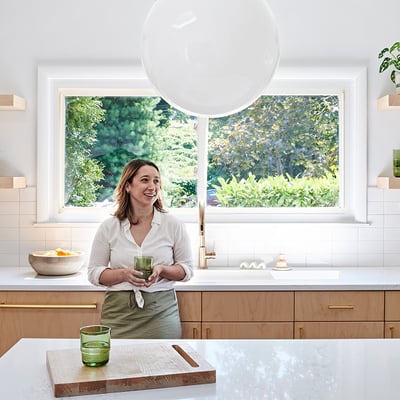
New detached garage construction in Sacramento — whether replacing a deteriorated structure or building on a property that never had one — has gained new relevance under California's ADU framework. Building for current use with future conversion in mind is worth thinking through carefully.
These Block Renovation guides address the project types Sacramento homeowners ask about most.
Block Renovation connects Sacramento homeowners with thoroughly vetted local contractors handpicked for the project's scope and style. Every contractor undergoes insurance verification and reference reviews through a rigorous multi-step vetting process. A dedicated Project Planner provides expert guidance through proposals, timelines, and contractor selection at no cost.
Block manages payments through a secure, progress-based system ensuring contractors are paid as work gets done. Every project scope is reviewed by renovation experts and AI-enabled tools to spot gaps and minimize change orders. Every contractor in the Block network provides a workmanship warranty.
Remodel with confidence through Block

Connect to vetted local contractors
We only work with top-tier, thoroughly vetted contractors

Get expert guidance
Our project planners offer expert advice, scope review, and ongoing support as needed

Enjoy peace of mind throughout your renovation
Secure payment system puts you in control and protects your remodel


Renovate confidently with Block
Easily compare quotes from top quality contractors, and get peace of mind with warranty & price protections.
California
Sacramento ADU Costs 2026: Types, Value, and Budget
06.29.2026
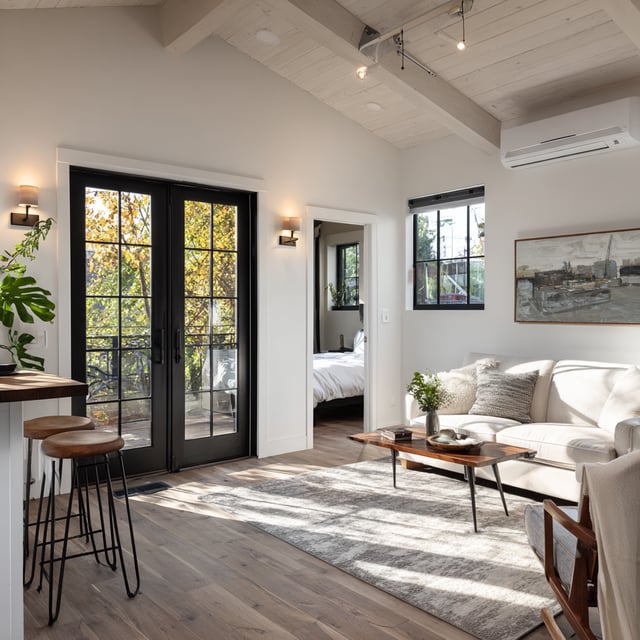
Garage
1-Bedroom Garage Apartment Floor Plans | Block
06.11.2026

California
Custom Home Building in Santa Rosa, CA: A Complete Guide
05.20.2026

California
Custom Home Building in Stockton, CA: Climate-First Guide
05.19.2026

California
Custom Home Building in Rocklin, CA: What You Need to Know
05.18.2026