



Remodeling
Cinder Block Garage Cost: Prices by Size & Material
07.23.2026
07.19.2026


In This Article
Your contractor says the job will take 8 weeks, but the project still takes 6 months of your life. The gap comes from everything that happens before demolition: budgeting, design, permits, and material orders all sit on the home renovation timeline too, and most estimates only count the construction at the end of it. Mapping all 15 phases, with realistic durations for each, tells you when to order materials, when to book a place to stay, and when you'll actually move back in.
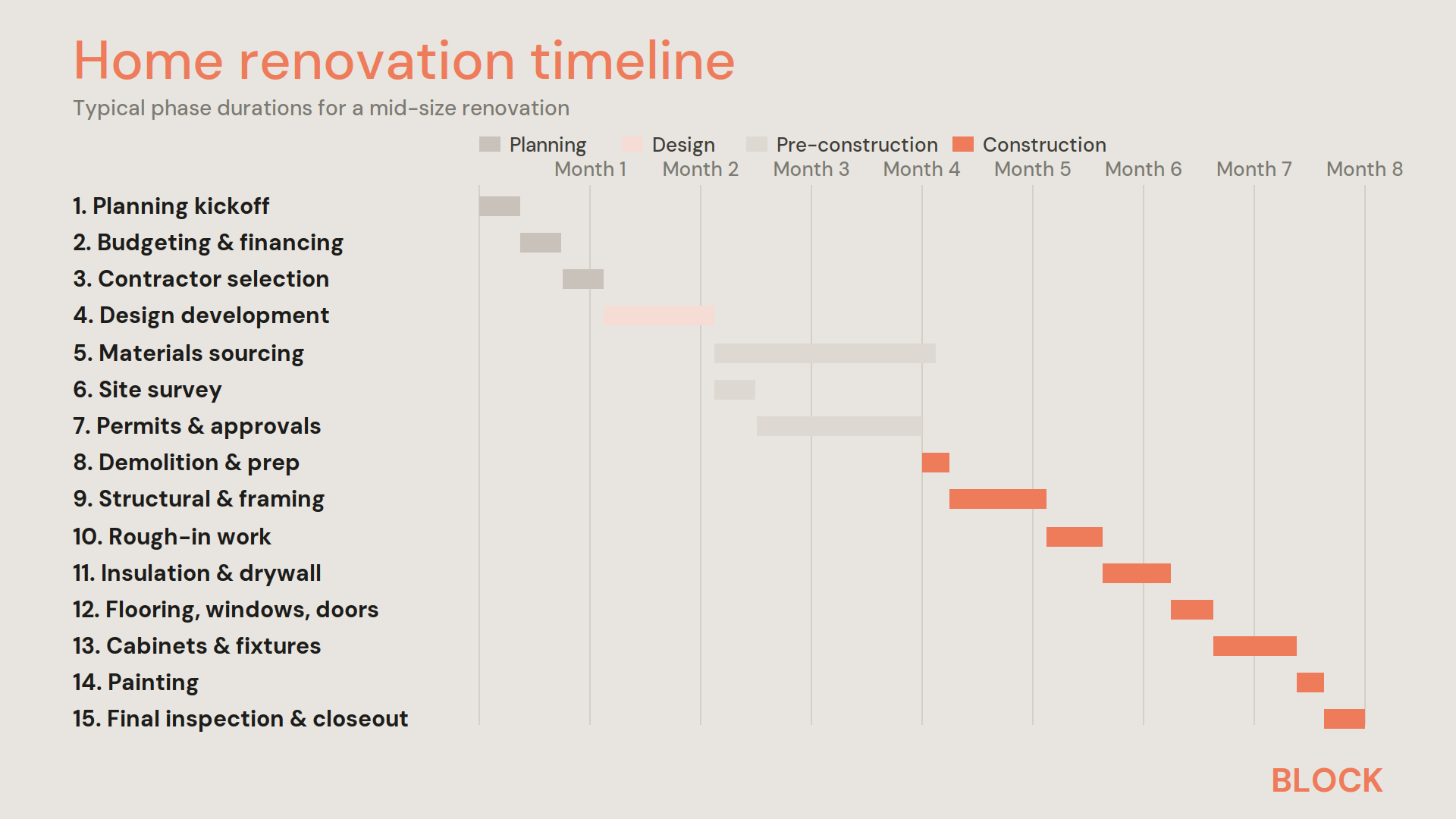
The phase-by-phase breakdown below covers the full arc of a renovation across its 4 core stages: planning, design, pre-construction, and construction.
Every project moves through the same phases, but the total duration varies widely by scope. The ranges below reflect typical start-to-finish timelines, including planning and permitting, not just construction.
|
Project type |
Typical total timeline |
Construction portion |
|
Bathroom remodel |
3 to 6 months |
4 to 12 weeks |
|
Kitchen remodel |
4 to 8 months |
6 to 12 weeks |
|
Basement finish |
3 to 6 months |
4 to 8 weeks |
|
Home addition |
6 to 12 months |
12 to 20 weeks |
|
Whole-home renovation |
8 to 16 months |
4 to 9 months |
Treat these as planning ranges, and notice what the two columns reveal: the construction portion is the smaller half of almost every project. The construction estimate is the number homeowners plan their lives around, and it's the least useful one on the schedule. Permits alone can take up to 3 months, materials 1 to 3 months, and contractor lead time 1 to 4 months, so the phases in front of demolition often outlast the build itself and belong on your calendar from day one.
Compare Proposals with Ease
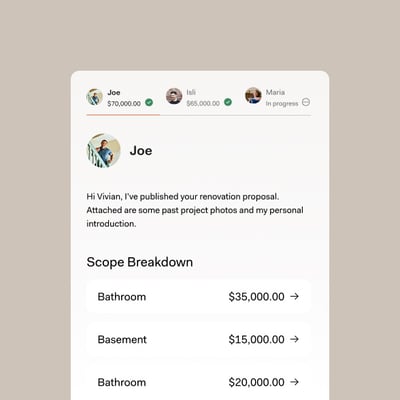
Estimating timelines and renovation costs is tricky because each renovation has its own quirks. The more completely you capture your project up front, the more accurate your estimates will be. These factors carry the most weight.
Are you adding a new coat of paint or reworking the purpose of an entire room? More extensive renovations that involve structural changes and electrical work take much longer than cosmetic refreshes. You'll also lose time if you change the scope mid-project, which is why careful upfront planning matters so much in a remodel.
Permit review times depend entirely on your local building department, and they range from same-day approvals to multi-month waits. In practice, a slow permit office costs you more time than a slow contractor, since a crew running behind loses you weeks while a stalled application can lose you a full season, and outside of markets where permit expediters operate, there's no paying to jump the line. Check your building department's published review times before you set any move-back-in date. Inspections add scheduling dependencies during construction too, since certain work can't continue until an inspector signs off on the stage before it.
Once walls open up, crews sometimes find problems that have to be resolved before work continues: rot from water damage, black mold, or outdated wiring. Fixing these can require revised plans and, in some cases, additional permits.
Summer tends to be peak renovation season, so the best contractors book up and scheduling delays follow. Starting your search early, or scheduling your renovation for the winter off-season, helps you avoid the queue.
Extreme heat, storms, and poor air quality can slow or pause construction, especially for exterior work like roofing and additions. Every season carries its own risks, so build weather slack into any timeline that includes outdoor work.
Custom cabinetry, imported tile, and specialty fixtures can take 8 to 12 weeks or more to arrive. Ordering everything before demolition, and sourcing locally where you can, keeps material delays from stalling the build.
There are 4 overarching phases to every home renovation: planning, design, pre-construction, and construction. The 15 granular phases below show how those stages break down and how long each one typically runs.
Timelines and pricing dominate most contractor interviews, but HRP general contractor Andre Taouil points homeowners to a protection almost nobody asks about:
Once you sign with a general contractor, expect lead time between the contract and the start of work. Depending on season and local demand, 1 to 4 months is common. Fold that gap into your timeline from the start.
Spending real time on these first 7 phases pays off later. The more thoroughly you plan and communicate with the experts you hire, the fewer surprises you'll face once construction begins.
Where will you stay during your renovation? Before crews break ground, sort out your living situation. If the project isn't contained to an area you can avoid, budget and plan for staying somewhere else for the duration. Get ideas for where to stay during your renovation.
All of these timelines are general estimates. Your actual schedule depends on factors unique to your project, so pad each phase rather than planning to the exact week.
The last 2 weeks of a renovation involve more than cleanup. Closeout is where you confirm the work matches the contract, the city signs off, your final payment stays protected, and your warranty coverage gets documented. Here's what happens, in order.
A punch list is the running record of small items that still need attention: a door that sticks, a missed paint touch-up, a cabinet pull installed crooked. Walk the space with your contractor, write down every item together, and agree on a completion date. Nothing on the list should be left to memory or a verbal promise.
If your project required permits, the building department performs final inspections before the work is officially approved. Depending on scope, that can include electrical, plumbing, and building inspections, and for larger projects, a certificate of occupancy or certificate of completion. Keep copies of every sign-off. You'll want them when you sell, refinance, or file an insurance claim.
The final walkthrough is your last structured review with the contractor before releasing final payment. Test everything: run water at each fixture, flip the light switches, open the doors and drawers, and check finishes in daylight. Anything that fails goes back on the punch list before payment moves.
Release the last payment only after the punch list is complete and inspections have passed. Collect a final lien waiver from your contractor, which is a signed document confirming that the contractor and their subcontractors have been paid and waive any claim against your property. Taouil recommends structuring the contract so final payment is roughly 10% of the total, held until the waivers are in hand, and adjusting that figure to fit your project. Without the paperwork, you could pay your contractor in full and still face a lien from a subcontractor they never paid. Progress-based payment systems, like the one Block manages, hold this leverage in place automatically by tying each release to completed milestones.
Before the crew leaves for good, collect the paperwork you'll rely on later:
Construction cleaning goes beyond a normal deep clean: fine drywall dust settles into HVAC systems, cabinet interiors, and window tracks. Confirm whether professional post-construction cleaning is in your contract scope, then schedule your move back in once it's done.
A realistic timeline comes from planning every phase, not just the construction weeks. Give the early phases the time they need, pad the estimates, and keep your closeout checklist as firm as your design plan.
You don't have to build that timeline alone. Block's renovation platform matches you with vetted contractors based on your project, lets you compare detailed quotes side by side, and ties payments to progress so your schedule and your money stay aligned. Get a free consultation to map out a timeline that works for your home.
Remodel with confidence through Block

Connect to vetted local contractors
We only work with top-tier, thoroughly vetted contractors

Get expert guidance
Our project planners offer expert advice, scope review, and ongoing support as needed

Enjoy peace of mind throughout your renovation
Secure payment system puts you in control and protects your remodel


Renovate confidently with Block
Easily compare quotes from top quality contractors, and get peace of mind with warranty & price protections.
Remodeling
Cinder Block Garage Cost: Prices by Size & Material
07.23.2026
Timelines
Home Renovation Timeline: All 15 Phases Explained
07.19.2026

Cost
How America Renovates 2026: The State of US Renovations
04.06.2026

Working with Contractors
The Block Way of Renovating: A Complete Homeowner’s Guide
11.24.2025
Contractors
50 Most Common Home Renovation Questions (Answered by Experts)
10.28.2025