



Kitchen Floor Plans
Galley Kitchen Floor Plans and Ideas That Work | Block
07.15.2026
02.16.2026


In This Article
A 16x10 kitchen gives you 160 square feet — and more importantly, it gives you width. At 16 feet across and 10 feet deep, this is a kitchen shaped like a room you actually want to spend time in, not a corridor you pass through. The wide footprint means you can stretch a full appliance run along one wall with counter space to spare, seat a family of six without crowding the cooking zone, or carve out a proper L-shape with enough open floor for a second person to move freely.
These kitchens show up frequently in ranch-style homes, split-levels, and newer suburban builds where the floor plan favors width over depth. They’re also common in homes where a wall was removed during a previous renovation to open the kitchen to an adjacent dining or living space.
The result is a room that’s generous in one direction and compact in the other which creates a specific set of layout opportunities and constraints that differ from square kitchens of similar total area.
The 10-foot depth is the dimension to design around. It’s deep enough for a single row of base cabinets and a comfortable walkway, but not deep enough for a full island with pass-through clearance on both sides unless you’re disciplined about dimensions. That tension between width and depth is what makes the layout decisions in a 16x10 kitchen so consequential.
Turn your renovation vision into reality
Get matched with trusted contractors and start your renovation today!
Find a Contractor
A 16x10 kitchen is 60% larger than the industry-standard 10x10 benchmark. That additional square footage means more material across every category—cabinetry, countertops, flooring, backsplash—and a longer appliance run on the primary wall. But the cost story at this size isn’t just about quantity.
It’s about the functional upgrades the extra width makes possible: eat-in dining for six, an L-shaped cooking zone with real counter depth, a peninsula that doesn’t choke circulation, or a freestanding fridge placement that opens up your working wall.
Here’s what homeowners can generally expect:
Basic refresh: $35,000–$55,000. Stock cabinetry, standard countertops, mid-range appliances, and updated lighting. The existing layout stays mostly intact. You’re refreshing surfaces and swapping fixtures, not rethinking the room. At this size, a basic refresh still covers a meaningful amount of material — the 16-foot wall alone can hold 10–12 linear feet of cabinetry plus a full appliance suite.
Mid-range renovation: $55,000–$85,000. Semi-custom cabinetry with soft-close hardware and interior organizers, granite or quartzite countertops, upgraded appliances, and improved lighting.
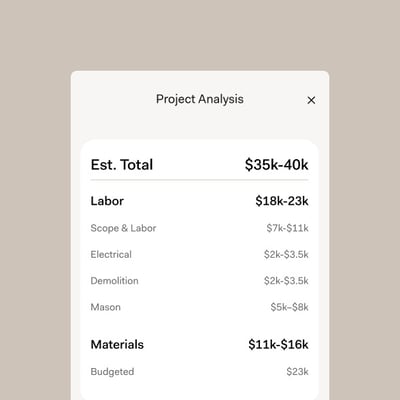
This tier is where most layout changes happen: relocating the fridge to a side wall, adding a peninsula, or shifting from a single-wall to an L-shaped configuration. Plumbing and electrical modifications at this level typically add $3,000–$8,000 depending on complexity and local labor rates.
High-end renovation: $85,000–$120,000+. Custom cabinetry, premium appliances, full layout reconfiguration, and architectural details like statement lighting or a waterfall-edge peninsula. At this budget you’re likely gutting to the studs and rebuilding, which means new subflooring, updated electrical, and potentially structural work if you’re opening or closing a wall.
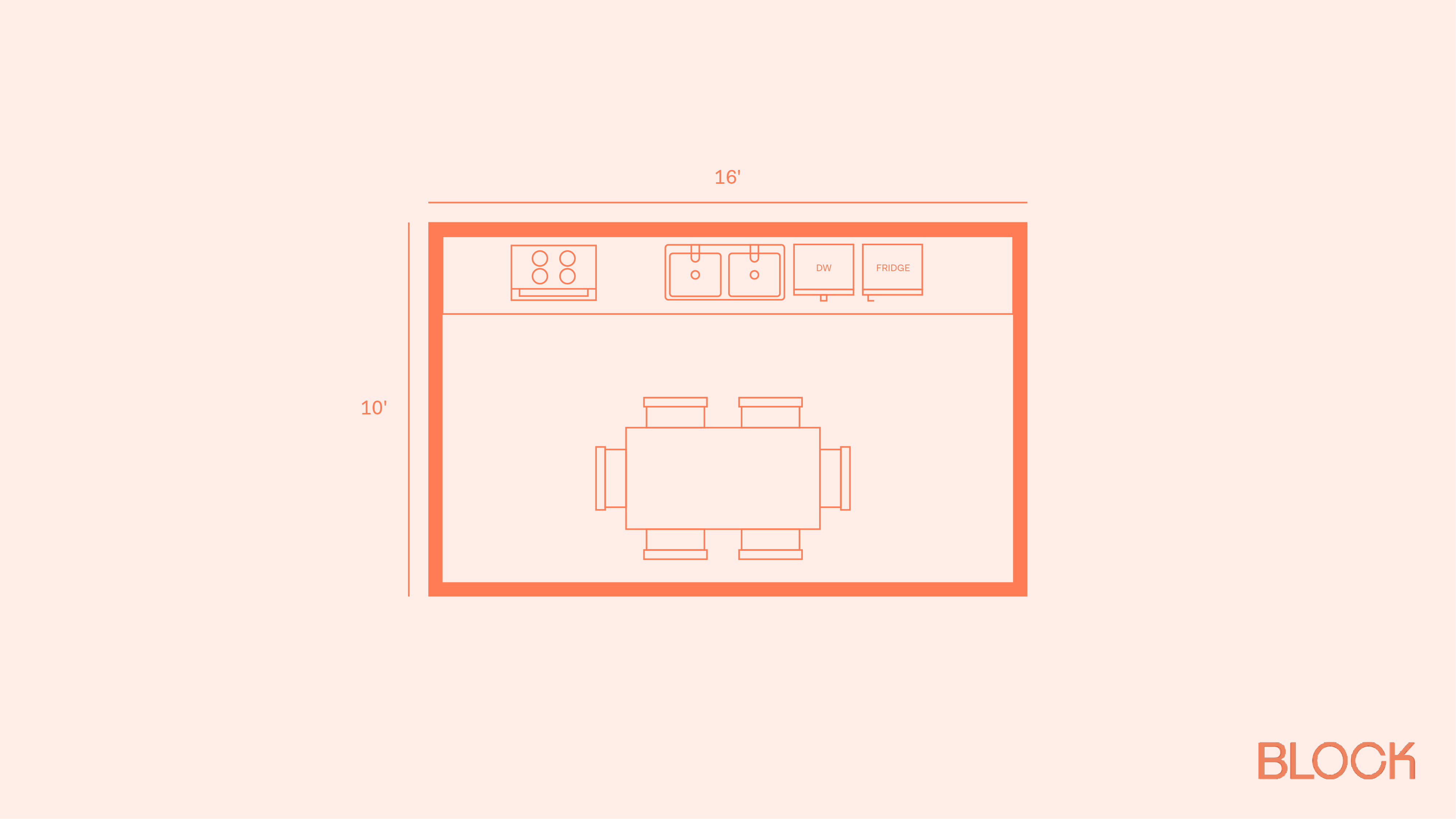
The stove, double sink, dishwasher, and fridge line the upper 16-foot wall in a continuous run. A rectangular dining table with seating for six occupies the center and lower portion of the room.
This layout is the most straightforward way to use a 16x10 footprint, and it’s also one of the most functional for households that value eating together in the kitchen. The 16-foot wall is long enough to hold every major appliance plus a generous run of counter on either side of the sink—you’re not choosing between prep space and appliance placement the way you are in a 10- or 12-foot kitchen. The dining table sits comfortably on the open floor with clearance on all sides, and the cook faces the table while working at the stove or sink.
From a daily-life standpoint, this is the layout that turns the kitchen into the room where everything happens—homework, morning coffee, weeknight dinners, Saturday projects. The table becomes a second work surface when you need it and a gathering spot when you don’t.
Cost-wise, this is the most economical configuration in the set. Cabinetry, plumbing, and electrical stay concentrated on one wall, which keeps material quantities and labor hours low. The dining table and chairs are a furnishing cost, not a construction cost, so you can upgrade them independently over time.
Know the Cost Before You Start
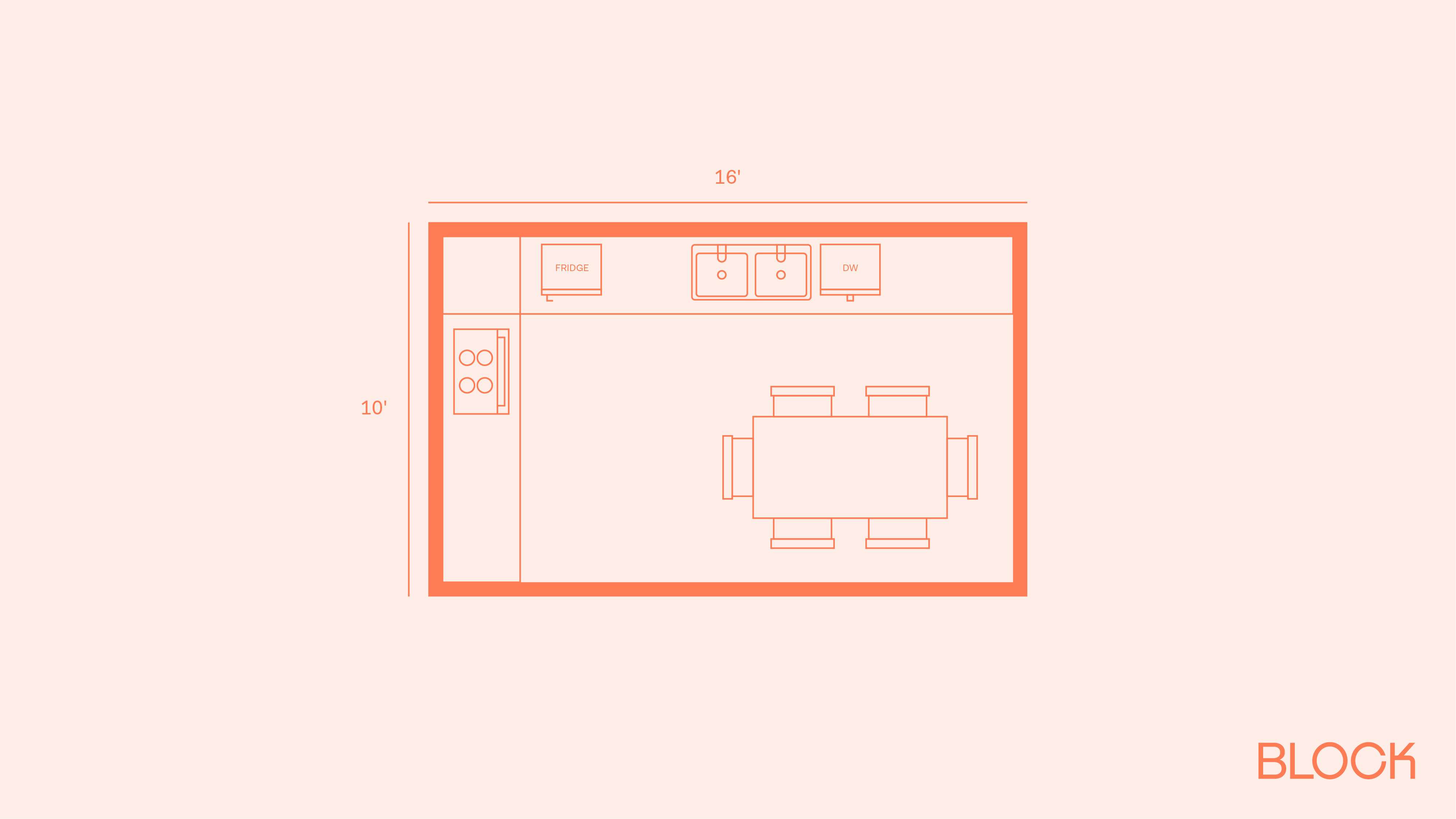
The fridge, double sink, and dishwasher line the upper wall. The stove sits on the left-hand wall with cabinetry. A rectangular dining table with seating for six occupies the center-right of the room.
The L-shape changes the cooking experience in a 16x10 kitchen. Instead of everything happening along one long line, the stove gets its own wall — which creates a compact work triangle between the sink, stove, and fridge that reduces the steps you take during actual cooking. The left wall gives the stove a dedicated backsplash surface and room for a range hood above it, turning what was a flat appliance run into a real cooking station.
The dining table still seats six comfortably, with clearance from the cooking zone that means you can have people sitting while you’re working at the stove without anyone feeling like they’re in the way. That separation between cooking and eating is one of the functional upgrades that makes the biggest day-to-day difference.
The L-shape does add cabinetry, countertop surface, and potentially an additional electrical run to the left wall.
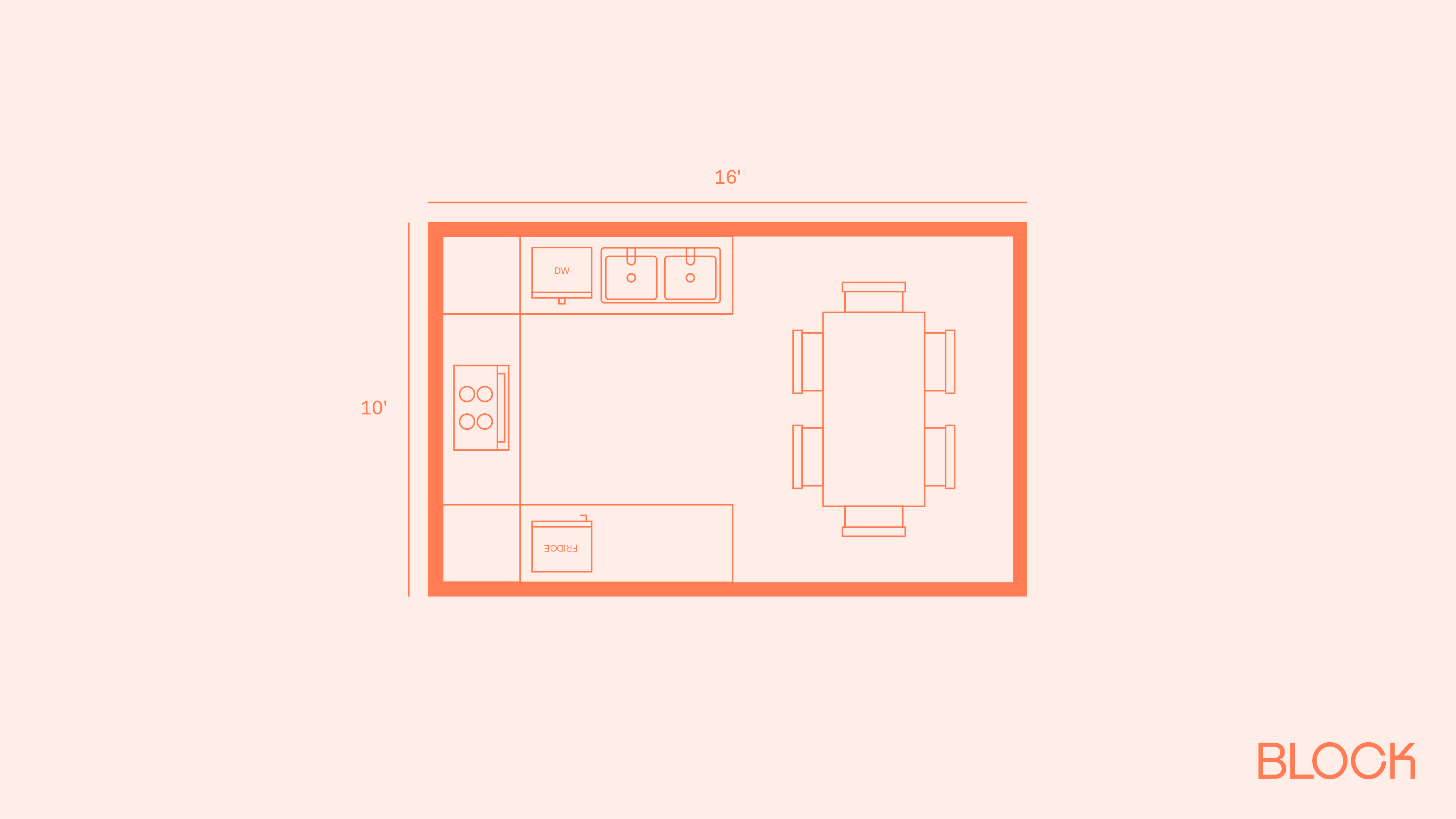
The dishwasher and double sink line the upper wall in a shorter run. The stove sits on the left-hand wall with cabinetry. The fridge is positioned freestanding on the lower-left wall. A large rectangular dining table with seating for six to eight occupies the right side of the room.
Pulling the fridge off the upper wall and onto the lower-left creates two functional advantages. First, the upper wall gets a longer uninterrupted run of counter between the sink and the end of the cabinetry — the best prep surface in the set. Second, the fridge becomes part of a storage zone rather than breaking up the cooking run. You can choose a larger-capacity unit without worrying about fitting it between cabinets, and the adjacent wall space can accommodate a tall pantry column if you want a dedicated dry-goods station.
The dining table in this layout is the biggest in the set — seating six to eight is comfortable because the right side of the room is almost entirely open. If you regularly host dinners or have a large household, this layout earns its keep every evening.
The fridge relocation may require extending a water line to the new wall for an ice maker or water dispenser, adding $500–$1,500 to the plumbing budget.
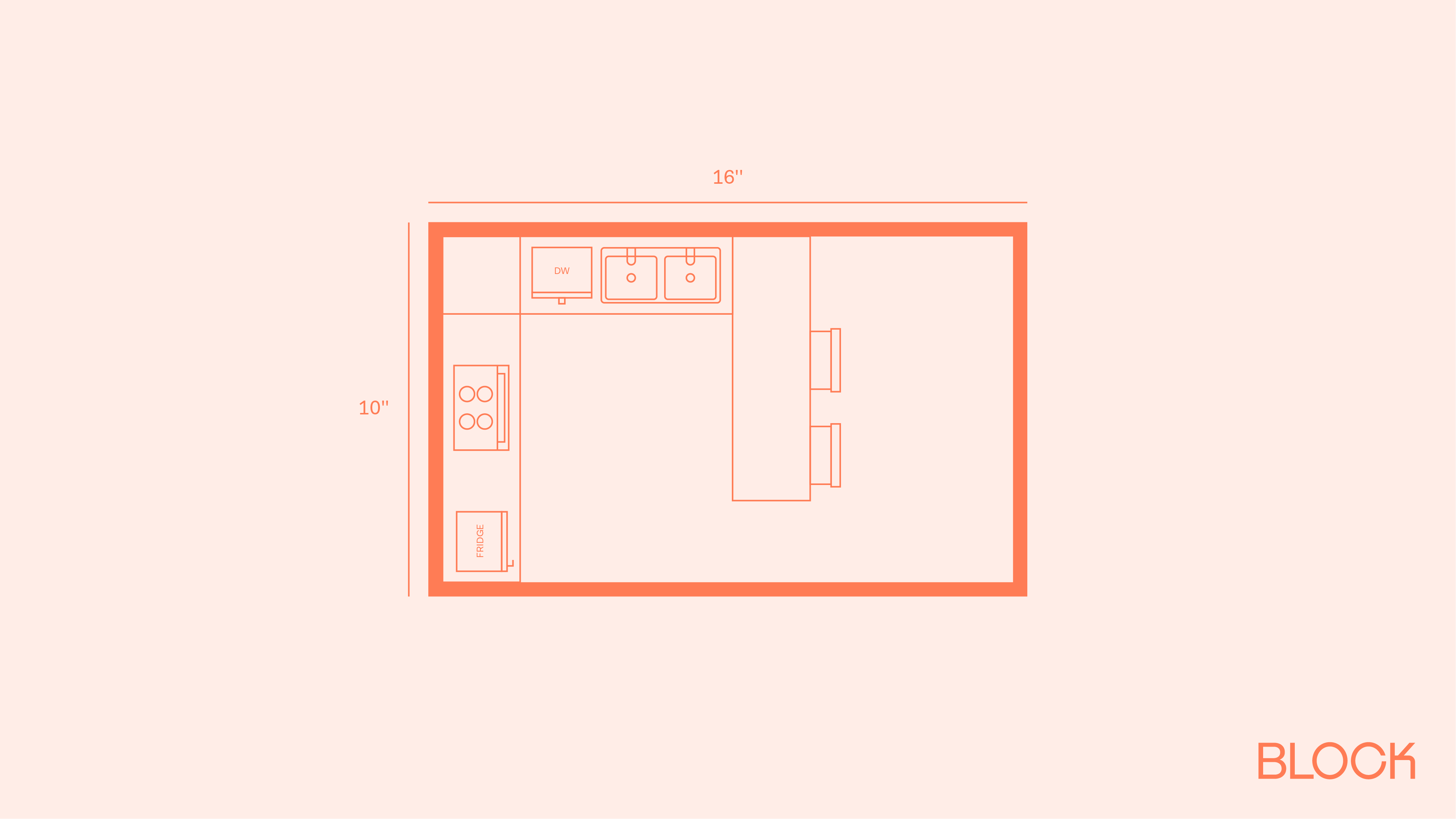
The dishwasher and double sink line the upper wall. The stove sits on the left-hand wall with cabinetry. The fridge is freestanding on the lower-left. A peninsula extends from the right side of the upper wall cabinetry, creating a bar-height seating area with room for two to three stools.
This is the layout for households where the kitchen is the social center of the home. The peninsula faces the open floor, so whoever is sitting there is part of the conversation while the cook works at the stove or sink. It adds counter space, base cabinet storage, and casual seating in a single move — without requiring island plumbing or structural support.
Functionally, the peninsula changes how the kitchen handles the hour before dinner. Kids do homework at the counter while you cook. A partner sits with a glass of wine and talks through the day. Guests gravitate to the stools instead of hovering in the cooking zone. That kind of low-key social function is one of the things that separates a kitchen you tolerate from one you actually enjoy spending time in.
The peninsula is also one of the more cost-effective upgrades in a 16x10 kitchen. Because it extends from an existing cabinet run, it doesn’t need its own plumbing or dedicated electrical circuit. A basic peninsula with cabinetry, countertop, and a seating overhang runs $2,500–$5,000 installed—a fraction of what an island with utilities would cost.
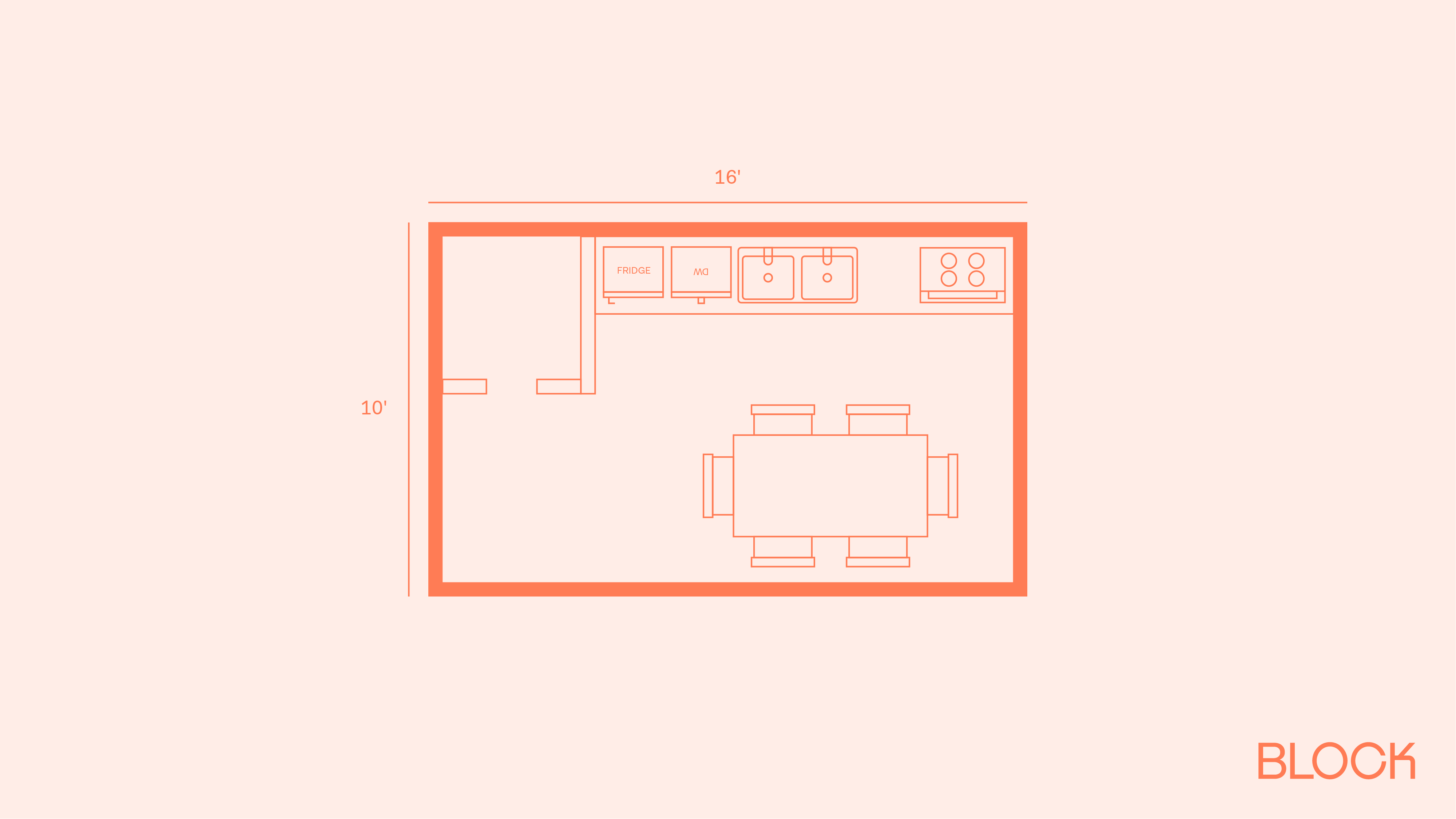
The fridge, microwave, double sink, and stove run along the full length of the upper 16-foot wall. A peninsula with cabinetry extends downward from the left end of the upper wall. A rectangular dining table with seating for six occupies the center-lower portion of the room.
This layout uses the 16-foot wall to its fullest potential. Every appliance fits in a single, accessible run with counter space between each one — which means you never run out of landing zones when you’re moving between tasks. The peninsula adds a buffer between the cooking zone and the dining area, extra base storage, and a natural place to set out serving dishes during meals.
The combination of a full upper run, a peninsula, and a dining table is ambitious for 160 square feet, but the 16-foot width makes it work. The cook has a continuous working wall, the family has a proper eating area, and the peninsula bridges the two zones without creating a bottleneck.
This is the most material-intensive layout in the set. The full upper wall of cabinetry and countertop, plus the peninsula’s base cabinets and surface, pushes material quantities toward the higher end.
Expect the cabinetry budget alone to run 20–30% higher than the single-wall option. But if you need both serious cooking function and daily dining capacity, this layout delivers both without compromise.
Renovate with confidence every step of the way
Step 1: Personalize Your Renovation Plan
Step 2: Receive Quotes from Trusted Contractors
Step 3: Let Us Handle the Project Details
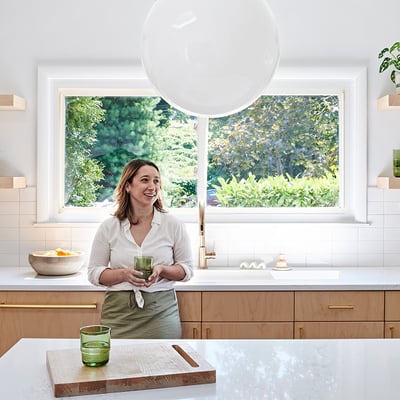
At 160 square feet, you have enough room to move past cosmetic updates and into changes that affect how the kitchen actually works. Not every upgrade justifies its cost — but the ones that do tend to show up in small moments you repeat hundreds of times: reaching for a pan, setting down a cutting board, or sliding into a seat without bumping into the person at the stove. Here’s where the money goes furthest.
Invest in a layered lighting plan. A 16x10 kitchen is wide enough that a single ceiling fixture leaves the ends of the room in shadow. Replacing it with a layered system — recessed cans for ambient light, LED strips under the cabinets for task lighting over the counters, and a pendant or two over a dining table or peninsula — changes how the room feels at every hour of the day. Morning coffee, weeknight cooking, and a late dinner each deserve their own light level.
A full lighting plan for a 16x10 kitchen typically runs $2,500–$6,000 installed, and it affects how you experience the room more than almost any other single upgrade.
Move from stock to semi-custom cabinetry. With a 16-foot primary wall plus potential cabinetry on a second wall, you’re looking at 15–25 linear feet of cabinets depending on layout. That’s a lot of doors and drawers, and the quality difference between stock and semi-custom is something you’ll notice every time you open one.
Semi-custom gives you plywood box construction instead of particleboard, soft-close hinges and drawer slides as standard, more finish and door style options, and access to interior accessories — pull-out trays, deep drawer organizers, built-in spice racks — that turn storage from something you deal with into something that works for you.
At $200–$400 per linear foot installed versus $75–$150 for stock, the cost increase is real but proportional to the daily improvement.
Upgrade the range hood to match your cooking. If you’re upgrading your stove or cooktop, match it with ventilation that actually does the job. A dedicated range hood sized to your cooktop’s output keeps grease off your new cabinets, prevents cooking odors from settling into adjacent rooms, and improves the air quality in a room where your family spends hours. Mid-range hoods run $500–$2,000 installed.
Professional-grade wall-mount or chimney-style hoods run $2,000–$5,000 and double as a visual anchor for the cooking wall. In an L-shaped layout where the stove has its own wall, a statement hood is one of the few upgrades that’s both functional and decorative.
Add a peninsula if you don’t already have one. A 16x10 kitchen has the width for a peninsula that doesn’t block the main walkway. Extending from an existing cabinet run, a peninsula adds counter space, base storage, and casual seating in a single construction move — without the plumbing, electrical, or structural cost of a freestanding island. If your household eats breakfast at the counter, does homework while you cook, or entertains standing up, a peninsula changes how the kitchen gets used on a daily basis.
Basic peninsula installation runs $2,500–$5,000; add a seating overhang with supports for another $500–$1,000.
Consider a tall pantry cabinet on a side wall. A 16x10 kitchen has enough wall area to dedicate a section to storage without giving up working counters or cooking space. A tall pantry cabinet (18–24 inches wide, 84–96 inches tall) with pull-out shelving keeps dry goods, oils, spices, and small appliances visible and organized instead of buried in deep base cabinets. Positioned next to a freestanding fridge, it creates a dedicated provisions zone that simplifies grocery unloading and daily cooking prep.
Pull-out pantry columns run $800–$2,000 for the cabinet plus installation.
A 16x10 kitchen gives you width that most kitchens don’t have — and the question is whether you use it. The layouts that succeed at this size aren’t the ones with the most features. They’re the ones where the cooking zone is tight enough to move efficiently, the dining zone is generous enough to seat the household comfortably, and the upgrades are the ones you interact with every day rather than the ones that look impressive in a photo.
With Block Renovation, you can experiment with different layouts, materials, and finishes through the free Renovation Studio — seeing how each upgrade affects your budget before construction begins. When you’re ready, Block connects you with vetted local contractors who provide detailed, comparable proposals backed by progress-based payments and a one-year workmanship warranty.
The best 16x10 kitchens aren’t the widest or the most expensive. They’re the ones where every decision was made with how you actually cook, eat, and live in mind.
Remodel with confidence through Block
Connect to vetted local contractors
We only work with top-tier, thoroughly vetted contractors

Get expert guidance
Our project planners offer expert advice, scope review, and ongoing support as needed
Enjoy peace of mind throughout your renovation
Secure payment system puts you in control and protects your remodel

Renovate confidently with Block
Easily compare quotes from top quality contractors, and get peace of mind with warranty & price protections.
Kitchen Floor Plans
Galley Kitchen Floor Plans and Ideas That Work | Block
07.15.2026
.webp?width=640&name=King%20-%20Final%20Kitchen%20(1).webp)
Kitchen Floor Plans
AI Floor Plan Generator: Best Free & Paid Software
06.26.2026
Kitchen Floor Plans
U-Shaped Kitchen Layouts & Floor Plans: 8 Designs
05.28.2026

Kitchen Floor Plans
Kitchen Floor Plans With Islands: 6 Layouts That Work
05.14.2026

Kitchen Floor Plans
12x10 Kitchen Layouts: 5 Designs That Work
04.26.2026