


Building Your Custom Home in Bakersfield, California

Budget your upcoming Bakersfield custom home build with help from Block
How we get your estimate
Fill out the form above to either connect with contractors for a personalized quote or estimate your costs with Block's Renovation Studio.
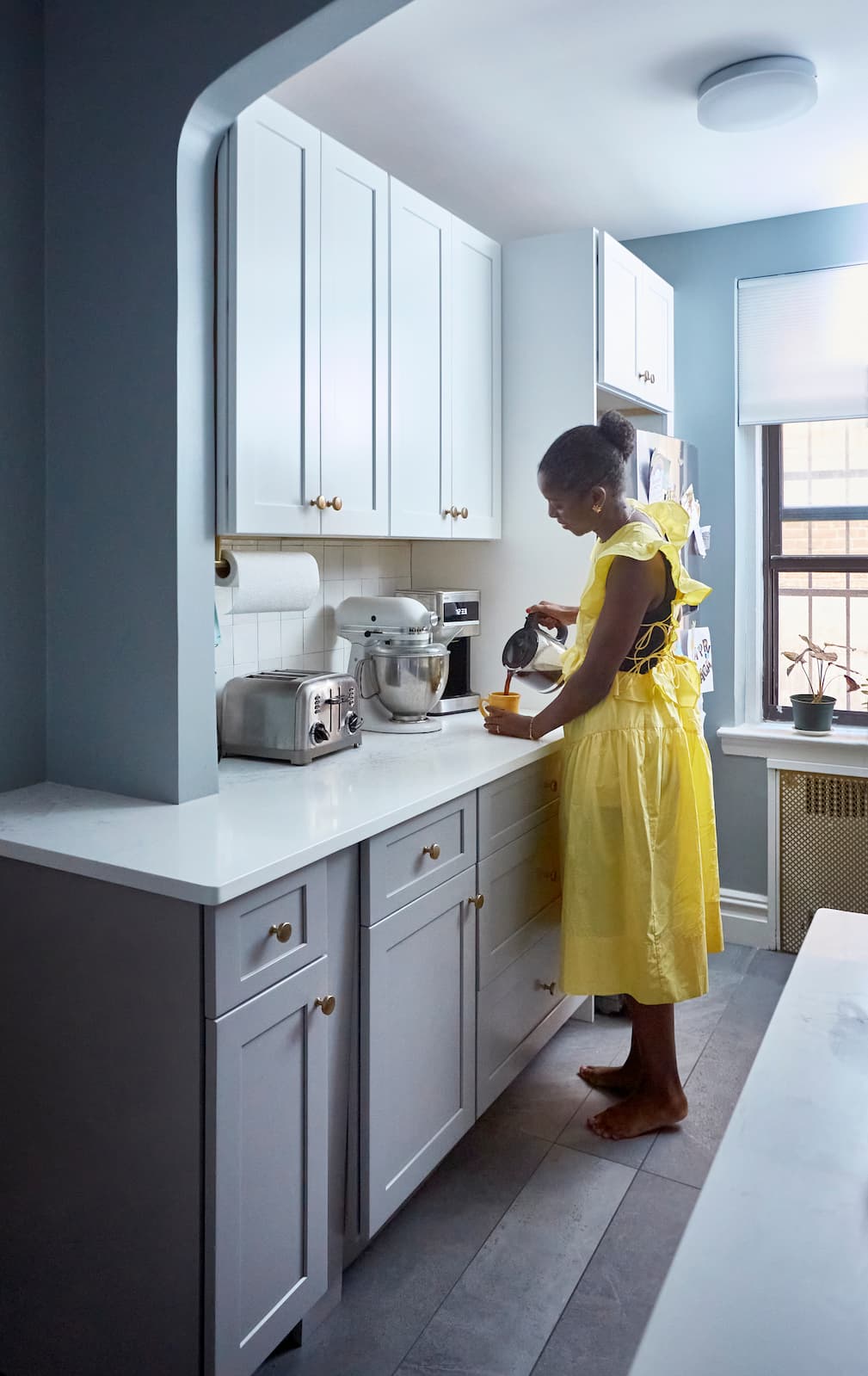
Sunny breakfast nook with a built-in bench and wood table.

In This Article

    Bakersfield is California's most affordable major city for homebuyers, and that gap relative to the coast has widened considerably as Bay Area and Los Angeles transplants have discovered that the San Joaquin Valley's cost of living allows them to build the kind of home that would require a much larger budget anywhere within 200 miles.

    The energy sector, particularly oil and gas production in the surrounding Kern County fields, combines with a robust agricultural economy and a growing healthcare and logistics employment base to keep the local economy stable through cycles that shake other California markets. The food scene has improved significantly, the east and northwest portions of the city offer established residential neighborhoods with mature landscaping, and land prices here remain far below what California's coastal and inland empire markets charge for equivalent square footage.

    Turn your renovation vision into reality

    Get matched with trusted contractors and start your renovation today!

    Find a Contractor

    Cost and timeline overview for future Bakersfield homeowners

    Bakersfield offers some of the best construction value in California, but the state's regulatory overhead and the Valley's specific climate demands add costs that buyers from other states may not anticipate.

    Custom home construction in Bakersfield typically runs between $200 and $320 per square foot, with high-end builds featuring premium finishes, resort-style outdoor spaces, and whole-home solar systems pushing toward $375. Those numbers are substantially below Los Angeles or the Bay Area equivalents, but they reflect California's labor costs, Title 24 compliance requirements, and building department fee structures rather than a simple Sun Belt construction market. Land in the desirable northwest Bakersfield corridors near Riverlakes Ranch, Seven Oaks, and the Stockdale Highway area carries meaningful premiums, while lots in the southwest and east Bakersfield areas offer more affordable entry points with acceptable commute access. Kern County's active agricultural fringe also offers larger parcels at prices that give buyers space and privacy at the cost of some convenience.

    The largest factors in determining cost

    California's regulatory overhead, including building permit fees, Title 24 energy compliance engineering, and the California Environmental Quality Act requirements for certain projects, adds soft costs that are genuinely higher than in most other states. Kern County Assessor's fees, school impact fees, and infrastructure connection fees are charged at rates that reflect California's cost structure, and these fees can add $20,000 to $50,000 to a residential project budget before the first foundation material is ordered. Foundation engineering for Bakersfield's expansive San Joaquin Valley soils, which have significant shrink-swell potential during the contrast between wet winters and dry summers, is a genuine cost variable that shifts based on the specific soil profile of each lot.

    Post-tensioned slab systems are standard among experienced Bakersfield builders, with additional cost on lots with deeper shrink-swell active zones. California's solar mandate, which requires photovoltaic systems on most new single-family homes, adds $15,000 to $30,000 to the construction budget but delivers long-term energy cost savings that are significant in a market with extreme summer cooling loads.

    HVAC systems designed for Bakersfield's summer peak temperatures, which regularly exceed 105 degrees for weeks at a time, must be sized for genuine cooling capacity rather than average load, and quality systems sized correctly cost more than those that are undersized for the local climate.

    Danny Wang

    “HGTV has distorted renovation budgets. Homeowners often underestimate real labor and material costs, then feel blindsided mid‑project.”

    Examples of upgrades that will push your budget higher

    These additions most consistently expand Bakersfield custom home budgets beyond initial estimates:

    • Resort-style pool and spa with automated systems: In a market where summer temperatures routinely exceed 105 degrees and the outdoor season runs eight months, a pool is close to standard in higher-end Bakersfield custom homes, with full automation, heating, and safety covers adding $60,000 to $120,000.
    • Whole-home solar with battery storage: California's solar mandate establishes a floor, but many Bakersfield homeowners go beyond the requirement to add battery storage that provides backup power during the grid outages that San Joaquin Valley heat waves periodically trigger.
    • Outdoor kitchen and covered patio with misting systems: Bakersfield's long warm season makes covered outdoor living one of the most-used spaces in a custom home, and a high-pressure misting system can reduce perceived outdoor temperature by 15 to 20 degrees at the seating area.
    • Three-car garage with climate control and EV charging: California's EV adoption rate and the Valley's extreme summer temperatures make a climate-controlled garage with Level 2 EV charging infrastructure close to standard in higher-end Bakersfield custom builds.
    • Premium glazing with low SHGC and exterior shading: West and south-facing glass in Bakersfield's climate adds enormous peak cooling loads without proper solar heat gain coefficient management, and quality glazing packages with exterior sunshades are worth the upfront investment in a market where the air conditioning runs from May through October.
    • Whole-home air filtration rated for valley air quality: Bakersfield's San Joaquin Valley air quality is among the worst in the nation for particulate matter, and MERV-16 or HEPA-equivalent whole-home filtration systems protect occupants during the high PM2.5 episodes that are a regular feature of valley weather patterns.

    Finding the right site in Bakersfield for your custom home

    Bakersfield's San Joaquin Valley floor is flatter than most California landscapes, but soil conditions, drainage patterns, agricultural legacy contamination, and proximity to active oil operations vary considerably across the metro. An experienced local builder who has worked across Kern County can identify site-specific issues that don't appear on a listing sheet and that materially affect what the project will cost and how the finished home will perform.

    Considerations will include:

    • Soil quality and site stability: Bakersfield sits on alluvial fan and floodplain deposits laid down by the Kern River and its tributaries, with soil profiles ranging from sandy loam in the river corridor to clay-rich alkaline soils in the lower valley positions and in areas with former wetland or playa history. The expansive clays present in portions of the Bakersfield basin, particularly in the central and east Bakersfield areas, have moderate to high shrink-swell potential that cycles with the contrast between Kern County's wet winters and completely dry summers, creating conditions that require engineered foundation systems.
    • Utilities access: Pacific Gas and Electric, Southern California Gas, and the City of Bakersfield water utility serve most developed areas, but outlying Kern County parcels and agricultural fringe lots frequently rely on private wells and septic systems where the deep alluvial aquifer conditions affect both well construction depth and water quality.
    • Zoning and restrictive covenants: The City of Bakersfield administers zoning under its Municipal Code, with residential zone types governing setbacks, lot coverage, and accessory structure rights across the city. Many of Bakersfield's master-planned communities, including Seven Oaks, Riverlakes Ranch, and Haggin Oaks, carry CC&Rs that govern exterior materials, landscaping maintenance, and design compatibility standards that are enforced by active HOAs independently of city zoning.
    • Lot slope and drainage: The Bakersfield metro is nearly flat, making drainage a design decision rather than a natural given, and lots at low points in a drainage shed can receive concentrated stormwater during Kern County's winter rain events when the valley soils' clay content slows infiltration. The Kern River channel, which runs through the northern part of the city, has produced flooding events in years of high Sierra Nevada snowpack and rapid spring melt.
    • Proximity to amenities: Northwest Bakersfield's concentration of retail and dining along the Stockdale Highway and Rosedale Highway corridors, proximity to Adventist Health Bakersfield and Dignity Health Mercy and Memorial Hospitals, and access to California State University Bakersfield shape buyer preferences among professional households. The Seven Oaks and Riverlakes Ranch communities are specifically designed around golf course and recreational amenity access that commands consistent premiums among buyers prioritizing active outdoor lifestyle.
    • View, orientation, and privacy: North-facing primary glazing in Bakersfield minimizes direct solar heat gain on living room and kitchen windows during the long summer cooling season, and homes designed with the main living areas on the north side with covered south and west patios outperform equivalently insulated homes with unshaded south and west glass on peak summer energy demand. Views of the Tehachapi Mountains to the south and southeast are available from elevated lots in the Stockdale Estates and Seven Oaks areas and carry pricing premiums that reflect both the scenery and the limited number of elevated parcels in an otherwise flat valley.

    Preparing for unique local challenges

    Building in Bakersfield involves a set of California regulatory requirements and valley-specific physical conditions that add complexity not found in comparable-sized cities in other states. The combination of Title 24 compliance, expansive soils, extreme heat, and valley air quality makes planning here more demanding than the land costs alone might suggest.

    California Title 24 energy compliance and solar requirements

    California's Title 24 Building Energy Efficiency Standards are among the most demanding residential energy codes in the country, and compliance requires specific documentation from an energy consultant before a building permit can be issued in Bakersfield. For new single-family homes, Title 24 mandates minimum insulation values, maximum window U-factors and solar heat gain coefficients, whole-house ventilation systems, and since 2020, photovoltaic solar systems sized to offset a significant portion of the home's projected energy use.

    The solar requirement adds $15,000 to $30,000 to the construction budget depending on system size, but California's net metering program and the energy cost savings in a Bakersfield summer, where cooling bills without solar can exceed $400 per month, make the investment recover within six to eight years in most scenarios. Heat pumps are increasingly favored over gas furnaces under Title 24's evolving requirements, and the mechanical system specification needs to be coordinated with the energy model from the earliest design stages rather than selected independently.

    Extreme summer heat and cooling load management

    Bakersfield's summer climate, with three to four months averaging above 95 degrees and frequent stretches above 105 degrees, creates peak cooling loads that overwhelm building envelopes and mechanical systems that are adequately specified for more moderate California climates.

    A home in Bakersfield that is properly designed for its climate will cost meaningfully less to cool than one built to minimum Title 24 compliance. Examples of smart design include north-facing primary glazing, exterior shading on south and west openings, roofing with a high solar reflectance index, continuous insulation, and a properly sized variable-speed heat pump.

    Pool evaporation during summer months, which can run 150 to 200 gallons per day on a 400-square-foot pool in Kern County's dry heat, is a water cost and management consideration that buyers should evaluate as part of the outdoor living planning process rather than discovering after the pool is filled for the first time.

    Bring Your Dream Bathroom to Life

    Explore stunning design ideas, materials, and color schemes tailored to your space—no guesswork, just inspiration.
    Start Designing

    Expansive valley soils and post-tensioned foundation design

    The clay-rich soils present in portions of the Bakersfield basin have moderate shrink-swell potential that cycles with the strong seasonal moisture contrast between Kern County's wet winters and completely dry summers. Under a conventionally reinforced slab, the differential movement caused by this cycling creates cracking patterns in slabs, walls, and finishes that are familiar to anyone who has owned an older Bakersfield home without an engineered foundation system.

    Post-tensioned slabs designed by a licensed geotechnical and structural engineer are the standard response among experienced Bakersfield custom builders, with the cable layout, slab thickness, and grade beam design driven by the specific soil profile and moisture history of the lot.

    Landscaping choices adjacent to the foundation matter for long-term performance: trees and plants with aggressive root systems that draw moisture from the soil adjacent to the foundation accelerate the differential drying that drives slab movement, and drought-tolerant native plantings maintained at consistent moisture levels are both the ecologically appropriate and the structurally beneficial choice.

    San Joaquin Valley air quality and construction planning

    Bakersfield consistently ranks among the worst cities in the United States for ozone and particulate matter air quality, a distinction driven by the valley's bowl geography, agricultural burning, vehicle emissions, and active oil and gas operations in the surrounding fields.

    For construction workers and homeowners, the Kern County Air Pollution Control District issues Spare the Air alerts that restrict certain construction activities including open burning of vegetation cleared from lots, and demolition of structures containing asbestos requires specific notification and air monitoring protocols. New homes should be designed with HVAC systems capable of providing positive pressurization and high-efficiency filtration that maintains indoor air quality independently of outdoor conditions, as the valley's high PM2.5 episodes are frequent enough that a home relying on natural ventilation for cooling will regularly introduce outdoor air at health-affecting concentrations.

    Additional articles to help prepare you for the home building process

    • Buy vs. Building Your Next Home: Detailed Cost Breakdown. In Bakersfield's market, where existing home prices have risen substantially while remaining far below coastal California equivalents, the buy-versus-build comparison has genuine nuance. This guide provides the cost breakdown framework that helps Bakersfield homeowners make the comparison honestly.
    • New Home Construction Timelines and Important Factors. California's permitting process and Title 24 compliance documentation requirements add timeline complexity that buyers from other states consistently underestimate. This guide identifies the factors that most commonly extend new construction timelines, helping Bakersfield homeowners set expectations that reflect what California's process actually requires.
    • Large Kitchen Designs: Practical Layouts and Inspiring Ideas. Bakersfield's growing custom home market, particularly in the northwest communities, has strong demand for kitchens designed for both serious cooking and social entertaining. This guide covers the layout configurations that make large kitchens perform well for both daily use and larger gatherings.
    • Building an In-Law Suite: Ideas and Budgeting. Bakersfield's multi-generational family culture and the affordability of larger lots relative to coastal California make in-law suites a practical addition to many custom home programs. This guide covers cost ranges and design options for suite configurations that provide genuine independence and privacy.

    Partner with Block to find your ideal Bakersfield home builder

    Block connects Bakersfield homeowners with vetted custom home builders who have been screened through a rigorous process covering California contractor license verification, insurance, background checks, and references from completed Kern County projects. Rather than navigating a market where Title 24 compliance experience and expansive soil foundation knowledge are genuine differentiators, you receive personalized contractor matches based on your project's scope, your lot's specific conditions, and your timeline. A dedicated Project Planner guides you through proposal comparison and builder selection at no cost and with no obligation to hire.

    Every Bakersfield project managed through Block benefits from a progress-based payment system that releases contractor funds only as work is verified complete, protecting your investment through California's multi-step permitting process and a construction scope where soil and climate conditions can introduce budget variables. Block Protections include expert-reviewed project scopes designed to catch missing line items before they translate into change orders, plus a workmanship warranty backed by every builder in the network. Your complete project timeline and payment schedule are visible through Block's dashboard from first contact through final walkthrough.

    Lay the groundwork for a successful custom home
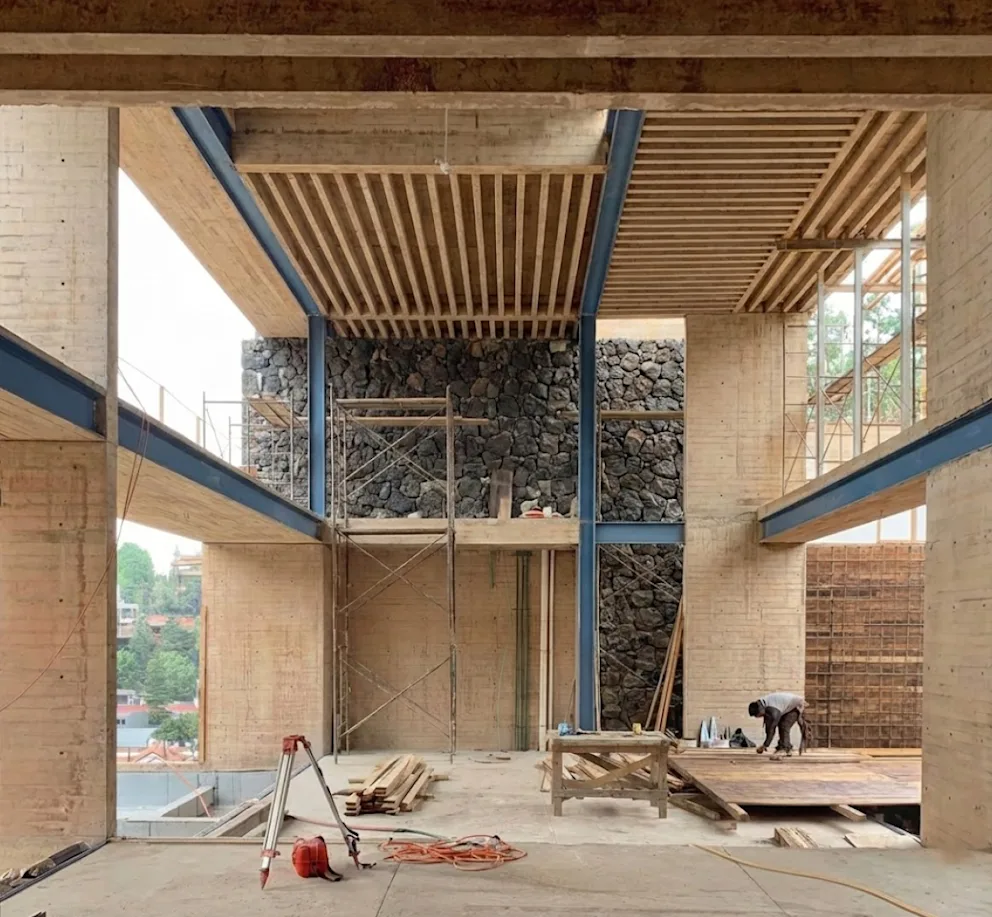
    New construction home build

    Match with vetted builders

    Receive quotes from experienced contractors aligned to your vision.
    Block experts reviewing quotes and timelines

    Hire with confidence

    Partner with Block experts to review quotes and timelines for end-to-end clarity.

    Homeowner staying in control of their renovation

    Stay in control

    Avoid surprises with Block Protections and a progress-based payment system.

    Get Started

    Frequently asked questions

    I want to build a second home on my property; how do I know if it qualifies as an ADU?

    California has one of the most permissive ADU frameworks in the country, with state law (AB 68 and subsequent legislation) limiting local governments' ability to restrict ADU development and establishing baseline standards that apply even where local ordinances are more restrictive. In Bakersfield, an ADU qualifies if it is a complete independent dwelling unit with its own kitchen, sleeping area, and bathroom, located on the same lot as a primary single-family or multi-family residence, and it can be detached, attached, or created through conversion of existing accessory space such as a garage or storage building. California law allows detached ADUs up to 1,200 square feet on most single-family lots, with reduced setback requirements that make smaller lots more feasible for ADU construction than local codes previously allowed. Junior ADUs, which are created within the existing floor area of the primary dwelling and include a private bathroom and efficiency kitchen, are an additional option that requires less construction but provides less independence than a full ADU. The City of Bakersfield's Planning Department can confirm the specific standards applicable to your parcel, and the state's HCD ADU handbook is a useful reference for understanding what state law guarantees regardless of local ordinance.

    How much cheaper is it to build a ranch home versus a multi-story house?

    Ranch homes are more expensive per square foot to build than two-story homes of equivalent total area because they require a larger foundation footprint and larger roof area per square foot of finished living space. In Bakersfield, where post-tensioned slab foundations engineered for expansive soils are standard, and where California's solar mandate requires a PV system sized to the home's energy use, the larger footprint of a ranch home has a compounding cost effect: more slab area means more post-tensioning cable and more concrete, and the larger roof area requires a larger solar system. A two-story home concentrates the same living area over a smaller foundation and roof, reducing the cost of both elements per square foot of finished space, and in California's high-cost construction market that differential is meaningful. The practical cost premium for a single-story ranch versus a comparable two-story in Bakersfield's market typically runs $18 to $30 per square foot, with the foundation and solar system differential as the largest contributors. Ranch homes remain strongly preferred by Bakersfield's retiree demographic and by buyers with accessibility needs, and their consistent resale demand in those market segments can partially offset the higher construction cost over time.

    What are common issues that cause permits to be denied?

    In Bakersfield, permit applications are most frequently returned for incomplete or non-compliant Title 24 energy documentation, which requires a certified energy analysis demonstrating that the proposed home meets California's energy efficiency standards for its climate zone. Missing or inadequate solar system specifications, which are required for most new single-family homes under California's solar mandate, are a consistent trigger for plan review holds. Structural engineering drawings that don't address seismic design requirements under California's adopted building code are another common deficiency, as Kern County lies in a seismically active region and structural calculations must address lateral load resistance as well as gravity loads. Site plans that fail to show required setbacks from identified fault traces under the Alquist-Priolo Earthquake Fault Zone Act, which affects some parcels in eastern Kern County near mapped fault systems, can trigger requests for additional geological assessment. California contractor license and insurance documentation requirements are more rigorous than in most states, and permit applications that don't include current CSLB license verification and certificates of insurance meeting the required coverage minimums are returned before plan review begins.