



Garage
How to Convert a Garage Into a Living Space: Costs, Steps, and Ideas
08.09.2026
07.07.2026


.webp?width=640&name=u5821215421_A_renovated_attached_garage_interior_used_for_dai_be957847-8779-47d0-80bc-5a7ad148320e_0%20(1).webp)
In This Article
Maybe your garage has become the room where things go to be forgotten. Maybe you need an office, a gym, or a place for your in-laws to land. Whatever the reason, garages are getting a second look: they're the cheapest square footage most homeowners own, and the least used.
Garage projects fall into two very different categories, and they cost very different amounts. A makeover keeps your garage a garage: new door, new floor, better storage, maybe insulation. A conversion turns it into something else entirely: a home office, gym, guest suite, or full accessory dwelling unit (ADU). This guide covers both, starting with what you can expect to spend overall, then breaking down each path.
Costs vary widely, and we'll get into why below. First, the big picture.
The table splits garage projects into three tiers: cosmetic updates, full remodels, and full conversions. Only the last one changes what your garage is for.
|
Remodel category |
Remodel detail examples |
Total cost range estimate |
|
Cosmetic updates |
Fresh paint, new garage door, updated flooring, storage or shelving installation, and other updates that don't involve structural changes or major functionality adjustments |
Low range: $3,000 to $5,000 |
|
Full remodel |
All of the above cosmetic updates, but as part of a more complete renovation that may involve structural changes that improve the overall aesthetic and functionality of the garage |
Mid range: $7,000 to $15,000 |
|
Full conversion |
Instead of using your garage for parking cars and mixed-use storage, this type of remodel completely changes the purpose of the space into something new, like a home office, gym, or guest suite |
High range: $20,000 to $75,000 |
Whichever path you choose, your budget will split across the same categories. Learn more about garage remodel expenses with this handy chart that breaks it down. Keep in mind that these are estimates, and your actual cost breakdown will depend heavily on the complexity of your project and average market rates in your area.
|
Type of cost |
Expense details |
Total cost percentage |
|
Labor |
For any garage makeover project you're not DIYing, you'll need to hire licensed professionals to complete the job. Depending on your project vision, you may need to also hire electricians, plumbers, HVAC specialists, demolition teams, and others. |
40% to 50% |
|
Design |
For broader scope remodels, you may want to work with an architect, interior designer, or other design specialist to get the most out of your planning phase and end result. |
10% to 20% |
|
Materials |
Materials encompass all the physical elements that'll go into your garage remodel, including: new flooring, paint, lighting fixtures, insulation, drywall, storage units, windows, and doors. |
30% to 40% |
|
Permits and inspections |
Make sure to follow your local laws by obtaining the right permits and scheduling the required inspections for your remodel. |
Up to 2% |
|
Contingency |
It's always wise to budget for unexpected expenses that may crop up somewhere along the project timeline. |
5% to 10% |
Beyond those categories, your total will depend on a handful of project-specific factors:
Compare Proposals with Ease

If your garage will keep doing garage things, most of your budget lands on the door and the floor. Insulation is the sleeper third category, and the one people skip until they regret it. (Looking for inspiration first? Browse our garage upgrade ideas.)
Homeowners typically pay $800 to $2,500 for a standard single-car garage door replacement, including installation.
Basic steel doors tend to be the most affordable option, while wood, composite, or custom-designed doors can significantly increase the price. Additional features such as insulation, windows, or smart technology integration will also add to the overall cost. Labor charges for professional installation typically range from $200 to $500, but this can be higher for more complex projects or if the existing door frame needs repairs.
The sticker price isn't the whole story. An insulated door cuts energy bills by keeping garage temperatures steadier, which matters most when the garage is attached or doubles as living space. You also get better security and a front-of-house upgrade buyers notice.
Garage door replacement consistently ranks as the single best home improvement project for resale value. According to the 2025 Cost vs. Value Report, a midrange replacement (about $4,700 installed) recoups an average of 268% of its cost, the highest return of the 28 projects studied. Note that the return comes from swapping a dated door for a solid one, not from splurging on a designer model.
Resurfacing a two-car garage floor often runs $1,500 to $4,000. A full slab replacement typically costs $4,000 to $9,000 or more.
The difference matters. Coatings and finishes like epoxy, decorative overlays, or interlocking tiles are surface treatments over an existing slab, typically $3,000 to $7,000 for a two-car garage. Replacing the slab itself means demolition, hauling, and a new pour, which is why it costs more. Structural problems or drainage fixes add to the bill.
Here's our honest take: epoxy has become the granite countertop of garage upgrades, a default splurge people buy for resale optics rather than daily use. If your garage is staying a garage, interlocking tiles deliver most of the same durability and cleanability for a fraction of the cost. Save the coating budget for spaces you'll actually live in.
Insulating a standard two-car garage typically runs $1,000 to $5,000.
Where you land in that range depends on how much of the envelope you're insulating (walls only, or walls, ceiling, and garage door) and the material you choose: fiberglass batts, spray foam, or rigid foam panels. Spray foam tends to be more expensive but offers superior energy efficiency and air sealing. The Department of Energy's insulation guide covers recommended R-values by climate zone, which is worth checking before you get quotes.
Proper ventilation is also essential, especially if you plan to use your garage as a living space or workshop. Installing basic vents or an exhaust fan can cost between $200 and $700, while a ductless mini-split for both ventilation and climate control typically adds $2,000 to $5,000 or more, depending on system size and how much electrical work the installation requires.
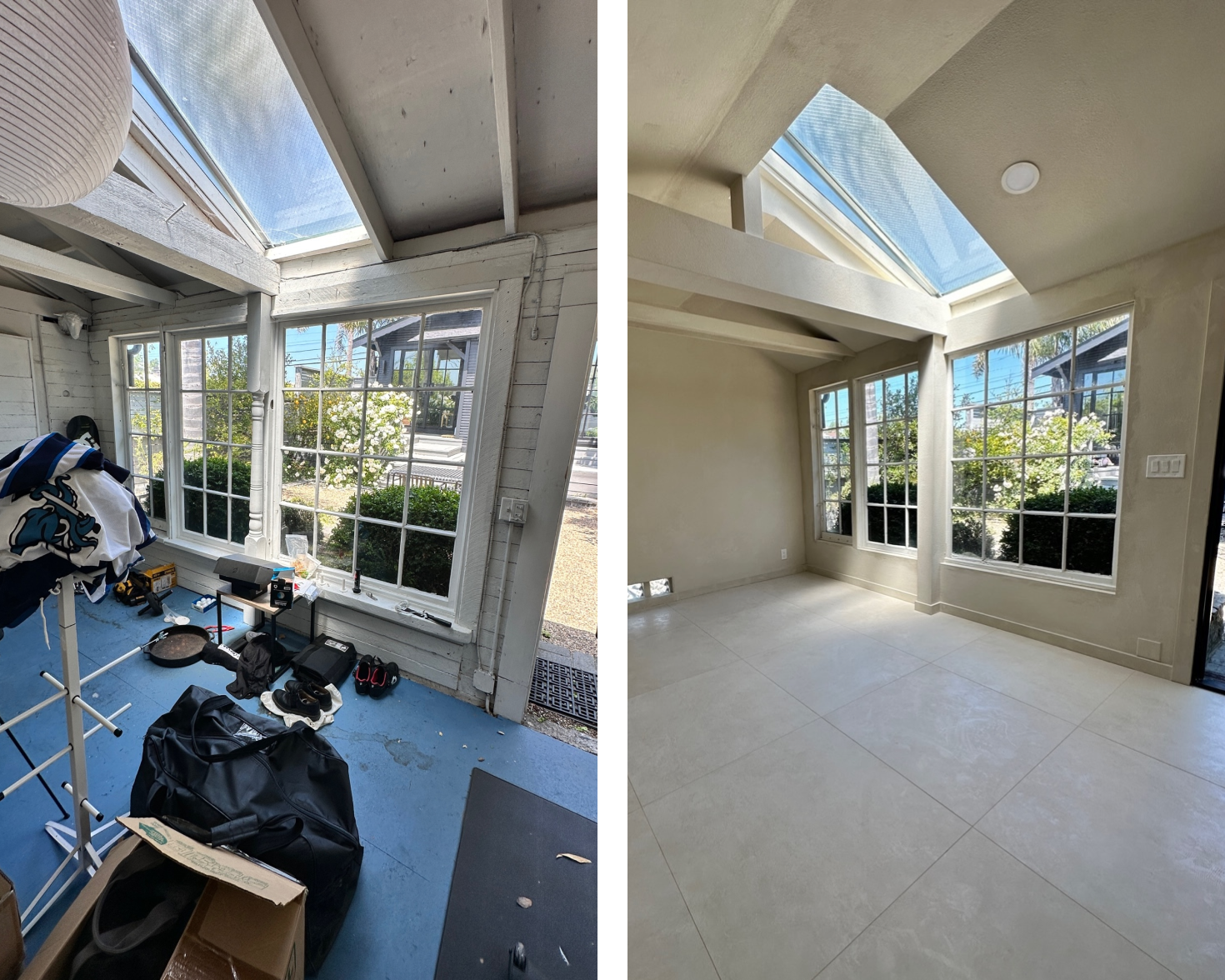
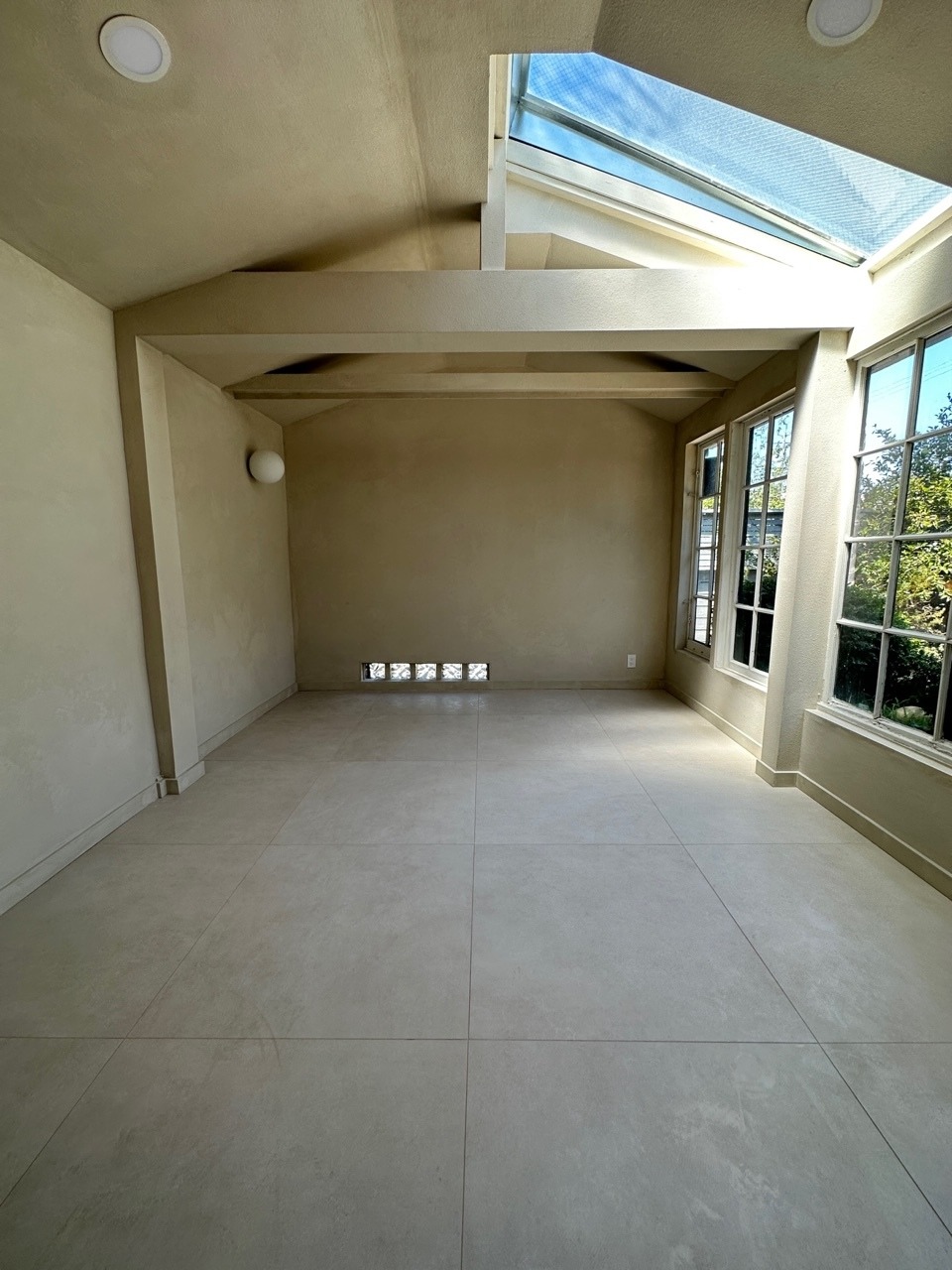
In this Berkeley, CA project, the homeowner set out to overhaul their existing detached garage. The scope included pouring new concrete floors, installing drywall on the walls and ceilings, and painting, all while staying within a $25,000 budget. No electrical work was required, allowing the focus to remain on creating a clean, finished space.
The result shows what a well-scoped full remodel looks like in practice: the garage stays a garage, but the finishes make it usable year-round for storage, projects, and everything in between.
For some aspects of your remodel, it's best not to cut corners due to safety reasons. (Think: electrical upgrades, plumbing or HVAC installation, or proper demolition.) But there are other areas where you can take steps to lower your overall renovation expenses.
Here are some tips for how to reduce garage remodeling costs:
For some households, a garage can be put to better use as an in-law suite, home office, or other functional living space instead of just storing vehicles and tools. Common conversion goals include:
Garage conversions typically run $20,000 to $75,000, with the final number driven by how much livability you're adding. To see what these budgets actually buy, browse our garage conversion before-and-after ideas.
A rule of thumb worth holding onto: a full ADU conversion is the only garage project that should cross $50,000. If you're not adding a legal rental unit or code-compliant living space, a $60,000 garage remodel is usually a budget that lost its way to scope creep. High-labor-cost metros and structural repairs are the legitimate exceptions.
While consulting with multiple contractors is the best way to determine an accurate budget for your garage conversion, you can get a better idea of expected costs based on three factors.
Existing garage size and condition. Bigger costs more, and so does older. A two-car garage needs more of everything, and a garage with cracks, leaks, or knob-era wiring may need repairs before the real work starts. Whether it's attached or detached matters too. The upside: a garage that's already insulated or partially finished gives you a head start.
Electrical and plumbing modifications. If your garage has one bare bulb and two outlets, budget for new wiring, new circuits, and possibly a panel upgrade before it can support living space. Plumbing is the bigger swing. Adding a bathroom or kitchenette where no pipes exist often means trenching, new lines, and permits, and it's routinely the single most expensive line item in a conversion.
Scope of work for the new living space. If you want the room to be completely unrecognizable as a former garage, expect to pay for it. Drywall, custom lighting, and designer fixtures each push the final number higher.
One thing we'll insist on: insulation is the single worst place to cut on a conversion. Even an attached garage sits outside your home's thermal envelope, and the Department of Energy's building guidance treats garage walls like exterior walls for exactly this reason. Insulation is cheap while the walls are open and brutally expensive after drywall goes up, and it's the difference between a real room and a shed with furniture in it. Trim the finishes if the budget gets tight. Never trim the envelope.
One caveat most conversion guides skip: losing covered parking can hurt resale more than the new space helps. In snow-belt markets and suburbs where buyers expect a two-car garage, a conversion can be a net negative on value even when the finished room appraises well. Illinois homeowner Lisa Meyers ran into exactly this. "About 10 years ago, we turned our garage into private quarters for our adult son and his partner so they could save up for a house of their own," she says. "I have no regrets but, when we went to sell our home last year, our realtor told us that the lack of a conventional garage actually turned off some potential buyers." Know your market before you give up the parking.
If you convert and still want covered parking, you have options: building a new garage elsewhere on the lot, or, if you have an existing carport, a carport-to-garage conversion can restore enclosed parking for less than building from scratch.
Your return on investment depends heavily on scope, and the pattern is counterintuitive: the smallest project wins. The garage door replacement covered above recoups 268% of its cost, the top return in the 2025 Cost vs. Value Report, while bigger garage projects recoup progressively less. The report's ADU project returns under half its cost at resale.
That doesn't make conversions a bad investment. It means their value shows up somewhere other than the sale price: an ADU pays rent, an in-law suite keeps a parent close and out of assisted living. If resale return is your primary goal, put your money in the door and keep the rest of the garage a garage. If added function is the goal, budget for the conversion and treat any resale recoup as a bonus. Local market conditions and material quality shift the math in both directions.
Whichever way the math points for your home, Block Renovation can help you pressure-test the numbers. Block pairs you with vetted local contractors and a free Project Planner, so you can compare real quotes for your garage before committing to a scope.
A garage remodel is one of the rare projects where the modest version and the ambitious version both make sense; it just depends on what you need the space to do. Plan the scope honestly, hire a contractor you trust, and the budget tends to behave.
Block has helped homeowners across the country, from the Bay Area to Chicago to Philadelphia, renovate their garages while staying within budget. We pair you with local contractors who have been vetted for relevant experience remodeling garages like yours. Every homeowner also gets free access to a Project Planner, a personal guide who helps with cost estimates and arranges home visits.
Remodel with confidence through Block

Connect to vetted local contractors
We only work with top-tier, thoroughly vetted contractors

Get expert guidance
Our project planners offer expert advice, scope review, and ongoing support as needed

Enjoy peace of mind throughout your renovation
Secure payment system puts you in control and protects your remodel


Renovate confidently with Block
Easily compare quotes from top quality contractors, and get peace of mind with warranty & price protections.
Garage
How to Convert a Garage Into a Living Space: Costs, Steps, and Ideas
08.09.2026

Cost
20x20 Room Addition Cost: What to Budget in 2026
07.28.2026
Garage
Garage Roof Replacement: Costs, Materials, and Timing
07.26.2026
Remodeling
Cinder Block Garage Cost: Prices by Size & Material
07.23.2026

Cost
2026 Bedroom Remodel Cost Guide: Average Price, Tips & ROI
07.22.2026