




Bathroom
Converting a Laundry Room Into a Bathroom: Costs & Layouts
10.08.2026
09.23.2026


In This Article
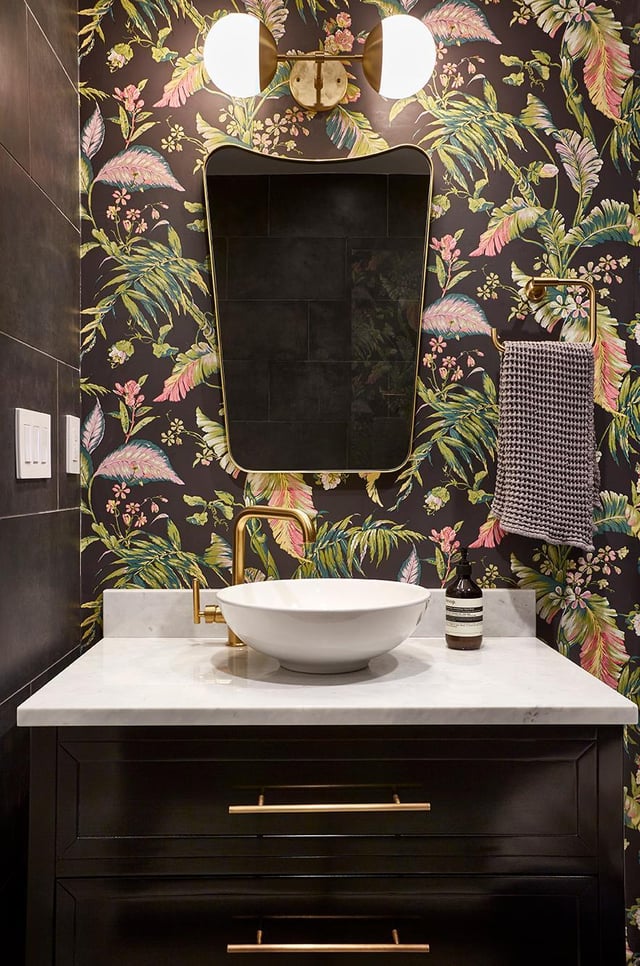
You can spend carefully on tile, lighting, fixtures, and a vanity, then make the whole bathroom feel less considered with a mirror that looks like an afterthought. Bathroom mirror trends 2026 are moving beyond the plain rectangle toward better frames, integrated lighting, oversized proportions, and shapes with more personality. The best choice still has to work with the room around it, so scale, lighting, and material matter as much as the trend itself.

"You can have really nice tile in a bathroom, but the mirror can still make the room feel cheap. If it’s unframed, or the frame looks more like plastic than metal, it can make the whole thing feel unfinished.”
Scale for your vanity: A conventional bathroom mirror is often about 2 to 4 inches narrower than the vanity, although wall-to-wall mirrors, paired mirrors, and organic shapes can intentionally break that rule.
Pick your placement: Hang your mirror so the center sits comfortably at eye level, often around 57 to 60 inches from the floor, or position the bottom edge in relation to the faucet and backsplash.
Shape matches style: Rectangular mirrors feel structured, arches and rounds introduce softness, and organic silhouettes can become a stronger design feature.
Mirror quantity: In a double-vanity setup, consider 2 separate mirrors for flexible styling, or one large mirror for a cleaner, unified look.
Consider lighting: When natural light is limited, a larger mirror or integrated lighting can help brighten the vanity area.
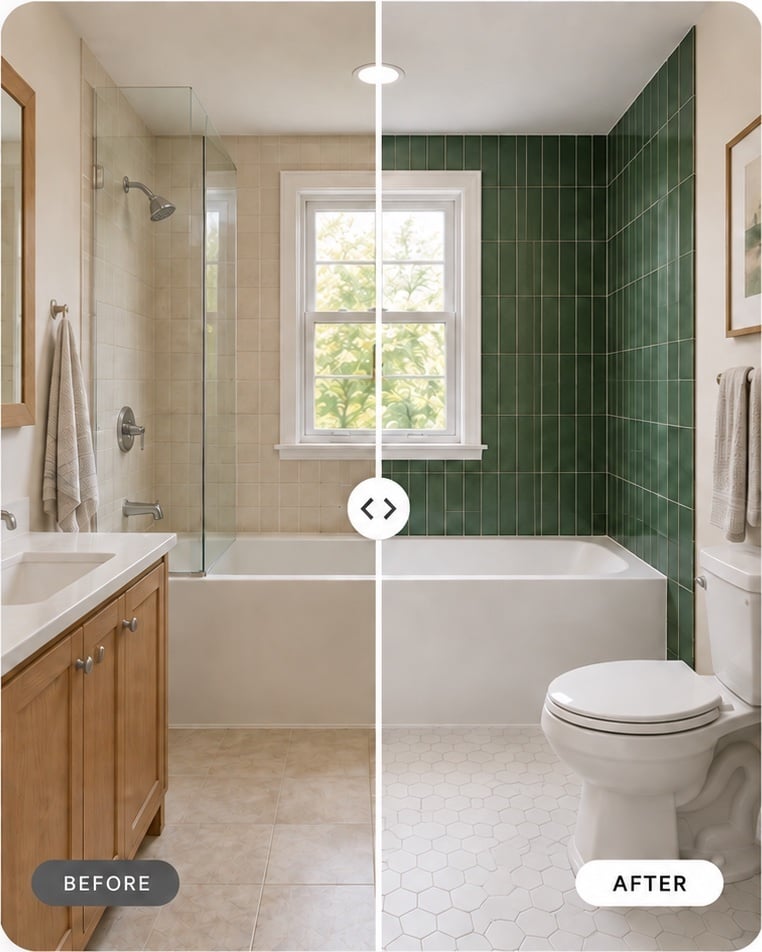
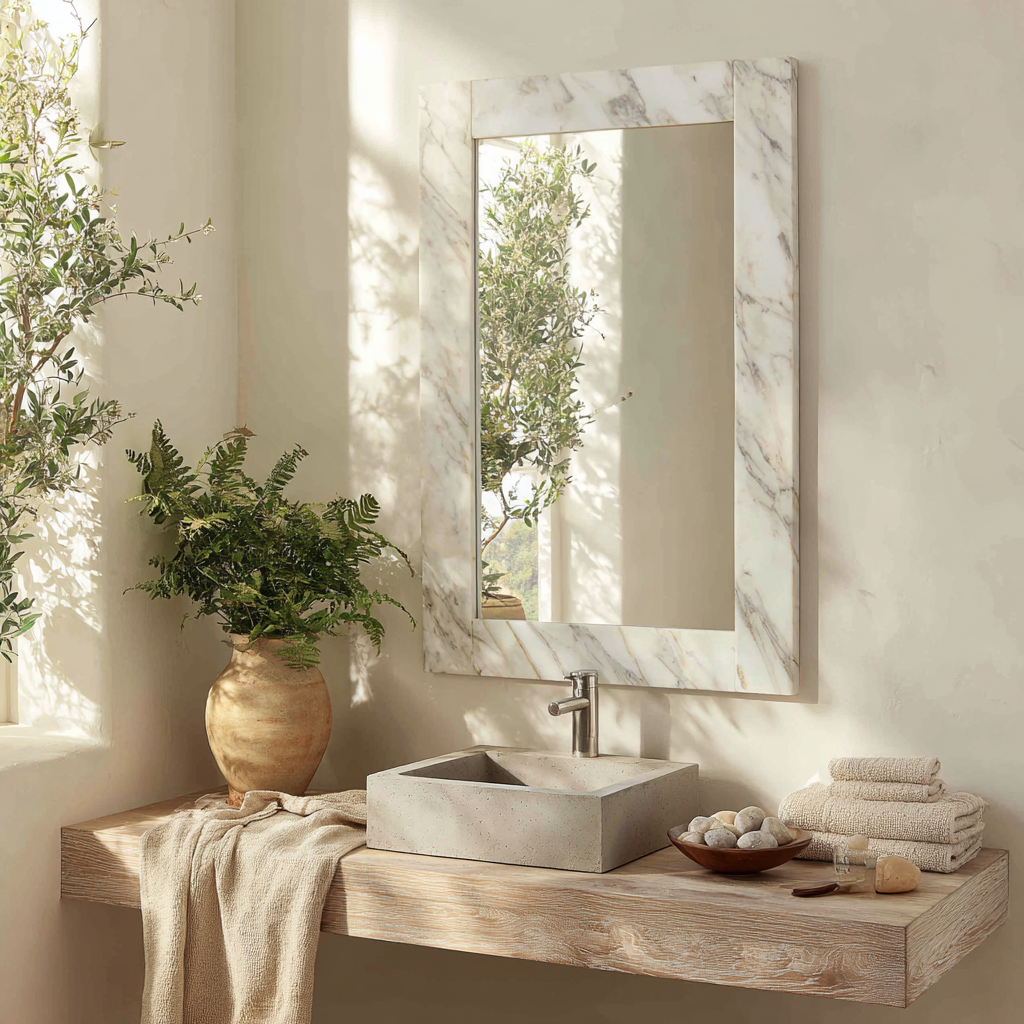
When picking out a bathroom mirror, deciding between a framed or frameless design has a noticeable effect on the finished room. Because the mirror usually sits at the center of the vanity wall, even a relatively slim frame can introduce a material, color, or design reference that appears nowhere else.
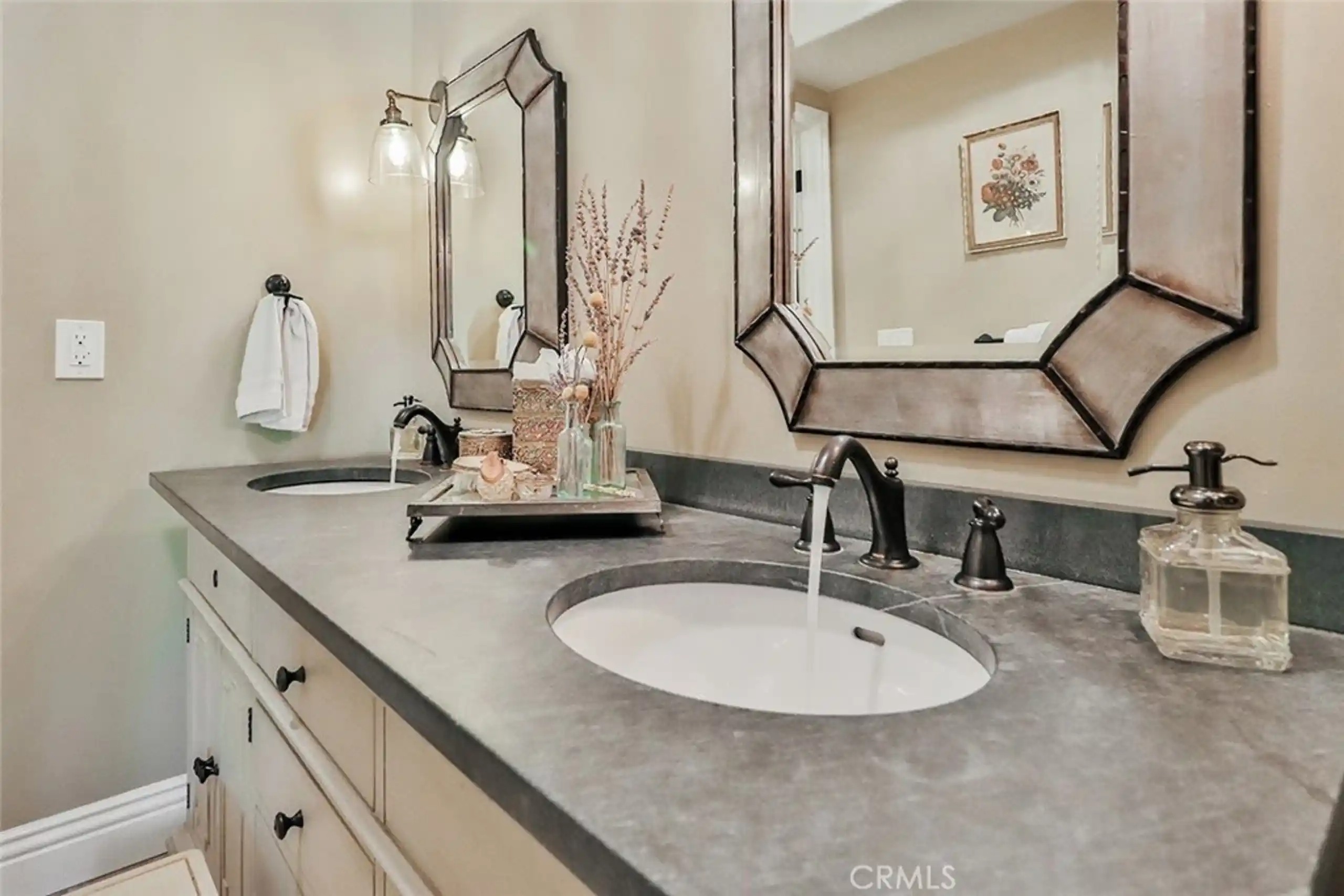
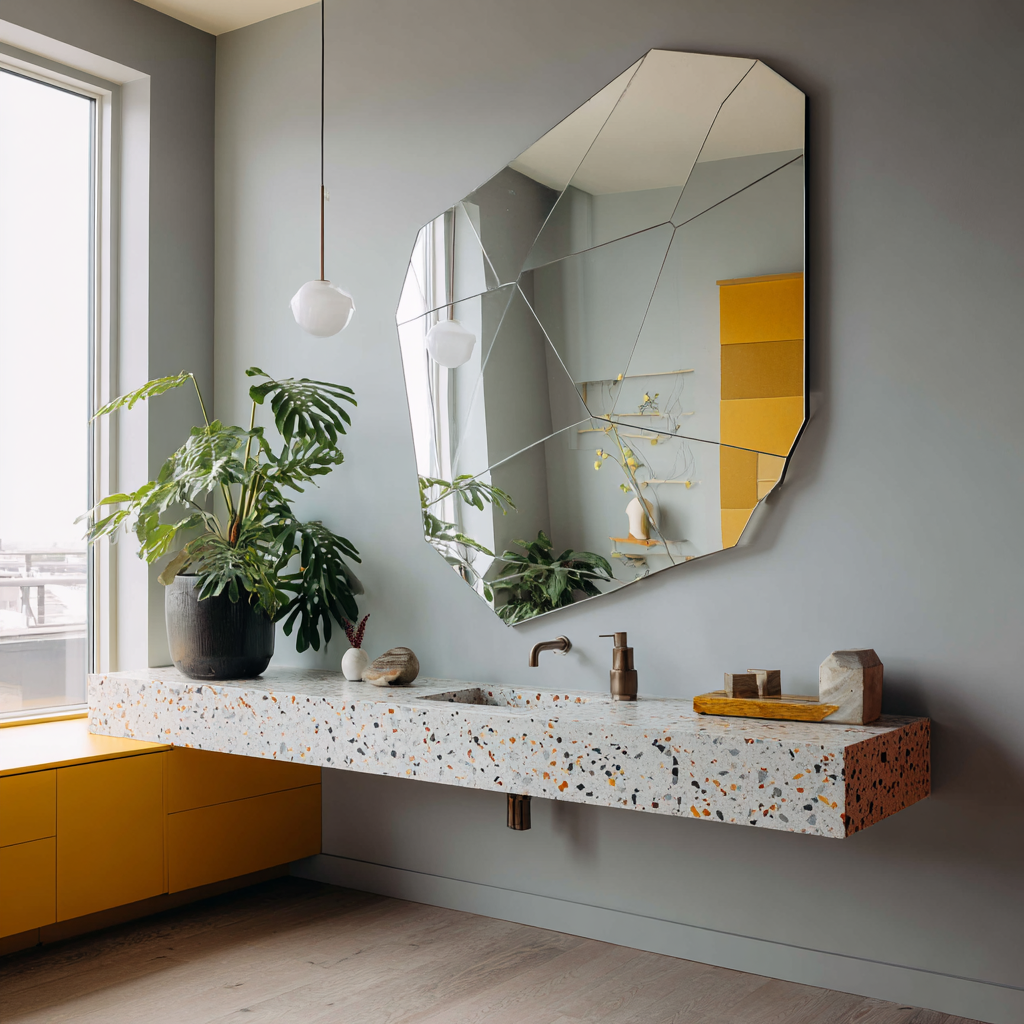
Simply put, a framed mirror offers more styling opportunities than a frameless mirror. Frameless mirrors have an effortlessly modern look, but the range pretty much stops there. With the right frame, a mirror can take on almost any aesthetic. Take, for example, this Agoura Hills renovation by Executive Design & Construction Inc, where Art Deco-inspired framing gives the mirror much more presence than a standard metal border. The faceted shape does most of the decorative work, so the glass itself can stay simple.
Design advantages
Adds definition and style: Frames offer a chance to introduce color, texture, or a distinctive material such as wood, metal, stone, or lacquer.
Statement potential: A bold frame can make the mirror a focal point or give the vanity area a more finished appearance.
Fits specialty styles: The right frame can reinforce a specific design direction, including Art Deco, traditional, Mediterranean, or vintage-inspired spaces.
Design disadvantages
May feel bulky in small spaces: In a bathroom measuring only 40 square feet, a thick frame can take up valuable visual and physical space.
Potential for water damage: Natural materials need to be appropriate for a humid environment, especially when the mirror sits close to a shower or tub.
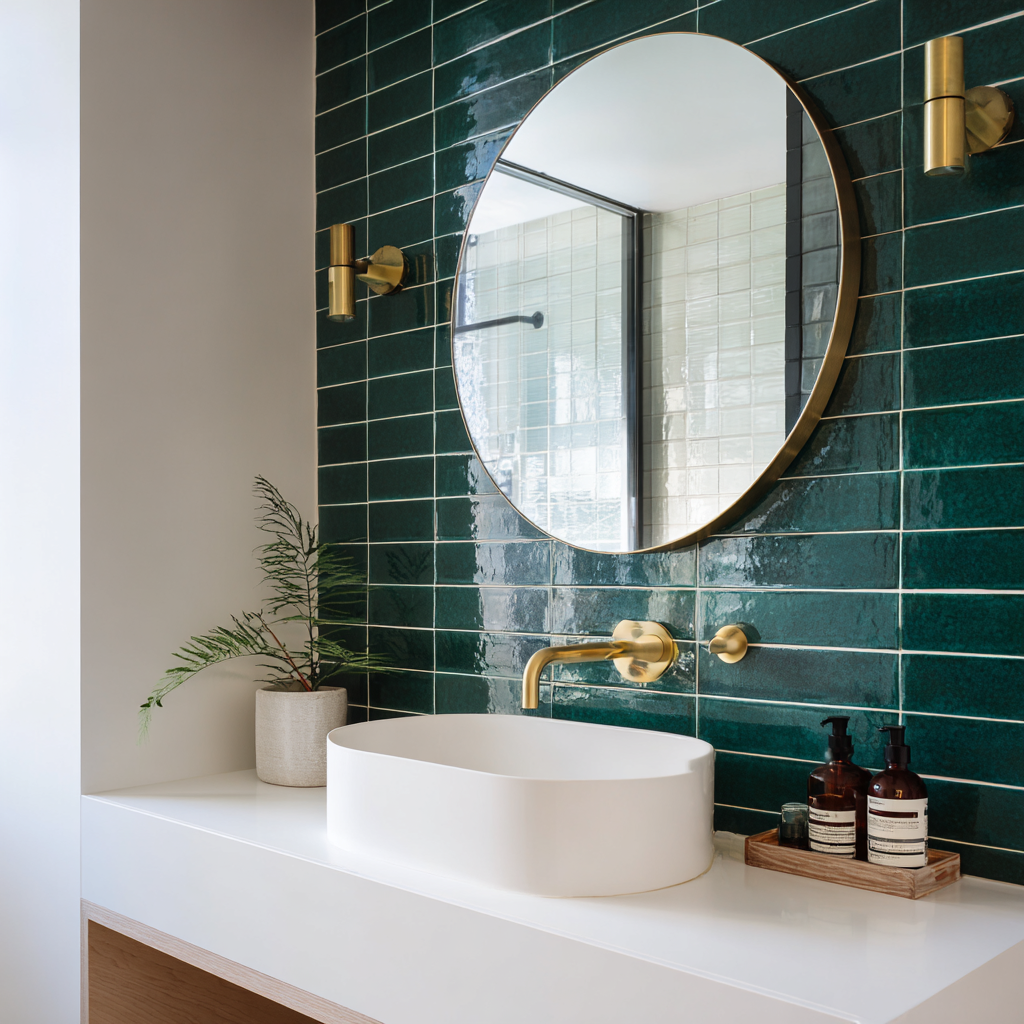
A good frameless mirror depends on its edge treatment, proportions, mounting, and scale. Get those details right and the result looks polished; get them wrong and the mirror can resemble a sheet of glass that was simply mounted to the wall.
Design advantages
Sleek and versatile: Frameless bathroom mirrors keep the wall visually quiet and fit easily into contemporary bathrooms or rooms where tile and cabinetry already provide plenty of detail.
Creates a sense of space: Without a visible frame interrupting the reflection, a larger frameless mirror can help a small bathroom feel more open.
Design disadvantages
Shows edges and mounting: Polished edges remain visible, and some installation methods leave mounting hardware exposed.
Limited decorative opportunity: Without a frame, you lose one potential place to introduce texture, color, metal, or wood.
A framed mirror makes sense when you want the vanity wall to carry more color, warmth, or decorative character, especially when the rest of the room is restrained. Choose frameless when tile, lighting, stone, or cabinetry is already doing enough visually and the mirror needs to stay quieter.
Chasing trends is usually a poor reason to make an expensive renovation decision. Replacing dated tile or cabinetry can mean reopening a finished room and spending thousands of dollars just to change the look. Mirrors are an exception: most are relatively easy to swap, so trying a current shape, frame, or finish carries far less long-term risk.
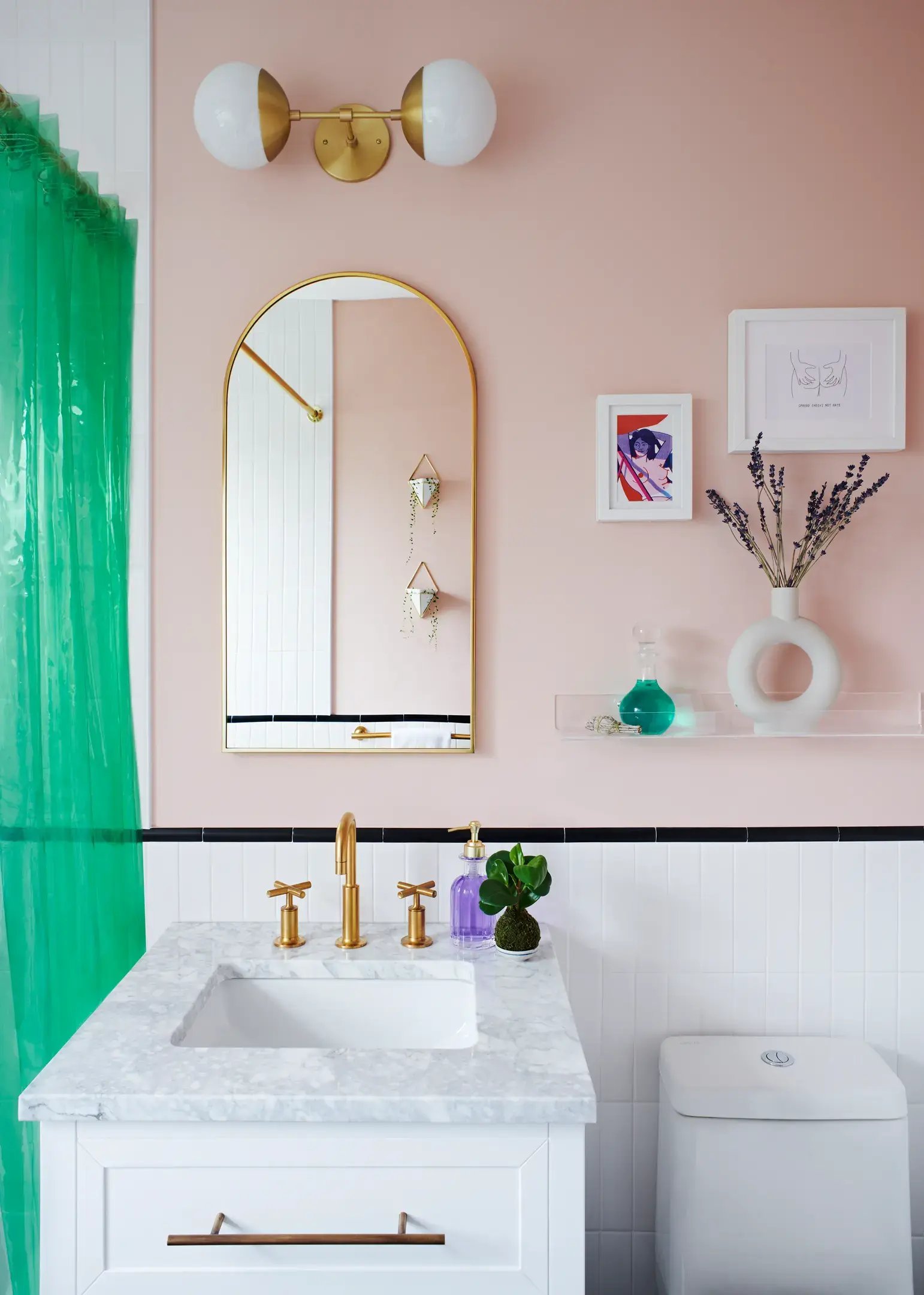
Arch-shaped mirrors are getting more dimensional frames rather than simply repeating the thin-metal versions that have been everywhere for years. Plaster-like sculpted frames create a softer, handmade look, whereas wood or metal can keep the same curved silhouette sharper and more structured.
Bathrooms in which this trend works best: These mirrors suit powder rooms and ensuites where you want personality without introducing a complicated pattern. They also work well with boho, Mediterranean, and transitional interiors where curved forms already appear elsewhere.
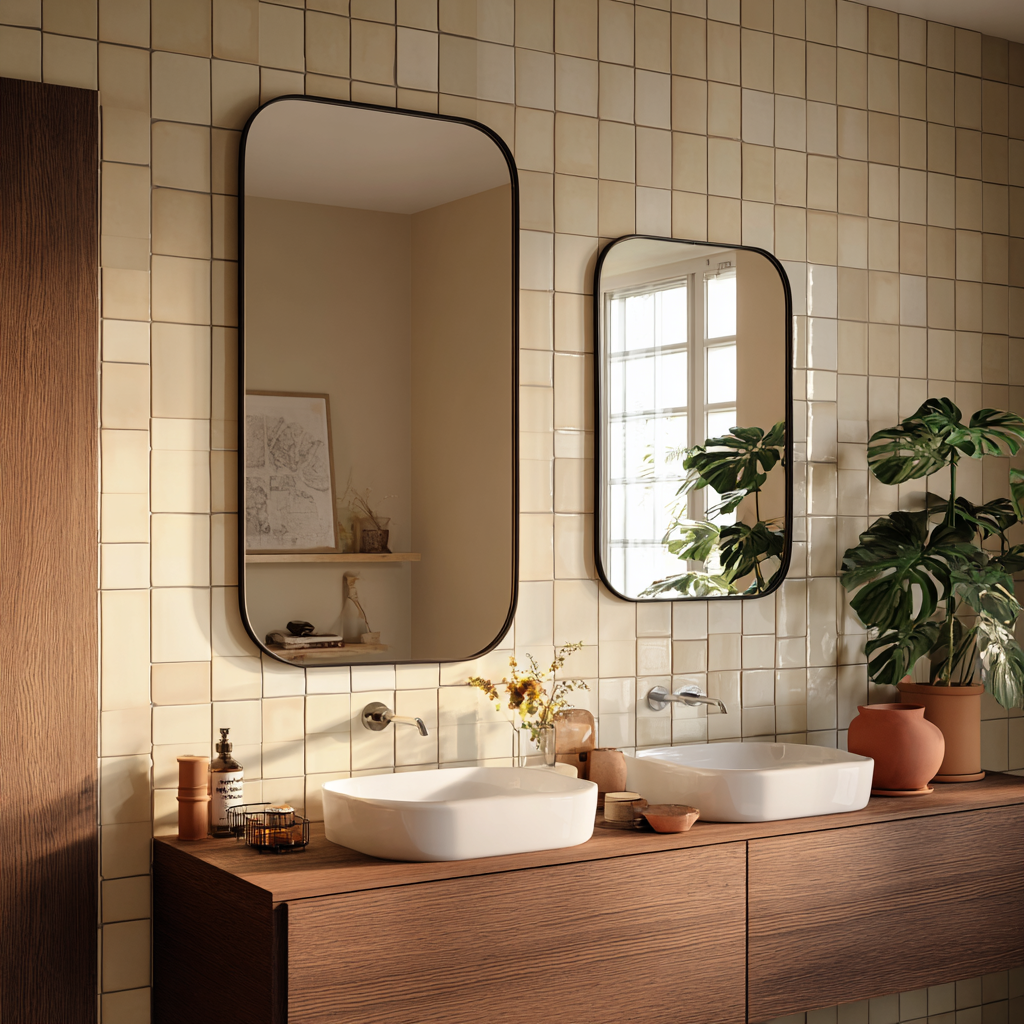
Larger mirrors are stretching well beyond the sink itself, sometimes covering most of the vanity wall or running nearly wall to wall. The extra reflective surface spreads available light across the room and can make a long vanity feel like one cohesive element.
For a long double vanity, one oversized mirror is often cleaner than crowding the wall with several smaller decorative mirrors. The exception is a lighting plan that depends on separate sconces or clearly divided grooming zones.
Bathrooms in which this trend works best: Oversized mirrors work well above long or double vanities and in narrow bathrooms where reflected light can make the room feel less enclosed. Skip the wall-to-wall version if it creates problems around sconces, outlets, medicine cabinets, or a backsplash you actually want to see.
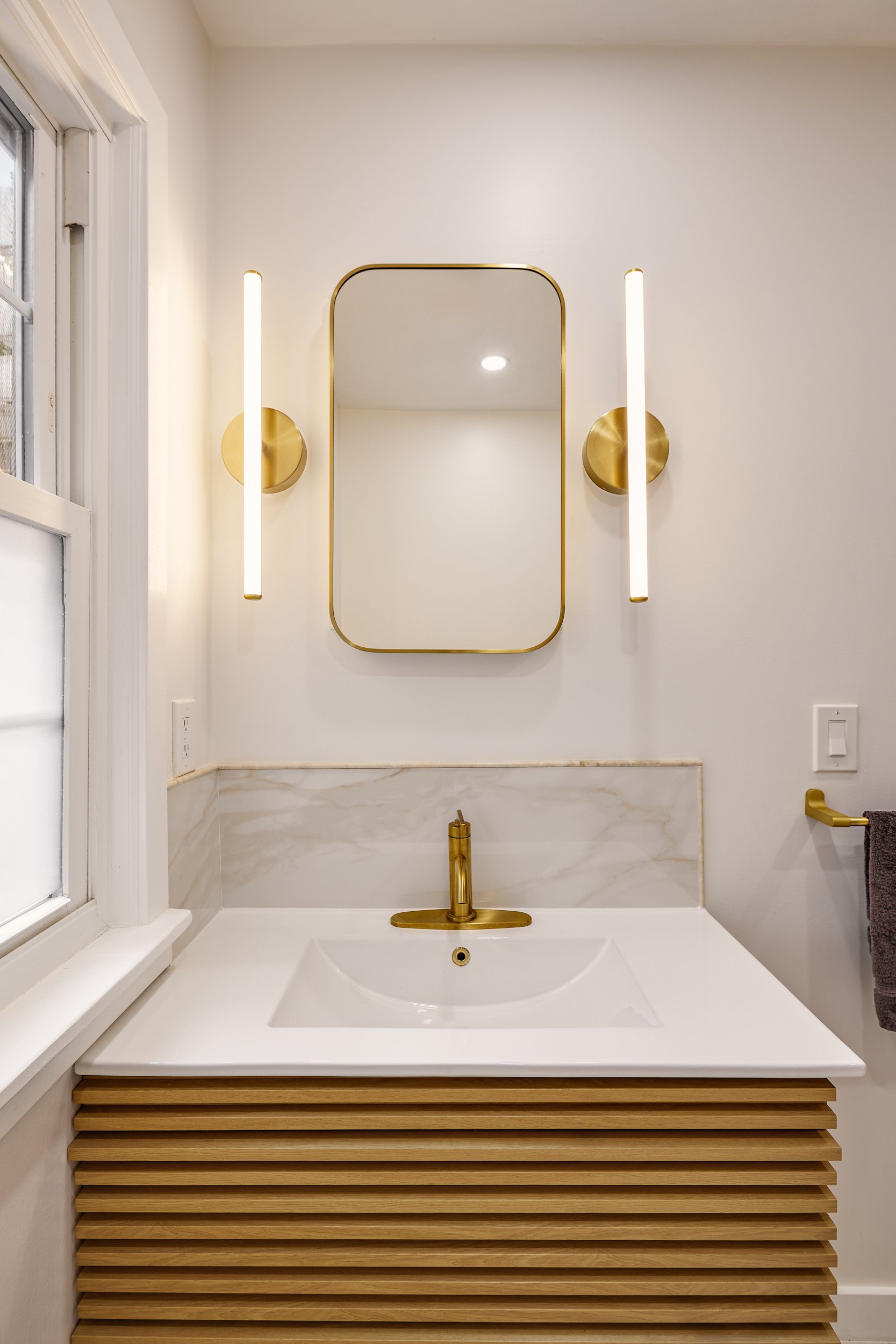
Rounded-corner modern bathroom mirrors keep the familiar proportions of a rectangle but lose some of its rigidity. They're a good choice when you want a softer vanity wall without making the mirror the dominant decorative feature.
Bathrooms in which this trend works best: These mirrors fit easily into contemporary, mid-century, and family bathrooms where the vanity or tile already introduces strong straight lines. They can also update a simple bathroom without forcing the rest of the room into a highly specific design style.
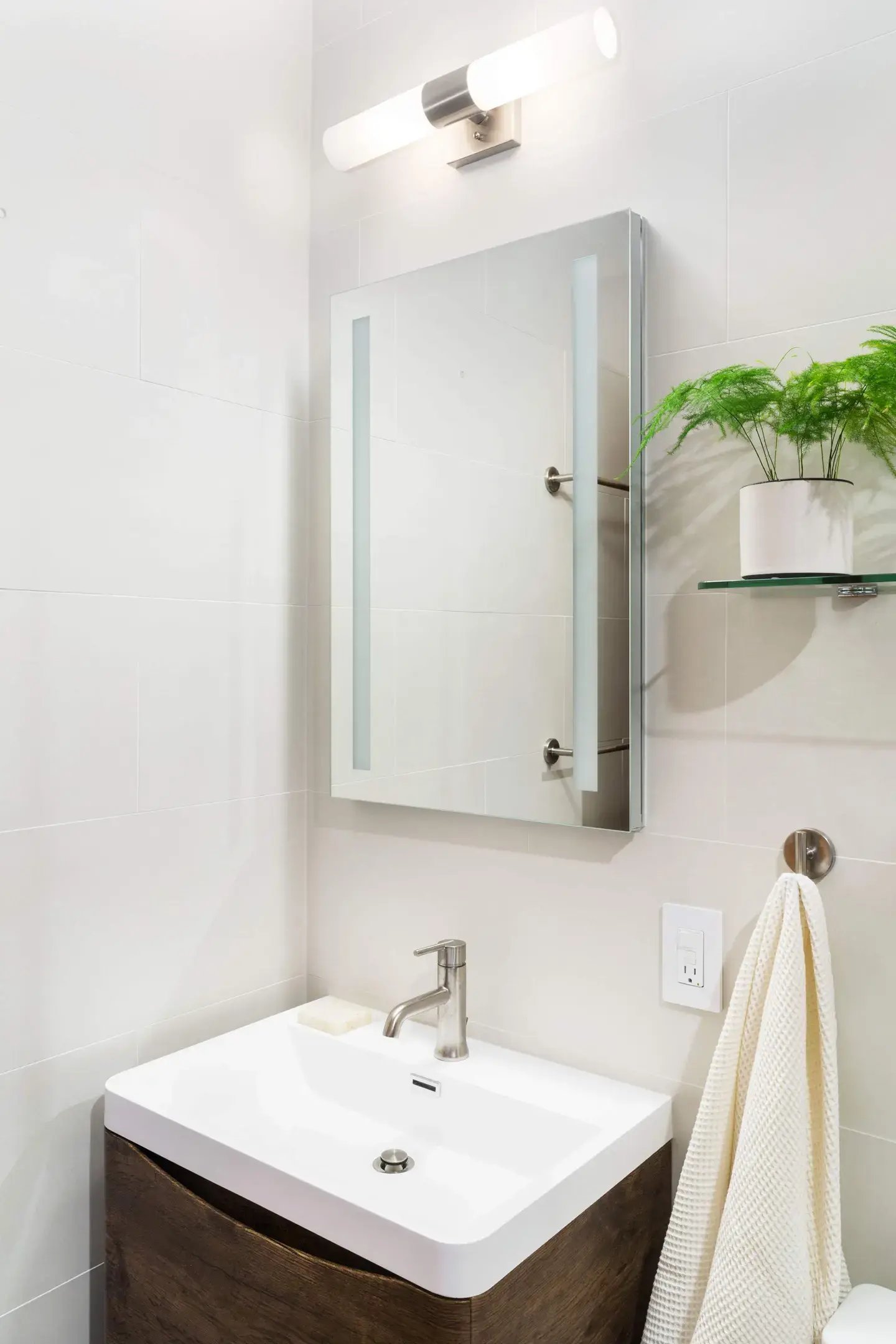
Medicine cabinets have moved well beyond a mirror attached to a basic shelf box. Newer designs can incorporate slim storage compartments, interior lighting, electrical outlets, charging access, and illumination around or behind the glass, bringing several functions into one portion of the wall.
Bathrooms in which this trend works best: Storage mirrors make sense in compact and shared bathrooms where countertop space disappears quickly. They're also useful when you want storage at eye level without introducing another visible cabinet beside the vanity.
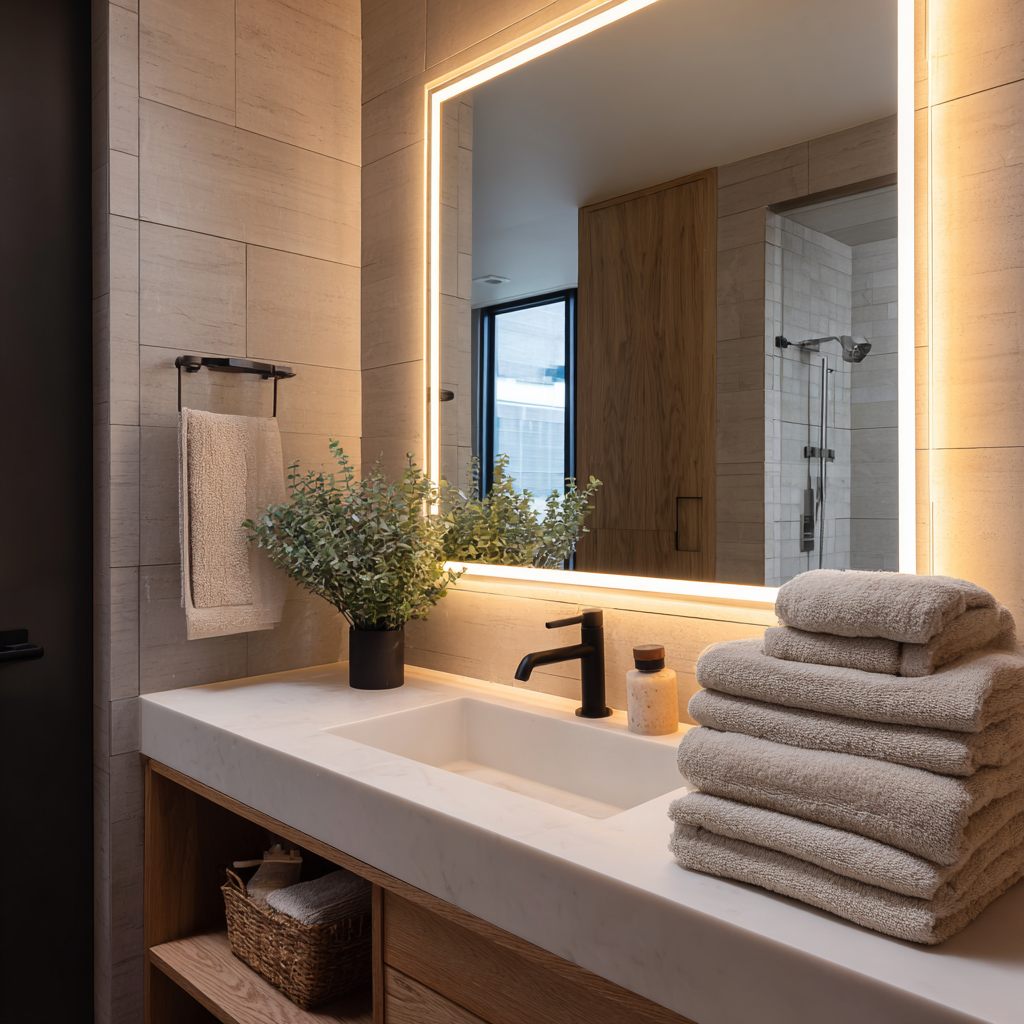
A lighted mirror earns its place when its controls solve an actual lighting problem. Dimming and adjustable color temperature can make the same vanity work better at different times of day, and built-in defogging is useful in bathrooms where steam regularly clouds the glass. The National Kitchen & Bath Association's 2026 research found that 47% of surveyed industry professionals favor integrated mirror lighting over the next 3 years, although 92% also agreed that primary bathrooms should include task lighting.
Backlighting alone is a poor substitute for good face-level task lighting. Plan the mirror together with sconces or other frontal lighting if the vanity is used for makeup, shaving, or anything else where shadows become annoying.
For inspiration, a Saratoga bathroom renovation by Mount Construction uses circular backlit mirrors above the vanity. Their round shape softens the outline of the lighting, and the glow separates the mirrors visually from the wall behind them.
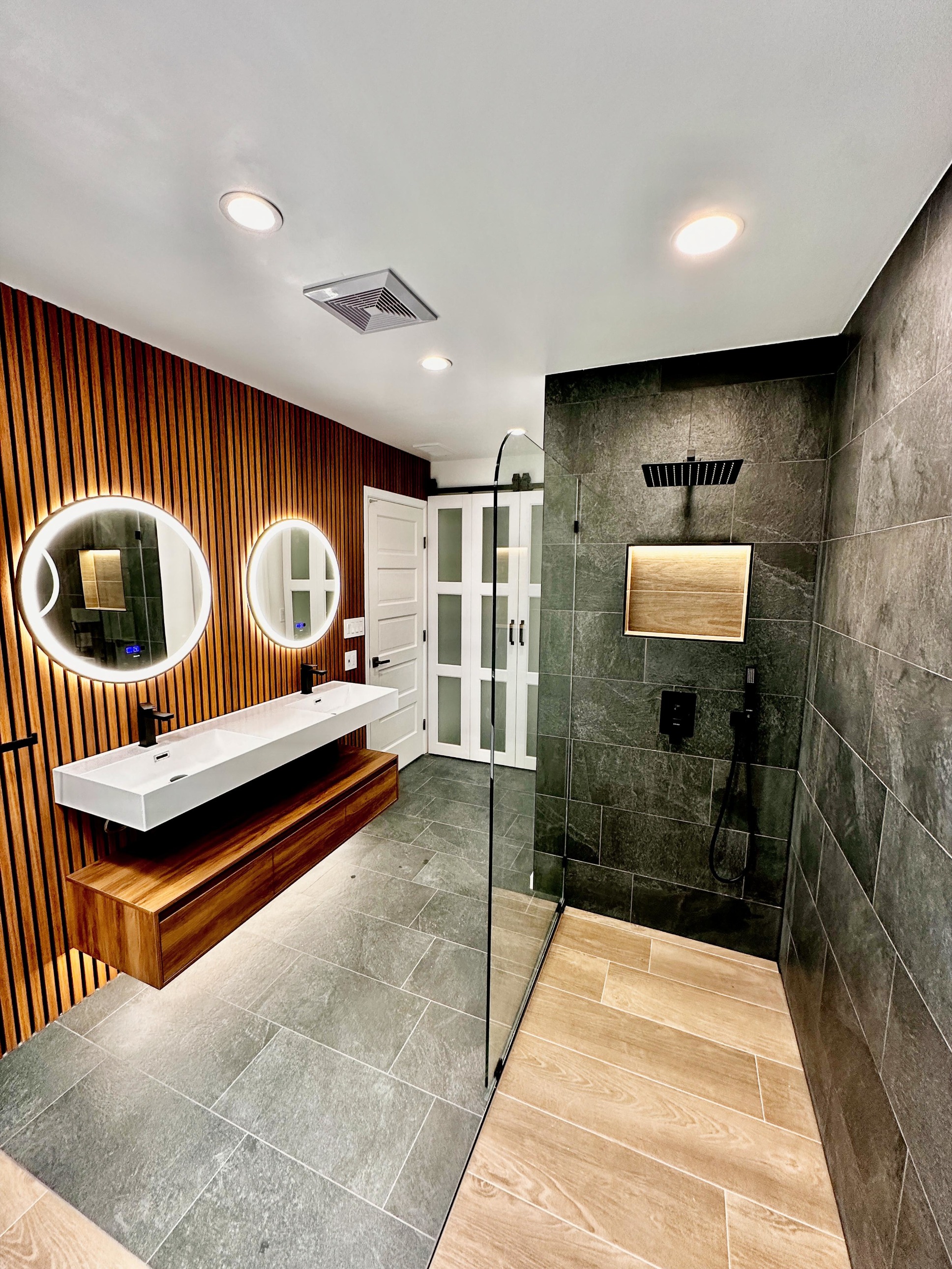
Bathrooms in which this trend works best: Lighted mirrors are useful in windowless or low-light bathrooms and at vanities used for tasks that benefit from clear illumination. They can also reduce the amount of decorative lighting needed around the mirror when wall space is tight.
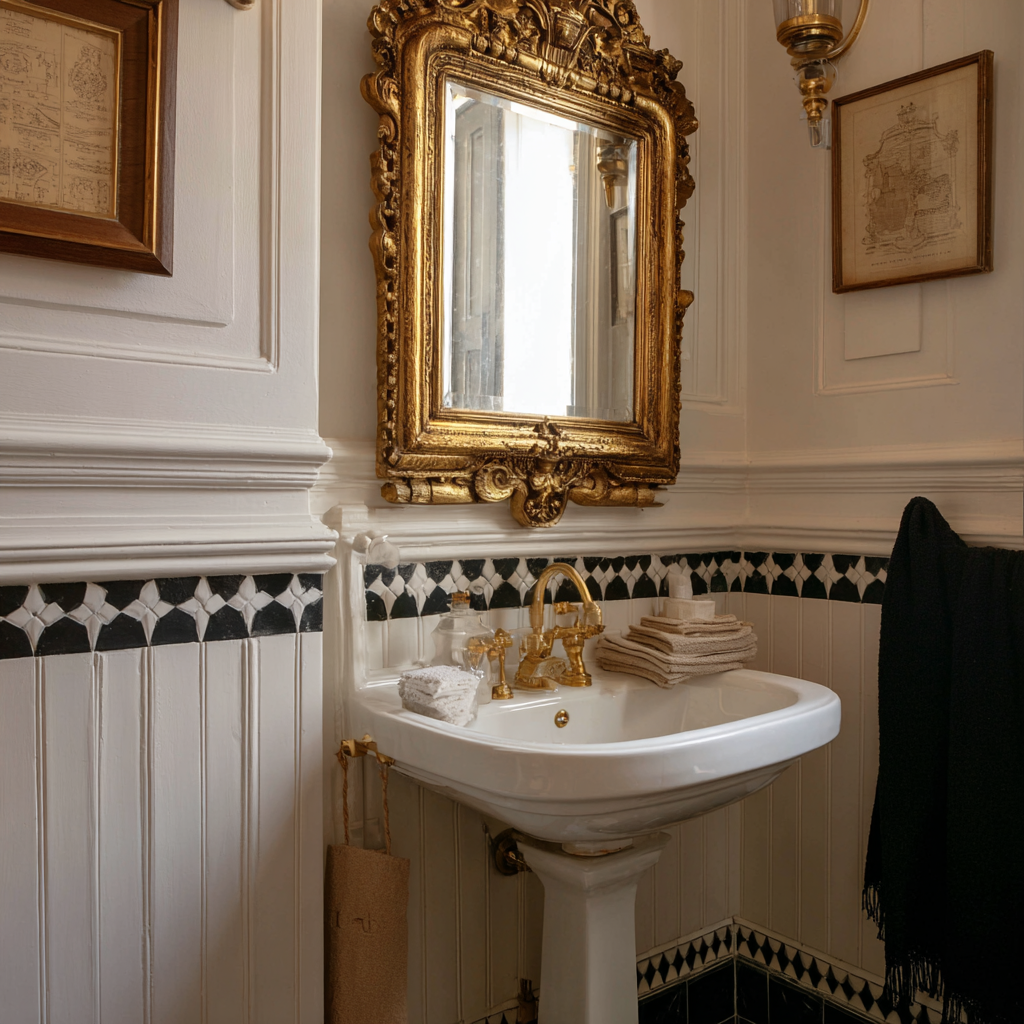
Lightly distressed mercury-style glass brings age and texture into bathrooms without requiring an antique mirror with decades of wear. Subtle mottling around the edges can add character without getting in the way of the reflection.
Bathrooms in which this trend works best: Mercury glass suits historic details, traditional moldings, aged metal finishes, and vintage bathroom elements. If this is the only mirror you use for grooming, skip heavily distressed glass. It looks interesting, but it is worse at the mirror's actual job.
Floating mirrors sit away from the wall on concealed or minimal supports, leaving visible space behind the glass. The gap adds depth and lets tile, colored walls, glass backsplashes, or lighting continue behind the mirror instead of stopping at its edge.
Bathrooms in which this trend works best: This approach suits contemporary bathrooms and small bathroom remodels where keeping surfaces visually light is important. It can work particularly well above a floating vanity because both elements are visually separated from the wall.
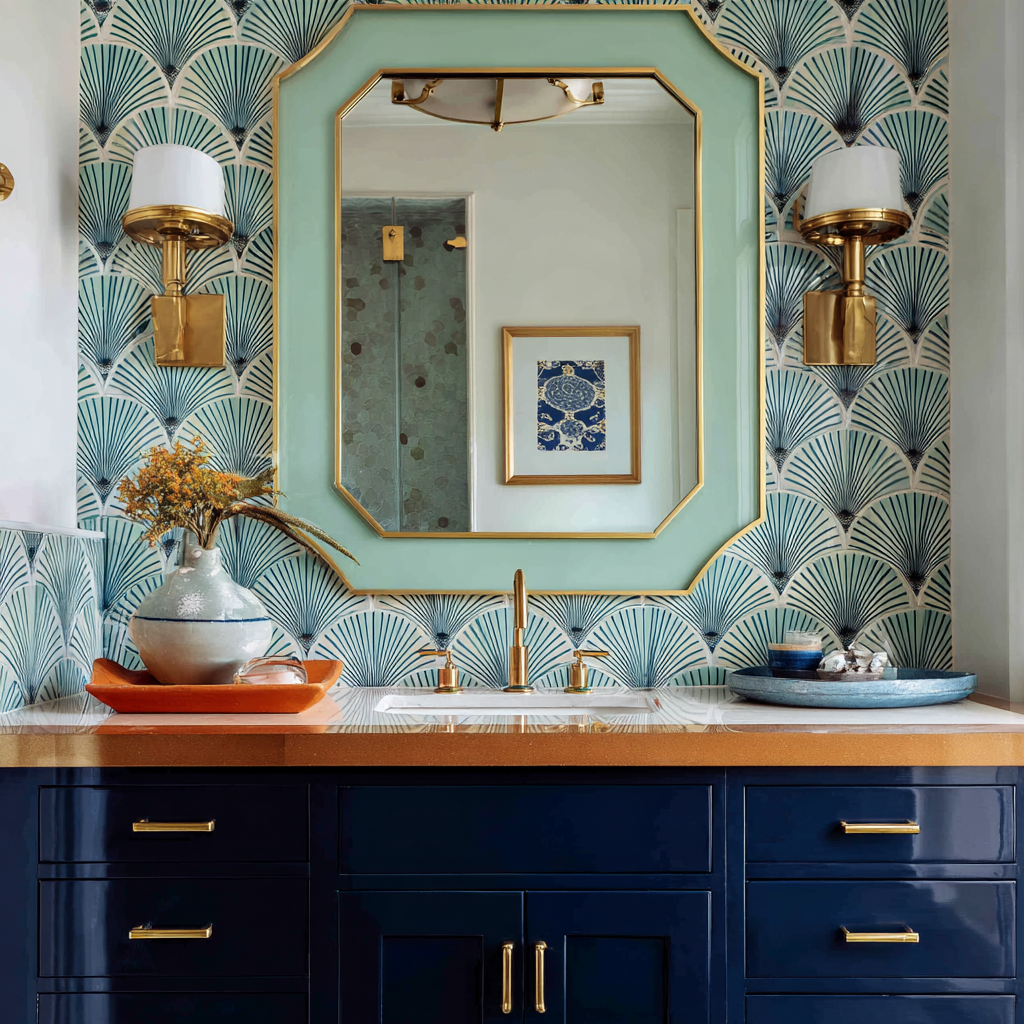
A mirror frame gives you another place to introduce color without committing an entire wall to it. Deep green or burgundy can make the mirror one of the room's strongest features. Black or navy is easier to live with when the vanity, tile, or wallpaper already carries plenty of color.
A saturated lacquer frame is also easier to tire of than a simple curve or metal edge. That makes it a better trend to experiment with on a mirror than on cabinetry you expect to keep for decades.
Bathrooms in which this trend works best: Colored frames suit bathrooms where most of the permanent materials are neutral enough to accommodate a stronger accent. They are also a good fit for Art Deco bathrooms, where shape, color, and metal detailing already play a larger decorative role.
A Walnut Creek bathroom by WCSS Construction pairs an asymmetrical, organically shaped mirror with the natural stone treatment in the shower. The softer geometry carries the natural influence into the vanity area instead of confining it to one side of the room.
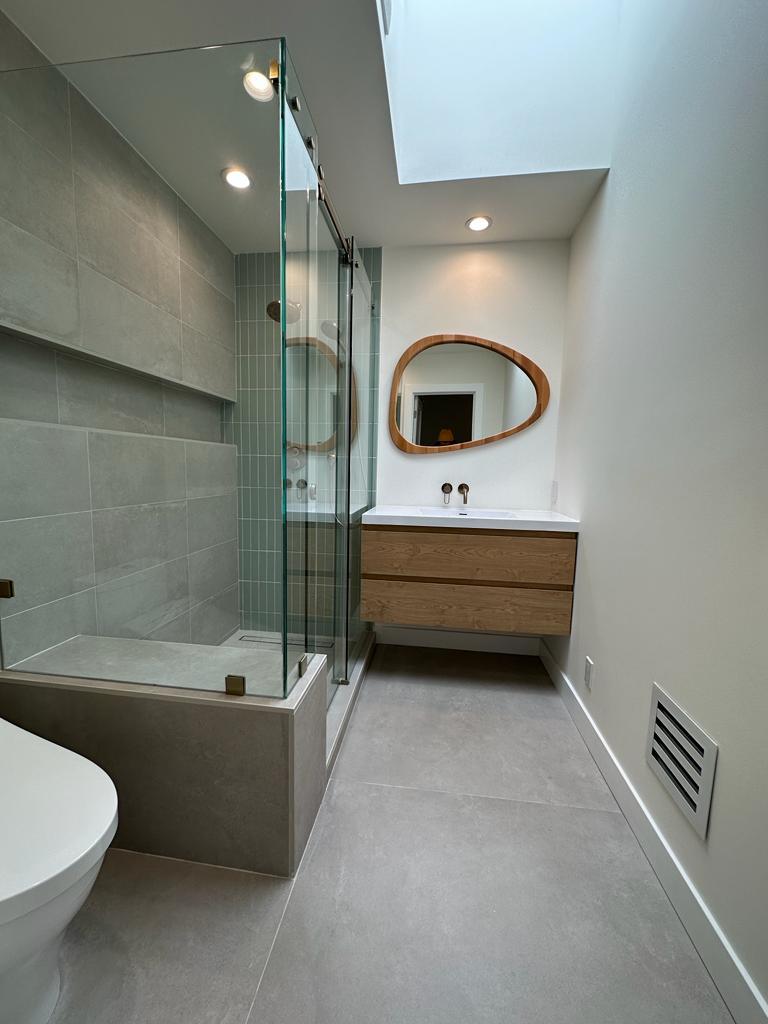
Organic mirrors work because bathrooms already contain so many straight structural lines, from tile grids to vanity edges and shower enclosures. One irregular silhouette can loosen up the room without requiring another pattern or material.
Bathrooms in which this trend works best: Organic and asymmetrical mirrors work well in modern bathrooms where most of the vanity wall is restrained. If the tile, wallpaper, lighting, and cabinetry are already competing for attention, an irregular mirror can push the room into visual clutter.
Rather than stretching one large mirror across a double vanity, two equally sized round mirrors can divide the wall into distinct grooming areas. The repeated circles also break up a long horizontal countertop and leave room to build the lighting plan around each sink.
Bathrooms in which this trend works best: This approach is useful in partner and kids' bathrooms where both sinks are regularly used at the same time. It also gives extra-long vanity spaces more visual structure, though a short vanity can start to look crowded once two mirrors and multiple sconces are squeezed above it.
In this Squaw Pass project by Unison Builds, LLC, a straightforward rectangular mirror is bordered by mosaic tile against a natural-stone wall. The surround gives the vanity a distinct Tuscan feel, proving that the artistic part of the mirror doesn't always have to come from the glass itself.
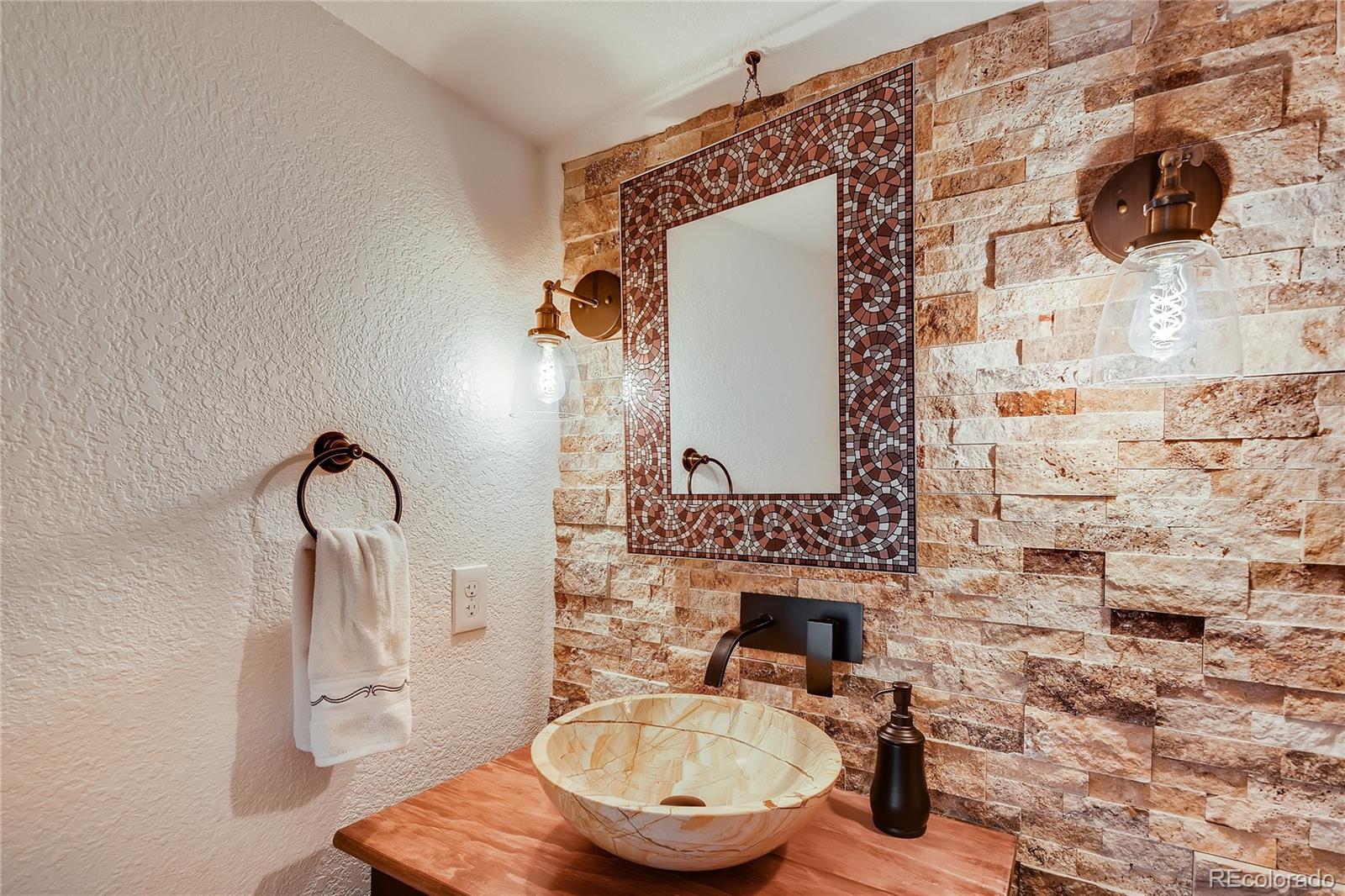
Bathrooms in which this trend works best: Decorative surrounds work well when tile, stone, or mosaic already plays an important role elsewhere in the bathroom and you want to repeat that material near the vanity. Because the interest comes from around the mirror, the glass can stay simple.
Price has surprisingly little to do with whether a bathroom mirror looks expensive. Proportion, finish, and installation usually matter more. A $200 mirror that fits the vanity perfectly and relates to the rest of the room can look far better than a $1,000 option that feels undersized or disconnected from everything around it.
A simple frameless mirror with polished edges and excellent proportions can look far better than an ornate frame made from a material that feels cheap.
A mirror has a large effect on the finished bathroom, but its size and placement connect to decisions about the vanity, backsplash, electrical work, lighting, storage, and wall finishes. Planning those pieces together gives you much more control over the final result than treating the mirror as something to buy after construction is nearly complete.
When you're ready to renovate, Block can match your project with vetted local contractors and give you multiple quotes built around the same detailed scope. You'll also have expert scope review, progress-based payments, and ongoing support as the project moves from planning through construction.
Remodel with confidence through Block

Connect to vetted local contractors
We only work with top-tier, thoroughly vetted contractors
Get expert guidance
Our project planners offer expert advice, scope review, and ongoing support as needed
Enjoy peace of mind throughout your renovation
Secure payment system puts you in control and protects your remodel

Renovate confidently with Block
Easily compare quotes from top quality contractors, and get peace of mind with warranty & price protections.
Bathroom
Converting a Laundry Room Into a Bathroom: Costs & Layouts
10.08.2026
Bathroom
Converting a Bedroom Into a Bathroom: Costs and Layouts
10.05.2026
Bathroom
Bathroom Mirror Trends to Inspire Your Ideas
09.23.2026
Bathroom
Brooklyn Bathroom Renovation Costs: What Shapes the Budget
09.19.2026
Bathroom
York City Bathroom Remodel: Costs, Planning & Design
09.17.2026