




Design
Bathtub to Shower Conversion: Cost, Ideas, Examples & More
08.11.2026
.jpg?width=640&name=7bacb6ea-82dc-403c-8e9a-191d2fb45b55%20(1).jpg)
01.08.2026


In This Article
Bathroom remodels on a budget succeed when decisions are driven by how bathrooms are actually built, not just how they look in inspiration photos. An economical bathroom remodel prioritizes labor efficiency, durable materials, and fixtures that deliver daily performance without unnecessary complexity. With informed planning, affordable bathroom remodeling ideas can result in a space that feels intentional, well-built, and comfortable for the long term.
In bathrooms, labor and mechanical work often outweigh material costs. Plumbing and fixture decisions directly affect how much demolition, rough-in work, and inspection is required. Understanding where costs typically escalate helps homeowners make choices that preserve both function and budget.
Maintaining the existing locations of the toilet, shower, and vanity minimizes the need to open walls, adjust supply lines, or relocate drains. Moving even one fixture can trigger additional plumbing labor, patching, waterproofing, and inspections, which compounds costs quickly. In older buildings, rerouting plumbing may also uncover code compliance issues that require further upgrades.
Not all plumbing fixtures are priced equally once labor is considered. Wall-mounted toilets, concealed shower valves, and freestanding tubs often require in-wall carriers, additional framing, or reinforced flooring. Floor-mounted toilets, standard valve systems, and alcove tubs typically install faster and with fewer structural changes, making them more economical options without sacrificing comfort.
Swapping visible components like faucets, shower trim, or showerheads updates the look of the bathroom while keeping the underlying plumbing intact. These upgrades rely on existing rough-ins, which avoids costly behind-the-wall work. This approach is one of the most reliable economical bathroom remodeling ideas for improving appearance without increasing construction scope.
Certain changes—like upgrading fixture flow rates or adding multiple shower outlets—can require upsizing supply lines or water heaters. These “cascade upgrades” increase both scope and permitting requirements. Understanding these downstream effects helps prevent budget escalation tied to otherwise small decisions.
Each additional fixture—such as a second shower head, body sprays, or a handheld sprayer—adds both material and labor costs. More connections mean longer installation time, higher plumbing complexity, and sometimes increased water heater capacity requirements. Streamlining fixture selections can meaningfully reduce costs while still delivering a comfortable experience.
Grouping the shower, tub, and toilet within the same area reduces the length of plumbing runs and waterproofing zones. Shorter runs mean less material, less labor, and fewer opportunities for issues behind the walls. This layout strategy is particularly effective for keeping compact bathroom remodels on budget.
Transparent Pricing You Can Trust

Affordable remodeling materials that still elevate your bathroom
Material choices influence not just how a bathroom looks, but how long it lasts and how expensive it is to install. Affordable bathroom remodeling ideas focus on materials that balance durability, availability, and installation efficiency. The right selections can elevate the space without inflating labor costs.
Simple grid layouts require fewer cuts and reduce installation time compared to complex patterns like herringbone or chevron. Less cutting also means less material waste, which helps control both labor and material costs. Straight-set layouts are a reliable choice for an economical bathroom remodel.
Shower wall materials vary widely in cost, durability, and long-term upkeep, making them a major factor in whether a bathroom remodel stays on budget. The most economical options are those that resist moisture naturally, are readily available, and don’t require specialty components to perform well.
Porcelain tile. Porcelain is considered an overall strong choice because it is dense, non-porous, and highly resistant to water absorption. It offers the look of natural stone at a lower price point and holds up well over time, making it a reliable, economical choice.
Large-format porcelain panels. Fewer seams and grout lines reduce material use and simplify maintenance. These panels provide a clean, modern look while remaining within budget compared to more complex stone or mosaic installations.
Acrylic shower surrounds. Acrylic panels are among the most affordable shower wall materials available and are designed specifically for wet environments. Their smooth, continuous surface eliminates grout maintenance and provides consistent performance at a lower overall cost.
Fiberglass-reinforced panels (FRP). FRP panels are lightweight, water-resistant, and cost-effective, making them suitable for bathrooms where budget control is a priority. While more utilitarian in appearance, they remain a practical option for economical bathroom remodels.
Porcelain tile offers consistency, durability, and design flexibility at a lower overall cost than many natural materials. It performs well in wet environments and is widely available, which keeps timelines predictable.
Stone-look porcelain. Modern manufacturing allows porcelain to closely replicate marble, limestone, or concrete while avoiding sealing, staining, and higher breakage risk.
Rectified edges. These tiles allow for tighter grout lines, creating a cleaner look while simplifying layout and installation.
Moderate tile sizes. Tiles that are large but manageable reduce grout lines without significantly increasing cutting or handling labor.
Consistent thickness and sizing. Porcelain tiles are manufactured to tighter tolerances than many natural stones, which reduces lippage during installation and speeds up setting time, helping keep labor costs more affordable.
Vanities are highly visible but do not need to be custom-built to perform well. Many stock and semi-custom options are engineered for durability and efficient installation.
Pre-assembled stock vanities. These reduce labor time compared to fully custom cabinetry and are available in a wide range of finishes.
Simple construction methods. Flat-panel or shaker doors are easier to manufacture and repair, which keeps costs lower over time.
Integrated storage layouts. Thoughtful drawer configurations eliminate the need for added cabinetry or custom storage solutions.
Countertops in bathrooms face less heat and wear than kitchens, allowing for more budget flexibility without sacrificing performance.
Quartz surfaces. Non-porous and consistent in appearance, quartz requires minimal maintenance and offers predictable pricing.
Solid surface materials. Seamless fabrication reduces visible joints and simplifies cleaning, making them a cost-effective option.
Laminated edge profiles. Simple eased or square edges are faster to fabricate and install than decorative profiles, reducing labor time while still delivering a clean, modern finish.
Prefabricated sizes. Standard depths and lengths reduce fabrication time and help avoid custom upcharges.
Full tile coverage is not always necessary and can significantly increase labor costs. Strategic use of paint and partial, half-wall tile keeps budgets in check while maintaining durability.
Tile only in wet zones. Limiting tile to showers and tub surrounds economically reduces material and installation time without compromising waterproofing.
Moisture-resistant paint elsewhere. High-quality bathroom-rated paint performs well on remaining walls and is easier to refresh in the future.
Clean transitions. Simple edge trims and clear termination points prevent the space from feeling incomplete.
Recessed lights and integrated LED fixtures are often easier to install than layered or decorative lighting schemes. Fewer fixtures mean fewer wiring runs and switch modifications. Thoughtful placement—such as above the shower—can still create a balanced, functional lighting plan without added complexity.
Brushed nickel, chrome, and matte black finishes are widely available and more economical than specialty finishes like unlacquered brass. These standard finishes also make future replacements easier to source. Choosing readily available hardware helps keep both initial and long-term costs predictably affordable.
Perfect Every Detail of Your Bathroom
Not every bathroom upgrade requires starting from scratch. In many cases, existing features can be refreshed or reworked in ways that feel current while keeping the remodel affordable and within budget. Thoughtfully evaluating what can be restored, refinished, or reused allows homeowners to direct spending toward improvements that truly add comfort and longevity, rather than replacing elements that are still structurally sound. Economical strategies include:
Reglazing an existing tub. If the tub is structurally sound, professional reglazing can restore its finish at a fraction of the cost of replacement, while avoiding demolition and plumbing disruption.
Refinishing tile instead of replacing it. Tile refinishing or painting systems can improve appearance and brightness without the labor-intensive process of removal and reinstallation.
Refacing or repainting a vanity. If cabinet boxes are in good condition, new doors, hardware, or a durable paint finish can modernize the vanity without the cost of full replacement.
Repolishing or replacing only the sink basin. If the vanity cabinet is in good shape, updating just the sink refreshes the focal point while avoiding full vanity replacement and plumbing changes.
Polishing or regrouting existing tile. Deep cleaning, grout repair, or grout color sealing can dramatically improve appearance and extend the life of existing tile surfaces.
Updating lighting fixtures while keeping junction boxes. New sconces or vanity lights can modernize the space without opening walls or rerouting wiring, keeping electrical work minimal.
Even well-intentioned decisions can lead to unnecessary costs when planning lacks detail. Avoiding these issues helps keep an economical bathroom remodel on track.
Underestimating labor-intensive work. Waterproofing, tile installation, and plumbing adjustments often cost more than expected and should be priced carefully.
Failing to plan for existing conditions. Older homes frequently require additional prep work once walls are opened, which should be anticipated.
Selecting materials before understanding installation costs. Some materials are affordable to purchase but expensive to install due to weight, cutting difficulty, or layout complexity.
Proceeding without a defined scope. Incomplete plans lead to change orders, which increase costs and disrupt timelines.
DIY can support bathroom remodels on a budget when limited to low-risk, non-technical tasks. The key is understanding where mistakes are cosmetic versus structural or mechanical.
Painting walls. This work does not impact waterproofing or building systems and can be redone without lasting consequences. Don’t skimp on your choice of paint itself; choose finishes that are moisture-friendly, as detailed in our bathroom paint guide.
Installing accessories. Items like towel bars and mirrors involve minimal risk when installed with appropriate anchors.
Removing surface-level finishes. Carefully removing vanities or fixtures can save time if coordinated with a contractor and done without disturbing plumbing or wiring.
It’s tempting to do more tasks yourself rather than trust a professional in order to keep your bathroom remodel on budget and overall more economical. However, these seemingly simple updates should not be attempted by amateurs.
Installing a new toilet or changing toilet flange height. Toilets are often viewed as “plug-and-play,” but improper flange height, uneven flooring, or incorrect sealing can cause rocking, broken wax rings, and hidden leaks. These failures typically show up as subfloor rot rather than obvious surface water.
Applying waterproofing membranes or liquid sealants. These products look simple to roll or trowel on, but coverage thickness, cure times, and seam detailing are critical. Skipping manufacturer-specific steps is a common DIY mistake that voids warranties and leads to premature failure.
Installing recessed medicine cabinets. Cutting into walls for recessed storage can interfere with framing, wiring, or plumbing. Homeowners often discover too late that the cavity isn’t suitable, resulting in patchwork repairs or compromised wall integrity.
Replacing a vanity without adjusting plumbing correctly. Swapping a vanity seems straightforward, yet differences in cabinet depth, sink height, or drain alignment often require precise adjustments. DIY installations frequently result in stressed connections or misaligned traps that leak slowly and damage flooring over time.
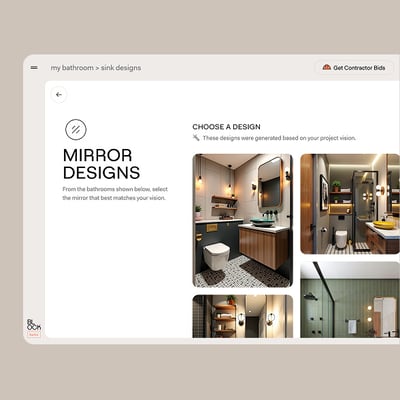
Block Renovation’s Renovation Studio allows homeowners to see how design decisions directly affect cost in real time. As you adjust materials, fixtures, and layouts, the estimated budget updates instantly, making trade-offs visible before construction begins. For example, switching from a natural stone tile to a porcelain alternative or reducing tile coverage immediately reflects in the cost estimate.
Pricing is localized based on your location, accounting for regional labor rates, material availability, and typical permitting costs. This gives homeowners a more realistic picture of what an economical bathroom remodel looks like in their specific market. By exploring different combinations early, you can refine your budget with confidence and avoid surprises later in the process.
An affordable bathroom remodeling project depends as much on execution as on planning. Block Renovation helps homeowners connect with vetted contractors and compare detailed scopes side by side, ensuring that pricing reflects real work—not assumptions. With expert scope review and structured guidance, homeowners can move forward knowing their budget decisions are informed, realistic, and built to last.
Remodel with confidence through Block

Connect to vetted local contractors
We only work with top-tier, thoroughly vetted contractors

Get expert guidance
Our project planners offer expert advice, scope review, and ongoing support as needed

Enjoy peace of mind throughout your renovation
Secure payment system puts you in control and protects your remodel


Renovate confidently with Block
Easily compare quotes from top quality contractors, and get peace of mind with warranty & price protections.
Design
Bathtub to Shower Conversion: Cost, Ideas, Examples & More
08.11.2026
Design
Open Shelving Bathroom Design Ideas & Optimal Placement
08.08.2026
Bathroom
Bathroom Wall Texture Ideas and What to Avoid
08.03.2026
Bathroom
High End Toilets for an Upgraded Bathroom
07.24.2026
Bathroom
Adding a Bathroom to an Old House: Cost & Placement
07.22.2026