



Commercial
Commercial Tenant Improvement Contractors Explained
07.27.2026
03.12.2026


In This Article
California’s restaurant scene is one of the most dynamic in the world, stretching from the farm-to-table temples of the Bay Area to the celebrity-chef driven dining rooms of Los Angeles and the craft-forward eateries of San Diego. In a state where diners expect as much from the atmosphere as from the plate, restaurant interior design is not an afterthought—it’s a competitive advantage.
The firms featured in this guide represent the best of California’s restaurant design talent. Their portfolios span Michelin-starred fine dining, buzzy neighborhood bistros, adaptive reuse projects, and sprawling food halls. Each one brings a distinct design philosophy shaped by the light, climate, and culture of the region it calls home. We’ve organized them by geography so you can find the right creative partner for your project, wherever in California it may be.
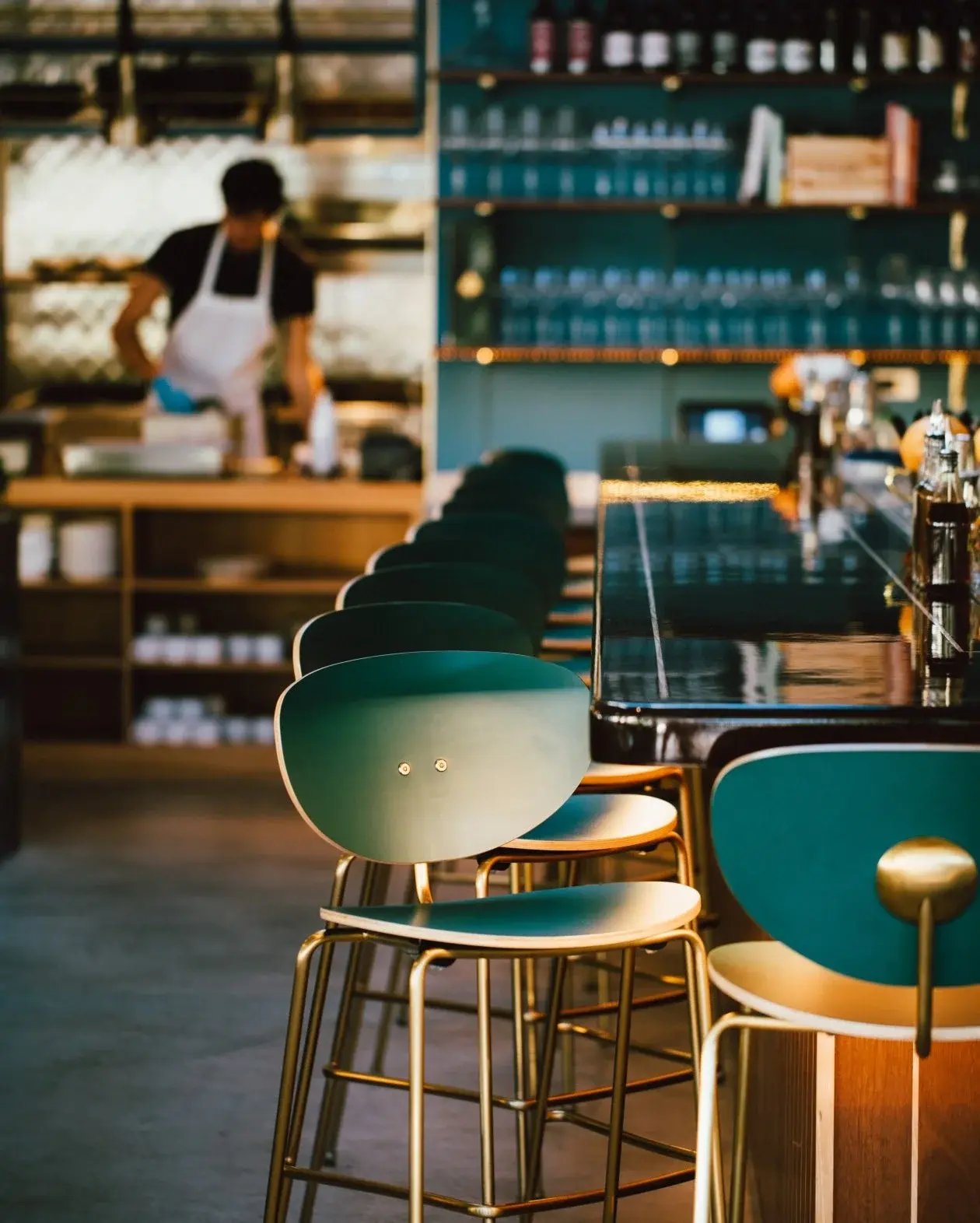
Founded in 2009 by Greg Bleier, Studio UNLTD made its name designing the adaptive reuse projects that helped put the Los Angeles Arts District on the culinary map. The firm, now co-led by principal designer Terri Robison, has become the go-to creative partner for some of LA’s most acclaimed chefs and restaurateurs, and its influence has expanded well beyond Southern California to include projects in New York, Paris, San Diego, and Hawaii.
Studio UNLTD’s most celebrated project is Bavel, the Middle Eastern restaurant from chefs Ori Menashe and Genevieve Gergis in a former Arts District warehouse. The design challenged the cliché of dark, heavily patterned Middle Eastern interiors by constructing soaring sawtooth skylights to flood the dining room with natural light, then layering whitewashed brick walls with turquoise tile, saffron accents, and brass highlights drawn from the coastal Mediterranean. The firm is also behind Bestia, Otium (a ground-up restaurant built on a bridge overlooking the Broad Museum), and the recently opened Vaca downtown, a sculptural Spanish restaurant defined by curved ceiling planes and warm soffit lighting. In addition, Studio UNLTD is currently redesigning the hospitality spaces inside the Honda Center in Anaheim ahead of the 2028 Olympics.
Regions served: Los Angeles, Orange County, San Diego, nationally and internationally
Common project types: Fine dining, chef-driven concepts, adaptive reuse, hotel hospitality, arenas
Website: https://www.studiounltd.com
.png?width=1769&height=1089&name=image%20(36).png)
Alexis Readinger founded Preen in Los Angeles in 2005 with the conviction that hospitality spaces should be treated as art—environments that deepen reality and invite emotional connection. The firm has since completed more than 100 projects across Los Angeles and abroad, earning the 2020 Design Firm of the Year award from World Interior News and recognition from Hospitality Design, AIA Los Angeles, and Eater.
Preen’s breakout restaurant project was Tesse, a refined Cal-French restaurant on the Sunset Strip created in partnership with Fred Segal. Eater named it LA’s Most Beautiful Restaurant of 2018, and it went on to become a two-time Hospitality Design Awards finalist and an AIA LA Best Restaurant Design finalist in 2019. The 6,000-square-foot space features reclaimed teak ceiling panels, pink terra concrete block façades, and deeply embedded greenery walls that blur the line between interior and exterior. Readinger’s philosophy centers on first identifying the deep essence of a client’s brand, then translating that into a material language. More recent projects include Piccalilli in Culver City, Yapa in Little Tokyo, and Socalo, a California canteen from celebrated chefs Mary Sue Milliken and Susan Feniger in Santa Monica.
Regions served: Los Angeles, nationally and internationally
Common project types: Restaurants, hotel lobbies, chef-driven concepts, branded dining
Website: https://www.preeninc.com
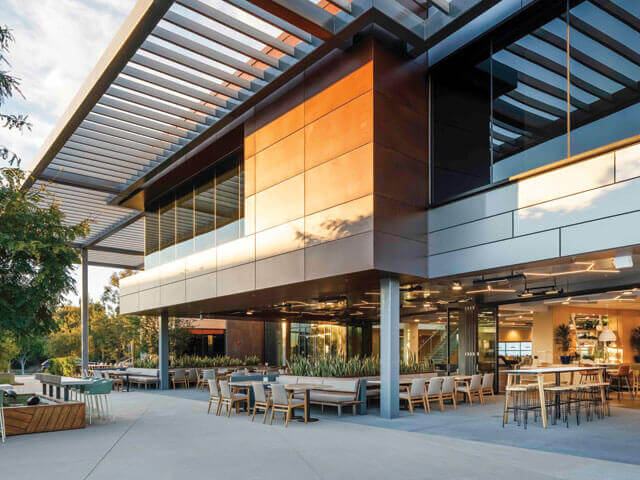
Stephen Francis Jones founded SFJones Architects in 1996 after serving as the in-house architect for the Wolfgang Puck Food Company, where he gained an intimate understanding of how restaurants function—not just operationally, but as dynamic communal spaces. Based in Marina del Rey, the firm has been recognized by AIA Los Angeles, and its work has appeared in the Los Angeles Times, Interior Design, and numerous national publications.
Jones’s first major commission upon launching his own firm was Spago Beverly Hills, Wolfgang Puck’s iconic fine-dining flagship. The design featured a sloped roof with exposed hardwood beams, a herringbone tile patio, and sliding etched-glass doors that connected indoor and outdoor dining. That project led to designing Wolfgang Puck restaurants worldwide, including Chinois Las Vegas and Wolfgang Puck Cafes in Canada, Kuwait, and Japan. Jones also created Lucky Strike Lanes in Hollywood, a restaurant-bar-bowling hybrid that became so popular it spawned locations across the country. His more recent portfolio includes the Michelin-starred chef David LeFevre’s M.B. Post in Manhattan Beach, Anisette (a French brasserie in a landmark Santa Monica tower for four-star chef Alain Giraud), and the serene sushi restaurants Hamasaku and Kumo for Michael Ovitz. Jones’s guiding principle is making the visual and spatial experience as memorable as the food itself.
Regions served: Los Angeles, Southern California, nationally and internationally
Common project types: Fine dining, celebrity-chef restaurants, entertainment venues, branded chains
Website: https://sfjones.com
.png?width=1766&height=758&name=image%20(37).png)
Founded in 1989 by Mehdi and Mandi Rafaty, Tag Front is an architecture and design firm that relocated from Orange County to Los Angeles in 1999 to be closer to its high-profile restaurant clientele. Over the past three decades, the firm has expanded to include offices in Asia and Europe, building a worldwide practice in restaurant, retail, and residential design.
Tag Front’s portfolio in Los Angeles includes some of the city’s most enduring restaurant interiors. The firm designed BOA Steakhouse in West Hollywood, a sleek and modern space defined by dark walls, warm ambient lighting, and sophisticated material finishes that have made it a perennial draw for its celebrity clientele. Tag Front’s design philosophy blends contemporary minimalism with sensory richness, and its services extend beyond interiors into furniture design, product design, and full conceptual development. The firm is particularly valued for its ability to create environments that feel both high-end and timeless without relying on fleeting trends.
Regions served: Los Angeles, Orange County, international
Common project types: Upscale restaurants, steakhouses, retail, residential
Website: https://www.tagfront.com
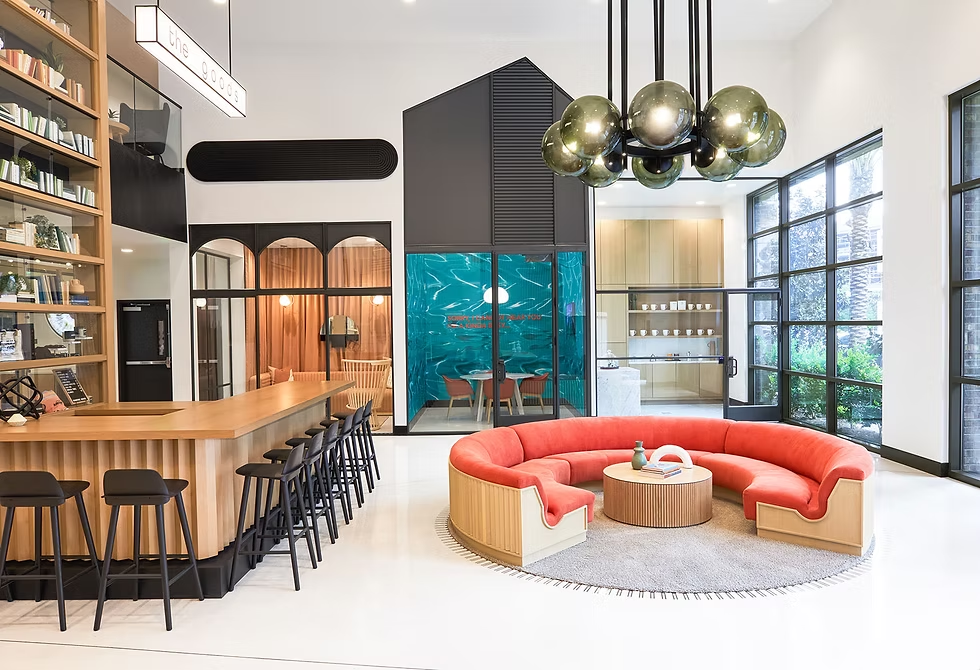
Co-founded by Barbara Rourke and Jason St. John, Bells + Whistles is a boutique interior design firm that has been shaping Southern California’s restaurant landscape for 24 years. The self-described “Unicorn Gang” started as a design-build studio and has grown into a full-service firm executing 15 to 20 projects per year, with an emphasis on restaurant design that extends into retail, hotels, and wellness spaces. Hospitality Design named the firm a 2017 Wave of the Future honoree, and their work has been published in Interior Design, Metropolis, the LA Times, and Wallpaper.
Bells + Whistles first gained national attention with Starlite in San Diego, a mid-century-inspired space influenced by Alfred Hitchcock’s North by Northwest that remains iconic more than a decade after opening. The firm later designed Campfire in Carlsbad—a former mechanics shop and World War II–era Quonset hut transformed into a 6,000-square-foot live-fire restaurant that channels the spirit of California’s camping culture—and Jeune et Jolie, a Michelin Bib Gourmand–recognized French restaurant in Carlsbad where rosé-colored booths and custom terrazzo replace the dark red leather of traditional French dining rooms. Animae, their opulent pan-Asian palace in downtown San Diego, was shortlisted for the Restaurant + Bar Design Awards. What distinguishes the firm is its fabrication background, which gives it the technical fluency to execute fully custom interiors from concept through construction.
Regions served: Los Angeles, San Diego, Orange County, Southern California
Common project types: Restaurants, bars, hotels, wellness spaces, retail
Website: https://www.bw.design
.png?width=1689&height=891&name=image%20(38).png)
Led by AIA Fellow Cass Calder Smith, CCS Architecture has been a defining force in restaurant design since the firm’s founding in San Francisco in 1990. With studios in San Francisco and New York, a staff of roughly 30, and more than 300 completed projects, CCS has earned recognition from the James Beard Foundation, AIA Los Angeles, the International Interior Design Association, and publications including The New York Times, Dwell, Architectural Record, and Metropolis.
Smith’s career in restaurant architecture began with Restaurant LuLu, one of the landmark dining rooms of the early 1990s San Francisco scene, and his firm has gone on to shape the Bay Area’s culinary identity over three decades. In San Francisco, CCS designed Perbacco, an 8,000-square-foot Northern Italian destination in the Financial District’s 1912 Hind Building, and the Vesuvio Bakery in SoHo (for the New York office). Smith’s design approach is rooted in clean modernism and strong conceptual thinking. He works closely with chefs—particularly on open and exhibition kitchens, which he considers integral to the front-of-house experience—and his firm’s projects are known for exceptional spatial and material qualities that age gracefully over time.
Regions served: San Francisco Bay Area, New York City, nationally and internationally
Common project types: Fine dining, hotel restaurants, food halls, bakeries, cafés
Website: https://www.casscaldersmith.com
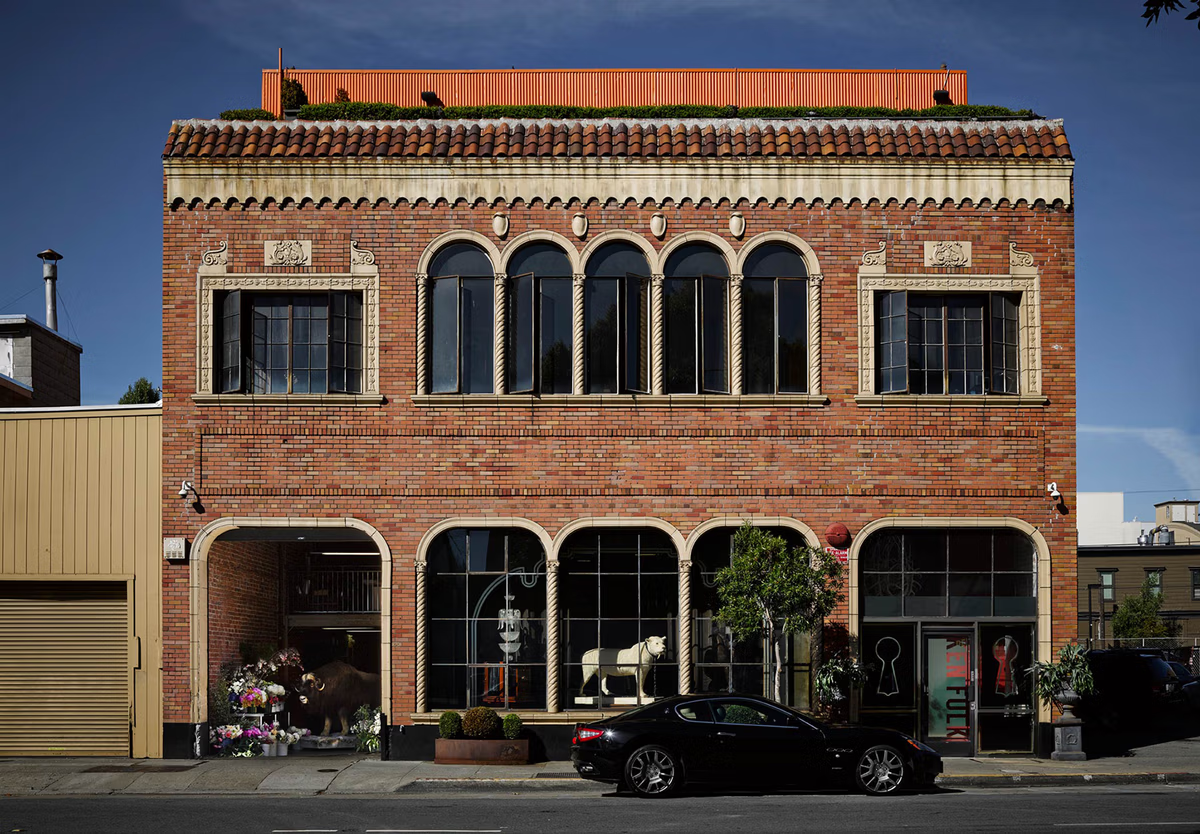
Ken Fulk founded his eponymous design firm in San Francisco in 1997, and it has since grown into one of the most recognized names in American hospitality and residential design. Operating from a four-story 1920s building in San Francisco known as the “Magic Factory,” Fulk and a team of nearly 50 offer a sweeping range of services including interior design, architecture, branding, and event design. He has been named to the AD100, the Elle Decor A-List, and the Luxe Gold List, and Introspective has called him a “Master of Maximalism.”
In the restaurant world, Fulk is perhaps best known for Leo’s Oyster Bar in San Francisco’s Financial District, which Bon Appétit named the Best Designed New Restaurant of 2016 and which the James Beard Foundation nominated for a design award. The space is a maximalist stunner—palm frond wallpaper, checkerboard tile floors, rattan furniture, and metallic leather banquettes that evoke a mid-century tropical cocktail lounge. In 2021, Fulk redesigned Boulevard, one of San Francisco’s most beloved fine-dining institutions, introducing handmade wallpapers, a textured ceiling, theatrical lighting, and a new bar-and-lounge layout that gave the restaurant a dramatic second act. His private club The Battery and the Saint Joseph’s Arts Society are also considered landmark San Francisco projects. Fulk’s work is transportive and theatrical, designed to make guests feel they’ve stepped into another era.
Regions served: San Francisco, New York, Miami, nationally
Common project types: Restaurants, bars, private clubs, hotels, event spaces
Website: https://www.kenfulk.com
Image: Find an image from their website
.png?width=1440&height=1113&name=image%20(39).png)
Hannah Collins Tate launched ROY in San Francisco in 2009, and the firm has since designed more than 300 restaurants—the majority of them in San Francisco—making it arguably the most prolific restaurant design studio in the city. Her sister Emily Collins joined the company to co-lead the firm, which rebranded as ROY in 2019. The studio has been named a California Home + Design Emerging Designer, a Hospitality Design Awards finalist, and its work has been featured in Eater, C Magazine, Refinery29, and The San Francisco Standard. Most recently, George’s Donuts & Merriment won best casual restaurant at the Hospitality Design Awards.
Collins Tate’s designs lean toward the approachable and feminine, layered with European influences and rich textures. The firm designed the celebrated renovation of Delfina, the landmark San Francisco California-Italian restaurant, combining three buildings and multiple facades into a cohesive space without losing the restaurant’s soul. ROY also designed Wildseed in the Marina, The Riddler champagne bar in both San Francisco and New York, Barzotto in the Mission District, Sam’s Anchor Cafe in Tiburon, and Flores, a Northern California cantina featuring a mural by Bay Area artist Marcial Cabada. What makes ROY distinctive is Collins Tate’s background as a server, which gives her a rare practical understanding of front-of-house flow and the operational realities of restaurant life—something her chef and restaurateur clients consistently praise.
Regions served: San Francisco Bay Area, New York, nationally
Common project types: Restaurants, bars, champagne bars, cafés, hotels
Website: https://www.thisisroy.com
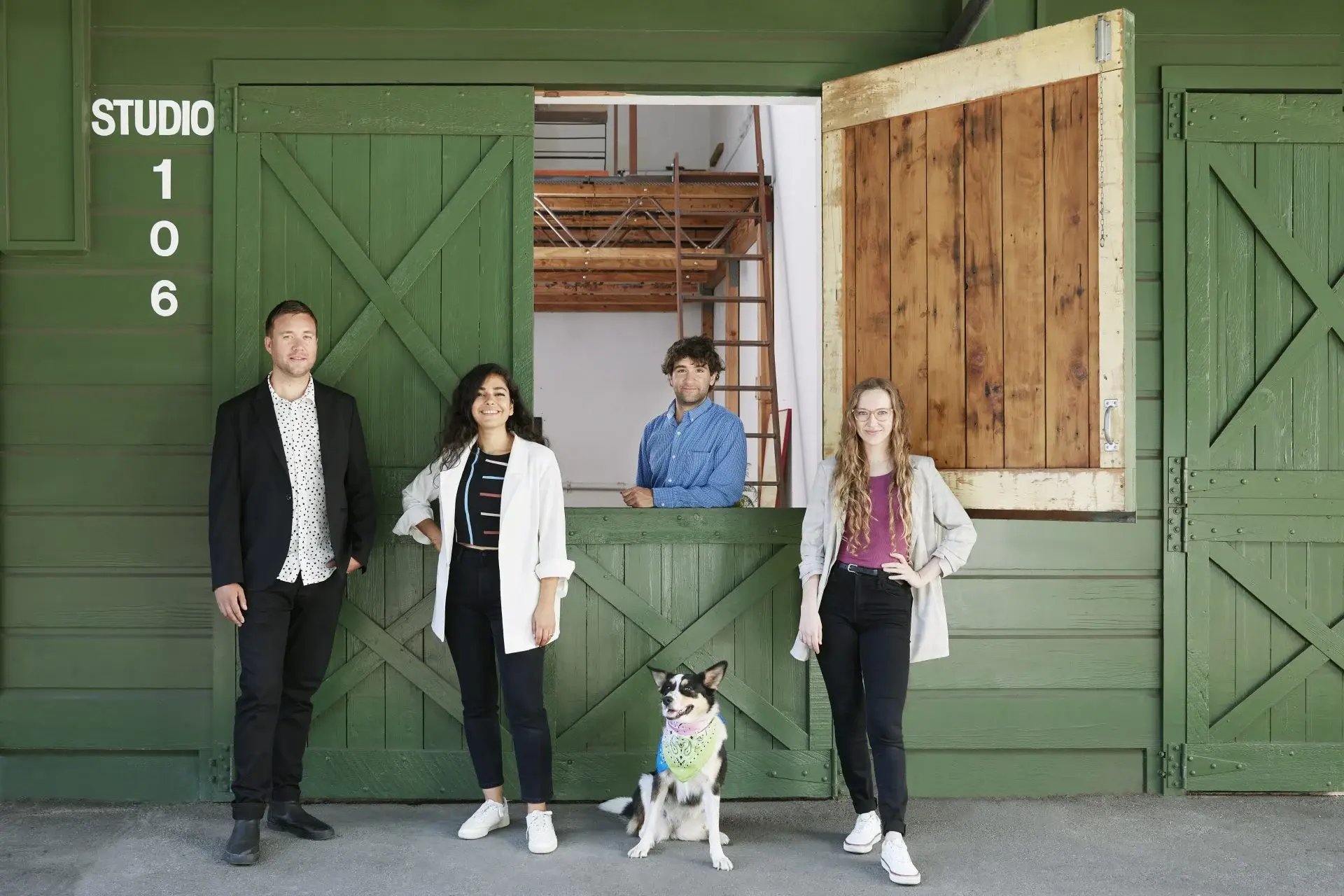
Studio BANAA is a San Francisco–based architecture firm dedicated to creating spaces where neighborhoods gather, stories unfold, and small businesses grow. The firm’s primary expertise is in hospitality—restaurants, bars, and coffee shops—and it has earned recognition from The Architect’s Newspaper for its interior design work. The firm brings a deeply curious, community-oriented design philosophy to every project, aiming to respond in an original way to people, place, and time.
Among its notable Bay Area projects, Studio BANAA designed Voyager Craft Coffee’s “The Alameda” location, incorporating subtle nautical accents—sailboat-patterned tiles, ladder-like shelf frames, a hull-shaped coffee counter—that reflect the brand’s ethos of coffee and travel. It was the firm’s third project with the growing coffee company. Studio BANAA has also been featured for its work on common design pitfalls when launching cafés and restaurants, positioning itself as a trusted resource for first-time restaurateurs navigating the design process. The firm works from its studio at 2325 3rd Street in San Francisco’s Dogpatch neighborhood.
Regions served: San Francisco Bay Area, San Jose
Common project types: Restaurants, cafés, coffee shops, bars, non-profit spaces
Website: https://www.studiobanaa.com
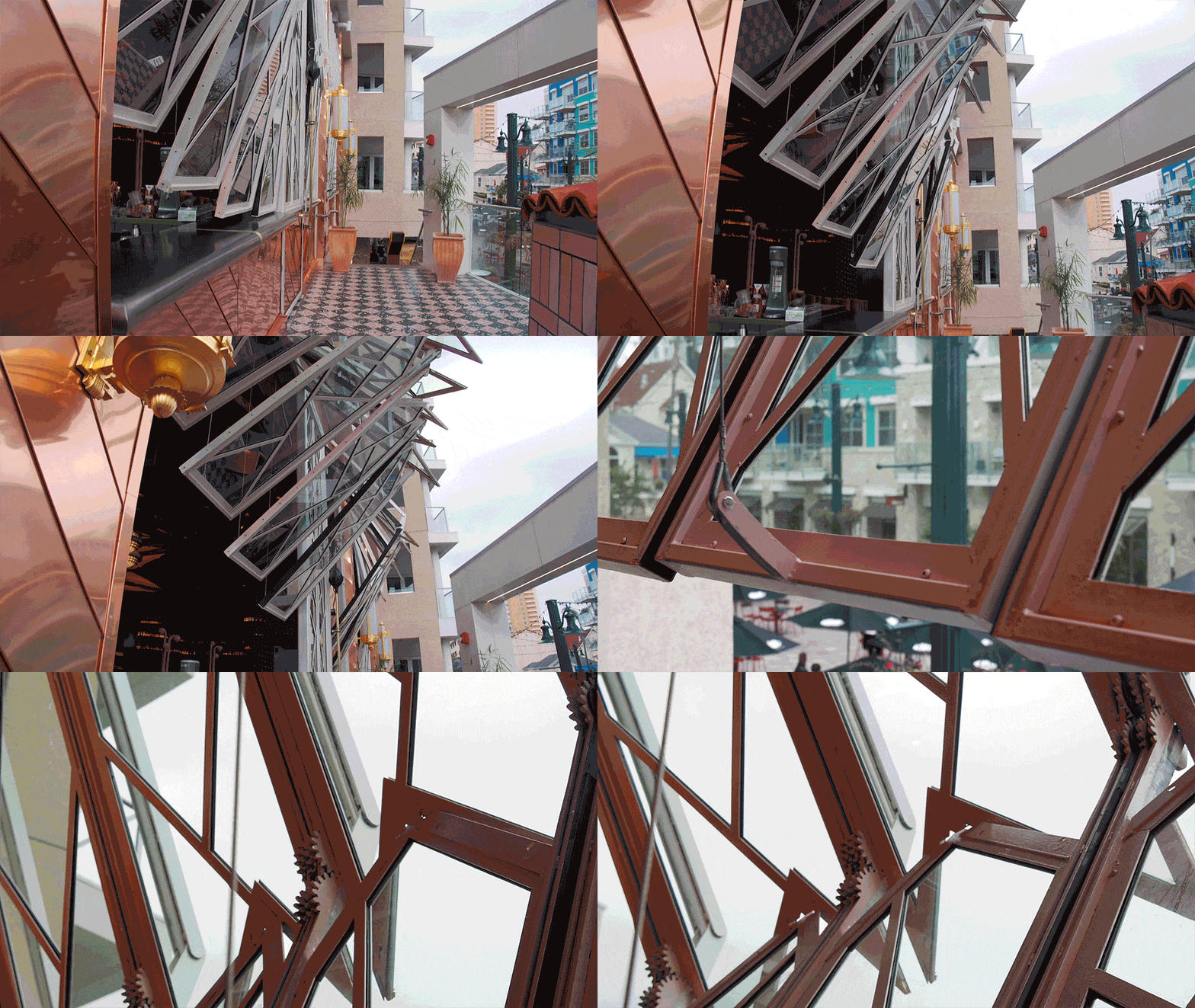
Founded in 1994 by Paul Basile, BASILE Studio is a full-service design, build, and fabrication studio headquartered in a 12,000-square-foot warehouse in San Diego’s East Village. What makes the firm exceptional is that it fabricates nearly every project in-house: a team of more than 60 designers, artisans, and fabricators—including specialists in metalwork, woodworking, CNC machining, and mechatronics—works under one roof to take projects from design through construction. Basile himself is a fourth-generation builder whose family roots are in Detroit construction, and metal remains the studio’s signature material.
The firm’s most celebrated project is Born & Raised, a 10,000-square-foot upscale steakhouse in Little Italy that transformed a 1930s-era drugstore into a mid-century-meets-Art Deco showpiece. BASILE Studio designed and built every surface and detail in-house—from the curved camel-colored leather booths and imported Italian green marble tabletops to the parquet and terrazzo floors, tambour paneling, and book-matched walnut veneer ceiling sourced from a single Northern California tree. The project won the Hospitality Design Award for Upscale/Fine Dining, the Eater San Diego Design of the Year, and multiple Orchid Awards from the San Diego Architectural Foundation. The studio has since designed more than 75 restaurants, including Morning Glory, Raised by Wolves, Craft & Commerce, Ironside, Kindred, and Puesto locations throughout California. Remarkably, more than 95 percent of its restaurant projects remain open and thriving.
Regions served: San Diego, Los Angeles, nationally
Common project types: Fine dining, steakhouses, bars, craft breweries, speakeasies, boutique hotels
Website: https://www.basilestudio.com
.png?width=1523&height=402&name=image%20(40).png)
Hatch Design Group has specialized in restaurant and hospitality design since 1969, making it one of the longest-running firms of its kind in Southern California. The firm provides each client with front-of-house interior design as well as food-service design—a rare dual capability that allows it to coordinate the aesthetic and operational dimensions of a restaurant under one roof. Interior Design magazine has honored Hatch with its Design Giants Award for more than 20 consecutive years.
The firm’s client list includes some of San Diego’s most established restaurant groups. Hatch designed the Maryjane’s restaurant and bar at the Hard Rock Hotel San Diego, the Brigantine’s celebrated Del Mar location, and multiple concepts for the Miguel’s restaurant chain. The firm works closely with chefs during the initial design phases to ensure equipment layouts and kitchen workflows align with culinary programs—a level of food-service integration that larger, more generalized firms often lack. Clients consistently praise Hatch for creating designs that age well and maintain their ambiance over time, a testament to the firm’s half-century of accumulated expertise.
Regions served: San Diego, Southern California, nationally
Common project types: Restaurants, hotel dining, food-service design, branded restaurant rollouts
Website: https://www.hatchdesign.com
.png?width=1547&height=883&name=image%20(41).png)
Crave Design Co. is a San Diego–based restaurant interior design firm led by a team of self-described creative rebels. The firm specializes exclusively in food-and-beverage spaces—restaurants, bars, pizza shops, wine bars, speakeasies, coffee shops, cafés, and bakeries—and prides itself on delivering out-of-the-box, highly expressive design concepts. Crave’s approach is inspired by color, passion, music, and experiences, and the studio is known for pushing against conventional design rules to realize each client’s vision.
Among its San Diego projects, Crave designed the Humble Somm Wine Bar, a moody and intimate space with rich material layering that reflects the personality of its wine-focused concept. The firm works primarily with independent restaurateurs and first-time operators, offering a personalized and collaborative design process from early concept through construction documentation. For restaurateurs seeking a design partner who will treat their space as a deeply personal expression rather than a templated solution, Crave stands out in the San Diego market.
Regions served: San Diego, Southern California
Common project types: Restaurants, bars, wine bars, coffee shops, bakeries
Website: https://www.cravedesignco.com
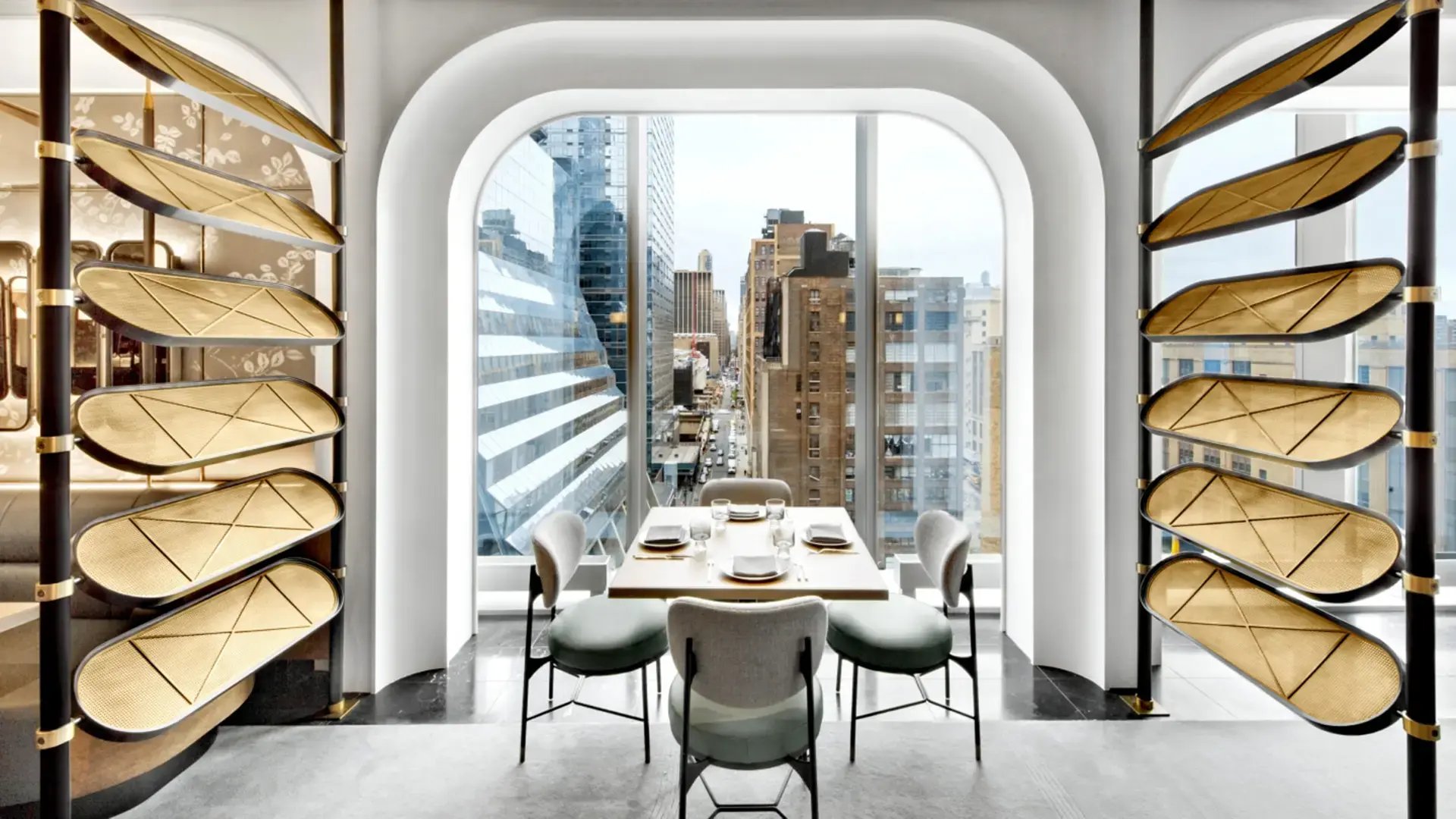
With studios in New York and San Francisco (as well as London, Bangkok, and Miami), AvroKO has been designing award-winning restaurant, bar, and hotel experiences for more than two decades. The firm’s trademarked philosophy of “Hospitable Thinking” drives a human-centric approach to design that extends beyond food and beverage into residential, wellness, and retail. AvroKO also operates its own hospitality strategy arm, as well as a custom furniture and lighting fabrication company called Goodshop.
In the Bay Area and Northern California, AvroKO designed Ninebark, a nearly 5,000-square-foot, three-story restaurant with a rooftop bar in Napa Valley created for chef Matthew Lightner. The space earned California Home + Design’s Best New Restaurant distinction and was named a Top 100 Wine Restaurant by Wine Enthusiast. The firm also designed RN74, an upscale urban French wine bar and restaurant on the corner of Mission and Fremont in San Francisco, where it created custom furniture and lighting inspired by the early railways of Burgundy. AvroKO’s San Francisco gallery and gathering space, HOST on Howard, won Interior Design’s Best of Year award. For restaurateurs who want a firm that can think holistically across interior design, branding, food-and-beverage strategy, and custom fabrication, AvroKO offers a breadth that few competitors can match.
Regions served: San Francisco, New York, nationally and internationally
Common project types: Restaurants, hotel dining, bars, food halls, branded F&B concepts
Website: https://www.avroko.com
.png?width=1418&height=763&name=image%20(42).png)
Founded in 1999 by Will Meyer and Gray Davis, Meyer Davis has grown into one of the most decorated design studios in the country, with offices in New York, Los Angeles, Miami, London, and Dubai. The firm was named 2025 Design Firm of the Year by Hospitality Design magazine and inducted into the Interior Design Hall of Fame. In the restaurant space, Meyer Davis earned a James Beard Award for Best Restaurant Design for its work on St. Cecilia in Atlanta.
From its Los Angeles office, the firm serves a growing number of California-based restaurant and hotel clients. Meyer Davis’s roster of chef collaborators includes Andrew Carmellini, Daniel Boulud, Tom Colicchio, and Jean-Georges Vongerichten—a client list that speaks to the caliber of the firm’s work. The approach balances proportion, materiality, and light, creating environments that feel refined without being stiff. With more than 70 staff across its global offices, Meyer Davis operates at a scale that few boutique-minded firms can match while maintaining a hands-on design sensibility that appeals to chef-driven concepts.
Regions served: Los Angeles, New York, nationally and internationally
Common project types: Fine dining, hotel restaurants, bars, chef-driven concepts, branded rollouts
Website: https://www.meyerdavis.com
The firms in this guide represent the full spectrum of restaurant design in California—from the craft-and-fabrication mastery of BASILE Studio in San Diego to the chef-collaborative modernism of CCS Architecture in San Francisco, the prolific neighborhood-shaping work of ROY Hospitality, and the adaptive reuse expertise of Studio UNLTD in Los Angeles. What they share is a belief that great restaurant design is inseparable from great dining: the materials, the light, the flow of a room, and the story a space tells all shape how a guest experiences every dish that leaves the kitchen.
Choosing a design firm is ultimately about finding a creative partner whose process, personality, and portfolio align with the concept you’re building. Study the work showcased on each firm’s website, visit the restaurants they’ve designed, and pay attention to how those spaces make you feel—because that feeling is exactly what your future guests will carry with them long after the meal is over.
Build your business with confidence

Renovate confidently with Block
Easily compare quotes from top quality contractors, and get peace of mind with warranty & price protections.
Commercial
Commercial Tenant Improvement Contractors Explained
07.27.2026

California
Sacramento ADU Costs 2026: Types, Value, and Budget
06.29.2026

Working with Contractors
Is a Property Renovation Company Worth the Cost?
06.24.2026

California
Custom Home Building in Santa Rosa, CA: A Complete Guide
05.20.2026

California
Custom Home Building in Stockton, CA: Climate-First Guide
05.19.2026