





Working with Contractors
Is a Property Renovation Company Worth the Cost?
06.24.2026
04.16.2026


In This Article
Your restaurant's interior probably went through dozens of rounds of design review. You agonized over the lighting, the tile, the booth upholstery, the flow between the bar and the dining room. You thought carefully about how the space would feel at 7pm on a Friday night, how it would photograph, and how it would hold up after three years of heavy use.
Now ask yourself honestly: did your outdoor patio get the same treatment?
For most restaurants, the answer is no. The patio gets picked up as a secondary project, something tacked on after the "real" renovation is done, budgeted too lean, and handed off without the same level of scrutiny. The result is outdoor spaces that look provisional, age poorly, and underperform commercially despite genuinely good intentions.
Design your restaurant’s patio right, and the pay-off can be real; 54% of respondents are more likely to choose a restaurant with outdoor seating.
The patio is not where you send the extra chairs from the storage room. It's not where mismatched planters go to live. It's not acceptable to leave it poorly lit because "it's outside."
In the warmer months, the patio may be the first thing a potential guest sees as they walk by. It shapes how your restaurant is perceived from the street, how it photographs, and how your regulars describe the experience to friends. Every design decision that matters inside, including lighting, materials, furniture scale, and flow between service and seating, matters outside too.
Give your patio the same brief you'd give an interior designer. What is the mood? Does the material palette feel cohesive with the interior, or does it look like a different restaurant entirely? How does the lighting transition from day service to evening?
If you want outside eyes on that brief, Block Renovation's design services pair a professional designer with contractors who have built commercial exterior spaces before—people who know where the details get expensive and where they don't.
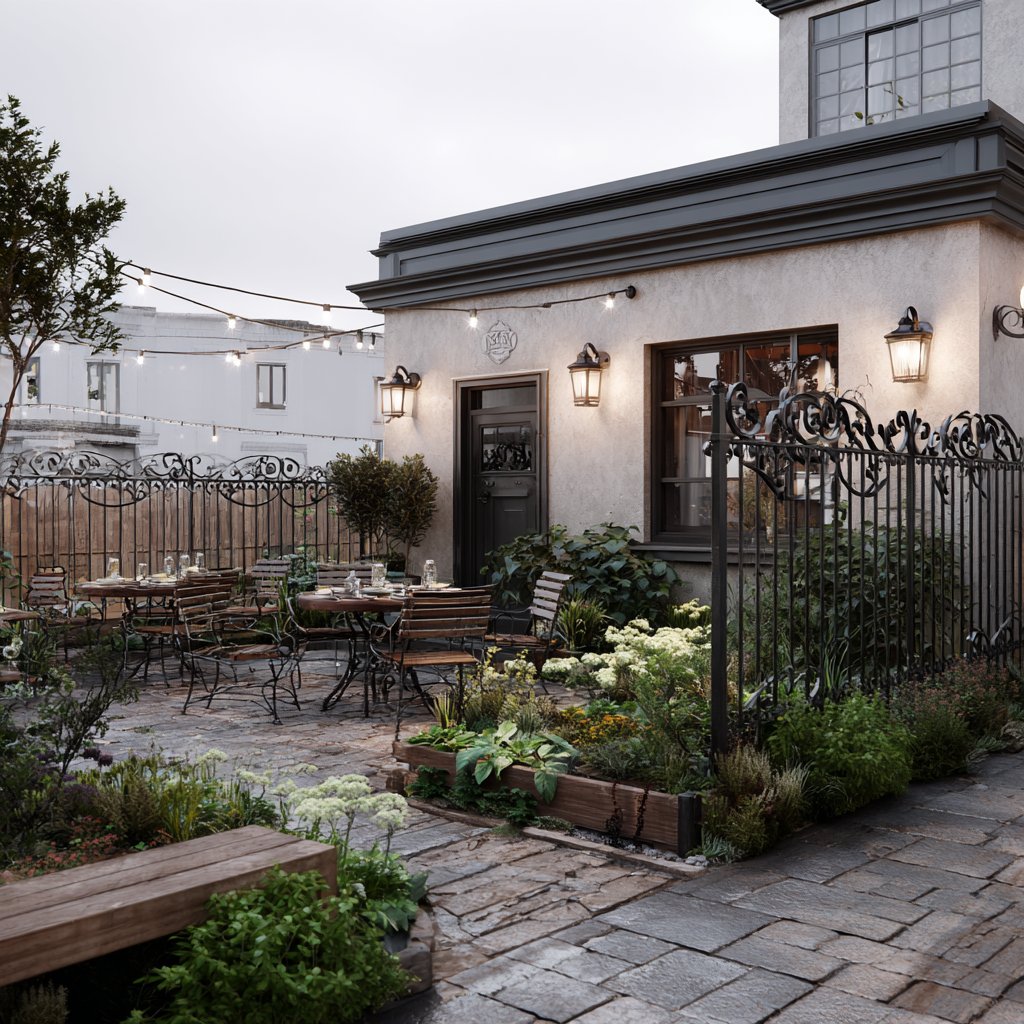
The design questions get specific fast. And the most common one, the one most restaurant owners either ignore or underestimate: what if the view isn't good?
Not every patio comes with a picturesque backdrop. Some face a parking structure. Some border a dumpster enclosure. Some look directly onto a busy service entrance or a windowless building wall that has seen better decades. The instinct is often to ignore it and hope guests don't notice. They do.
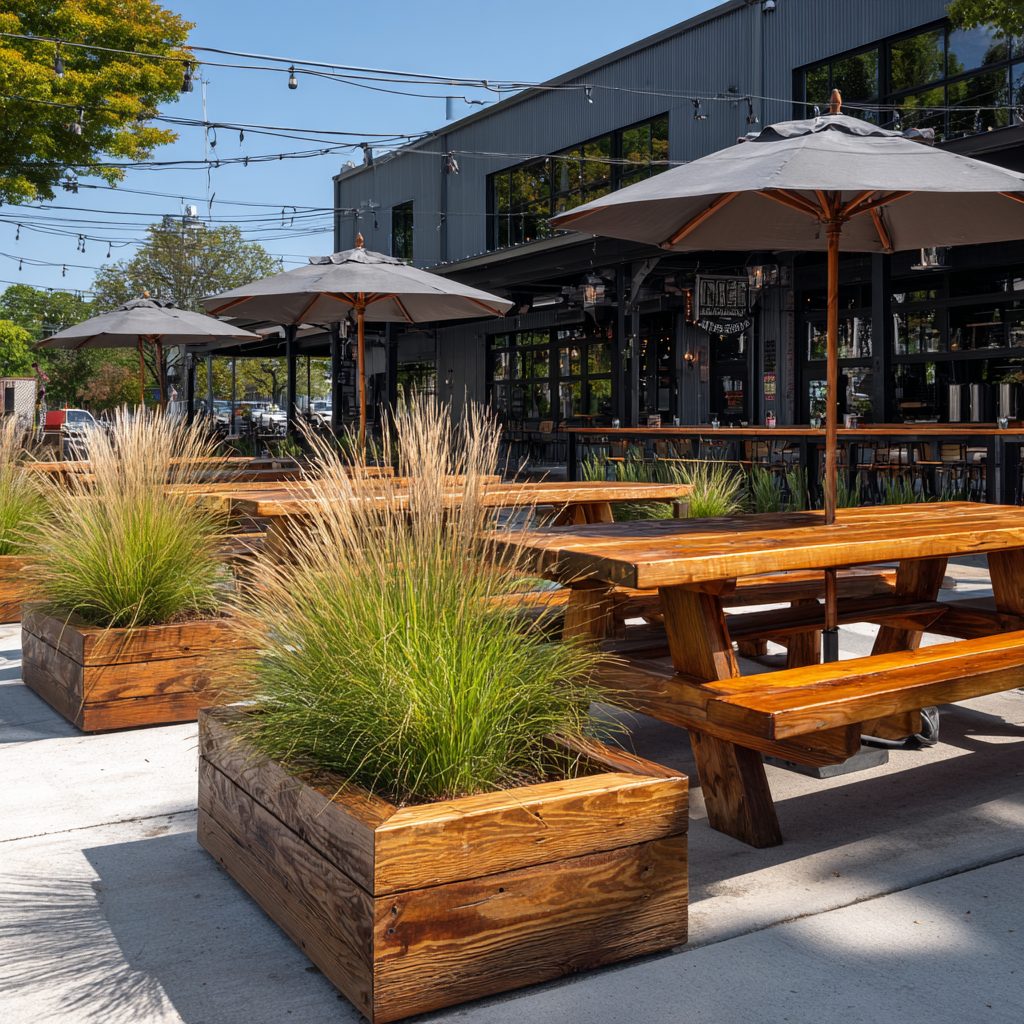
Good design and bad construction is still a bad patio. This is where the most consequential money gets spent, and where shortcuts reveal themselves fast.
Before material choices, there's a more fundamental question: are you building up or building flat?
A ground-level hardscape, poured concrete or concrete pavers laid on a prepared base, is the more common choice for good reason. It's structurally simpler, less expensive to build and maintain, and easier to make ADA compliant. It also ages better; there's no framing to rot, no decking boards to warp, and no ledger attachment to the building that can become a water intrusion point over time.
A raised deck, typically wood or composite framing elevated above grade, makes sense when the site demands it: uneven terrain, a sloped yard, or a space where you want to create a platform effect that reads as distinct from the surrounding ground.
Some restaurant owners choose a raised deck for purely aesthetic reasons, and it can look striking. But the tradeoffs are real. Raised decks require more maintenance, have a shorter lifespan than hardscape in most climates, and often require more complex permitting because they're classified as structures. If you're in a region with significant moisture or freeze-thaw cycles, wood framing is particularly vulnerable without rigorous waterproofing and ventilation designed in from the start.
Cheap materials are not appropriate for a commercial exterior, and "it's outside" is not a reason to lower your specifications. It's a reason to raise them. The exterior faces everything the interior does not: sun, moisture, freeze-thaw cycles, grease from service carts, and the daily punishment of chairs and tables being dragged across it. An interior floor might last fifteen years while a cheap outdoor surface might need to be torn out in three.
Poured concrete is the most durable option for high-traffic commercial use. It's load-bearing, low maintenance, and gives you a stable, level surface. Concrete pavers offer similar durability with more design flexibility; if a section gets damaged, individual pavers can be swapped out rather than requiring a full pour. Both are sound choices.
Gravel, decomposed granite, loose stone, and composite decking not rated for commercial use. These surfaces shift underfoot, create trip hazards, fail under heavy furniture, and become drainage problems after a few hard rain seasons. They also rarely read as elevated, which is not what you want when you're asking guests to spend $80 a head.
Slip-and-fall incidents are among the most common liability claims for restaurants, and patios carry more risk than the interior because they're exposed to water, grease, food debris, and weather. Four things your surface choice needs to get right:
Standing water is a safety hazard, a guest experience failure, and a structural liability. Drainage needs to be engineered into the base before any surface material goes down, not addressed as an afterthought when the first heavy rain reveals a problem. Work with your contractor to grade the surface correctly and install channel drains or area drains that direct water away from the seating area and the building foundation. In climates with significant rainfall, this is not optional.
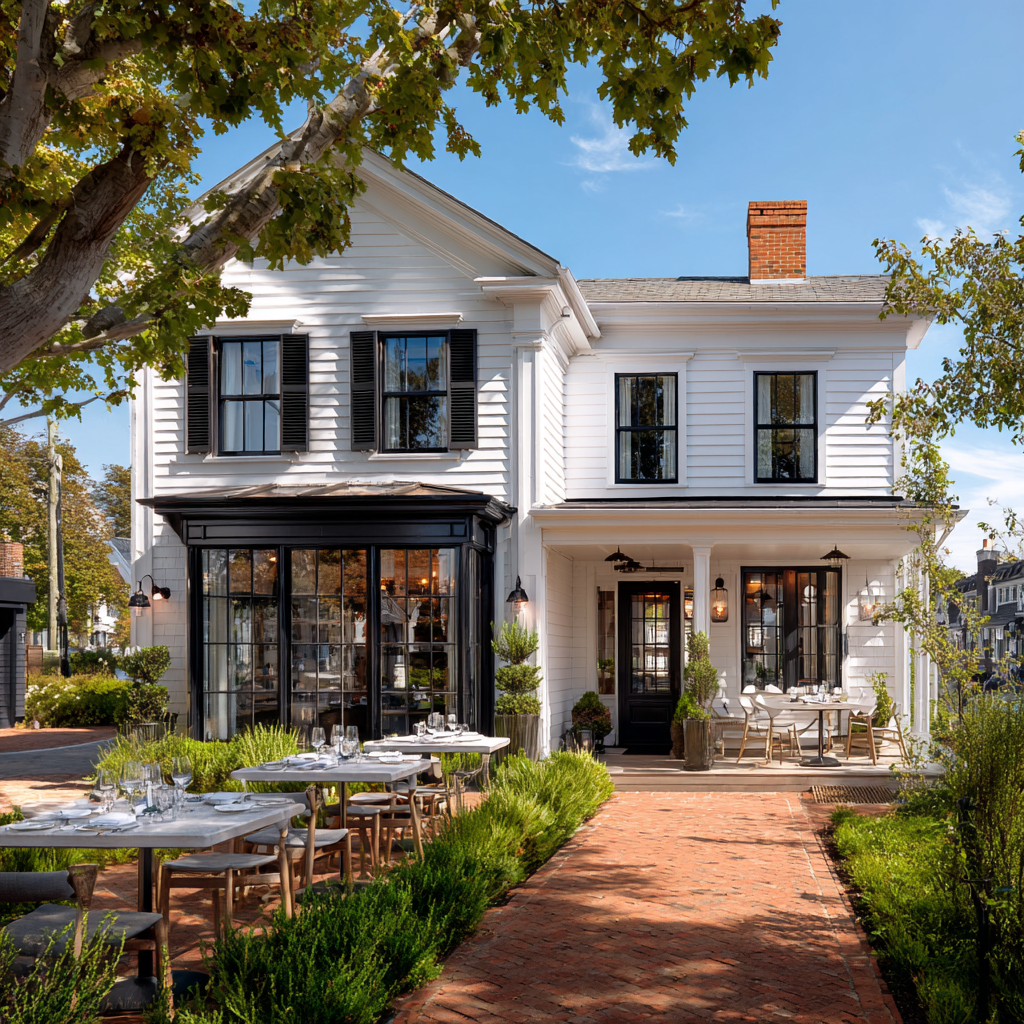
A patio usable from May to October is a start. A patio usable from March to November is a materially better business. Incorporate the below into your design to elongate your patio’s usability.
When planning the build, think about which of these systems you want the capacity to add, even if you don't install them on day one. Running electrical conduit for heaters or designing the perimeter to accommodate a glass wall system later costs very little during construction and a lot as a retrofit.
Here's an irrefutable pattern that plays out at restaurants across the country: the patio gets built, it looks great, and then outdoor guests start waiting noticeably longer for their food and check than inside diners.
This isn't a staffing problem. It's a design problem.
When a server has to walk back inside for every drink order, every condiment request, and every card swipe, the outdoor section becomes a logistical penalty by design. The guests sitting outside didn't choose to be deprioritized. But if there's nowhere outside to pour a drink, process a payment, or grab a side of aioli, they will be, no matter how good your team is. The fix isn't heroics from your staff. It's infrastructure built into the patio from the start.
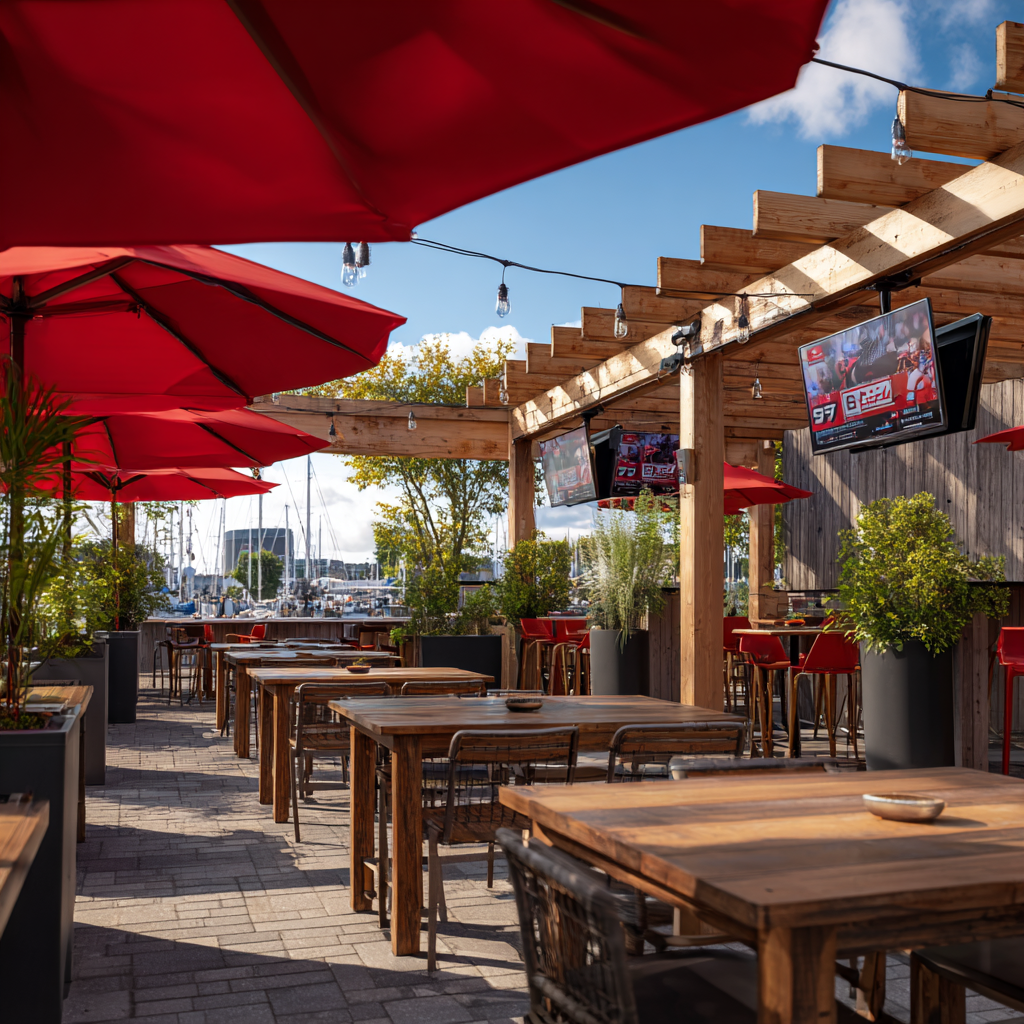
Before a patio can open, you need a clear picture of what your municipality and building actually allow. Most restaurant owners underestimate this part. In major cities, the full approval process can take three to six months, and that's before a single shovel goes in the ground.
Depending on your city and location, the list typically includes:
A commercial exterior renovation is not the same job as a residential one, and the contractors who do it well know that. Code compliance, ADA requirements, drainage engineering, permitting complexity, and materials specified for heavy daily use: these require a different level of experience, and getting them wrong costs far more than it saves.
Block Renovation connects restaurant owners with thoroughly vetted, licensed, and insured contractors who have real experience with commercial exterior construction. Every contractor in Block's network passes through license verification and workmanship reviews, so you're not starting from scratch on due diligence when you're already stretched thin running a restaurant.
Block's platform lets you receive detailed, line-item proposals from multiple contractors, compare them side by side, and work with a project planner who can flag missing line items and ensure the pricing is accurate and fair before you commit.
Remodel with confidence through Block

Connect to vetted local contractors
We only work with top-tier, thoroughly vetted contractors

Get expert guidance
Our project planners offer expert advice, scope review, and ongoing support as needed
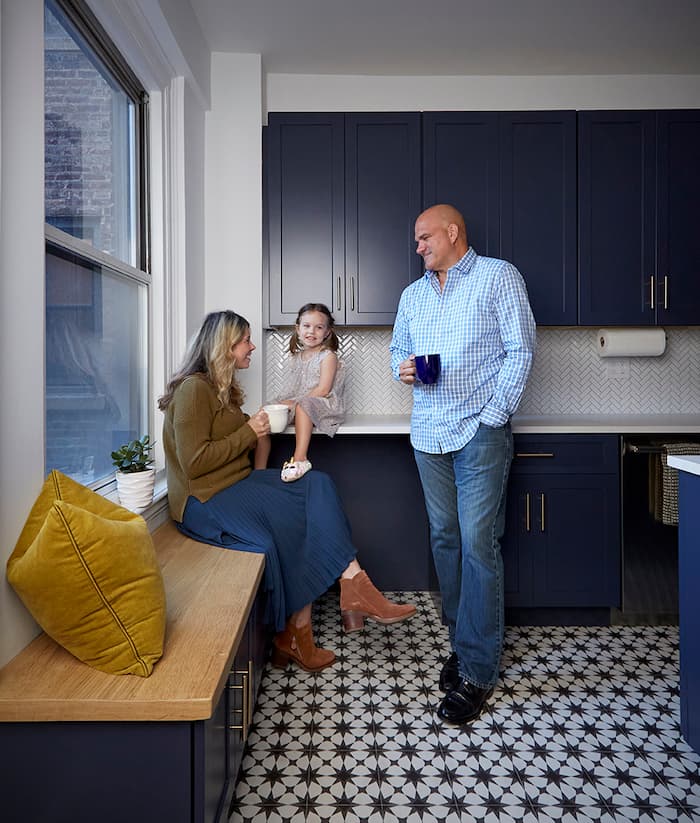
Enjoy peace of mind throughout your renovation
Secure payment system puts you in control and protects your remodel


Renovate confidently with Block
Easily compare quotes from top quality contractors, and get peace of mind with warranty & price protections.
Working with Contractors
Is a Property Renovation Company Worth the Cost?
06.24.2026

Commercial
Commercial Remodeling in San Diego by Neighborhood | Block Renovation
04.27.2026
Commercial
Commercial Remodeling and Buildouts in Dallas-Fort Worth | Block Renovation
04.24.2026
Commercial
2026 Restaurant Design: 11 Trends Defining the Industry
04.24.2026

Commercial
Restaurant Remodel Regulations Checklist
04.21.2026