



Kitchen
Retro Kitchen Design Ideas: 7 Modern Renovations
05.18.2026
12.04.2025


In This Article
Lighting might be one of the last things people think about when designing a kitchen—but it’s almost always one of the most defining. The right lighting plan doesn’t just make your kitchen look good; it makes it feel right. It shapes how you cook, clean, entertain, and unwind.
A well-lit kitchen layers light like a recipe—each ingredient matters, and together, they bring the whole space to life. Whether you want soft morning calm or dinner-party energy, a balanced mix of fixtures can set the tone and make every meal feel a little more special.
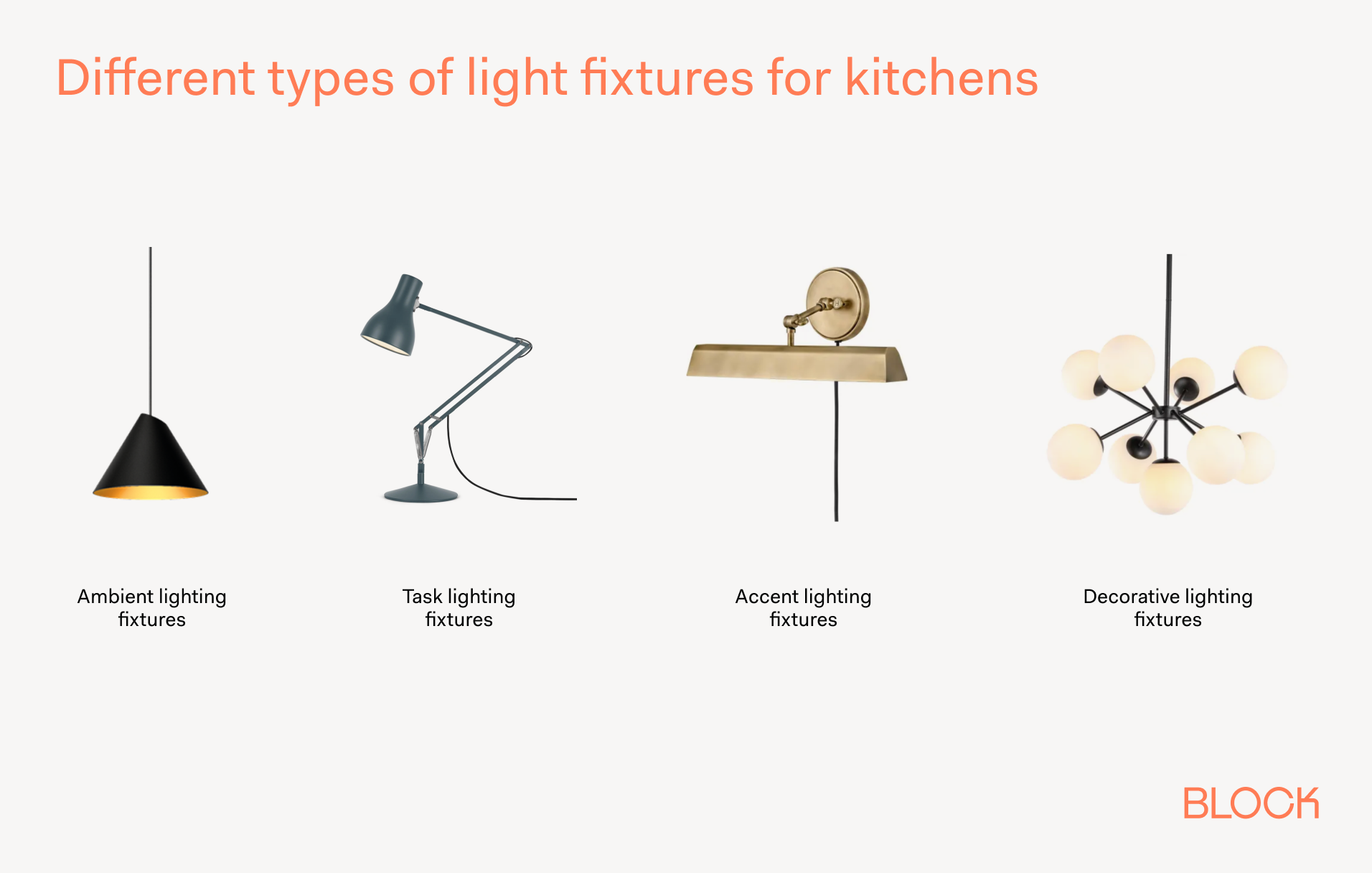
Ambient lighting is your kitchen’s foundation—the all-over glow that helps everything feel open and inviting. It provides general visibility and creates the first impression of your space. Think of it as the daylight of your interior world: soft enough to live in, strong enough to see clearly.
Common fixture types:
Recessed ceiling lights
Flush-mount or semi-flush fixtures
Large or linear pendants
Ceiling track systems
Statement chandeliers that balance form and function
Task lighting is the focused layer that helps you actually get things done. It brightens the kitchen counters where you chop vegetables, the sink where you scrub dishes, and the island where homework somehow always happens. It’s your kitchen’s most hard-working layer—and the one you’ll thank yourself for every night.
Common fixture types:
Under-cabinet LEDs for crisp counter visibility
Pendants above islands or peninsulas
Adjustable track lights
Focused recessed downlights
Articulated spotlights
Accent lighting brings personality. It highlights what you love most about your kitchen—beautiful tilework, open shelves, or the texture of real wood. It’s like a spotlight on the details that make your space yours.
Common fixture types:
LED strips along toe kicks for depth
Glass cabinet lighting for soft interior glow
Directional spotlights for texture or art
Picture or wall-mounted luminaires
Subtle cove lighting for atmosphere
Decorative lighting is where function meets flair. It’s what catches your eye when you walk in—the sculptural pendant, the elegant wall sconce, or that one-of-a-kind chandelier for particularly large kitchens. Decorative lighting adds polish and presence, bringing personality to the practical side of illumination.
Common fixture types:
Single or multi-light pendants
Sculptural or blown-glass fixtures
Textured linen or rattan shades
Sleek modern sconces
Statement chandeliers with warm diffusion
Design a Home That’s Uniquely Yours
Block can help you achieve your renovation goals and bring your dream remodel to life with price assurance and expert support.
Get Started
Your lighting’s color temperature is almost as important as the choice of fixture, itself. Warm white (2700–3000K) gives off a golden, relaxed hue that makes kitchens feel cozy and connected. It works beautifully in spaces with wood cabinetry or open layouts that spill into living and dining areas.
By contrast, cool white (3500–4100K) creates bright, crisp light that keeps focus and energy high. It highlights clean lines, glossy tile, and sleek finishes, which is why it’s a go-to for modern kitchens.
Many homeowners blend the two: cooler light for everyday cooking zones, warmer accents for seating or entertaining. It’s all about matching the light to the moment.
Turn your renovation vision into reality
Get matched with trusted contractors and start your renovation today!
Find a Contractor
Each kitchen style calls for its own approach to lighting. The goal is to match form and function while allowing materials and finishes to shine.
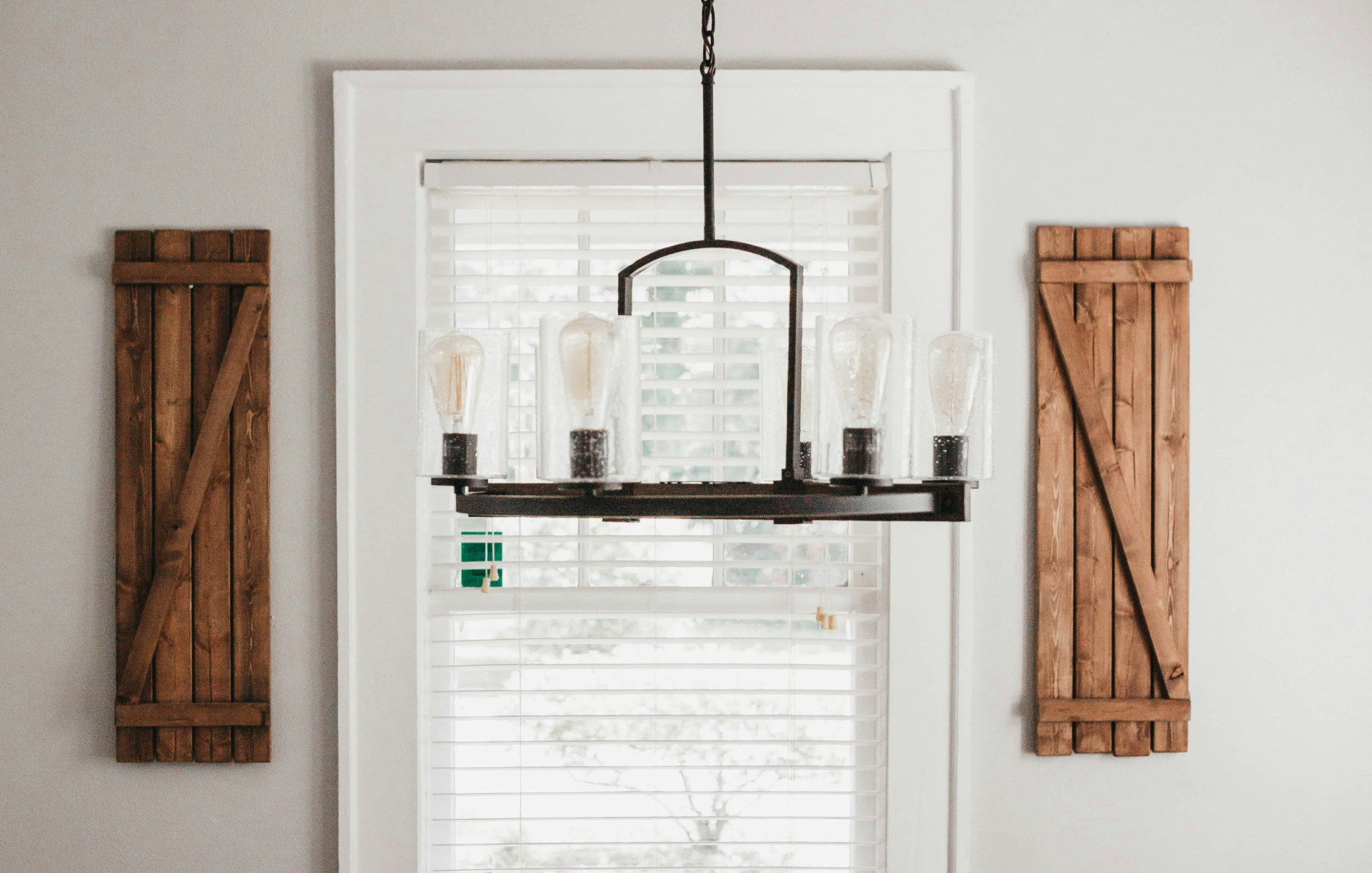
Farmhouse design blends traditional craftsmanship with everyday practicality. Fixtures should feel grounded and classic, favoring simple shapes and warm, familiar finishes. A thoughtful mix of vintage-inspired and functional fixtures reinforces the farmhouse ideal of beauty built on utility.
Black, bronze, or aged metal pendant lights
Glass or enamel dome fixtures
Wall sconces flanking open shelving
Edison-style bulbs for soft glow
Warm bulbs that complement wood accents
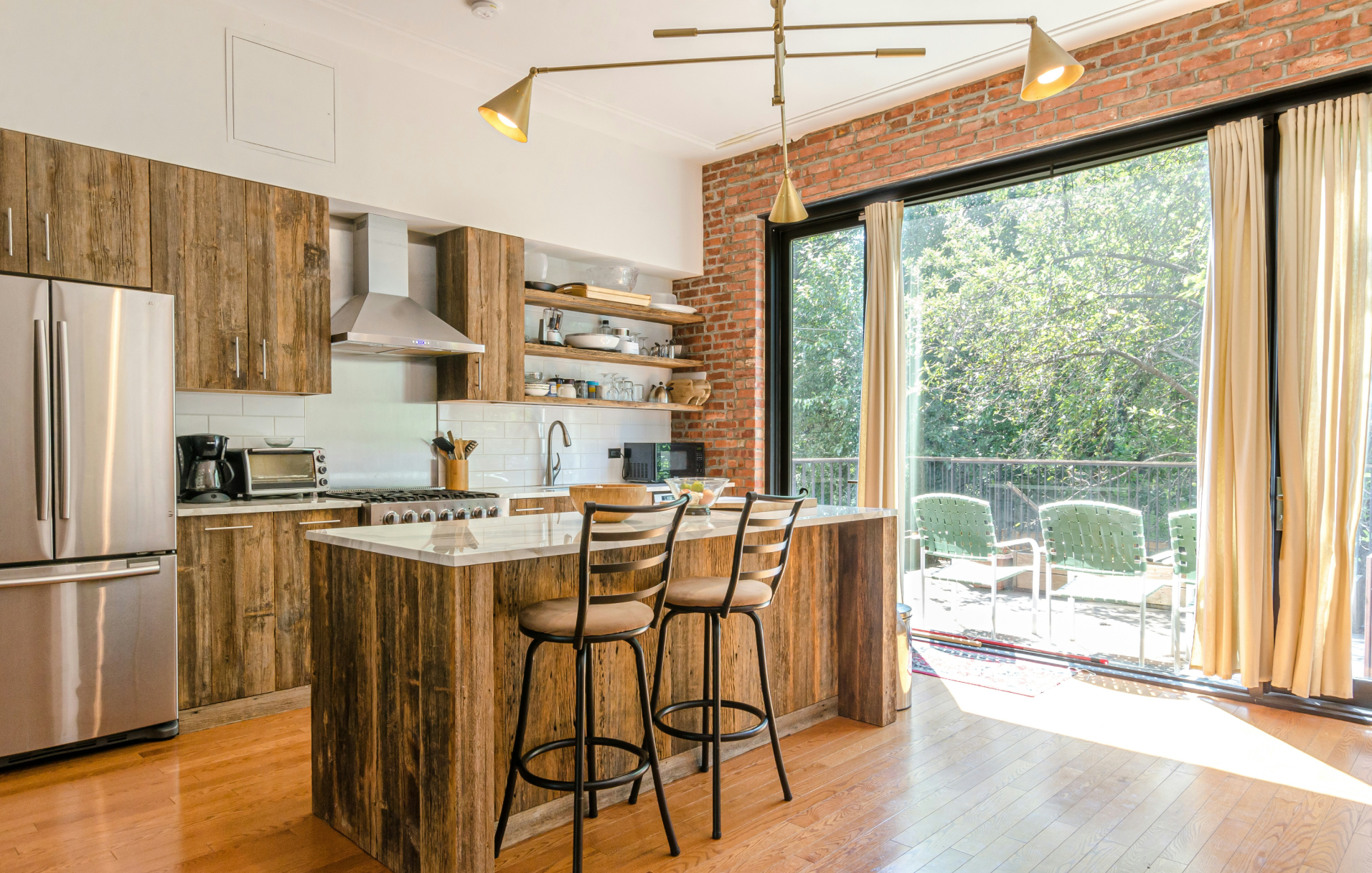
Inspired by natural materials and Mediterranean warmth, a modern Tuscan kitchen benefits from layered lighting that enhances texture and richness. Lighting should highlight wood grains, stone surfaces, and the interplay of warm tones that define the space. Decorative fixtures often have organic shapes and aged finishes that add depth without feeling ornate.
Antique iron or bronze chandeliers
Amber glass for gentle diffusion
Soft recessed lighting with dimmable bulbs
Wrought-iron wall sconces
Under-cabinet lighting highlighting stone detail
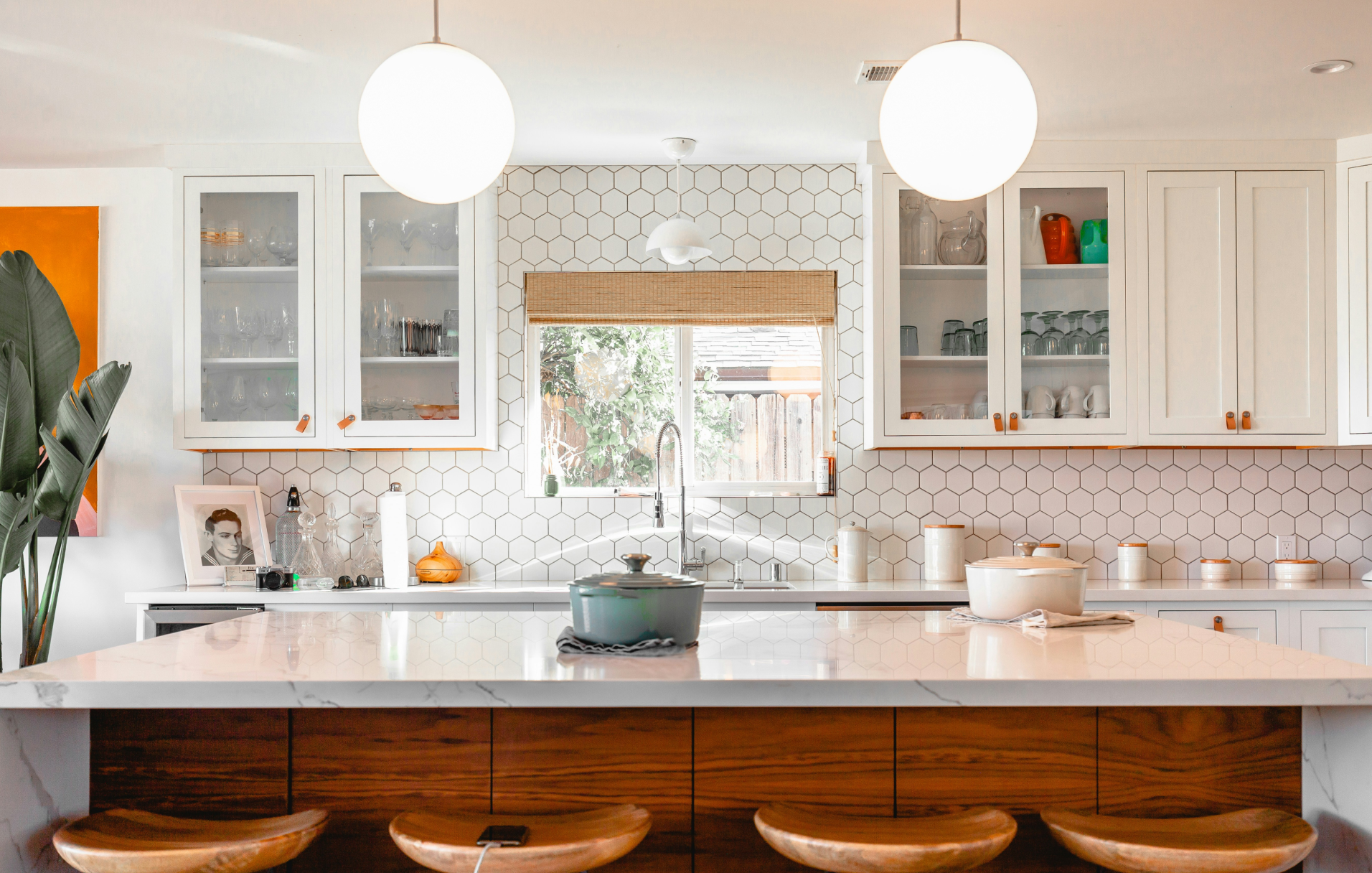
Mid-century modern kitchen design combines simplicity with precision. Lighting should echo clean forms and thoughtful geometry. Fixtures in this style become part of the architecture, often acting as sculptural focal points rather than background accents. The look is streamlined but warm, emphasizing timeless design and the quality of light itself.
Globe pendants or multi-arm chandeliers
Matte brass or walnut accents
Semi-flush ceiling fixtures
Discreet under-cabinet LED strips
Warm white bulbs around 3000K
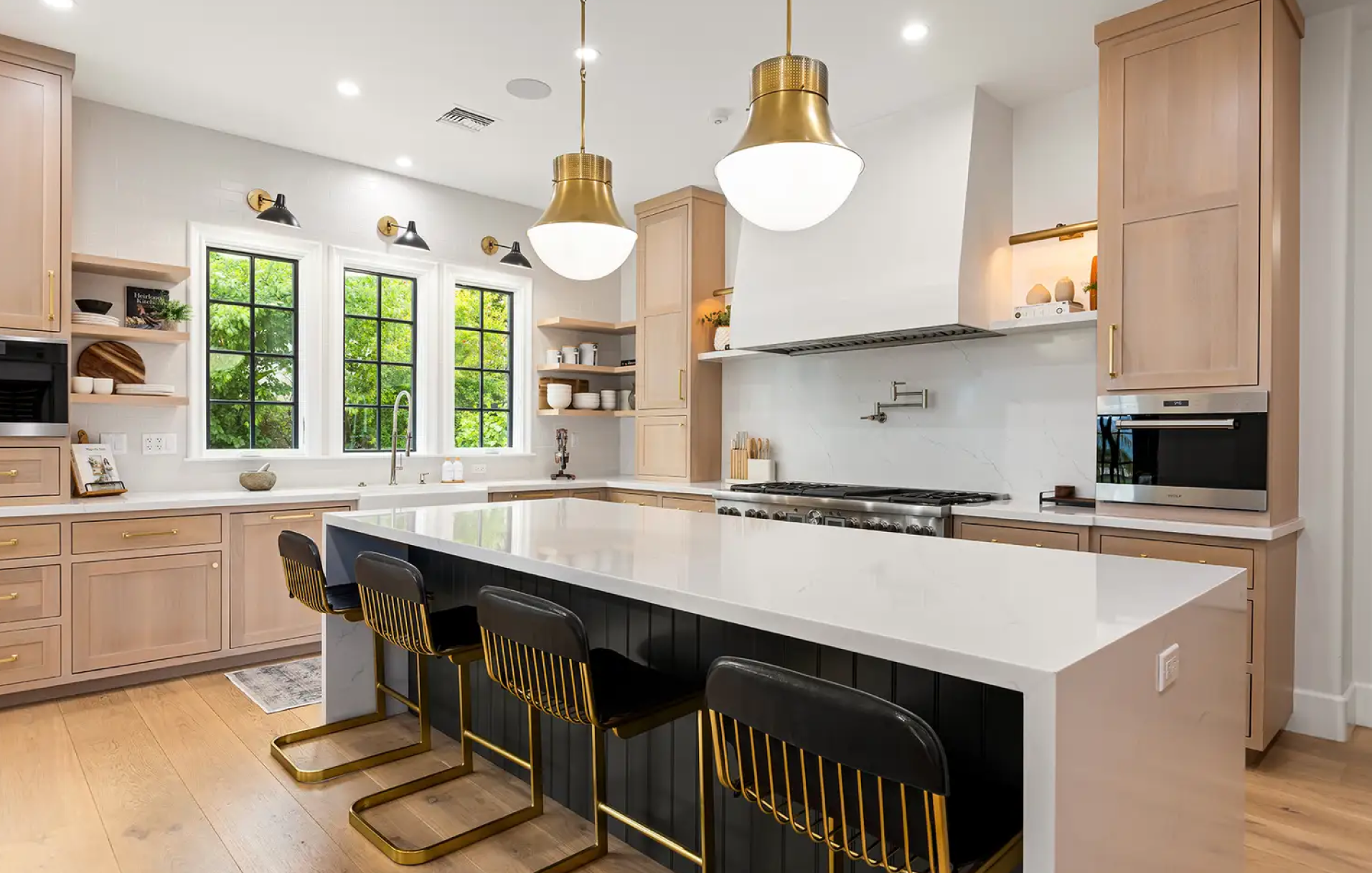
Transitional kitchens mix traditional and modern details, prioritizing simplicity and balance. Lighting in these spaces should be refined, timeless, and understated. The goal is to create flow—fixtures that bridge old and new without calling attention to themselves.
Drum or dome pendants
Two-tone metal finishes
Balanced neutral temperatures (3000–3500K)
Recessed ceiling lights for clean lines
Soft under-cabinet illumination
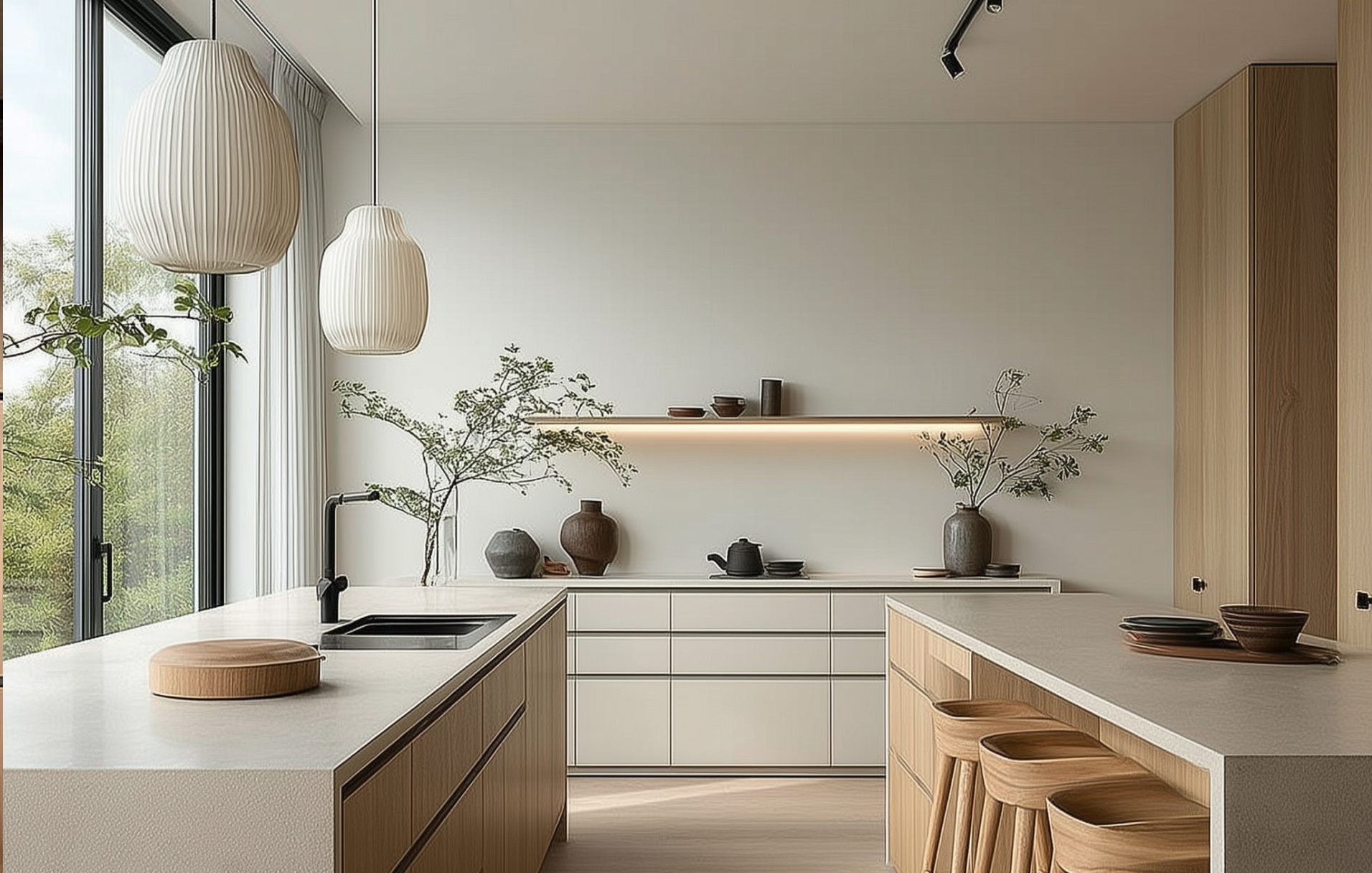
Scandinavian kitchen design emphasizes light and function; Japandi introduces structure and stillness. Both prize natural light and a calm, minimal aesthetic. Lighting should feel effortless, with a focus on warmth, rhythm, and restraint. Clean lines, honest materials, and soft brightness work together to maintain serenity without sacrificing utility.
Maximize daylight with open or sheer windows
Use white or soft neutral fixtures
Conceal LED strips for subtle brightness
Choose paper, linen, or ceramic shades
Keep bulbs warm to neutral for restful tone
Maintain consistent spacing for calm rhythm
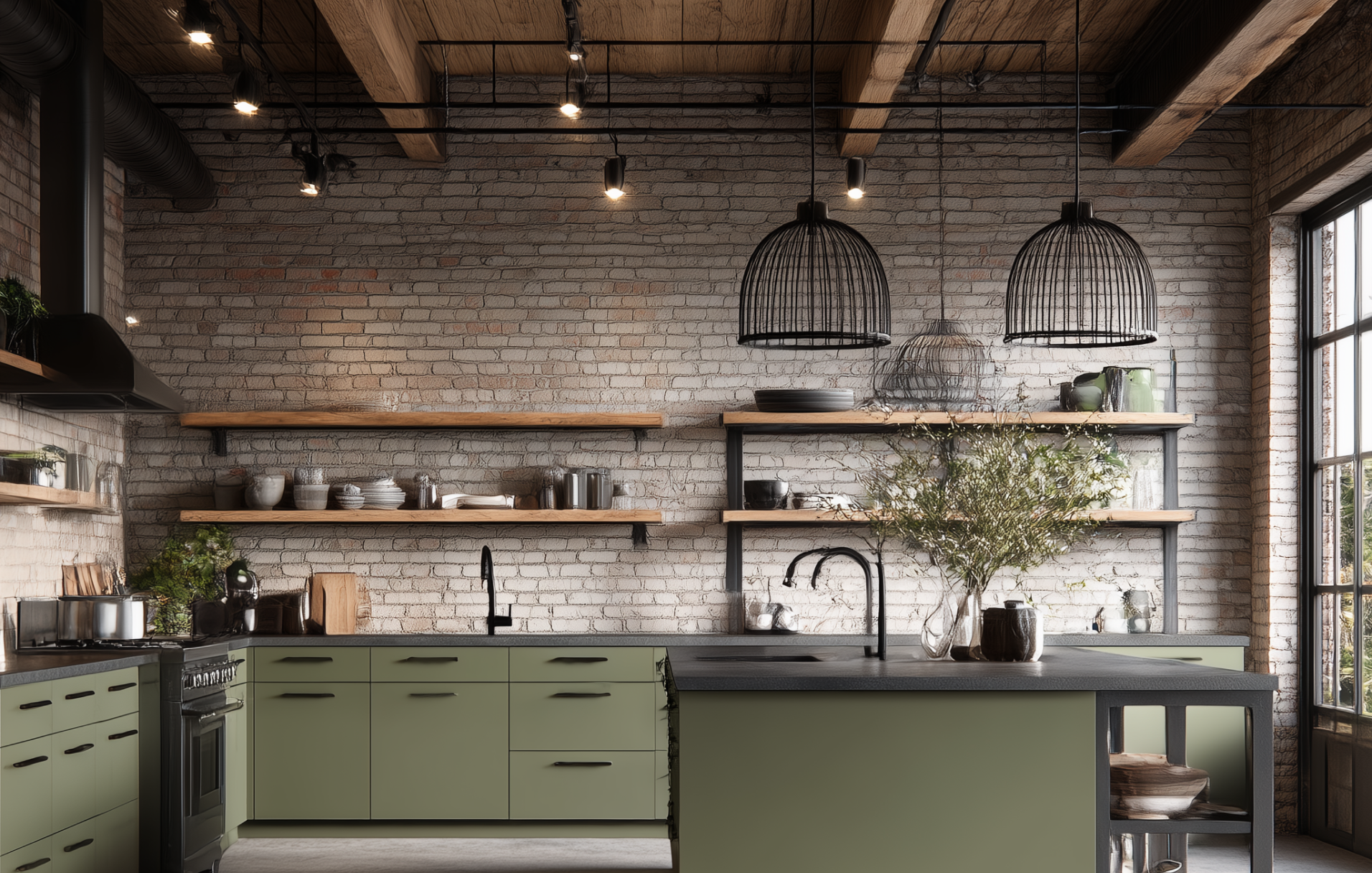
Industrial kitchens focus on utility and honest materials. Keep lighting simple, durable, and intentional. The best fixtures feel as though they could have been part of the original structure—straightforward, functional, and built to last. The result is a space that feels strong and purposeful, without losing warmth or balance.
Matte black or zinc metal fixtures
Cage-style or dome pendants
Track lighting for adjustable coverage
Spotlights emphasizing brick or concrete
Exposed Edison bulbs for character
Good lighting balance depends on both variety and control. Each source should serve a purpose, and together they should create an atmosphere that feels comfortable and natural.
Layer your lighting. Combine ambient, task, and accent sources rather than relying on a single light overhead. This helps distribute brightness evenly and makes your kitchen feel thoughtfully designed.
Avoid shadows. Aim light toward work areas from in front or above, not behind, to prevent dark zones on counters or sinks. Proper placement makes the room feel more open and easier to use.
Use dimmers. Adjustable brightness creates flexibility for different times of day—bright for busy mornings, soft for evening meals. Dimmers also extend bulb life and reduce energy use.
Highlight focal points. Use targeted light for backsplashes, architectural detail, or open shelving. Accent lighting draws attention to craftsmanship and completes the layered look.
Consider your ceiling height. Pendant and chandelier sizes should align with your kitchen ceiling’s scale. High ceilings can accommodate deeper fixtures; lower ones benefit from recessed or flush options to preserve openness.
Design a Home That’s Uniquely Yours
Block can help you achieve your renovation goals and bring your dream remodel to life with price assurance and expert support.
Get Started
Open and semi-open floor plans bring light, movement, and connection between spaces—but they can also blur boundaries. Without careful planning, overhead lighting may spill unevenly across areas or leave certain zones feeling unfinished. The right lighting strategy helps define spaces while keeping the layout cohesive.
Start by mapping your functional zones. Consider the distinct roles within your layout—cooking, dining, and relaxing—and use lighting to outline each one. Task lighting for prep areas, pendants over the island, and softer ambient light for dining help establish clear boundaries that feel natural, not forced.
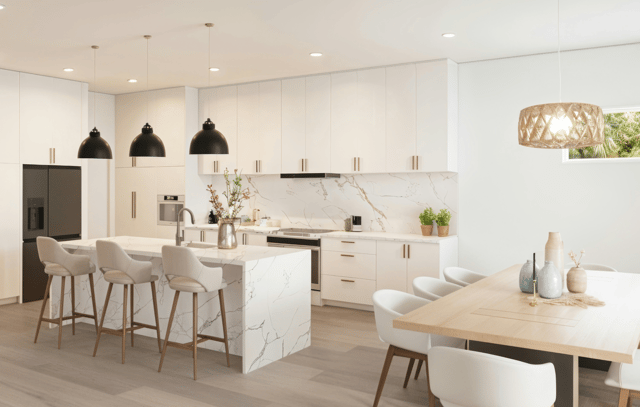
Anchor the kitchen with statement fixtures. Pendant lighting or a proportional chandelier above the island acts as both a focal point and a visual marker, helping the kitchen read as its own defined area within a shared open space.
Use transition lighting to connect zones. Recessed ceiling lights, rail systems, or subtle wall washing can guide the eye between areas without harsh cutoffs. Consistent fixture finishes and bulb tones help create a smooth visual flow across rooms.
Align sightlines and design language. In open layouts, every fixture is visible from multiple angles. Choose complementary materials and proportions so each light contributes to a unified, intentional whole rather than competing for attention.
Block Renovation is a trusted platform designed to make home remodeling more straightforward and predictable. Homeowners can plan, visualize, and budget their renovation through Block’s free online studio, then get matched with fully vetted, licensed contractors.
Each project includes transparent pricing, expert-reviewed scopes, and secure progress-based payments. From design to final walkthrough, Block offers the clarity and structure every renovation deserves—so you can focus on creating a kitchen you’re proud to live in.
Remodel with confidence through Block

Connect to vetted local contractors
We only work with top-tier, thoroughly vetted contractors

Get expert guidance
Our project planners offer expert advice, scope review, and ongoing support as needed
Enjoy peace of mind throughout your renovation
Secure payment system puts you in control and protects your remodel

Renovate confidently with Block
Easily compare quotes from top quality contractors, and get peace of mind with warranty & price protections.
Kitchen
Retro Kitchen Design Ideas: 7 Modern Renovations
05.18.2026
Kitchen
L-Shaped Kitchen Layouts & Designs: 6 Floor Plans
05.13.2026
Kitchen
Closet to Pantry Conversion: Ideas, Costs, and Tips
05.04.2026
Kitchen
Galley Kitchen Remodel: Before & After Inspiration | Block
05.01.2026
Kitchen
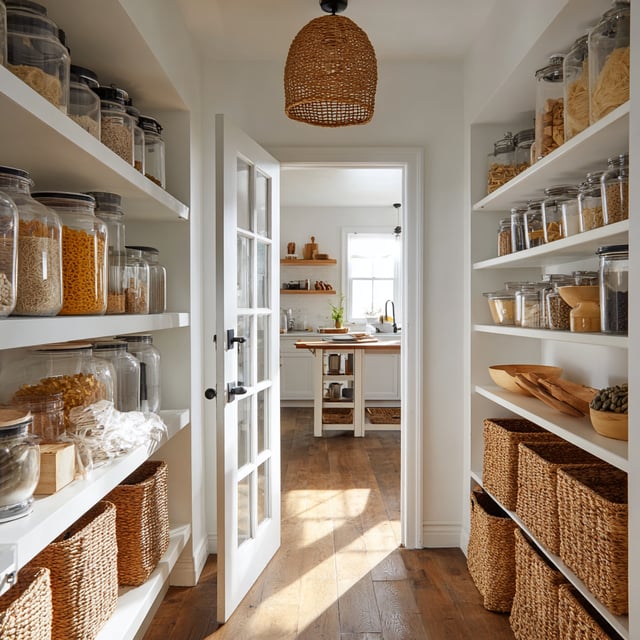
Building a Small Walk-In Pantry: Size and Layout Guide
04.29.2026