



Kitchen
A Galley Kitchen Remodel in NYC - Adding a Breakfast Bar
07.02.2026
02.19.2026


In This Article
There's something magnetic about a kitchen island with rounded edges. In a world of sharp right angles and rigid cabinetry, a curve feels like a breath of fresh air — a moment where the architecture exhales. Rounded kitchen islands have surged in popularity not just because they're beautiful, but because they solve real design problems: they improve traffic flow in tight kitchens, soften the visual weight of a large footprint, and create a natural gathering point that feels more inviting than a hard rectangular edge ever could.
But here's the thing many homeowners don't realize: "rounded" can mean many different things. Your kitchen island doesn't have to be a perfect circle or a symmetrical oval to incorporate the fluidity of curves. A single softened corner, a gently bowed edge on one side, or a half-moon breakfast bar extension all count. The goal isn't geometric perfection — it's introducing movement and softness into a space that's traditionally all straight lines.
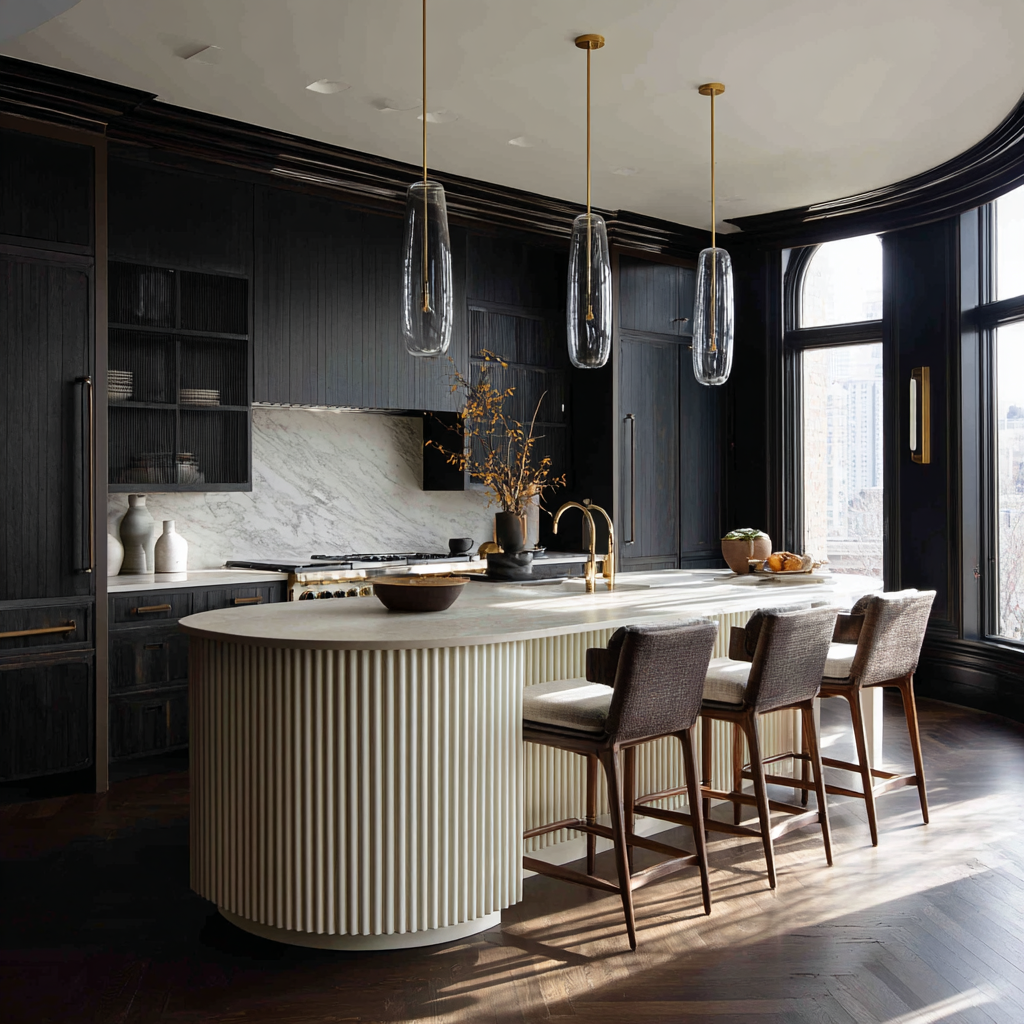
If you're drawn to deep, saturated tones and a sense of drama, a rounded island can serve as a luminous counterpoint to dark surrounding cabinetry. Picture a pale, fluted island set against near-black walls — the curve catches light differently at every hour, creating a focal point that's simultaneously grounding and ethereal. Pair brass or gold-toned hardware and faucets with the island to introduce warmth without competing with the moody palette.
In these darker schemes, surface texture becomes especially important. Reeded or fluted paneling on a rounded island base adds dimension that flat panels simply can't achieve. The vertical lines of the fluting play beautifully against the horizontal sweep of the curve — it's the kind of detail that elevates a kitchen from "nice" to "architectural."
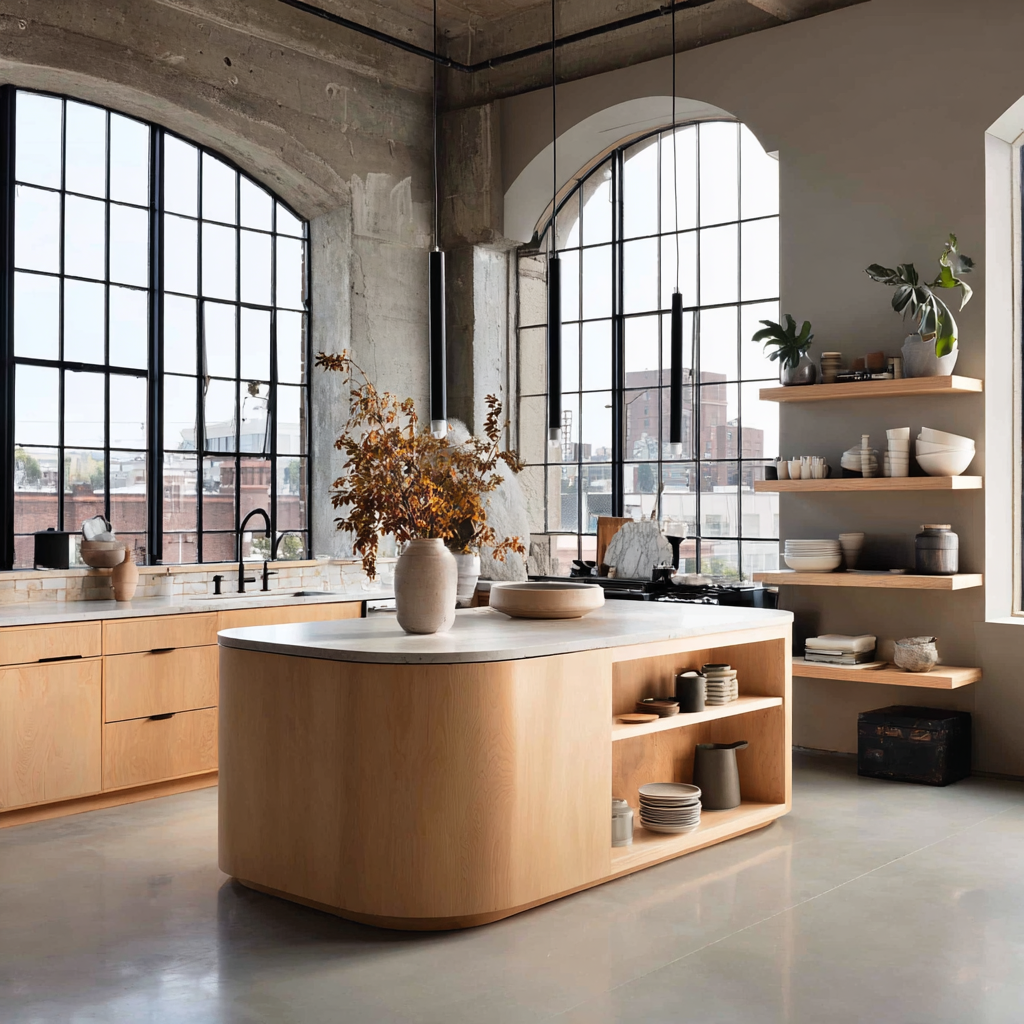
High ceilings, exposed concrete, and steel-framed windows are stunning — but they can also make a kitchen feel more like a warehouse than a home. A rounded kitchen island in natural wood brings a human-scaled, tactile element into the room and gives the space an emotional center. If your loft has arched windows or doorways, echoing that shape in the island's profile creates a subtle but powerful sense of cohesion.
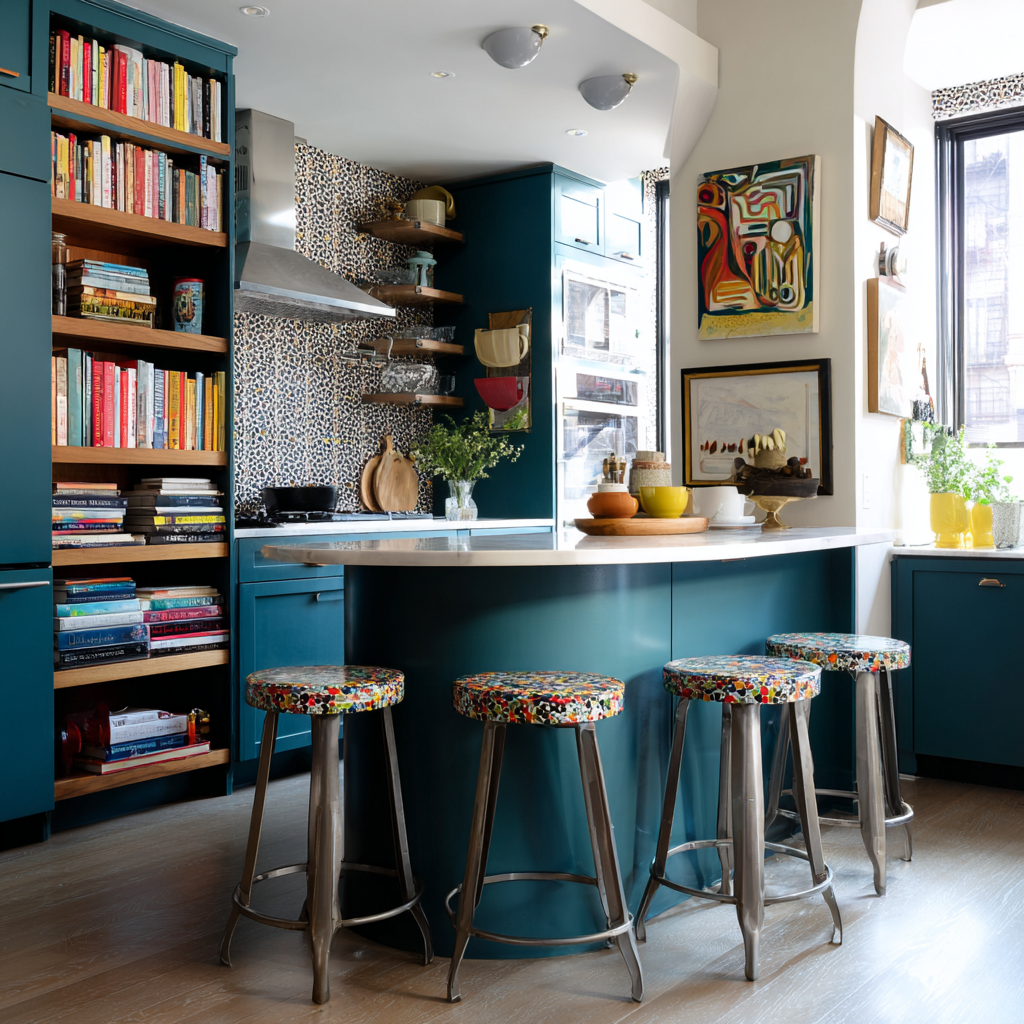
A kitchen full of personality deserves an island that refuses to play it safe. Where a standard rectangular island reinforces the grid of a room, a curved form breaks free of it — signaling that this is a space where the rules are more like suggestions. It's a quiet act of rebellion that underscores everything else you've done: the bold cabinet color, the mismatched stools, the art hung where a backsplash "should" be. A rounded peninsula is especially effective here because it feels intentional rather than default, giving the whole kitchen a sense of curation rather than chaos.
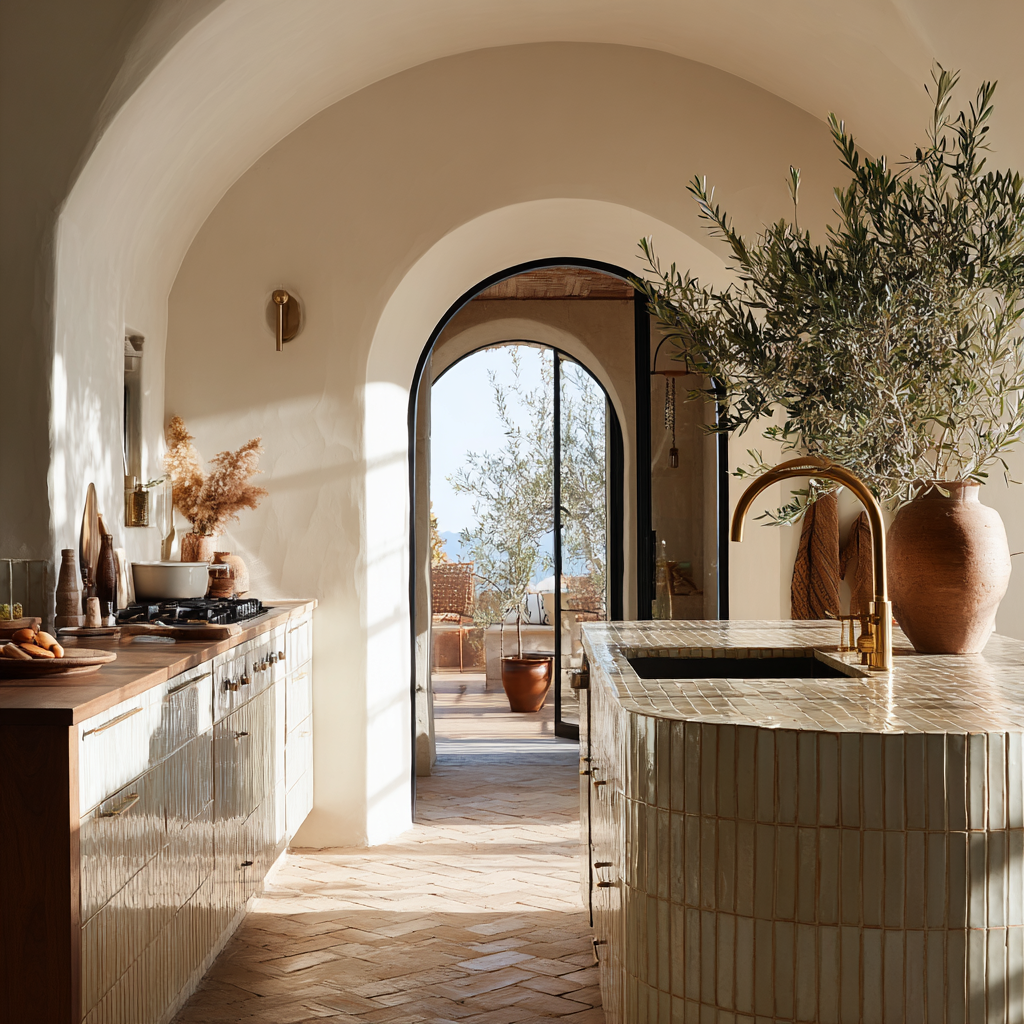
Mediterranean kitchens are already a celebration of organic forms — arched doorways, plaster walls, herringbone tile floors. A rounded kitchen island is a natural extension of that language, especially when finished in handmade materials like zellige tile or lime-washed plaster. The imperfections of hand-applied surfaces only enhance the curve, and a brass faucet or fixture adds just enough polish to keep things feeling intentional.
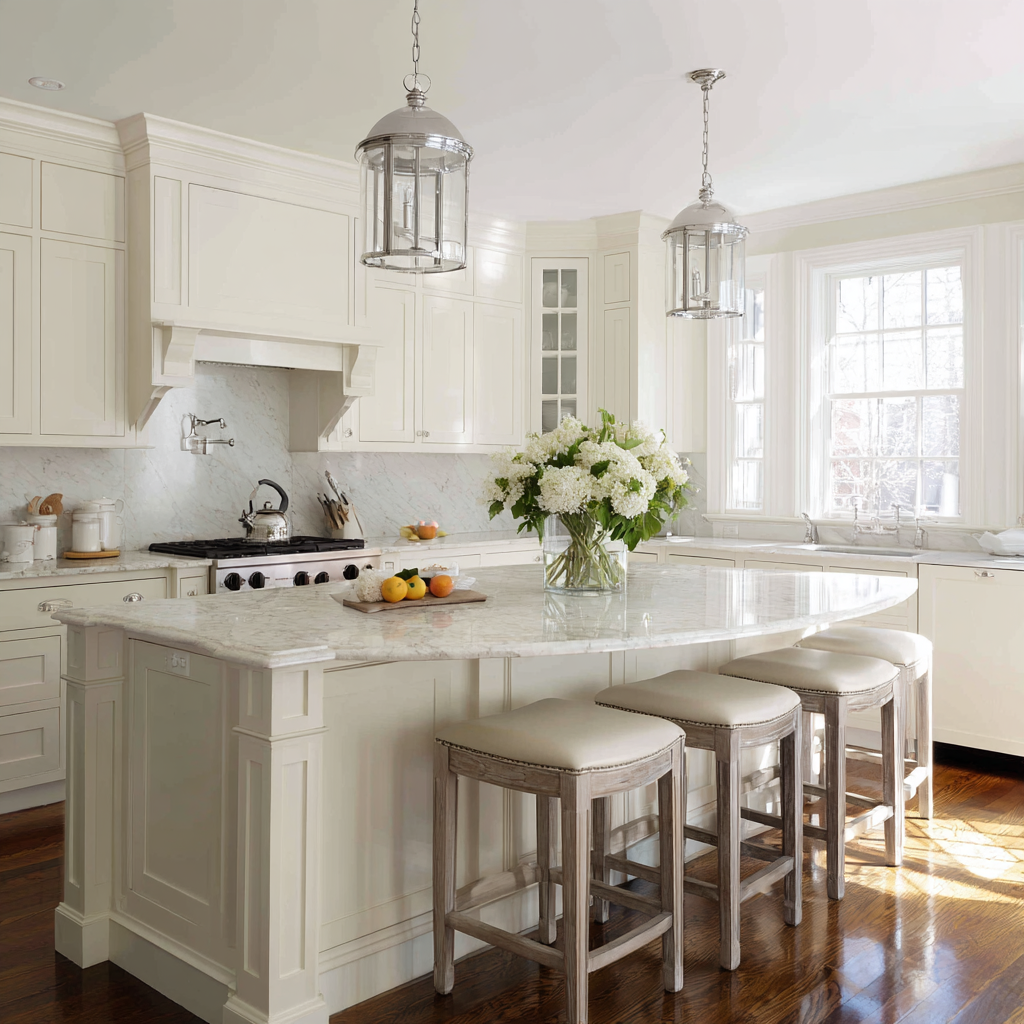
Rounded islands aren't reserved for contemporary spaces. In a Shaker or transitional kitchen, a gently curved seating edge feels like an heirloom piece — more furniture than fixture. The key is restraint: one sweeping curve on the seating side is often more effective than a fully rounded form, keeping the working side practical for prep while introducing that crucial softness. A marble top with a bullnose edge and simple backless stools complete the look without pushing it into modern territory.
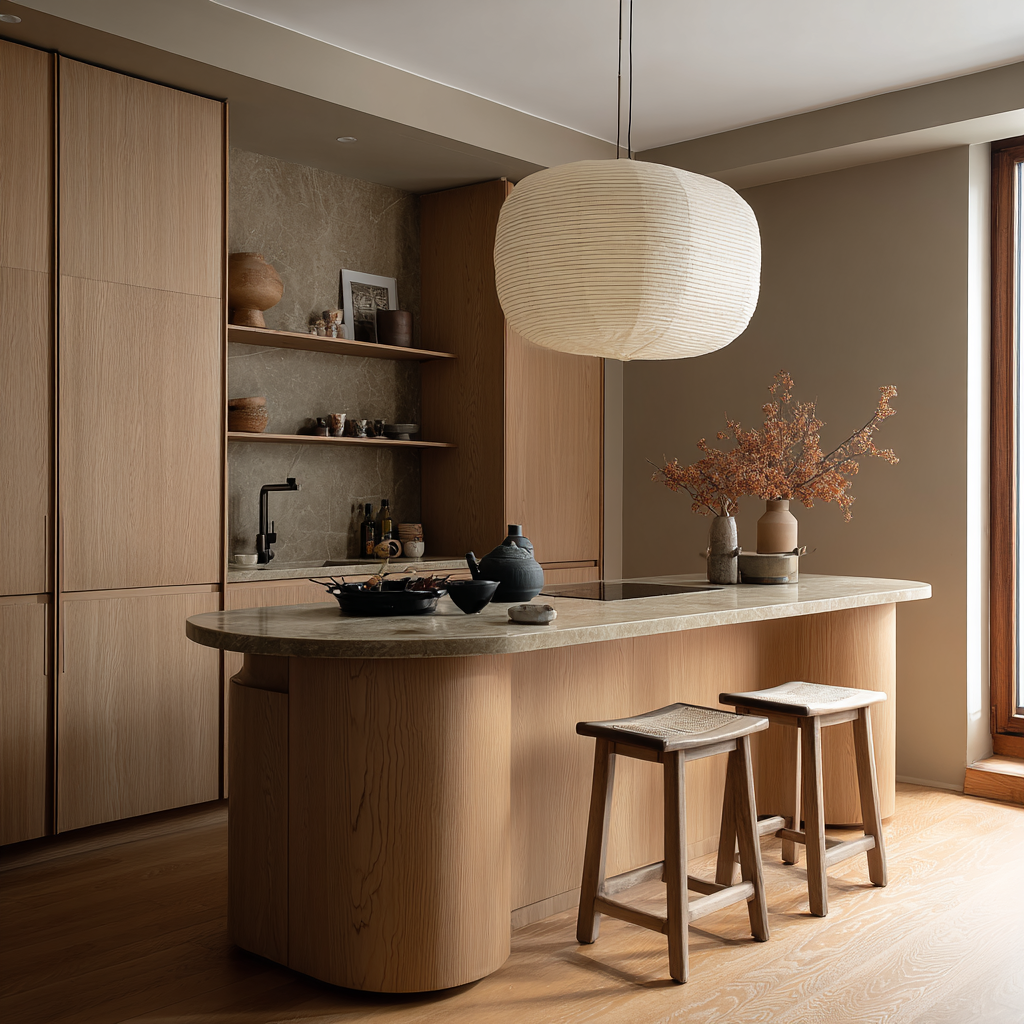
In a pared-back kitchen, the island's shape becomes the primary design gesture — so give it room to breathe. Smooth, handle-free surfaces in warm wood with a stone or concrete top let the curve speak for itself. Position a statement-making light overhead that mimics the curvature of the island; a Japandi-inspired paper lantern or woven pendant creates a beautiful visual dialogue between two shapes — one solid and grounded, the other light and floating.
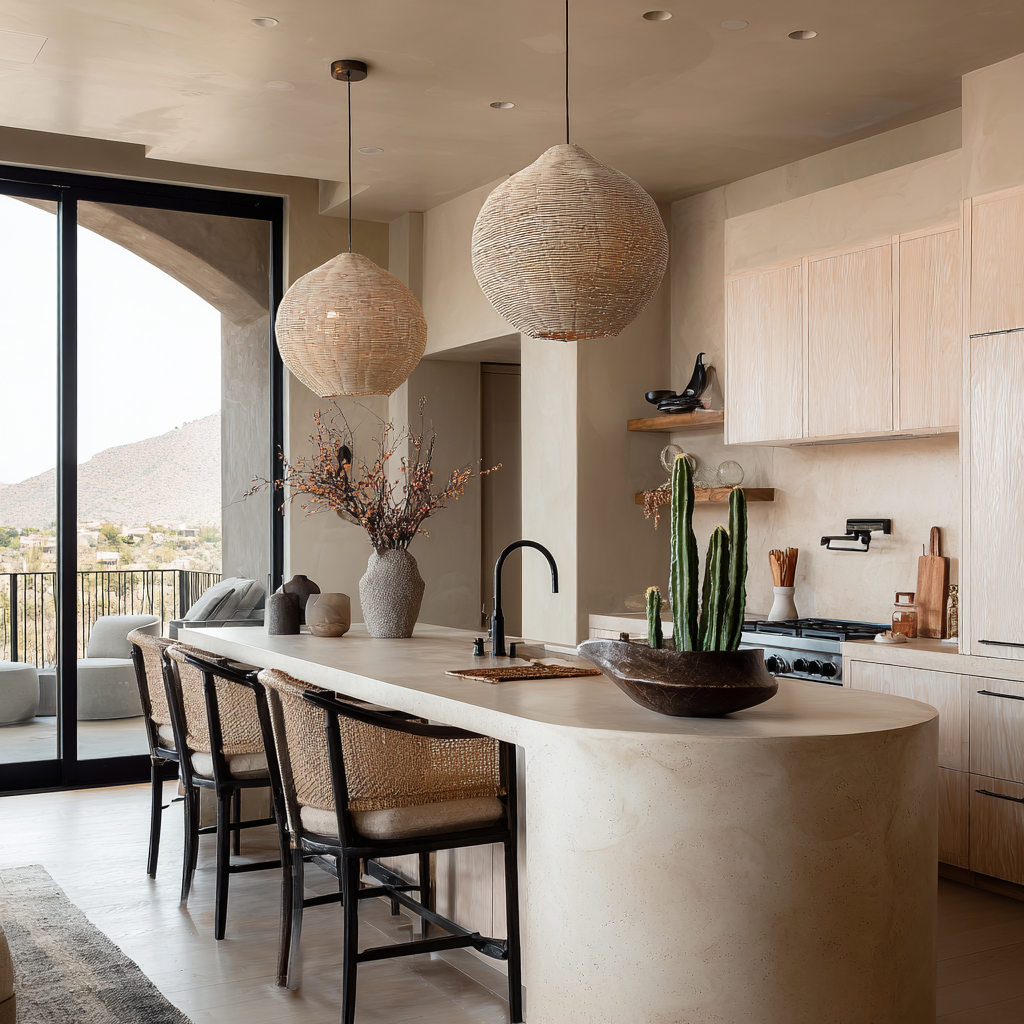
When your kitchen looks out onto mountains or open sky, the island should feel like part of the terrain — almost geological, as though it were carved rather than constructed. A plaster or microcement finish in warm sand or clay tones reinforces that connection, and natural woven bar stools keep the material story consistent. Rounded forms work especially well here because they mirror the soft contours of the landscape itself.
Design a Home That’s Uniquely Yours
Block can help you achieve your renovation goals and bring your dream remodel to life with price assurance and expert support.
Get Started
The most practical advantage of a rounded island is improved circulation. In galley-style kitchens or any layout where the island sits between two traffic paths, rounded ends eliminate the pinch points where people tend to bump corners. As a general rule, maintain at least 42 inches of clearance on all sides — though 48 inches is ideal if you have appliance doors to swing open.
Pendant lights are one of the most impactful ways to highlight a rounded island, and the shape of your fixtures matters. Linear bar pendants fight the curve; instead, choose globe, elongated capsule, or organic-shaped pendants that echo the island's form. Hang them in an odd number—three is classic—and follow the island's arc rather than a rigid straight line. Find more inspiration with our guide to kitchen lighting designs.
The seating side of a curved island has a different geometry than a straight bar, so standard backless stools often work better than bulky swivel chairs that can collide. Stools with a slight curve to their own backs are ideal. Spacing matters too: because stools fan out along a radius, you'll typically fit one fewer seat than you would along the same linear length of a straight island. Plan accordingly.
The base treatment of a rounded island is just as important as the top. A simple flat panel wrapping a curve can look unfinished. Consider fluted or reeded paneling, vertical shiplap, curved tambour doors, or even zellige tile to give the base its own visual weight. If your island is doing double duty as a design statement, the base is where half that statement lives.
Curves reveal materials differently than flat planes. High-gloss finishes and polished stone will reflect light in sweeping bands, which can be stunning or distracting depending on the space. Matte finishes, plaster, fluted wood, and textured tile tend to be more forgiving and add tactile interest. For the countertop, look for materials that can be fabricated with a bullnose or waterfall edge — natural stone, engineered quartz, and concrete all work beautifully.
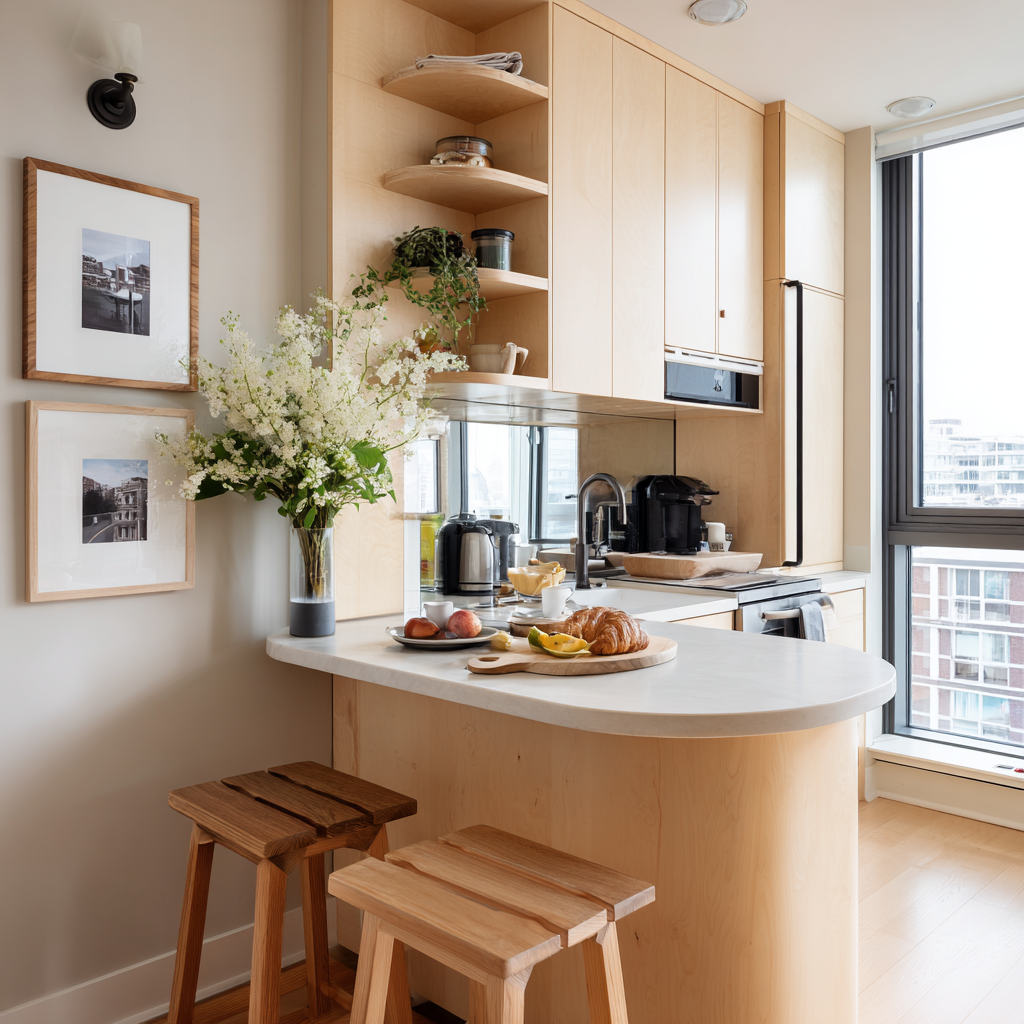
A rounded island isn't a simple swap for a rectangular one. Curved cabinetry requires either custom millwork or specialized bending techniques, both of which add labor and lead time compared to standard box construction. Countertop fabrication is another factor: cutting a curve into natural stone or quartz generates more waste material and demands more precision from the fabricator, which is reflected in the price. For this reason, curved kitchen islands are particularly well-suited to homeowners who desire luxury in their kitchens.
That said, the cost premium varies widely depending on how dramatic the curve is. A single softened end adds far less to your budget than a full oval, so if you're cost-conscious, start with a subtle radius and see how it transforms the space before committing to something more ambitious.
Some finishes take beautifully to curves — plaster, microcement, fluted wood panels, and small-format tile like zellige all wrap around a radius without much fuss. Others are trickier.
Large-format porcelain slabs, for instance, can't be bent, so a waterfall edge on a curved island requires careful mitering and a skilled installer. Laminate can be thermoformed to a curve, but cheaper options may show stress marks over time. When you're choosing materials, ask your contractor or fabricator specifically about their experience with curved applications — it's a different skill set than working on flat planes, and the quality of the finish depends heavily on who's doing the work.
The interior of a curved island doesn't lend itself to standard cabinetry as neatly as a straight run does. Drawers and doors need to be custom-fitted, and deep corners inside a curve can become dead space if you're not intentional about the layout. Pull-out shelves, lazy Susans, and open niches tend to work better here than traditional hinged doors.
It's worth spending extra time with your contractor or kitchen designer mapping out the interior storage plan early — the outside of your island might be all about beauty, but the inside still needs to earn its keep.
A rounded island is the kind of detail that can redefine how your kitchen looks and feels — but getting the curve right takes skilled hands and careful planning. From custom millwork to countertop fabrication to the storage solutions hidden inside, it's a project that benefits enormously from working with a contractor who's done it before.
Block Renovation connects you with vetted, experienced contractors who can help you navigate the design and construction decisions that make a curved island sing. You'll receive detailed proposals you can compare side by side, and your project planner can help you understand where your budget is going — so you can invest confidently in the details that matter most to you. Whether you're softening a single corner or building a show-stopping oval, the right team makes all the difference between a curve that looks intentional and one that looks like an afterthought.
Design a Home That’s Uniquely Yours
Block can help you achieve your renovation goals and bring your dream remodel to life with price assurance and expert support.
Get Started

Renovate confidently with Block
Easily compare quotes from top quality contractors, and get peace of mind with warranty & price protections.
Kitchen
A Galley Kitchen Remodel in NYC - Adding a Breakfast Bar
07.02.2026
Kitchen
Adding a Pass Through Window to Your Kitchen
06.12.2026
Kitchen
Retro Kitchen Design Ideas: 7 Modern Renovations
05.18.2026
Kitchen
L-Shaped Kitchen Layouts & Designs: 6 Floor Plans
05.13.2026
Kitchen
Closet to Pantry Conversion: Ideas, Costs, and Tips
05.04.2026