



.png?width=640&name=u5821215421_A_moody_maximalist_mezzanine_loft_the_open_edge_o_fb2c4d70-9740-4734-b87b-8cf6d392cd55_0%20(1).png)
Alabama
Planning a Birmingham Home Addition? Start Here
06.15.2026

04.06.2026


In This Article
Birmingham has built a post-industrial identity that few mid-sized Southern cities can match. The UAB medical complex is now one of the largest employers in the Southeast, anchoring a healthcare and biotech economy that has drawn professionals, researchers, and entrepreneurs to a metro that still offers genuinely affordable land and a standard of living that coastal cities can't touch at the same price point. Neighborhoods like Mountain Brook, Homewood, and Forest Park offer mature tree canopy, walkable commercial corridors, and an architectural character shaped by the city's Appalachian foothills setting, while the Pepper Place market district and the 2nd Avenue North corridor have given downtown Birmingham a cultural energy that continues to attract younger residents.
The topography that makes Birmingham visually distinctive, ridge-and-valley terrain shaped by the southern Appalachians, also creates specific challenges for home builders. Steep slopes, variable soil profiles, and a climate that delivers both icing events and severe spring thunderstorms require a builder who knows what those conditions mean in practical terms before the first shovel goes in.
Turn your renovation vision into reality
Get matched with trusted contractors and start your renovation today!
Find a Contractor
Birmingham sits in a favorable cost position relative to national custom home building averages, but the terrain-driven complexity of many desirable lots means budget assumptions need to account for what the site actually requires.
Custom home construction in the Birmingham metro typically runs between $165 and $280 per square foot for the structure, excluding land. High-end builds on hillside lots with significant site work, premium finishes, and elaborate outdoor spaces push toward $325 or beyond. Land costs in established in-demand communities like Mountain Brook, Vestavia Hills, and Homewood carry meaningful premiums, while lots in growing communities like Trussville, Helena, and Alabaster offer more room in the budget for the build itself. Contractor demand has strengthened with the Birmingham metro's steady growth, and skilled subcontractor availability, particularly for finish carpentry and tile work, is tighter than it was a decade ago. Material costs are subject to the same national pressures as every market.
Hillside and ridge-top lots offer the views and privacy that many Birmingham buyers prize, but they add retaining, grading, and foundation costs that flat suburban lots don't carry. A lot that appears affordable on paper can require $40,000 to $80,000 in site work before construction of the home itself begins, which is exactly why walking a lot with your builder before signing a purchase agreement is not optional.
Site work and foundation complexity driven by Birmingham's ridge-and-valley topography is the most significant local cost variable. Steeply sloped lots in Mountain Brook, Vestavia Hills, and along the Red Mountain corridor require engineered retaining walls, cut-and-fill grading, and in some cases helical pier foundations anchored to bedrock below loose surface soils. Blasting or rock excavation is not unusual on lots with shallow limestone or sandstone near the surface, and builders who haven't done significant hillside work in Jefferson County may not budget accurately for these conditions. The clay-heavy soils common in the Birmingham valley floor areas have their own shrink-swell dynamics that require foundation engineering attention, though they present different challenges than hillside rock. Alabama's humid subtropical climate demands mechanical systems designed for continuous cooling load management rather than seasonal use, and a well-specified HVAC system with adequate dehumidification is a baseline rather than an upgrade. Design and permit fees through the City of Birmingham or the applicable suburban municipality are modest by national standards, and construction labor in Alabama generally runs below national averages.
These are the line items that most reliably expand Birmingham custom home budgets:
From initial planning through move-in, plan on 13 to 19 months for a Birmingham custom home. Design and permitting typically run three to five months through the City of Birmingham's Development Services Department or the applicable suburban municipality. Construction runs eight to twelve months. Alabama's severe weather season from March through May can delay exterior work and complicate site drainage management during heavy rain events, and summer heat slows certain exterior work and concrete placement during July and August. Experienced local builders sequence weather-sensitive work for the fall and winter months, which are mild enough in Birmingham to allow productive outdoor construction well beyond what's possible in northern markets.
Birmingham's topographic variety makes lot selection a process with more variables than in flatter markets. An experienced local builder can assess a hillside parcel for rock depth, drainage patterns, and retaining requirements in ways that a real estate listing can't convey. Spending a few hours on a potential site with your builder before purchase can save months of post-commitment recalibration.
Considerations will include:
School district assignment is the dominant driver of lot premiums in the Birmingham suburbs. Mountain Brook City Schools and Homewood City Schools command the most consistent premiums, and families building in Jefferson County research attendance boundaries before any other neighborhood characteristic. Access to Interstate 459, U.S. Route 280, and the Red Mountain Expressway shapes commuter household decisions, and proximity to UAB's medical campus is a meaningful attractor for healthcare workers across the metro.
Compare Proposals with Ease

Birmingham homeowners build with an eye toward both the region's Southern design traditions and the practical demands of a hilly, heavily wooded landscape that requires homes to engage with their terrain rather than ignore it.
Birmingham's combination of Appalachian terrain, severe spring weather, an industrial environmental legacy, and a humid subtropical climate creates planning requirements that vary from what builders encounter in flatter, less weather-active parts of the South.
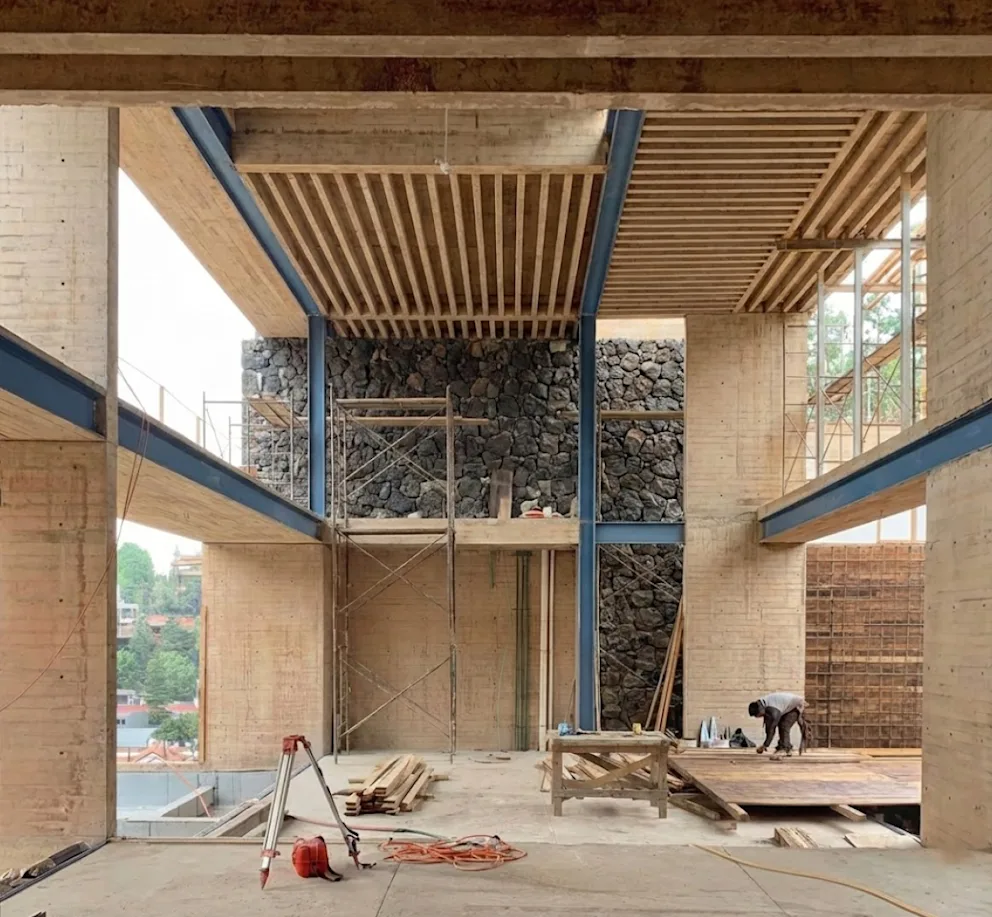
The most common budget surprise in Birmingham custom home construction is rock. The limestone, sandstone, and shale formations that underlie Jefferson County's ridge system appear at varying depths across individual lots, and a location where soil borings show 10 feet of usable soil 20 feet from the foundation may encounter bedrock at 2 feet under the footprint itself. Rock excavation and blasting add cost quickly: $8,000 to $25,000 or more depending on volume and access constraints, with no reliable way to predict the number precisely without excavating. Experienced Birmingham builders carry contingency in their hillside foundation budgets and communicate proactively when conditions differ from initial estimates. Retaining wall systems on steep lots require structural engineering, and walls over four feet in height typically need permit-ready engineered drawings, a process that adds both time and design cost to the pre-construction scope.
Alabama is one of the most tornado-active states in the country, and the Birmingham metro has experienced multiple significant tornado events including the catastrophic April 27, 2011 outbreak that produced EF4 and EF5 tornadoes tracking directly through Jefferson County communities including Tuscaloosa and communities northeast of the city. Unlike the flat plains of Oklahoma, Birmingham's ridge-and-valley terrain can cause tornadoes to behave unpredictably as they interact with topographic features, making shelter design and construction quality particularly important. Most custom home buyers in Birmingham specify either an in-home reinforced safe room or a below-grade shelter integrated into the basement or foundation, and wind-rated construction including continuous load path framing, reinforced garage doors, and impact-resistant roofing is increasingly standard practice rather than an optional upgrade. Hail events are also frequent and can cause significant roofing and siding damage, making Class 4 impact-resistant roofing products worth the upfront premium.
Birmingham's climate is classified as humid subtropical, with summers that combine temperatures regularly exceeding 90 degrees with relative humidity above 80 percent for extended periods. A building envelope that is not carefully designed for this climate will accumulate moisture in wall assemblies, creating conditions for mold growth and wood deterioration that are expensive to remediate and can affect indoor air quality significantly. The critical design decisions involve vapor retarder placement calibrated to ASHRAE Climate Zone 3A, continuous air barrier systems that prevent humid exterior air from infiltrating the building cavity, and HVAC systems with adequate latent capacity to manage humidity independently of temperature. Crawl space encapsulation with a continuous vapor barrier and conditioned air supply is strongly preferred over vented crawl spaces in Birmingham's climate, as vented crawl spaces in humid subtropical conditions accumulate moisture from the ground and exterior air that leads to subfloor deterioration and mold formation over time.
Birmingham's combination of steep terrain, high annual rainfall averaging about 54 inches per year, and clay-heavy soils with low permeability creates significant flash flooding risk in developed areas. Shades Creek, Village Creek, and Five Mile Creek have all produced flood events that damaged or destroyed structures in their floodplains, and new construction near these waterways requires compliance with Jefferson County and City of Birmingham floodplain management ordinances that govern finished floor elevations, fill placement, and compensatory storage requirements. Even on lots well above named floodplains, site grading must direct runoff away from the foundation and toward defined drainage paths rather than allowing it to sheet across the site. Alabama also has riparian buffer requirements for development near regulated streams that can reduce the effective buildable area of a lot positioned near a drainage feature, and these constraints should be identified before purchase rather than after.
The right builder for a Birmingham custom home understands both the city's architectural expectations and the specific technical demands of its terrain and climate. Chemistry matters too, because this is a long-term working relationship.
Questions to ask potential Birmingham custom home builders include:

“A general contractor shouldn’t be the labor. They should be managing trades, schedules, and risk.”
Block connects Birmingham homeowners with vetted custom home builders who have been screened through a rigorous process covering license verification, insurance, background checks, and references from completed Alabama projects. You receive personalized contractor matches based on your project's scope, your lot's terrain conditions, and your timeline, rather than navigating Jefferson County's builder market on your own. A dedicated Project Planner guides you through proposal comparison and builder selection at no cost and with no obligation to hire.
Every Birmingham project managed through Block is supported by a progress-based payment system that releases contractor funds as work is verified complete, protecting your investment through each phase of a build that can span multiple seasons and dozens of individual scope decisions. Block Protections include expert-reviewed project scopes that catch missing line items before they become change orders, along with a workmanship warranty backed by every builder in the network. Your project timeline and payment schedule are visible through Block's dashboard from the first engagement forward.
Lay the groundwork for a successful custom home
Match with vetted builders
Receive quotes from experienced contractors aligned to your vision.
Hire with confidence
Partner with Block experts to review quotes and timelines for end-to-end clarity.

Stay in control
Avoid surprises with Block Protections and a progress-based payment system.

Renovate confidently with Block
Easily compare quotes from top quality contractors, and get peace of mind with warranty & price protections.
