





Bathroom
York City Bathroom Remodel: Costs, Planning & Design
09.17.2026
08.25.2026



In This Article
Your Brooklyn apartment renovation estimates are $80,000 apart, even though every contractor walked through the same rooms. Look closer, and the lower bid covers only the visible finishes; aging plumbing, board requirements, and repairs behind the walls are nowhere in its scope. Understanding your actual Brooklyn apartment renovation cost starts with knowing what each estimate includes.
Completed Brooklyn projects through Block Renovation range from an $18,000 bathroom to a $1,300,000 full apartment renovation with custom millwork. Your building’s age, layout, plumbing, and board requirements help explain why similar-looking projects end up with very different price tags.
A Brooklyn apartment renovation typically costs $100 to $200 per square foot for cosmetic updates, $200 to $350 for a mid-range remodel, and $350 to $550 for a full gut renovation. For a 700- to 1,000-square-foot apartment, a mid-range project totals $140,000 to $350,000. Custom projects can cost considerably more.
Keeping your existing layout usually costs less than moving walls or plumbing. Relocate the kitchen sink, add electrical circuits, or open a load-bearing wall, and the project requires additional trades, architectural drawings, and approvals.
| Project scope | Cost per square foot | What it covers |
|---|---|---|
| Cosmetic refresh | $100 to $200 | Paint, refinished floors, new fixtures, and hardware |
| Kitchen and bathroom replaced in place | $200 to $350 | New cabinetry, tile, fixtures, and appliances on the existing layout |
| Full gut with layout changes | $350 to $550 | New walls, plumbing, electrical work, architectural plans, and applicable permits |
| Custom or high-end renovation | $550 to $900 | Custom millwork, premium stone, integrated appliances, and specialized finishes |
Architectural drawings, permit filings, board review fees, refundable deposits, temporary storage, and accommodations during construction often sit outside the construction quote. Ask each contractor to identify those expenses separately so you can compare estimates on equal terms.
Does a square-foot estimate work for a 40-square-foot bathroom? Usually, it does not. These averages are more useful when the renovation covers much of the apartment and the cost of different rooms is spread across the entire floor plan.
Bathrooms concentrate expensive work into a small footprint. Demolition, waterproofing, plumbing, and protecting the building’s common areas all cost money regardless of whether the room measures 40 or 70 square feet.
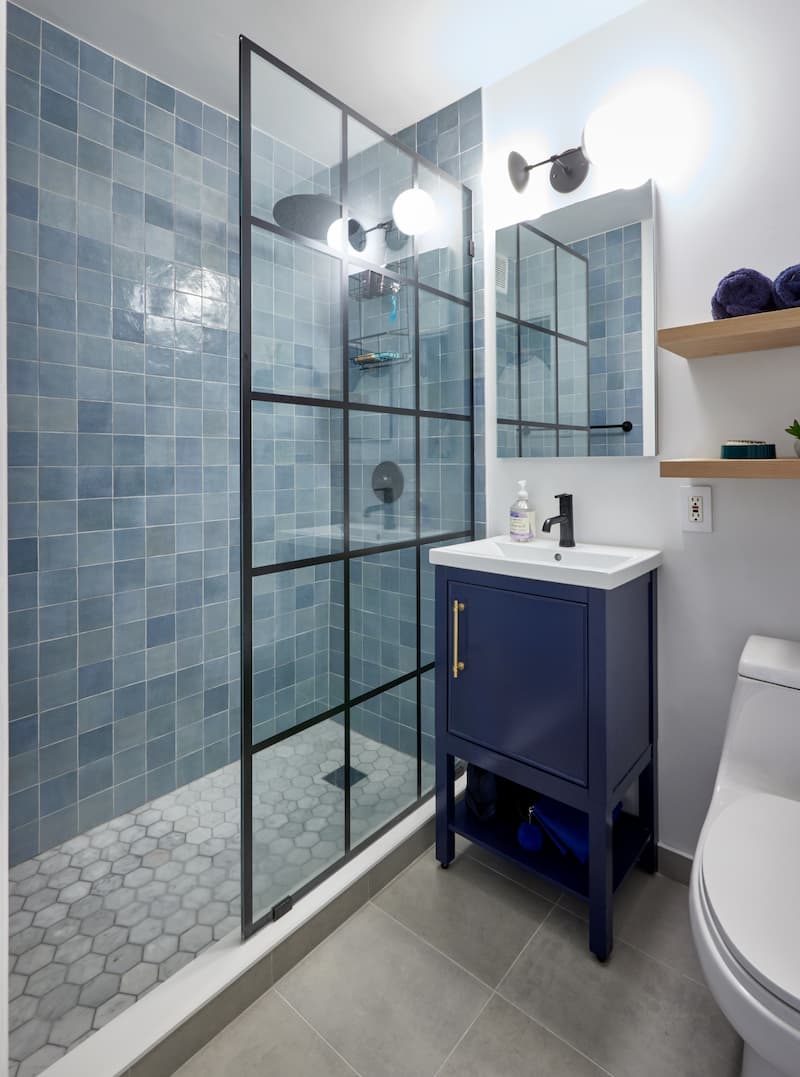
At $350 per square foot, a 40-square-foot bathroom would appear to cost $14,000. The completed Williamsburg bathroom below cost $18,000 because its scope included expenses that a simple square-foot calculation misses. For individual rooms, use project-specific estimates for a kitchen remodel or a Brooklyn bathroom renovation.
A Williamsburg bathroom renovation that included demolition, tile, a vanity, a shower, and wallpaper cost $18,000 and took 2 weeks on site. Another homeowner spent $29,453 on a kitchen remodel completed in 4 weeks. Larger projects included a $120,000 Dumbo apartment renovation and a $1,300,000 full gut with custom millwork.
| Real Brooklyn remodel example | Scope and known build time | Total cost |
|---|---|---|
| Williamsburg bathroom remodel | 1 bathroom, 2 weeks | $18,000 |
| Single-kitchen apartment remodel | 1 kitchen, 4 weeks | $29,453 |
| Kitchen and bathroom with handmade tile | 1 kitchen and 1 bathroom | $67,353 |
| Two-bathroom apartment renovation | 2 bathrooms | $67,984 |
| Kitchen, bathroom, and bedroom remodel | 1 kitchen, 1 bathroom, and 1 bedroom, 10 weeks | $88,974 |
| Kensington kitchen and bathroom remodel | 1 kitchen and 1 bathroom, 12 weeks | $115,000 |
| Dumbo full-apartment renovation | Entire apartment | $120,000 |
| Full-apartment gut with custom millwork | Entire apartment, 45 weeks | $1,300,000 |
The kitchen-and-bathroom renovation at $67,353 and the two-bathroom project at $67,984 also show why room count alone does not predict cost. Your final price depends on the specific work involved, the materials you select, and your building’s construction requirements.
A compact kitchen gives you the opportunity to invest in better materials because you need less of them. Upgrading a short countertop to natural stone, for example, costs less than covering a large kitchen island and several surrounding counters.
You will also notice the difference immediately. In a small apartment kitchen, the cabinetry, backsplash, hardware, and countertops are visible almost all at once, so a better finish does not need much square footage to stand out.
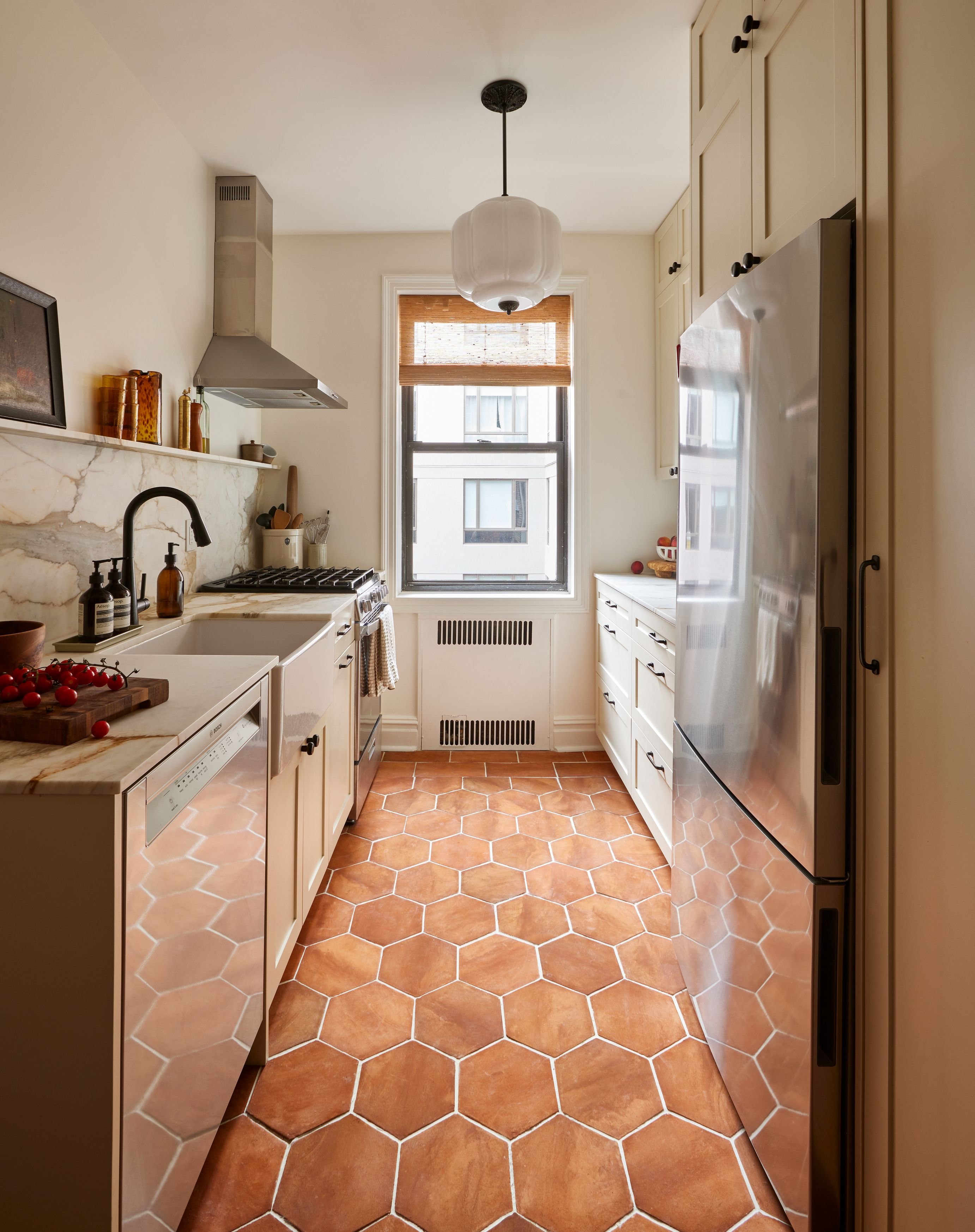
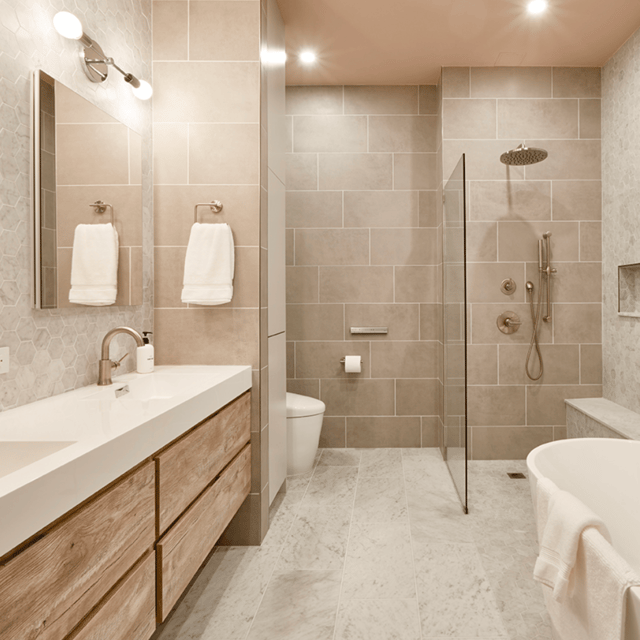
This Brooklyn kitchen renovation with marble surfaces pairs marble with terracotta hexagon flooring and an arched entryway. A midcentury Brooklyn bathroom renovation uses warm wood and matte black fixtures instead. Another small Brooklyn bathroom remodel shows how a few carefully selected materials can shape the entire space.
That unused space above standard upper cabinets could hold serving platters, seasonal cookware, and the appliances currently crowding your closets. By extending cabinetry to the ceiling, you gain storage without taking up additional floor space.
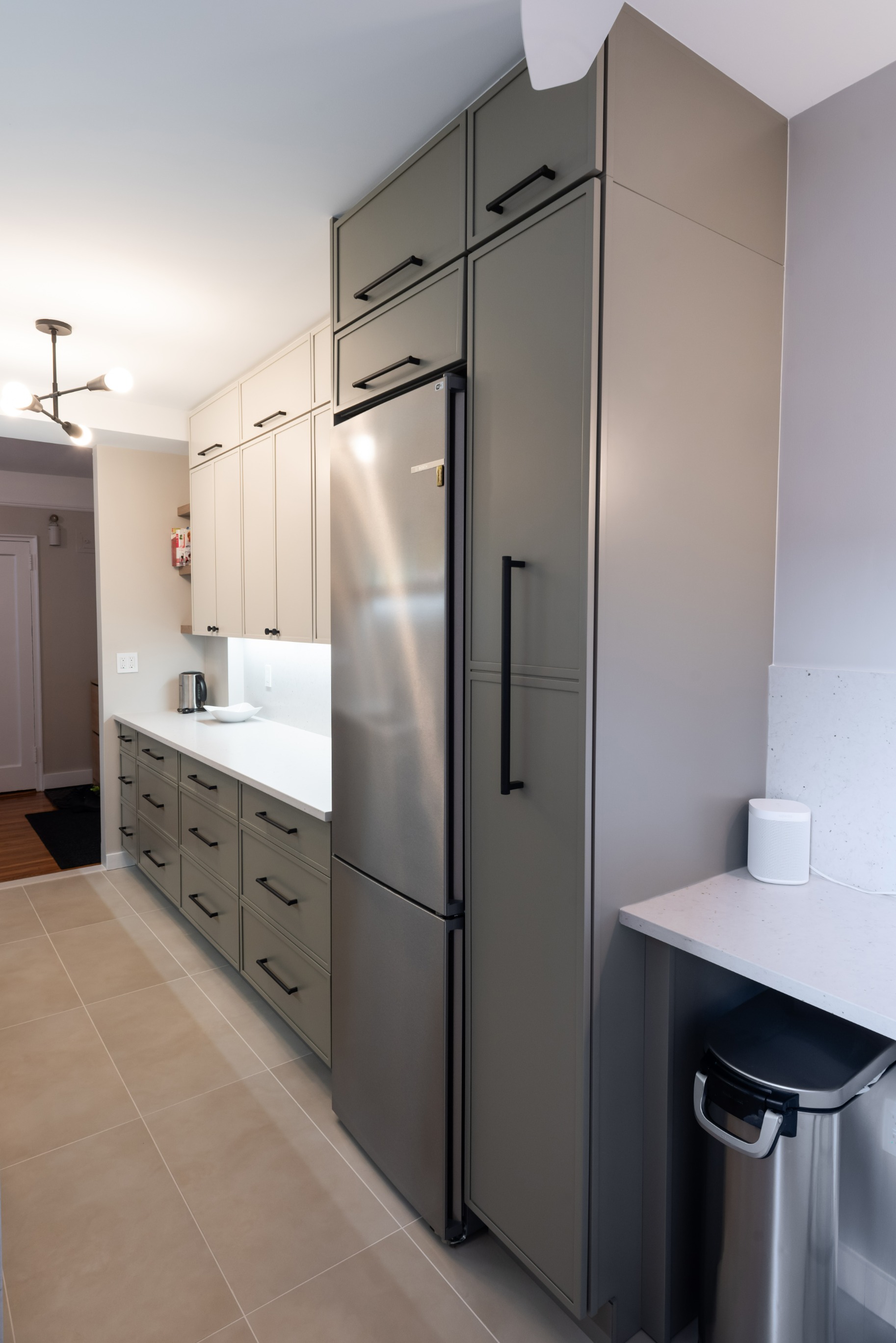
During a Kensington kitchen and bathroom renovation, I & N Builders LLC used semi-custom cabinetry and bathroom millwork to make better use of a tight footprint. The project cost $115,000 and took 12 weeks.
Because prewar ceilings are rarely perfectly level, your contractor will need filler strips and scribe molding for a clean fit. Put everyday cookware in lower drawers or roll-out shelves, and reserve the upper cabinets for items you reach for less often.

KS Renovation Group restored the original hardwood floors in this full-apartment renovation with custom millwork and added custom architrave trim. The project totaled $1,300,000 over 45 weeks, but you can apply the same design principles on a smaller scale.
A few targeted updates can give your apartment more architectural character:
Cutting the dishwasher from a small kitchen leaves you handwashing dishes long after the renovation ends. An 18-inch model takes up less room than a standard 24-inch dishwasher and still handles the same basic job, even though it holds fewer dishes per load.
An under-counter refrigerator drawer offers another way to add cold storage within a tight layout. Just account for ventilation, electrical connections, and door clearance when selecting smaller appliances so you can use them comfortably.
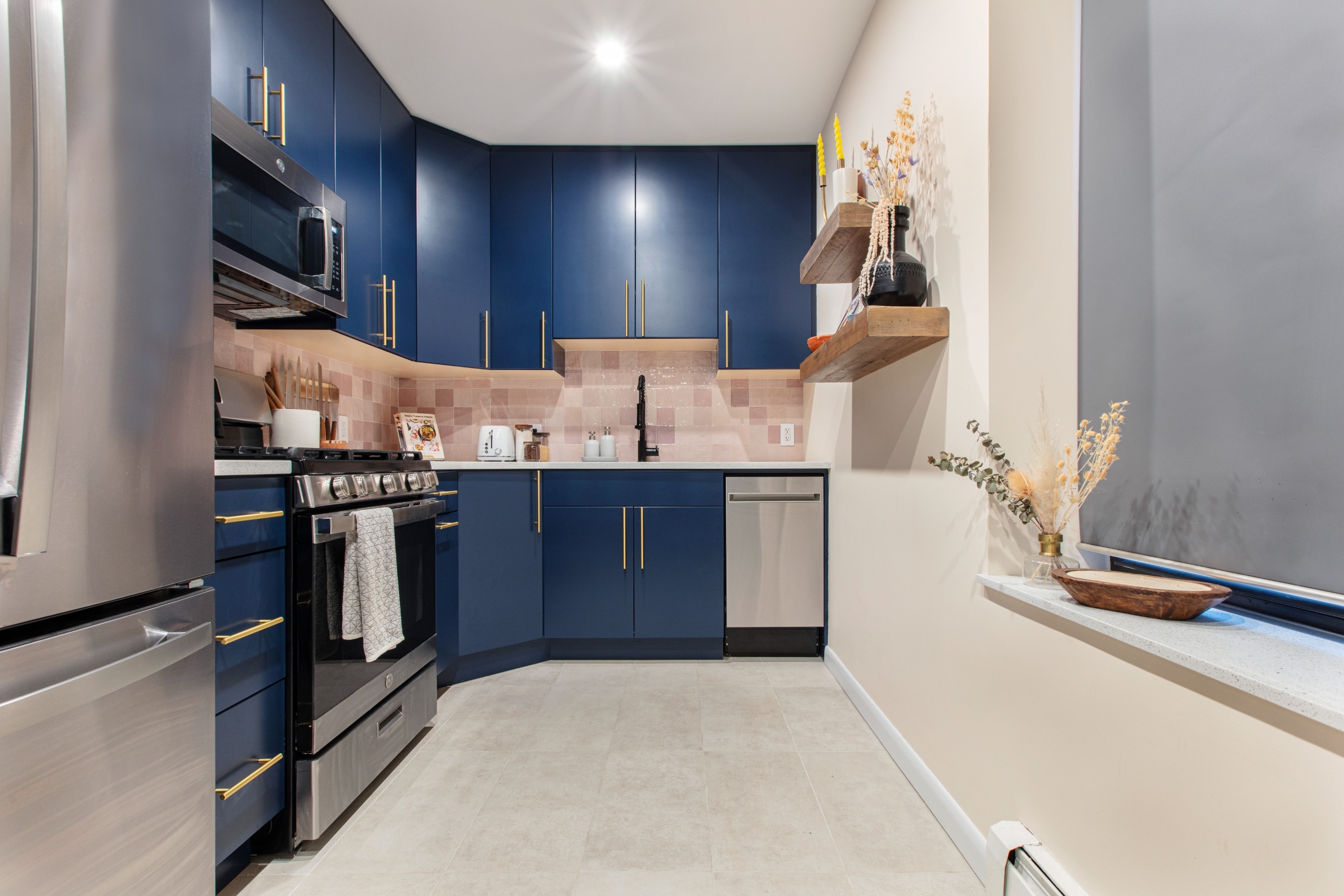
Art Deco Enterprises used this approach in a Brooklyn apartment kitchen remodel completed for $29,453 over 4 weeks. Thoughtful cabinetry and appliance selections made room for a complete kitchen within the existing co-op footprint.
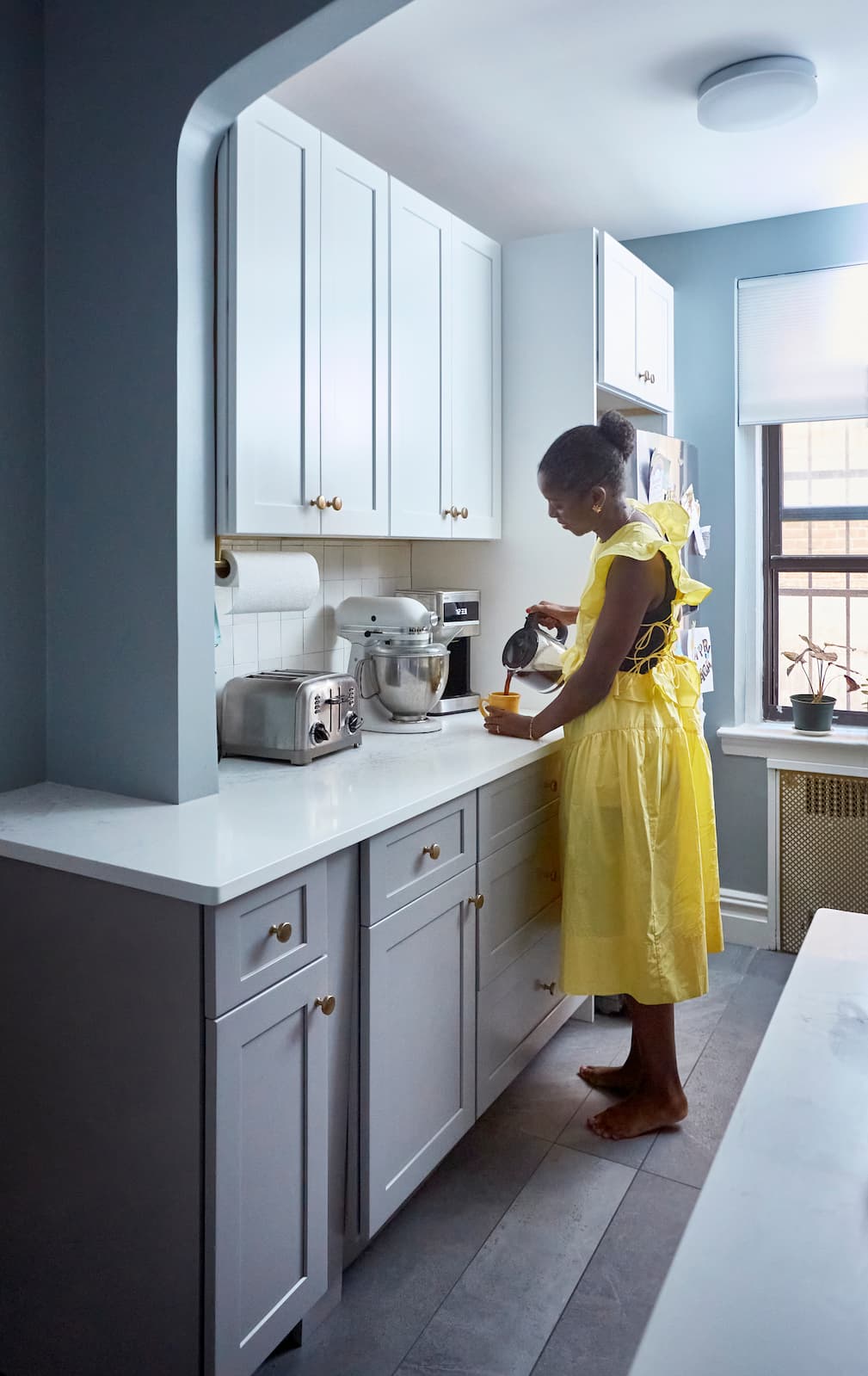
Your apartment does not need an entirely new layout or brightly colored finishes to feel like your own. In this Brooklyn kitchen, bathroom, and bedroom renovation, Art Deco Enterprises created a more individual space through eye-catching appliance handles, an unusual kitchen sink, and a distinctive white-tile arrangement.
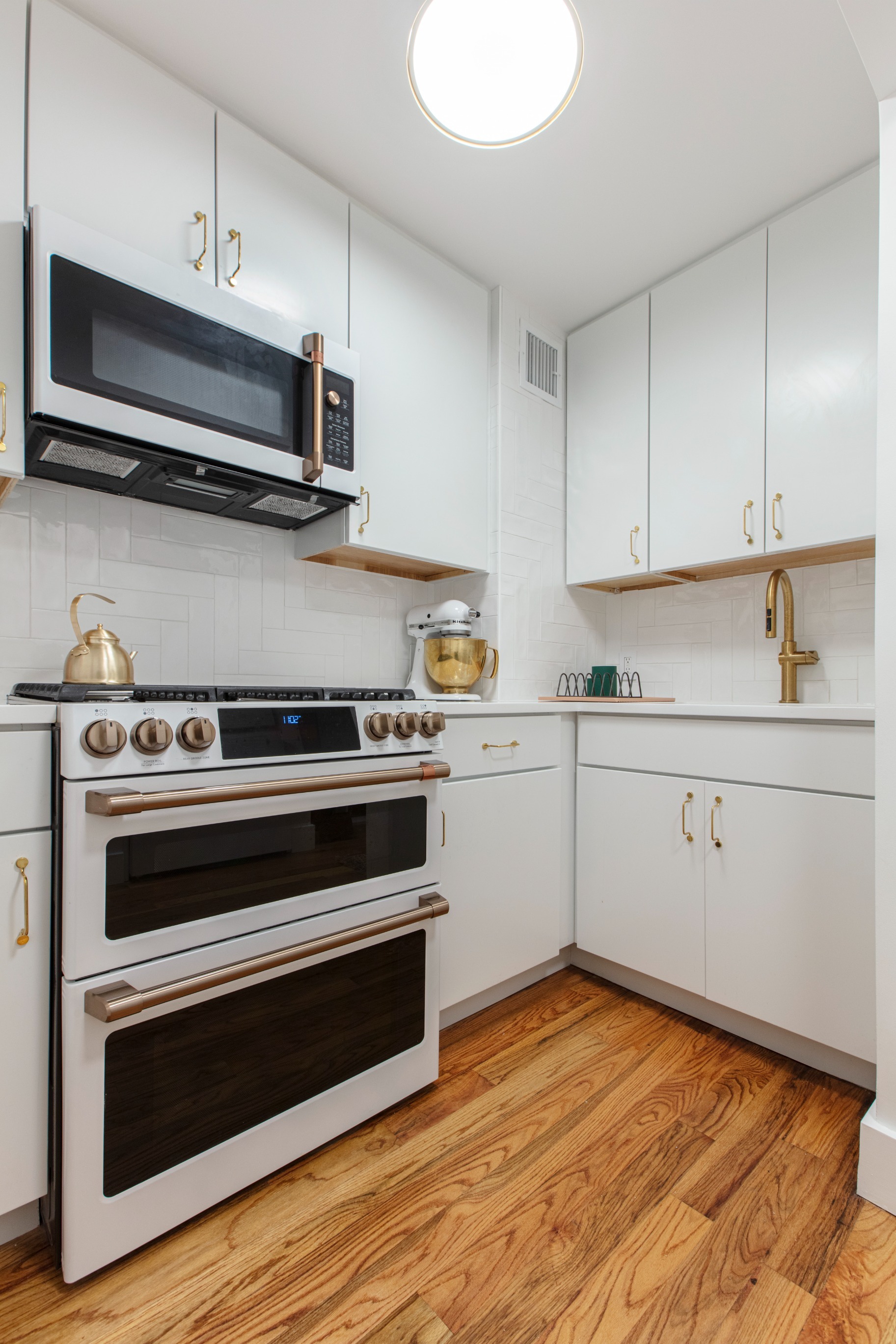
Those choices work together because they introduce personality through details you notice every day. The white tile maintains broad appeal, but its unexpected layout keeps the room from feeling generic. Meanwhile, the hardware and sink add another layer of character without requiring the homeowner to move plumbing or rebuild the entire kitchen.
Older Brooklyn apartments often have aging wiring, deteriorated supply lines, uneven framing, or plaster that takes more work to remove than drywall. Your contractor should explain how those conditions will be handled before you approve the scope.
Set aside a contingency reserve of 10 to 20% for repairs uncovered during demolition. On a $100,000 renovation, that means keeping an additional $10,000 to $20,000 available. Older buildings need that flexibility.
Buildings constructed on or before April 1, 1987 also require asbestos-related certification for certain alteration and demolition permits. If asbestos is present, qualified abatement professionals must address it before the affected work continues.
Original moldings, tall ceilings, and hardwood floors often make selective restoration worthwhile. A Brooklyn brownstone renovation introduces additional considerations tied to the building’s age and layout.
A 1960s co-op often has a more predictable layout than an older walk-up, with concrete slabs and building systems that are easier for your contractor to assess. That gives you more room to direct your budget toward the kitchen, bathroom, and finishes you actually want.
Here’s the thing that surprises a lot of homeowners: Your board can require a refundable security deposit of $5,000 to $15,000 before construction begins. That deposit increases the cash you need upfront, but it does not increase your final project cost if the building returns it. Co-op boards also require alteration agreements, insurance documentation, and restricted construction hours.
A newer condo gives your contractor a clearer starting point because the electrical systems, plumbing, and HVAC equipment are better documented than in many prewar apartments. As a result, you can spend more time planning the changes you want and less time anticipating major repairs behind the walls.
Your budget is more likely to go toward replacing standard cabinetry, countertops, fixtures, and flooring. Many condo boards also require sound-reducing underlayment beneath hard floors, so ask whether your estimate includes that material.
Even in a newer building, elevator reservations, delivery schedules, and common-area protection still apply. Get those requirements before your contractor finalizes the quote.
An 11-foot ceiling and an open floor plan create opportunities that are harder to find in a conventional Brooklyn apartment. However, adding bedrooms to a Dumbo or Gowanus loft requires new partitions, electrical work, HVAC adjustments, and sound insulation. Include those construction expenses in your budget before choosing finishes.
Design a Home That’s Uniquely Yours
Block can help you achieve your renovation goals and bring your dream remodel to life with price assurance and expert support.
Get Started
What does your board need before construction begins? Most Brooklyn co-ops and many condo associations require an alteration agreement outlining the proposed work, contractor qualifications, insurance coverage, and responsibility for building damage.
Your building can request several supporting documents:
A small, self-managed building can approve a straightforward renovation in about 2 weeks. Larger co-ops with monthly board meetings and outside engineering reviews can take 16 weeks or longer.
And that’s before you get to city permits. Start gathering your board package during the design phase to prevent unnecessary delays between approvals.
Ask your contractor or design professional to identify the required filings before signing the construction agreement. Moving walls, changing gas lines, adding electrical circuits, and completing substantial plumbing work all affect the approvals your project needs.
The city’s DOB NOW system uses Alteration for many projects that do not change the certificate of occupancy and Alteration-CO for projects that do. Older building records can still reference ALT1, ALT2, and ALT3. The New York City Department of Buildings explains how those older classifications correspond to current DOB NOW filings.
Combining two apartments does not automatically require an Alteration-CO filing. The correct category depends on whether the work affects the certificate of occupancy and other building requirements.
Painting, plastering, installing cabinets, resurfacing floors, and certain direct plumbing fixture replacements can qualify as permit-exempt work under the Department of Buildings’ permit guidance. Your board can still require notice or an alteration agreement, so confirm the building’s requirements before construction starts. Before making the final payment, make sure every required permit has been signed off.
Tell Block what you want to change, and vetted local contractors can compete for your project. You will receive quotes tailored to your renovation and an upfront scope review that helps identify missing line items before construction begins.
You can also review contractor experience, references, completed projects, and previous renovation costs. To find professionals already familiar with the borough, explore these Brooklyn renovation specialists.
Remodel with confidence through Block

Connect to vetted local contractors
We only work with top-tier, thoroughly vetted contractors

Get expert guidance
Our project planners offer expert advice, scope review, and ongoing support as needed
Enjoy peace of mind throughout your renovation
Secure payment system puts you in control and protects your remodel

Renovate confidently with Block
Easily compare quotes from top quality contractors, and get peace of mind with warranty & price protections.
Bathroom
York City Bathroom Remodel: Costs, Planning & Design
09.17.2026
New York
Brooklyn Apartment Remodel Costs | Block Guides
08.25.2026
.png?width=640&name=u5821215421_A_moody_maximalist_mezzanine_loft_the_open_edge_o_fb2c4d70-9740-4734-b87b-8cf6d392cd55_0%20(2).png)
New York
Planning a Rochester Home Addition? Start Here
06.19.2026
.png?width=640&name=2nd%20Story%20Addition%20(1).png)
New York
Home Additions in Buffalo: Budget, ROI & Financing Guide
05.26.2026
Cost
Bathroom Remodeling Cost: 2026 Pricing & Real Examples
05.11.2026