


Before and Afters
1950s Kitchen Remodels: Before & After Inspiration
05.25.2026
05.20.2026


.jpg?width=640&name=images%20(1).jpg)
In This Article
A countertop makeover can change the feel of a kitchen or bathroom faster than almost any other surface update. Cabinets may stay the same. Layouts may stay the same. But once the counters shift from dated tile, dark granite, worn laminate, or heavy stone to something brighter, cleaner, or more intentional, the entire room starts to feel different.
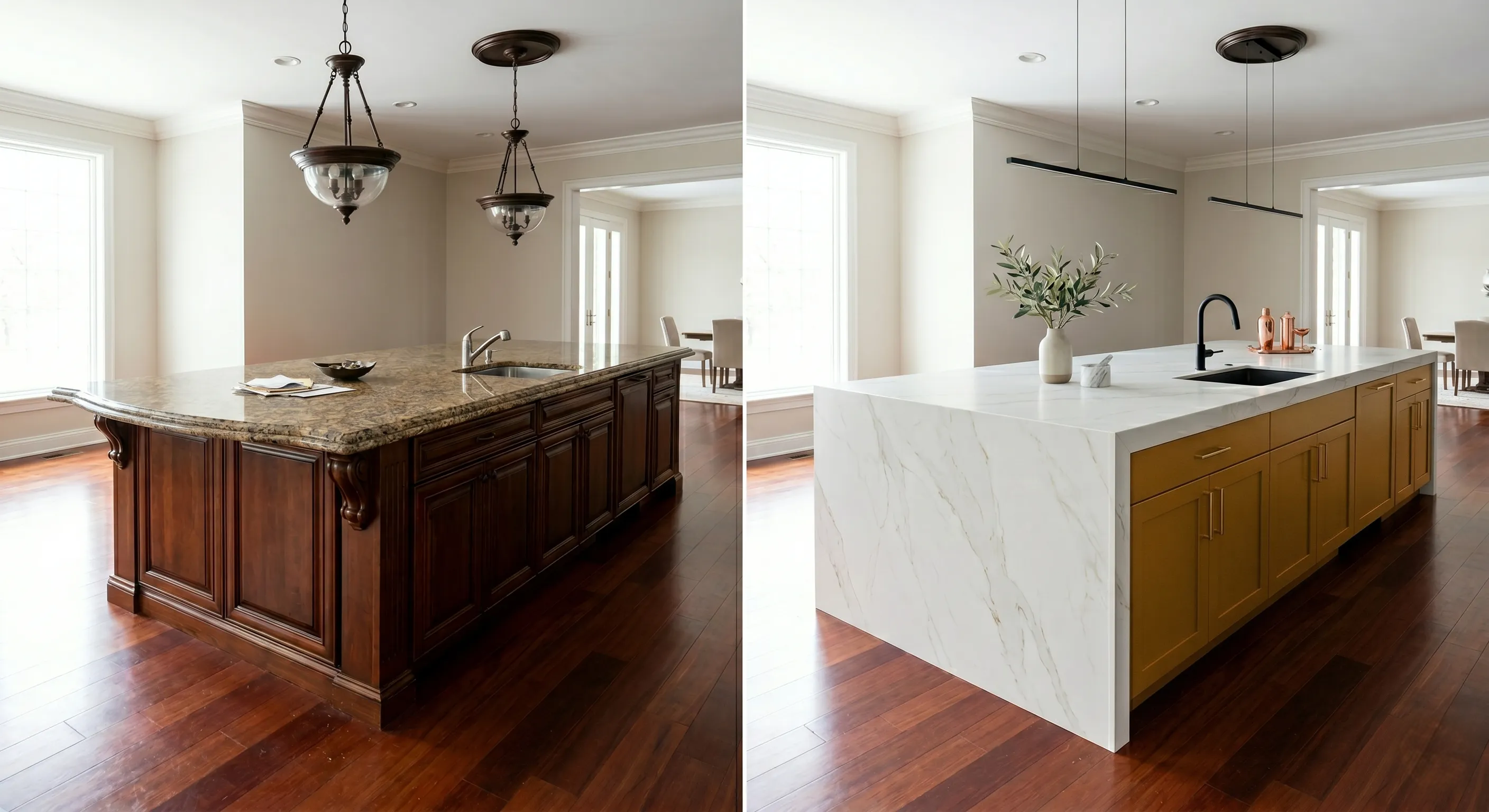
The kitchen above shows how much lighter a room can feel once the island stops visually blending into the flooring and cabinetry around it.
In the original image, the dark wood island and brown granite read almost like one continuous block in the middle of the room. The updated waterfall countertop creates separation and gives the island more structure without adding ornate details.
Quartz appears in many kitchen countertops before and after transformations because the veining and color stay more consistent from slab to slab. That consistency can make kitchens feel calmer, especially in open-concept homes where countertops remain visible from multiple rooms.
A kitchen may keep original hardwood flooring or traditional millwork while introducing lighter countertops and cleaner lines.
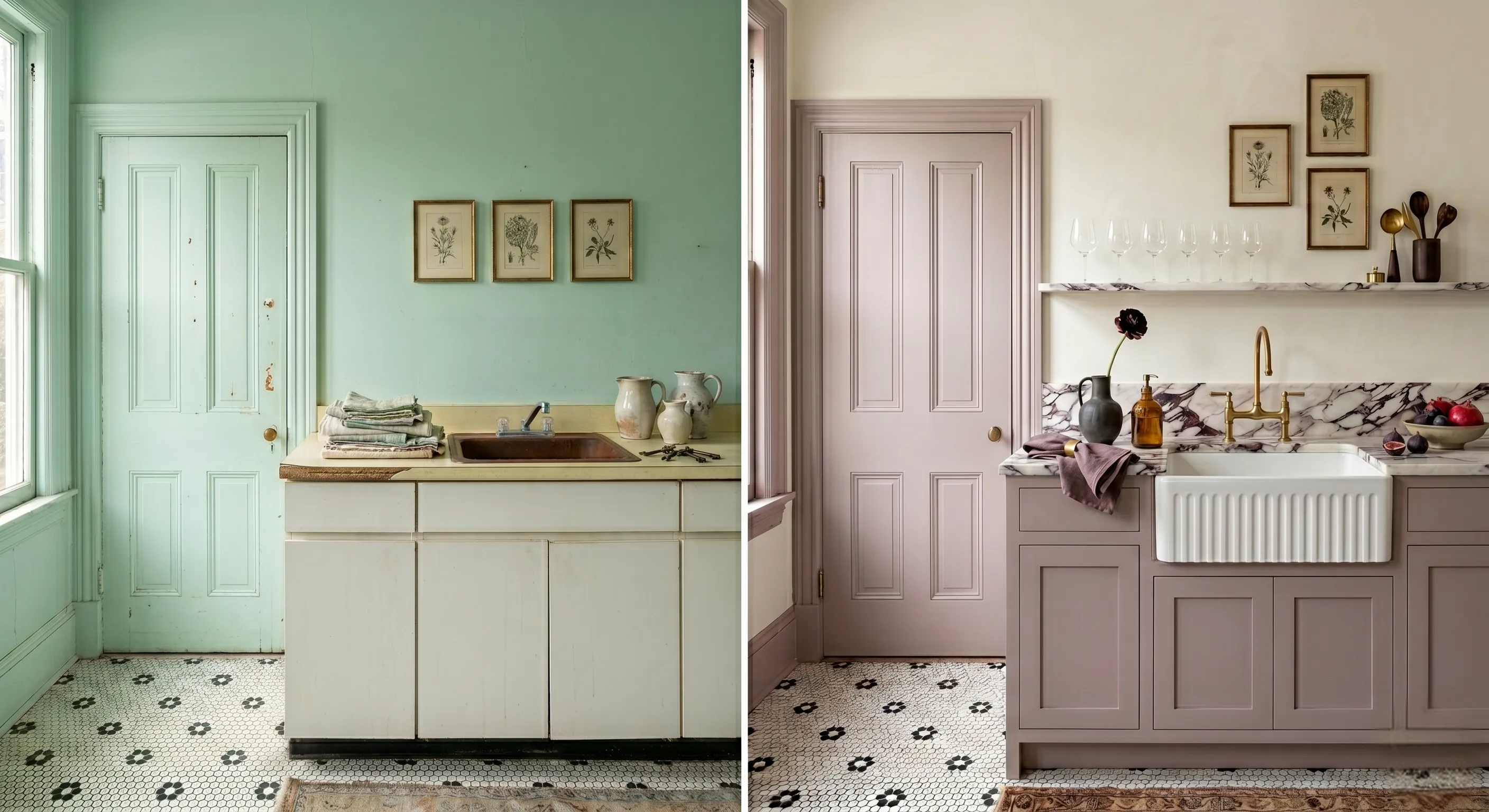
The kitchen above takes a much bolder approach with color, but the room still feels controlled because the palette stays muted overall.
The lavender cabinetry, brass fixtures, and heavily veined marble-style countertops all sit within softer tonal ranges. Nothing feels excessively bright or overly trendy, even though several statement finishes appear together in the same space.
The countertop becomes the focal point, but the surrounding materials support it instead of fighting for attention.
This kind of quartz countertops before and after transformation works because every finish participates in the same overall mood.
Granite countertops before and after transformations often surprise homeowners because granite itself is not always the issue. In many kitchens, the surrounding finishes make the stone feel dated.
Dark cherry cabinetry, ornate lighting, beige walls, and busy backsplashes were frequently paired with granite in the early 2000s. When all those materials sit together, the room can start to feel visually heavy.
Newer kitchens tend to integrate countertops more quietly into the rest of the room.
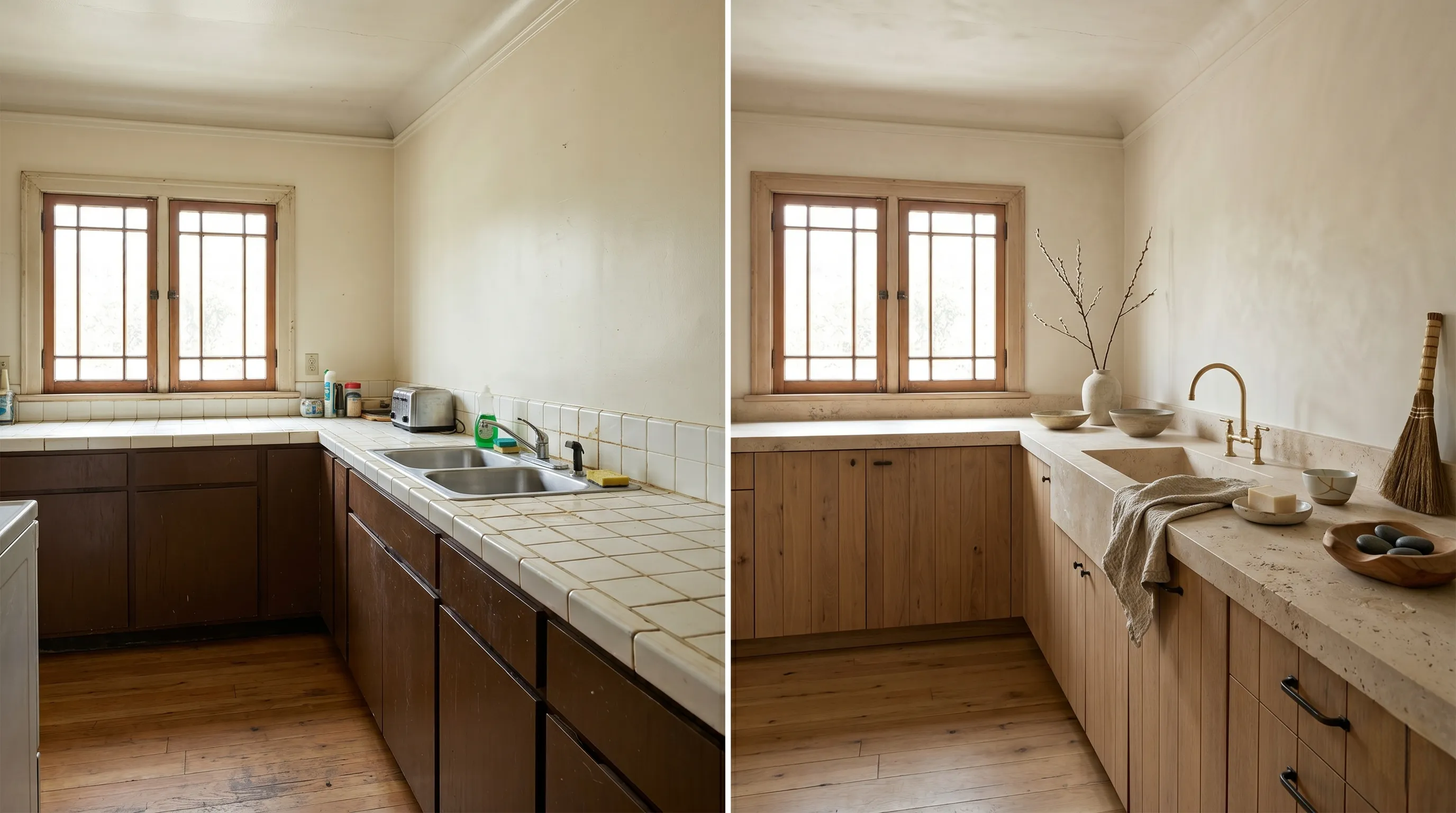
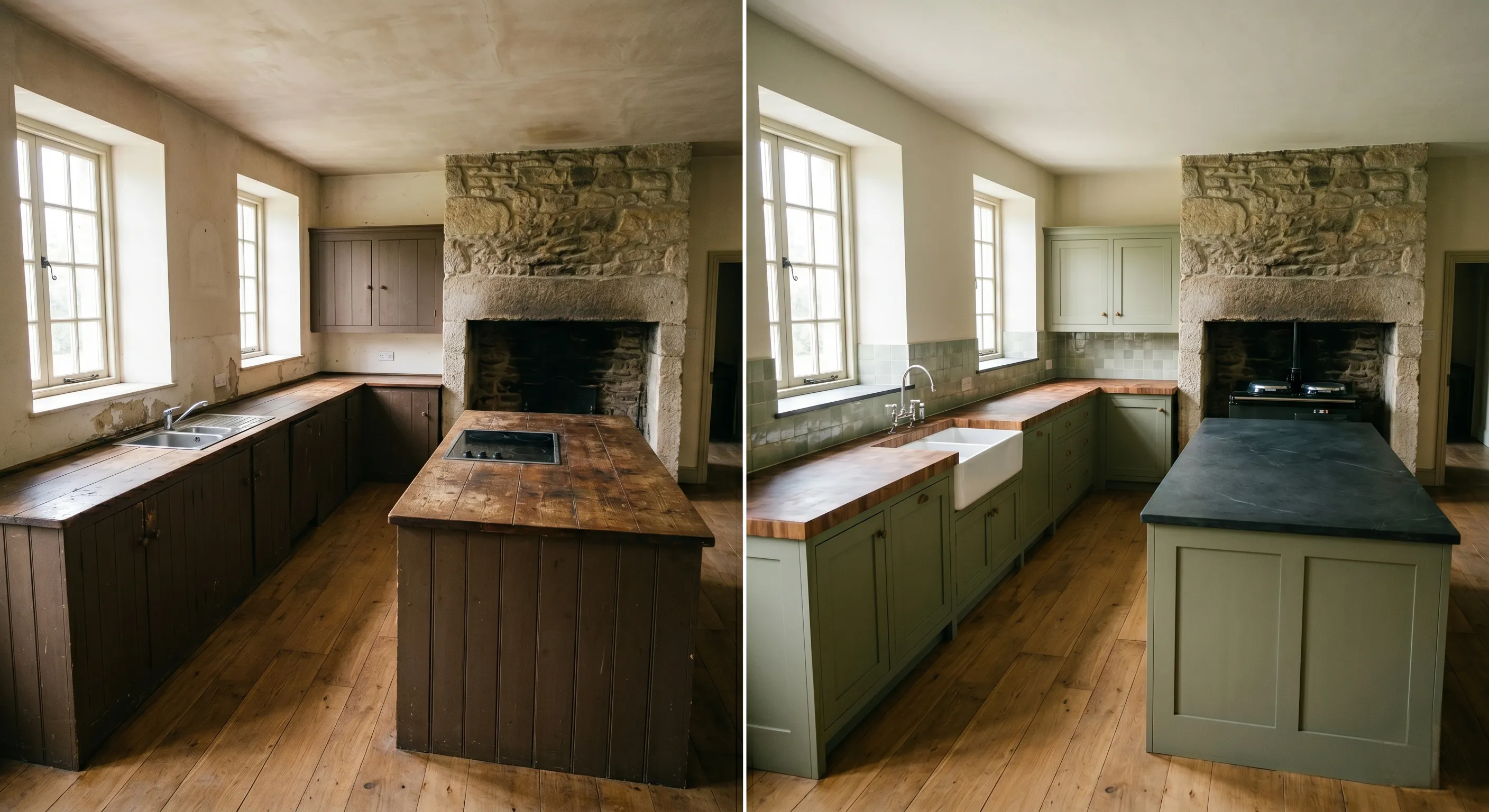
The kitchen above is a good example of why darker countertops can still work beautifully when the surrounding materials support them.
A bright white waterfall island would probably feel out of place here. The darker stone relates to the ceiling beams, fireplace stone, and natural wood tones already present throughout the room.
The cabinetry color matters too. The muted green softens the transition between the darker counters and the warmer wood ceiling without flattening everything into the same brown palette.
Several details keep the room balanced:
When homeowners replace older granite countertops, many move toward quartz because of maintenance preferences. Granite remains durable and heat-resistant, but some homeowners prefer the consistency and lower upkeep of engineered surfaces.
Epoxy countertops before and after projects have become increasingly common among homeowners looking for lower-cost ways to refresh kitchens and bathrooms.
Epoxy coatings can mimic marble veining, polished concrete, granite patterns, and high-gloss stone finishes. They can usually be applied over existing laminate or wood counters, which helps reduce demolition costs.
Overly dramatic veining and ultra-glossy coatings tend to look artificial more quickly.
Several design choices help epoxy counters feel more believable:
Epoxy is appealing because it avoids full countertop replacement costs. Natural marble and quartzite can cost significantly more than resurfacing existing counters.
Still, durability matters. Epoxy can scratch, discolor under UV exposure, or show wear near high-heat cooking zones. For heavily used kitchens, homeowners often weigh the lower upfront investment against future maintenance.
Before and after vinyl wrap countertop projects have gained traction among renters, homeowners planning phased renovations, and anyone looking for a temporary refresh before committing to full countertop replacement.
Modern vinyl wraps come in stone-look, terrazzo-look, concrete-look, and marble-inspired finishes. Some are surprisingly convincing from a distance, especially in kitchens with strong natural light and simpler cabinet lines.
Most before and after vinyl wrap countertop transformations succeed or fail at the edges. Corners, seams, sink cutouts, and transitions usually determine whether the installation feels polished or temporary.
Vinyl wraps are more temporary than quartz or granite, but they can still dramatically improve dated kitchens, basement bars, laundry rooms, or secondary bathrooms.
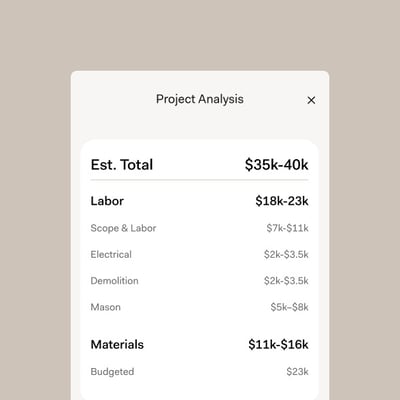
Know the Cost Before You Start
Many homeowners researching marble epoxy countertops before and after inspiration are balancing visual impact against maintenance and budget realities.
Real marble remains beautiful, but it's also porous and softer than quartz or granite. It can etch, stain, and develop patina over time, especially in heavily used kitchens.
Epoxy marble-look surfaces offer a lower-cost alternative with customizable veining and gloss levels. For some homeowners, especially in secondary spaces, that tradeoff makes sense.
The surrounding materials often matter more than whether the veining itself is natural or engineered.
Warm woods, softer paint tones, understated hardware, and layered lighting usually determine whether the final room feels balanced.
Small kitchens and powder rooms often show the most dramatic countertop transformations because every surface becomes more noticeable.
In smaller rooms, countertops take up more visual space, so even subtle material changes can shift the atmosphere significantly.
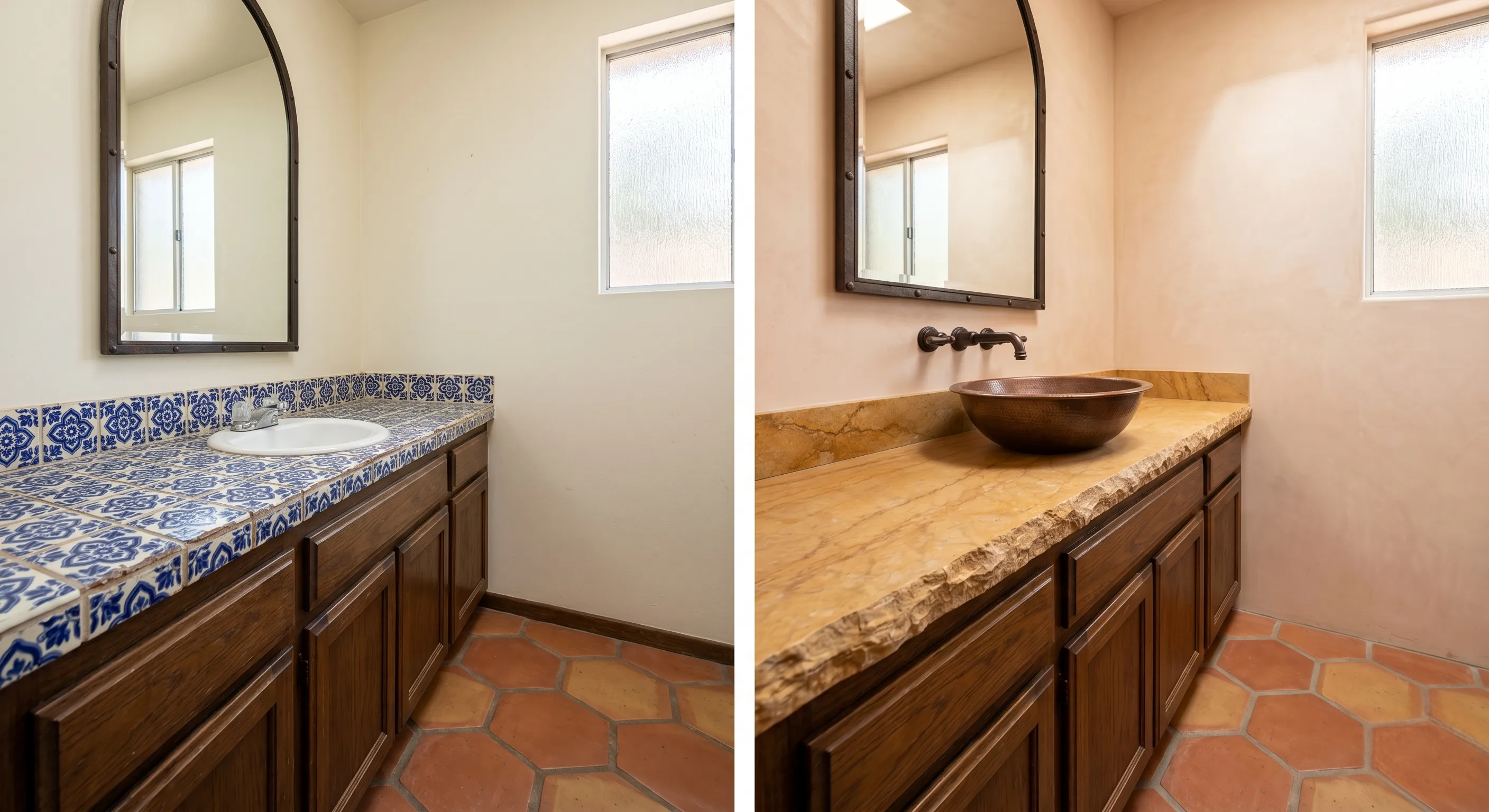
The powder room inspiration above shows how dramatically a space can change through countertop and surface choices alone.
The original room feels visually flat because the vanity, wallpaper, countertop, and fixtures all sit within nearly the same tonal range. In the updated version, the darker countertop immediately introduces contrast.
The brass fixtures and textured wall finish add depth without relying on bright color or oversized decor.
The room does not become physically larger, but it feels more layered and more intentional.
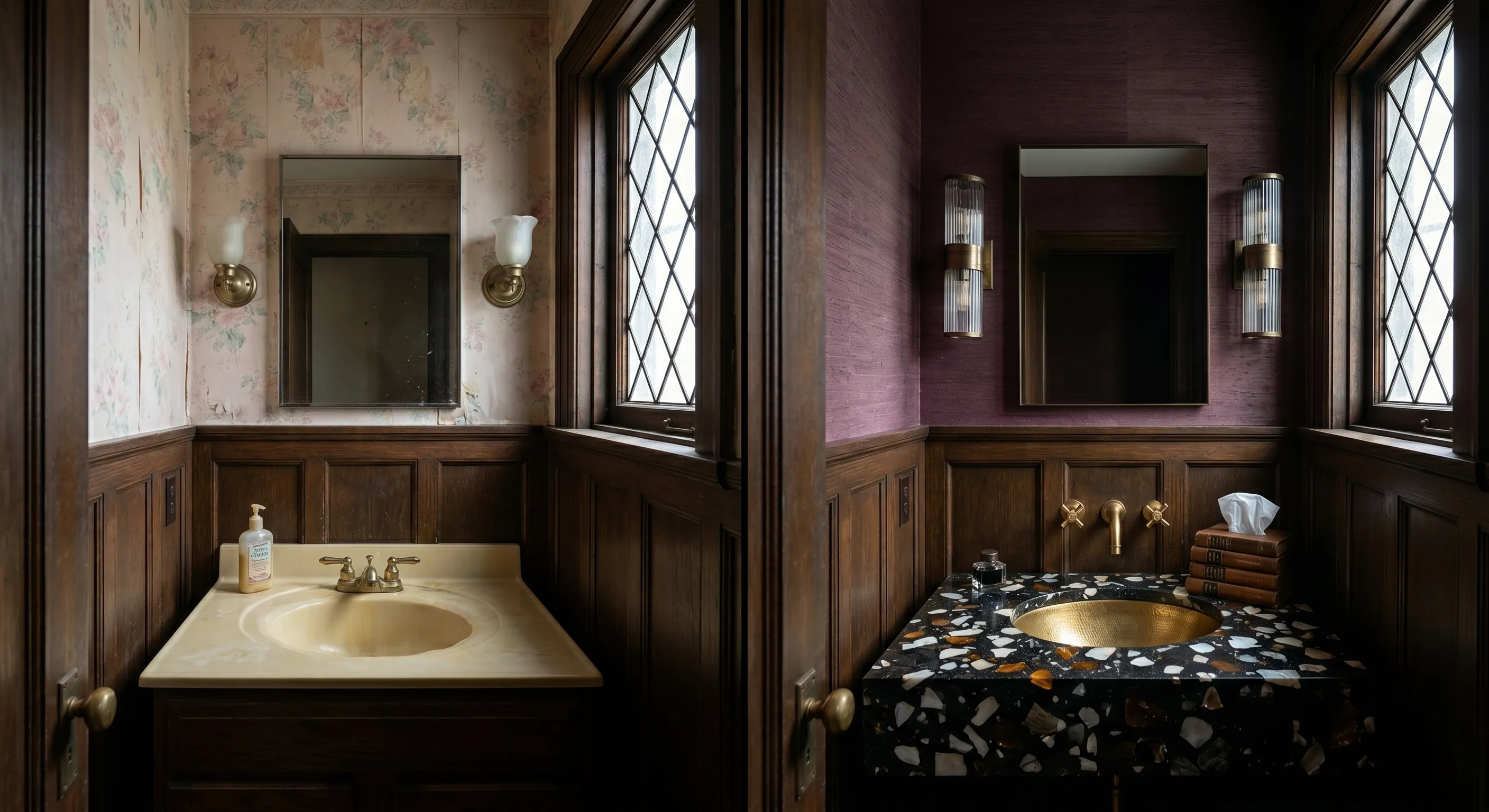
The bathroom above takes a different approach. Instead of introducing stronger contrast, the updated version leans into a softer tonal palette with lavender walls and lighter stone surfaces.
These before and after kitchen countertops and bathroom countertop transformations show that smaller spaces often benefit more from restraint than from dramatic material combinations.
The strongest kitchen countertop makeover before and after projects usually understand the room around the countertops instead of treating the surface as an isolated upgrade.
Several broader ideas repeat across these inspiration images:
The darker counters in the rustic kitchen work because they connect to the ceiling beams, fireplace stone, and wood tones already present in the room.
The lavender kitchen uses dramatic marble and bold cabinetry, but the muted palette keeps the room from feeling chaotic.
Many of the updated kitchens reduce visual clutter through cleaner slab edges, quieter backsplashes, or restrained hardware choices.
Dark countertops can feel rich and grounded in bright kitchens with natural wood and large windows. The same material may feel heavy in smaller rooms with limited light.
That's why countertop samples almost always look different once installed.
Every countertop material carries different strengths, maintenance needs, and visual effects.
A homeowner who cooks heavily every night may prioritize stain resistance and durability. Someone refreshing a guest bathroom may care more about visual impact than long-term wear patterns.
A countertop slab may influence cabinet dimensions, backsplash height, sink selection, appliance clearances, and even electrical placement around islands. Material lead times can also affect renovation schedules, especially for natural stone requiring templating and fabrication.
Clear project plans make contractor bids easier to compare and help reduce surprises later.
Our countertop visualizing tool helps homeowners explore layouts, materials, and pricing earlier in the process so countertop decisions connect cohesively with the rest of the renovation plan. Homeowners can visualize combinations, compare finishes, and build a clearer picture of how the entire space will come together before construction begins.
Remodel with confidence through Block

Connect to vetted local contractors
We only work with top-tier, thoroughly vetted contractors

Get expert guidance
Our project planners offer expert advice, scope review, and ongoing support as needed
Enjoy peace of mind throughout your renovation
Secure payment system puts you in control and protects your remodel

Renovate confidently with Block
Easily compare quotes from top quality contractors, and get peace of mind with warranty & price protections.