





West Virginia
Custom Home Building in Charleston, WV: A Local Guide
05.08.2026
05.08.2026


In This Article
he Kanawha Valley runs narrow and east-west through central West Virginia. The river cuts the floor. The hills climb on both sides, steep and wooded. The flat land at the bottom has been developed for generations, which means the desirable custom-building lots today are mostly up on the hillsides above the valley floor. That simple topographic fact shapes almost everything that follows: how you vet a lot, what the site work actually costs, how the house gets designed, and what it is worth when you sell it.
This is not Charleston, South Carolina. Different state, different climate, different market, different everything. Charleston, WV is a small market, which means the custom-build economy is different than in larger cities. The pool of custom builders is smaller, the pool of prospective buyers at resale is smaller, and the comparable properties that drive appraisals are fewer. None of this makes custom building here a bad idea. It makes it a specific idea, and one that deserves careful thought about what you are getting into before you buy the lot.
Turn your renovation vision into reality
Get matched with trusted contractors and start your renovation today!
Find a Contractor
A beautiful Charleston-area lot might be 2 acres with a view down the valley, mature hardwoods, and a neighborhood of other custom homes. It might also have a 22 percent slope, bedrock at 4 feet, a driveway that requires 300 feet of retaining wall, and a runoff pattern that sends water from the neighbor’s lot directly across the building site. The second set of facts does not show up in the listing. They show up on the walk-through with a builder who knows what to look for.
The slope itself is the first thing to evaluate. Slopes under 10 percent are relatively forgiving and work with most conventional foundations. Slopes from 10 to 15 percent require design attention but are manageable. Slopes above 15 percent push into serious site work territory: stepped foundations, significant grading, retaining walls, and often caissons drilled to bedrock. Slopes above 20 percent are expensive to build on, period.
The direction of the slope matters almost as much as the grade. A south-facing slope gets abundant sun (good for warmth, light, and landscape), handles winter snow melting faster, and offers better views in most cases. A north-facing slope is shadier, colder in winter, and more prone to ice persistence on driveways. An east or west slope takes directional sun all day. For a hillside custom, orientation drives livability, maintenance, and long-term comfort.
A hillside parcel vetting checklist that should run before any offer:
Charleston, WV has a specific custom-build reality that deserves honest discussion. The market is small, and a significant share of custom building happens at price points well above the area’s typical home. When a custom home finishes, the appraiser looks for comparable recent sales of similar homes in the area to support the value. In a market with limited high-end comparables, a $1.2M custom build on a hillside lot may appraise for less than it cost to build.
This is not a reason to avoid custom building in Charleston. It is a reason to go in with clear eyes. A few practical responses:
First, accept that you are building for your own long-term use, not for short-term flip value. Custom homes in small markets tend to hold their value well over 15- to 25-year ownership periods, even when the immediate post-construction appraisal may lag the build cost. The people who finish custom projects here happy are the ones planning to stay.
Second, pay attention to what neighboring parcels are doing. A hillside in an area where other custom homes are being built regularly has more appraisal support than an isolated custom in a neighborhood of 1970s ranches. The cluster matters.
Third, be realistic about what the construction loan will support. Banks evaluating construction loans use projected appraised value to determine loan size. If the projected appraised value is meaningfully below construction cost, the borrower covers the gap in cash or with additional collateral. Have this conversation with your lender early in the planning process, not after design is complete.
A hillside home that works with the topography rather than fighting it costs less and lives better. The walkout basement is the classic move: instead of cutting and filling to create a flat pad, the lower level opens to the downhill grade, with the main level above it. This adds usable finished square footage at a lower marginal cost per foot than adding a full second story, and produces a house that sits on the land rather than on top of it. For a broader look at how custom construction costs compare to buying existing, the Block guide on whether it’s cheaper to buy or build is worth reading before committing to either path.
Driveway and access design deserves specific attention. Long driveways on steep grades require careful engineering: proper drainage to handle runoff, retaining walls where necessary, a surface material appropriate to the grade (asphalt handles steep grades better than concrete for traction, though concrete lasts longer), and a turning radius adequate for emergency vehicle access at the house. Budget $30,000 to $150,000 for driveway work on a hillside parcel, depending on length and complexity.
Retaining walls are often unavoidable and always expensive. Engineered retaining walls cost $40 to $150 per square foot of wall face depending on height, materials, and engineering requirements. A 200-foot wall at 6 feet tall is $48,000 to $180,000. Budget for retaining walls at the parcel-evaluation stage, not in a change order midway through construction.
Window placement on a hillside custom deserves more thought than on a flat lot. The downhill elevation often carries the primary view and the most glass, which in West Virginia’s climate means serious attention to solar exposure and winter heat loss. A south-downhill lot works beautifully: south sun, valley view, and an east-west axis all on the same side. A west-downhill lot needs glazing choices that handle late-afternoon summer sun without losing the view. Overhang depths, glazing specifications, and interior finishes that handle direct sunlight should all be thought through at schematic design, not selected at the framing stage.
Outdoor space on a hillside needs to respect the grade. A traditional flat lawn may require so much cut and fill that it becomes impractical or visually disruptive. Terraced outdoor rooms, decks stepping down the slope, and patios carved into the hillside with retaining elements often produce more usable outdoor space than fighting the topography flat. These are architectural decisions worth making during design, not landscape afterthoughts.
Charleston-area custom construction currently runs approximately $225 to $400 per square foot for mid-range to high-end builds, with substantial site work adding meaningfully to total project cost on hillside lots. A 3,000-square-foot custom at the midpoint represents roughly $800,000 in construction cost, plus $75,000 to $300,000 in site work depending on slope and access. Add land (hillside parcels in desirable areas typically run $80,000 to $400,000) and total project costs of $1M to $1.5M are typical for a well-executed custom on a challenging lot.
Timeline from signed design contract to move-in typically runs 14 to 20 months, with the site work being the most variable piece. Complex hillside work (significant retaining, extensive grading, long driveway construction) can add months before the visible house construction begins. For homeowners thinking about the broader market picture, the Block guide on the most cost-effective homes to custom build offers useful framing for thinking about which design decisions return the most value, which applies specifically in a small market where every dollar should work hard.
Lay the groundwork for a successful custom home
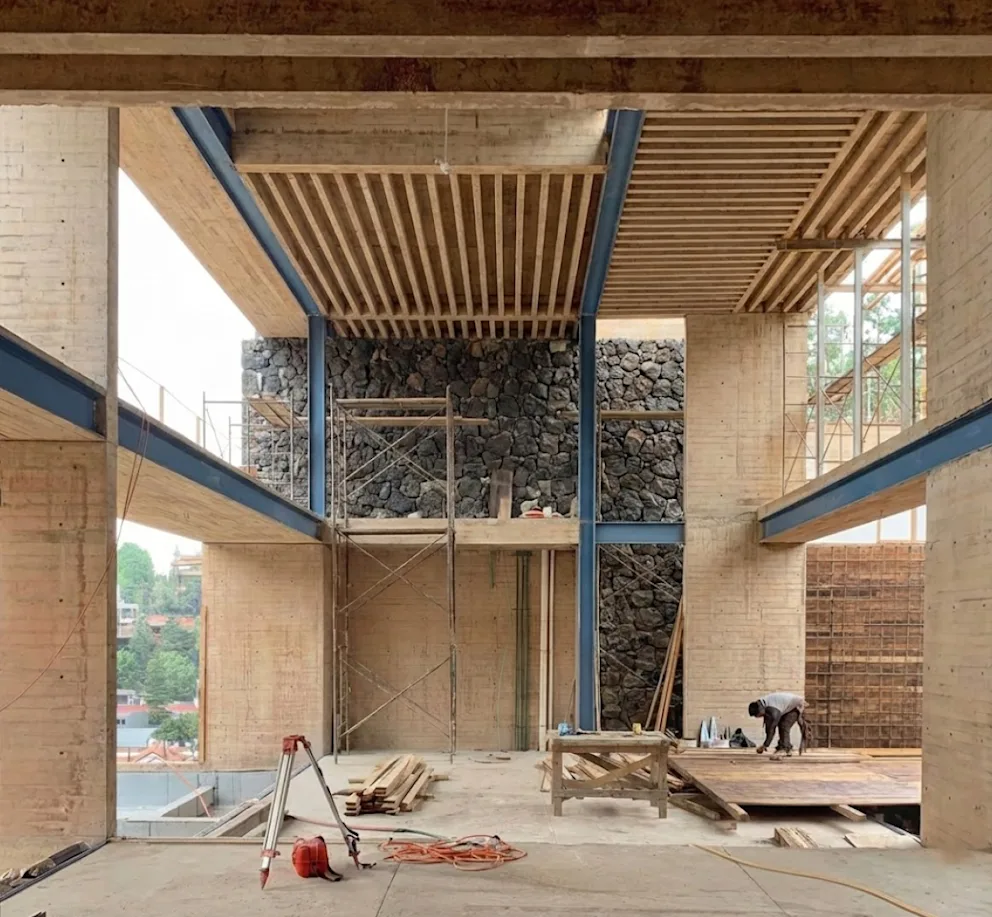
Match with vetted builders
Receive quotes from experienced contractors aligned to your vision.
Hire with confidence
Partner with Block experts to review quotes and timelines for end-to-end clarity.

Stay in control
Avoid surprises with Block Protections and a progress-based payment system.
Block’s Renovation Studio lets homeowners design their space, try different configurations on a hillside footprint, and see real-time cost estimates before committing. For a Charleston custom where the site itself shapes most of the major design and cost decisions, being able to explore scenarios early (walkout versus stepped foundation, single-story versus two-story on the given slope, where the driveway actually wants to land) is worth doing before architect contracts are signed.
Charleston has a limited but experienced pool of custom builders who genuinely understand hillside construction in the Kanawha Valley. The skills that matter most are hillside foundation experience, driveway and retaining wall engineering, familiarity with local soil and bedrock conditions, and relationships with the surveyors and engineers who work these sites regularly. A contractor whose portfolio is all flat-lot work in the valley floor is not the right fit for a hillside custom, regardless of their finish quality.
When evaluating builders, ask to see completed hillside projects with slope and access conditions similar to yours. Ask about their approach to change orders when hillside sites reveal unexpected conditions (bedrock, water, old fill), which is common. And ask specifically about their relationships with local lenders for construction loans, because the appraisal realities in this market make lender-builder coordination more important than in larger markets.
Block matches homeowners with vetted builders whose experience specifically fits the project, and every scope is reviewed by Block experts before bids come back. For a Charleston hillside custom, that upfront scope review catches the site-work realities, driveway and retaining wall specifications, and foundation details that generic scopes miss.
A Charleston custom done well is a long-term home on a parcel that fits the topography, designed for the specific site rather than from a generic plan, built by a team with hillside experience, and owned with realistic expectations about small-market resale. These are constraints, but they are also what makes a custom here distinctive. A well-executed hillside home in the Kanawha Valley, with real views and a site-responsive design, is not something available through production housing, and the specific buyers who want exactly that kind of home are the right buyers for this market.
Block Renovation is a technology-powered renovation and custom home platform that protects homeowners from the common pitfalls of large construction projects. From scope review to contractor matching to progress-based payments, Block is built around the homeowner. For Charleston custom builds, where the site, the small-market dynamics, and the hillside-specific construction realities demand careful navigation, Block’s expert team provides ongoing guidance from initial planning through final walkthrough. Thousands of homeowners have renovated and built with Block.
Remodel with confidence through Block
Connect to vetted local contractors
We only work with top-tier, thoroughly vetted contractors

Get expert guidance
Our project planners offer expert advice, scope review, and ongoing support as needed
Enjoy peace of mind throughout your renovation
Secure payment system puts you in control and protects your remodel


Renovate confidently with Block
Easily compare quotes from top quality contractors, and get peace of mind with warranty & price protections.