


Home Renovation ROI in Denver: Standing Out in a Market Where Buyers Have Options

Budget your upcoming Denver home remodel with help from Block
How we get your estimate
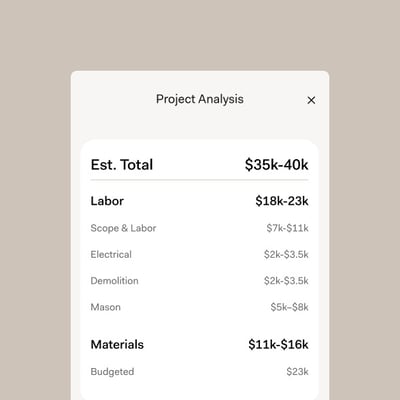
Fill out the form above to either connect with contractors for a personalized quote or estimate your costs with Block's Renovation Studio.
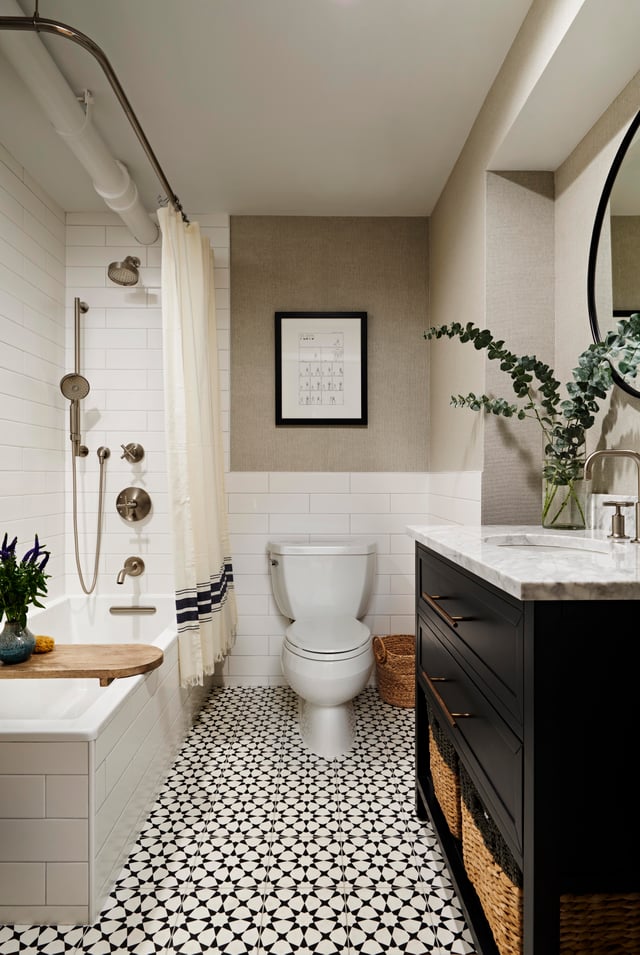
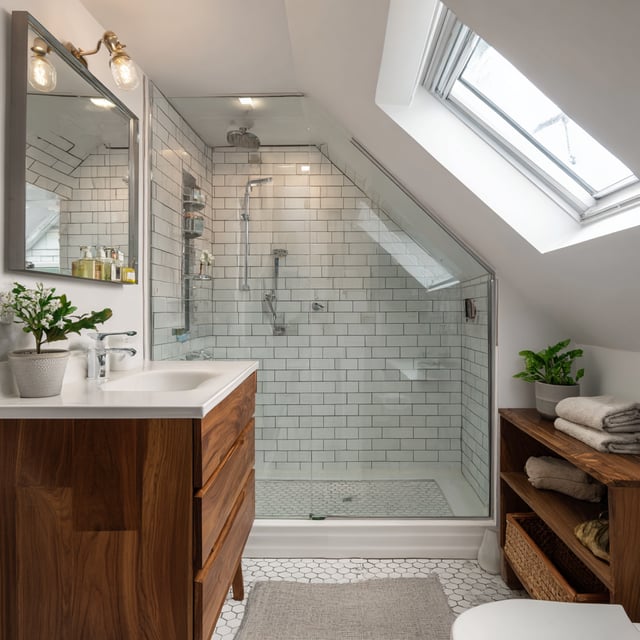
 Elegant bath with black vanity and patterned tile floors.

In This Article

    Denver's housing market has shifted meaningfully. After years of frenzied bidding wars, active listings jumped nearly 50% in 2025 and buyers now have breathing room they have not had since before the pandemic. The median sale price for single-family homes sits between the high $500Ks and low $600Ks, homes are spending 35 to 47 days on market, and roughly 37% of listings took price cuts in 2025.

    This is not a struggling market. Denver is still one of the most expensive major metros in the country, still attracting educated, high-income buyers, and still producing strong returns for well-presented homes. What has changed is the renovation strategy sellers need. In 2021, nearly any home in any condition sold over asking. In 2025, buyers have enough choices that they walk away from homes that feel dated, cluttered, or off-trend, even when they are spending $600,000.

    The renovation question for Denver sellers is not how to justify a price. It is how to create genuine differentiation: a home that a buyer immediately prefers over the six comparable ones they toured last weekend. That requires understanding what Denver buyers actually value and, just as importantly, what crosses the line from appealing into polarizing.

    Design a Home That’s Uniquely Yours

    Block can help you achieve your renovation goals and bring your dream remodel to life with price assurance and expert support.

    Get Started

    Understanding Denver's housing typologies before you spend

    Denver's housing stock falls into four dominant typologies, and each one has aged differently. Knowing which category your home falls into shapes every renovation decision that follows.

    • The postwar ranch (Harvey Park, Barnum, Overland): Built in the 1950s and 1960s, these single-story brick homes are structurally solid but often stuck in their original layouts: compartmentalized rooms, one small bathroom, and a kitchen isolated from the living space. Buyers compare them directly to renovated contemporaries in the same neighborhoods and to newer builds at higher price points. The renovation gap is often substantial and visible.
    • The mid-century Wash Park or Congress Park bungalow: These brick homes in Denver's most desirable in-town neighborhoods carry a price premium based on location and character. Buyers in this segment know what these homes look like renovated. An unrenovated bungalow at $650,000 loses immediately to a renovated one at $680,000. The bar is higher here because the comparables are also higher.
    • The 1970s to 1990s two-story Colonial (Centennial, Highlands Ranch, Greenwood Village): These homes have dated in predictable ways: brass fixtures, laminate countertops, popcorn ceilings, and original builder-grade bathrooms. They were not architecturally distinctive when built, which means they do not benefit from a preservation-minded approach. The renovation target is clean, current, and neutral.
    • New construction from the 2000s and 2010s: These homes serve as price anchors in their submarkets. A renovated older home competes against them by offering more character and a more established neighborhood for a comparable or lower price. The renovation investment needs to close the finishes gap without trying to replicate the new construction aesthetic.

    Buyers in Cherry Creek, Washington Park, and Capitol Hill are comparing renovated and unrenovated properties in a narrow price band. The renovation that wins is the one that makes a home feel more desirable than the unrenovated option at the same price and more justified than the newer build at a higher price.

    Renovation ROI for Denver home sellers

    Denver buyers in 2025 prioritize three things above all others: outdoor living, kitchen and bath quality relative to their price point, and energy efficiency. The sections below address each with specific guidance on scope, cost, and what to avoid.

    Outdoor living spaces

    • Lead with a professionally built deck or covered patio. Denver's 300 days of sunshine per year translates directly into renovation ROI. Buyers pay a meaningful premium for genuinely usable outdoor space. A professionally built deck or covered patio in the $8,000 to $20,000 range typically returns 70 to 85% of its cost at sale, which is higher than the national average because the climate makes outdoor space functionally usable for most of the year. A sagging or weathered deck creates a buyer objection rather than a selling feature. If your existing outdoor space is in poor condition, either rebuild it properly or remove it entirely before listing.
    • Prioritize clean, well-landscaped space over elaborate outdoor features. Outdoor kitchens with built-in grills, fire pit features, and custom water elements appeal strongly to a specific subset of buyers and leave others calculating the cost of removing features they do not want. A structurally sound, well-lit outdoor space with good landscaping consistently outperforms a feature-heavy outdoor room in terms of broad buyer appeal.
    • Consider xeriscaping as a locally resonant curb appeal investment. Denver is a water-conscious market, and drought-tolerant front yard landscaping using native plants and low-water ground cover signals environmental sensibility and lower maintenance costs. A well-executed xeriscape front yard costs $3,000 to $8,000 and resonates with Denver's buyer pool in a way a high-water traditional lawn does not.

    Kitchen updates

    • Match your investment level to your specific price tier. At $550,000, a targeted kitchen refresh delivers strong ROI for $10,000 to $20,000: painted or refaced cabinets in a contemporary color, quartz countertops, new hardware and fixtures, and updated lighting. At $750,000, buyers have already toured fully renovated kitchens in comparable homes. Cabinet painting against a fully updated kitchen next door will not close the gap. Know your comparables before deciding how far to go.
    • Evaluate a wall removal before spending on surface finishes. Denver's postwar ranches and mid-century bungalows were built with separate kitchens, and buyers accustomed to open-plan living feel cramped by these layouts even when square footage is adequate. Removing the wall between the kitchen and living space costs $5,000 to $15,000 and fundamentally changes how the home reads in photographs and in person. This is often better money than a premium countertop upgrade in a compartmentalized layout.
    • Choose finishes that work with Denver's natural light. Denver's high-altitude light reads brighter and warmer than coastal or Midwest light. Warm whites, earthy tones, and cream or sage cabinetry read as considered and sophisticated in Denver interiors. Stark whites and cool gray palettes, which dominated coastal design trends, often fight the warmth of Denver's built environment.

    Bathroom updates

    • Address the specific features that register as dated in Denver's market. The things that consistently trigger buyer hesitation are original builder-grade vanities with oak or honey-tone wood, bright brass hardware, large-format beige or almond tile, and fluorescent strip lighting. None of these are structural problems, but they signal to buyers that a $600,000 home has not been maintained or updated appropriately for its price tier.
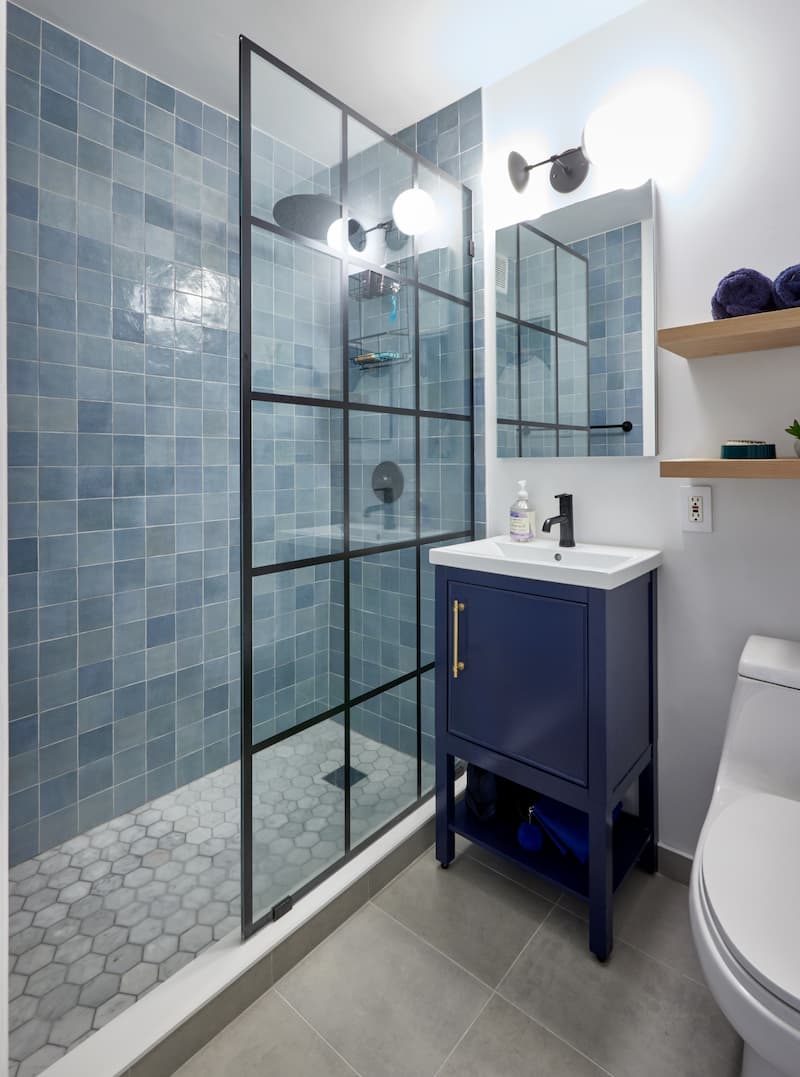
    • A targeted primary bathroom update removes a deal-threatening objection for $8,000 to $18,000. This scope covers a new vanity, updated fixtures, tile refresh or reglazing, and improved lighting. The goal is not a luxury spa. It is a bathroom that does not make a buyer immediately calculate what it would cost to update after closing. In a market where buyers have alternatives, that calculation is often the moment they choose the house next door.
    Danny Wang

    Bathrooms feel small, but prioritizing where you spend—function over decoration—has the biggest impact on long‑term value.

    Energy efficiency

    • Document efficiency investments as verifiable selling features. Denver buyers are among the most sustainability-oriented in the country, and a meaningful share actively factors energy costs into purchase decisions. A home with a recently replaced HVAC system, documented attic insulation levels, and an owned solar installation has a genuine differentiator over comparable homes. The key word is owned: a leased solar system requires buyers to assume the lease, which many are unwilling to do.
    • Colorado's net metering policies make solar a quantifiable asset. Unlike markets where solar adds an ambiguous quality-of-life premium, Colorado's net metering rules let buyers calculate projected savings from an owned system. Present annual production and cost savings data clearly in the listing to convert a vague sustainability signal into a concrete financial argument.
    • A new HVAC system and updated insulation carry real value even without solar. A high-efficiency furnace and central air unit ($6,000 to $12,000), attic insulation brought up to current standards, and a smart thermostat ($200 to $500) present as responsible ownership. Service records and documentation of the work reinforce the argument during buyer due diligence.

    Know the Cost Before You Start

    Get real-time estimates for materials and labor so you can plan your renovation with confidence—no surprises.
    Get an Estimate

    Paint and presentation

    • Fresh paint is the foundation of every other renovation decision. A professional repaint of a typical Denver home runs $4,000 to $8,000 and is the highest-ROI entry point regardless of price tier. A beautifully renovated kitchen in a poorly painted house shows worse than a dated kitchen in a freshly painted one. Paint should happen before anything else is evaluated.
    • Choose a palette that works with Denver's light. In a market where buyers tour multiple comparable properties, homes that photograph well get more traffic and more offers. Denver's bright, warm natural light rewards earthy and warm interior palettes. Homes photographed with that light working in their favor stand out against inventory shot in flat or artificial light.

    What to avoid: choices that narrow your buyer pool

    The renovations that create the strongest ROI in Denver's current market are those that appeal to the broadest segment of the likely buyer pool. The following choices consistently limit rather than expand buyer interest.

    • Bold or color-saturated interior paint in primary rooms. Deep navy feature walls, burgundy accent rooms, and trendy dark kitchens appeal strongly to buyers who share that aesthetic and alienate those who do not. Neutral, warm palettes consistently outsell personal color choices at sale.
    • Over-built outdoor rooms. A $40,000 outdoor kitchen with a pizza oven and built-in appliances appeals to entertaining-focused buyers and leaves others calculating how much they would spend to remove features they do not want.
    • Premium finishes where comparables do not support them. Marble countertops and custom millwork in a $480,000 home do not return their cost. The buyer at that price point cannot absorb the premium, and the market will not reward it.
    • Bedroom conversions. Removing a bedroom to create a home office or an expanded closet reduces your bedroom count, which is a hard search filter for most Denver buyers and directly affects comparable value.
    • Niche design aesthetics. Ultra-industrial loft styling, maximalist interiors, and hyper-rustic finishes require buyers to mentally reimagine the space before they can picture themselves living there. That friction costs offers.

    Denver home renovation ROI summary

    Renovation

    Estimated investment

    ROI in Denver's market

    Notes

    Outdoor deck or covered patio

    $8,000-$20,000

    Strong (70-85%)

    Climate makes outdoor space especially valued

    Xeriscape front yard

    $3,000-$8,000

    Strong

    Locally resonant, lower maintenance appeal

    Kitchen refresh (mid-range)

    $10,000-$22,000

    Strong

    Match investment to comparable price tier

    Open-concept wall removal

    $5,000-$15,000

    High

    Changes how home shows and photographs

    Primary bathroom update

    $8,000-$18,000

    Strong

    Removes a key buyer objection

    Professional repaint

    $4,000-$8,000

    Very high

    Foundation of every other renovation decision

    HVAC replacement and insulation

    $6,000-$14,000

    Moderate to high

    Valued by sustainability-conscious buyers

    Owned solar installation

    $15,000-$25,000

    Moderate

    Net metering makes economics quantifiable

    Full kitchen gut renovation

    $35,000-$65,000+

    Low to moderate

    Only justified at $700K+ price points

    Sell your Denver home confidently with pros from Block

    Block Renovation is a technology-powered renovation platform that protects homeowners from common and costly renovation pitfalls. From unclear contractor vetting to unpredictable pricing and payment risks, Block reimagines every step of the process to give homeowners clarity, control, and confidence. With Block, homeowners can receive personalized price estimates before construction begins. Block manages payments through a secure, progress-based system, ensuring contractors are only paid as work gets done.

    Remodel with confidence through Block

    Happy contractor doing an interview

    Connect to vetted local contractors

    We only work with top-tier, thoroughly vetted contractors

    Couple planning their renovation around the Block dashboard

    Get expert guidance

    Our project planners offer expert advice, scope review, and ongoing support as needed
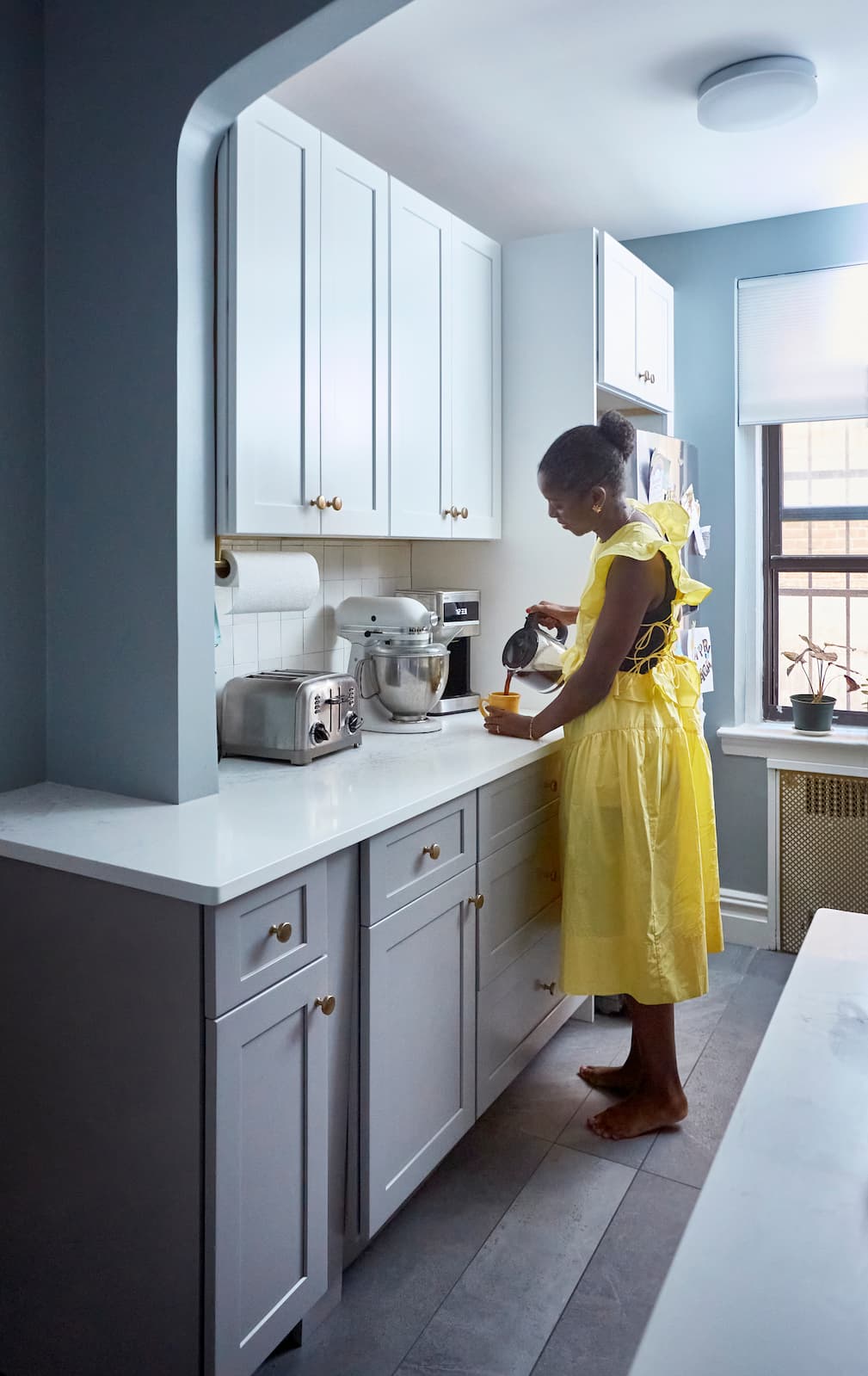
    Familty enjoying coffee in their newly renovated modern ktchen

    Enjoy peace of mind throughout your renovation

    Secure payment system puts you in control and protects your remodel

    Get Started

    Frequently asked questions

    What renovations add the most value to a Denver home before selling?

    Outdoor living spaces, targeted kitchen and bathroom updates, and paint consistently deliver the strongest ROI in Denver's current market. The common thread is broad buyer appeal: renovations that the largest possible share of your likely buyer pool sees as a positive. Fresh paint is the highest-ROI entry point at any price tier.

    How does Denver's housing typology affect renovation decisions?

    Significantly. A postwar ranch in Harvey Park competing against renovated contemporaries needs a different investment than a mid-century bungalow in Congress Park competing against fully renovated in-town homes. The comparison set your buyers are working from determines how much to invest and where. Know your comparables before committing to any scope.

    How much should I spend on renovations before selling my Denver home?

    A practical range is 1 to 3% of your anticipated listing price, focused on high-visibility improvements with broad buyer appeal. For a $600,000 Denver home, that is $6,000 to $18,000, covering paint, curb appeal, outdoor space, and a bathroom refresh. Larger investments require careful comparison against what renovated comparables in your specific neighborhood have already done.

    Does solar add value to a Denver home at sale?

    An owned solar system adds value because buyers can verify the energy cost savings using Colorado's net metering data. A leased system complicates the sale since buyers must assume the lease, which many decline to do. Document annual production and cost savings clearly and present that data proactively in the listing.

    What kitchen renovations make sense for a mid-range Denver home?

    For homes in the $500,000 to $700,000 range, a targeted refresh covering cabinet painting or refacing, quartz countertops, updated hardware and fixtures, and new lighting typically costs $10,000 to $22,000 and produces strong buyer response. A full gut renovation rarely returns its cost in this tier.

    Are outdoor kitchens a good investment in Denver?

    A clean, well-built deck or covered patio is a strong investment given Denver's climate. A fully built-out outdoor kitchen is more mixed: it appeals strongly to entertaining-focused buyers and can feel like an imposition to others. A simpler, well-executed outdoor space consistently outperforms elaborate outdoor features for broad buyer appeal and ROI.