




Commercial
Commercial Tenant Improvement Contractors Explained
07.27.2026

04.09.2026


In This Article
Denver has a commercial real estate problem that nobody seems to agree on how to fix. At a major industry conference earlier this year, nearly every panel took at least one shot at city and state officials for what they described as too many regulations, too much red tape, and a permitting and utility infrastructure that simply can't keep pace with the metro's growth. One panelist pointed out that landlords are actively subsidizing restaurant tenants just to make the numbers work, and that the cost of running a restaurant in Denver has become comparable to New York City.
The irony is that the market itself is full of real demand. Retail vacancy is near record lows, with construction at just 0.3% of total inventory. Experiential tenants like fitness studios, pickleball clubs, and specialty food concepts are expanding. Grocery-anchored and service-oriented properties keep outperforming other commercial categories. Venture capital funding rebounded in 2025, and the metro's tech sector is growing at 12.6% annually.
For business owners, this tension between opportunity and friction is the defining feature of Denver's commercial landscape right now. The customers are here. The demand is real. But the path from "signed lease" to "open for business" is longer, more expensive, and more bureaucratically complicated than in most comparable markets. Understanding what you're walking into is not a nice-to-have. It's the difference between a project that works and one that eats your budget before you serve your first customer.
Design a Home That’s Uniquely Yours
Block can help you achieve your renovation goals and bring your dream remodel to life with price assurance and expert support.
Get Started
Colorado has some of the most layered commercial building regulations in the country, and Denver adds its own on top. This is not a market where you pull a permit and start demolition next week.
Denver's Community Planning and Development department reviews building permit applications for compliance with building codes, zoning, and accessibility. For a straightforward tenant improvement, reviews can take several weeks. Projects that involve a change of use (converting retail to restaurant, for example), structural modifications, or work in certain zoning districts take meaningfully longer.
Beyond the building permit, your project may also need separate reviews from:
Each department runs on its own clock, and a delay in one can cascade through the rest.
Colorado's energy benchmarking laws require many commercial properties to track and report energy use, and Denver's own Green Building Ordinance pushes further. During a renovation, this can affect your HVAC selection, insulation, lighting, and building envelope specs. The costs are real, but they're predictable when you plan for them. A contractor unfamiliar with these requirements will create compliance problems that surface during inspection, which is exactly the wrong time to find out.
Build extra time into your project. If your contractor estimates 12 weeks of construction, plan for 16. If the permit review is quoted at three weeks, budget for five. Denver's process isn't broken, but it's more layered than what business owners from less-regulated markets are used to.
Denver is expensive to build in. There's no soft way to put it. Construction costs have been climbing for years, driven by rising labor and material prices and the additional time and expense tied to regulatory compliance.
Restaurant operators feel this pressure most acutely. Between rents that keep climbing in popular neighborhoods, the cost of commercial kitchen construction, and Colorado's labor regulations, the financial model for a Denver restaurant is tight. That's exactly why your buildout needs to be done right the first time. There is no margin for expensive rework or extended timelines when every month of pre-opening rent erodes your runway.
Denver's restaurant market deserves its own conversation because the economics are so specific. At the industry conference mentioned earlier, the comparison to New York City operating costs wasn't made casually. When you combine Denver's commercial rents in popular corridors, the cost of a full commercial kitchen buildout, Colorado's rising minimum wage, and the energy compliance requirements that affect everything from your hood system to your HVAC, the financial margin is thinner than many operators from other markets expect.
What this means practically:
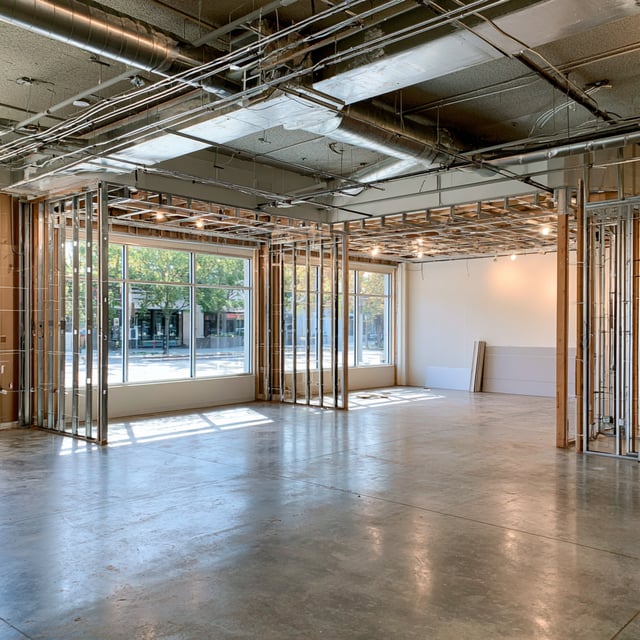
Denver's retail market has almost nothing in the new construction pipeline. That means the space you find is most likely an existing commercial space that needs to be adapted, not a new shell built to current standards.
The condition of the existing infrastructure is the single biggest variable in your budget. A space that looks move-in ready on a tour might need $30,000 in electrical upgrades once your contractor opens the ceiling.
Bring your contractor to any space you're seriously considering before you sign. A pre-lease site assessment costs almost nothing relative to discovering a major problem after you're committed.
Your buildout should match the submarket you're entering. Denver's neighborhoods have different characters, customer bases, and expectations.
One of Denver's most desirable commercial corridors, pulling in restaurants, breweries, creative studios, and experiential concepts. Spaces tend to be older warehouse or flex buildings that need significant adaptation. Rents are premium. Buildouts often lean into the industrial aesthetic, which can reduce finish costs, but the mechanical, plumbing, and electrical work underneath the exposed-brick look is often more extensive than people expect.
Strong local foot traffic. Loyal customer bases. Spaces tend to be smaller (800 to 2,500 sq ft) and in older buildings. These neighborhoods reward businesses that feel like they belong to the community. Going overboard on finishes in a neighborhood that values authenticity can actually work against you.
Newer commercial space with more predictable buildout conditions. Better odds of adequate existing electrical, mechanical, and plumbing. Permitting through suburban municipalities can sometimes move faster than the City of Denver. The customer base favors convenience, quality, and consistency.
Some of the highest commercial rents in the metro. Buildouts need to match the quality expectations of both the landlord and the customer base: higher-end finishes, more attention to design detail, and a budget that reflects that.
Given the regulatory complexity and cost realities, here's what experienced Denver operators actually do:

“Most renovation problems start before construction. Skipping proper planning leads to scope creep, delays, and costs that snowball once work begins.”
Denver rewards businesses that plan carefully and execute with patience. The demand is real, the neighborhoods are strong, and the customer base is engaged. But getting a commercial space open here requires navigating a regulatory environment and cost structure that don't leave much room for mistakes.
Block Renovation connects Denver business owners with pre-vetted contractors who understand the local codes, permitting timelines, and construction realities that define this market. Instead of sorting through contractors on your own, Block matches you with qualified professionals based on your project's scope and location, so you can move forward with the kind of expertise this market demands.
Build your business with confidence


Renovate confidently with Block
Easily compare quotes from top quality contractors, and get peace of mind with warranty & price protections.
Commercial
Commercial Tenant Improvement Contractors Explained
07.27.2026

Working with Contractors
Is a Property Renovation Company Worth the Cost?
06.24.2026

Commercial
Commercial Remodeling in San Diego by Neighborhood | Block Renovation
04.27.2026

Commercial
Commercial Remodeling and Buildouts in Dallas-Fort Worth | Block Renovation
04.24.2026
Commercial
2026 Restaurant Design: 11 Trends Defining the Industry
04.24.2026