




Your Guide to a Bathroom Remodel in Eugene, OR: Costs, Permits & Tips

Budget your upcoming Eugene bathroom remodel with help from Block
How we get your estimate
Fill out the form above to either connect with contractors for a personalized quote or estimate your costs with Block's Renovation Studio.
Bathroom with a tub clad in wood-look panels.

In This Article

    Eugene is a city where sustainability is not a marketing buzzword but a genuine way of life. Home to the University of Oregon and nestled in the southern Willamette Valley between the Cascade foothills and the Coast Range, the city attracts environmentally conscious residents who care deeply about the materials in their homes and the resources those homes consume. The housing stock reflects Eugene's diverse character: Craftsman bungalows line the tree-shaded streets of South University and Fairmount, mid-century modern homes populate the Amazon and Cal Young neighborhoods, and contemporary builds appear in the newer developments of River Road and Santa Clara.

    A thoughtful bathroom renovation in Eugene addresses two realities simultaneously. It protects your home's value in a market where eco-conscious buyers scrutinize material choices and energy performance, and it stands up to a Pacific Northwest climate that delivers roughly 47 inches of rain per year and sustained overcast stretches that make moisture management, ventilation, and durable finishes essential rather than optional.

    Turn your renovation vision into reality

    Get matched with trusted contractors and start your renovation today!

    Find a Contractor
    Typical costs of bathroom remodeling in Eugene

    Bathroom remodeling costs in Eugene run at or slightly above the national average, reflecting the Pacific Northwest's higher labor rates and the premium that comes with Oregon's strong contractor licensing and building-code requirements. Demand for skilled tradespeople has remained steady as the Eugene-Springfield metro continues to attract residents and housing inventory remains tight. Sourcing sustainable or locally produced materials, a priority for many Eugene homeowners, can add modest cost but often pays back through durability and lower maintenance.

    Project Scope

    Cost Range in Eugene

    Cosmetic bathroom updates

    $5,500–$14,500

    Mid-level bathroom renovations

    $14,500–$42,000

    Major bathroom overhaul

    $42,000–$92,000+

    Cosmetic bathroom updates: These projects keep the existing layout and plumbing intact while refreshing the surfaces and hardware that define the room's feel. In Eugene, that often means replacing a dated vanity top with locally sourced quartz or recycled-content solid surface, swapping builder-grade fixtures for water-efficient alternatives, and repainting with low-VOC, moisture-resistant finishes. Budget-friendly porcelain tile can replace worn vinyl or ceramic on floors and shower surrounds without subfloor modifications. Because no walls move and no drains relocate, timelines stay around two to three weeks and permit requirements are usually minimal.

    Mid-level bathroom renovations: At this tier, expect comprehensive new tile work across floors and shower walls, a full vanity replacement with sustainably sourced soft-close cabinetry, and upgraded lighting including energy-efficient LED sconces. Plumbing fixtures get a complete swap, including WaterSense-certified showerheads, faucets, and a higher-efficiency toilet. Many Eugene homeowners at this level convert a tub-shower combo into a dedicated walk-in shower with a frameless glass enclosure, which opens the room and reduces water use with a well-designed showerhead.

    Major bathroom overhauls: This is where layouts change and plumbing moves. A full gut renovation in Eugene might involve relocating the toilet and shower drain, expanding into an adjacent closet, or combining a compartmentalized layout into a modern primary suite with sustainably sourced materials throughout. Cost drivers include structural modifications, rerouting supply and waste lines, and installing radiant floor heating connected to a high-efficiency heat source. Custom cabinetry from FSC-certified wood, reclaimed materials, natural stone accent walls, curbless shower pans with linear drains, and freestanding soaking tubs push budgets toward the upper range. The City of Eugene requires plumbing and electrical permits for this scope, and inspections must be completed before walls and floors are closed.

    Strategies to help make the most of your remodeling budget

    There are smart ways to reduce costs and less-smart ways that end up costing more later, so being tactical about where you save and where you invest matters considerably.

    • Keep plumbing in its current location: Moving a toilet, shower drain, or vanity to a new wall introduces significant plumbing and labor costs that can consume a large share of a mid-range budget.
    • Choose porcelain tile over natural stone for large surfaces: High-quality porcelain closely mimics marble or slate at a fraction of the material and installation cost, and it never requires the periodic sealing that natural stone demands in a wet climate.
    • Source reclaimed or salvaged materials for accent elements: Eugene's robust salvage market, including local architectural salvage shops, offers quality vintage hardware, mirrors, and accent pieces at lower cost than new equivalents.
    • Select a semi-custom vanity rather than fully custom: Semi-custom lines offer a wide range of sizes, finishes, and configurations that fit most Eugene bathrooms without bespoke lead times or pricing.
    • Limit accent tile to a single feature area: A recycled-glass mosaic in the shower niche or behind the vanity mirror creates a focal point without the cost of tiling an entire wall in specialty material.
    • Invest in waterproofing and ventilation first: In Eugene's wet climate, skimping on moisture barriers and exhaust capacity leads to mold and material failure that costs far more to fix than to prevent.

    One approach that rarely saves money in the long run is attempting bathroom work yourself. Waterproofing failures are especially costly in the Pacific Northwest, where persistent moisture exploits every imperfection. Improperly set tile and plumbing mistakes can result in leaks, mold, and repairs that far exceed what a licensed professional would have charged.

    Danny Wang-Block Renovation copy-Mar-02-2026-04-59-34-2806-PM

    “Full floor‑to‑ceiling tile looks luxurious, but it’s expensive. Limiting tile to the wet zone saves on materials and skilled labor without sacrificing design.”

    What Eugene residents commonly care about when renovating their bathroom

    Every bathroom and household in Eugene brings a different set of priorities to a renovation, from the home's age and size to the homeowner's commitment to environmental responsibility. Still, certain themes come up consistently among residents across the city's neighborhoods.

    Remodeling your bathroom to intuitively limit water waste

    Water conservation is deeply embedded in Eugene's culture, and the Eugene Water and Electric Board supports efficiency programs that align with the community's values. Choosing the right fixtures makes conservation automatic, requiring no extra effort from anyone in the household.

    • WaterSense-labeled toilets: These use 1.28 gallons per flush or less, compared to older models at 3.5 or more, and the savings compound across a multi-bathroom home.
    • Low-flow showerheads with pressure-compensating technology: Modern low-flow heads maintain a strong spray feel at 2.0 GPM or below by aerating the water stream, which also reduces the energy needed to heat less water.
    • Faucet aerators rated at 1.2 GPM or less: Swapping a standard aerator is one of the cheapest and fastest water-saving upgrades during any remodel, and lower-flow models are readily available.
    • Thermostatic mixing valves: These reach your set temperature faster and hold it steady, reducing the water wasted while waiting for the shower to warm up.
    • Greywater-ready plumbing rough-ins: While not required, roughing in greywater-compatible drain connections during a renovation makes it inexpensive to add a greywater recycling system later, a feature that resonates strongly in Eugene's sustainability-minded market.

    Smart remodeling choices that help Eugene residents age in place

    Design choices that support aging in place can be both stylish and practical, fitting seamlessly into a modern bathroom without looking like clinical accommodations. Planning for accessibility during a renovation is far more cost-effective than retrofitting later.

    • Grab bars integrated into the shower design, using finishes that match your fixtures so they read as intentional hardware
    • Comfort-height toilets that sit two to three inches higher than standard, reducing strain on knees and hips
    • Lever-style door and faucet handles that are easier to operate than round knobs for anyone with reduced grip strength
    • A handheld showerhead on a slide bar that adjusts from seated to standing height
    • Non-slip matte-finish tile on all floor surfaces, including inside the shower, to minimize fall risk on surfaces that stay damp longer in Eugene's climate

    Renovate now, pay later

    Achieve the space you're looking for today, while financing it over time with our trusted partner.*

    *Not available in NYC

    Learn More
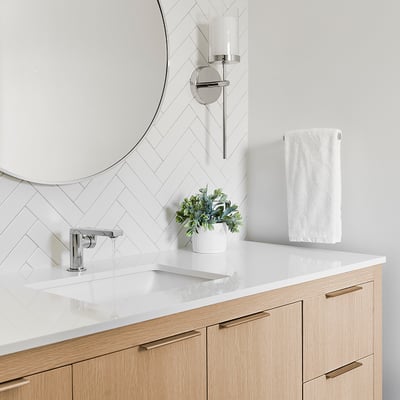
    Making the most of smaller bathroom footprints

    Many Eugene homes, particularly the Craftsman bungalows in South University and the post-war cottages throughout the Whiteaker neighborhood, have at least one bathroom where space is genuinely tight. A standard 5-by-8-foot or smaller hall bath imposes real constraints on fixture placement and storage. Thoughtful design can make these compact rooms feel significantly more open and functional.

    • A wall-mounted vanity that frees up floor space and creates visual breathing room
    • Large-format tile on floors and walls to minimize grout lines and visual clutter
    • A pocket door or barn-style slider instead of a traditional swing door
    • A recessed medicine cabinet that provides storage without protruding from the wall
    • A frameless glass shower enclosure instead of an opaque curtain to maintain sightlines
    • Continuous tile from the floor into the shower to visually extend the space

    Want to expand a smaller bathroom? What to keep in mind.

    Expanding a bathroom typically means borrowing space from an adjacent closet, hallway, or bedroom, and the cost adds up once structural work and plumbing extensions are involved. In Eugene, a modest expansion of 15 to 25 square feet can add $12,000 to $22,000 or more to the base renovation, reflecting Pacific Northwest labor rates and the possibility of encountering moisture-related damage in adjacent walls. The City of Eugene requires permits for any work modifying the building's footprint or plumbing layout.

    If physical expansion is not feasible or in the budget, design choices alone can make a bathroom feel meaningfully larger. Large-format tile with minimal grout lines, a frameless glass shower enclosure, and a floating vanity all create the visual impression of more space. Light, neutral color palettes and layered lighting reinforce that sense of openness.

    Renovating bathrooms for renters: smart design tips

    Eugene's rental market is shaped heavily by the University of Oregon, with student and young-professional demand concentrated in the West University, Downtown, and Whiteaker neighborhoods. Whether you own a rental near campus or a duplex in the Friendly Area, bathrooms play a meaningful role in attracting quality tenants. Rental bathrooms see heavier use and less careful maintenance, so durable, low-maintenance materials are essential, and moisture resistance is even more critical in a climate where everything stays damp longer.

    • Porcelain tile floors in a mid-toned neutral: Porcelain resists scratches, stains, and moisture better than laminate or vinyl, and a warm gray or beige hides everyday wear.
    • Single-handle faucets with ceramic disc cartridges: These are simpler to operate and far less prone to drips than compression-style valves.
    • A one-piece fiberglass tub-shower surround: Eliminating grout in the wet area reduces mold, an especially important consideration in Eugene's damp climate where mold grows aggressively.
    • Commercial-grade toilets with concealed trapways: These handle heavier use and are easier to clean than standard residential models.
    • High-CFM exhaust fans with humidity sensors: In Eugene's climate, auto-sensing fans are not optional in rental bathrooms. They protect surfaces from mold regardless of tenant behavior.
    • Semi-gloss or satin wall paint in low-VOC formulations: These sheens resist moisture and clean easily while meeting the environmental standards many Eugene renters expect.

    Ways Eugene homeowners can bring sustainability into their bathroom remodel

    Sustainability is where Eugene homeowners truly differentiate their renovations. The city's culture of environmental responsibility means eco-friendly choices are not just appreciated but expected, and many of these decisions also lower utility bills and reduce long-term maintenance.

    • WaterSense-labeled fixtures throughout: Toilets, faucets, and showerheads certified to WaterSense standards use significantly less water with no performance trade-off, and Eugene Water and Electric Board may offer rebates for qualifying upgrades.
    • LED lighting for all task and ambient fixtures: LEDs consume a fraction of the energy of incandescent or halogen bulbs and last for years, reducing both cost and waste.
    • Low-VOC paint, adhesives, and sealants: These products off-gas less, improving indoor air quality, and are widely available through Eugene's building supply stores.
    • Recycled-glass or reclaimed tile for accent areas: Recycled-glass tile is durable, visually striking, and diverts material from landfills. Local artisans in the Willamette Valley also produce handmade tile from reclaimed materials.
    • FSC-certified or reclaimed wood for cabinetry and shelving: Sourcing wood responsibly is a priority for many Eugene homeowners, and local suppliers stock FSC-certified options alongside reclaimed lumber from deconstructed Oregon buildings.
    • A heat-pump water heater: If you are upgrading the water heater during the remodel, heat-pump models are extremely efficient in Eugene's mild climate and often qualify for EWEB incentives.
    • Greywater-compatible plumbing rough-ins: Running separate drain lines for the shower and lavatory during a renovation makes it affordable to add a greywater recycling system later for landscape irrigation.

    Finding inspiration for your Eugene remodel in your home's architectural roots

    Eugene's housing stock reflects the city's evolution from a timber-era college town to a progressive, sustainability-focused community. From the Craftsman bungalows in South University and Fairmount to the mid-century modern homes in the Amazon and Cal Young neighborhoods and the contemporary eco-conscious builds in River Road and newer developments, each style carries its own proportions, material expectations, and spatial constraints.

    Ideas for Craftsman-style bathrooms in Eugene

    Craftsman bungalows are the architectural heart of Eugene's older neighborhoods, particularly South University, Fairmount, and parts of the Friendly Area. These homes emphasize handcrafted details, built-in functionality, and natural materials, an aesthetic that aligns naturally with Eugene's sustainability values. Bathrooms tend to be modestly sized but thoughtfully arranged, with original features like built-in medicine cabinets and tile wainscoting.

    • Subway tile in matte white or soft cream with dark grout: The classic subway format aligns with the Craftsman emphasis on clean, handmade aesthetics and honest materials.
    • A furniture-style vanity in FSC-certified or reclaimed wood with Shaker-profile doors: Simple, recessed-panel cabinetry complements the built-in sensibility of Craftsman interiors while reflecting Eugene's commitment to responsible sourcing.
    • Oil-rubbed bronze or aged brass fixtures: Warm, darker metal finishes feel more at home in a Craftsman bath than polished chrome or modern matte black.
    • A built-in recessed medicine cabinet with a framed mirror: This echoes the original built-in storage that defines Craftsman homes and keeps the wall clean and uncluttered.
    • Handmade ceramic tile from Oregon artisans for accent areas: Locally produced tile reinforces both the Craftsman commitment to artisanal quality and Eugene's support-local ethos.

    Ideas for Mid-century modern bathrooms in Eugene

    Mid-century modern homes populate several Eugene neighborhoods, including the Amazon corridor, Cal Young, and Harlow. Built primarily from the late 1940s through the 1960s, these homes feature clean lines, large windows that connect interior and exterior, and an emphasis on natural light. Bathrooms in these homes are typically compact, with simple fixtures and minimal ornamentation.

    • Large-format tile in warm, earthy tones: Ochre, olive, warm gray, and soft terracotta connect the bathroom to the mid-century palette and the natural Oregon landscape visible through the windows.
    • A wall-mounted vanity with clean, horizontal lines: This echoes the floating, cantilevered forms that define mid-century modern furniture design.
    • Brushed brass or satin gold fixtures: Warm metallic finishes complement the wood tones and earthy palette characteristic of mid-century Oregon homes.
    • Natural light maximized through a solar tube or enlarged window: Mid-century homes were designed around daylight; enhancing natural light in the bathroom preserves that intent and reduces daytime electricity use.

    Ideas for Contemporary eco-conscious bathrooms in Eugene

    Contemporary homes in Eugene's newer developments, including builds in River Road, Santa Clara, and the South Hills, increasingly reflect the city's environmental values through passive-solar design, tight building envelopes, and sustainable material palettes. Bathrooms in these homes are often generous, with double vanities and separate shower and tub areas. The design language favors clean lines and natural materials. Renovations should reinforce the home's sustainability mission while delivering the daily comfort and visual impact that anchor a primary suite.

    • Large-format porcelain tile in matte finishes: Fewer grout lines create a streamlined look that reinforces clean design while being extremely durable and low-maintenance.
    • A floating vanity with reclaimed-wood drawer fronts: The juxtaposition of a modern wall-mounted form with the texture and history of reclaimed Oregon timber creates a distinctly Eugene aesthetic.
    • A curbless shower with a concealed linear drain: A flush floor transition reinforces barrier-free design principles and simplifies cleaning.
    • Recycled-glass tile in earth tones for the shower accent wall: This material choice puts sustainability front and center while delivering a mosaic with depth and color variation unique to recycled content.
    • Daylight harvesting through skylights or clerestory windows: Maximizing natural light reduces the need for artificial lighting during Oregon's bright summer days while adding architectural interest overhead.

    Visualize and budget your bathroom remodel with Renovation Studio

    Before committing to materials or contractors, Renovation Studio lets you explore design options and see how they translate into a localized cost estimate for Eugene. The tool walks you through key decisions, from layout changes and fixture selections to sustainable material upgrades, and generates a budget range based on your specific scope. You can compare scenarios side by side to understand how choosing recycled-glass tile versus standard porcelain or adding radiant floor heating affects the bottom line. Renovation Studio draws from real project data in the Eugene-Springfield metro area, so the numbers reflect what Lane County homeowners are actually paying. It is a practical starting point for planning with confidence before the first contractor conversation.

    Bring Your Dream Bathroom to Life
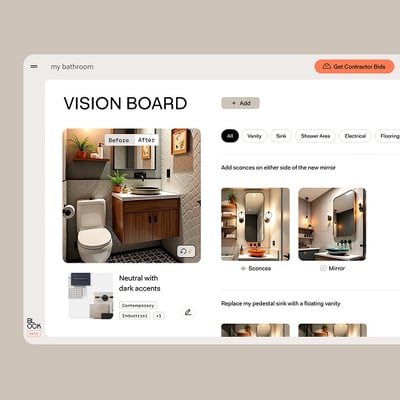
    Explore stunning design ideas, materials, and color schemes tailored to your space—no guesswork, just inspiration.
    Start Designing

    Local Businesses to Visit in Eugene

    One of the best parts of planning a bathroom renovation is getting to see materials and fixtures in person. Here are some Eugene-area shops worth visiting as you pull together your vision.

    • Real Deals- Eugene: Discover unique home decor treasures and fresh design ideas in this local gem, where every find sparks inspiration for your next renovation. It’s the perfect spot to explore curated pieces that add character and style to any space.
    • Down to Earth | Home, Garden & Gift: Discover a fresh blend of indoor greenery and organic gardening essentials that bring life and texture to any space. Their curated kitchen gear for cooking and canning adds a charming, rustic touch—perfect for those who love blending style with sustainability.
    • Oak Street Vintage: A treasure trove of carefully curated vintage pieces, this local gem invites you to discover unique home decor that sparks fresh design ideas. Perfect for adding character and charm to any renovation project.
    • Kelly's Furniture: Discover a curated collection of stylish, timeless pieces that effortlessly elevate any space. This local gem offers unique home decor treasures and fresh design ideas perfect for sparking your next renovation.
    • Coburg Antique Malls LLC: A treasure trove of unique vintage finds and timeless home accents, this local antique mall is perfect for sparking design inspiration and adding character to any space. With carefully curated pieces, it’s a must-visit for anyone looking to blend history with modern style.
    • Retro Rejuvenation: A treasure trove of vintage hardware and whimsical accents, this local spot sparks creative ideas for adding character to any renovation. It’s the perfect place to discover unique, nostalgic pieces that bring timeless charm into modern homes.

    Ready to build? Let Block help you find top-rated contractors in Eugene

    Once your design and budget are set, Block matches you with vetted, experienced contractors who work in Lane County and understand Oregon's building codes and the specific challenges of renovating in the Pacific Northwest climate. The matching process considers your project scope, timeline, and budget so you are connected with professionals whose expertise aligns with what your bathroom requires. You can review contractor profiles, past project photos, and verified homeowner reviews before making a decision.

    Remodel with confidence through Block
    Happy contractor doing an interview

    Connect to vetted local contractors

    We only work with top-tier, thoroughly vetted contractors
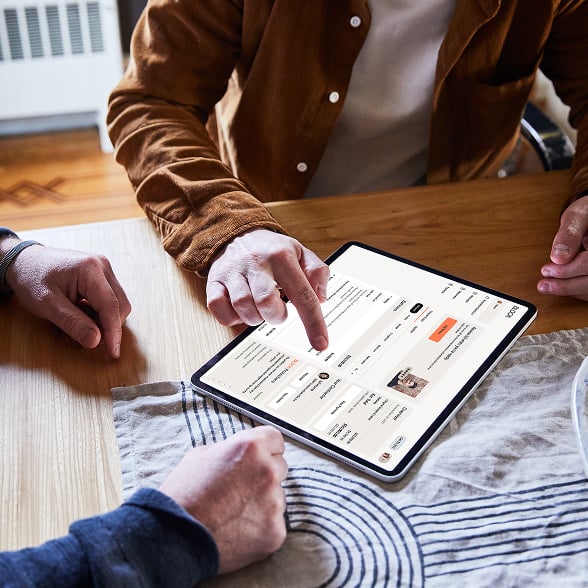
    Couple planning their renovation around the Block dashboard

    Get expert guidance

    Our project planners offer expert advice, scope review, and ongoing support as needed
    Familty enjoying coffee in their newly renovated modern ktchen

    Enjoy peace of mind throughout your renovation

    Secure payment system puts you in control and protects your remodel

    Get Started

    Frequently asked questions

    What is the best time of year in Eugene to start a bathroom remodel?

    Late fall through early spring can offer better contractor availability since the busiest season runs from May through October when exterior projects compete for trade labor. That said, Eugene's rainy season does not affect bathroom work since it is entirely interior. Scheduling during the quieter winter months often means faster starts and more attentive crews, and some contractors offer more competitive pricing during this period.

    How long does a typical bathroom remodel take in Eugene?

    A cosmetic refresh typically takes two to three weeks, while a mid-range renovation with new tile, fixtures, and vanity replacement runs three to five weeks. Full gut renovations involving plumbing relocation, structural changes, or extensive sustainable-material sourcing can take six to ten weeks or longer, depending on City of Eugene permit turnaround and material lead times. Building in a one-to-two-week buffer for unexpected conditions behind the walls, particularly moisture damage common in older Oregon homes, is always wise.

    Do I need a permit to remodel a bathroom in Eugene?

    Cosmetic updates like paint, hardware swaps, and fixture replacements generally do not require permits. However, the City of Eugene requires permits for plumbing changes, electrical work, and structural modifications. If you are moving a drain, adding a circuit, or modifying a wall, you will need to file with the City of Eugene Building and Permit Services and schedule inspections before walls and floors close up. Oregon also requires contractors to hold specific licenses for plumbing and electrical work.

    What sustainable materials work best for bathrooms in Eugene's climate?

    Porcelain tile remains the most durable, moisture-resistant surface for floors and shower walls regardless of sustainability priorities. For accent areas, recycled-glass tile and handmade ceramic from local Oregon artisans deliver both environmental integrity and visual interest. FSC-certified or reclaimed wood works well for vanities and shelving when properly sealed, and recycled-content quartz is an excellent countertop option. Low-VOC paints and adhesives are standard practice in Eugene and widely available from local suppliers.
