



Design
Bathtub to Shower Conversion: Cost, Ideas, Examples & More
08.11.2026
04.27.2026


In This Article
Most bathrooms don’t start as perfect rectangles with unlimited flexibility. You’re working around existing plumbing, structural walls, and whatever footprint the home gives you. When that footprint is long and narrow, a galley style bathroom layout often ends up being the most practical path forward.
Instead of forcing the space into something it’s not, this layout works with those constraints. When it’s planned carefully, the result is a bathroom that feels organized, comfortable to move through, and built with intention.
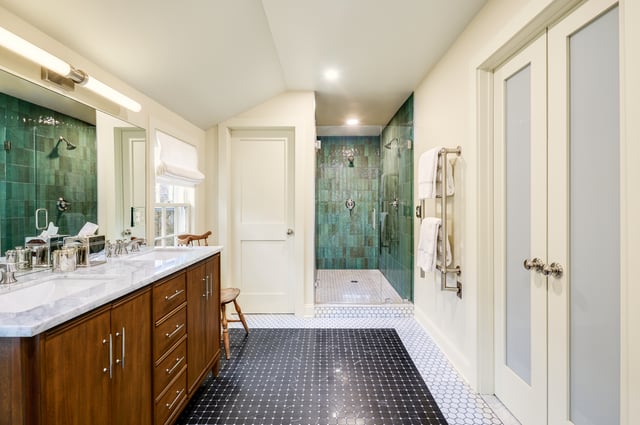
A true galley bathroom layout places fixtures along two parallel walls, with a walkway running between them. Think of it as a corridor where every element has a defined place and purpose.
In many homes, especially older ones, that structure gets adapted. You might see everything aligned along a single wall while still maintaining a clear, linear flow through the space. It’s not a textbook galley, but it follows the same logic, and homeowners often group it under the same category because it solves the same spatial challenges.
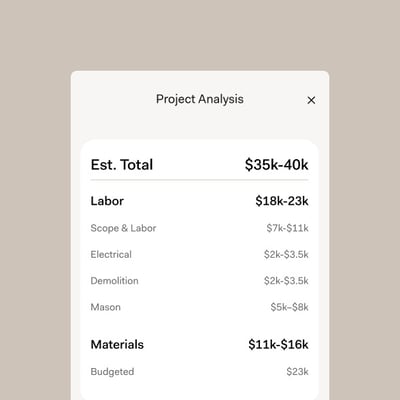
Know the Cost Before You Start
Most homeowners don’t actively choose a galley layout. They arrive at it once they understand what can realistically be changed.
Plumbing is often the first constraint. Moving a toilet or tub across the room can require rerouting pipes through joists or slabs, which adds time and complexity. Keeping fixtures aligned reduces that risk and keeps the project grounded.
Structural walls are another factor. Even when you want to open a space up, certain walls can’t move, which narrows the options for layout changes. Doors and windows add another layer. Their placement dictates how fixtures can be arranged and where circulation paths can run.
A galley bathroom layout works within all of those limits. It organizes the space in a way that feels natural, instead of forcing a layout that fights the existing structure.
In a tighter bathroom, layout decisions are less forgiving. A few inches in the wrong place can make the difference between a space that feels usable and one that feels frustrating.
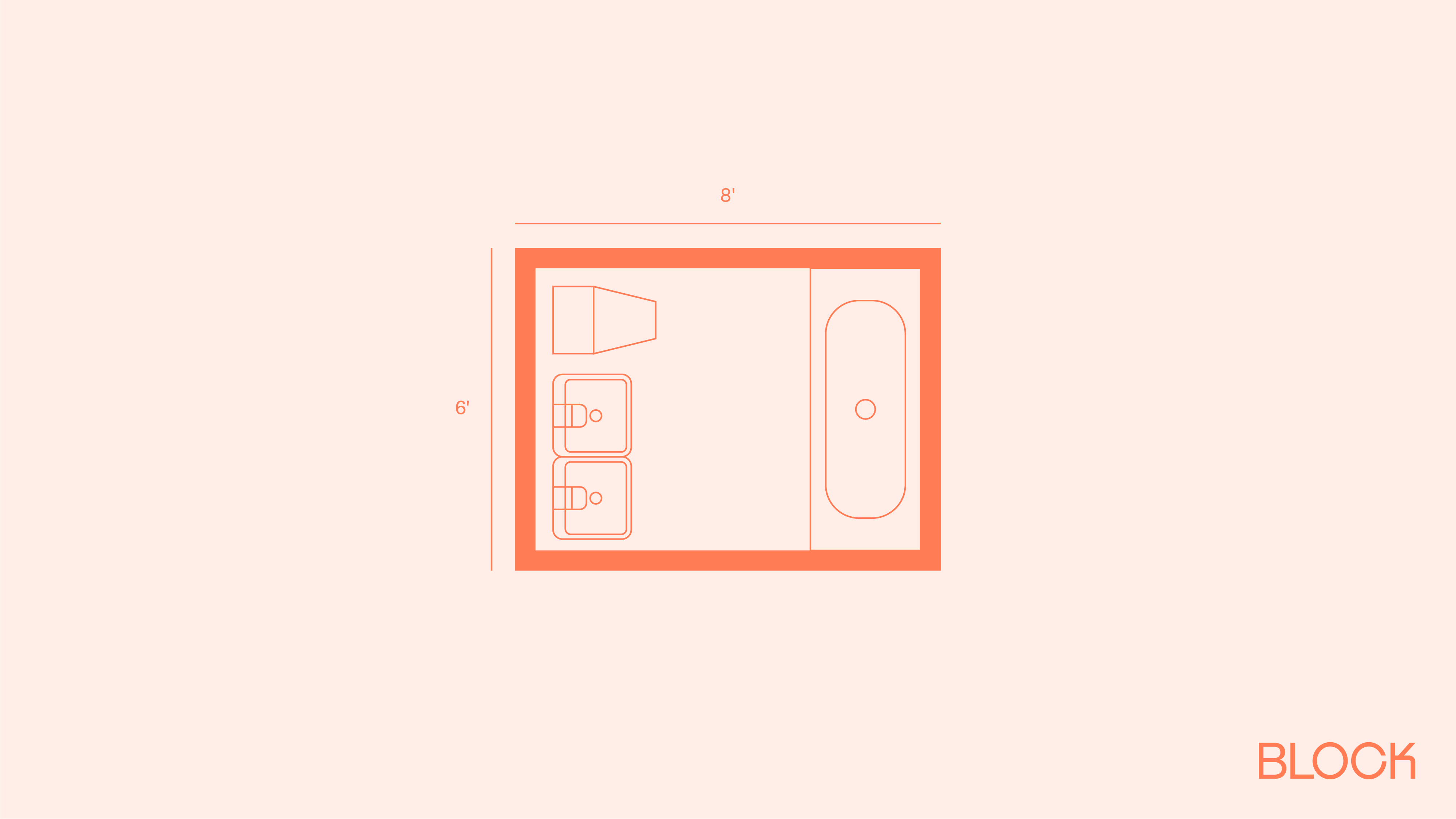
Walkway clearance is one of the most important considerations. Aim for at least 30 inches, and closer to 36 inches if the space allows. Anything narrower starts to feel restrictive, especially when multiple fixtures are in use.
Toilet spacing also matters more than most homeowners expect. Plan for about 15 inches from the centerline of the toilet to each adjacent wall or fixture. If that space gets tighter, it may technically fit, but it won’t feel comfortable day to day.
Vanity depth can quietly impact the entire layout. Standard vanities run 18 to 21 inches deep, which can eat into your walkway quickly. In smaller bathrooms, switching to a shallow vanity or wall-mounted sink can give you back several inches of usable space.
Door placement is another detail that’s easy to overlook. A swinging door can take up 30 inches or more when open, which often conflicts with vanities or toilets. Pocket or sliding doors can solve that issue without changing the overall layout.
Once the structure is clear, the next decision is how to distribute fixtures.
Single-wall layouts place most or all fixtures along one side. These are often the best option in very narrow bathrooms, where maintaining a usable walkway is the priority. By keeping one wall open, the space feels less compressed and easier to move through.
Split layouts distribute fixtures across both walls, which is closer to a traditional galley setup.
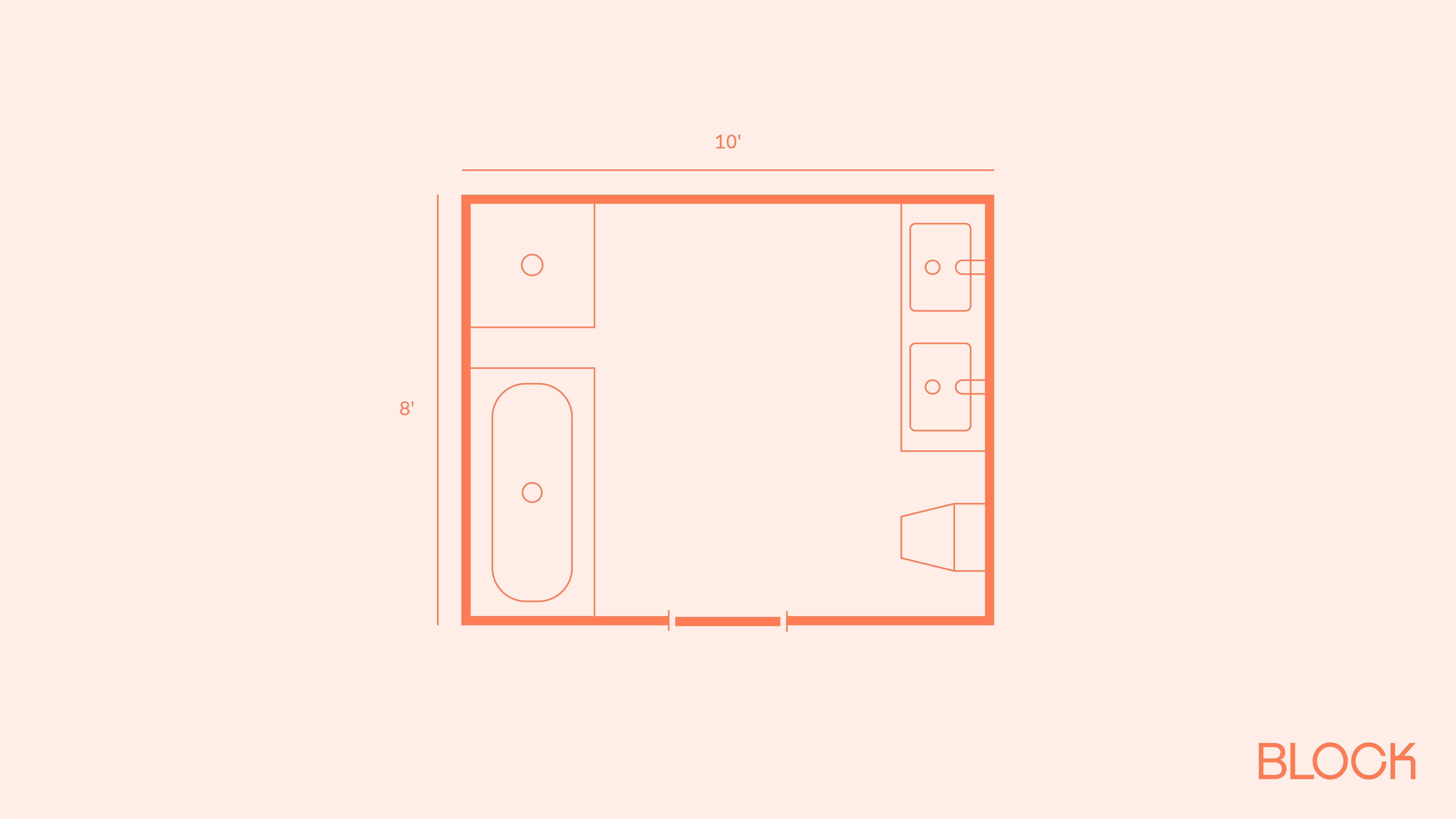
This approach separates functions more clearly. For example, a vanity might sit on one side while the toilet and tub are placed opposite. In shared bathrooms, this makes it easier for more than one person to use the space without getting in each other’s way.
A galley layout isn’t limited to compact spaces. It can also bring structure to larger bathrooms that might otherwise feel undefined.
.png?width=4001&height=2251&name=Block_Plans_Bathrooms_April_V3_Block_Plans_Bathroom_6x10-14%20(1).png)
With more room, you can create more distance between fixture groupings, which improves comfort without losing the efficiency of the layout. Double vanities become more practical, and there’s space to separate prep areas from bathing areas.
In more square bathrooms, the layout shifts slightly but still follows the same organizing principle.
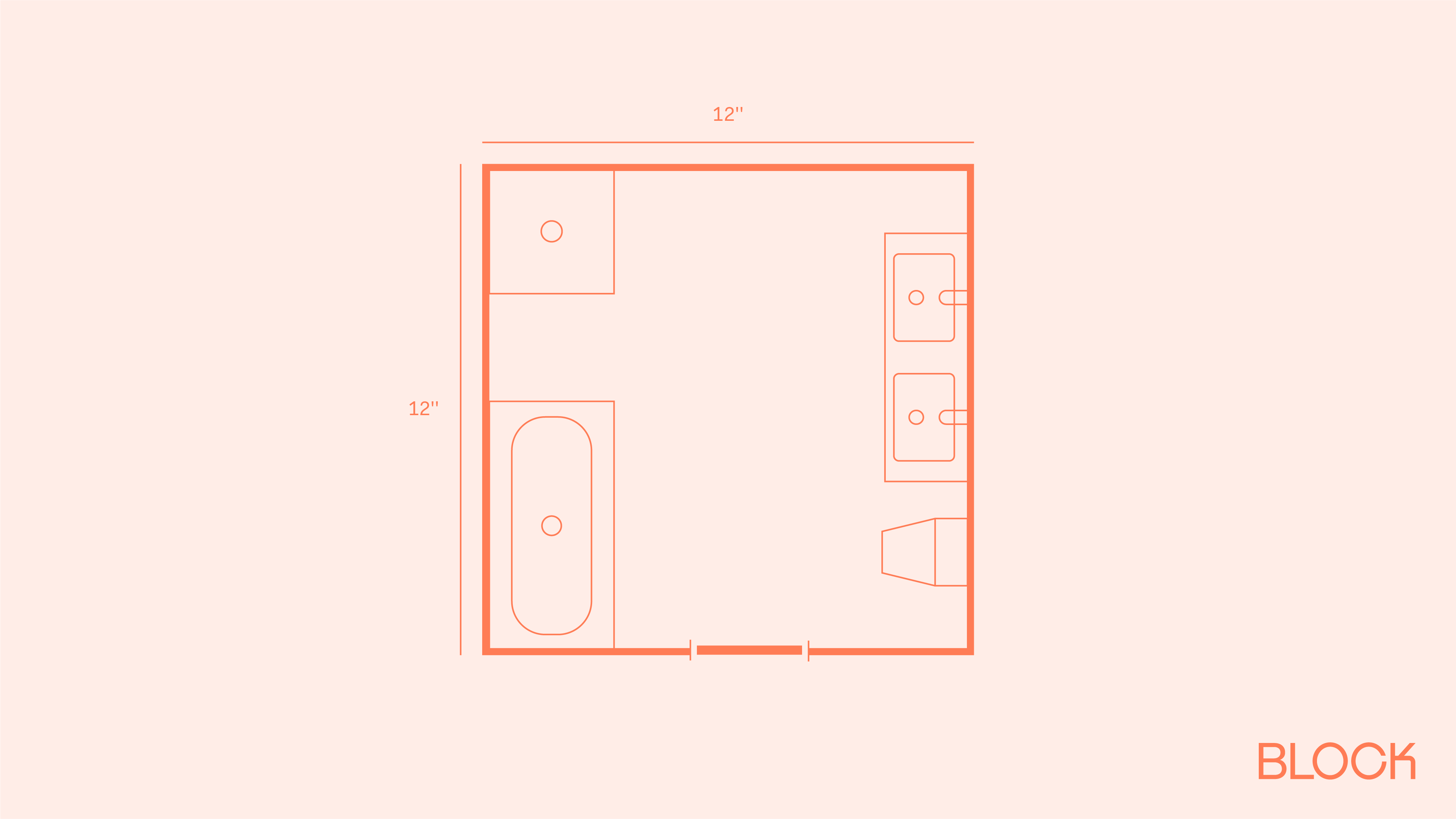
Instead of feeling like a corridor, the space feels more open, but parallel lines still guide how everything is arranged. This helps prevent the room from feeling scattered or overdesigned.
Layout decisions are easier to make when you can see them clearly. Block Renovation offers a free visualization tool in which homeowners can build out their bathroom, test different galley bathroom layouts, and visualize how everything will come together.
As you adjust fixture placement and materials, you can see how those choices affect the space in real time. Cost estimates update alongside your selections, so you understand how layout decisions connect to your overall budget before construction begins.
A galley style bathroom remodel depends on precision. Tight clearances and aligned fixtures leave less room for error, which makes execution just as important as planning.
Block connects homeowners with vetted contractors who are matched to the project and compete to provide quotes. Each proposal is reviewed to make sure the scope is complete and clearly defined, which helps reduce surprises once work starts.
Payments are handled through a secure system tied to project milestones, so progress stays visible and controlled. With a clear layout and the right contractor, a galley bathroom becomes a practical, well-executed solution that holds up over time.
Remodel with confidence through Block

Connect to vetted local contractors
We only work with top-tier, thoroughly vetted contractors

Get expert guidance
Our project planners offer expert advice, scope review, and ongoing support as needed
Enjoy peace of mind throughout your renovation
Secure payment system puts you in control and protects your remodel

Renovate confidently with Block
Easily compare quotes from top quality contractors, and get peace of mind with warranty & price protections.
Design
Bathtub to Shower Conversion: Cost, Ideas, Examples & More
08.11.2026
Design
Open Shelving Bathroom Design Ideas & Optimal Placement
08.08.2026
Bathroom
Bathroom Wall Texture Ideas and What to Avoid
08.03.2026
Bathroom
High End Toilets for an Upgraded Bathroom
07.24.2026
Bathroom
Adding a Bathroom to an Old House: Cost & Placement
07.22.2026