




Kitchen
Kitchen Remodel Mistakes to Avoid When Planning
08.13.2026
03.12.2025


In This Article
Updating your kitchen floor is a significant investment that can dramatically enhance the aesthetics and functionality of your space. However, the cost to replace a kitchen floor in 2026 varies based on several factors, including the choice of flooring material, kitchen size, labor rates, and additional expenses such as subfloor preparation and removal of existing flooring. This comprehensive guide will help you navigate these considerations to make an informed decision.
| Check the subfloor first |
Tile and hardwood need a flat, stable base. Uneven plywood, rot, slab movement, or weak joists can force repairs before installation and can cause cracking, cupping, or early failure if left alone. |
| Demo depends on the old floor | Floating vinyl and laminate are usually straightforward removals. Tile, glued-down hardwood, and asbestos-containing layers bring heavier labor, disposal rules, and safety costs before the new floor is installed. |
| Vinyl saves cash, not cachet | At $4 to $5.50 per square foot, vinyl can keep a 200-square-foot kitchen near $800 to $1,100. It is practical for water resistance and budget control, but it does not send the same resale signal as tile, hardwood, or stone. |
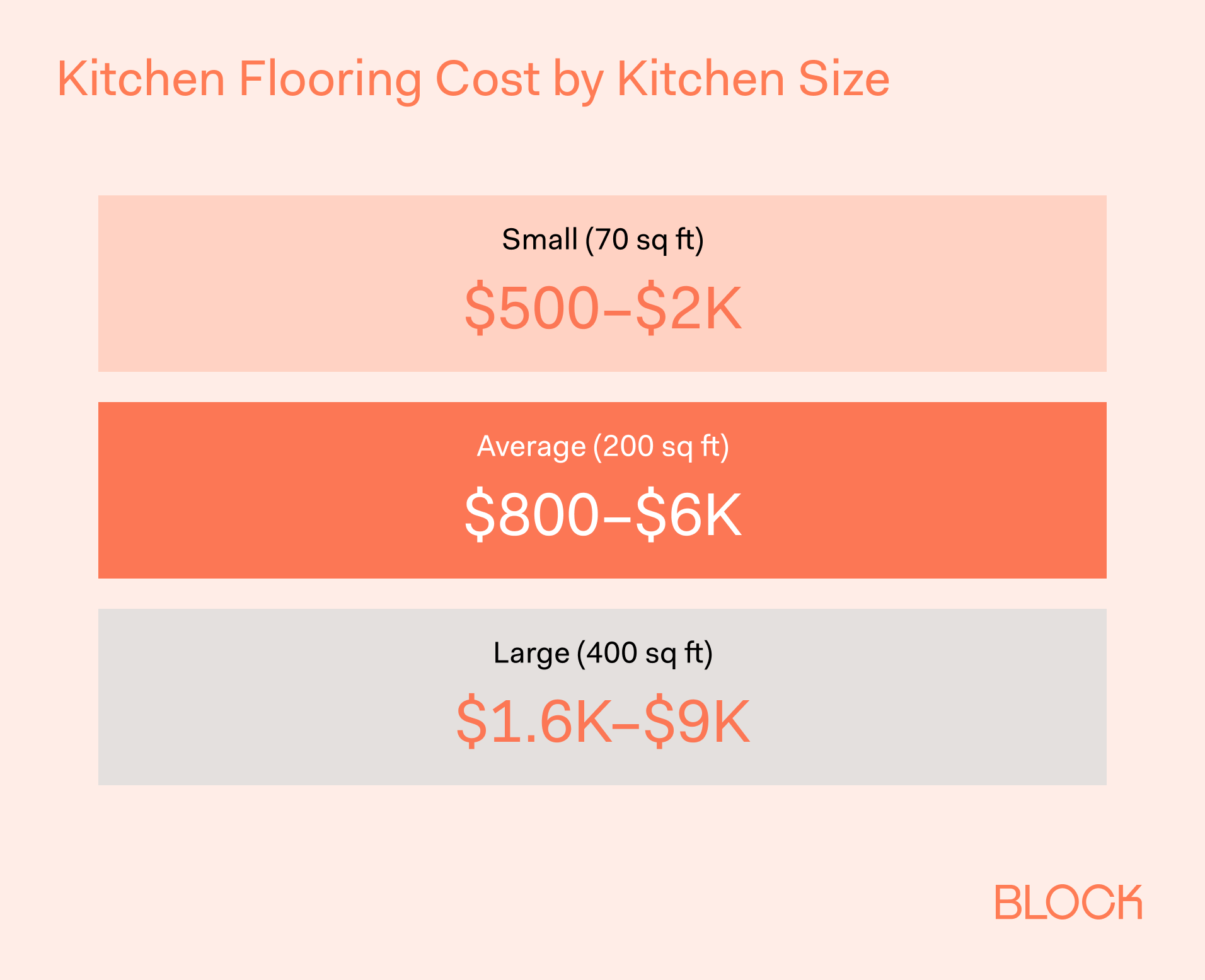
You will need to determine the specific design style and material of your floors, and factor in the location and size of your project, before you can determine the price of your new kitchen floors. However, to help with your initial budgeting, you can refer to the table below with typical costs.
| Kitchen size | Cost range (including labor) |
|
Small (70 square feet) |
$500 - $2,000 |
|
Average (200 square feet) |
$800 - $6,000 |
|
Large (400 square feet) |
$1,600 - $9,000 |
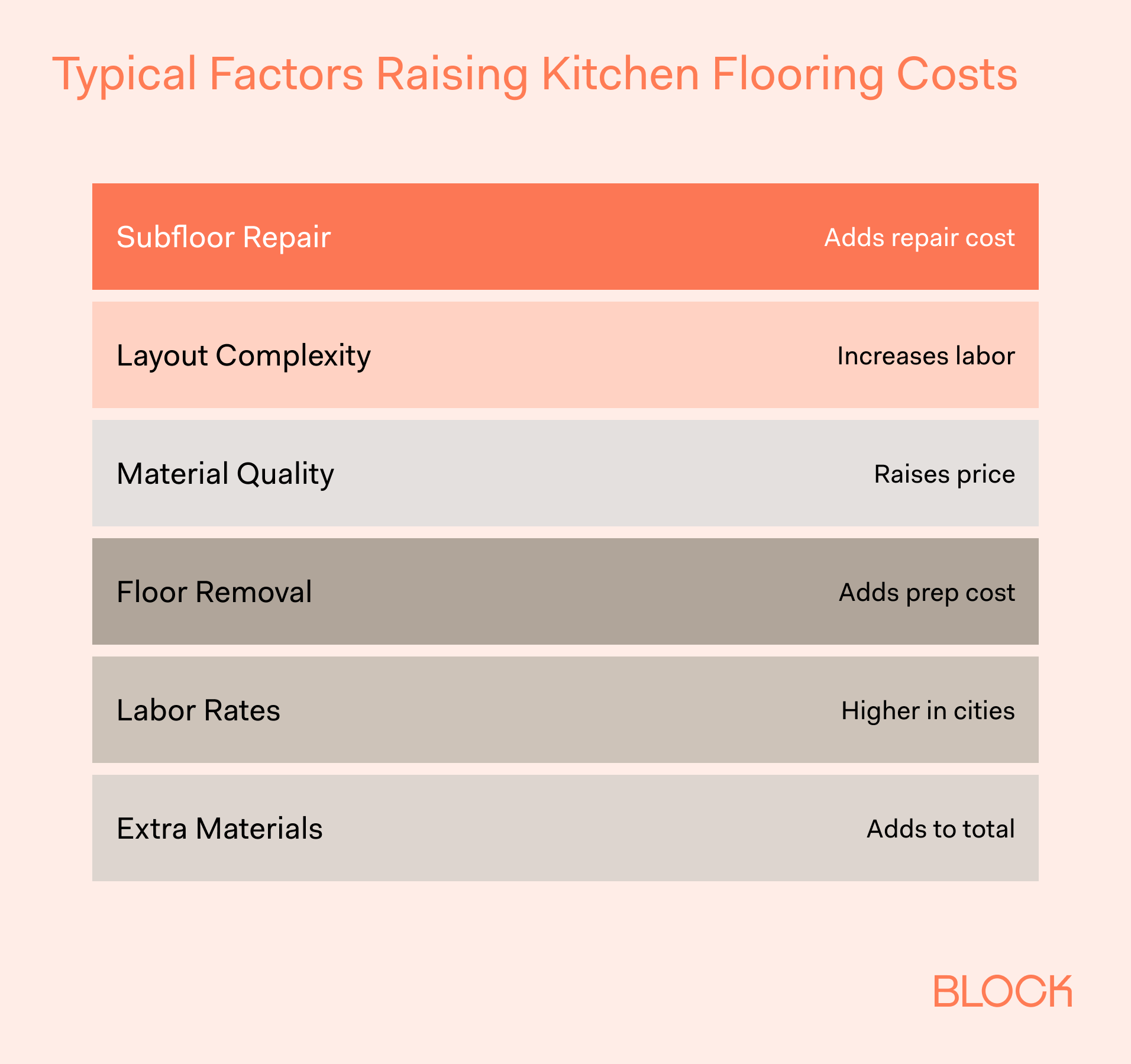
Replacing a kitchen floor is more than just selecting a material—it involves a combination of factors that determine the overall price. Understanding these elements will help you budget effectively and avoid unexpected expenses.
Replacing a kitchen floor is more than just selecting a material—it involves a combination of factors that determine the overall price. Understanding these elements will help you budget effectively and avoid unexpected expenses.
The choice of flooring material is the most significant cost determinant. Different materials vary in price, durability, maintenance requirements, and aesthetic appeal. Budget-friendly options like vinyl and laminate cost significantly less than high-end materials such as natural stone or solid hardwood. Additionally, some materials require special adhesives or underlayment, which can further affect costs.
The size of your kitchen directly impacts the cost of materials and labor. A larger kitchen requires more flooring material, increasing both supply and installation costs. Additionally, the layout of your kitchen plays a role—complex layouts with islands, nooks, or irregularly shaped spaces may require additional cutting, customization, and installation time.
Labor costs vary based on the type of flooring, regional rates, and installation difficulty. Some materials, such as floating vinyl planks or laminate, are relatively simple to install and may be DIY-friendly for particularly skilled homeowners. However, flooring options like tile, hardwood, and natural stone require professional installation due to their complexity. Intricate patterns, grout work, and detailed cutting around cabinetry can further increase labor costs.
According to contractor Quinn Babcock, "Two common issues that add complexity are uneven floors and subfloor damage. If a floor isn't level, there may be issues with the subfloor, joists, or concrete slab underneath. Water damage or rot can also require sections of the subfloor to be repaired or replaced before new flooring is installed."
Before installing new flooring, make sure the subfloor—the layer that sits on top of the floor joists—is in good condition. If your subfloor is uneven, damaged, or has moisture issues, it will need repairs or replacement, which adds to the overall expense. Some flooring materials, such as tile and hardwood, require a completely level and stable subfloor to prevent future issues like cracking or warping.
Compare Proposals with Ease

The cost of removing your old kitchen floor depends on the type of material and how it was installed. For example, peeling up old vinyl or laminate is relatively quick and inexpensive, while removing tile or glued-down hardwood can be labor-intensive and costly. If your existing flooring contains hazardous materials like asbestos (common in older homes), professional removal services will be required, significantly increasing the overall cost.
Beyond the primary flooring material, additional costs may arise from necessary accessories such as:
Where you live affects flooring costs due to variations in material availability, shipping expenses, and local labor rates. Urban areas with higher costs of living typically have more expensive contractor fees than rural locations. Additionally, hiring a specialized contractor for high-end flooring types may come at a premium.
Choosing a standard installation versus a custom pattern will also impact your budget. Herringbone or chevron tile layouts, inlays, or mixing multiple flooring types for a unique look will increase installation costs due to the extra labor required.
The upfront cost of your flooring is important, but so is the long-term maintenance. Some flooring materials, such as tile and vinyl, require minimal upkeep, while hardwood and natural stone may need periodic refinishing or sealing. Factoring in maintenance costs can help you determine the true lifetime cost of your flooring choice.
In some areas, replacing a kitchen floor may require permits, especially if structural subfloor repairs or modifications are involved. If you're unsure, check with your local municipality to determine if additional permit fees or inspections are required before starting your project.
Here's a detailed look at various flooring materials suitable for kitchens, along with their average costs per square foot, including both materials and installation:
Cost: $4 – $5.50 per sq.ft.
Overview: Vinyl kitchen flooring is a budget-friendly and durable option, offering water resistance and a variety of styles that mimic more expensive materials. It's particularly popular in kitchens due to its resilience and ease of maintenance.
Pros:
Cons:
Cost Example: For a 200 square-foot kitchen, the cost of a new vinyl floor would range from $800 to $1,100.
Cost: $6 – $8.50 per sq.ft.
Overview: Cork is an eco-friendly flooring option that provides a soft, comfortable surface underfoot. It's naturally resistant to mold and mildew, making it suitable for kitchens.
Pros:
Cons:
Cost Example: For a 200-square-foot kitchen, the cost of a new cork floor would range from $1,200 to $1,700.
Cost: $6 – $13 per sq.ft.
Overview: Laminate flooring offers the appearance of hardwood at a more affordable price point. It's relatively easy to install and maintain.
Pros:
Cons:
Cost Example: For a 200-square-foot kitchen, the cost of a new laminate floor would range from $1,200 to $2,600.

"Two common issues that add complexity are uneven floors and subfloor damage. If a floor isn't level, there may be issues with the subfloor, joists, or concrete slab underneath."
Cost: $7.50 – $24.50 per sq.ft.
Overview: Hardwood flooring adds timeless beauty and value to a home. However, it requires proper maintenance to withstand the kitchen environment.
Pros:
Cons:
Cost Example: For a 200-square-foot kitchen, the cost of a new hardwood floor would range from $1,500 to $4,900.
Cost: $11 – $29 per sq.ft.
Overview: Tile flooring is durable, water-resistant, and available in a wide range of styles. It's a popular choice for kitchens but can be cold and hard underfoot.
Pros:
Cons:
Cost Example: For a 200-square-foot kitchen, the cost of a new ceramic or porcelain tile floor would range from $2,200 to $5,800.
Cost: $14.50 – $27.50 per sq.ft.
Overview: Natural stone flooring offers a unique and luxurious appearance. It's durable but requires sealing to prevent stains.
Pros:
Cons:
Cost Example: For a 200-square-foot kitchen, the cost of a new stone floor would range from $2,900 to $5,500.
%20per%20Sq.%20Ft..png?width=1912&height=1799&name=How%20Much%20Does%20New%20Flooring%20Cost%20in%20a%20Kitchen%20ID_%207-2%20Title_%20Flooring%20Material%20Cost%20(Installed)%20per%20Sq.%20Ft..png)
While beauty is in the eye of the beholder (and buyer), some kitchen renovations consistently offer better returns than others. Replacing your kitchen flooring is one such project, typically recouping about 50 to 70% of the initial installation cost when it comes time to sell. Although this ROI isn’t quite as high as what you might see from new appliances or countertops, it still makes updating worn or outdated flooring a worthwhile investment for most homeowners. This is especially true if your current kitchen floors:
For more insights into strategic renovations, read Kitchen Remodel ROI & Upgrades for High Resale Value.
Transparent Pricing You Can Trust

Partnering with a designer can help you navigate the many flooring options and ensure your choices complement the overall design of your kitchen. Designers can provide valuable insights on color, material, and layout, tailored to your specific space and style preferences. You can also make your own realistic digital renderings with Block’s Renovation Studio, which allows you to visualize how different flooring options will look in your kitchen and what style ultimately suits you best.
As for what to choose, Block designer Meredith Sells notes that wood floors tend to work well in older homes because they bestow a warm feel. “I love wood floors in kitchens, but also advise homeowners that they are more delicate and need extra care, including loving the inevitable dent,” she says. “For homeowners who are looking for low-maintenance, tile is the way to go for its forgiving nature and ability to handle water.”
Here’s what else to keep in mind:
Turn your renovation vision into reality
Get matched with trusted contractors and start your renovation today!
Find a Contractor
Block’s Renovation Studio makes it easy to visualize how different kitchen flooring options will look in your actual space by allowing you to upload a photo and experiment with various materials, colors, and patterns. As you explore different flooring choices, the tool provides real-time, personalized cost estimates based on your selections, so you can see how each option fits your budget. You can mix and match flooring with other design elements, ensuring your new kitchen floor coordinates seamlessly with cabinets, countertops, and lighting. Once you’ve found the perfect look, you can save your plans, share them with contractors, and move forward with confidence knowing your design and budget are aligned.
Replacing your kitchen floor is an investment that enhances both the functionality and aesthetic appeal of your space. The total cost depends on factors such as the flooring material, kitchen size, labor rates, and any necessary subfloor repairs. Vinyl and laminate offer budget-friendly options, while hardwood, tile, and natural stone provide high-end durability and luxury.
Understanding the costs and benefits of each material will help you make an informed decision based on your budget and lifestyle needs. Before finalizing your choice, consider consulting with a professional to get an accurate quote and ensure a high-quality installation. Block Renovation can help you get the support you need by matching you with top-tier, vetted contractors who are highly experienced in flooring installation.
Remodel with confidence through Block

Connect to vetted local contractors
We only work with top-tier, thoroughly vetted contractors

Get expert guidance
Our project planners offer expert advice, scope review, and ongoing support as needed

Enjoy peace of mind throughout your renovation
Secure payment system puts you in control and protects your remodel


Renovate confidently with Block
Easily compare quotes from top quality contractors, and get peace of mind with warranty & price protections.
Kitchen
Kitchen Remodel Mistakes to Avoid When Planning
08.13.2026
Kitchen
Rental Kitchen Renovation: Smart Materials & Design Choices
08.08.2026
Kitchen
Wall Oven Installation Cost & Are Wall Ovens Worth It?
08.07.2026

Kitchen
Wet Bar Installation Cost: A Line-by-Line Breakdown
08.01.2026

Cost
20x20 Room Addition Cost: What to Budget in 2026
07.28.2026