




New York
Gut Renovations in NYC: Costs, Timeline, Tips & Considerations
09.20.2026

04.06.2026


In This Article
Major home renovations are a thoroughly considered, high-stakes decision for most US homeowners. Block Renovation’s new How America Renovates report finds that in 2026, homeowners continue to prioritize home updates, even as ongoing economic pressures and new lifestyle dynamics force new priorities.
The survey points to a broader shift in why and how Americans renovate. Homeowners continue to prioritize function over resale, while a rise in multigenerational living and accessory dwelling unit interest reflects changing household needs. And although AI use in renovation planning is still early, adoption rose notably year over year, with many users saying it influenced at least one project decision.
About this report
“How America Renovates” is an annual report conducted by Block Renovation to better understand the financial, emotional, and logistical experiences of US homeowners who have completed a major renovation project, or are planning one in the next 12 months.
Methodology
This online survey was independently fielded between February 19–March 4, 2026, to a sample of 1,059 qualified US homeowners including respondents from all 50 states.
To qualify, respondents had to own their home, reside in the United States, and have either completed a renovation of $10,000 or more or be planning one in the near future. All insights and statistics refer to homeowners who met the criteria for recent or upcoming major renovations. The survey also included several optional, open-ended responses, a selection of which are included in the report for color.
Age and household income
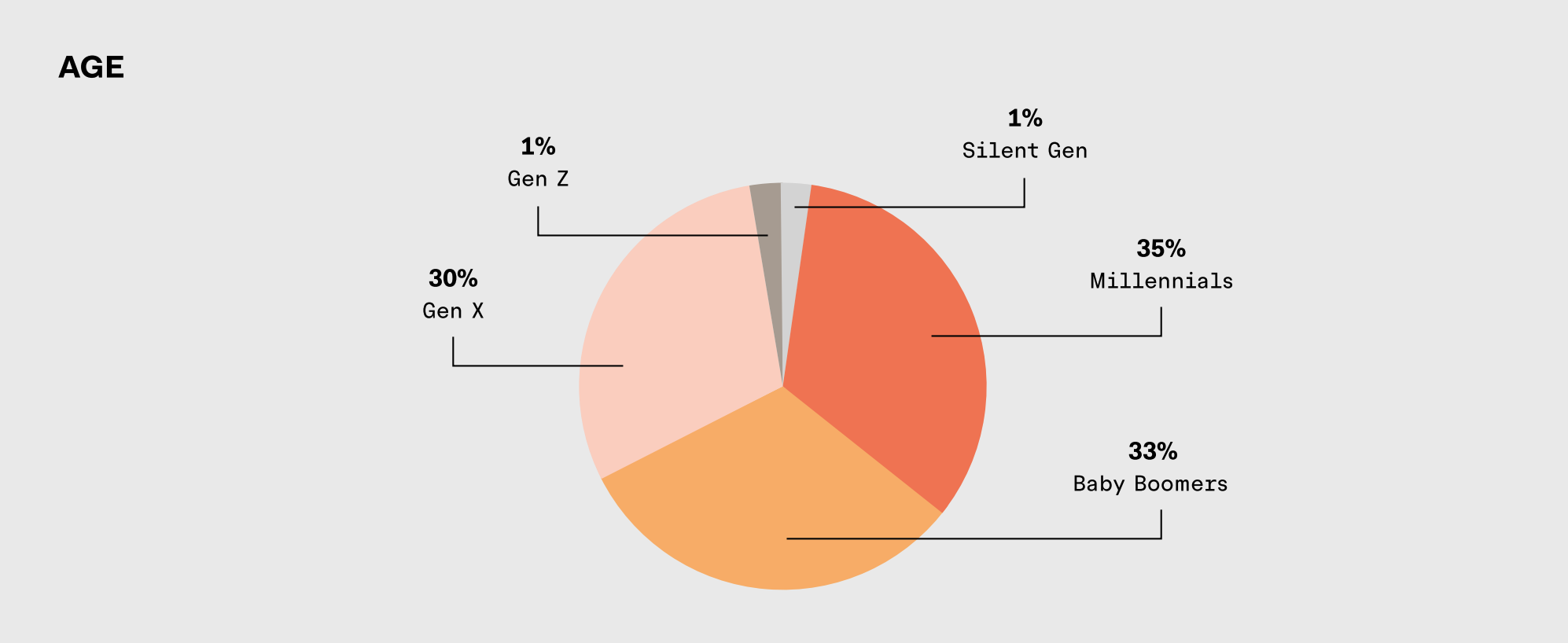
Millennials are now the largest cohort of renovators at 35% of respondents, followed closely by Baby Boomers (33%) and Gen X (30%). This result differs from Block’s 2025 homeowner study, when Boomers made up the largest share of renovators (36%).
Overall, the bulk of renovation activity falls to homeowners aged 40–69, who collectively account for 65% of respondents. Meanwhile, the 70+ group is also sizeable at 16%, showing steady renovation activity among older Americans.
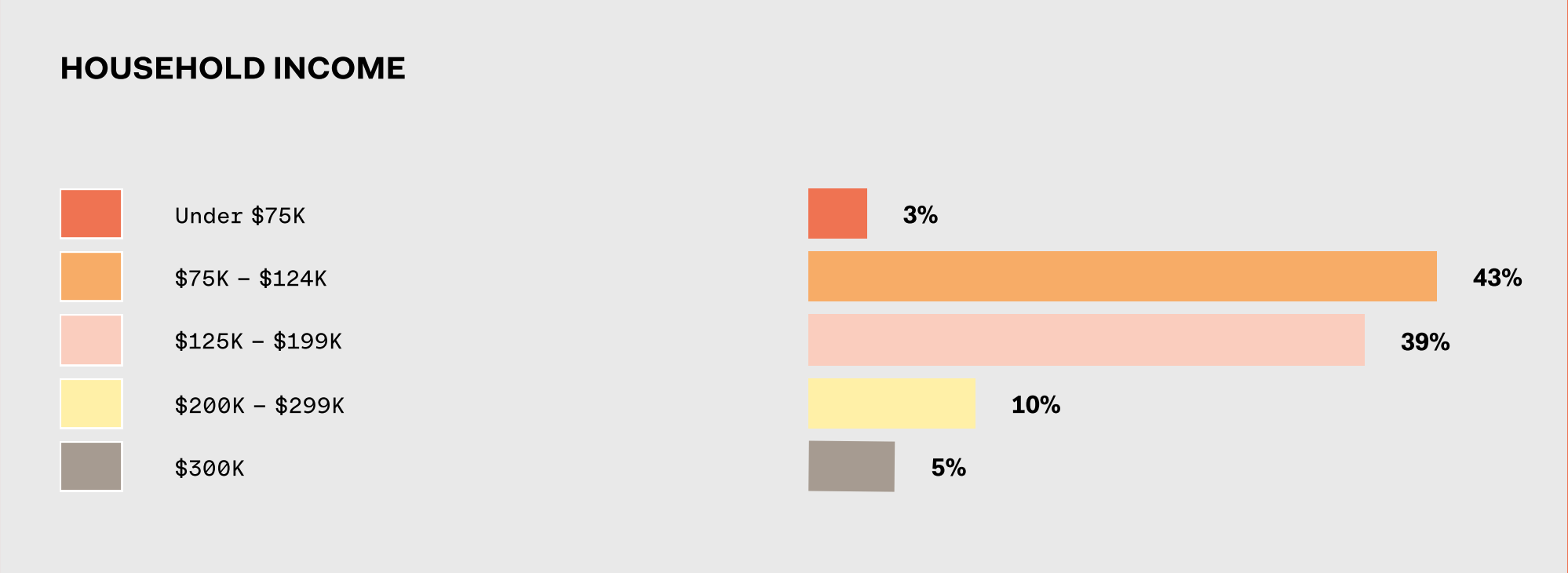
Most respondents (43%) have a household income of $75,000–$124,999, with another 39% reporting a $125,000 to $199,999. Very-high-income households ($200K+) make up 15%.
What Americans are renovating
Bathrooms and kitchens are by far the most common renovation projects. Nearly 1 in 2 homeowners (47%) are renovating bathrooms. Kitchen renovations follow with 39% of projects, while 35% are tackling flooring. Outdoor spaces appear in 28% of responses, suggesting a strong appetite for outdoor living improvements.
Only 8% of homeowners are doing a whole-home renovation, indicating that most tackle specific areas or renovate in phases rather than take on full-home overhauls.
How much are homeowners budgeting for their renovation?
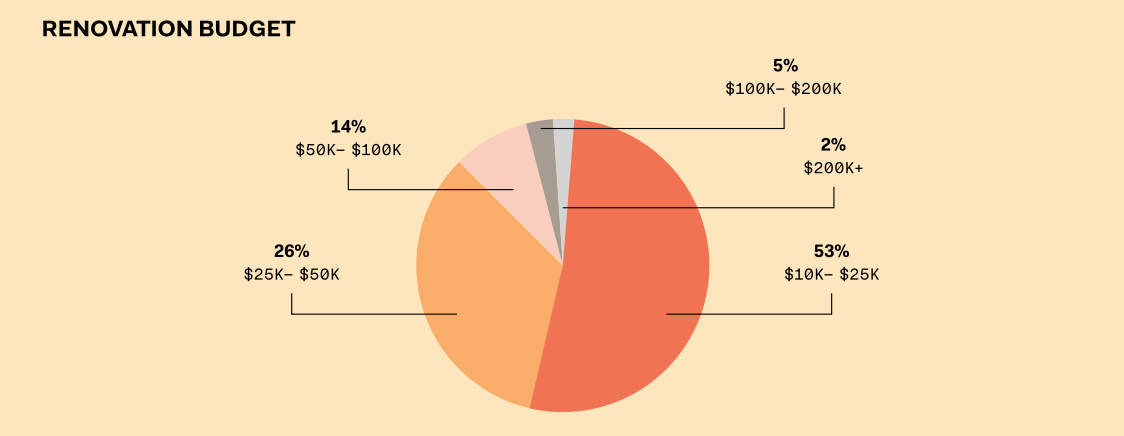
The majority of survey respondents are working with relatively modest budgets—over half (53%) are spending $25K or less.
Only 7% are planning budgets above $100K, suggesting high-end whole-home renovations are the exception, not the rule.
Across all respondents, the national estimated average budget for a renovation project clocks in at $41,500.
Budget differences by region and age bracket
Most Americans are spending between $10k–$25k on their renovation project, regardless of where they live.
However, regional differences reveal interesting trends. Western respondents are more likely to budget $50k+ for their renovation—about 28% are spending this much, compared to 15–17% in other regions. This may reflect higher costs of labor and materials in Western metros.
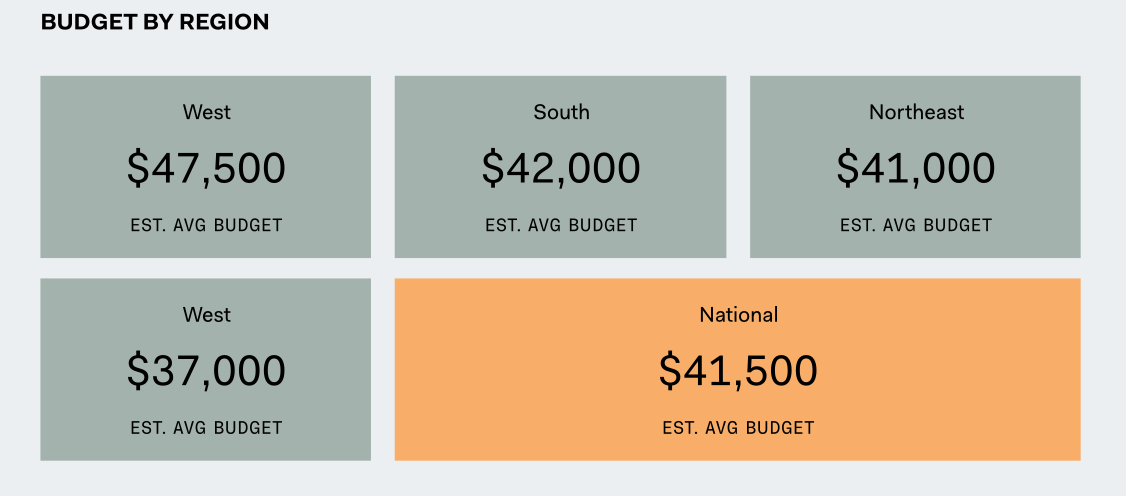
Midwestern respondents reported the lowest budgets. That region has the highest concentration of renovators budgeting $10–25k (57%) and has the smallest share spending $100k+. The average budget in the Midwest sits at ~$37k. The South and Northeast are close in the middle, both averaging ~$41–42k.
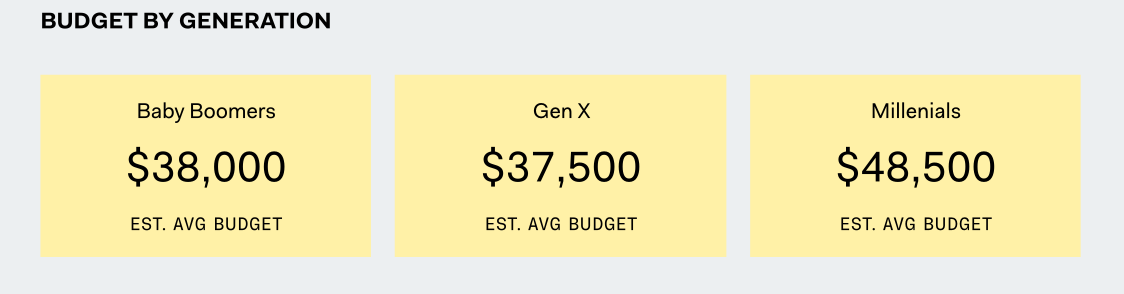
Additionally, there are pronounced budget differences among age groups. Millennials appear to be spending the most on their renovation projects, reporting an average budget of $48,500, while Gen X and Baby Boomers are spending at least $10,000 less on average.
How Americans are financing their renovations
Savings is the overwhelming default payment method—7 in 10 homeowners are funding renovations out-of-pocket, making savings more than three times as common as the next method (credit cards, at 23%).
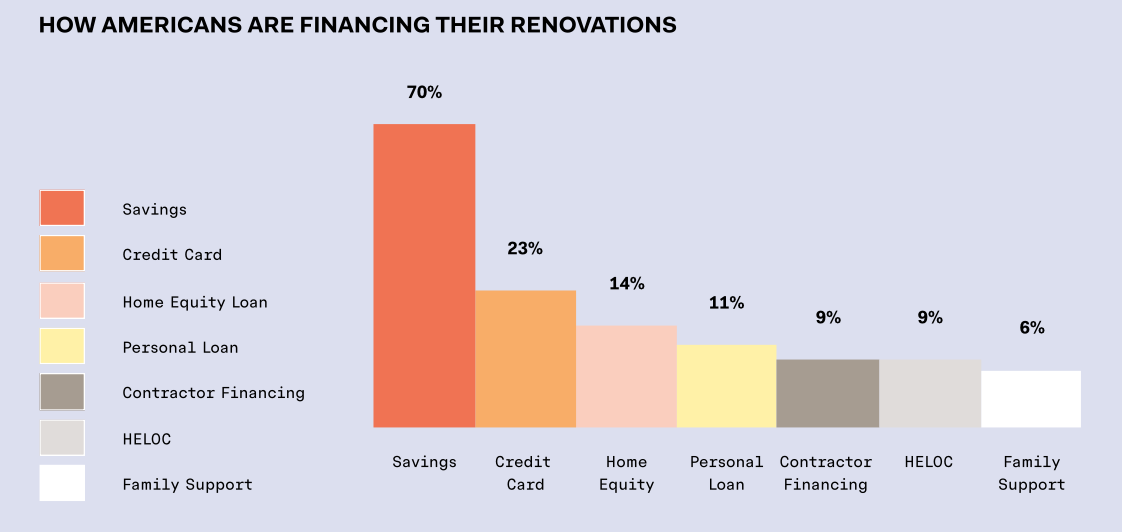
However, the demographic breakdown reveals that savings are a particularly popular choice for Baby Boomers. This group leans on savings most heavily (76%) compared to Gen X (63%) and Millennials (71%).
Credit cards show the sharpest generational split—Millennials use them at 37% to finance their renovations, more than three-times the Boomer rate (12%).
Compared to 2025 data, the 2026 report shows modest year-over-year increases in all non-savings-based funding methods. Credit cards jumped from 17% usage last year to 23% this year, while HELOC and home equity (taken together) collectively jumped from 15% in 2025 to 23% in 2026.
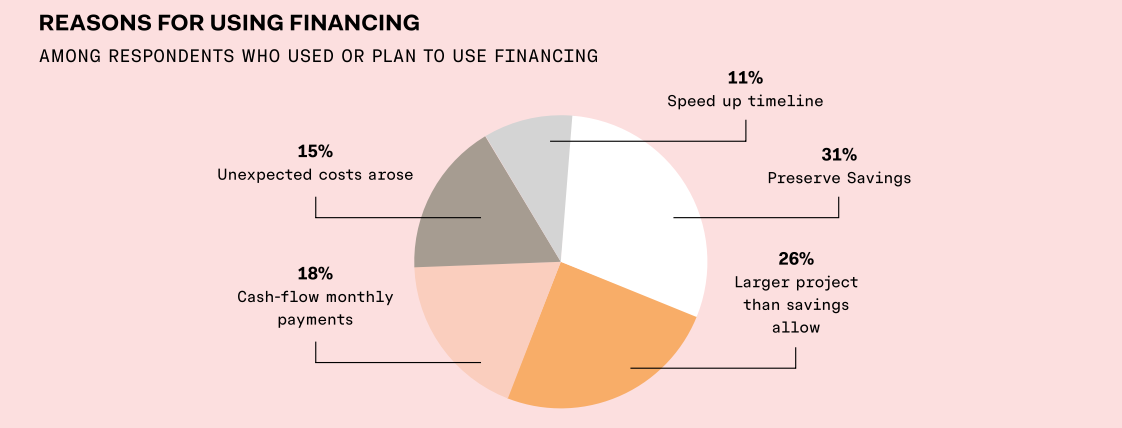
Among respondents who do use or plan to use financing, 31% suggest that the reason is to protect their savings.
However, Millennials and Gen X are more likely financing because the project is simply larger than their savings allow (28% for each), which may reflect tighter cash positions relative to project size.
The desire to speed up the project timeline by taking financing skews younger—Millennials at 13% vs. Boomers at 9%—suggesting more urgency or life-stage motivation among younger homeowners.
What about interest rates?
Since many homeowners are using savings to pay for their projects, the clear majority of them (61%) say interest rates have not changed their renovation plans.
However, among the 39% of all homeowners who were affected by interest rates, the most common consequence was delaying the project.
Navigating cost overruns
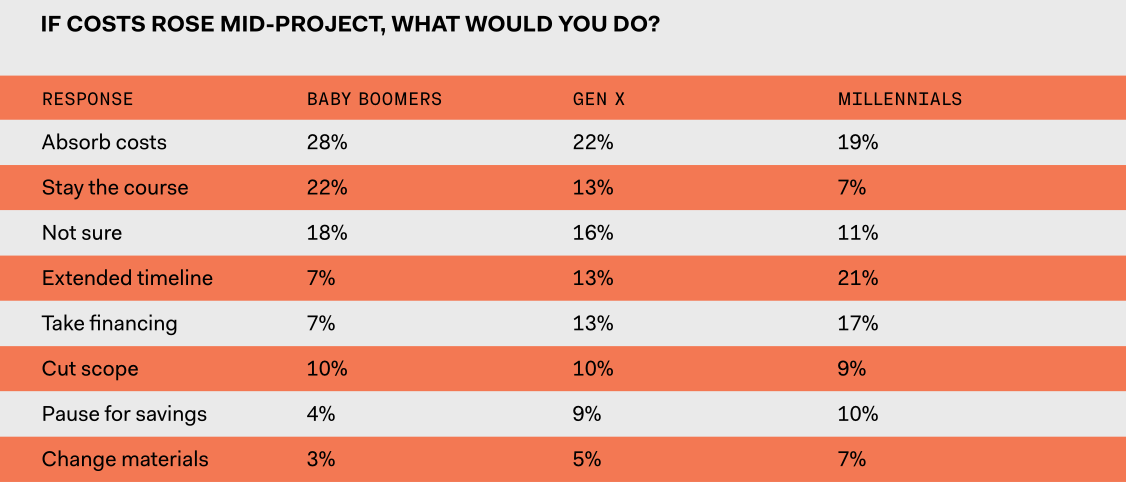
When cost overruns hit, most homeowners are prepared to absorb additional costs over delaying, curtailing, or canceling the project, suggesting that once renovation momentum is underway, people prefer to keep things moving rather than risk stalling the project.
But the survey responses reveal a generational shift in how homeowners cope under financial pressure:
In other words, Boomers may feel more financial security when it comes to taking on large expenses compared to younger generations, who may feel more vulnerable—and therefore more inclined to do what they can to keep their total spend in check.
Impact of the US economy and inflation on renovators
About 42% of survey respondents expressed that the economy has impacted their renovation planning.
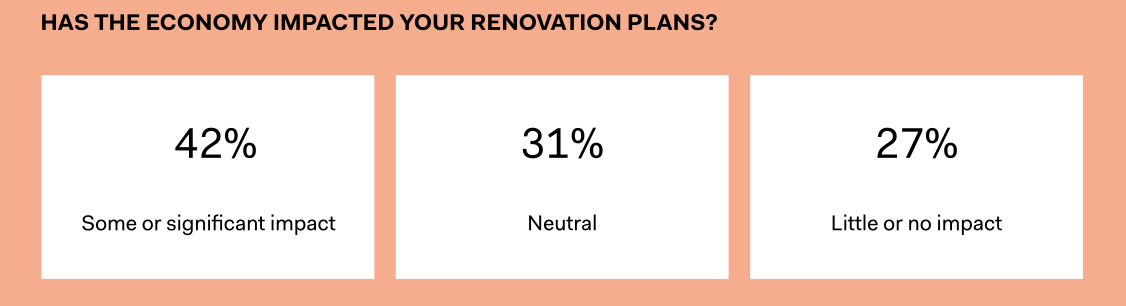
Sentiment varies across age ranges. Millennials feel the economy most acutely—54% of them reported an impact—whereas Baby Boomers are more insulated, with only 27% noting a correlation.
Gen X still feels significant financial pressure, with 46% saying the economy has affected their plans, nearly as high as Millennials.
Neutral responses also drop with age. 40% of Boomers are neutral vs. just 26% of Millennials—Millennials appear more likely to report feeling the economy’s impact directly.
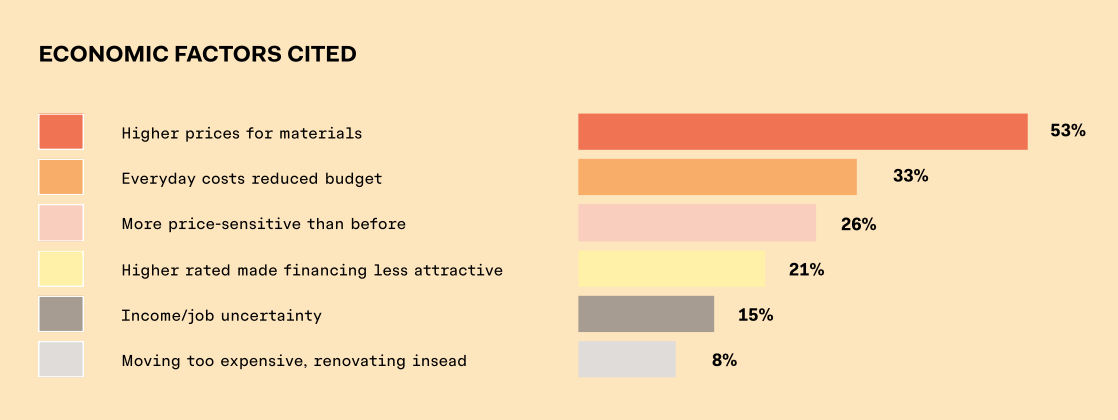
The dominant economic concerns are tied to inflation—primarily, rising materials and labor prices (53%) are felt by more than half of all respondents.
33% also say ballooning living costs have reduced their renovation budget; everyday inflation may be compressing what people feel they can spend.
A small but noteworthy group of 8% say moving feels too expensive and they are renovating instead of buying new; high home prices and mortgage rates could be redirecting spending from buying to improving.
DIY as a cost-saver
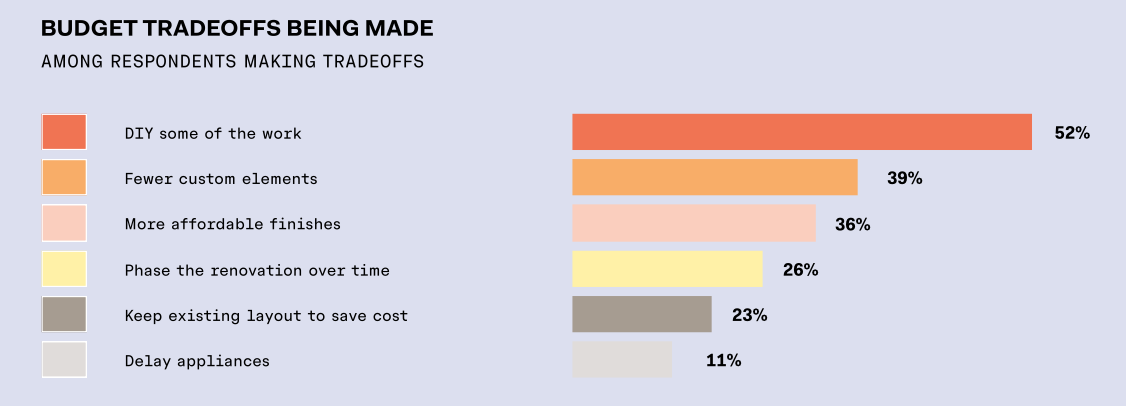
When budgets are tight, Americans roll up their sleeves first. 52% of homeowners needing to make tradeoffs would DIY some portion of the work.
Material and finish trade-downs are also popular: 39% would choose fewer custom elements and 36% would choose more affordable finishes, suggesting homeowners prefer to adjust materials rather than cut the scope of the project entirely.
Top reasons for renovating
Practical considerations and home improvements appear to be driving renovation spending today, more than cosmetic upgrades. Improving functionality is the most popular reason for renovating, selected by 68% of respondents, followed by repairs/maintenance (52%).
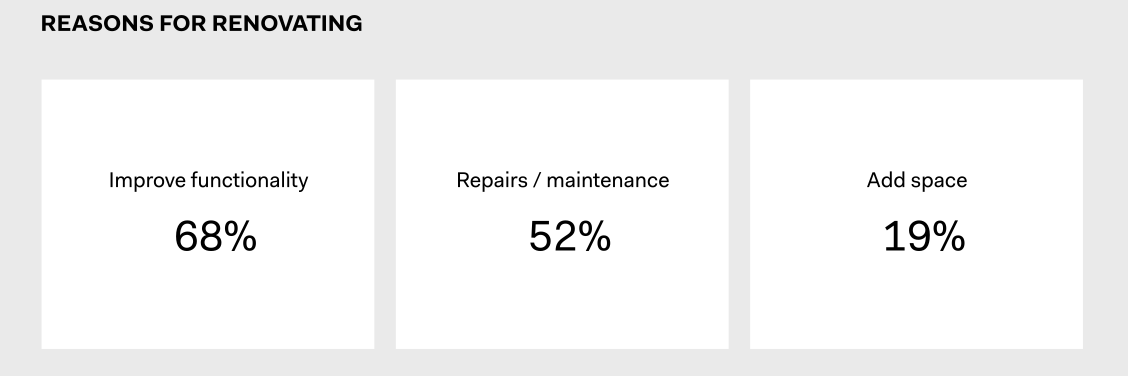
While these motivators are common across all age groups, one difference stands out among younger renovators: Millennials are nearly twice as likely to have bought a fixer upper compared to their Boomer and Gen X counterparts, suggesting that affordability pressures may be pushing younger buyers to purchase older homes in need of remodel. This in turn may explain why Millennials reported higher total renovation budgets, versus older generations who are more likely tackling single-room upgrades with smaller price tags.
Biggest barriers to starting or advancing a renovation
The single biggest barrier to renovation is finding someone reliable to do the work. “Finding a trustworthy contractor” was cited by 30% of respondents—edging out “exorbitant total cost” at 24% as the most common specific barrier.
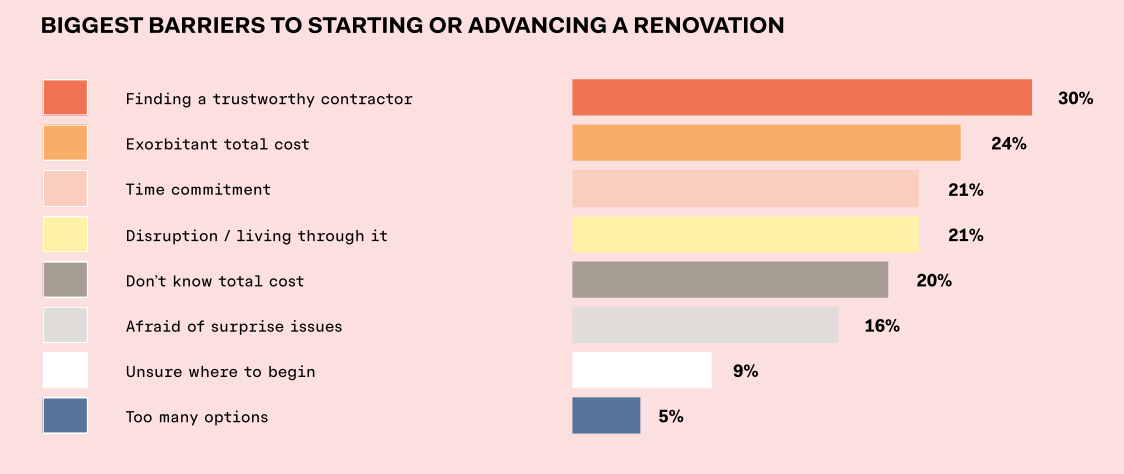
But cost uncertainty compounds the cost concern: one in five said not knowing the total renovation cost is a barrier.
Overall, Millennials feel these obstacles most acutely. Only 17% of Millennial respondents reported feeling no renovation barriers, compared to 47% of Baby Boomers and 30% of Gen X.
Renovation confidence boosters
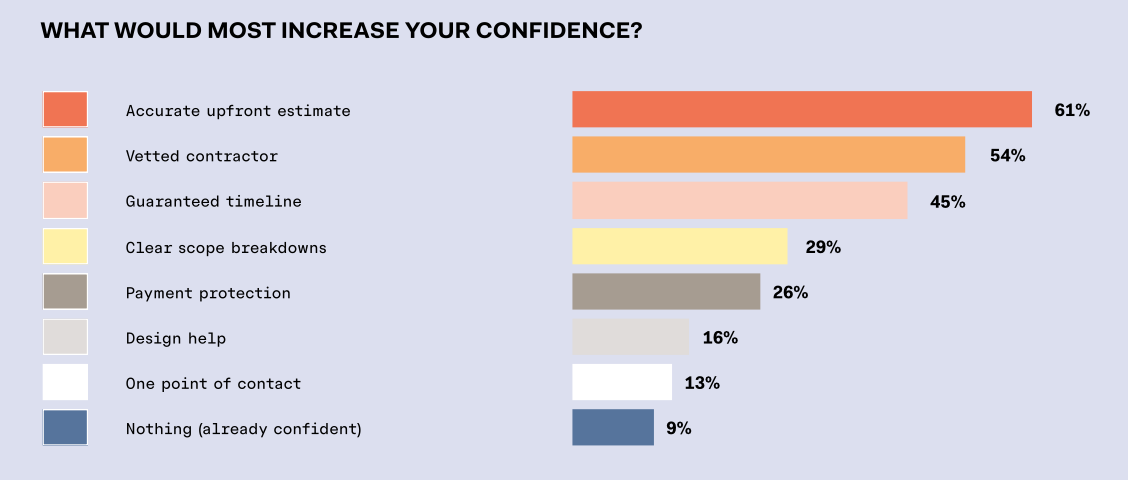
Homeowners want financial certainty and contractor trust above all else. The top three confidence builders for renovators are all about reducing unknowns—an accurate upfront estimate (61%), vetted contractors (54%), and guaranteed timeline (45%) would all help unlock greater feelings of security.
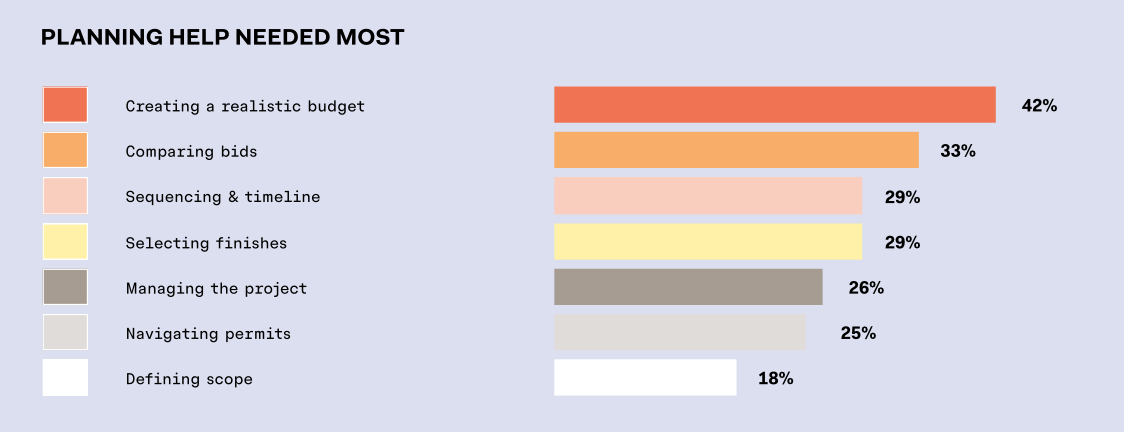
Meanwhile, budget creation is the most universally needed planning support—4 in 10 homeowners wish they had more help with it.
Phasing as a strategy
More than half of homeowners (55%) are breaking their renovation into multiple phases rather than tackling it all at once. This may be in response to tighter budgets: with over three-quarters of renovators citing budgets under $50K, phasing could allow homeowners to spread costs over time without taking on debt.
The rise of diverse living arrangements
While most homeowners live in traditional households, multigenerational living is a meaningful and growing factor. 78% of respondents live in households with just one generation of adults. But more than 1 in 5 have a multigenerational or nontraditional arrangement: Adult children living at home account for 12%, while older family members account for 9%.
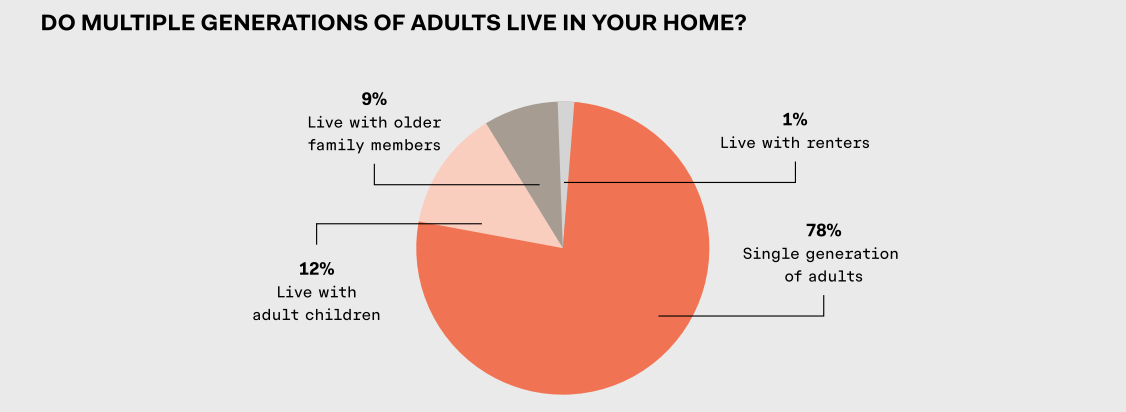
Multiple respondents explicitly described renovating to create accessible spaces for family members with disabilities or to prepare for aging in place. One respondent wrote, “One of my daughters is physically disabled and can no longer be taken upstairs—we are renovating to move her bedroom to the lower level.”
Plans to create in-home secondary units (such as basement apartments or ADUs) for adult children appeared repeatedly, reflecting the housing affordability crunch that is keeping younger adults in their parents’ homes longer.
Pet considerations emerged as a genuine logistical factor, with several respondents writing they must schedule renovation work around animals that cannot easily be relocated—a practical constraint that affects project timelines.
Steady interest in ADUs
Accessory dwelling units (ADUs) are still a small market, perhaps because of their higher starting costs. 17% of respondents are interested or actively considering ADUs. Interest is somewhat higher in the West, which may reflect the more permissive ADU policy environments in states like California, Washington, and Oregon.
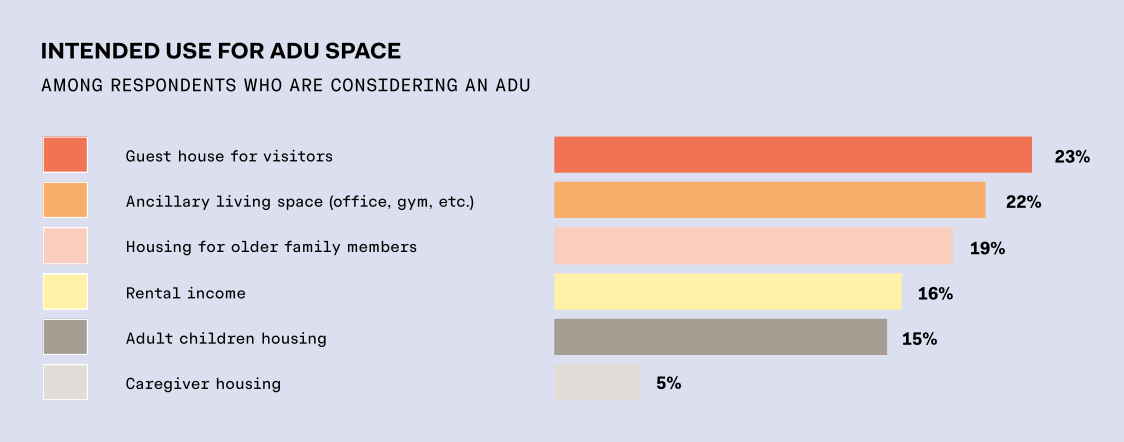
Among the respondents who did express interest in ADUs, their goals are split. ADU interest appears to be driven more by family and lifestyle needs than by financial return and the promise of rental income. Guest housing (23%) and flexible ancillary living space (22%) are the top two intended uses for those who would consider ADUs.
But taken together, family care uses—housing older family members (19%) + adult children (15%) + caregiver housing (5%)—together represent 39% of intended ADU uses, suggesting multigenerational living is an important motivator for building an accessory dwelling.
AI adoption in renovation planning is real but still early—just under 1 in 4 homeowners have used AI tools to support their renovation. But usage is rising: In 2026, 23% of respondents used AI tools, a 14-point increase from Block’s 2025 survey, when 9% of homeowners reported usage, responding to the exact same question.
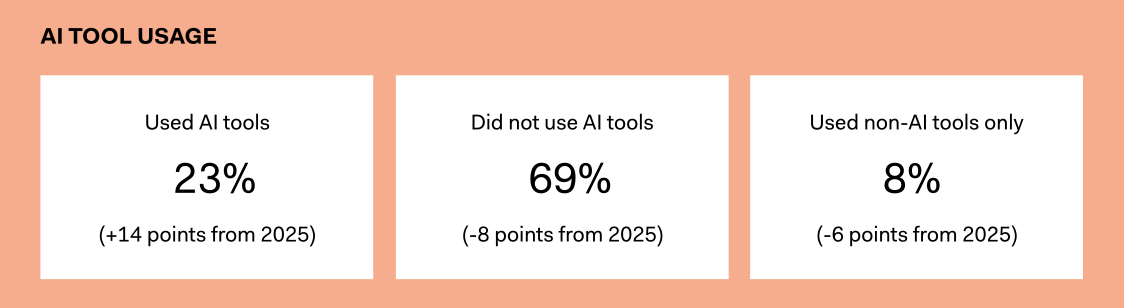
Perhaps unsurprisingly, AI adoption is overwhelmingly a Millennial phenomenon. 42% of Millennials used AI tools during their renovation planning—more than 2.5x the Gen X rate (16%) and more than 4x the Boomer rate (10%).
For those who did report that they used AI tools for their renovation planning, 61% used the technology for design/layout planning, and 57% used it for cost estimation—the two tasks that most require expertise homeowners don’t have.
Additionally, 84% of AI users say it influenced at least one decision, with 16% saying it had no impact.

Renovate confidently with Block
Easily compare quotes from top quality contractors, and get peace of mind with warranty & price protections.
New York
Gut Renovations in NYC: Costs, Timeline, Tips & Considerations
09.20.2026
Cost
The Cost to Add a Half Bath & How to Plan for It
09.04.2026
Remodeling
How to Remodel a Game Room: Ideas and Costs
09.03.2026
Planning & Logistics
How to Obtain a Blueprint of Your Home
08.30.2026

ADUs
How Much Does It Cost to Build or Remodel a Guest House?
08.28.2026