




Los Angeles
Garage Conversion to ADU Los Angeles: Top Contractors & Tips
08.14.2026
04.10.2026


In This Article
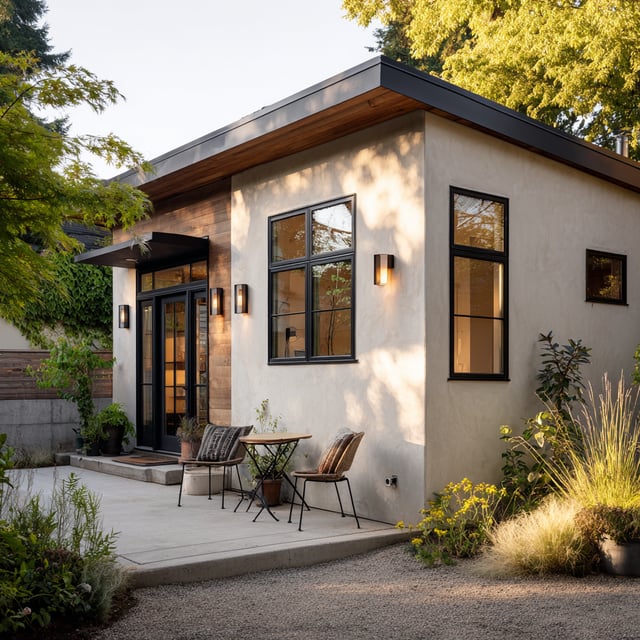
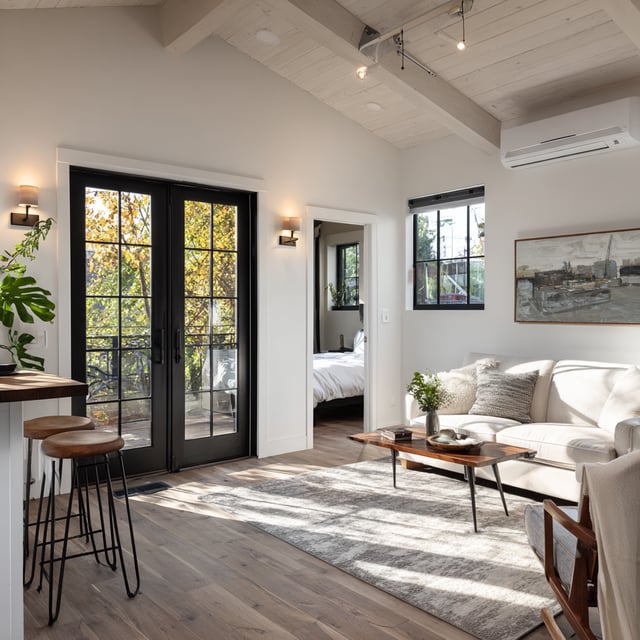
At 800 square feet, the ADU conversation changes. You’re not building a clever use of backyard space. You’re building a home, one with enough room for two bedrooms, a kitchen with actual counter space, a living area where furniture can be arranged rather than crammed in, and storage that doesn’t require daily workarounds.
That shift in scale comes with a corresponding shift in planning demands. An 800 sq ft ADU is closer in scope and complexity to a whole-home renovation than to a compact studio build. It’s also where the economics of ADU building tend to work most clearly in the homeowner’s favor, because the fixed costs that every project carries are finally spread across enough square footage to justify the investment.
The most common configuration at this size is a two-bedroom layout. Eight hundred square feet typically allows a primary bedroom of 120 to 140 square feet, a secondary bedroom of 100 to 120 square feet, and an open living and kitchen area with enough room to function without feeling like a compromise. Features that routinely disappear in smaller ADUs—a dedicated laundry area, a dining space that seats four, a home office corner—can all appear here without sacrificing anything significant, making this size practical for in-law suites and other long-term living arrangements.
A one-bedroom ADU at 800 square feet is genuinely spacious. The bedroom can accommodate a king bed with clearance on both sides. The common area feels like a conventional home rather than a space designed around constraints. For an owner who plans to live there long-term, the quality of daily experience at this size is different from what a 500 sq ft unit can offer.
The two-bedroom configuration appeals to a wider range of occupants than a one-bedroom or studio: couples with a young child, roommates splitting rent, aging parents who want a guest room, or renters in markets where two-bedroom units command a meaningful premium. That adaptability is part of why it’s the default at this size and why most homeowners end up there regardless of what they initially planned.
The ADU industry reflexively recommends 2-bedroom/2-bathroom at 800 square feet. It’s worth questioning directly rather than accepting it as the obvious default.
A second bathroom at this size adds cost, consumes 40 to 60 square feet of floor space, requires additional plumbing runs, and often produces two rooms that are each too tight to feel comfortable rather than one that’s properly sized. A 50-square-foot bathroom is functional. A 35-square-foot bathroom is a daily inconvenience. A well-designed 2-bedroom/1-bathroom layout frequently delivers a better lived experience than a cramped 2-bedroom/2-bathroom one.
The single-bathroom argument breaks down in one specific context: if rental income is the primary goal and local market data shows that two-bathroom units command a meaningful premium. That’s a market-specific question worth running the numbers on before committing to a floor plan, not an industry reflex worth following without thought.
Find out what your jurisdiction’s maximum allowable ADU size is before deciding how large to build. It’s a step many homeowners skip, and one they sometimes regret.
“We had 800 square feet locked in our heads for about a year,” says Priya Gupta., a homeowner in Pasadena who completed a backyard ADU in 2024. “Our contractor mentioned almost as a footnote that our lot zoning allowed up to 1,000 square feet. We asked what the cost difference would be and it came out to roughly 12% more on a project we’d already committed to. We built 980 square feet. There is not a day I wish we’d built the smaller version.”
In California, state law allows ADUs up to 1,200 square feet on most single-family lots. Many other states and municipalities set limits between 800 and 1,000 square feet. Your contractor or local planning department can confirm what your property allows.
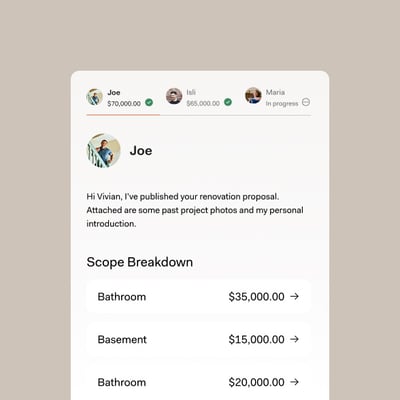
Compare Proposals with Ease
At 800 square feet, material choices do real work. The unit is small enough that every surface is visible and every finish decision is felt, but large enough that upgrading those finishes adds up fast. Knowing where the money is well spent is more useful than a general directive toward quality.
Nationally, a detached 800 sq ft ADU with site-built construction and mid-range finishes typically runs $120,000 to $275,000 all in. Labor accounts for 40 to 50% of total construction cost, which on a $200,000 project means $80,000 to $100,000 in labor alone. Fixed project costs, a concrete slab foundation at $10,000 to $15,000, utility connections at $10,000 to $35,000, and design and permit costs at $15,000 to $25,000 or more, together commonly total $30,000 to $60,000 before framing begins.
Where you build shifts every one of those numbers. In California, UC Berkeley’s Terner Center puts the statewide median ADU construction cost at approximately $250 per square foot, which at 800 square feet translates to roughly $200,000 for construction alone before soft costs. All-in project costs across California commonly run $160,000 to $320,000, with Bay Area projects frequently above that range.
Seattle sits at the other end of the high-cost spectrum. An 800 sq ft detached ADU in Seattle commonly runs $300,000 to $450,000 all in. Seattle’s permit fees alone can reach $20,000 to $40,000 depending on project scope, structural engineering requirements add to soft costs on many lots, and the local skilled-trade labor market is among the tightest in the country. Washington’s House Bill 1337, fully implemented in 2025, simplified some aspects of permitting and eliminated owner-occupancy requirements, but those changes affect timelines more than they affect construction costs.
In most Texas markets, the same 800 sq ft ADU runs $100,000 to $175,000. Lower labor rates, simpler regulatory environments in most cities outside Austin, and the absence of solar and energy compliance mandates comparable to California’s Title 24 account for most of the difference.
Budget a contingency of 15 to 20% of your total estimated project cost. At this scale, running short midway through construction creates real problems. Err toward 20% if the lot has unusual conditions or if site conditions are uncertain.
Construction on an 800 sq ft ADU typically takes 4 to 8 months once permits are approved. Add 2 to 6 months for design, permitting, and approvals before construction begins, and a realistic total timeline from first conversation to occupancy is 10 to 18 months. Starting the permitting process before finalizing a contractor and ordering long-lead materials in advance are the most reliable ways to limit delays within your control.
An 800 sq ft ADU requires a contractor with genuine ADU experience, not just general residential construction capability. ADU projects involve specific regulatory requirements, utility coordination demands, and design constraints that distinguish them from standard home renovations. When evaluating contractors, ask specifically about their ADU project history: how many they’ve completed, in which jurisdictions, and whether they can connect you with past clients. The detail in their initial scope of work is a reliable indicator of how carefully the project will be managed once construction starts.
Block Renovation matches homeowners with vetted, licensed ADU contractors based on your specific project, site conditions, and location. Once matched, you receive detailed proposals, expert scope review, and progress-based payments that protect your investment from start to finish. Every contractor in the Block network carries a one-year workmanship warranty.
Remodel with confidence through Block
Connect to vetted local contractors
We only work with top-tier, thoroughly vetted contractors

Get expert guidance
Our project planners offer expert advice, scope review, and ongoing support as needed
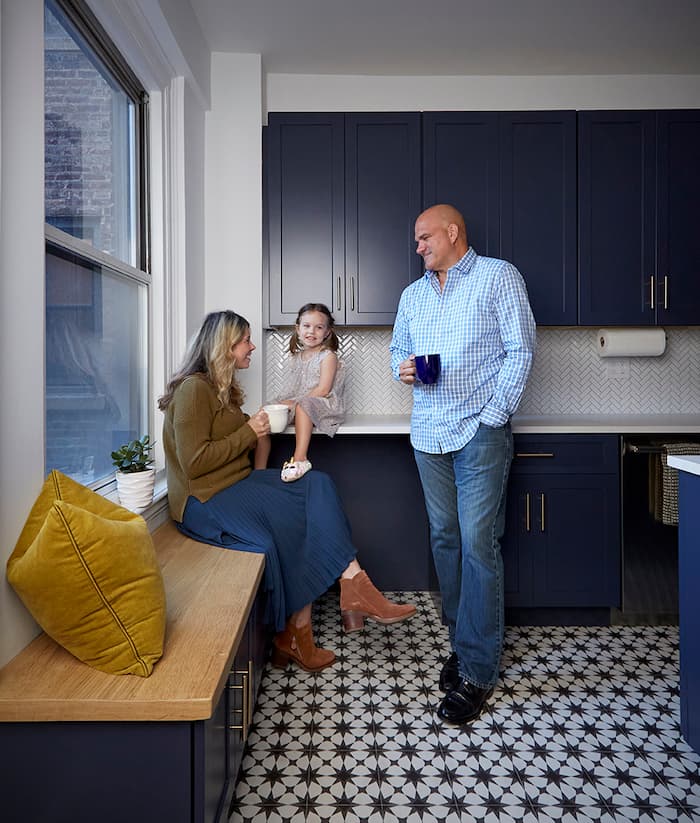
Enjoy peace of mind throughout your renovation
Secure payment system puts you in control and protects your remodel


Renovate confidently with Block
Easily compare quotes from top quality contractors, and get peace of mind with warranty & price protections.
Los Angeles
Garage Conversion to ADU Los Angeles: Top Contractors & Tips
08.14.2026
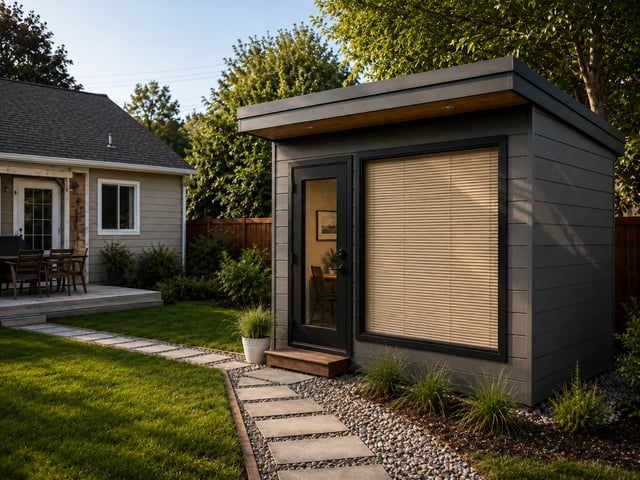
ADUs
Backyard Office Shed: Is Prefab Right for You?
07.25.2026
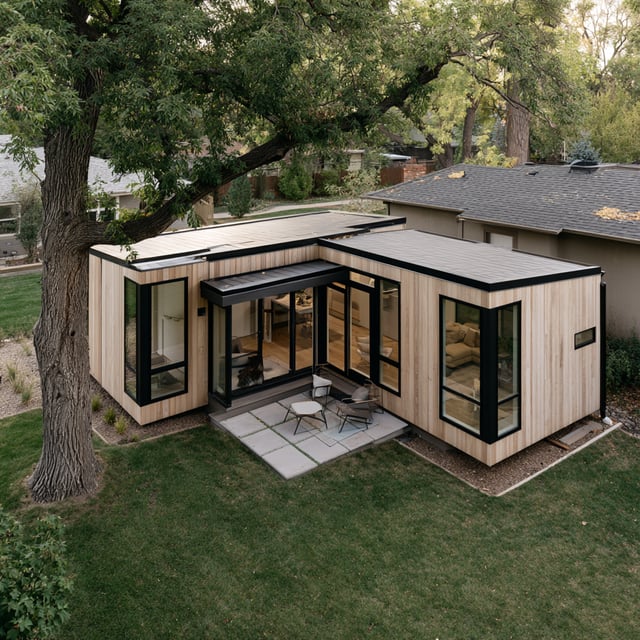
ADUs
L-Shaped ADU Plans: Layouts, Costs, Pros and Cons
07.13.2026
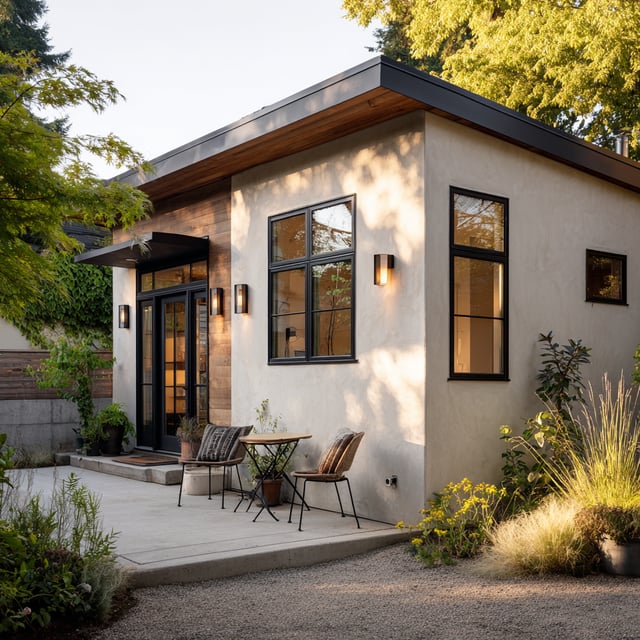
ADUs
Detached ADU Cost: What You'll Really Pay
06.19.2026
Garage
1-Bedroom Garage Apartment Floor Plans | Block
06.11.2026