





ADUs
How Much Does It Cost to Build or Remodel a Guest House?
08.28.2026
04.08.2026


In This Article
Five hundred square feet has a reputation as the sensible ADU choice. Not so small it feels like a compromise, not so large the budget conversation gets uncomfortable. It fits most lots, covers the basics, and it’s the number people tend to land on before looking closely at what the size actually costs or what they could build at 600 or 650 square feet for a fraction more.
That reputation deserves scrutiny. A 500 sq ft ADU can be a smart decision, but usually for reasons that have nothing to do with why people initially choose it. This guide covers what the size genuinely delivers, what it costs across different markets, and the decision points that tend to separate a project that holds up from one that feels like the wrong call a year after move-in.
At this size, there are two real layout options: a generous studio or a modest one-bedroom. Both can work. Which makes more sense depends entirely on who will live there and under what circumstances.
A 500 sq ft studio has room for a full kitchen rather than a kitchenette, a proper dining setup that seats more than two, a living area with actual furniture in it, and a sleeping zone that doesn’t feel like an afterthought. Designed carefully, it can feel like a genuine home. The openness at this size is comfortable rather than claustrophobic, which isn’t always true at 300 or 350 square feet.
A 500 sq ft one-bedroom involves more trade-offs. The bedroom typically lands around 100 to 120 square feet, which is workable but not generous. The remaining square footage carries the living area, kitchen, and dining together in an open plan, which means the common area is compact. The gain is psychological: sleeping and living occupy separate rooms, and for someone spending most of their time in the unit, including working from home, that boundary matters daily. The cost is a shared living space that doesn’t have much room to breathe.
The deciding factor is usually occupancy duration. For guests or short-term tenants, a well-designed studio typically performs better at this size because the open common area is what actually gets used. For a family member or tenant living there year-round, the separate bedroom tends to earn its keep.
Two layout decisions have the most direct impact on cost:
Where the bathroom and kitchen land. Shared or adjacent walls shorten plumbing runs and reduce labor cost compared to placing them on opposite sides of the unit.
The outdoor connection. A covered porch or small deck, even 50 to 60 square feet, extends how large the unit feels day-to-day in a way that no interior decision can replicate. It gives whoever lives there somewhere to be that isn’t the interior of a small building. At 500 square feet, that matters more than it does at 1,500.
A 500 sq ft ADU frequently costs more per square foot than a 700 or 800 sq ft one. This runs counter to most people’s instincts, but the math is straightforward once you understand how ADU projects are priced.
Every ADU project carries fixed costs that don’t change based on how large the unit is. A concrete slab foundation runs $10,000 to $15,000 whether the building on top of it is 350 square feet or 550. Utility connections, covering water, sewer, and electrical for a detached structure, commonly total $10,000 to $35,000, with the specific number driven by distance from existing service lines rather than unit size. Design and permit costs add another $15,000 to $25,000 or more depending on the market. At 800 square feet, these fixed costs are spread across more livable space. At 500, they represent a larger share of a smaller total, and the per-square-foot number climbs accordingly.
Nationally, a detached 500 sq ft ADU typically runs $100,000 to $200,000 all in. Lower-cost markets with simpler regulatory environments can land toward the bottom of that range. High-cost coastal cities push toward the top and beyond.
Below are four ADUs, all about 500 square feet and built in California. And yet the price range spans from $150,000 to $275,000. The takeaway? Your current space, the choice of finishes, and labor requirements can all have a large impact on the scope.
Before committing to 500 square feet, it’s worth pricing a footprint 100 to 150 square feet larger. Because fixed costs don’t scale with size, the marginal cost of additional square footage is low relative to what you’ve already committed to. The math tends to shift the decision when you run it honestly.
"My contractor came back with 620 square feet instead of 500, and the difference was $18,000. I almost said no. What changed my mind was that the extra 120 square feet fit an actual bedroom, and on Airbnb a one-bedroom lists for about $50 more per night than a studio in Corpus Christi. At the occupancy rates here, that upgrade pays for itself in under two years."
A one-bedroom at 620 or 650 square feet might cost $15,000 to $25,000 more than a 500 sq ft studio, but it rents at a higher rate, serves a wider range of occupants, and is easier to live in long-term. The situations where 500 square feet is the right call: when lot size or zoning limits how large you can build, when budget is a firm ceiling, or when the unit will serve primarily as guest accommodation. For anything long-term or rental-forward, pricing up before deciding down is almost always worth a conversation with your contractor.
A detached 500 sq ft ADU in California typically runs $150,000 to $300,000 all in. San Diego and Bay Area projects regularly land toward the upper end. Los Angeles, despite being a high-cost market, often comes in somewhat lower for comparable builds due to differences in labor supply and local fee structures. Regardless of where you reside in California, the ADU adds real value to your property in a state where housing is especially limited.
One California pathway worth understanding before finalizing plans: units of 500 square feet or less that are attached to the primary residence may qualify as Junior ADUs under state law. JADUs follow a distinct permitting process that can be faster and less expensive than a standard ADU application. The trade-off is real: a JADU requires an internal connection to the main dwelling and is limited to a kitchenette rather than a full kitchen, which affects livability considerably for full-time occupants. Whether the JADU pathway fits your project depends on lot configuration and intended use, and it’s a conversation to have with a contractor before designs are finalized.
Also worth knowing from the start: California’s SB 13 exempts ADUs of 750 square feet or smaller from development impact fees. In cities where those fees run $5,000 to $20,000, this exemption is a real financial advantage that most 500 sq ft projects.
Portland has some of the most ADU-friendly regulations in the country, and the cost difference shows. A detached 500 sq ft ADU in Portland typically runs $130,000 to $190,000 all in, lower than California for a comparable build despite meaningful local labor costs. The regulatory environment explains most of the gap.
Portland permanently waived its Systems Development Charges for ADUs, fees that reach $15,000 or more in other Pacific Northwest cities, for homeowners who agree not to use the unit as a short-term rental for ten years. For homeowners planning to house a family member or rent long-term, this is a significant saving with a straightforward condition attached. Portland also has no solar panel mandate for new construction, building permit costs that typically run $6,000 to $10,000, and a permitting process that most ADU contractors describe as more predictable than California cities of comparable size.
The contrast between these two markets points to something worth understanding before you budget: the regulatory environment shapes the all-in cost as much as the unit’s size or finish level. The first call on any project should be to a contractor who builds regularly in your specific city, not the nearest metro.
Prefab and modular units are marketed aggressively at the 500 square foot size range, and the sticker prices often look compelling. The full picture is more nuanced.
A prefab unit still requires a site-prepared foundation, utility connections, permitting, and in many cases crane placement and delivery fees. These costs apply to prefab builds exactly as they do to site-built ones. Once everything is added to the factory price, the all-in cost of a prefab 500 sq ft ADU typically lands within 10 to 15 percent of a comparable site-built unit. The timeline advantage is real: a factory-built unit can reduce the on-site construction phase by several months. The cost savings are usually smaller than the initial quote suggests.
Prefab makes the most sense when the timeline is the overriding priority, when the lot can’t accommodate months of on-site construction activity, or when the homeowner values the predictability of factory tolerances over design flexibility. If the primary motivation is cost, site-built construction on a simple foundation with a rectangular footprint and straightforward roofline typically delivers comparable value at lower risk of post-bid surprises.
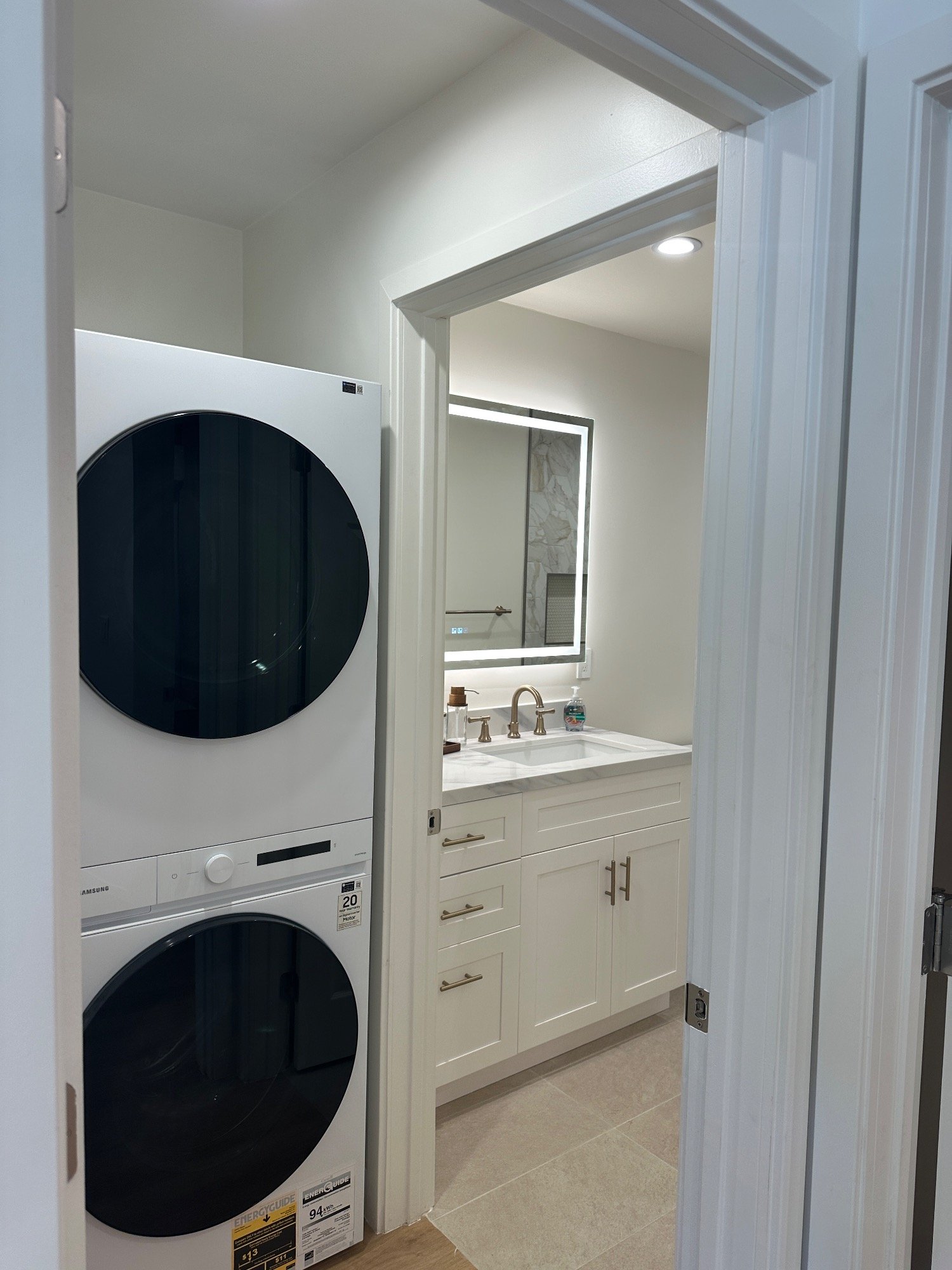
Hauling laundry back to the main house or laundromat every week can make an otherwise independent ADU feel a lot less independent. Proving it's indeed possible and non-intrusive, this 500-square-foot Los Angeles ADU, Alto Builders tucked a stacked washer and dryer into a designated nook. Even if you’re delaying the appliance purchase, have your contractor install the necessary hookups during construction.
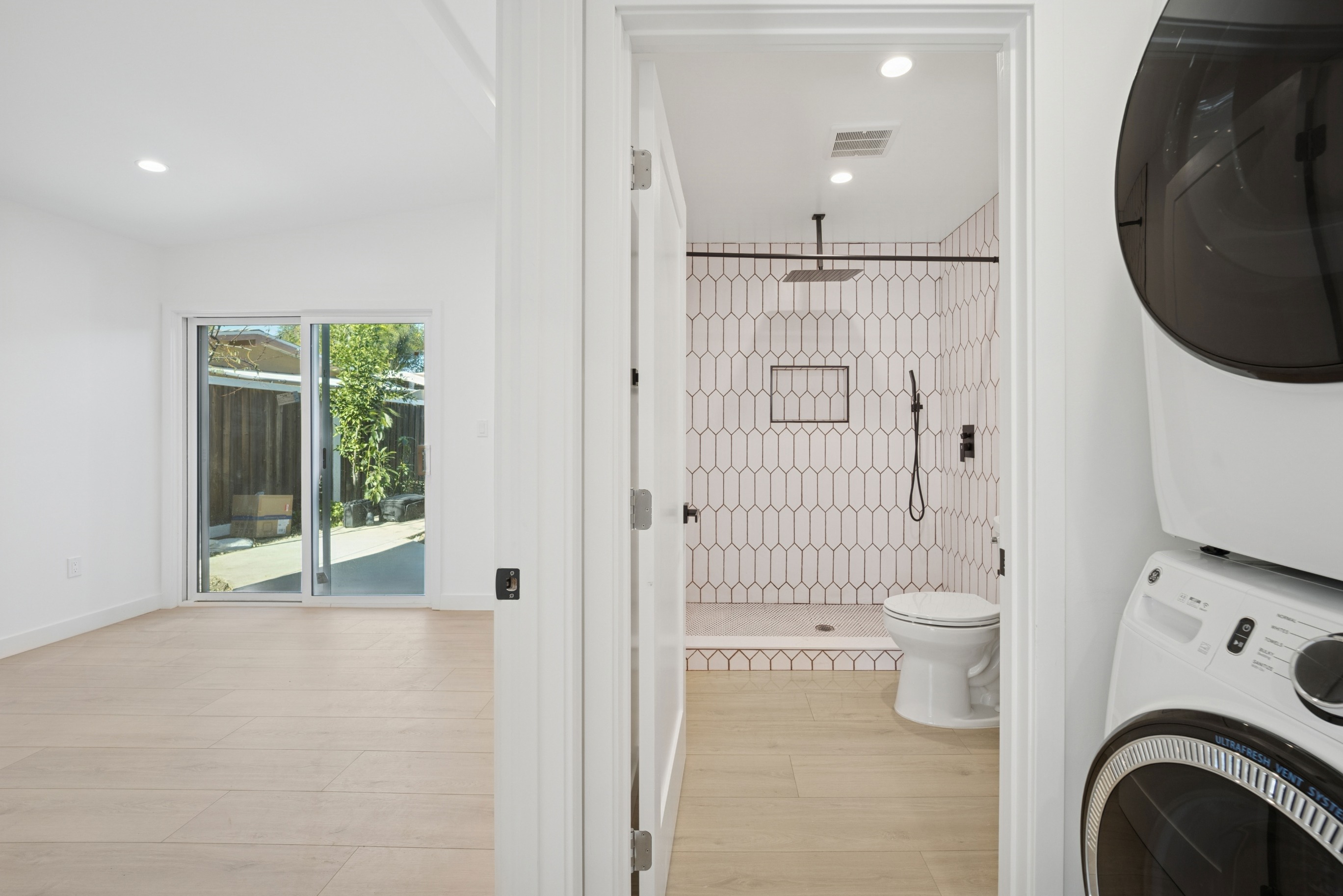
You can live with a smaller bedroom or dining table more easily than a shower that feels cramped every morning. Find inspiration with this 500-square foot Los Angeles garage conversion by MY Home Builders which accommodates a comfortable shower alongside a bedroom, kitchen, living space, and laundry. Trust me, you and guests will notice and appreciate the few extra square foot of a generously sized shower more than if it was part of your living room.
Give the bedroom a real sense of privacy
For a full-time resident, a separate bedroom can make the entire ADU feel more like home. The room only needs enough space for a bed, a practical closet, and comfortable movement around both. Mirrored closet doors help it feel larger, and a pocket door saves floor space. If the living area starts feeling squeezed, reconsider the closet or hallway dimensions before giving up the bedroom.
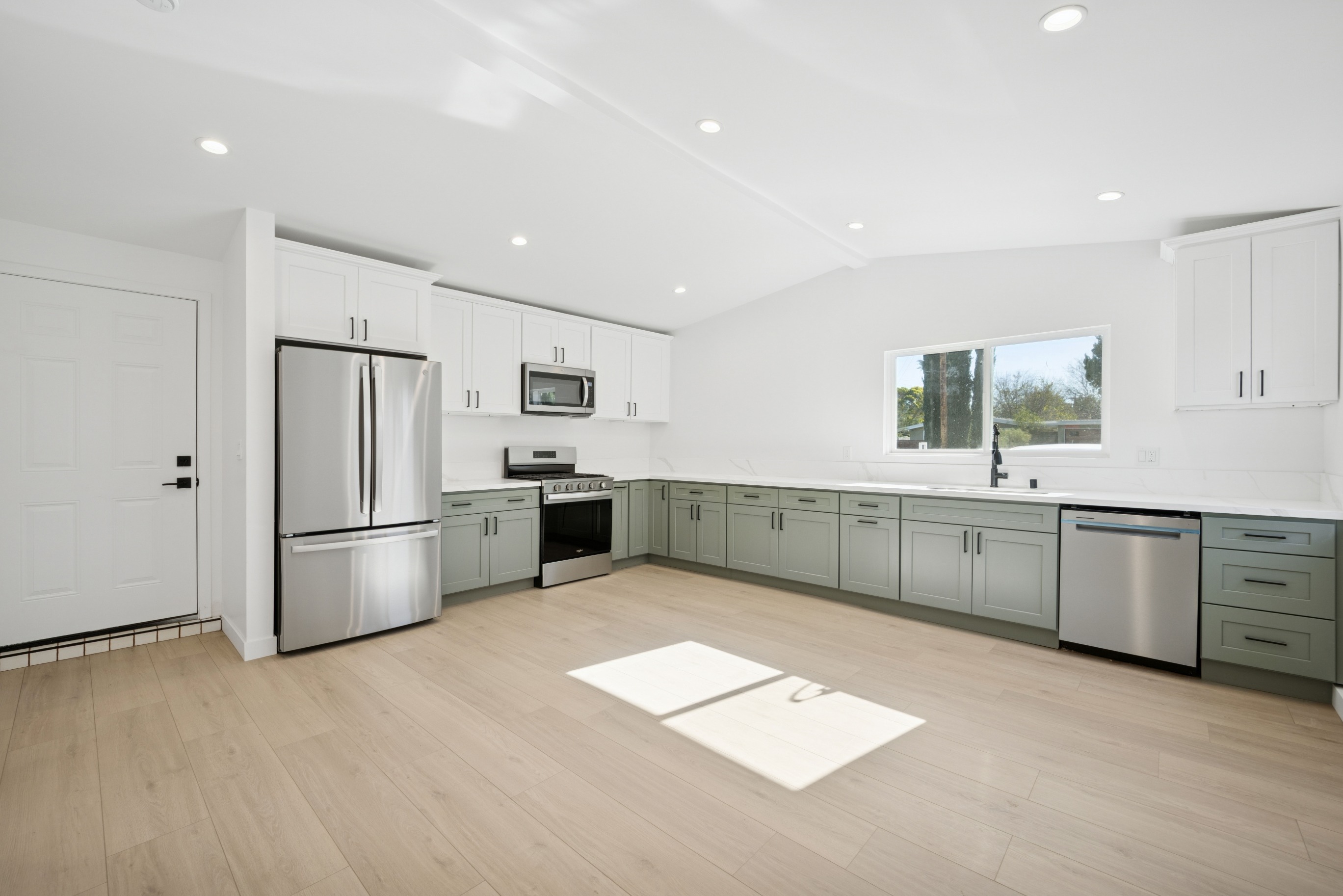
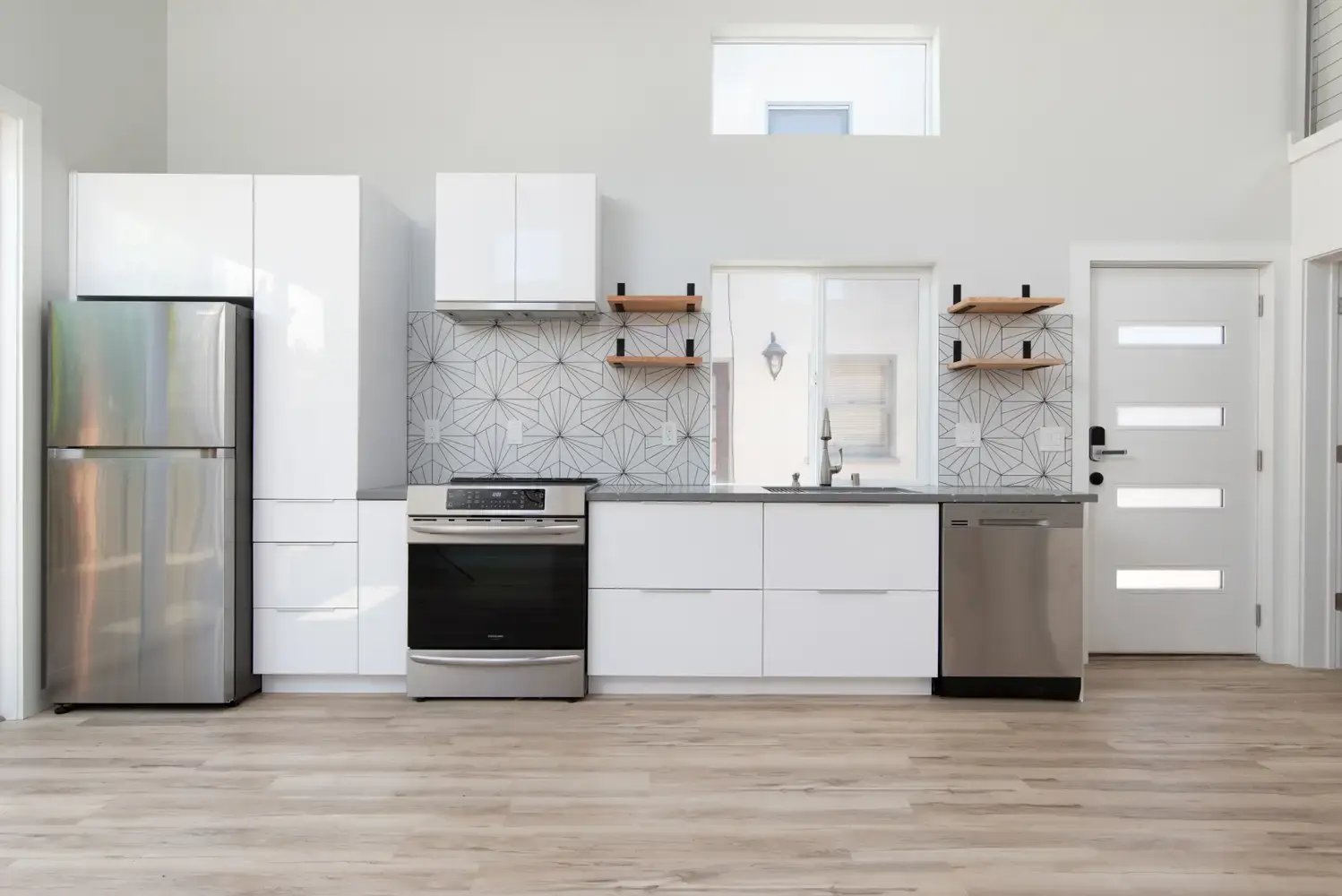
Five hundred square feet is enough for more than a miniature fridge and a microwave. The previously shown garage conversion fits a full-size refrigerator, range, and dishwasher along one wall, keeping the rest of the room open. An L-shaped layout works well, too, especially if you want more counter space.
A small room feels even smaller when the only window faces a fence. This San Leandro ADU from Real Time Construction has windows above the kitchen sink and high on the wall, bringing daylight into the main living area. Mirrored closet doors brighten the bedroom, too. Higher windows are especially useful when neighboring homes are close enough to create privacy concerns, especially considering the design includes an in-shower window.
Yes, your 500-square foot ADU will naturally require some compromise. When determining where you can shrink your footprint, go with:
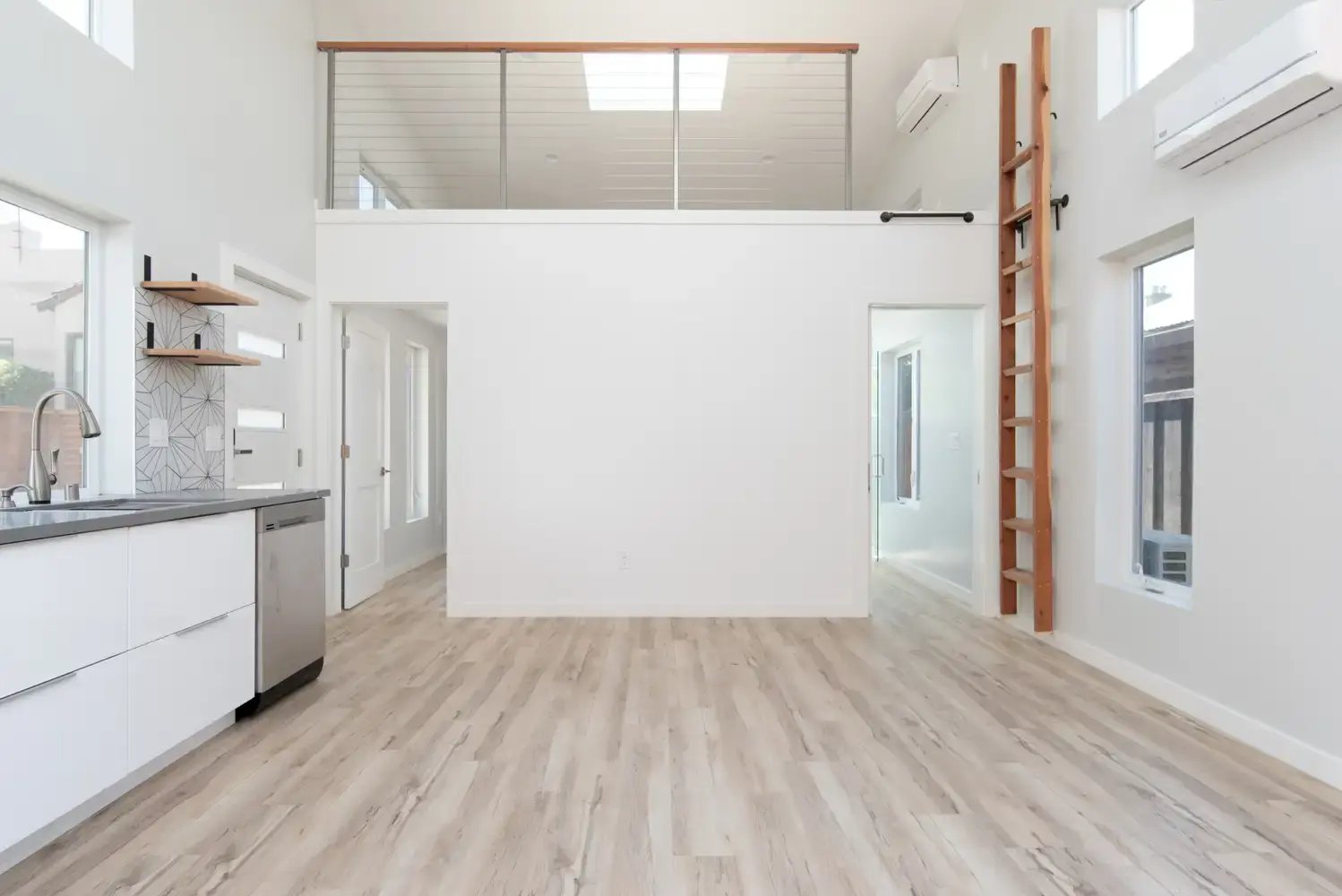
A high ceiling gives you another place to look for usable space. In this 540-square-foot San Leandro ADU, Real Time Construction incorporated a ladder-accessed loft above the main living areas. Use it as a sleeping nook or extra storage, depending on who will occupy the ADU. Just remember that a ladder might appeal to a younger tenant considerably more than an aging parent.
Block Renovation matches homeowners with vetted, licensed ADU contractors based on your specific project, site conditions, and location. Once matched, you receive detailed proposals, expert scope review, and progress-based payments that protect your investment throughout construction. Every contractor in the Block network carries a one-year workmanship warranty.
Remodel with confidence through Block
Connect to vetted local contractors
We only work with top-tier, thoroughly vetted contractors

Get expert guidance
Our project planners offer expert advice, scope review, and ongoing support as needed

Enjoy peace of mind throughout your renovation
Secure payment system puts you in control and protects your remodel


Renovate confidently with Block
Easily compare quotes from top quality contractors, and get peace of mind with warranty & price protections.
ADUs
How Much Does It Cost to Build or Remodel a Guest House?
08.28.2026
Los Angeles
Garage Conversion to ADU Los Angeles: Top Contractors & Tips
08.14.2026
ADUs
Backyard Office Shed: Is Prefab Right for You?
07.25.2026
ADUs
L-Shaped ADU Plans: Layouts, Costs, Pros and Cons
07.13.2026
ADUs
Detached ADU Cost: What You'll Really Pay
06.19.2026