


How to Save When Building a Home: Where Budgets Win or Lose

 Cozy A-frame living room with wood walls and forest views.

In This Article

    The average newly built home in America now sells for around $665,298, with construction costs alone making up roughly 64% of that price tag, according to the National Association of Home Builders. Knowing how to save when building a home is mostly about understanding which choices move the needle and which ones are rounding error dressed up as smart strategy. Most of them have nothing to do with picking cheaper tile.

    How to save when building a home: start with the footprint

    The biggest cost lever in any home build isn't your countertop choice or your appliance package. It's the size and shape of the structure itself. The footprint decides almost everything downstream: foundation size, roof complexity, framing labor, mechanical runs, square footage of flooring, gallons of paint.

    A 2,400 square foot two-story home built in the Midwest might come in around $400,000 in construction costs. Stretch that same 2,400 square feet into a single-story rambler and the number can climb $50,000 to $80,000 higher.

    • Square footage is the dominant macro decision. At a national average of roughly $200 per square foot, cutting 250 square feet from a plan saves around $50,000 before anyone has picked out a faucet. A 2,400 square foot home built thoughtfully will almost always feel better to live in than a 2,700 square foot home built carelessly.
    • Building up costs less than building out. Two-story homes typically run 10 to 30% less per square foot than a single-story home of the same size, because they share one foundation and one roof across two levels of living space.

    Custom or stock plans: how to reduce cost of house construction

    A custom architectural plan can run anywhere from $10,000 to $50,000. A stock plan, modified to your needs, runs $500 to $5,000. That's a swing of up to $45,000 before construction begins. Knowing when stock plans save you a fortune and when they cost you one is the actual decision.

    • Stock plans are the right call for most flat, conventional lots. Crews move faster on layouts they've built before, which means fewer mistakes during framing and fewer delays at inspections.
    • Custom plans earn their fee on difficult lots and unusual programs. A steep slope, a tight urban infill, an unusual lot shape, a multigenerational layout, or a real architectural ambition can justify the cost of a true custom plan. Paying an architect $25,000 to design something buildable is far cheaper than paying a contractor $100,000 to fight a stock plan onto a site that won't accept it.
    • The middle path is "modified stock," and it's usually the best value. Take a stock plan you like, hire a designer for a few thousand dollars to adapt it, and you get most of the customization benefit at a fraction of the price.

    Where to splurge and where to save when building a home

    The smartest way to save when building a home isn't cutting your budget evenly across every category. It's spending heavily on what you can't easily change later and lightly on what you can. The question to ask about any line item is: if I hate this in five years, how hard is it to fix?

    • Splurge on the things hidden in walls. Insulation, structural framing details, plumbing rough-in, electrical panel capacity, HVAC equipment, and roof underlayment are all invisible and all nearly impossible to upgrade without demolition. A $3,000 insulation upgrade pays back for thirty years; the same $3,000 in counter upgrades pays back the day you sell.
    • Splurge on windows. Mid-tier vinyl windows feel cheap on day one and look worse by year ten.
    • Save on anything swappable in a weekend. Light fixtures, cabinet pulls, faucets, and even appliances at mid-tier price points are decisions you can revisit later. There's no reason to spend $1,200 on a pendant when a $200 placeholder lets you decide later.
    • Save on flooring outside wet areas. Luxury vinyl plank in 2026 is genuinely good and costs a fraction of solid hardwood.

    Transparent Pricing You Can Trust

    Start your renovation using Block’s Price Assurance. See a detailed cost breakdown with no unexpected expenses along the way.
    Get Started

    Where premium materials earn their price

    Most of your budget gets spent on materials, and most homeowners spread that money too thinly across the whole house. The smarter play is concentrating premium materials where they register.

    • Premium goes where light hits and hands touch. Splurge on the kitchen island countertop and use a less expensive surface on the perimeter. For example, use real stone in the primary bath and porcelain in secondary baths.
    • Match material to traffic and exposure. Quartz holds up to a kitchen better than marble, and porcelain handles entryways better than ceramic. Engineered hardwood resists the humidity that warps solid wood. The most expensive mistake is paying premium prices for a material that fails because it was wrong for the spot.
    • The choice to pay for higher priced materials should be driven by durability and not just looks. Cabinet boxes demonstrate this concept perfectly; plywood and particleboard look identical the day they're installed, but the particleboard will need replacing significantly sooner.
    • Buy in continuous runs. Order flooring, tile, and trim from a single dye lot with 10 to 15% overage. The cost of overage is small; the cost of two-tone tile in your primary bath is forever.

    How to cut costs when building a home: control change orders

    A change order is any modification to the original plan after work has started. Anyone serious about how to cut costs when building a home has to take change orders seriously, because they're where most build budgets quietly hemorrhage, and they're almost entirely preventable with better planning up front.

    The change orders that blow budgets aren't the dramatic ones. They're the small accumulating ones: a counter outlet here, a window swap there, a sink moved six inches. Each costs more than it should because someone is on the clock when the decision finally gets made.

    • The same decision costs three to five times more once construction has started. For instance, moving a sink six inches before rough-in is a quick redline; after rough-in, it's two days of demo and re-piping.
    • Change orders compound. They don't stack. Each change ripples through timelines, downstream trades, material orders, and inspection schedules. A single window relocation isn't just the cost of moving the window. It's the cost of re-engineering the header, redoing the framing schedule, reordering the trim, and pushing inspections back two weeks. What started as a free design tweak becomes a $4,000 to $6,000 change order, plus the holding costs of a stalled crew.
    • The cure is over-investing in pre-construction planning. Lock every outlet, fixture, sink height, appliance dimension, door swing, and window placement on paper before breaking ground.

    Small decisions that quietly define your budget

    Asking how to cut cost when building a house usually leads people to the big-ticket items: square footage, floor plan, kitchen finishes. But a home is built out of thousands of small choices, and the ones that look minor often define whether you feel like you got your money's worth.

    Take lighting. Block Renovation Senior Project Planner Tenzin Dhondup:

    Tenzin

    "In my opinion, lighting is one of the best dollar-for-dollar upgrades a homeowner can make. Specifically, make sure to add dimmers wherever you can, and use multiple light sources instead of the typical single ceiling fixture that most homes have. Using warm-tone bulbs is important too. The temperature of the bulb really plays a factor in how cozy your home feels or, negatively, how much it looks like a hospital."

    Other small decisions that decide whether your dollars work hard or run away from you:

    • Hardware finishes do disproportionate work.
    • Paint quality and color decide how expensive a home looks.
    • Outlets, switches, and data drops are 8x cheaper before drywall.
    • Stock cabinets cost a third of custom and read nearly identical from across the room.
    • Interior door upgrades multiply across every room in the house.
    • Trim profile and height separate a $200 per square foot home from a $300 per square foot one.

    When to break ground (and why timing can help you save)

    The same home costs different amounts depending on when you build it. Lumber prices swing with the seasons, the best contractors disappear in summer, and a foundation pour depends on a weather window that may or may not arrive when you want it. Homeowners who pay the least are the ones who time the start carefully.

    • Late summer and early fall starts often beat spring. Spring is when everyone wants to break ground, which means contractors are booked solid and material lead times grow. A fall start gets the foundation in before frost, frames during a quieter season, and finishes interior work over winter when crews have time to do it well.
    • Lock long-lead items 8 to 12 weeks early. Windows, custom doors, specialty appliances, and overseas tile have lead times that have only gotten worse since 2024.
    • Watch material prices in the months before you sign. 2026 tariff schedules continue to push softwood and steel up unpredictably.
    • Avoid the worst weather window for your region. A January start in the Northeast or a July start in Phoenix adds real cost: heated enclosures, slower concrete cures, crew premiums for difficult conditions.

    How to cut cost when building a house with the right contingency

    Builder websites suggest setting aside 10% of the budget for surprises. Real-world construction in 2026 says that's optimistic. Lumber prices are still elevated and tariffs keep pushing softwood up. Add skilled trade shortages on top of that, and labor rates have nowhere to go but higher.

    • 15 to 20% is a more realistic floor. For a $400,000 build, that's $60,000 to $80,000 set aside before you sign a contract. If you don't end up needing it, you bought yourself a finished basement or a better kitchen.
    • Contingency is for the unexpected, not for upgrades. The $8,000 surprise when the excavator hits ledge rock. The $4,000 when the panel inspector flags an issue. The $12,000 when a long-lead window is back-ordered and you have to swap to a more expensive in-stock option. Don't spend your contingency on a nicer primary bath. That's a different bucket of money.
    • Watch the categories that historically run over. Site work, foundations, and rough mechanicals (plumbing, electrical, HVAC) are where surprises tend to hide. Site work alone has nearly doubled in average cost over the past five years, climbing from about $18,000 per home to roughly $33,000 as labor rates and permitting fees rise.
    • A real contingency requires a real budget. Start with a contractor estimate that reflects your specific build, not a national average per square foot. Block's project planners help homeowners build the underlying budget so the contingency reflects real risk.

    Find a contractor before you break ground

    Most homeowners don't realize they made the most expensive decision of their build until they're three months in. The contractor you pick decides what gets caught early. Some problems show up in the scope review. Others go unflagged and become $8,000 surprises three months in. Block matches homeowners with vetted contractors who compete for the project, with expert scope review built in to catch missing line items before they turn into change orders. The cheapest version of a home build starts with the right contractor.

    Lay the groundwork for a successful custom home
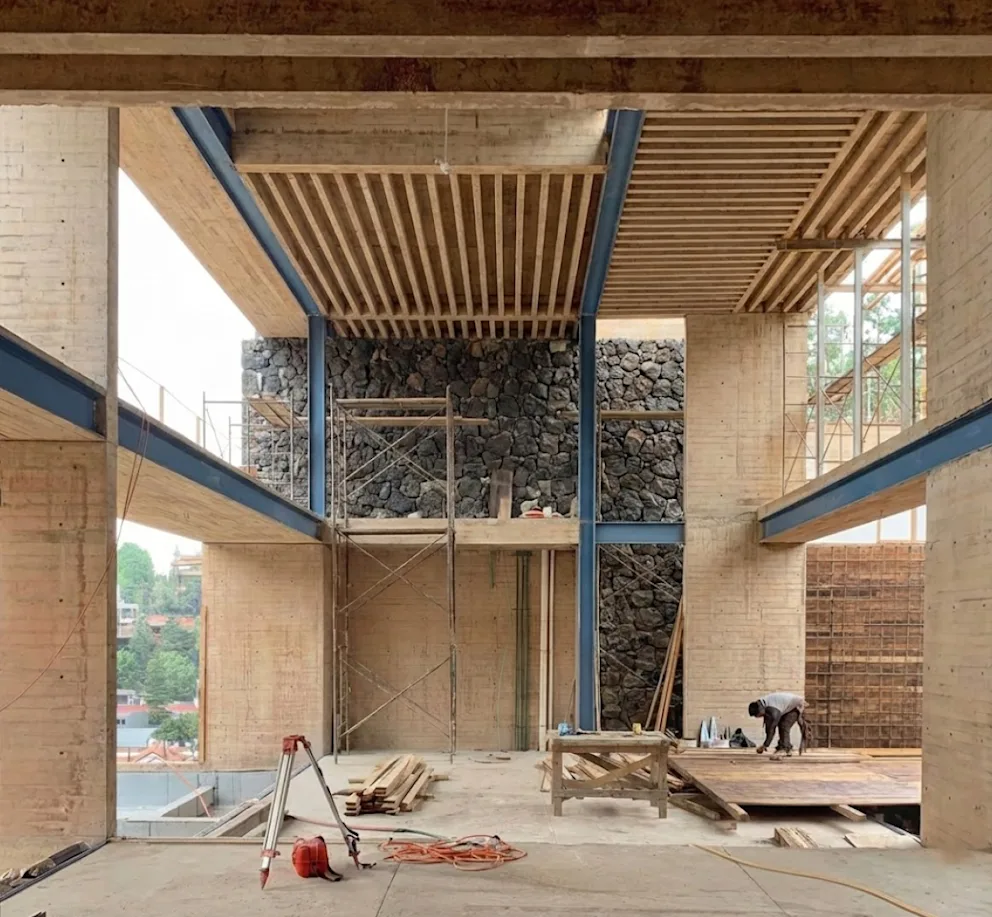
    New construction home build

    Match with vetted builders

    Receive quotes from experienced contractors aligned to your vision.
    Block experts reviewing quotes and timelines

    Hire with confidence

    Partner with Block experts to review quotes and timelines for end-to-end clarity.

    Homeowner staying in control of their renovation

    Stay in control

    Avoid surprises with Block Protections and a progress-based payment system.

    Get Started

    Frequently asked questions

    What's the best way to save when building a home?

    The biggest savings come from the footprint, not the finishes. Reducing square footage, choosing a two-story over a single-story design, and locking every decision on paper before construction starts will save more than any finish-level swap. At roughly $200 per square foot nationally, cutting 250 square feet from a plan saves about $50,000, more than upgrading every finish in the house combined.

    How can I cut costs when building a home without cutting quality?

    Spend disproportionately on planning and disproportionately less on changes. Every decision made on a drawing is three to five times cheaper than the same decision made on site after framing. Use a stock plan or modified stock plan instead of full custom, lock all fixture and outlet locations before rough-in, and reserve your "splurge" budget for the things you touch every day: hardware, paint quality, lighting, and plumbing rough-in placement.

    How can I reduce the cost of house construction on a tight budget?

    Start with three structural choices: smaller footprint, two-story instead of single-story, and modified stock plans instead of custom. Together these can reduce a typical build by 15 to 25% before any finish decisions get made. Then negotiate competitive bids from multiple vetted contractors rather than accepting the first estimate, and build a 15 to 20% contingency into your real budget so a single surprise doesn't blow the whole project.

    Is it cheaper to build a one-story or two-story home?

    A two-story home is usually 10 to 30% cheaper per square foot than a one-story home of the same size. A two-story design shares one foundation and one roof across two levels of living space, which is the most expensive part of any build. Single-story homes win on lifestyle but lose on cost.