




Commercial
Commercial Tenant Improvement Contractors Explained
07.27.2026
03.13.2026



In This Article
A commercial interior renovation can reshape the way your business operates—improving how your team works, how customers experience your brand, and how efficiently your space supports day-to-day needs. But unlike a quick coat of paint or a furniture swap, a full renovation involves multiple phases, specialized trades, and regulatory requirements that all need to move in sync.
Understanding the commercial building renovation process before you begin is one of the most valuable things you can do as a business owner or property manager. When you know what each phase involves, how long it typically takes, and where delays tend to crop up, you can plan with confidence rather than reacting to surprises.
Every project is different, but the following ranges give you a realistic starting point for planning. These estimates assume a mid-sized space (roughly 5,000–20,000 square feet) with a standard scope of work.
|
Phase |
Typical duration |
Key variables |
|
Planning and goal-setting |
2–4 weeks |
Number of stakeholders, decision speed |
|
Design development |
4–10 weeks |
Complexity, approval rounds, interior designer involvement |
|
Permitting and approvals |
2–12 weeks |
Jurisdiction, scope triggers |
|
Contractor selection |
2–4 weeks |
Number of bids, negotiation |
|
Pre-construction |
2–4 weeks |
Material lead times, phasing |
|
Construction |
6–24+ weeks |
Scope, space size, conditions |
|
Inspections and closeout |
1–3 weeks |
Inspector availability, punch list |
For a straightforward cosmetic refresh of a small office—new flooring, paint, lighting, and furniture—you might complete the entire process in three to four months. A full gut renovation of a large commercial space with structural changes, new mechanical systems, and custom finishes could take nine months to over a year from initial planning to move-in.
Here's a quick reference for total project duration by space type:
|
Space type |
Estimated total duration |
|
Small office refresh (under 5,000 sq ft) |
3–5 months |
|
Mid-size office renovation (5,000–20,000 sq ft) |
4–8 months |
|
Retail space build-out |
3–6 months |
|
Restaurant renovation |
4–8 months |
|
6–12+ months |
|
|
Large or multi-floor commercial renovation |
8–14+ months |
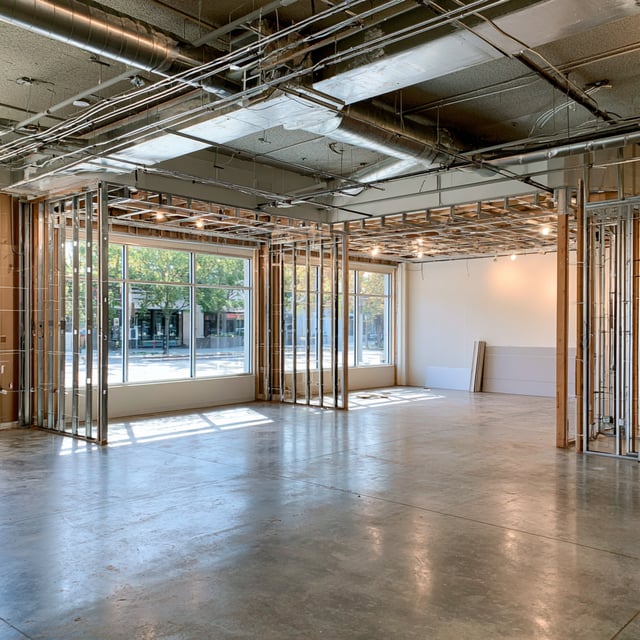
If you're renovating a second-generation space (one that already has ceilings, plumbing, and basic infrastructure in place), your timeline will generally be shorter than a shell-condition build-out. The less infrastructure you need to install from scratch, the faster you can move into the finish phase.
Commercial interior renovations follow a structured sequence, and each phase feeds directly into the next. Skipping steps or rushing through early stages often leads to problems—and added costs—later on.
Every successful commercial renovation starts with clarity about what you're trying to accomplish. This is the stage where you define the scope of your project, set a preliminary budget, and identify any constraints—like lease terms, building rules, or operational needs—that will shape your decisions. Are you reconfiguring the layout to support a different way of working? Updating finishes to reflect a rebrand? Improving energy efficiency to reduce operating costs? The clearer your goals are now, the more efficiently everything else will follow.
This is also when you should start assembling your project team. For commercial work, that typically includes a general contractor and, depending on the complexity of the renovation, potentially an interior designer, architect, and construction manager.
We asked Rory O'Driscoll of Block Renovation what the single most impactful thing business owners can do to keep a commercial renovation on schedule. He didn't hesitate.
"To accelerate your timeline, start contractor conversations early. While contractors can't provide a final price without a completed set of plans, you should begin engaging them as soon as you start working with an architect. That way, you can narrow your shortlist and have contractors ready to bid the moment plans are complete, rather than starting that process after the fact."

You should also apply for permits simultaneously with contractor bidding. Don't wait until you've selected a contractor to submit your permit application. In an ideal world, contractors start bidding as soon as they receive the plans and break ground the day permits are approved.
Work with your team to develop layouts, select materials, plan lighting and acoustics, and create construction documents that your contractor will build from. Compliance should also be a major consideration at this stage of the timeline. Your team will need to confirm that the plans meet local building codes, fire safety requirements, ADA accessibility standards, and any landlord or HOA specifications.
If your space is in a historic building or district, additional review may be required. Lead times for specialty materials can stretch weeks or even months, so early procurement decisions during this phase help protect your renovation timeline.
Permitting is one of the most common sources of delays in commercial renovation projects. Depending on your location, the scope of work, and the type of commercial space, you may need building permits, electrical and plumbing permits, fire safety permits, and sign-offs from your building's management or ownership group.
Processing times vary significantly by jurisdiction—a straightforward permit might take two to four weeks in some cities, while dense urban areas with high construction volume could mean six to twelve weeks or longer.
If your project triggers the 30% rule (where renovation costs exceed 30% of the property's assessed value), additional code compliance requirements may apply to the entire building, not just your space.
Warning: when asked about the part of a commercial interior renovation timeline that almost always takes longer than expected, Rogue Schott, a PMP-certified Lead Project Planner at Block Renovation, pointed to this specific phase.

The phase that almost always takes longer than clients expect is permitting and inspections. It’s largely outside both the client’s and contractor’s control, and in most cases, there’s no reliable way to speed it up. While some contractors mention “permit expediters,” they rarely make a meaningful difference and often just add cost without improving timelines.
Before the first wall comes down, there's important groundwork to cover. Pre-construction includes finalizing the project schedule, ordering long-lead materials, coordinating subcontractor schedules, and preparing the site. If your business will continue to operate during construction, this is also when you'll develop a phasing plan so parts of the space remain functional while others are under renovation.
Communication planning happens here too. Employees, clients, tenants, and building management should all know what to expect—including noise levels, access changes, and any temporary relocations.
This is the most visible phase, and it typically follows a predictable sequence: demolition, structural work, rough-in for mechanical systems (HVAC, electrical, plumbing), inspections, framing and drywall, finish installation (flooring, paint, tile, cabinetry), and final fixture and equipment installation. Your commercial contractor should provide regular progress updates and flag any issues that could affect the timeline or budget.
The most common mid-renovation surprises in commercial spaces include hidden conditions behind walls (outdated wiring, water damage, structural issues), material delivery delays, and inspection scheduling bottlenecks. Having a contingency budget in place—typically 10–20% of the project total—helps you absorb these surprises without derailing the entire schedule.
As construction wraps up, your contractor will schedule final inspections with the local building department to confirm code compliance. You'll also do a detailed walkthrough to create a punch list—a record of any items that need correction, completion, or touch-up before the project is considered finished. Common punch list items include paint touch-ups, hardware adjustments, minor alignment issues, and cleaning.
Closeout also includes collecting all warranties, as-built drawings, and maintenance documentation for the finished space. Your interior designer may also do a final review at this stage to confirm that finishes, furnishings, and branding elements have been installed according to the design intent. These records are valuable for future maintenance and any subsequent renovations.
Even with the best planning, certain variables can shift the timeline of your interior renovation projects. Understanding these factors helps you anticipate challenges and build in appropriate buffers.
This is often the first question that determines your timeline and costs. For instance, remodeling a compact juice bar with a simple counter, basic plumbing, and a small seating area is a fundamentally different project from an upscale restaurant requiring a full commercial kitchen, custom millwork, a bar program with specialized ventilation, and a carefully designed dining room. Both are food-service spaces, but the scope, the number of trades involved, and the regulatory requirements are worlds apart.
The same principle applies across every commercial category. A 2,000-square-foot co-working lounge will move much faster than a 15,000-square-foot multi-department office with server rooms, conference centers, and executive suites. When you're estimating your timeline, think not just about square footage but about the density of systems and finishes your space requires.
A cosmetic update—paint, flooring, lighting—moves quickly. A full gut renovation with structural modifications, new mechanical systems, and custom finishes takes significantly longer. The more trades involved, the more coordination required, and the more time the project will need.
Older buildings frequently have surprises behind the walls: outdated wiring, asbestos, lead paint, plumbing that doesn't meet current codes, or structural issues that only become visible during demolition. These conditions can add weeks to a project and thousands to a budget. If your space is in an aging building, budget extra time and contingency funds accordingly.
Processing times for permits vary widely by city and by the type of work involved. Projects that trigger ADA compliance updates, fire suppression upgrades, or the 30% rule will face longer approval timelines. Starting permitting early and working with experienced professionals are the most effective ways to minimize these delays.
Custom millwork, specialty lighting, imported tile, and specific mechanical equipment can all carry lead times of eight to sixteen weeks or more. Supply chain disruptions, tariffs, and seasonal demand can push those timelines further. Ordering materials as early as possible—ideally during the design phase—gives you the best chance of keeping construction on schedule.
Delays in internal approvals—material selections, design sign-offs, change order decisions—can slow a project just as much as construction challenges. Designate a single point of contact with decision-making authority, and set clear internal deadlines for approvals to keep things moving.
Not sure how to begin your renovation?
Get free, expert guidance from a dedicated Block Project Planner who can help you navigate proposals, timelines, contractor selection, and more.
Book A Free Consultation
When assessing the timeline of a commercial interior renovation, One of the biggest concerns for business owners is downtime. The good news is that with careful planning, many businesses can remain at least partially operational throughout the process. It requires more coordination, but the trade-off—maintaining revenue and client relationships—is often worth it. Here are some of the most common strategies:
Whether you're renovating a single office suite or transforming a multi-floor commercial space, having the right partner makes the process significantly smoother. Block Renovation connects you with thoroughly vetted, licensed, and insured contractors who have real experience with commercial projects.
Every contractor in Block's network has passed a rigorous screening process that includes license verification so you can spend less time vetting and more time building.
Personalized contractor matching: Share your project details, and Block will connect you with commercial contractors whose experience, location, and specialties are the best fit for your specific renovation.
Side-by-side proposal comparison: Review detailed bids on your dashboard, with line-item pricing and scope breakdowns that make it easy to evaluate your options and make an informed decision.
Expert scope review: Block's team reviews every proposal to help identify gaps, inconsistencies, or red flags so you can move forward knowing your scope and budget are solid.
Progress-based payments: All payments are handled through Block's secure platform and released in stages as work is completed. This keeps your contractor motivated and your investment protected.
Ongoing support: From planning through final walkthrough, Block's project planners are available to answer questions, review change orders, and help keep your renovation on track.
A well-planned commercial renovation is an investment in how your business works, how your employees feel, and how your customers experience your brand. With the right process and the right team behind you, it can be one of the most rewarding projects you take on.
Build your business with confidence


Renovate confidently with Block
Easily compare quotes from top quality contractors, and get peace of mind with warranty & price protections.
Commercial
Commercial Tenant Improvement Contractors Explained
07.27.2026

Working with Contractors
Is a Property Renovation Company Worth the Cost?
06.24.2026

Commercial
Commercial Remodeling in San Diego by Neighborhood | Block Renovation
04.27.2026

Commercial
Commercial Remodeling and Buildouts in Dallas-Fort Worth | Block Renovation
04.24.2026
Commercial
2026 Restaurant Design: 11 Trends Defining the Industry
04.24.2026