



Ceiling
Cost to Vault a Ceiling: Homeowner Budget Guide
09.23.2026
04.16.2026



In This Article
Low ceilings have a reputation for making rooms feel cramped, dark, and hard to love. But ceiling height doesn't have to define how a space feels or functions. With the right design moves, a low ceiling basement renovation or attic conversion can produce some of the most comfortable, characterful rooms in your home. The before-and-afters in this guide show exactly what's possible. Each transformation started with a challenging, underused space and ended as a room that's genuinely better to live in.
Unfinished or partially finished basements are among the most common low-ceiling challenges homeowners face. Drop ceilings, exposed joists, and poor lighting make these spaces feel more like utility areas than livable rooms. But a well-planned low ceiling basement renovation can add hundreds of usable square feet to your home, and the design tricks that make it work aren't as complicated as you might think.
Drop ceilings are the grid-and-tile systems common in 1970s and 80s basements, and they're one of the most common low-ceiling culprits and one of the most satisfying things to get rid of. They often conceal only a few inches of space between the tiles and the actual structure above, meaning removing them can immediately add 6 to 12 inches of clearance.
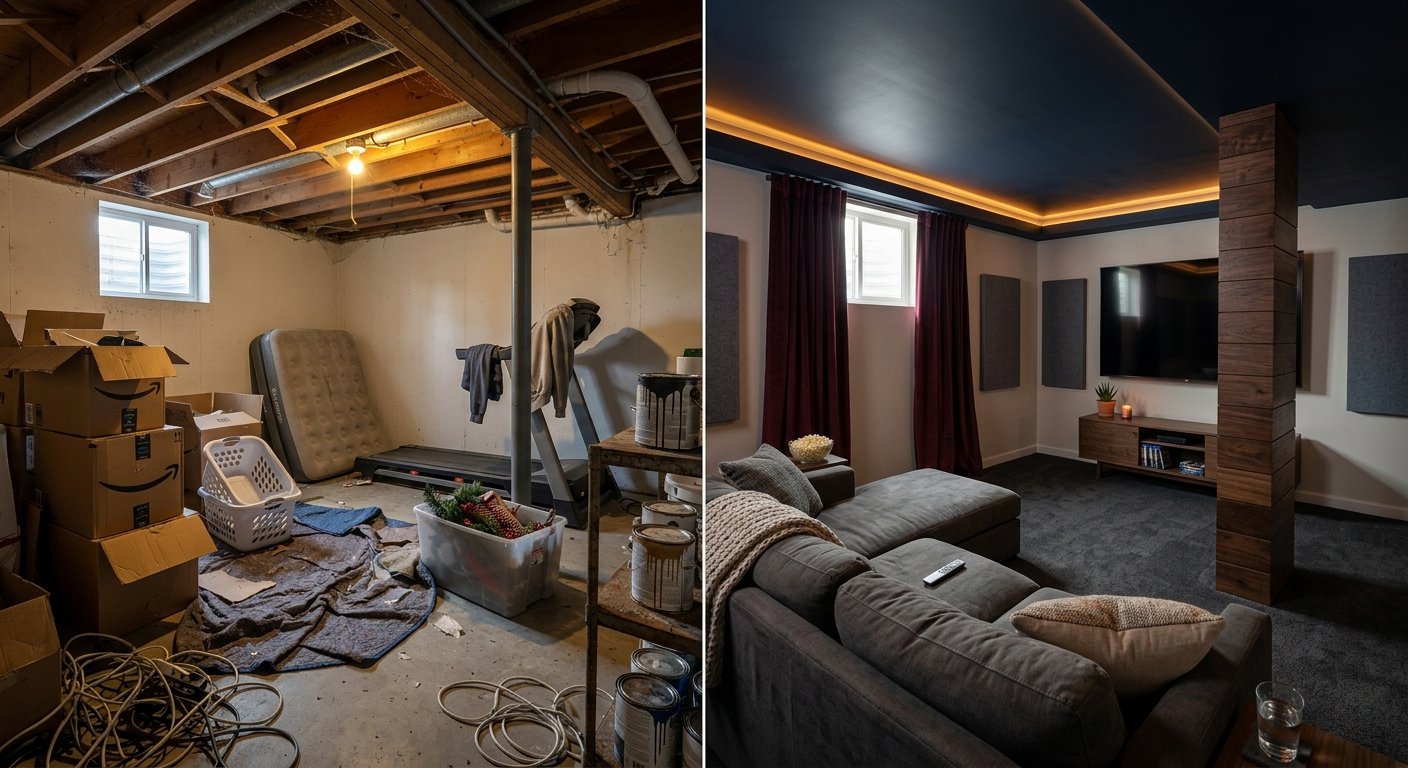
Where structural and mechanical elements can't be fully concealed, some homeowners choose to leave them exposed and paint everything (joists, pipes, ducts) a uniform dark color. The before and after below shows how dramatic that choice can look in practice.
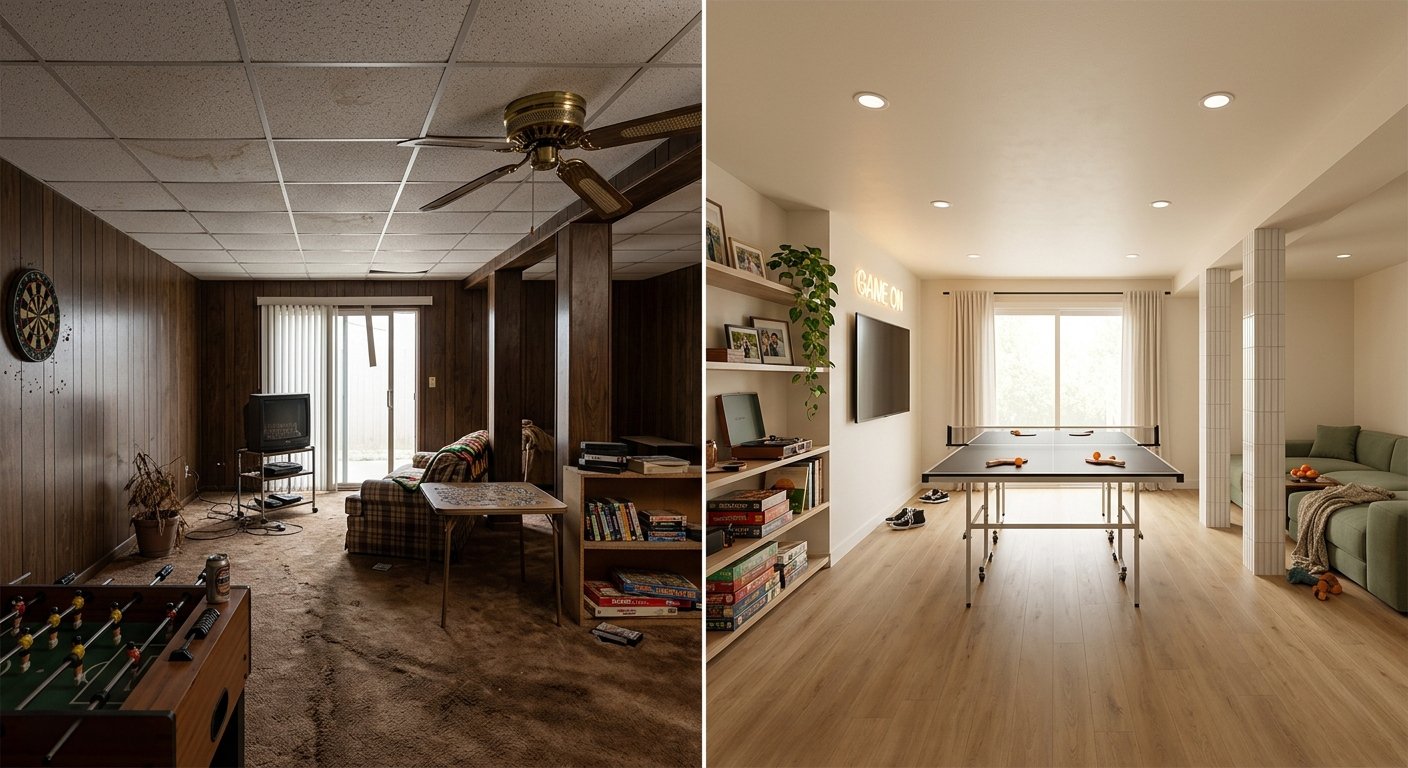
Ceiling color is an underrated decision in a low-ceiling basement. When you paint the ceiling the same color as the walls or a slightly lighter shade, the visual boundary between wall and ceiling dissolves and the room feels more continuous and spacious.
A dark ceiling can also work beautifully when done intentionally. By painting the ceiling a deep, moody color and keeping walls lighter, you create a cocooning effect that makes the low ceiling feel deliberate rather than like a limitation. The before and after here is one of the clearest examples of that in the set.
In a low-ceiling room, the wrong fixture is physically in your way. Flush-mount or recessed lighting keeps the ceiling plane clean and prevents the visual intrusion of hanging pendants or chandeliers. Recessed cans give you flexibility to layer light across the room without eating into your headroom.
Wall sconces, floor lamps, and LED strip lighting tucked into soffits or under shelving all add depth and warmth without touching the ceiling at all.
In a room where you can't go up, you go to the walls. Built-ins that reach the ceiling do two things at once: they give you storage without eating floor space, and the vertical lines make the room feel taller than it is.
Custom built-ins also do something freestanding furniture can't: they make a room feel intentional. The before and after in the home study renovation shows exactly that. A low-ceiling basement that went from cluttered overflow space to a room worth spending time in, largely because of the built-ins.
.jpeg?width=1408&height=768&name=Low-Ceiling-Room-Before_After%20(1).jpeg)
Flooring choices have a bigger effect on how a low-ceiling basement reads than most people expect. Large-format tiles or wide plank hardwood create fewer grout lines and seams, which means a less busy visual field at floor level. Consistent flooring throughout, without transitions or contrasting materials between areas, makes the space feel more continuous and pulls the whole renovation together.
A basement with small, inadequate windows will feel like a bunker no matter what you do with the ceiling. Window wells and larger egress windows are where the budget should go before almost anything else, and they're almost always the last thing homeowners think about. Natural light changes the entire calculus of a low-ceiling basement renovation. A room that reads as dim and compressed with a single small window can feel completely livable with two proper ones.
A basement finishing project that covers drywall, flooring, and lighting typically runs $25,000 to $45,000 in most markets. If your project involves relocating ductwork or raising the ceiling height structurally, expect additional cost. Egress windows, required for basement bedrooms in most jurisdictions, are another line item to plan for if your existing windows don't meet code.
A low ceiling attic renovation presents a different set of challenges than a basement project. The ceiling follows the slope of the roof, which means there are typically areas of full height and areas where you can't stand upright at all. The approach that works best leans into the geometry rather than fighting it.
The key to a successful attic conversion is placing the right activities in the right spots. Walking paths, seating, and sleeping areas belong where clearance is greatest, typically at the peak of the roofline. Storage, window seats, and built-ins make excellent use of the sloped lower edges where headroom is limited.
When the furniture fits the geometry, the room feels purposeful rather than awkward. The low ceiling attic renovation before and after below makes that shift as clear as any example could.
[Image placement: Low-Ceiling-Attic-Before_After.jpeg. This before-and-after is one of the most striking in the set: a cluttered, unfinished attic storage space becomes a warm, inviting bedroom where the sloped roofline, exposed beam, and built-in window seat with under-seat storage all work together to make the ceiling geometry feel cozy and deliberate.]
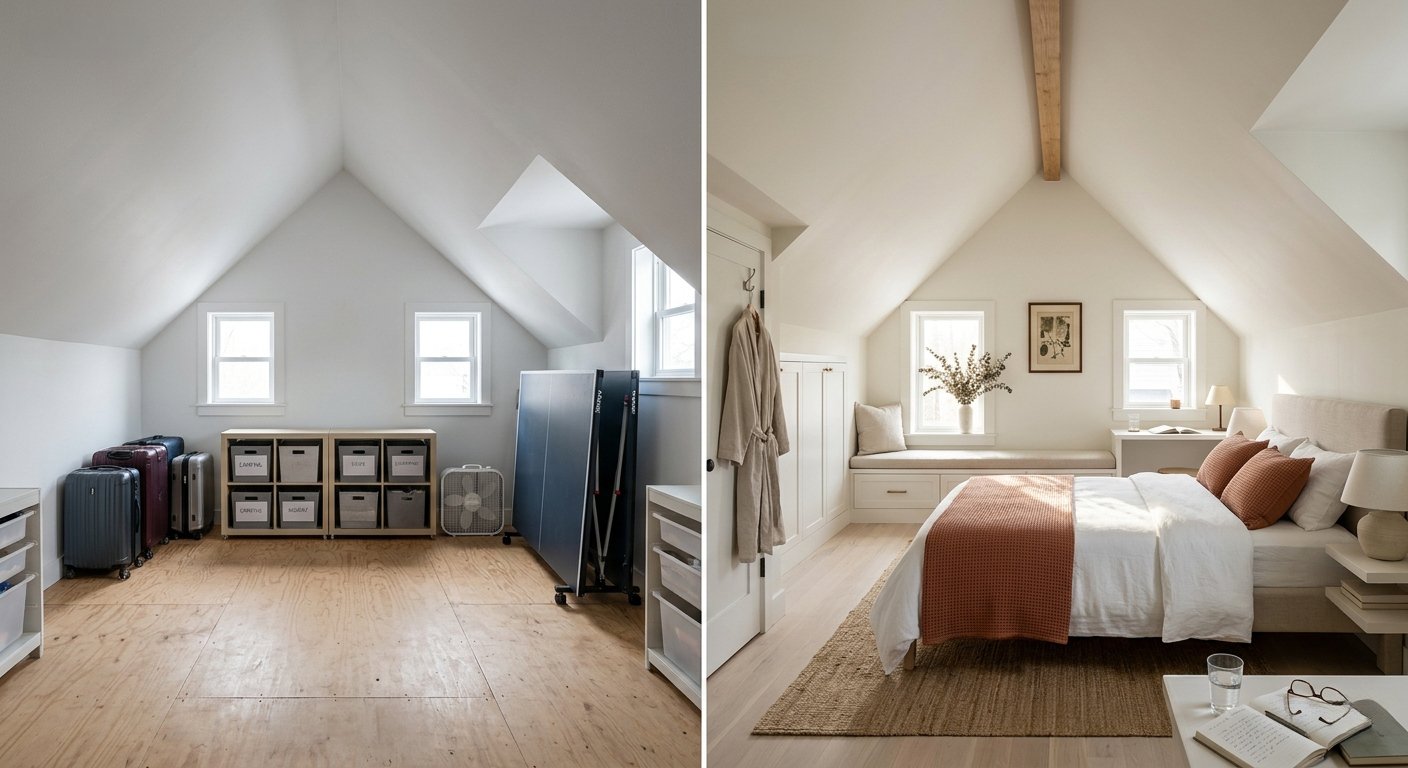
Sloped ceilings aren't a flaw. They're what makes an attic bedroom feel different from any other room in the house. Exposed beams, left natural or painted, add warmth and structure that make the slope feel like a design decision. Light, warm wall colors keep the space from feeling heavy, and natural light from dormers or skylights does significant work in making a low attic feel open.
The before-and-after above shows how finishing an attic with a beam, built-in storage under the eaves, and a window seat in the dormer produces a bedroom that feels genuinely considered rather than a place where the leftover space happens to be.
The same logic applies in attics. A low attic with a single small gable window feels like a storage room with a bed in it. Add a dormer or a pair of skylights and the room becomes somewhere people actually want to sleep. Natural light is doing more work than the ceiling height in almost every successful attic conversion, and it's the investment that tends to get deferred when budgets tighten. It shouldn't be.
An attic conversion with dormers and HVAC work can reach $80,000 to $120,000 or more, depending on your location and structural complexity. Projects that don't require new dormers or significant structural changes cost considerably less. As with basements, egress requirements apply for any attic space intended as a bedroom.
Compare Proposals with Ease

Low ceilings aren't limited to basements and attics. Bonus rooms over garages, older living areas in ranch-style homes, and rooms with dropped soffits all run into the same issues.
Even when you can't change the ceiling height, you can manipulate how the eye moves through a room. Tall, narrow elements like bookshelves that reach the ceiling, floor-to-ceiling drapery, and vertical shiplap or paneling create a sense of upward movement. Lighting can do the same work: sconces, uplights, and cove lighting that cast light upward draw attention toward the ceiling and create a sense of expanded space.
In rooms where the ceiling is low but the bones are otherwise plain, trim work can do a lot to make the renovation feel complete. Crown molding, wainscoting, and paneled walls create horizontal and vertical definition that gives the eye somewhere to land other than the ceiling.
It comes up in almost every low-ceiling renovation conversation, so it's worth addressing directly: physically raising a ceiling is possible, but it's a significant undertaking that most homeowners underestimate.
Removing a drop ceiling to expose the structure above is the affordable version, and it's often worth doing. But genuinely raising the finished ceiling height requires relocating the mechanical systems living inside it: ductwork, wiring, plumbing. In many cases it also involves structural work that needs an engineer. Your HVAC system was also sized for the room as it existed. Add two feet of ceiling height and you've changed the volume of air it needs to condition, which can mean resizing ductwork or adding supplemental equipment.
The costs reflect that complexity. According to Block's guide on raising ceiling height, basement ceiling projects that involve underpinning or rerouting mechanicals typically run $50,000 to $100,000 or more. Vaulting a ceiling on the main floor of a home runs $10,000 to $30,000 for a single room. If load-bearing walls are involved, the beam work alone can add $4,000 to $10,000 before demo, permits, and finishing.
For most homeowners, the design strategies in this article will get them further than the cost and disruption of a structural ceiling project. But if you're already doing a full basement renovation, or if the ceiling height is genuinely making a space unusable, it's a conversation worth having with a contractor before you rule it out.
Getting the most out of a low-ceiling space depends heavily on who's building it. The ceiling finish, the lighting plan, and the built-in details all interact, and a contractor who's done this kind of work before will make better calls during construction than one who hasn't.
Block matches homeowners with up to four vetted contractors suited to their specific project, facilitates competitive bidding with expert-reviewed proposals, and provides support throughout the build. If you're ready to take a low-ceiling space from underused to genuinely livable, Block is a good place to start.
Remodel with confidence through Block

Connect to vetted local contractors
We only work with top-tier, thoroughly vetted contractors

Get expert guidance
Our project planners offer expert advice, scope review, and ongoing support as needed

Enjoy peace of mind throughout your renovation
Secure payment system puts you in control and protects your remodel


Renovate confidently with Block
Easily compare quotes from top quality contractors, and get peace of mind with warranty & price protections.
Ceiling
Cost to Vault a Ceiling: Homeowner Budget Guide
09.23.2026
Ceiling
Ceiling Medallion Installation: Costs and Modern Ideas
09.04.2026
Ceiling
Cathedral Ceiling Ideas - Trim, Molding, Beams & Lighting
08.28.2026
Ceiling
Concrete Ceiling Repair and Replacement
08.22.2026

Ceiling
Wallpaper on Ceiling: Ideas and Cost Ranges
08.01.2026