






Minnesota
Luxury Remodeling in Minneapolis | Smart Home, Sustainability, and Premium Upgrades
04.17.2026

03.02.2026


In This Article
Minneapolis is one of those places where custom homes actually make sense block by block. You’ve got lakes tucked into the city grid, long-established urban neighborhoods, and nearby suburbs that routinely land high on national lists for schools and quality of life. The local design DNA runs deep — think Craftsman bungalows in South Minneapolis, Tudors near the lakes, and mid-century gems scattered through the first-ring suburbs. Whether you’re eyeing a glassy lake home in Orono or a sleek infill in Edina, the broader Twin Cities give you real options in both style and setting. A strong regional economy and steady growth keep Minneapolis near the top of upper Midwest markets for custom construction.
Building a custom home here, though, means dealing with conditions very specific to Minnesota. Winters are long and intense, which means deeper footings, strict frost-line rules, and heavy snow load requirements that all show up in the budget. Land around the most coveted lakes and top-tier school districts has appreciated quickly, and lots near water come with layers of permitting and environmental oversight that only a locally seasoned builder can really navigate.
Turn your renovation vision into reality
Get matched with trusted contractors and start your renovation today!
Find a Contractor
In the Twin Cities, picking the lot is every bit as important as picking the floor plan. A builder who really works this market will look past the listing photos and curb appeal and dig into soil conditions, drainage, and city or watershed rules that control what you’re actually allowed to build and how much it will cost. When a lot is a poor fit, it’s one of the few decisions you truly can’t unwind later.
Key considerations include:
Across the metro, school district lines are often the deciding factor for where families choose to build. Wayzata frequently sits at the top of statewide rankings, followed closely by Edina, Minnetonka, and Orono — districts that line up with many of the busiest custom home pockets. The pull of the Chain of Lakes, Lake Minnetonka, and the Mississippi River bluffs also shapes demand, since these natural features are a big part of what gives Minneapolis its character compared with other metros.
Knowing what a custom home actually costs to build in this market — and how long it takes — prevents the kind of budget surprises that derail projects midstream. Minneapolis has its own pricing structure, shaped by climate, labor, and the types of homes people choose to build here.
For entry-level custom construction in the Minneapolis metro, expect to pay roughly $200–$275 per square foot. Mid-range builds with quality finishes and thoughtful design typically fall between $275–$375 per square foot, while high-end and luxury custom homes — particularly in communities like Edina, Wayzata, and along Lake Minnetonka — start at $400 per square foot and can exceed $600 for architecturally ambitious projects. These figures generally exclude land, permits, and site work, which can add 20–30% to the total.
Labor drives a substantial portion of the cost, typically comprising 30–50% of the total build. Skilled trades in the Twin Cities command premium rates, and while labor availability is more stable than in some overheated markets, the region's short building season concentrates demand into the spring-through-fall months. Materials costs have risen roughly 7% year-over-year through recent quarters, with reinforcing steel and plumbing systems seeing some of the steepest increases. Land values vary enormously — a one-acre suburban lot in Hopkins might run $200,000, while a comparable parcel in Eden Prairie could exceed $500,000 and lakefront property in Orono tops $3 million.
Lot choice shapes your budget in ways that go beyond the sticker price. Infill lots in established neighborhoods like Edina's Country Club District carry premium land costs but offer immediate access to infrastructure and top-rated schools. Lakefront parcels on Lake Minnetonka come with complex permitting, shoreline regulations, and often unusual topography from their origins as seasonal cabin sites. Suburban parcels in developing areas may offer more square footage for the dollar but require longer utility runs and more extensive site preparation.
Foundation work carries outsized weight in Minneapolis because of the region's 42-inch frost-depth requirement. Every home must have footings extending at least three and a half feet below grade, and on the clay-heavy soils common throughout the metro, the engineering needed to prevent frost heave and settlement adds meaningful cost. Framing and structural systems represent the next largest category, with Minneapolis's snow load requirements — typically exceeding 50 pounds per square foot on the ground — demanding heavier roof structures than warmer climates require. Mechanical systems (HVAC, electrical, plumbing) must be designed for extreme cold, including routing plumbing away from exterior walls and specifying heating systems that perform reliably at subzero temperatures. Interior finishes account for 15–30% of the budget depending on your selections, and energy-efficient building envelopes — R-30-plus insulation, high-performance windows, and air sealing — are both code-required and practically essential in a climate where heating bills can define a home's livability.
Every custom home involves choices about where to invest, and certain upgrades carry particularly significant cost implications in Minneapolis:
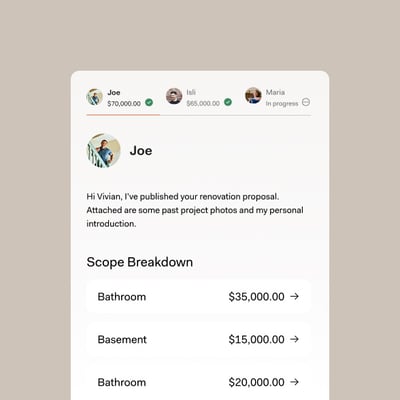
Compare Proposals with Ease
A realistic timeline from the start of construction to move-in ranges from 10 to 16 months for most custom homes in Minneapolis, with larger or more complex builds extending to 18 months or more. The pre-construction phase — design development, material selections, and permitting — typically adds another 3–4 months, putting the total process from first meeting to occupancy at roughly 14–22 months.
The compressed building season is the dominant scheduling factor. Late spring through late fall offers the most productive construction window, and builders who break ground in April or May gain the maximum benefit of favorable weather before winter sets in. Concrete curing, masonry, roofing, and exterior finishing all face constraints once temperatures drop, and freeze-thaw cycles complicate heavy equipment access. Permit approval in the Twin Cities generally takes a minimum of 6–8 weeks, and projects requiring variances or environmental review can take significantly longer. Experienced builders plan backward from winter, scheduling exterior-dependent milestones for the warm months and reserving interior trades for December through March.
Architecture in the Twin Cities has its own rhythm, and most custom homes here take cues from that local language while upgrading comfort, performance, and everyday function.

“Gray vinyl floors and all‑white marble kitchens are turning buyers off. Trends fade faster than resale timelines.”
Building in Minneapolis isn’t just “cold-climate construction.” The combination of temperature swings, soil behavior, and local codes means your builder needs real experience with how homes age here, not just on paper but through many winters.
Subzero stretches are a regular part of life in Minneapolis, and Minnesota code requires footings to sit at least 42 inches below grade to get beneath the frost line. That depth reflects how far the ground can freeze solid and then shift with enough force to crack or lift a foundation. Clay-heavy soils make things worse by holding more moisture, which expands as it freezes. Well-designed custom homes here also keep plumbing runs away from exterior walls and size HVAC systems for sustained deep cold, not just a rare cold front. The extra excavation, insulation, and mechanical capacity do add cost versus milder markets, but skimping is a shortcut to long-term structural and comfort problems that are expensive to fix.
Local snow standards require ground snow load ratings typically above 50 pounds per square foot, far higher than many other parts of the country. Once those loads exceed 70 PSF, a structural engineer has to be involved in roof and deck design. That translates into beefier framing, tighter spacing of joists and rafters, and stronger connections throughout the structure. Roofs need particular attention to how snow drifts, how long it lingers, and where ice dams might form. Generic plans from warmer regions don’t cut it here; they need to be adapted or fully redesigned to meet Minnesota’s structural expectations.
Realistically, the exterior-building season around Minneapolis runs from about April through November. Foundations, framing, roofing, siding, and any exterior masonry have to fit into that window, and an early freeze or late start can push the schedule well into the next year. Builders who know the market plan aggressively to get homes dried in — roof on, windows installed, and the shell sealed — before consistent cold settles in. Once that happens, interior trades can keep going through winter in a heated space. That kind of scheduling discipline is usually the difference between a custom home that hits its timeline here and one that drifts months behind.
As soon as you move closer to water around the Minneapolis metro, the rulebook gets thicker. Lake Minnetonka alone spans multiple cities and is treated as a protected water body with its own standards layered on top of local ordinances. Shoreline setbacks, caps on impervious surface, stormwater rules, and wetland buffers can all trim down the size and shape of what you’re allowed to build and can stretch permitting by months. Any variance involves public hearings and no guaranteed outcome, and environmental review may highlight issues like rare habitat or steep bluffs that further tighten the design. Builders who routinely work on lakefront lots know which reviewers to engage early, which reports to have ready, and how to design a custom home that fits within those constraints from the outset.
Choosing a custom builder in this market shapes not just your budget, but everyday life for the next year or two. Beyond glossy photos and bid numbers, the conversations you have at the start will tell you how they’ll handle real-world conditions in your part of town.
Block connects you with up to three vetted contractors who submit tailored proposals for your project, so you can compare qualified Minneapolis-area builders side by side. Every contractor in Block’s network passes background checks, insurance verification, and reference screening before they ever see your plans. Instead of spending weeks calling around the metro and chasing bids, you get curated matches aligned with your project scope, timeline, and budget.
Block Protections are designed to keep the financial side of your build under control. Expert-reviewed proposals aim to limit surprises and reduce the change orders that often throw custom home budgets off course, so the numbers you see more closely reflect what the project will actually cost. Payments are tied to progress-based milestones and released as work is completed, giving you visibility and control through Block’s dashboard from the first footing to your final walkthrough.
Remodel with confidence through Block

Connect to vetted local contractors
We only work with top-tier, thoroughly vetted contractors

Get expert guidance
Our project planners offer expert advice, scope review, and ongoing support as needed
Enjoy peace of mind throughout your renovation
Secure payment system puts you in control and protects your remodel

Renovate confidently with Block
Easily compare quotes from top quality contractors, and get peace of mind with warranty & price protections.
Minnesota
Luxury Remodeling in Minneapolis | Smart Home, Sustainability, and Premium Upgrades
04.17.2026
Minnesota
Minneapolis Attic Renovations: Design & Practicalities
04.16.2026
Minnesota
Home Renovation ROI in Minneapolis: Projects That Pay Off for Sellers
04.10.2026

Minnesota
Bathroom Remodel in Eden Prairie, MN, Costs & Tips
03.12.2026

Minnesota
Eden Prairie Basement Renovation Costs, Options & Tips
03.11.2026