





Arizona
Phoenix Home Additions—Costs, HOA Rules, and What to Expect
04.16.2026
04.10.2026


In This Article
Phoenix homeowners have real advantages when it comes to renovation: a strong contractor market, year-round project accessibility, and a housing stock that runs from mid-century ranch homes to recent builds. But those same factors can breed overconfidence. The Valley's reputation for affordability makes it easy to underestimate what a renovation actually costs, and the pressure to move fast in a competitive market leads to the kind of shortcuts that end up far more expensive than the time they saved.
Affordable remodeling in Phoenix isn't about choosing the cheapest materials or cutting corners. It's about being deliberate—knowing which decisions protect your budget and which ones quietly blow it up, and building a plan around that knowledge from day one.
Design a Home That’s Uniquely Yours
Block can help you achieve your renovation goals and bring your dream remodel to life with price assurance and expert support.
Get Started
A few factors specific to the Valley shape what renovations cost and what materials hold up. Before you settle on a scope or a budget, keep these in mind:
Not sure how to begin your renovation?
Get free, expert guidance from a dedicated Block Project Planner who can help you navigate proposals, timelines, contractor selection, and more.
Book A Free Consultation
One of the most common and costly mistakes Phoenix homeowners make is approaching contractors before they've clearly defined what they want. Vague scopes produce vague bids, and vague bids almost always lead to change orders—adjustments to the agreed scope after work has begun that can add 10–20% or more to a project's final cost.
Before you contact a single contractor, build out your scope in as much detail as possible. What exactly are you replacing? Where does existing plumbing stay, and where does it move? Are you refinishing or replacing cabinets? Detailed answers mean comparable proposals, and your contingency budget can go toward genuine surprises rather than things you could have decided in advance.
In Phoenix's ranch-style homes and open floorplans, it's tempting to reconfigure layouts in ways that require moving plumbing or electrical runs. But those relocations add cost fast—a moved sink can add thousands to a kitchen remodel, and new subpanel compounds from there.
Layout changes can be worth it. They just need a clear justification. If keeping the plumbing in place means your kitchen will always feel awkward to cook in, that's a real quality-of-life consideration worth pricing out honestly. But if the move is purely cosmetic, the math rarely works in your favor.
Renovation inspiration is everywhere, and it's easy to fall in love with a material before understanding what it actually demands. In Phoenix, that gap between a material's appearance and its real-world performance can be costly. A few examples:
None of these are wrong choices—but choosing them without understanding their maintenance requirements in this climate can turn an "affordable" option into a recurring expense. Ask your contractor how each material performs in Phoenix specifically before committing.

“Clear drawings protect budgets. The more detail up front, the fewer surprises later.”
This is the mistake that turns a manageable project into a financial crisis. A contingency isn't pessimism—it's accurate budgeting. For Phoenix homes built before 1990, setting aside 15–20% of your total project budget for unexpected discoveries isn't conservative; it's realistic. Behind older walls you might find outdated wiring, deteriorated insulation, water intrusion from a leaky AC condensate line, or pest damage that wasn't visible from the surface.
Think of your contingency as money you hope to keep, not money you plan to spend. If the project goes smoothly, it's a pleasant outcome. If surprises show up, you're not scrambling to cover them mid-construction.
One real advantage of renovating in the Valley is year-round accessibility. Unlike climates where exterior work pauses for winter, Phoenix contractors can work outdoors and in unconditioned spaces through most of the year—peak summer being the obvious exception. Scheduling work in unconditioned spaces for fall through spring keeps crews productive and avoids the slowdown that comes with extreme heat.
The same logic applies to procurement. Starting material purchasing in fall, when contractor demand eases, often means better pricing and shorter lead times on popular finish materials.
In a mid-century Phoenix ranch, the temptation is to put your budget into the kitchen aesthetic—new cabinet faces, updated hardware, a fresh backsplash—while deferring the aging water heater or original ductwork. The problem: deferred system work tends to resurface as emergency repairs, and emergency costs always hit harder than planned ones.
Before finalizing your scope, get your HVAC, plumbing, and electrical assessed by a licensed professional. If anything is near the end of life, build it in now. A $1,500 water heater replacement planned for is far less disruptive than the same replacement forced mid-project.
Some of the most cost-effective affordable renovations in Phoenix homes improve a space without touching its bones. Replacing original single-pane windows with energy-efficient double-pane units modernizes a home's appearance and cuts cooling costs—and in Phoenix's climate, the payback on that upgrade is faster than in most other markets.
Refinishing or repainting kitchen cabinets rather than replacing them can produce a dramatic result for a fraction of the cost. Swapping outdated hardware and refreshing grout lines are moves that punch well above their price.
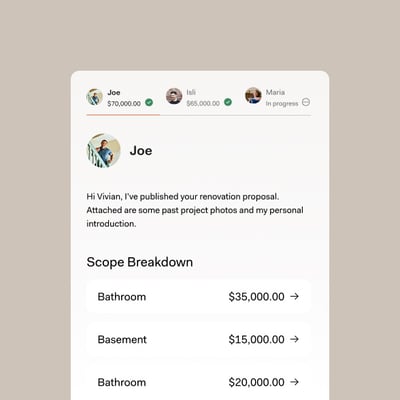
In Phoenix's active contractor market, the spread between the highest and lowest bids on the same project can be significant. But the lowest number isn't automatically the best deal—what matters is which bid most thoroughly covers your actual scope. Compare proposals line by line. Pay as much attention to what's missing as what's included. A bid that excludes permits, debris removal, or specific materials isn't a bargain; it's a surprise waiting to happen.
Compare Proposals with Ease
Not all renovations return equal value in the Phoenix market. A few categories consistently show strong results for local homeowners:
One of the hardest parts of planning an affordable remodel in Phoenix is getting a realistic number before you've spoken to a single contractor. Renovation budgets in the Valley vary significantly by neighborhood, home age, and material choices—a figure that sounds reasonable in one zip code can be well off the mark in another.
Block's free Renovation Studio lets you visualize your space, test different materials and layouts, and see real-time cost estimates based on what Phoenix homeowners are actually paying. You can work through trade-off decisions before anyone sets foot in your home—what happens to the budget if you keep the existing tile and just regrout? What does upgrading to quartz countertops actually add?—and walk into your first contractor conversation with a grounded number rather than a guess.
Even better, Block Renovation lets you view actual data from real-world kitchen renovations in nearby areas like Chandler, Gilbert, Goodyear, and Phoenix, itself.
Phoenix has no shortage of contractors, but that abundance can make finding the right one harder, not easier. A large market means a wide range of quality, and without a reliable way to vet candidates, homeowners often default to choosing on price alone—which, as noted above, is one of the more dependable paths to budget overruns.
Block Renovation connects Phoenix homeowners with vetted, licensed, and insured contractors matched specifically to their project type and scope. Every contractor in Block's network has passed license verification, virtual site visits, and workmanship review. Block's project planners help you compare proposals side by side, flag gaps before they turn into change orders, and keep you oriented at each stage of the process.
Remodel with confidence through Block

Connect to vetted local contractors
We only work with top-tier, thoroughly vetted contractors

Get expert guidance
Our project planners offer expert advice, scope review, and ongoing support as needed

Enjoy peace of mind throughout your renovation
Secure payment system puts you in control and protects your remodel


Renovate confidently with Block
Easily compare quotes from top quality contractors, and get peace of mind with warranty & price protections.
Arizona
Phoenix Home Additions—Costs, HOA Rules, and What to Expect
04.16.2026

Outdoor Spaces
Phoenix Deck and Patio Ideas | Shade, Materials, and Desert Design
04.14.2026

Commercial
Commercial Restaurant Remodeling in Phoenix | Block Renovation
04.13.2026

Arizona
Phoenix Condo and Apartment Renovations: Making a Sunbelt Unit Feel Like Home
04.13.2026
Arizona
Affordable Remodeling in Phoenix, AZ | Smart Renovation Ideas That Save You Money
04.10.2026