



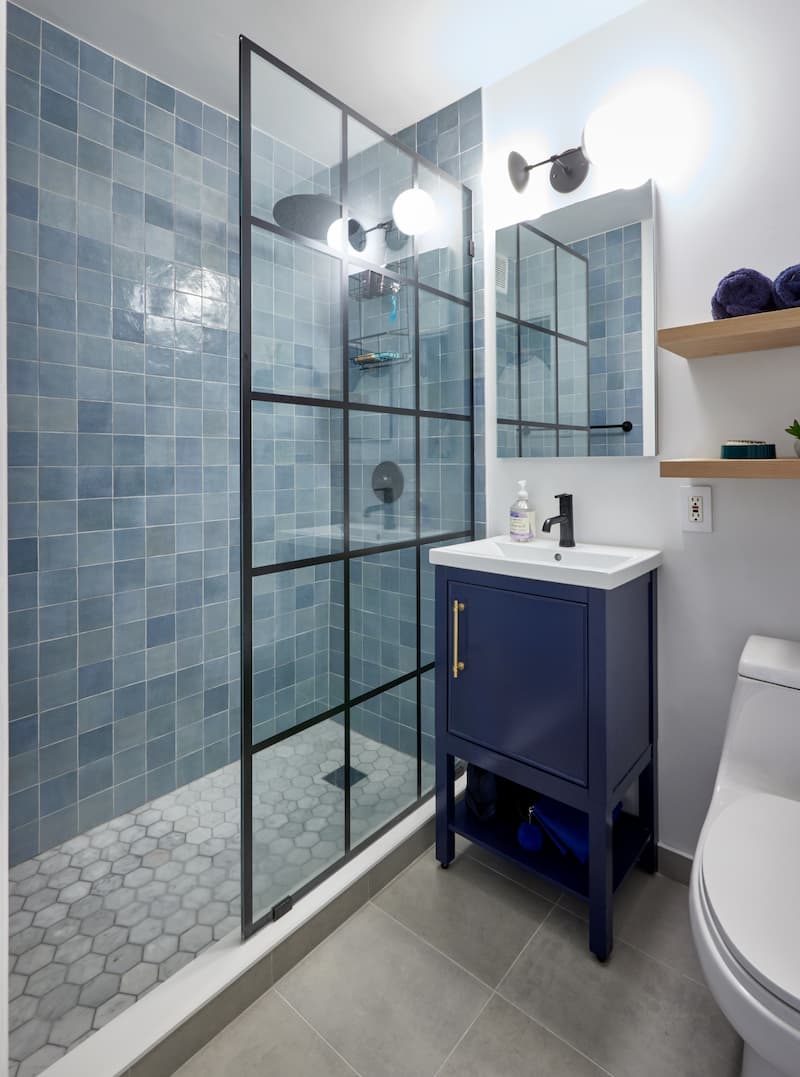

Bathroom
Converting a Laundry Room Into a Bathroom: Costs & Layouts
10.08.2026
03.27.2026


In This Article
Rustic farmhouse style carries a real risk—push it too far and a bathroom can start to feel more like a theme park than a place you'd actually want to spend time. Weathered wood on every surface, mason jar accessories covering the counter, shiplap on all four walls: the aesthetic quickly tips from charming into contrived. But executed with restraint and a clear vision, rustic farmhouse can feel genuinely warm, personal, and lived-in—the kind of bathroom that looks like it came together naturally rather than all at once. The key is knowing which ideas to lean into and which ones to leave behind.
.png?width=960&height=1200&name=u5821215421_A_full_view_of_a_rustic_farmhouse_bathroom_with_w_84e3c793-f73f-4b8c-ad61-f869e0ce3d21_2%20(1).png)
Rustic farmhouse style doesn't have to mean white walls and bright open spaces. A deeply saturated palette—near-black walls, charcoal shiplap, or richly stained wood paneling—can actually make the farmhouse elements in a bathroom feel more grounded and intentional. The key is pairing dark walls with warm-toned natural materials like terracotta tile, raw wood, or woven textures, so the rustic farmhouse bathroom feels cozy rather than cold. When you get this balance right, even a deep, dramatic bathroom can feel genuinely livable. For more ideas on how to remodel with dark colors, check out our guide to designing around black bathroom floors.
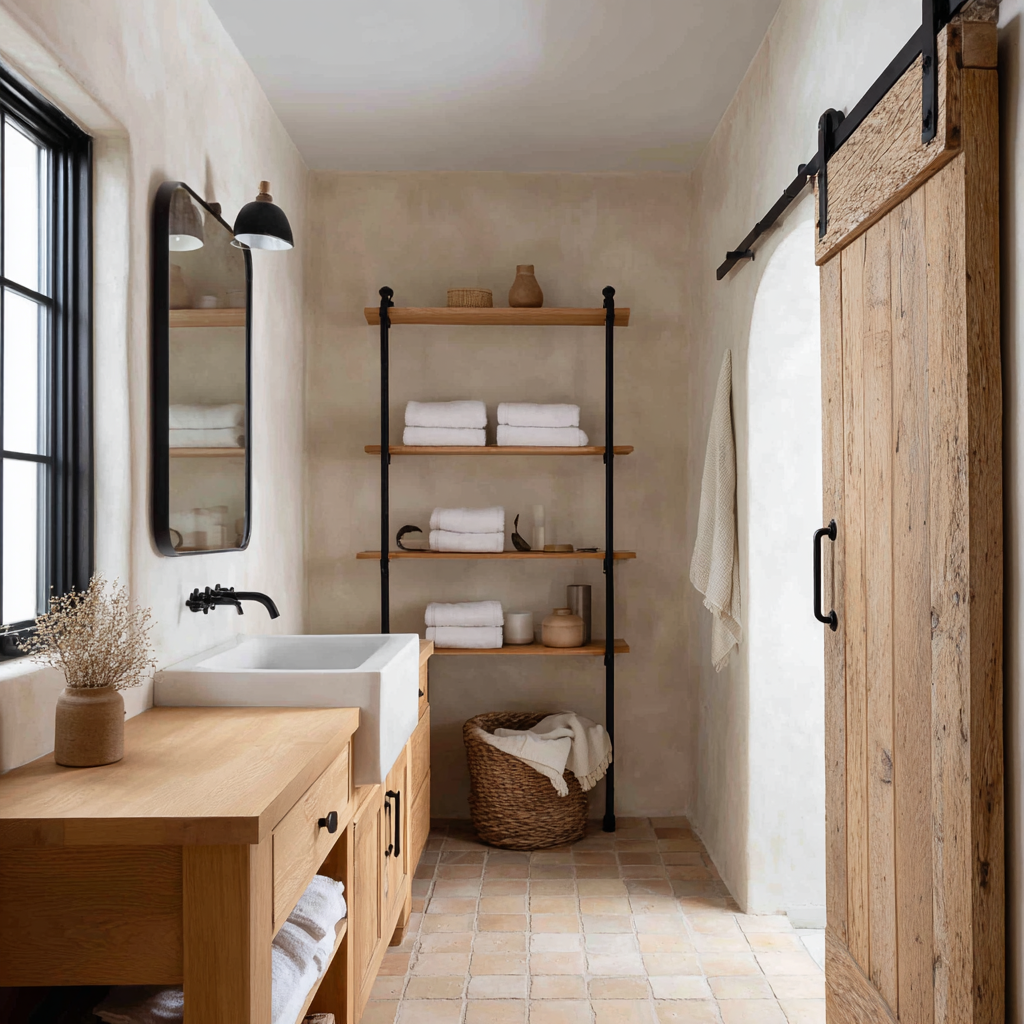
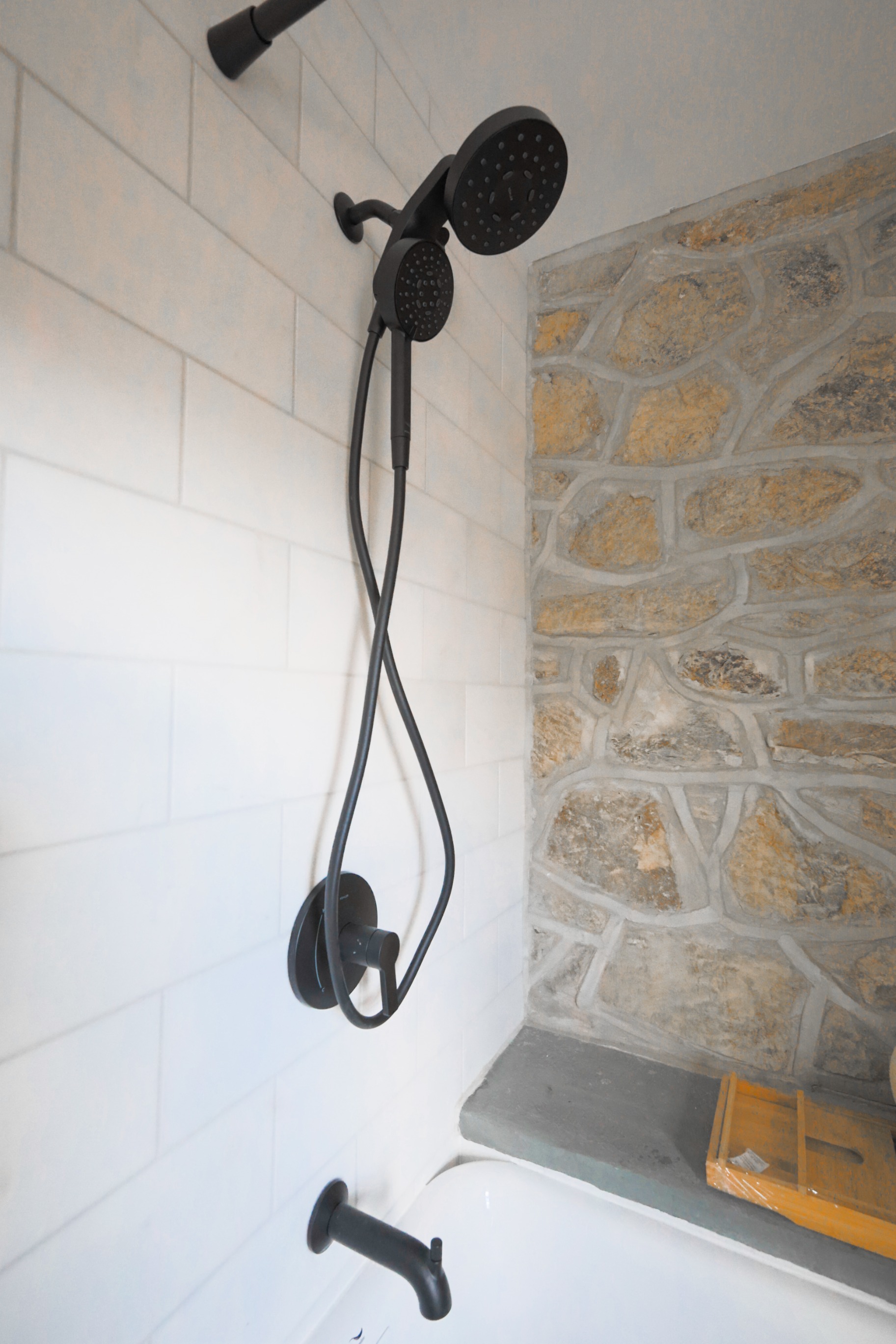
One of the most effective ways to give a rustic farmhouse bathroom a sense of visual cohesion is to choose a single hardware finish and commit to it across every element in the room. Matte black is particularly well-suited to this—it reads as utilitarian and unfussy, which fits naturally with the farmhouse sensibility. Run it through your shelving brackets, mirror frame, faucet, door hardware, and light fixture, and the room will feel designed without feeling overdone. The barn door and open bathroom shelving in this space show how that consistency creates a calm, collected result.
A live edge wood slab as a vanity counter is one of the highest-impact moves you can make when you renovate a farmhouse bathroom—the raw, organic edge of the wood does more for the character of a space than almost any other single material choice. But it works best when the rest of the room steps back and lets it breathe: simple white vessel sink, wall-mount faucet, plain walls, unadorned mirror.
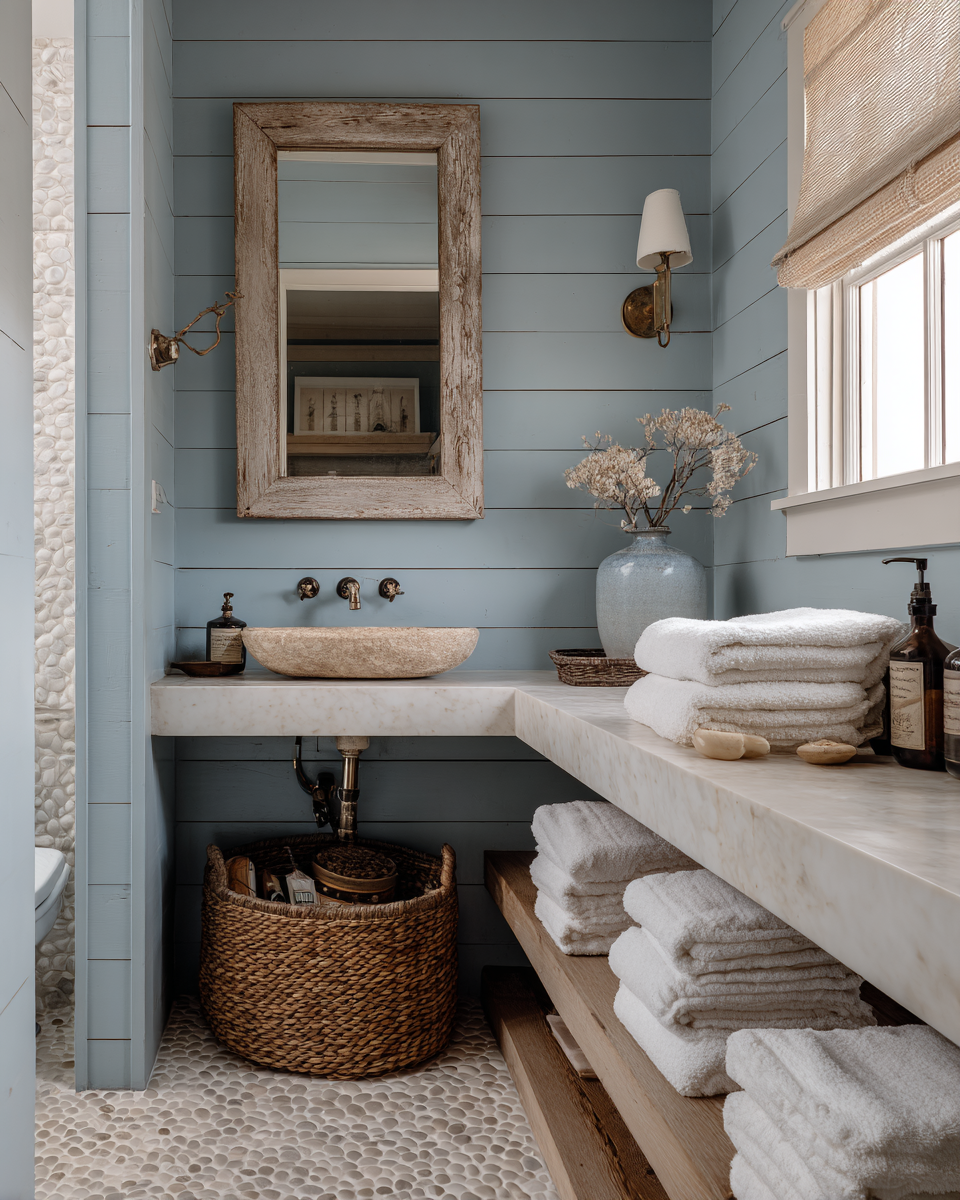
In a rustic farmhouse bathroom, painted shiplap does double duty—it brings both color and texture to the walls simultaneously, which means you don't need to layer in additional materials to make the space feel rich. A dusty blue, warm ochre, or soft sage on horizontal shiplap reads completely differently than the same color on a flat drywall surface. The texture breaks up the light and gives the color more depth, making even a modest paint choice feel considered and intentional. Homeowners who want to renovate on a tighter budget will find this one of the most cost-effective ways to make a meaningful change.
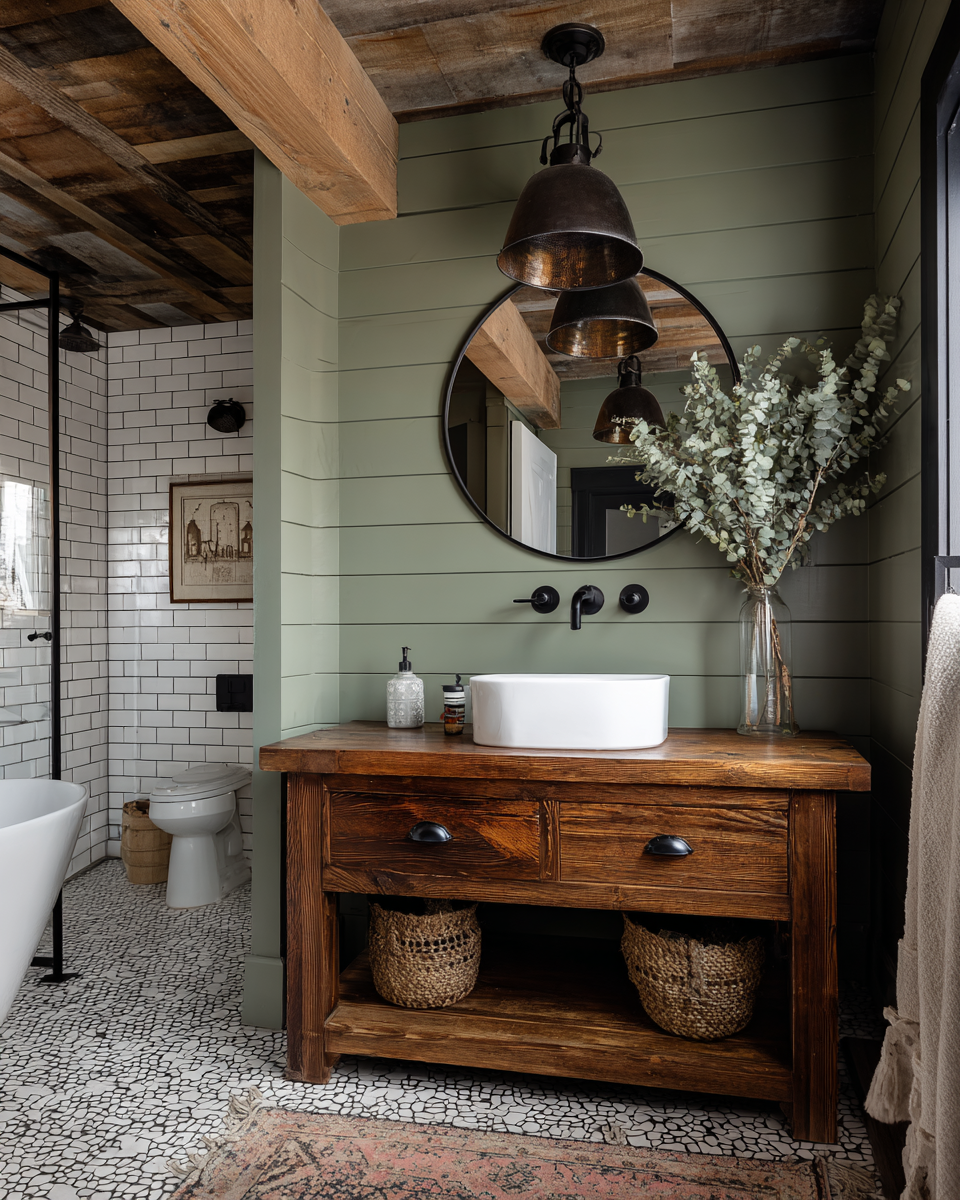
The mirror is one of the most overlooked opportunities in a bathroom remodel, and in a farmhouse space it can do a significant amount of the design work on its own. A weathered driftwood frame, a round mirror in blackened metal, a woven rattan surround, or a simple oval in aged brass each communicate a distinct point of view without requiring much else around them.
Choose a frame material that connects to at least one other element already in the room—the vanity wood, the fixture finish, or the floor texture—and the mirror will feel like it belongs rather than like it was added as an afterthought.
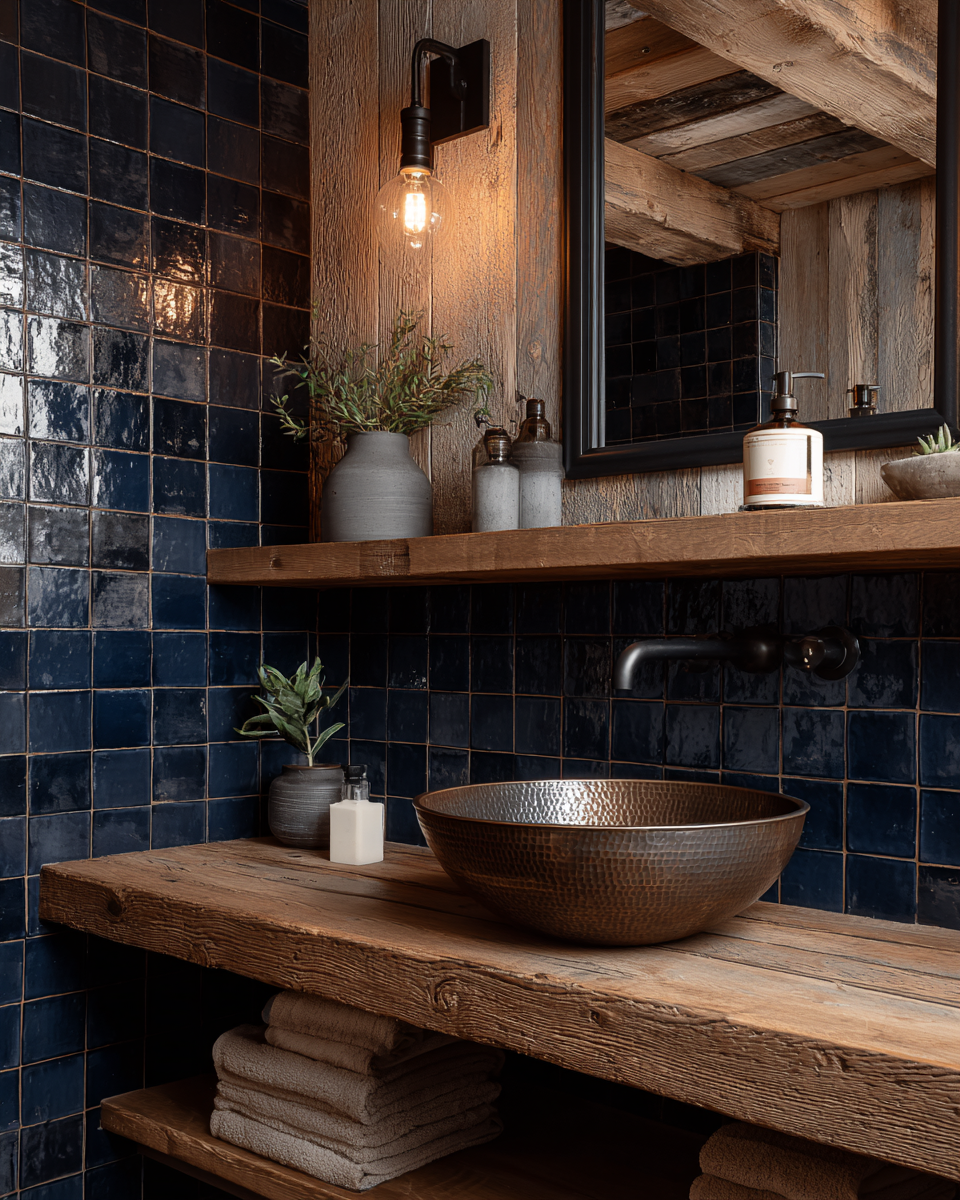
Most bathroom remodels stop at the walls, but the ceiling is an opportunity that farmhouse style is uniquely equipped to take advantage of. Decorative wood beams, reclaimed plank ceilings, painted shiplap overhead, or even an original pressed tin ceiling can transform a rustic farmhouse bathroom from a purely functional space into one that feels architecturally interesting. If your renovation allows for it, extending your material palette upward—even just with paint—signals that the design was thought through completely rather than stopping at eye level.
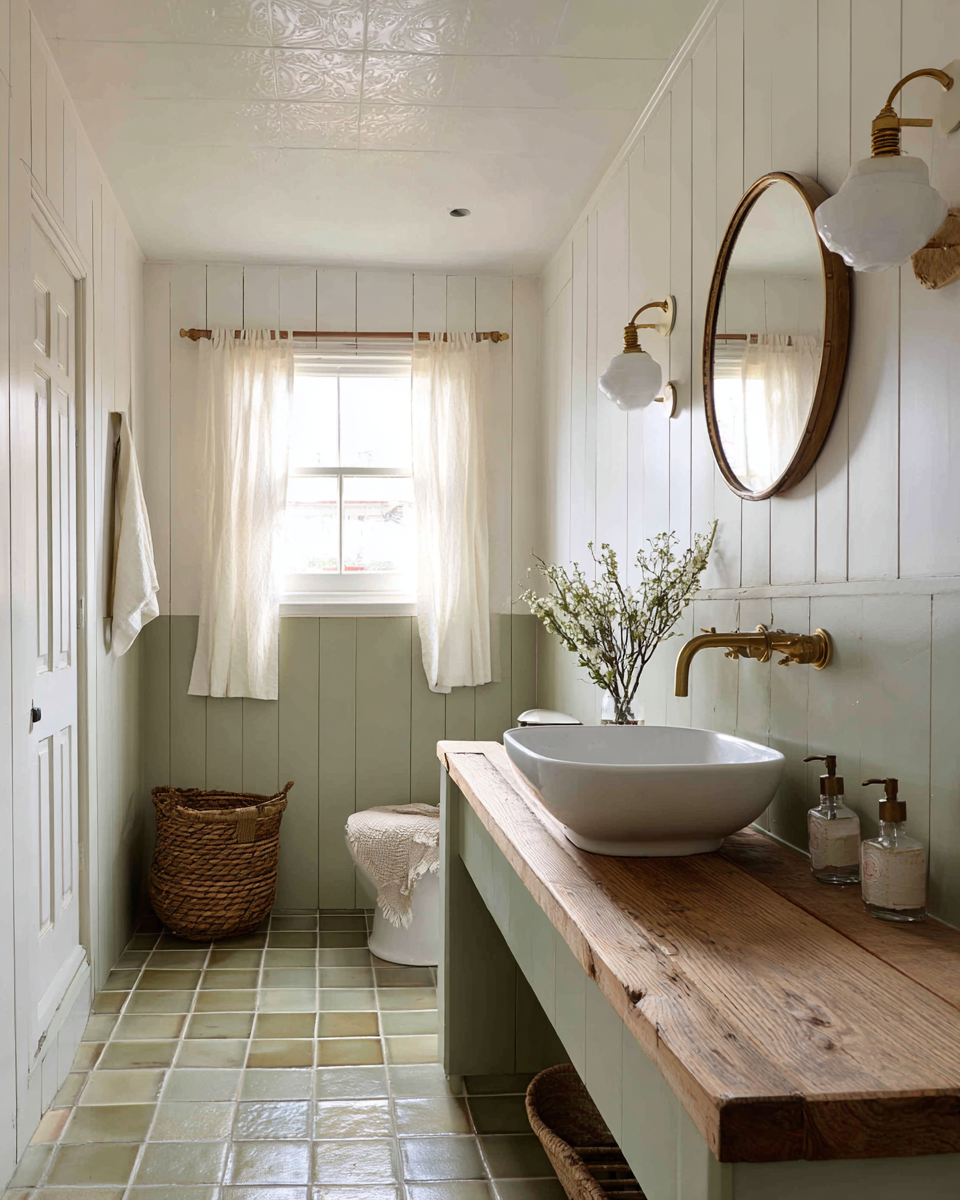
Deeply colored, high-gloss tile—navy, forest green, burgundy, or charcoal—brings drama and sophistication to a rustic farmhouse bathroom that might otherwise skew too predictable. The key to keeping it from feeling heavy is pairing that tile with something raw and unfinished: a reclaimed wood floating shelf, a live edge vanity, or rough-sawn brackets. The contrast between the refined surface of glazed tile and the honesty of aged wood is where the rustic farmhouse sensibility lives—neither element overwhelms the other.
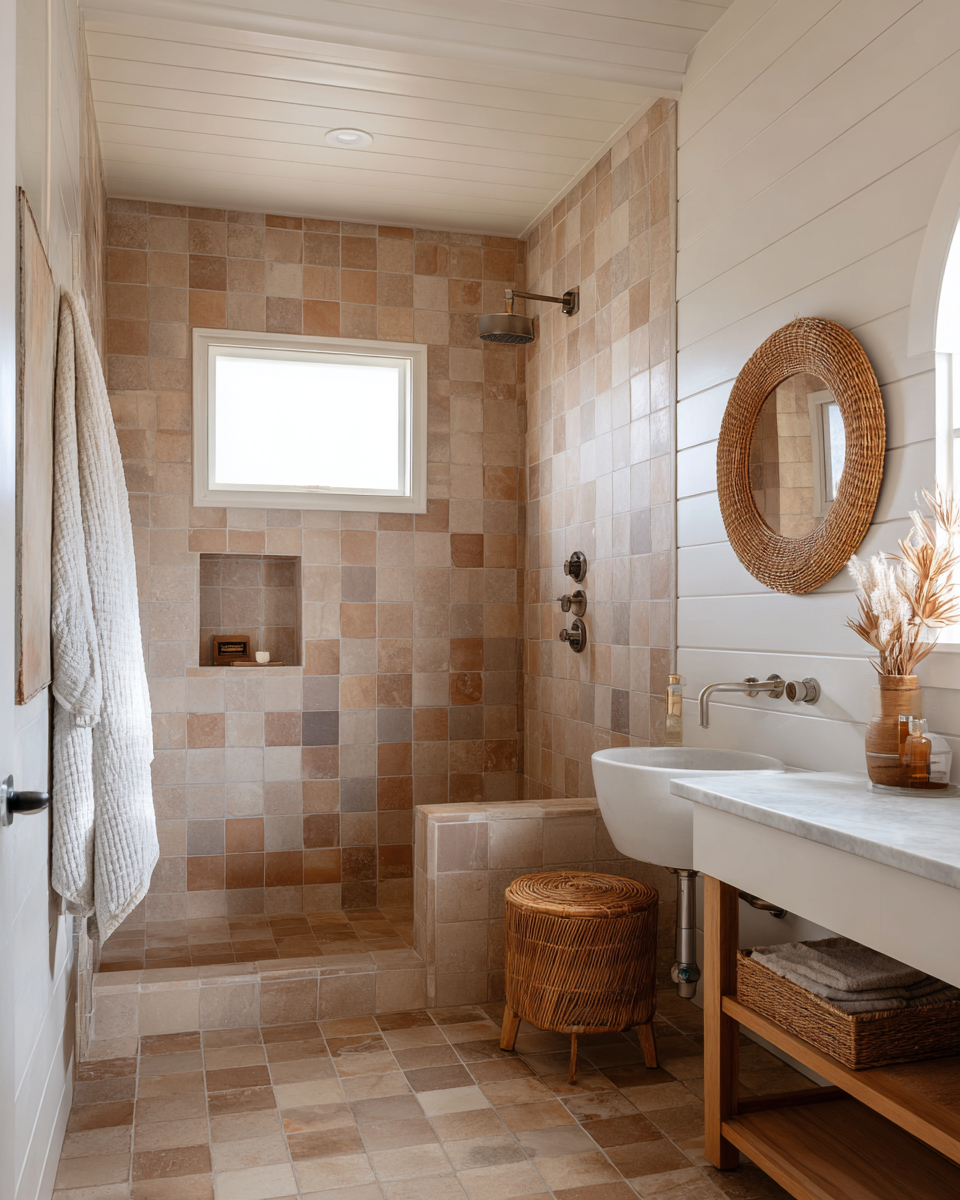
Dividing a rustic farmhouse bathroom wall into two distinct zones—a painted or paneled lower half and a lighter upper half—is a simple technique that adds architectural interest without requiring major structural work. It also gives you a natural opportunity to introduce two complementary tones or textures into the same space, which is particularly effective in farmhouse bathrooms where layering natural materials is part of the appeal.
Keep the transition line at roughly chair-rail height, and make sure the two halves share at least one color reference so the room reads as unified rather than divided. For more tips, read our guide to two-tone bathroom walls.
One of the most characterful moves in a rustic farmhouse bathroom is sourcing a piece of furniture—an old dresser, a workbench, a carpenter's table—and converting it into a vanity rather than purchasing something purpose-built. The imperfections, the patina, the proportions that were never meant for a bathroom: these are exactly what make the space feel genuinely collected rather than assembled from a showroom. Work with your contractor to ensure the plumbing rough-in accommodates the piece you have in mind, and waterproof the top surface appropriately for daily use.
Choosing materials for a rustic farmhouse bathroom isn't just about aesthetics—it's about finding options that hold up to moisture, steam, and daily use without losing their character over time. When you renovate a bathroom in this style, material selection is one of the most consequential decisions you'll make. Here are the materials worth considering:
Perfect Every Detail of Your Bathroom
A rustic farmhouse bathroom done well requires the kind of careful planning and skilled execution that makes the difference between a space that feels genuinely considered and one that feels like a collection of trend-driven decisions. The right contractor doesn't just build what you describe — they help you think through the details that matter, flag the choices that could cause problems down the line, and bring a level of craft that shows in the finished result.
Block Renovation connects homeowners with thoroughly vetted, licensed, and insured contractors who are matched specifically to your project type, style, and location. Every contractor in the Block network passes through a rigorous process that includes background checks, license verification, and workmanship reviews — so you know the person working in your home has genuinely earned their place there.
Remodel with confidence through Block

Connect to vetted local contractors
We only work with top-tier, thoroughly vetted contractors

Get expert guidance
Our project planners offer expert advice, scope review, and ongoing support as needed
Enjoy peace of mind throughout your renovation
Secure payment system puts you in control and protects your remodel

Renovate confidently with Block
Easily compare quotes from top quality contractors, and get peace of mind with warranty & price protections.
Bathroom
Converting a Laundry Room Into a Bathroom: Costs & Layouts
10.08.2026
Bathroom
Converting a Bedroom Into a Bathroom: Costs and Layouts
10.05.2026
Bathroom
Bathroom Mirror Trends to Inspire Your Ideas
09.23.2026
Bathroom
Brooklyn Bathroom Renovation Costs: What Shapes the Budget
09.19.2026
Bathroom
York City Bathroom Remodel: Costs, Planning & Design
09.17.2026