


Custom Home Building in Washington, DC: A Complete Guide for Future Homeowners

Budget your upcoming Washington custom home build with help from Block
How we get your estimate
Fill out the form above to either connect with contractors for a personalized quote or estimate your costs with Block's Renovation Studio.
Gray two-story gabled home with a white garage and driveway.

In This Article

    Building a custom home in Washington, DC is unlike building almost anywhere else. You are working in a compact city where federal agencies, embassies, think tanks, and Fortune 500 offices share streets with historic rowhouses and tightly controlled residential neighborhoods. The same historic significance that draws people to Georgetown, Capitol Hill, and Dupont Circle also means strict preservation rules, complex permitting, and very limited land for ground-up construction.

    Most projects here happen on narrow infill lots or as teardowns in established neighborhoods, not on open fields. You are designing around clay soils, shared party walls, and neighbors just a few feet away, while your architect and home builder coordinate with the DC Department of Buildings, the Historic Preservation Review Board, and, in some areas, federal design review bodies. When you approach your Washington custom home with that context in mind—starting with the right site and the right design team—you set yourself up for a smoother, more predictable build.

    Design a Home That’s Uniquely Yours

    Block can help you achieve your renovation goals and bring your dream remodel to life with price assurance and expert support.

    Get Started

    Choosing the right Washington site for your custom home with your home builder

    Finding the right lot is often the hardest part of a Washington custom home. Inventory is scarce, especially in established neighborhoods like Georgetown, Cleveland Park, or Capitol Hill. Most of what you will see are existing structures with teardown potential or challenging infill lots rather than clean, vacant land. This is where having both your architect and a Washington home builder involved early is critical.

    Site evaluation considerations include:

    • Soil quality and site stability: Washington sits atop Piedmont clay soils that present construction challenges due to their poor drainage and moderate expansive characteristics. These heavy clay soils require proper foundation design and waterproofing to prevent moisture infiltration and basement flooding common in the District's climate. Geotechnical investigations reveal bearing capacity and whether bedrock lies at accessible depths, though most DC properties have sufficient clay depth for standard basement construction. Urban lots may have contamination from historical uses requiring environmental assessments, particularly in industrial areas undergoing residential conversion.
    • Utilities access: All developed Washington neighborhoods offer municipal water, sewer, electricity, and natural gas connections through DC Water, Pepco, and Washington Gas, though aging infrastructure in some neighborhoods occasionally requires utility upgrades during construction. Alley access provides valuable utility easements and sometimes garage access in neighborhoods with rear alleys, while through-lot properties lacking alley access face more challenging utility coordination. High-speed internet access varies, with fiber available in many neighborhoods but limited in some areas where buildings rely on cable or DSL service.
    • Zoning and restrictive covenants: Washington enforces zoning regulations through the DC Zoning Commission, with residential zones governing lot coverage, height limits, and setback requirements. Most established neighborhoods fall under Residential-1 or Residential-2 zones with specific requirements regarding building mass and placement. Historic district overlays add preservation requirements superseding zoning in some cases. Properties in planned unit developments face additional covenants beyond standard zoning regulations.
    • Lot slope and drainage: Washington's varied topography includes flat lots in Georgetown and Foggy Bottom near the Potomac River and sloped properties throughout Northwest neighborhoods ascending from the river valley. Lots with significant slopes require tiered foundation systems and careful drainage design preventing erosion and water infiltration during the region's frequent thunderstorms. Proper grading and drainage prove critical given clay soils' poor permeability and the District's substantial rainfall.
    • Proximity to amenities: Metro rail access provides commuting alternatives particularly valuable given Washington's challenging parking and traffic congestion, with properties within walking distance of stations commanding premiums. Access to quality retail along Wisconsin Avenue, Connecticut Avenue, or 14th Street corridors influences daily convenience. Proximity to Rock Creek Park, the National Mall, or waterfront areas affects recreational opportunities.
    • Environmental concerns or hazards: Lead paint and asbestos prove common in older DC structures requiring proper remediation during teardown or renovation projects, adding costs to site preparation. Some industrial areas contain soil contamination requiring environmental cleanup before residential construction. Flood zones exist along the Potomac, Anacostia, and Rock Creek, with properties in floodplains requiring elevation and flood insurance though most residential neighborhoods sit above flood risk.
    • View, orientation, and privacy: Properties with views of monuments, the Capitol, or Potomac River command substantial premiums, with home orientation and window placement critical to capitalizing on these assets. Southern exposures maximize natural light while requiring shade strategies for summer heat. Privacy proves challenging on narrow urban lots, requiring thoughtful design including strategic window placement, fencing, and landscaping creating separation from neighbors in close proximity.

    Washington homeowners prioritize proximity to highly-ranked schools in neighborhoods with strong DC Public Schools attendance zones or access to elite private schools concentrated in Northwest DC. Metro accessibility, walkability to amenities, and neighborhood safety also factor heavily into site selection decisions in the District's urban environment.

    An experienced Washington home builder can quickly flag red flags like difficult access, problematic slopes, or likely utility upgrades, while your architect evaluates how much house you can reasonably and legally fit on the site. Together, they help you understand whether a high-priced Georgetown teardown, a more accessible property in Wesley Heights or Spring Valley, or an emerging neighborhood in Northeast or Southeast DC better aligns with your budget and goals.

    Washington custom home styles and how they fit different neighborhoods

    Once you have a site and an architect–home builder team you trust, style becomes the lever that ties your design to its neighborhood. In Washington, you are rarely starting with a blank slate; you are fitting into a block that already has a strong character, and in many cases, detailed historic guidelines.

    • Contemporary rowhouses with clean lines, large windows, and contextual materials represent Washington's evolution toward modern design within historic fabric. Brick or limestone facades reference traditional materials while simplified details, floor-to-ceiling glazing, and rooftop decks create distinctly contemporary expressions. These designs prove popular in emerging neighborhoods where historic preservation requirements prove less stringent while buyers seek modern aesthetics and functionality.
    • Federal and Georgian Revival homes with brick facades, symmetrical compositions, and classical details remain popular in Georgetown and other historic neighborhoods where design guidelines encourage period-appropriate architecture. Multi-story designs with English basements, formal entries, and traditional proportions create timeless elegance. Modern interpretations incorporate open floor plans and contemporary systems behind historically appropriate facades maintaining neighborhood character.
    • Victorian rowhouses with bay windows, decorative cornices, and varied rooflines suit Capitol Hill, Dupont Circle, and other neighborhoods where 19th-century architectural traditions dominate. Detailed brick work, ornamental elements, and vertical emphasis create visual interest within narrow lot widths. Contemporary versions maintain these forms while incorporating modern spatial arrangements and building systems.
    • Transitional designs blending traditional forms with simplified contemporary details appeal to buyers seeking homes that respect context without feeling dated or overly historicist. Brick or limestone exteriors with quality proportions, generous windows, and understated detailing create elegant compositions. These designs prove popular with buyers seeking timeless architecture that ages gracefully.
    • Rooftop additions and decks maximize limited outdoor space in Washington's dense urban environment, with many custom homes incorporating substantial roof terraces providing city views and outdoor entertaining areas. Proper structural engineering supports these additions while designs often incorporate planters, pergolas, and outdoor kitchens creating functional outdoor rooms.
    • Finished basements with entertainment areas, home offices, and guest suites prove standard in Washington custom homes where land costs make below-grade space valuable. English basements with above-grade windows provide natural light while walk-up access from rear yards creates seamless indoor-outdoor connections despite urban lot constraints.
    • Smart home technology and energy-efficient systems appeal to Washington's educated, environmentally conscious population. Geothermal HVAC systems, solar panels within historic preservation guidelines, and sophisticated home automation provide comfort and efficiency while reducing operating costs in expensive urban real estate.

    Your Washington architect will shape the exterior to satisfy neighbors and review boards, while your home builder helps you understand what different facade materials, cornice details, or roof terraces will mean for cost, staging, and schedule.

    Custom home costs in Washington and how home builders structure budgets

    Understanding local building costs and timeframes helps Washington homeowners establish realistic budgets and avoid surprises during the construction journey. Custom home construction in Washington typically ranges from $300 to $500 per square foot, with luxury builds in Georgetown, Kalorama, or Massachusetts Avenue Heights exceeding $700 per square foot depending on finishes, lot constraints, and historic district requirements.

    Several factors influence where projects fall within this range. Labor costs reflect Washington's premium market as skilled trades command high rates due to sustained demand, stringent District licensing requirements, and cost of living that limits workforce availability. Material costs face transportation expenses reaching the District's urban core, with narrow streets and limited staging areas adding logistical challenges and expenses.

    The prevalence of brick construction, rowhouse infill, and conformance to historic district guidelines affects cost structures compared to suburban markets with fewer constraints.

    Lot selection dramatically impacts total investment. Georgetown properties command premium prices from $2 million to $10 million-plus for teardown opportunities or vacant lots, when rarely available. Northwest DC neighborhoods like Cleveland Park, Wesley Heights, or Spring Valley provide somewhat more accessible entry points but still command prices exceeding most American markets.

    Emerging neighborhoods in Northeast and Southeast DC offer relative value but may lack established amenities and face longer approval timelines as the District encourages development in these areas.

    The largest cost drivers in a Washington custom home

    Foundation systems represent substantial expenses in Washington, consuming 15-20% of total budgets due to the region's clay soils and challenging site access in dense urban neighborhoods. Most DC custom homes utilize full basements providing valuable living space in a city where land costs make every square foot precious.

    Clay soils require proper foundation design and waterproofing to prevent moisture infiltration common in the region's humid subtropical climate with 40 inches of annual rainfall. Narrow urban lots limit equipment access, requiring hand-digging or specialized machinery that increases foundation costs compared to suburban properties.

    Historic preservation compliance and permitting account for 10-18% of project costs as most DC neighborhoods maintain historic district status requiring conformance to detailed design guidelines. Historic Preservation Review Board approval precedes building permits, adding months to timelines and requiring architectural designs respecting context, materials, and proportions of surrounding structures. Properties in locally or federally designated historic districts face even more stringent requirements sometimes necessitating historically accurate replication of period details increasing both design and construction costs.

    Exterior materials and architectural details consume 18-26% of budgets as Washington buyers expect high-quality brick facades, detailed trim work, and architectural elements conforming to historic precedents or contemporary designs that demonstrate sensitivity to neighborhood context. Full brick exteriors prove standard in most DC neighborhoods, with limestone accents, copper roofing elements, and quality windows creating facades that meet Historic Preservation standards while providing modern performance.

    Examples of upgrades that will push your budget higher

    Custom home features that increase construction costs include:

    • Basement finishing with full bathrooms, wine cellars, home theaters, and walk-up or elevator access transforming below-grade spaces into functional living areas
    • Rooftop decks with city views, outdoor kitchens, and fire features capitalizing on limited outdoor space by creating elevated entertainment areas
    • Smart home automation integrating security, climate, lighting, and entertainment throughout urban homes where technology enhances convenience
    • Gourmet kitchens with professional-grade appliances, custom cabinetry, and premium countertop materials serving as centerpieces in homes where entertaining proves central to Washington's social culture
    • Luxury master suites with spa-like bathrooms, custom closets, and private outdoor spaces creating personal retreats within urban settings
    • Elevator systems accommodating multiple stories in narrow rowhouse footprints, particularly valuable for aging-in-place or accessibility
    • Green building features including geothermal HVAC, green roofs, and solar panels reflecting Washington's environmental consciousness and reducing operating costs
    • Secure garage parking in neighborhoods where off-street parking commands premiums and enhances property values substantially

    Strong Washington home builders will walk you line by line through these decisions so you can see how a rooftop deck, full basement build-out, or elevator might shift your per-square-foot costs and total budget.

    Claire Fitzgerald

    “Unexpected costs happen, but good planning minimizes them. Clear designs and a detailed scope before construction help prevent costly changes mid‑project.”

    Loose timelines for custom home builds in Washington

    Custom home construction in Washington typically requires 16-24 months from initial planning to move-in, with Historic Preservation Review Board approval consuming 4-8 months before building permits can even be applied for. Multiple rounds of design revisions responding to board comments prove standard for most projects. Properties in federal historic districts face additional review by the Commission of Fine Arts or National Capital Planning Commission extending timelines further.

    DC Department of Buildings permitting processes typically require 6-12 weeks for plan review once projects clear historic preservation hurdles, though complex designs or properties requiring variances extend approval periods. Material lead times for custom elements including historically appropriate windows, specialty brick, or architectural details require 12-20 weeks advance ordering. The District's limited contractor pool means top builders often book many months in advance, with scheduling becoming as critical as pricing in securing quality construction teams.

    Washington home builders who work here regularly will set these expectations from the beginning and build realistic timelines into their contracts and payment schedules.

    How Washington home builders navigate regulations for your custom home

    One of the biggest differences between building in Washington and building in a typical suburb is the number of agencies looking at your plans. The more your architect and home builder understand the system, the fewer surprises you will face.

    Preservation and review for Washington custom homes

    Historic preservation compliance shapes almost every exterior decision in many neighborhoods. Historic Preservation Review Board approval precedes building permits, adding months to timelines and requiring architectural designs respecting context, materials, and proportions of surrounding structures. Properties in locally or federally designated historic districts face even more stringent requirements sometimes necessitating historically accurate replication of period details increasing both design and construction costs.

    For properties in federal historic districts, the Commission of Fine Arts or National Capital Planning Commission may add another level of review. Experienced Washington custom home builders will already have processes in place to coordinate with your architect on submittals, mock-ups, and revisions so those reviews do not derail your schedule.

    Working with Washington zoning, neighbors, and infrastructure

    Washington enforces zoning regulations through the DC Zoning Commission, with residential zones governing lot coverage, height limits, and setback requirements. Most established neighborhoods fall under Residential-1 or Residential-2 zones with specific requirements regarding building mass and placement. Historic district overlays add preservation requirements superseding zoning in some cases. Properties in planned unit developments face additional covenants beyond standard zoning regulations.

    Questions to ask potential Washington custom home builders include how they handle narrow lots, limited staging areas, and neighbor coordination, as well as their approach to unknown conditions common in urban infill or teardown projects. Their familiarity with party wall conditions, aging infrastructure that might require utility upgrades, and logistics like alley access will directly affect both your construction experience and your final cost.

    Key questions to ask Washington home builders before you sign

    Finding the right builder requires evaluating not just their construction capabilities but also their experience navigating Washington's unique regulatory environment and their communication style throughout lengthy approval processes. Questions to ask potential Washington custom home builders include:

    • What experience do you have working with DC Historic Preservation Review Board and what is your approval success rate? Their familiarity with board members, understanding of design guidelines, and track record for securing approvals indicates whether they can navigate Washington's complex preservation requirements efficiently or will face repeated rejections causing delays.
    • How do you handle the challenges of urban construction including narrow lots, limited staging areas, and neighbor coordination? Understanding their approach to logistics, noise mitigation, and maintaining positive neighbor relations reveals experience with Washington's dense urban environment where construction impacts surrounding properties.
    • What is your approach to managing extended timelines spanning 18-24 months from design through completion? Their communication protocols and project management systems prove critical for maintaining positive relationships through the multi-year journeys common in Washington custom construction requiring patience and realistic expectations.
    • Can you provide references from recent historic district projects? Direct conversations with past clients reveal whether they successfully navigate preservation requirements, maintain budgets through approval processes and construction, and deliver quality results meeting Washington's high standards.
    • How do you establish budgets accounting for unknown conditions common in urban infill or teardown projects? Their approach to contingencies, transparent communication about discovery risks, and track record for managing budgets reveals whether they understand Washington construction's unpredictability or underestimate complexity.

    Resources like Block Renovation can help you narrow your list to Washington home builders who have already been vetted for licensing, insurance, and relevant local experience, so these questions become about fit rather than basic qualification.

    Compare Proposals with Ease
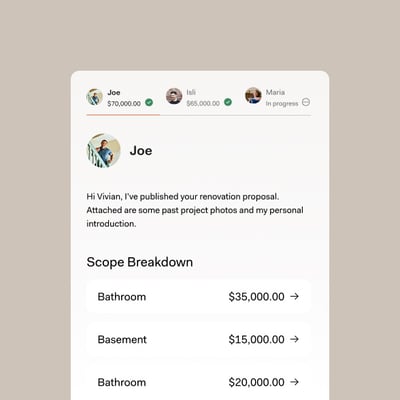
    Easily compare contractor quotes with intuitive layouts, and side-by-side comparisons to help you make the best choice.
    Get a Quote

    Additional articles to help prepare you for the home building process

    Comprehensive resources for planning your Washington custom home project:

    • Buy vs. Building Your Next Home - Detailed Cost Breakdown: This article compares purchasing existing Washington inventory versus custom construction, helping you evaluate factors like location options, historic character, and investment returns in the nation's capital real estate market.
    • New Home Construction Timelines & Important Factors: Understanding realistic construction schedules helps Washington homeowners navigate Historic Preservation Review Board processes, extended permitting timelines, and maintain appropriate expectations for projects commonly taking two years from planning to completion.
    • Your House Rehabbing Checklist, and FAQs—Answered: For Washington homeowners considering renovation of existing properties in historic neighborhoods, this guide addresses budgeting, preservation requirements, and contractor selection for rehabilitation projects respecting historic character.
    • How to Negotiate with a Contractor before your Home Remodel: This resource provides negotiation strategies Washington homeowners can apply when finalizing custom home builder contracts in a premium market where expertise navigating preservation requirements proves essential.
    • Remodeling a Home for Multigenerational Home Living: Washington families planning custom homes that accommodate aging parents or adult children benefit from design strategies providing privacy and accessibility within urban rowhouse footprints common throughout the District.

    Partner with Block to find your ideal Washington home builder

    Block Renovation connects Washington homeowners with thoroughly vetted custom home builders through a curated matching process that evaluates your project scope, budget, and design preferences. Our platform pre-screens builders for proper DC licensing, comprehensive insurance coverage, and demonstrated track records of quality work across Washington's unique construction challenges including historic preservation compliance and urban site constraints. Washington clients receive multiple qualified proposals from builders experienced with Historic Preservation Review Board processes and District building codes.

    Block Protections safeguard your investment by holding project funds in escrow and releasing payments only when construction milestones are verified complete and meet quality standards. This structured payment approach protects homeowners from contractor default while ensuring reputable builders receive fair compensation for completed work. Transparent payment schedules aligned with construction progress create accountability throughout the extended custom home building process common in Washington.

    Remodel with confidence through Block

    Happy contractor doing an interview

    Connect to vetted local contractors

    We only work with top-tier, thoroughly vetted contractors

    Couple planning their renovation around the Block dashboard

    Get expert guidance

    Our project planners offer expert advice, scope review, and ongoing support as needed
    Familty enjoying coffee in their newly renovated modern ktchen

    Enjoy peace of mind throughout your renovation

    Secure payment system puts you in control and protects your remodel

    Get Started

    Frequently asked questions

    I want to build a second home on my property; how do I know if it qualifies as an ADU?

    Accessory Dwelling Units in Washington DC must comply with zoning regulations that vary by residential zone, typically requiring minimum lot sizes of 2,500 to 6,500 square feet depending on zone. ADUs cannot exceed 900 square feet and must meet setback requirements with parking provisions when required by zone. Most DC properties have alley access allowing garage conversions or detached alley structures, while through-lot properties face more constraints. Properties in historic districts require Historic Preservation Review Board approval for ADUs, with designs respecting neighborhood character. Consulting with DC Zoning Administration and Historic Preservation office clarifies feasibility before investing in design work.

    What are common issues that cause permits to be denied?

    Permit denials in Washington typically stem from failure to secure Historic Preservation Review Board approval before applying for building permits, with projects unable to proceed without preservation clearance in most neighborhoods. Structures exceeding height limits, violating setback requirements, or exceeding lot coverage percentages face rejection. Inadequate structural engineering for party wall conditions common in rowhouse construction or insufficient documentation for foundation work near neighboring properties prevents approval. Incomplete submittal packages lacking required engineering stamps, energy code compliance documentation, or proper storm water management plans cause delays. Projects must demonstrate compliance with historic district guidelines regarding materials, proportions, and architectural details before permits issue.

    What custom home features should I incorporate to boost resale value?

    Parking, particularly secure garage spaces, commands substantial premiums in Washington where off-street parking proves scarce and valuable, with properties featuring garages selling faster and at higher prices than comparable homes without parking. Finished basements with proper ceiling heights, natural light through English basement windows, and quality finishes provide valuable living space in a market where every square foot matters. Rooftop decks with city or monument views create outdoor entertaining space highly desired in urban environments with limited yard space. Proximity to Metro stations, quality school attendance zones, and walkable retail corridors significantly impacts values. Energy-efficient systems including geothermal HVAC and solar panels reduce operating costs increasingly important to environmentally conscious Washington buyers.

    What are ideas for weatherproofing my new Washington home?

    Proper basement waterproofing including exterior drainage systems, sump pumps with battery backup, and interior-exterior waterproofing membranes prevents moisture infiltration in Washington's clay soils and humid climate with frequent rainfall. French drains around foundations with proper grading and gutter systems channel water away from structures during intense summer thunderstorms. High-quality roofing materials with proper ice-and-water shield protect against winter ice dam events and summer storm damage. Installing whole-house surge protection safeguards electronics from lightning strikes during thunderstorms. Proper crawl space or basement ventilation and dehumidification prevents mold growth in Washington's humid subtropical climate where moisture management proves critical to long-term building performance and indoor air quality.