




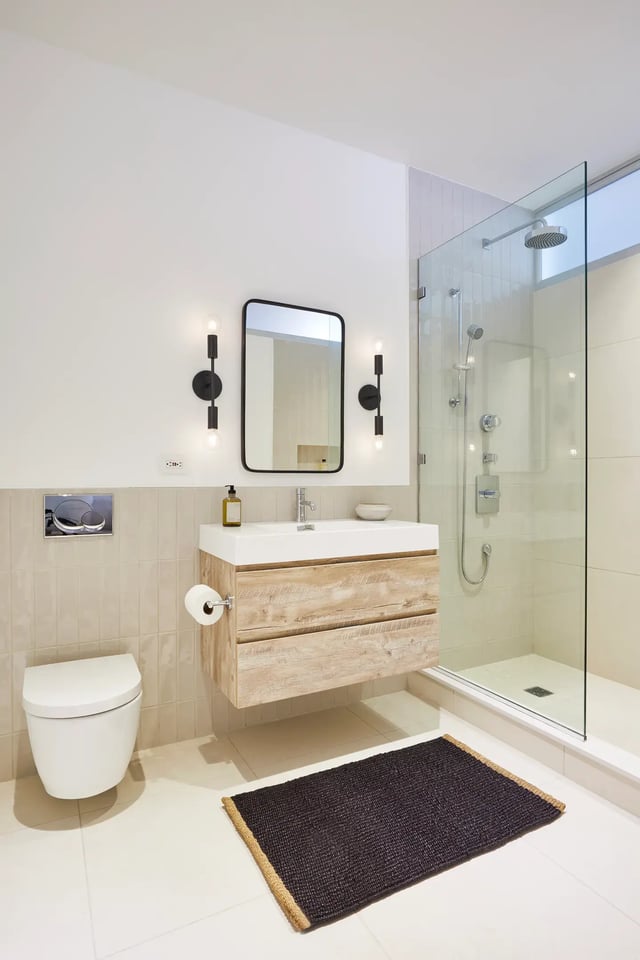
Bathroom Floor Plans
Single Wall Bathroom Layout: Pros, Cons, and Tips
07.22.2026
03.26.2026


In This Article
A 10x12 bathroom gives you 120 square feet to work with, and that is enough to build a primary bath that genuinely impresses—not just for the people who live in it every day, but for the buyers who will walk through it someday. At this size, the decisions you make are not just about daily comfort. They are about lasting value.
The rectangular footprint helps. Twelve feet of length creates natural separation between the wet zone and the grooming zone, and 10 feet of width gives every fixture room to breathe. A double vanity along the right wall does not crowd the tub across from it. A walk-in shower in the corner does not compete with the toilet for clearance. The room is large enough that good layout decisions produce a space that feels effortless to use, and thoughtful finish choices produce a space that holds its value well.
What follows is a practical guide to the layouts that work best at this size and the renovation investments that deliver the clearest return—both in how the room functions today and in what it communicates to buyers down the line.
Renovate with confidence every step of the way
Step 1: Personalize Your Renovation Plan
Step 2: Receive Quotes from Trusted Contractors
Step 3: Let Us Handle the Project Details

At 120 square feet, a 10x12 bathroom renovation involves significant material quantities, typically more ambitious fixture choices, and often a higher finish level than smaller primary baths. Understanding the cost landscape before you start is the best way to make decisions you will not revisit.
A basic refresh covering new tile, updated fixtures and hardware, a vanity replacement, and paint with plumbing staying in place typically runs $15,000 to $24,000. A mid-range renovation with a full retile, a double vanity with stone countertops, improved lighting, and one or two fixture relocations runs $28,000 to $52,000. A high-end renovation with custom tilework, a frameless glass shower enclosure, a soaking tub, heated floors, and a full layout reconfiguration typically starts at $52,000 and rises from there depending on finish level and scope.
Tile installation at 120 square feet is a meaningful line item on its own, and any layout change that moves plumbing to new walls adds $1,500 to $4,000 per fixture relocation. Partial walls or toilet compartments add $2,000 to $5,000 in framing, waterproofing, and tile work on both faces.
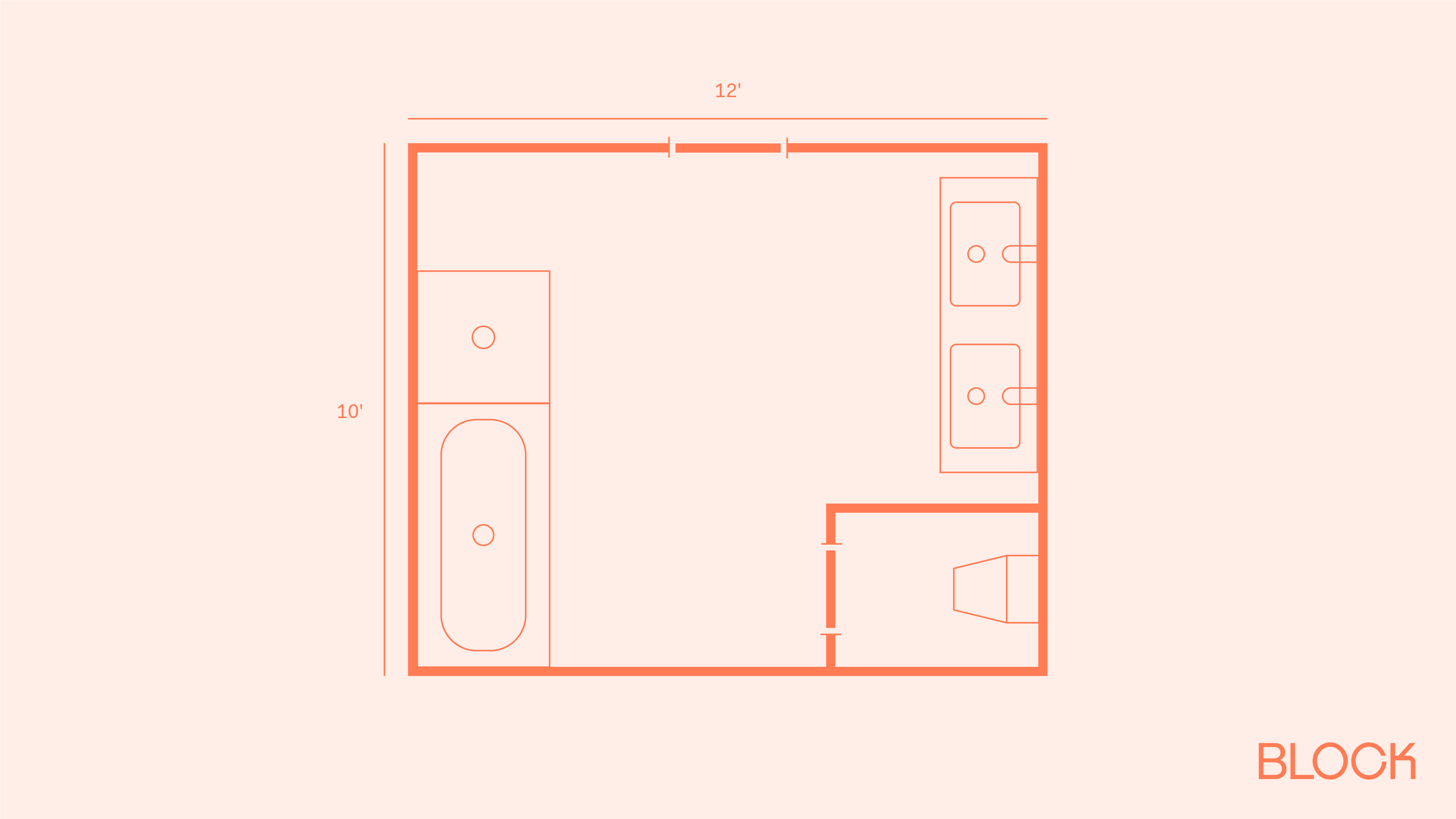
The left wall handles all the wet work here—shower in the upper portion, tub below it—while the double vanity holds the upper-right and a partial wall creates a private toilet compartment in the lower-right. The center of the room is open floor from the door to the back wall.
This is one of the most functional configurations for a shared primary bath. Both wet fixtures are on the same wall, which keeps plumbing costs in check. The double vanity and toilet are separated by purpose and by the partial wall between them. Two people can be in the room at the same time—one at the vanity, one in the shower—without either one feeling like they are in each other's space. For a busy household, that kind of independent use is worth more than almost any finish upgrade.
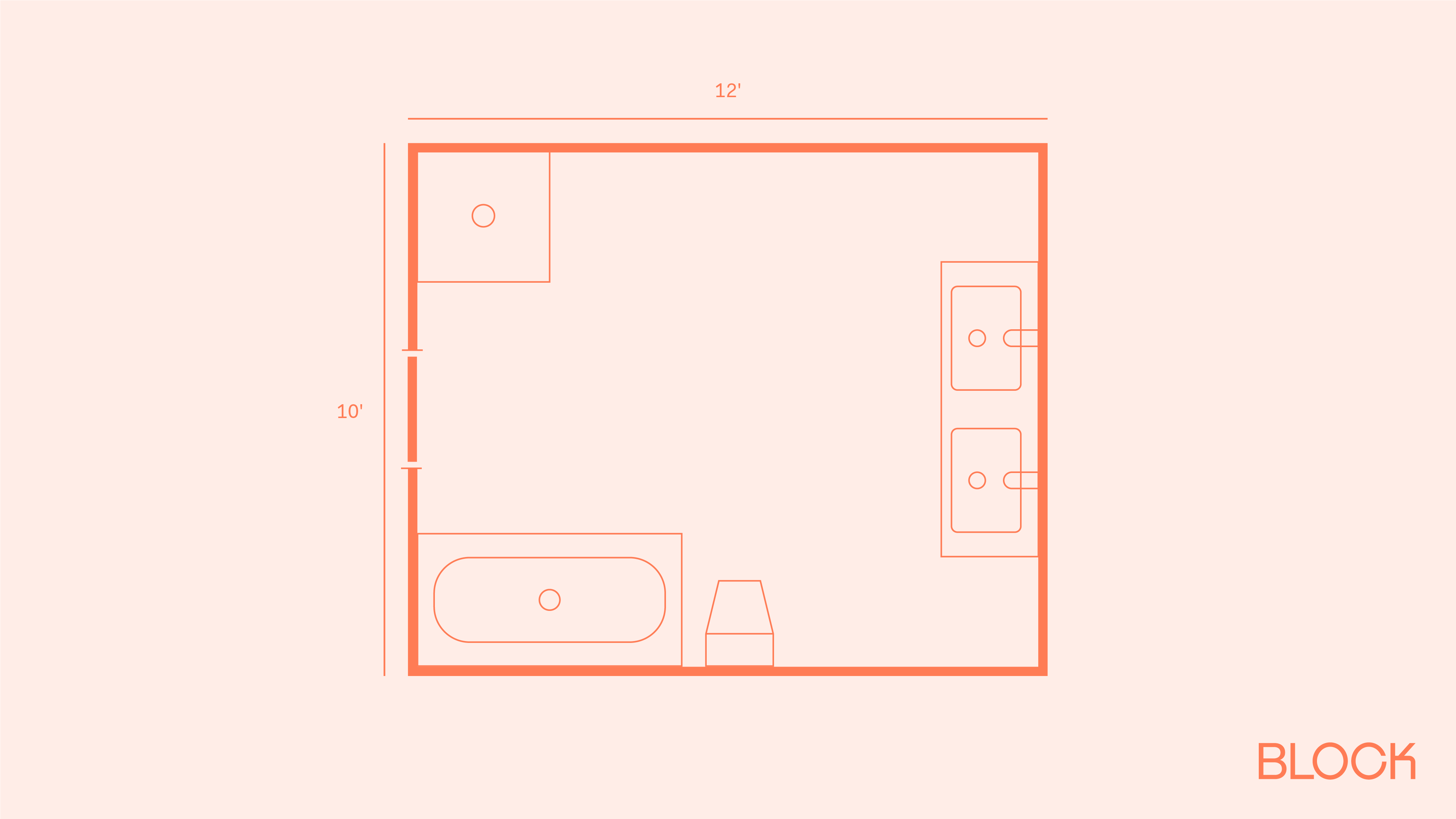
The shower occupies its own zone in the upper-left corner behind a partial wall. The tub and toilet share the lower wall. The double vanity runs down the right side of the room. The center is open floor with the entry door on the left.
What this layout does particularly well is establish three distinct zones without the room feeling chopped up. The shower has privacy. The tub has its own stretch of wall. The vanity has full wall length on the right side, which is enough for a generous 60 to 72-inch double without any compromise.
Homeowners who use all three fixtures regularly will find this configuration naturally accommodates each use without one fixture ever being in the way of another.
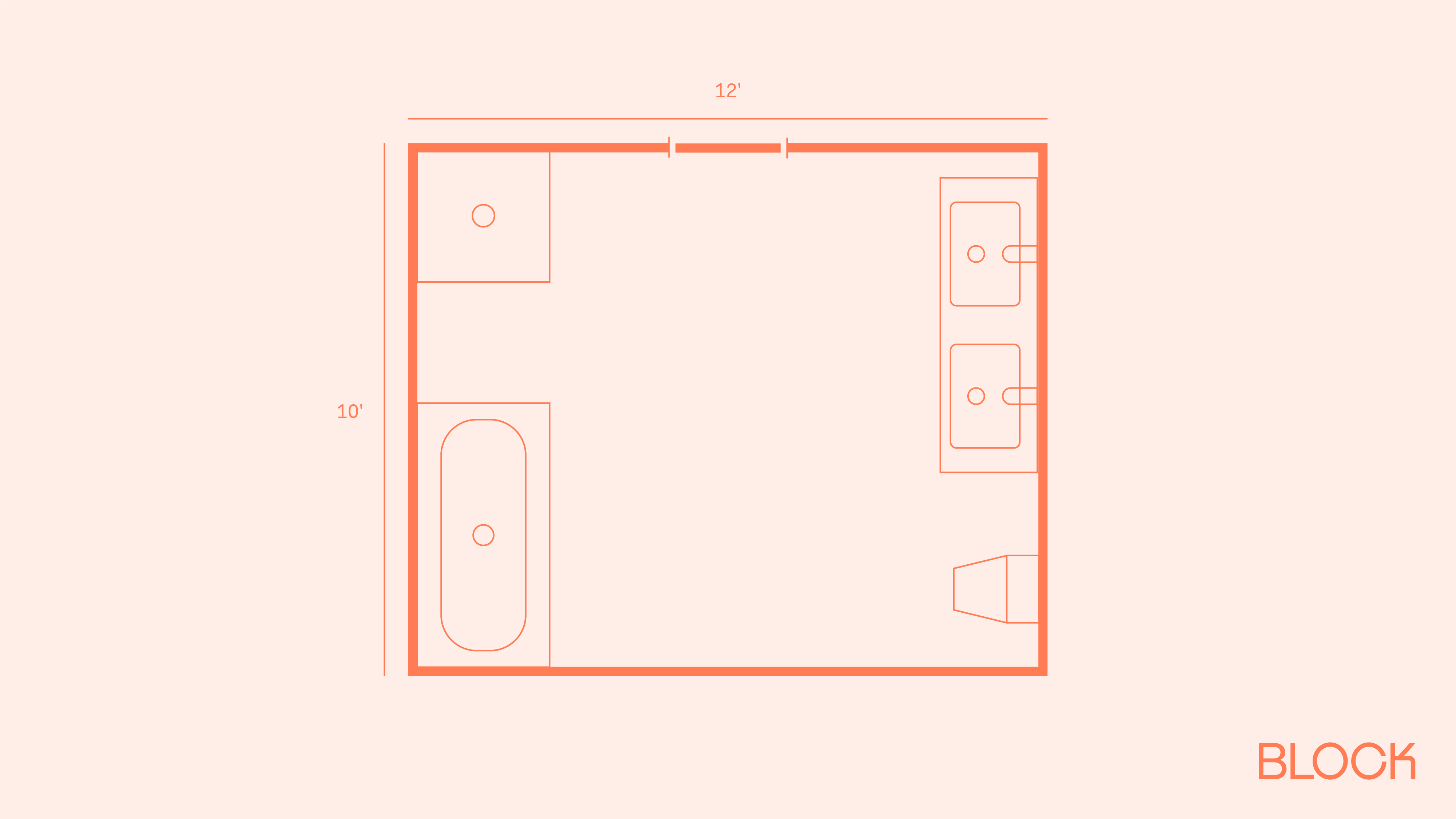
This layout keeps the shower tucked into the upper-left corner behind a partial wall and runs the tub down the left wall below it. The double vanity and toilet share the right wall. The 10-foot depth gives each fixture on the left wall enough individual clearance that neither crowds the other.
The organizational clarity here is the appeal. The left wall is the bathing wall. The right wall is the grooming wall. The center of the room belongs to no fixture and serves only as open floor. For homeowners who want a primary bath that feels organized and purposeful without being overly formal, this layout delivers that quality without requiring any complicated zoning decisions.
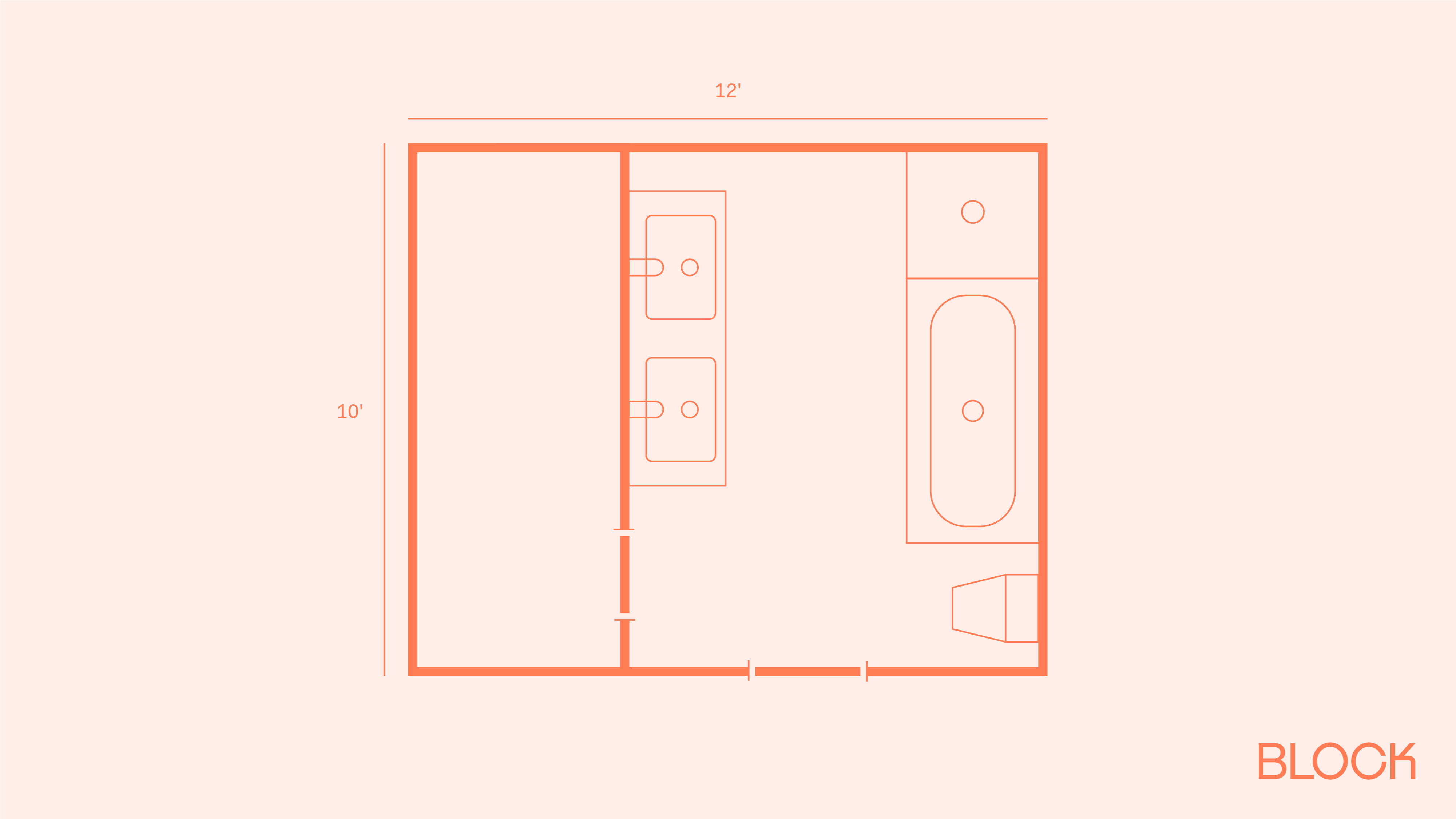
A full partial wall on the left side of the room creates a proper walk-in closet zone, completely separated from the bathroom. The double vanity is centered between that wall and the wet zone, facing into the room. The tub, shower, and toilet share the right wall. The door enters from the lower center.
This is the most suite-like layout in the set. Three zones—closet, grooming, bathing—each with their own defined boundary, arranged so you move naturally from one to the next as you get ready in the morning. The centered double vanity is the organizing element of the whole room, sitting between the closet and the wet zone like the axis the space turns on. Buyers who see a primary bath organized this way understand immediately that it was designed rather than assembled.
Renovate with confidence every step of the way
Step 1: Personalize Your Renovation Plan
Step 2: Receive Quotes from Trusted Contractors
Step 3: Let Us Handle the Project Details
A 10x12 primary bathroom is one of the most scrutinized rooms in any home sale. Buyers at this price point have expectations, and a bathroom that meets them—in layout, in finish level, and in the fixtures they can see—shortens the time a home sits on the market and supports a stronger asking price. The projects below are the ones that deliver the clearest return, both in how the room functions while you live there and in what it communicates to buyers when the time comes.
A 10x12 bathroom renovation at a finish level that supports resale value requires a contractor who works precisely, sequences trades carefully, and delivers the kind of detail quality that buyers remember. Getting there with confidence means having vetted professionals, transparent pricing, and built-in accountability from start to finish.
Block Renovation connects you with thoroughly vetted local contractors who provide detailed, comparable proposals with line-item pricing. Every project comes with progress-based payments, expert scope review to minimize change orders, and a one-year workmanship warranty on every job.
Remodel with confidence through Block

Connect to vetted local contractors
We only work with top-tier, thoroughly vetted contractors

Get expert guidance
Our project planners offer expert advice, scope review, and ongoing support as needed

Enjoy peace of mind throughout your renovation
Secure payment system puts you in control and protects your remodel


Renovate confidently with Block
Easily compare quotes from top quality contractors, and get peace of mind with warranty & price protections.
Bathroom Floor Plans
Single Wall Bathroom Layout: Pros, Cons, and Tips
07.22.2026
.jpg?width=640&name=5301c89b-3165-4f83-af34-a6b02eaa6c48%20(2).jpg)
Bathroom Floor Plans
Long, Narrow Bathroom Floor Plans: Layouts That Work
07.21.2026
.jpg?width=640&name=2a430d6c-5cf0-4596-9a89-601f3d2d6391%20(7).jpg)
Bathroom Floor Plans
Square Bathroom Floor Plans & Layout Tips
07.18.2026
Bathroom Floor Plans
300 Sq Ft Bathroom: 7 Large Master Bath Layouts
06.05.2026
Bathroom Floor Plans
100 Square Foot Bathroom Layout: Make It Work
06.02.2026