




Bathroom Floor Plans
Single Wall Bathroom Layout: Pros, Cons, and Tips
07.22.2026
04.26.2026


In This Article
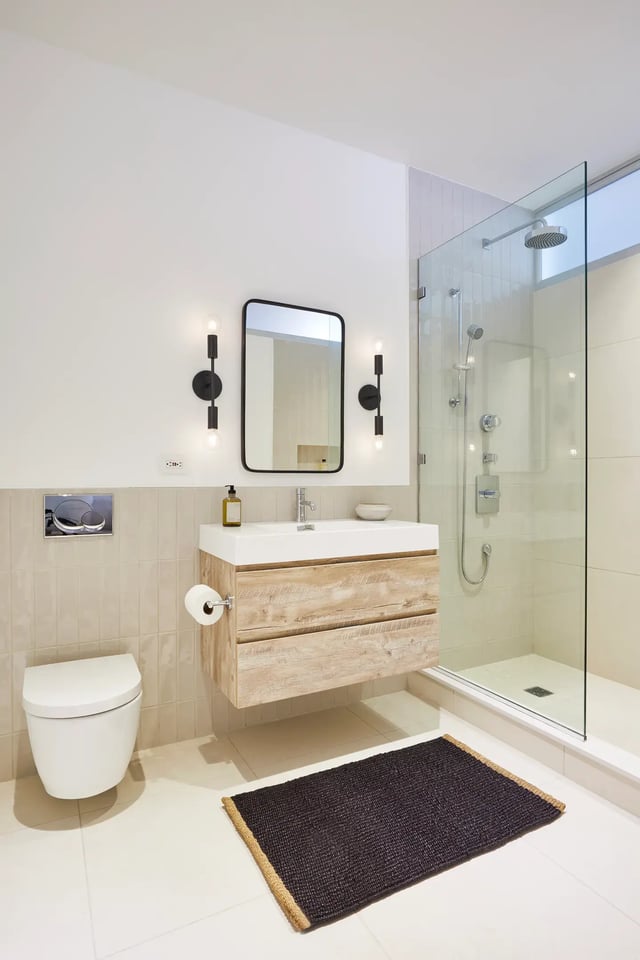
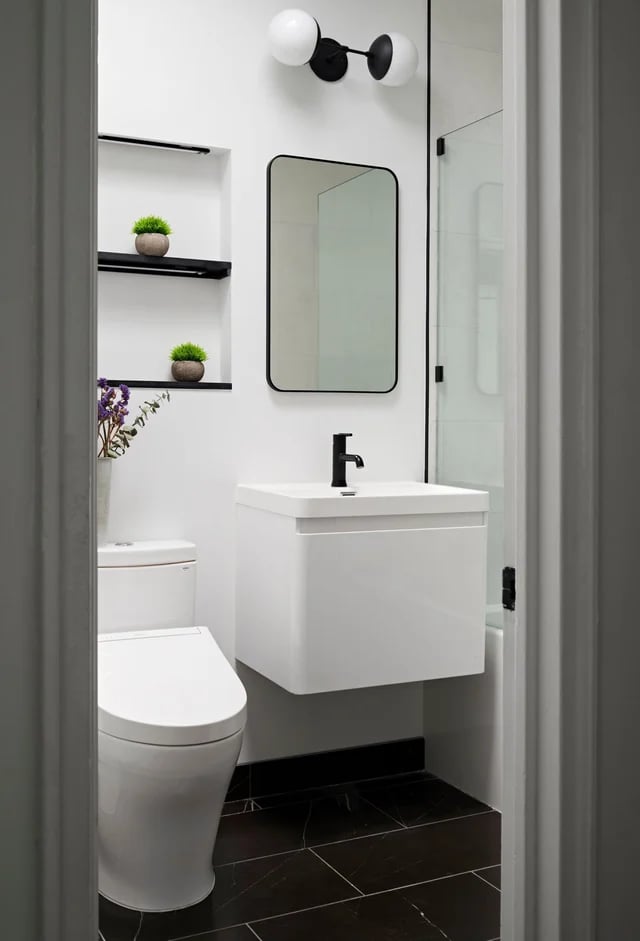
Thirty-two square feet is not a lot of room to work with. A 4x8 bathroom is the floor plan you land on when a hallway closet gets converted, when a basement corner gets carved out for a guest bath, or when an older house simply never had the square footage to spare. The width is the hard part. At 48 inches wall-to-wall, a 30-inch shower plus the 21-inch front clearance that code requires already eats 51 inches. You have to choose carefully.
Plenty of people design comfortable, code-compliant bathrooms in this footprint. The layouts that work accept the constraint. The ones that don't are usually 5x10 bathrooms someone tried to shrink.
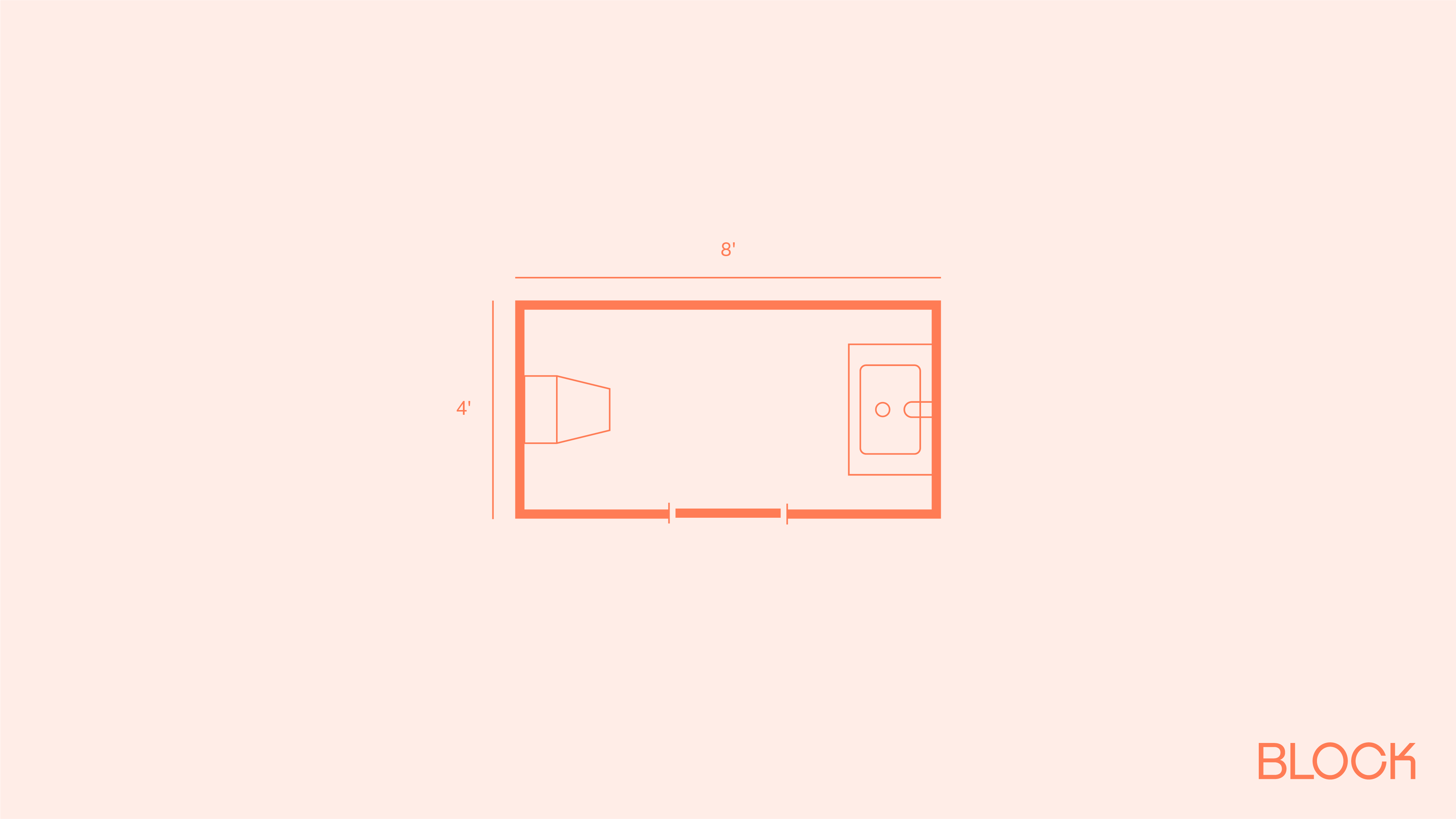
A toilet on one short wall, a sink on the opposite short wall, a door on the long wall in between. That is the whole plan. No shower, no tub, no wet zone at all.
This is the most feasible layout by a wide margin in a 4x8 footprint. Every clearance is generous. The door swings into open floor. The plumbing runs are short and simple. If the bathroom does not need to handle full showers, and if there is another full bath elsewhere in the house, this layout gives you room to breathe and a significantly lower budget.
It also happens to be the layout that resale appraisers treat as a clear asset. A half bath on the main floor of a home that previously only had full baths upstairs can return more than it costs.
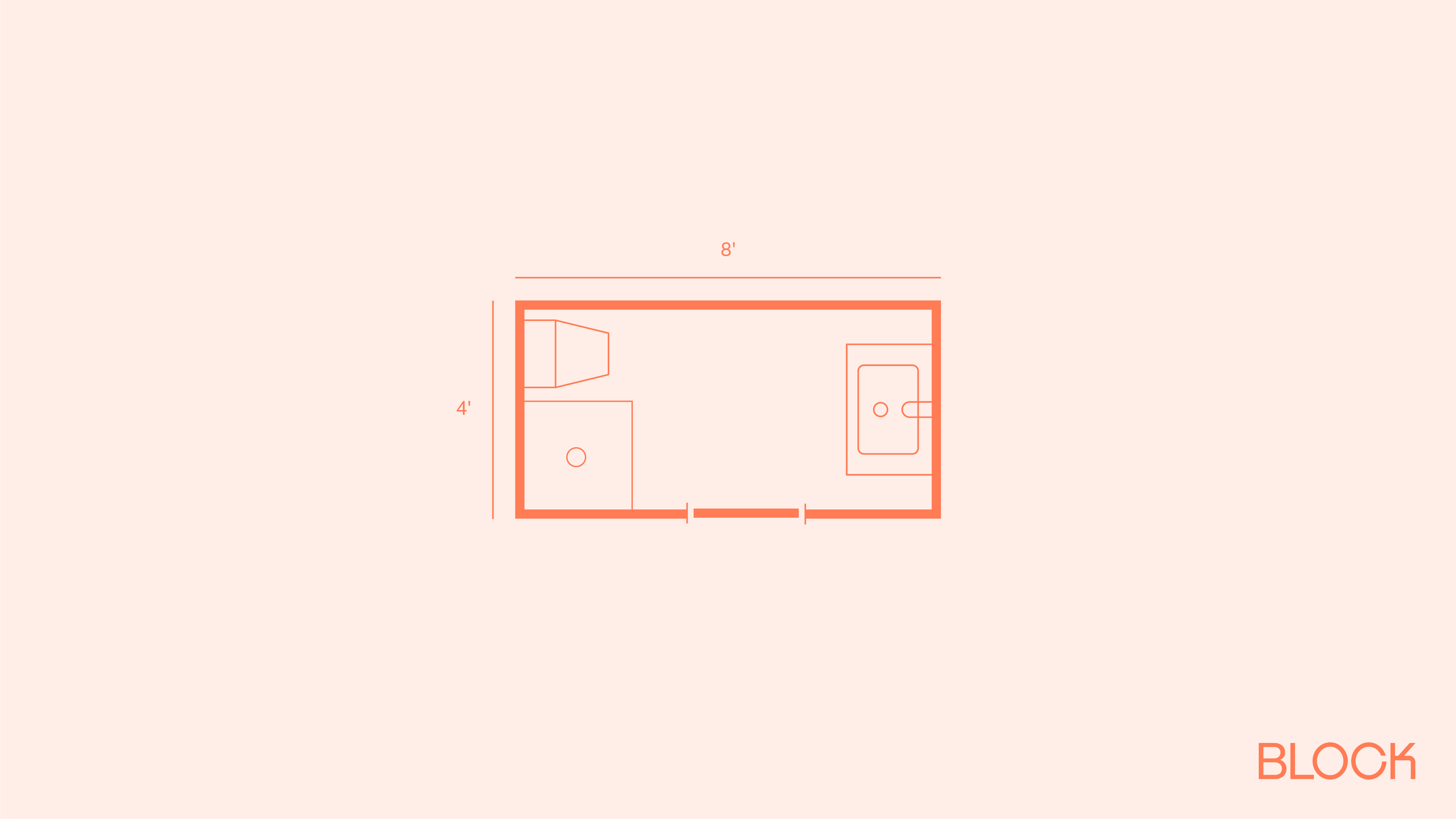
A 30-inch corner shower at one end, toilet tucked next to the shower on the same long wall, sink on the opposite long wall, door entering from the long wall between the shower and sink.
This is the strongest three-piece layout for the 4x8 footprint. The side-entry door is the key move. Instead of walking into a fixture, you walk into the circulation zone, with the shower visible ahead and the sink to one side. Plumbing stays grouped on two walls, which keeps the rough-in predictable.
The tight point is the toilet's 15-inch centerline clearance to the shower wall. That number is non-negotiable under IRC code, and a contractor should dimension it on the drawing before framing.
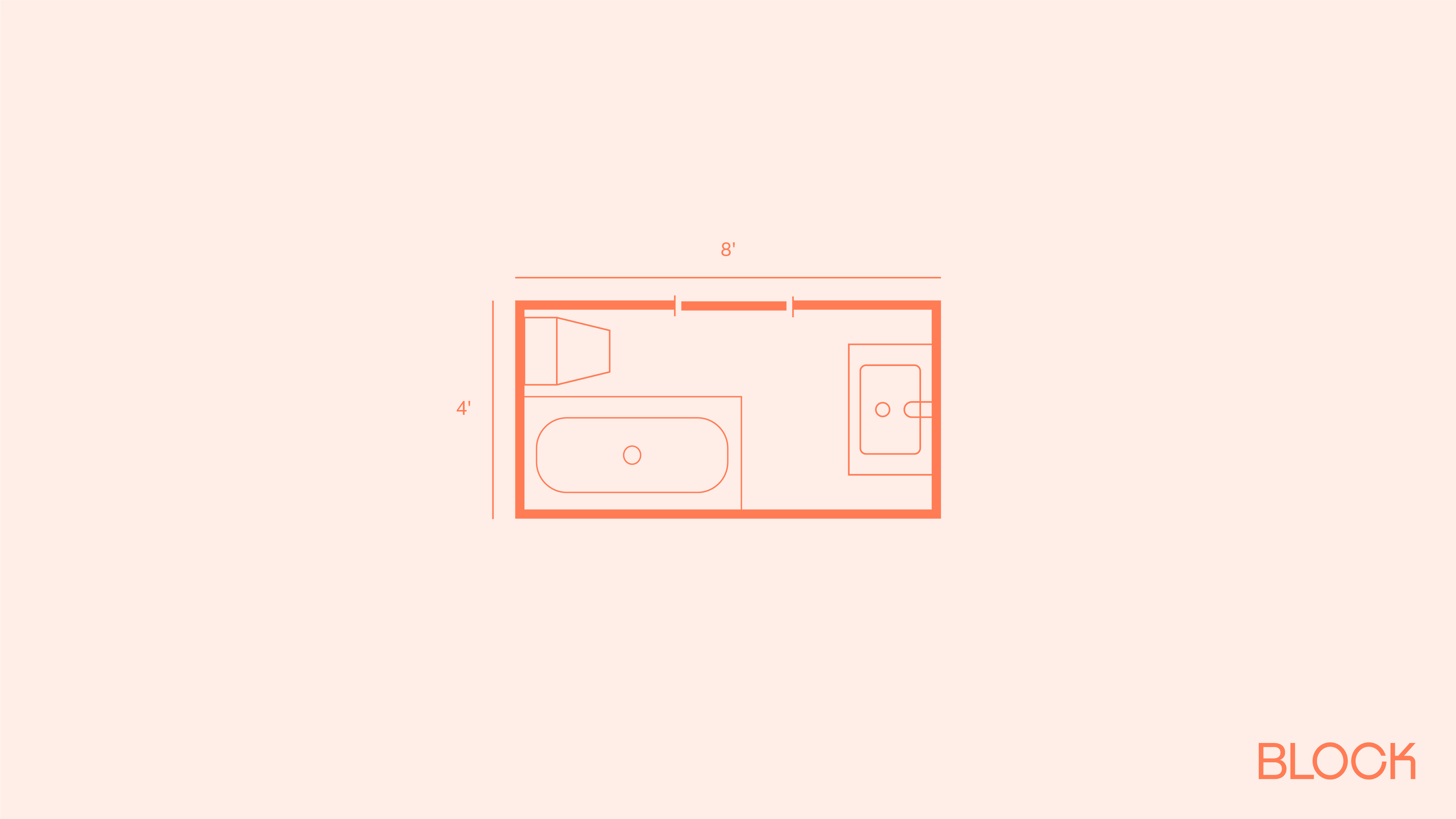
Tub along the full length of one long wall, toilet and sink on the opposite long wall, door at the end.
A standard American tub is 60 inches long and 30 inches deep. At a true 48-inch interior width, a 30-inch-deep tub leaves just 18 inches of floor in front of it, which is below the 21-inch minimum clearance. The workable versions of this plan use a compact soaking tub (often 54 or 55 inches long and 27 to 29 inches deep) rather than a standard drop-in. Japanese-style and European soaking tubs are the category to look at.
If keeping at least one tub in the house matters (and for families with small children or for eventual resale, it usually does), this layout is the way to do it. Expect to spend more time on fixture selection than with the other plans.
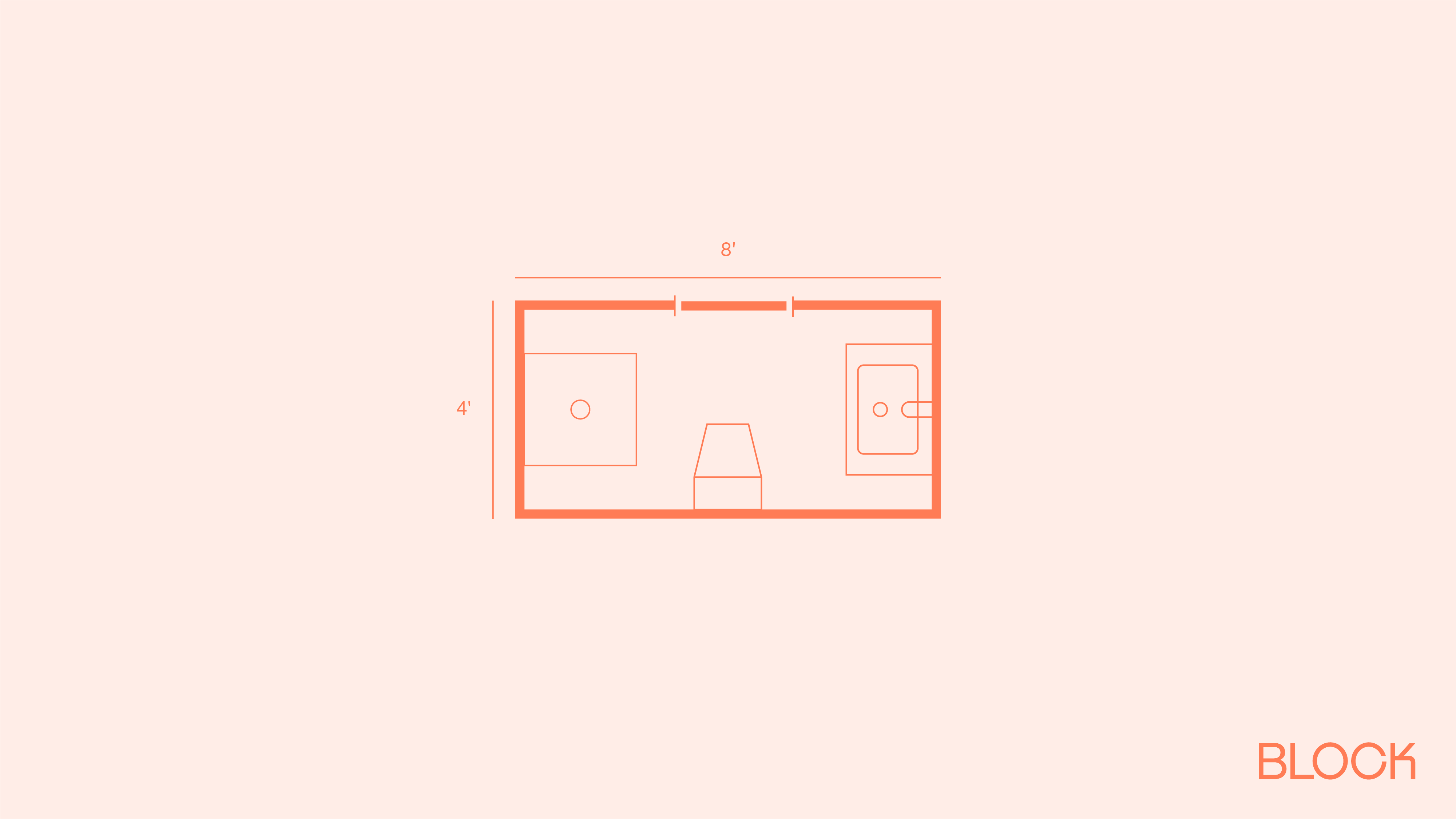
Shower at one end, toilet in the middle, sink at the opposite end, all on the same long wall. The opposite long wall stays open. Door at the end of the short wall.
This is the layout to reach for when the plumbing stack is already on one side and moving it is off the table. Running all three fixtures off one wet wall is the cheapest rough-in you can ask for. The math works, barely: 30-inch shower plus a 30-inch toilet zone plus a 24-inch sink equals 84 inches, which just fits inside 96 inches of length. The open wall across from the fixtures gives the room something it otherwise would not have, which is a sense of space.
The trade-off is that the toilet sits between two fixtures rather than anchored in a corner. The 15-inch centerline rule applies on both sides, not just one, which means the shower wall and the vanity edge have to be placed precisely.
Bring Your Dream Bathroom to Life
Costs have climbed 4% to 6% over 2025, pushed by skilled-labor shortages and tariffs on imported cabinetry and fixtures. Here is what to expect for a 4x8 footprint:
Per square foot, a 4x8 bathroom runs higher than larger bathrooms because every trade still shows up. Plumbing, tile, and waterproofing don't care that the room is small. Expect $180 to $280 per square foot for mid-range work, $300 to $450 for high-end finishes.
A half bath (the first layout above) is the outlier on the low end. Without a shower, you skip waterproofing, tile surround work, and a significant portion of the plumbing. Half bath renovations typically fall between $3,000 and $9,000.
Labor accounts for 40% to 50% of a typical project. Licensed plumbers now charge $85 to $175 per hour in most US markets. Electricians run $60 to $145 per hour. Fixtures and materials make up most of the rest. The single largest individual line items are usually the vanity ($400 to $3,000 installed), the shower ($2,500 to $8,000 depending on whether it is tiled or prefab), and the tile work ($600 to $3,500).
If the above floor plans have you thinking that a 4x8 space may not meet your household’s needs, you’re not entirely out of options. An expansion can make more fixtures and configurations possible, as explored in our guides to 5x8, 6x8, and 8x8 bathrooms.
Borrowed space from an adjacent room. The most common expansion path is stealing a closet or a few feet from the neighboring bedroom or hallway. Going from 4x8 to 5x8 (from 32 to 40 square feet) sounds modest. However, the extra room means an easier fit for a A 60-inch tub, and a double vanity gets plausible on the long wall.
If an expansion is two or five years off, small decisions today can make it easier later. Run plumbing supply and waste lines slightly oversized. Avoid placing the main plumbing stack on the wall you would eventually want to remove. Frame the wall that is most likely to move as a non-load-bearing partition, or confirm what is above it before designing around it.
Moving the plumbing wet wall. If the long-term plan is to reconfigure the plumbing entirely, the cheapest time to do it is during the initial renovation, not during a second one. Opening walls twice costs far more than opening them once.
Check load-bearing before you dream. A contractor should confirm what is load-bearing before an expansion is designed. A wall that looks removable on a floor plan sometimes holds up the ceiling joists above it. Removing or modifying a load-bearing wall is possible but adds engineering, permits, and a beam, typically $3,000 to $8,000.
Plumbing stack location. The vertical stack carries waste from upstairs bathrooms down through the house. It almost never moves, which means any expansion tends to grow around it rather than through it.
The difference between a 4x8 bathroom that works and one that does not is often a few inches decided during framing. Those decisions sit with the contractor, and picking the right one matters more in tight spaces than in large ones.
Block Renovation pairs clients with vetted local contractors who compete for the project. Every scope is reviewed by Block experts before bids come in, which catches missing line items (like the waterproofing membrane behind a curbless shower, or the carrier frame for a wall-hung toilet) before they become change orders. Payments are held securely and released as project milestones are approved, so contractors stay on schedule and on scope. Every contractor in the Block network provides a one-year workmanship warranty.
Remodel with confidence through Block

Connect to vetted local contractors
We only work with top-tier, thoroughly vetted contractors

Get expert guidance
Our project planners offer expert advice, scope review, and ongoing support as needed

Enjoy peace of mind throughout your renovation
Secure payment system puts you in control and protects your remodel


Renovate confidently with Block
Easily compare quotes from top quality contractors, and get peace of mind with warranty & price protections.
Bathroom Floor Plans
Single Wall Bathroom Layout: Pros, Cons, and Tips
07.22.2026
.jpg?width=640&name=5301c89b-3165-4f83-af34-a6b02eaa6c48%20(2).jpg)
Bathroom Floor Plans
Long, Narrow Bathroom Floor Plans: Layouts That Work
07.21.2026
.jpg?width=640&name=2a430d6c-5cf0-4596-9a89-601f3d2d6391%20(7).jpg)
Bathroom Floor Plans
Square Bathroom Floor Plans & Layout Tips
07.18.2026
Bathroom Floor Plans
300 Sq Ft Bathroom: 7 Large Master Bath Layouts
06.05.2026
Bathroom Floor Plans
100 Square Foot Bathroom Layout: Make It Work
06.02.2026