



Bathroom Floor Plans
4x10 Bathroom Floor Plans With Showers
08.26.2026
03.18.2026


.png?width=640&name=u5821215421_Terrazzo_An_editorial_full_bathroom_photograph_fe_6f10becf-3293-4520-b4da-70261c22667b_0%20(1).png)
In This Article
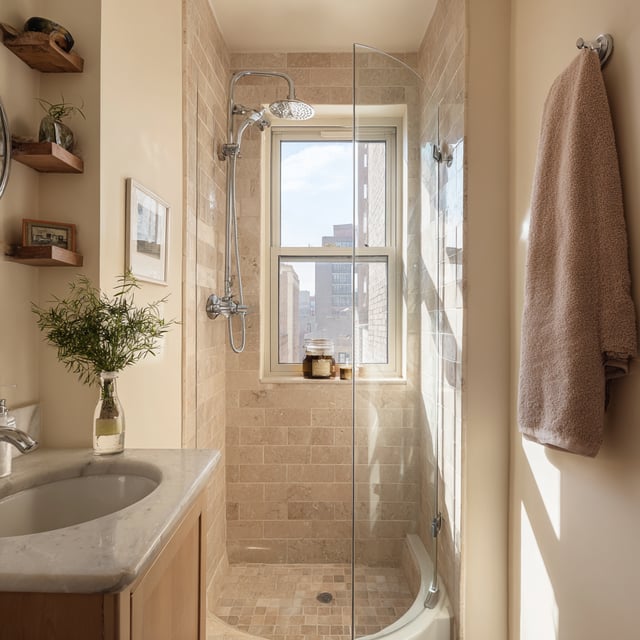
An 8x5 bathroom gives you 40 square feet — enough for a full bath, but just barely, and only if you’re deliberate about where everything goes. The 8-foot length is workable. The 5-foot width is what makes this bathroom challenging. Five feet is tight enough that every fixture placement is a negotiation: the tub competes with the vanity for wall space, the toilet needs clearance that eats into the walkway, and the door swing can make or break the whole plan.
This is one of the most common narrow bathroom footprints in American homes. You’ll find it in postwar ranches, older apartments, row houses, and split-levels where the original builder squeezed a full bath into the narrowest viable rectangle. It’s also the standard size for many hall bathrooms in homes built from the 1940s through the 1970s, and it shows up frequently in condos and co-ops where the building’s structural grid dictates narrow room widths.
The good news: 40 square feet is enough for a toilet, a vanity, and either a bathtub or a standing shower — the three fixtures that define a full bath. Some configurations even fit both a tub and a separate shower, or two sinks instead of one. But those ambitions only work if the layout accounts for the room’s proportions. A plan that would feel comfortable in a 6-foot-wide bathroom can feel pinched at 5 feet, because those 12 missing inches come directly out of your standing and moving space.
This guide covers what an 8x5 bathroom renovation costs, five layout configurations that show what’s possible at this width, and the design decisions that help a narrow bathroom feel more open than its dimensions suggest.
Turn your renovation vision into reality
Get matched with trusted contractors and start your renovation today!
Find a Contractor
An 8x5 bathroom is a compact full bath, and the renovation cost reflects the fact that you’re working with all three major plumbing fixtures in a room where labor has very little margin for error. Tight spaces don’t reduce labor costs — they often increase them, because trades need more time to work in close quarters and sequence their tasks carefully to avoid conflicts.
Basic refresh: $8,000–$15,000. New tile over the existing footprint, updated fixtures and hardware, a fresh vanity, and paint. The tub stays, the toilet stays, the plumbing stays. You’re changing what the room looks and feels like without opening walls or relocating anything. At this level, a retile of the tub surround, new flooring, and a vanity swap can shift the bathroom from dated to current.
Mid-range renovation: $15,000–$28,000. Higher-quality tile, a better vanity with stone or quartz top, improved lighting, and potentially one fixture relocation — converting an alcove tub to a walk-in shower, for instance, or moving the toilet to a less visible position. Plumbing modifications at this level typically add $1,500–$4,000 depending on how far the new fixture sits from the existing rough-in.
High-end renovation: $28,000–$45,000+. Custom tilework (floor-to-ceiling, specialty materials), frameless glass shower enclosure, premium fixtures, heated floors, and full layout reconfiguration. At this budget you’re gutting to the studs, replacing the subfloor and waterproofing membrane, and potentially upgrading supply lines and drain positions. Permit costs typically run $500–$2,000 depending on your municipality.
In a bathroom this compact, labor is the dominant cost. The room is small, but the trades are the same as a larger bath — plumber, electrician, tile installer, painter — and their minimums don’t shrink with square footage. Expect labor to account for 60–70% of the total in a typical 8x5 renovation.
Block’s Renovation Studio lets you experiment with different fixtures, finishes, and configurations to see how each choice affects your budget before you commit.
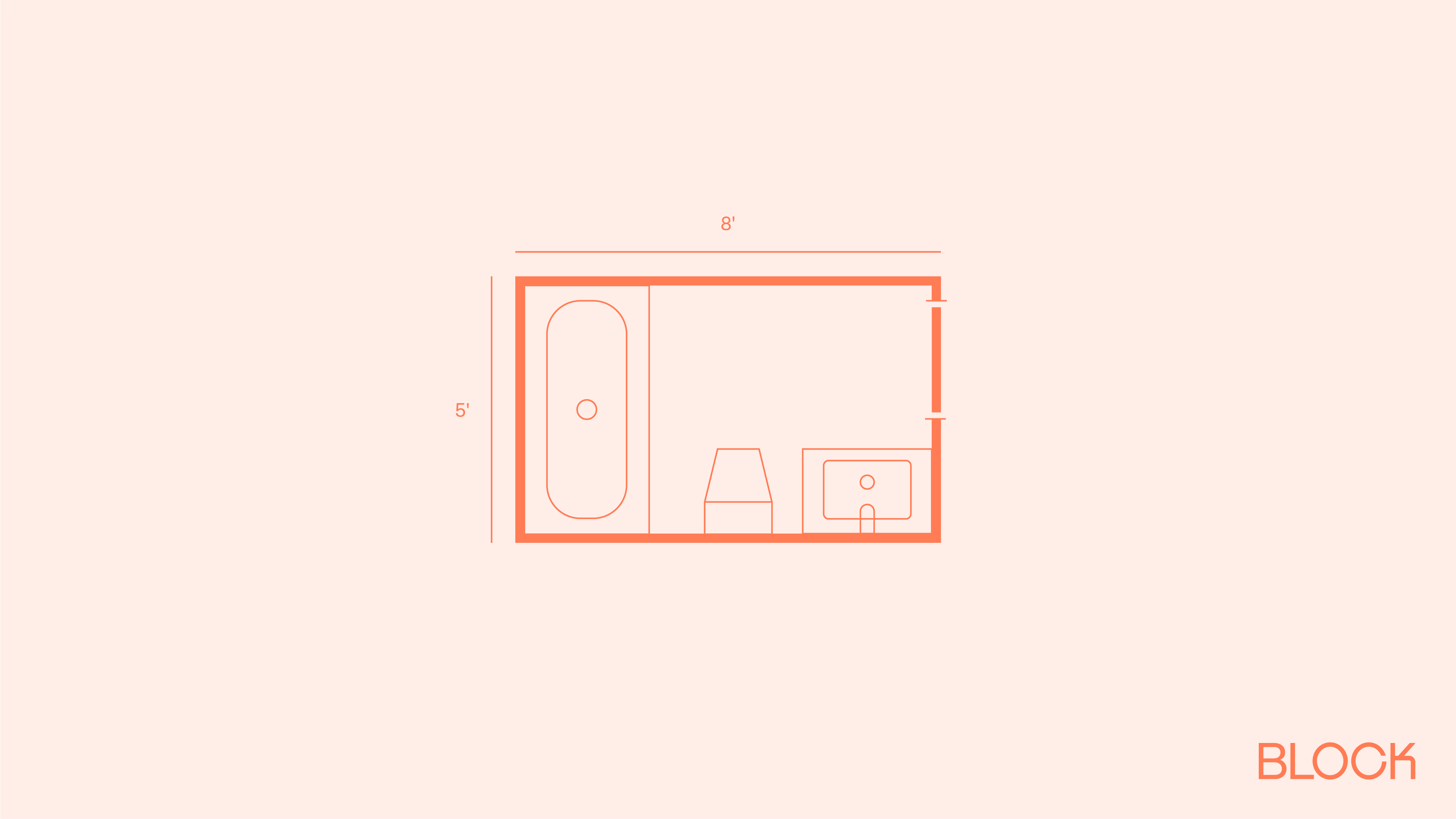
The bathtub runs along the left wall from top to bottom. The toilet sits in the lower-center area, and a single vanity occupies the lower-right corner. The door opens on the right wall.
This is the classic narrow-bathroom layout, and it works because it respects the room’s proportions. The tub gets the long wall — the only wall that can accommodate a standard 60-inch alcove model — and the toilet and vanity share the remaining width on the opposite side.
The floor space between the tub and the vanity is narrow — roughly 18–24 inches depending on vanity depth. A wall-mount vanity or a pedestal sink can reclaim a few inches of visual and physical clearance if the walkway feels tight.
This is the most economical layout in the set. All plumbing stays on the same wall or in close proximity, and the standard alcove tub is one of the most affordable bathtub options available ($200–$600 for the tub itself).
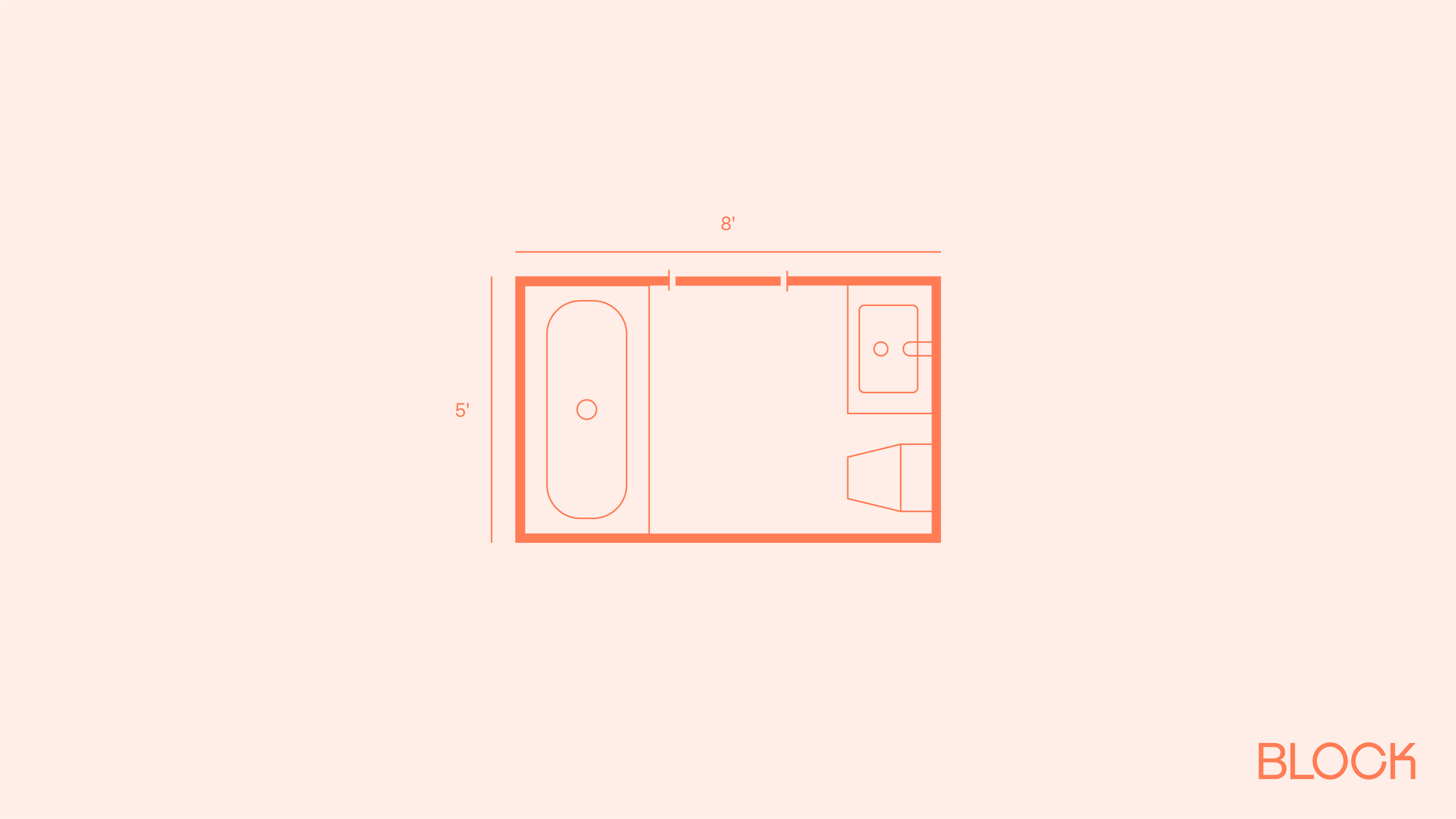
The bathtub runs along the left wall. A single vanity sits on the upper-right wall, and the toilet is positioned in the lower-right corner. The door opens on the upper wall.
Moving the vanity to the upper wall — directly visible when you walk in — changes the room’s first impression. Instead of seeing the toilet, you see the vanity and mirror, which reads as cleaner and more intentional. The toilet gets tucked into the lower-right corner behind the door swing, the least visible position in the room.
The vanity is the fixture you use first and most often, and placing it nearest to the entry means you can brush your teeth, wash your face, or check the mirror without walking past the toilet or around the tub. It’s a small change in placement that affects how the room feels every time you use it.
The cost is comparable to the classic layout. The plumbing for the vanity moves to a different wall, which may require extending the supply and drain lines — typically adding $800–$2,000 to the plumbing budget.
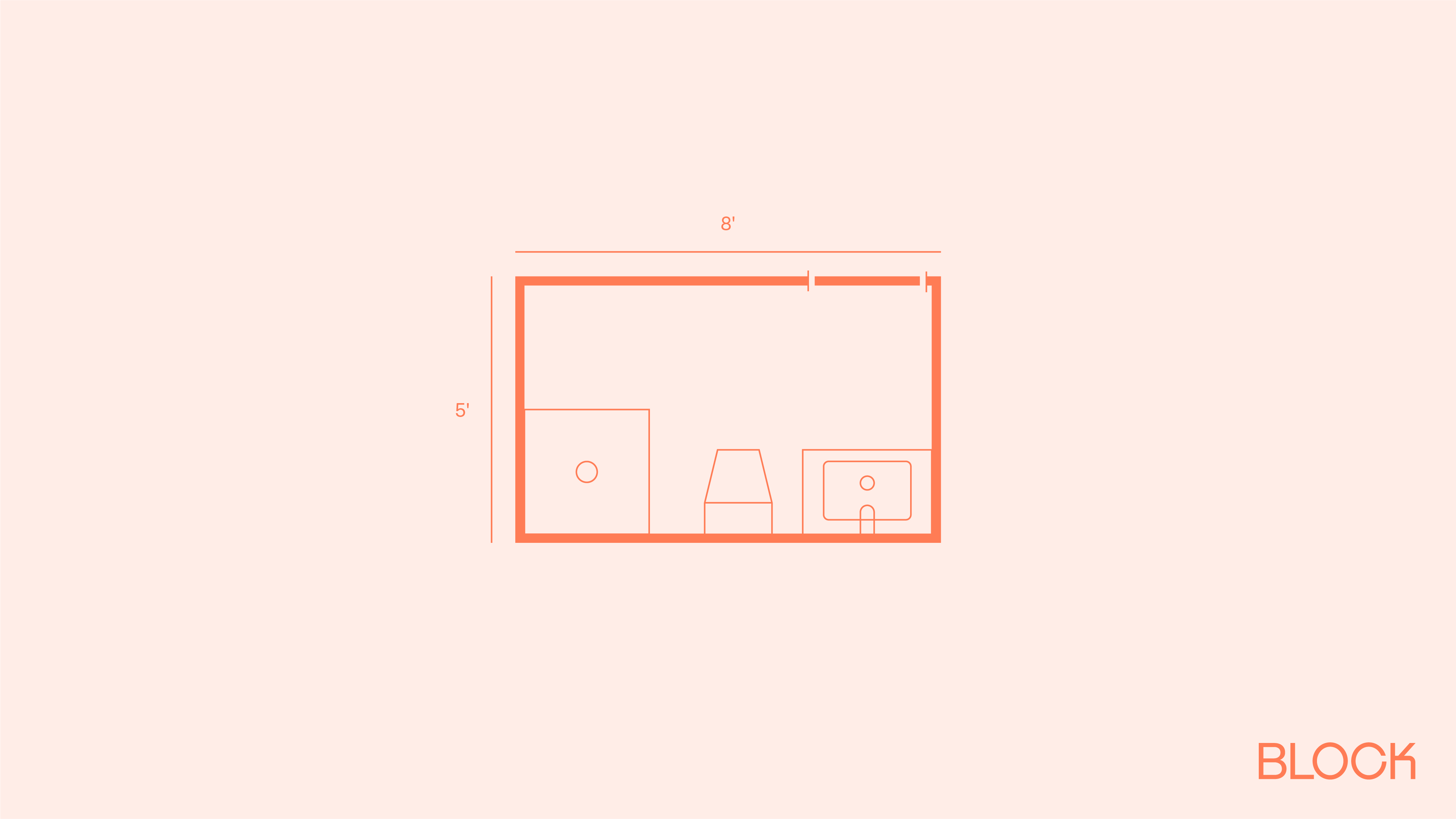
A square shower stall sits in the lower-left corner. The toilet occupies the lower-center, and a single vanity is positioned in the lower-right. The entire upper portion of the room is open floor. The door opens on the upper-right wall.
This is the layout that maximizes open floor area in an 8x5 bathroom. By concentrating all three fixtures along the lower wall, the upper half of the room is clear — creating a landing zone that feels significantly more spacious than the room’s 40 square feet would suggest.
The trade-off is the absence of a bathtub. If you don’t use a tub regularly — or if this is a secondary bathroom that primarily serves guests or a single occupant — dropping the tub for a standing shower is one of the smartest moves you can make in a narrow bathroom.
This is also one of the more accessible configurations. The open floor can accommodate a wider shower entry, grab bars, and a bench if needed. For aging-in-place planning, this layout provides the best foundation for future modifications without a full second renovation.
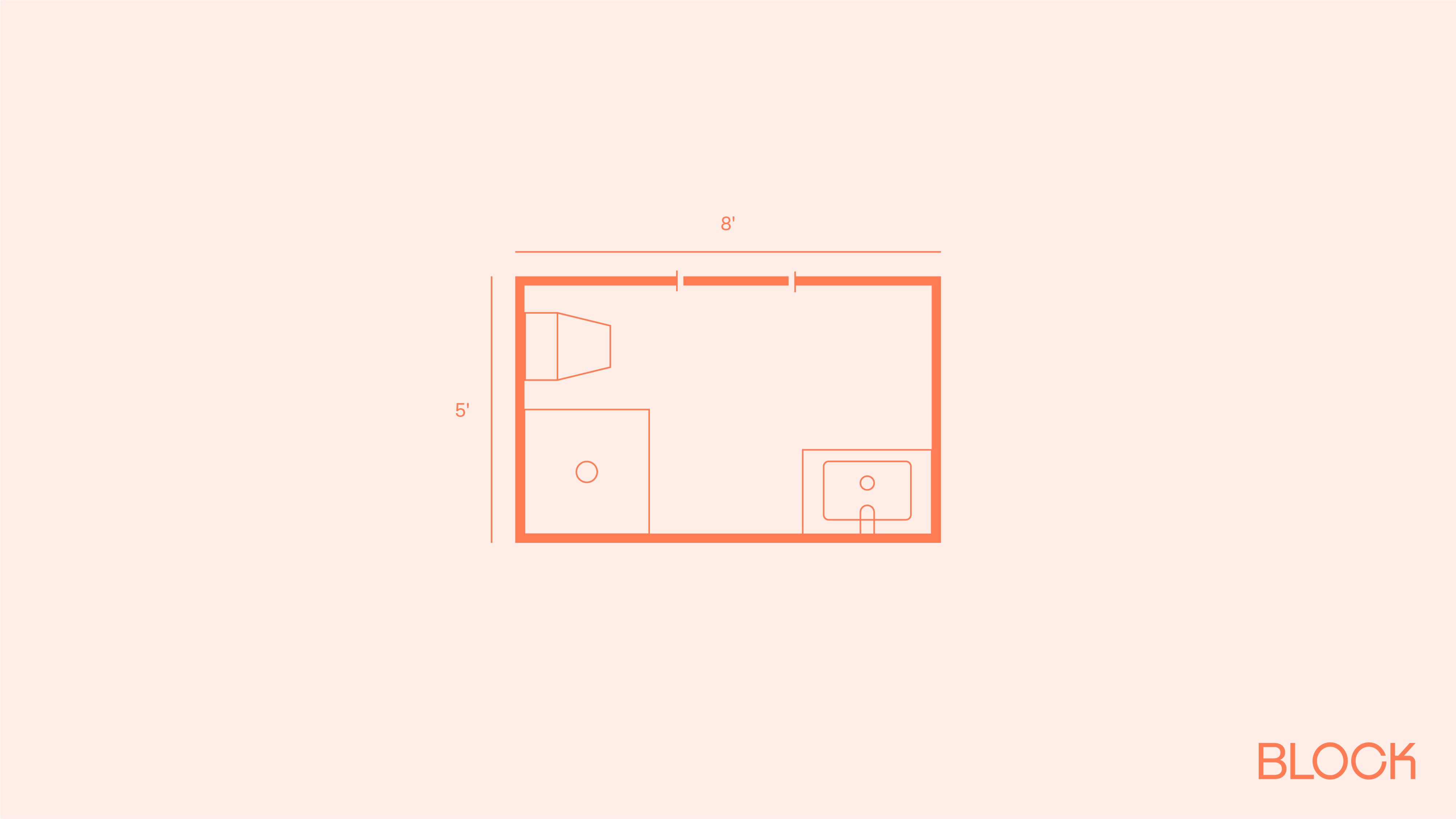
The toilet sits on the upper-left wall. A square shower stall occupies the lower-left. A single vanity is positioned in the lower-right corner. The center of the room is open floor. The door opens on the upper wall.
This variation on the shower-only layout moves the toilet to the upper wall, creating better separation between the wet zone (shower) and the dry zone (vanity and toilet). You’re not standing next to the toilet while showering — a comfort distinction that matters more in a 5-foot-wide room than it would in a wider one.
The open center floor area is generous for a bathroom this size. The vanity on the lower-right gets its own wall, which means you can center a mirror above it without competing with other fixtures for sightlines.
Cost-wise, this layout is nearly identical to the other shower-only option. The toilet relocation to the upper wall may require a short drain extension if the existing rough-in is on the lower wall, typically adding $500–$1,500.
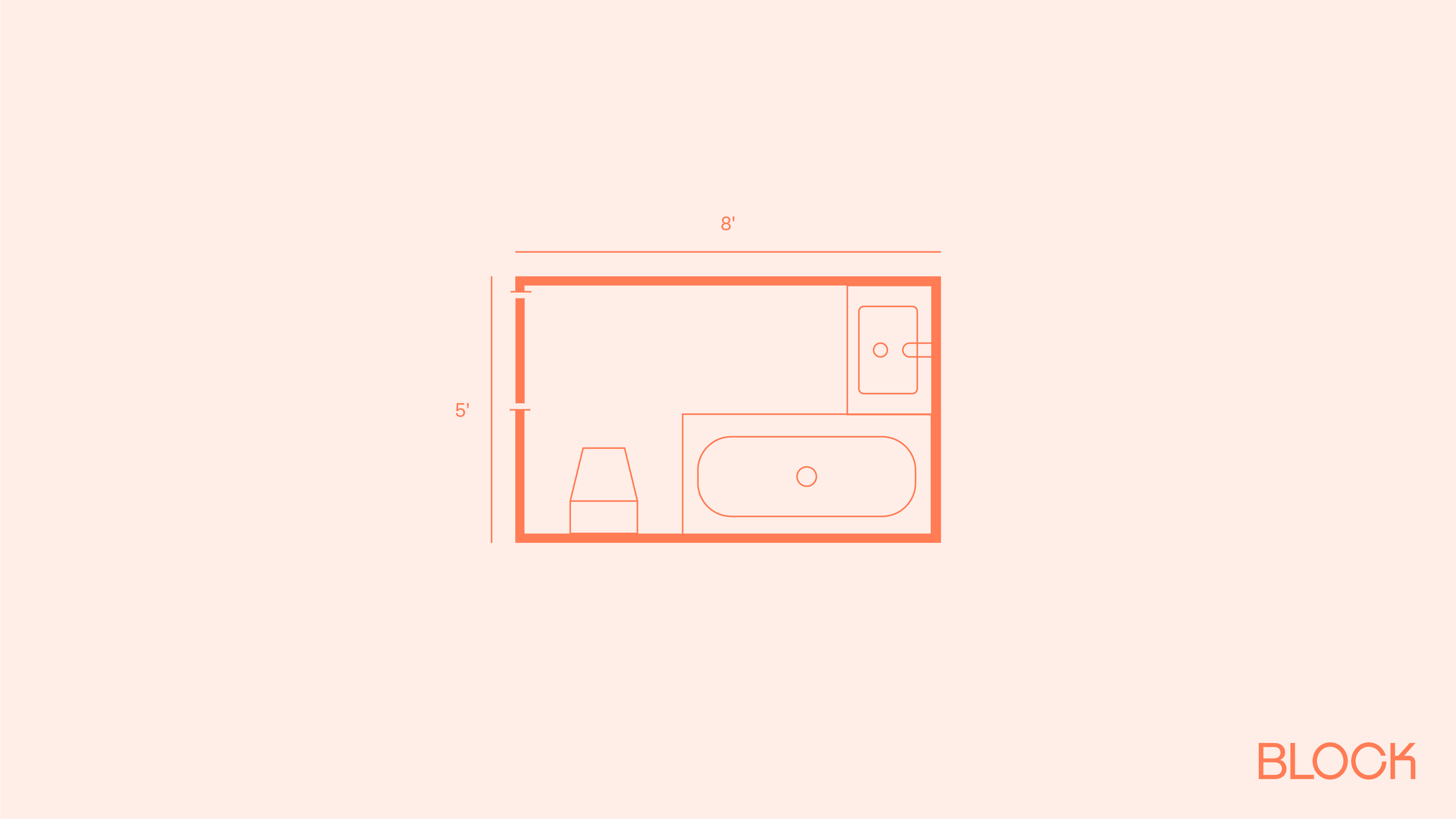
A walk-in shower occupies the upper-left portion of the room, enclosed by a partition wall. A single vanity sits on the upper-right wall. The toilet is positioned in the lower-left, and a bathtub occupies the lower-right. The door opens on the left wall.
This is the most ambitious layout in the set — a full bath with a separate walk-in shower, a tub, a toilet, and a vanity, all in 40 square feet. It works by zoning the room into two halves: the upper half is the daily-use zone (shower and vanity), and the lower half is the less frequent zone (tub for soaking, toilet).
The walk-in shower is larger than the stall options in the other layouts — roughly 30x48 inches — which makes it comfortable for daily use. This configuration is particularly appealing for families: kids get a tub for bath time, adults get a proper shower for daily use, and neither fixture compromises the other.
This is the highest-cost layout in the set. The separate shower enclosure requires its own drain, supply lines, waterproofing, and tile work. Expect the additional shower to add $3,000–$6,000 over a tub-only layout at the same finish level.
Renovate with confidence every step of the way
Step 1: Personalize Your Renovation Plan
Step 2: Receive Quotes from Trusted Contractors
Step 3: Let Us Handle the Project Details

In an 8x5 bathroom, the layout determines what fits. But the finishes, fixtures, and details you choose determine how the room feels once everything is in place. A few targeted decisions can make a 5-foot-wide bathroom feel noticeably more open without adding a single square foot.
For more ideas on getting the most out of a narrow footprint, read Narrow Bathroom Remodeling Ideas.
An 8x5 bathroom doesn’t have room for indecision. The 5-foot width means every fixture, every finish, and every inch of clearance is doing a job. The layouts that succeed at this size are the ones that respect the room’s proportions — giving the tub or shower the long wall, keeping the toilet out of the primary sightline, and choosing a vanity that fits the remaining space without crowding the walkway.
With Block Renovation, you can test different configurations and finish levels through the free Renovation Studio — seeing how each decision affects your budget before any demolition begins. When you’re ready, Block connects you with vetted local contractors who provide detailed, comparable proposals backed by progress-based payments and a one-year workmanship warranty.
The best narrow bathrooms aren’t the ones that pretend they’re bigger than they are. They’re the ones that use every decision — from tile format to door swing to vanity mount — to make the width you have feel like exactly what you need.
Remodel with confidence through Block

Connect to vetted local contractors
We only work with top-tier, thoroughly vetted contractors

Get expert guidance
Our project planners offer expert advice, scope review, and ongoing support as needed
Enjoy peace of mind throughout your renovation
Secure payment system puts you in control and protects your remodel

Renovate confidently with Block
Easily compare quotes from top quality contractors, and get peace of mind with warranty & price protections.
Bathroom Floor Plans
4x10 Bathroom Floor Plans With Showers
08.26.2026
Bathroom Floor Plans
Bathroom With 2 Doors: Layout Ideas That Work
08.24.2026
Bathroom Floor Plans
Single Wall Bathroom Layout: Pros, Cons, and Tips
07.22.2026
.jpg?width=640&name=5301c89b-3165-4f83-af34-a6b02eaa6c48%20(2).jpg)
Bathroom Floor Plans
Long, Narrow Bathroom Floor Plans: Layouts That Work
07.21.2026
.jpg?width=640&name=2a430d6c-5cf0-4596-9a89-601f3d2d6391%20(7).jpg)
Bathroom Floor Plans
Square Bathroom Floor Plans & Layout Tips
07.18.2026