



Bathroom Floor Plans
300 Sq Ft Bathroom: 7 Large Master Bath Layouts
06.05.2026
03.25.2026


In This Article
An 8x12 bathroom gives you 96 square feet arranged in a rectangle, and the rectangle is the key to understanding why this footprint is so practical. The 12-foot length creates natural separation between zones in a way that square rooms simply cannot offer. A tub at one end and a vanity at the other with open floor between them does not feel like a compromise. It feels like a room that was thoughtfully designed to keep things organized.
The 8-foot width is the dimension that asks for attention. It is generous enough for a double vanity, a comfortable walk-in shower, or a tub with clearance on both sides, but it is not so generous that you can ignore how fixtures are positioned across that width. Place the wrong fixture in the wrong spot and you turn a natural corridor into an obstacle course. Get it right and the room flows from end to end without interruption.
The five floor plans below show how an 8x12 bathroom can be organized around the way it is actually used, and how the length of the room can work in your favor at every step.
At 96 square feet, an 8x12 bathroom falls into the range where renovation costs reflect both meaningful surface area and the kind of fixture ambitions this size tends to inspire. A basic refresh, covering new tile, updated fixtures and hardware, a vanity replacement, and paint with plumbing staying in place, typically runs $12,000 to $20,000. A mid-range renovation with a full retile, a vanity upgrade with stone countertops, improved lighting, and one or two fixture relocations runs $22,000 to $42,000. A high-end renovation with custom tilework, a walk-in shower enclosure, a soaking tub, heated floors, and a full layout reconfiguration typically starts at $42,000 and rises from there depending on finish level and plumbing complexity.
Labor accounts for 55-65% of total project cost. In a rectangular bathroom, any layout that moves plumbing fixtures from one end of the room to the other adds meaningful cost in extended supply and drain lines. Keeping plumbing concentrated on one wall or one end of the room is one of the more reliable ways to protect the budget.
Renovate with confidence every step of the way
Step 1: Personalize Your Renovation Plan
Step 2: Receive Quotes from Trusted Contractors
Step 3: Let Us Handle the Project Details

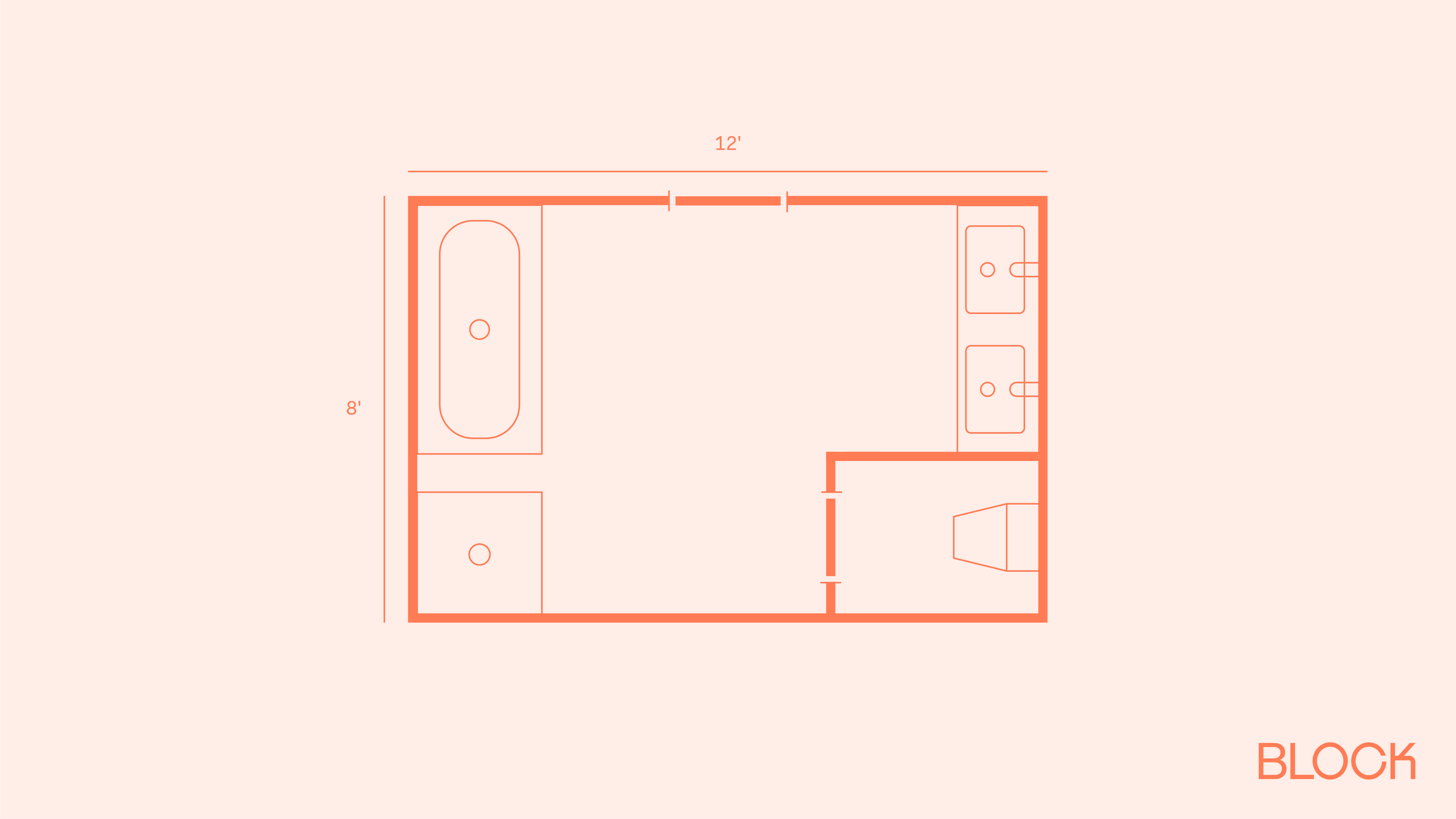
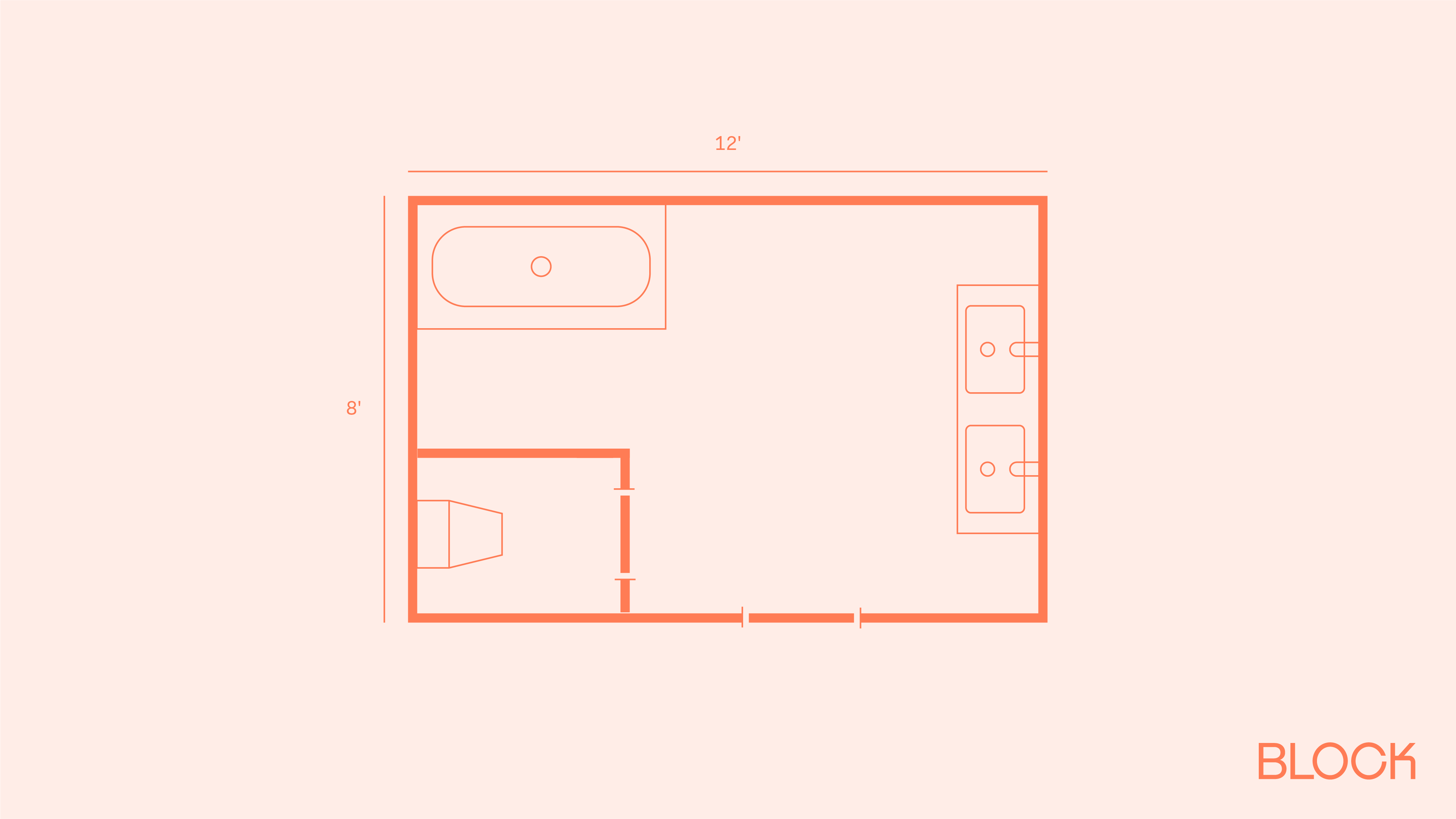
The length of this room works hard in this layout. The tub and shower occupy the left wall across the full 8-foot width, while a partial wall on the right side creates a private toilet compartment that sits discreetly away from the double vanity. The double vanity is the first thing you see from the door, and the toilet is tucked around the corner behind it. That separation is something most bathrooms this size cannot pull off, and it is genuinely useful in a shared primary bath.
What makes this layout especially practical is the clear zoning it creates. The wet zone and the grooming zone are on opposite sides of the room, connected by an open floor. Two people can move through space simultaneously without interfering with each other at any point. For a bathroom that sees heavy morning traffic, that kind of organization pays for itself quickly.
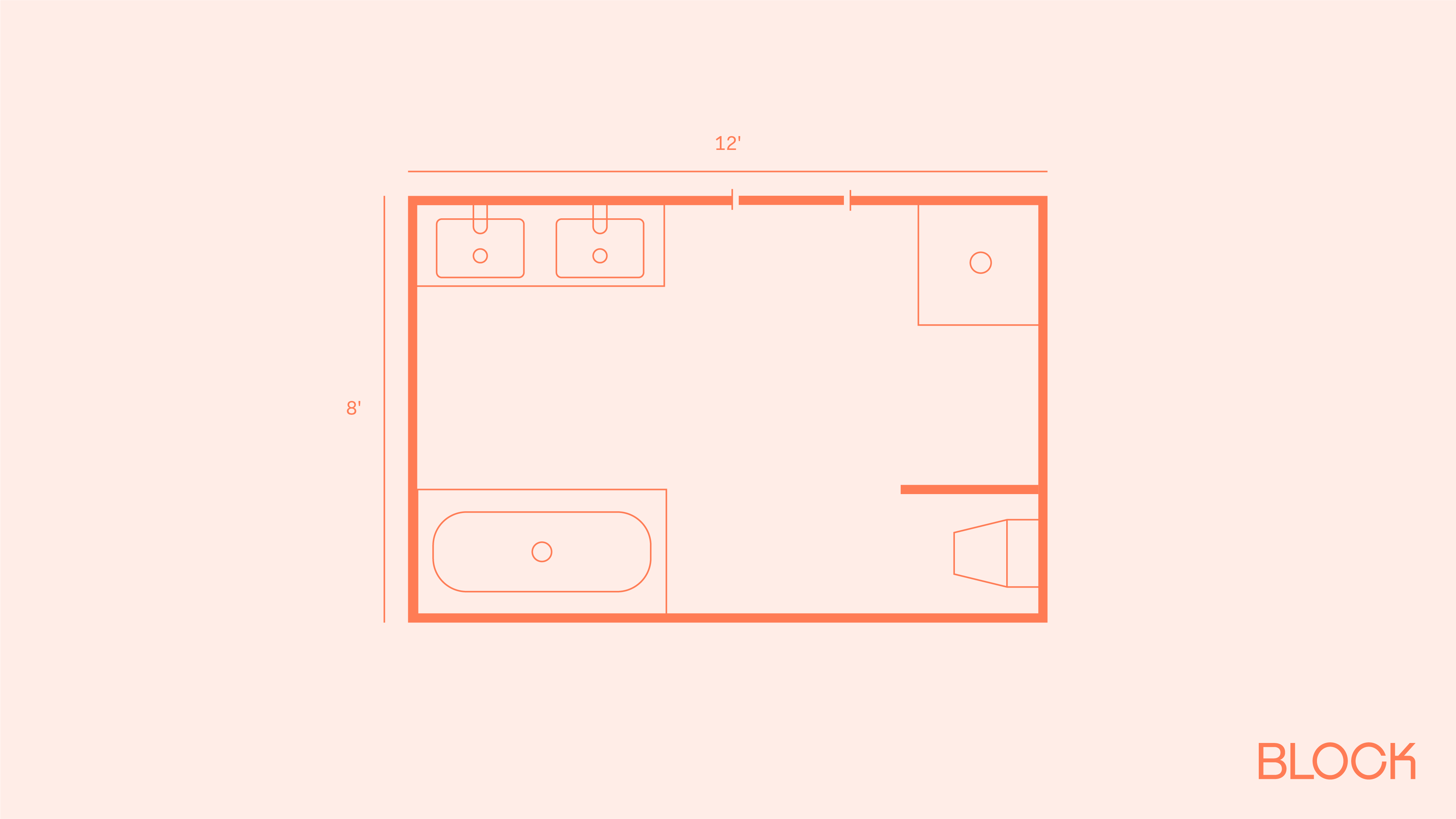
The upper wall is doing serious work in this layout. The double vanity spans the left portion, a shower occupies the upper-right corner, and the tub runs horizontally along the lower-left, oriented to take advantage of the room's width. A partial wall in the lower-right creates a private toilet compartment that sits out of the sightline from both the vanity and the tub. The center of the room is entirely open floor.
What stands out here is how much the layout does without the room ever feeling overloaded. The toilet compartment adds a level of privacy that is rare in a bathroom this size, and the double vanity paired with a separate shower makes this configuration genuinely well-suited to a primary bath shared by two people. The horizontal tub takes advantage of the 8-foot width in a way that a vertically oriented tub could not, and it fits naturally beneath the vanity zone without requiring any wall space of its own.
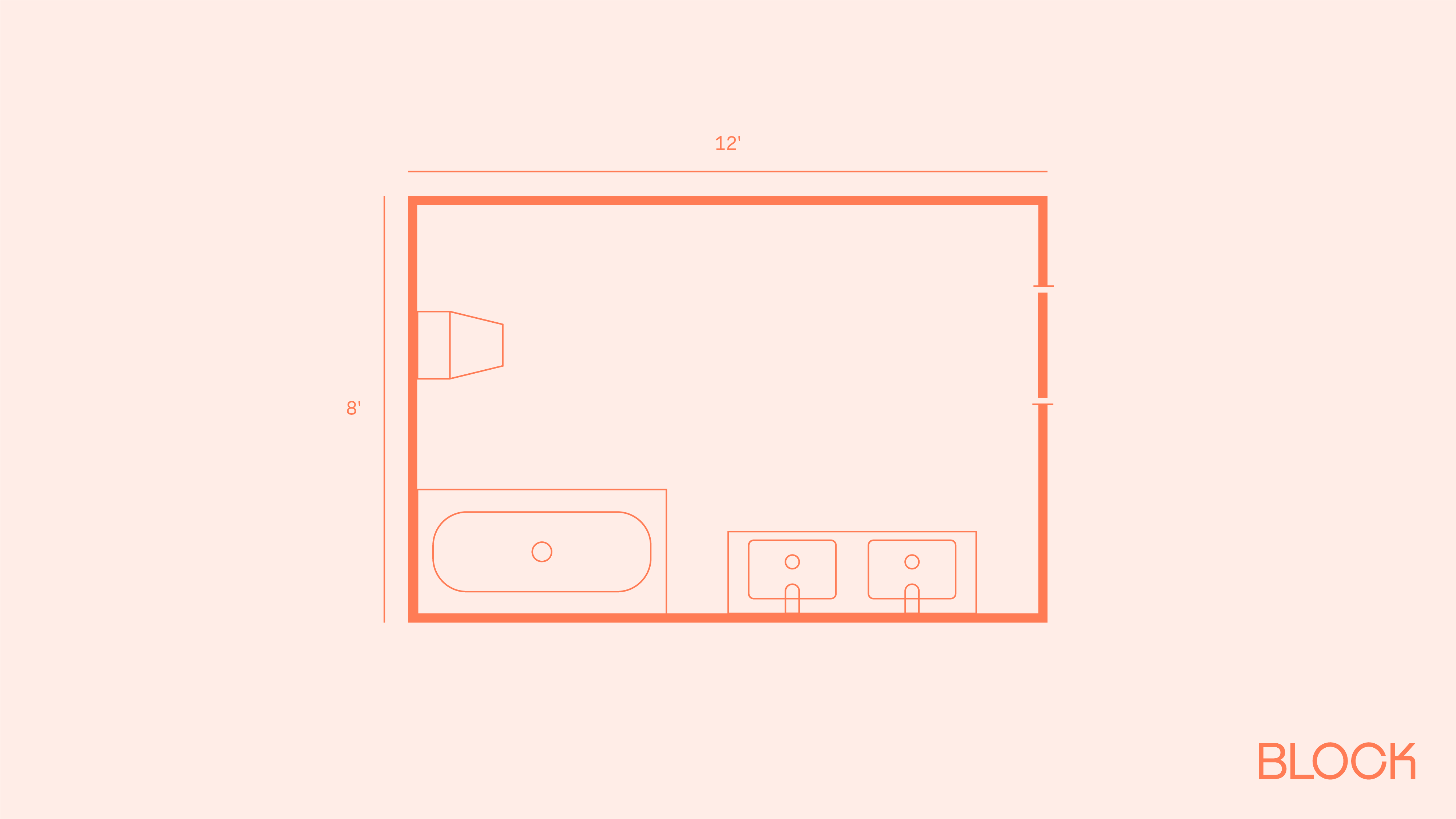
Simplicity is this layout's greatest strength. The tub runs horizontally along the upper-left, the toilet sits in the upper-left corner below it, and the double vanity spans the lower wall. The right side of the room and the door are on the longer walls, leaving a wide open floor zone between the upper wet fixtures and the lower grooming zone. The room reads as organized and uncrowded from every angle.
The horizontal tub position along the upper wall is particularly well-suited to the 8x12 footprint because it uses the width of the room efficiently without consuming wall space that the vanity needs. Keeping the toilet directly beside the tub on the same side concentrates all the plumbing in one zone, which simplifies rough-in work and keeps the budget lower than layouts that distribute plumbing across multiple walls. The double vanity on the lower wall gets the most prominent position in the room, which is exactly where it belongs in a bathroom used for daily grooming.
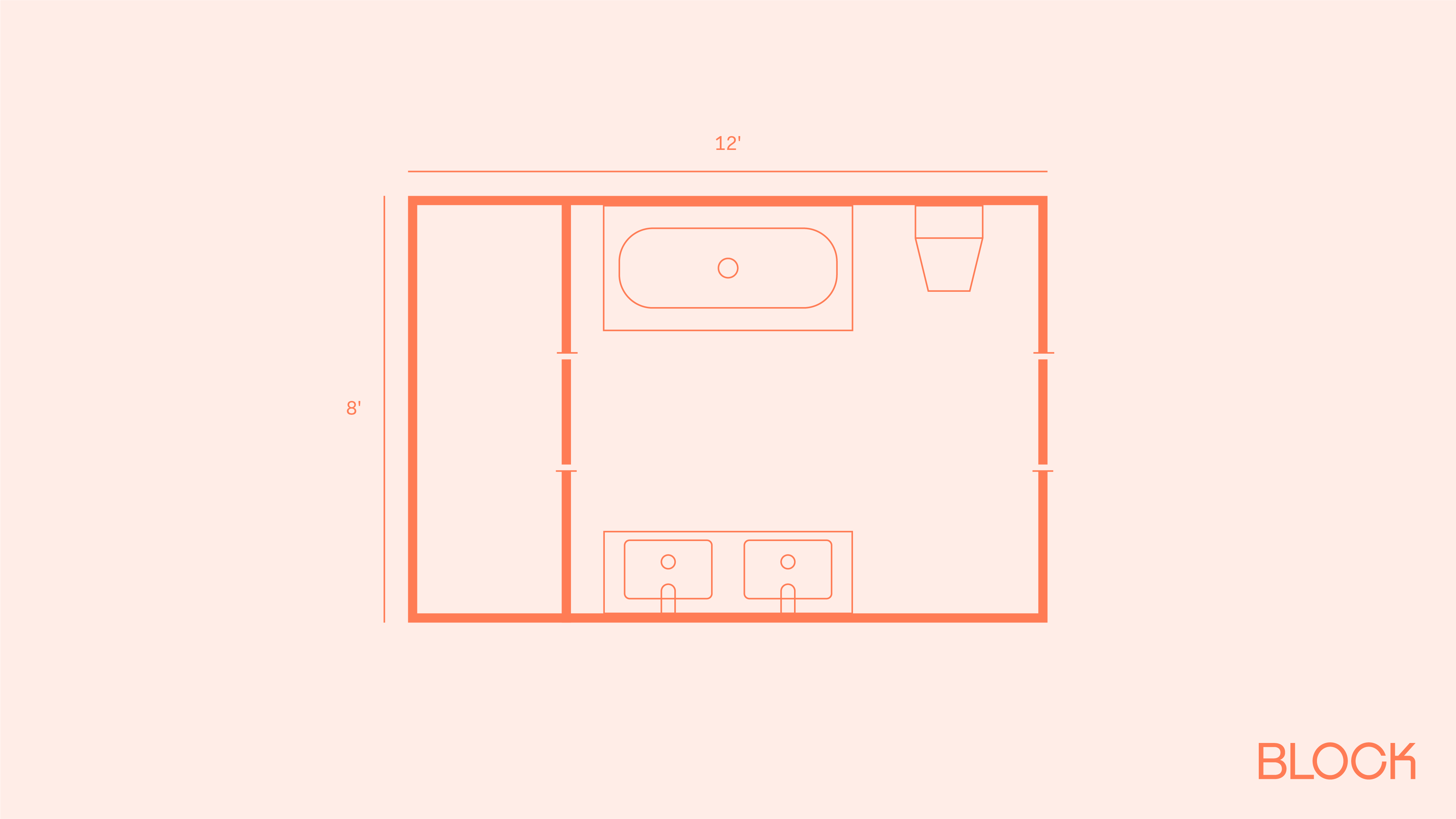
This is the most architecturally organized layout in the set. Two partial walls divide the room into three distinct zones: a walk-in shower behind the left partial wall, a bathing and toilet zone in the upper center, and a double vanity zone at the lower center. Each zone has its own defined boundary. The room feels less like a single bathroom and more like a suite with several rooms within it.
The symmetry of the lower half is particularly striking. The double vanity is centered between the two partial walls, with the door and open floor on both sides of it. That composition creates a sense of arrival when you enter the room that most bathroom layouts never achieve. This layout asks more of the renovation budget because the partial walls require framing, tiling on both faces, and careful waterproofing. For a homeowner who wants a primary bath that feels genuinely curated rather than just well-appointed, the investment is justified.
Bring Your Dream Bathroom to Life
Ninety-six square feet and a 12-foot length give you options that smaller and squarer bathrooms simply do not. The ideas below are not about extravagance. They are about using the room's proportions intelligently to get more function, more comfort, and more daily satisfaction out of the space you already have.
A double vanity is one of the most consistently valued upgrades in a shared primary bath, and the 8-foot width of this room accommodates one comfortably without the clearance compromises you would face in a narrower space. The key is choosing a model with storage that actually works for how you use the room. Deep drawers for hair tools and appliances, a dedicated cabinet on each side for each person's products, and a countertop that is wide enough for two people to use simultaneously without bumping elbows are the details that turn a double vanity from a visual upgrade into a genuine quality-of-life improvement.
In terms of sizing, a 60-inch double vanity fits an 8-foot wall with comfortable clearance on both sides. A 72-inch model is also possible and gives each person a more generous individual basin, though it leaves less breathing room at the ends of the wall. Wall-mounted models are worth considering here: they free up floor space, make cleaning easier, and give the room a lighter visual profile, which is a meaningful benefit in an 8-foot-wide space.
In a smaller bathroom, choosing between a tub and a walk-in shower often comes down to necessity. In an 8x12, you do not have to choose. Several of the layouts above show how both can be included without either feeling like a poor relation. The practical question is how you actually use them. If daily showers are the routine and the tub is for occasional soaking, a compact tub with a dedicated walk-in shower beside it is probably the right answer. If both are regular-use fixtures for two people, a larger tub with a separate enclosed shower zone makes more sense.
The combination that tends to deliver the most satisfaction in a bathroom this size is a soaking tub positioned at one end of the room and a shower stall at 36x36 inches or larger at the other end or on the adjacent wall. That arrangement gives each fixture its own zone and avoids the congestion that comes from cramming them side by side. Both fixtures benefit from having defined space around them, and the 12-foot length gives you the linear footage to make that work.
For more inspiration, check out our large shower ideas.
A partial wall that creates a separate toilet nook is one of the most underappreciated upgrades in a primary bathroom renovation, and the 8x12 footprint is one of the few sizes where it is genuinely achievable without sacrificing anything meaningful elsewhere in the room. The layouts above show two examples of how it can be done: either as a full compartment with its own partial-wall entry, or as a recessed nook tucked behind the vanity wall.
The framing and finishing for a toilet compartment typically adds $2,000 to $4,000 to the renovation budget, depending on the size of the partition and the tile specification used on both faces of the wall. That cost buys something that most bathroom layouts cannot offer at any price: the ability to use the toilet while another person is in the vanity or in the shower, without either person feeling like they are in each other's space. In a busy household, it is one of the most practical investments you can make.
The 12-foot length of this bathroom gives you more linear wall space than most bathrooms, which means more opportunities for storage that is built into the room rather than added on top of it. Recessed niches between studs in the shower wall eliminate the need for a hanging caddy and keep the enclosure looking clean. A niche above the toilet, recessed into the wall at a comfortable height, holds spare towels or toiletries without projecting into the room. A floor-to-ceiling linen cabinet built into the wall between the toilet and the vanity can hold a year's worth of towels and bathroom supplies in a footprint of roughly 12 to 18 inches deep and 24 to 36 inches wide.
The time to plan these is before the walls close, not after. If you know where you want built-in storage, your contractor can frame the cavities during rough-in, which is far simpler and less expensive than trying to add them once tile is on the walls. It is worth having a specific conversation about storage locations when you finalize your floor plan.
If the renovation involves reconfiguring walls, or the bathroom adjoins a bedroom or hallway, the 8x12 footprint sometimes allows for a modest linen closet or dressing alcove to be incorporated into the plan without reducing the bathroom's usable floor area. A 24-inch-deep closet set into a wall recess at the far end of the room can hold six to eight months of household linens while keeping the main bathroom floor entirely clear.
This is more common in gut renovations where the wall framing is being redone entirely, and less feasible in refresh-level projects. But if you are already opening walls as part of the project, it is worth asking your contractor whether the adjacent space allows for it. The best time to add a linen closet to a bathroom is when the walls are already open. Every other time is a compromise.
An 8x12 bathroom done well is one of the most functional rooms in the house. Getting it there takes a contractor who understands how to use the room's proportions to your advantage, who plans the plumbing layout to minimize cost without limiting what you can do with the space, and who brings the kind of attention to detail that built-in storage, partial walls, and quality tile work actually require.
Block Renovation connects you with thoroughly vetted local contractors who provide detailed, comparable proposals with line-item pricing. Every project comes with progress-based payments, expert scope review to minimize change orders, and a one-year workmanship warranty on every job.
Remodel with confidence through Block

Connect to vetted local contractors
We only work with top-tier, thoroughly vetted contractors

Get expert guidance
Our project planners offer expert advice, scope review, and ongoing support as needed
Enjoy peace of mind throughout your renovation
Secure payment system puts you in control and protects your remodel

Renovate confidently with Block
Easily compare quotes from top quality contractors, and get peace of mind with warranty & price protections.
Bathroom Floor Plans
300 Sq Ft Bathroom: 7 Large Master Bath Layouts
06.05.2026
Bathroom Floor Plans
100 Square Foot Bathroom Layout: Make It Work
06.02.2026
Bathroom Floor Plans
Rectangular Bathroom Layout Guide: Plans & Costs
05.11.2026
Bathroom Floor Plans
5x7 Bathroom Floor Plans: Layouts & Fixture Guide
04.29.2026

Bathroom Floor Plans
7x9 Bathroom Layout: 4 Floor Plans + Real Costs
04.27.2026