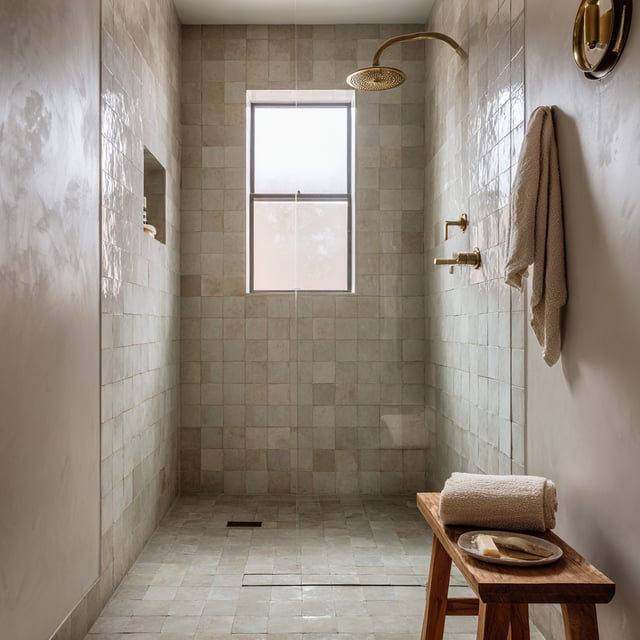
Freestanding Tubs & Showers - How & Why Treat Your Bathroom to Both

 Modern bathroom with tan tiles, wood vanity, and a pink ceiling.

In This Article

    Having a freestanding tub and a separate shower in the same bathroom is one of the most satisfying upgrades a primary bath can get. The two serve genuinely different purposes: a shower is efficient, a soaking tub is restorative. Giving each its own dedicated space lets both do their job well. But pulling it off takes real planning. Space, plumbing, layout, and finish choices all have to work together.

    Configurations and smart pairings

    Before getting into dimensions and tile choices, it helps to decide how the two elements will relate to each other spatially. There are two main approaches, and they look and function very differently.

    Separate, defined zones

    In this layout, the tub and shower each occupy their own distinct area of the bathroom, often divided by a partial wall, a change in flooring, or simply enough open space to give each element breathing room. The shower is fully enclosed, the tub stands on its own as a visual centerpiece, and the two feel like separate destinations within the same room. This works beautifully in larger bathrooms where there is ample square footage to work with.
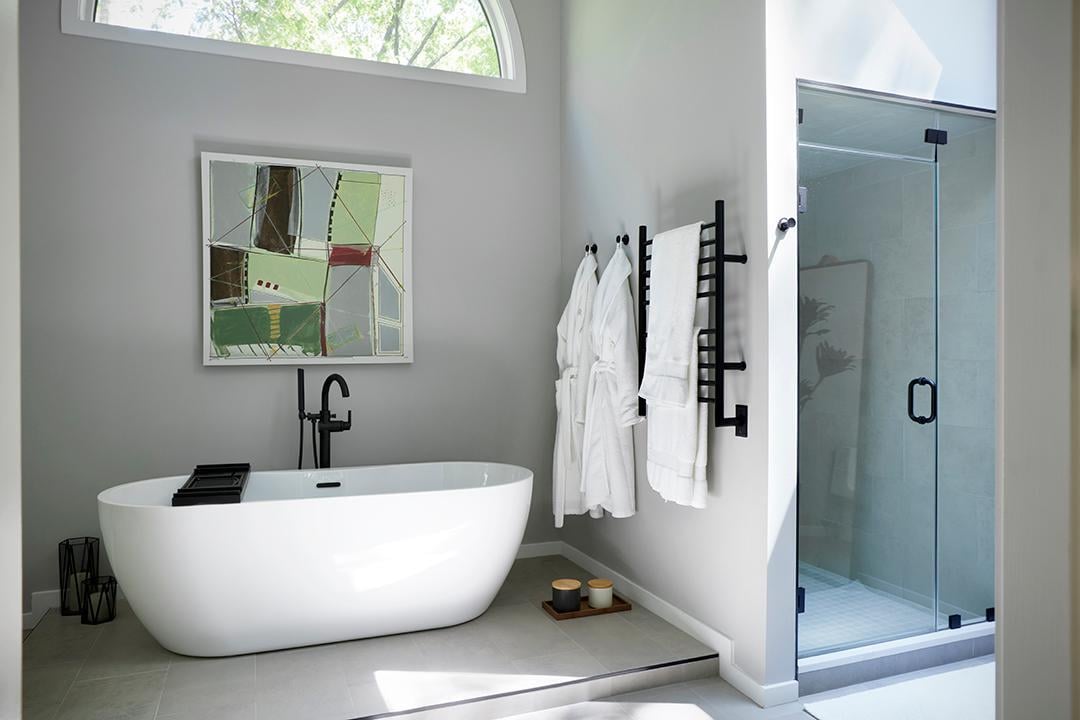

    Modern bathroom with freestanding tub and glass shower.

    This Block Renovation bathroom remodel is a strong example: a generously sized contemporary bathroom where a walk-in shower and soaking tub each hold their own, anchored by a skylight and arched window that flood both zones with natural light.

    A shared wet room

    This design has the tub and shower directly next to one another in a single remodeled wet zone, a decision that consumes much less floor space than the above option. The single drain point also simplifies rough plumbing considerably. This meaningfully reduces labor costs compared to running separate supply and drain lines.

    This Block Renovation bathroom remodel shows this approach at its best: a freestanding tub set within a fully tiled wet room, with a mosaic tile detail that ties the whole space together.
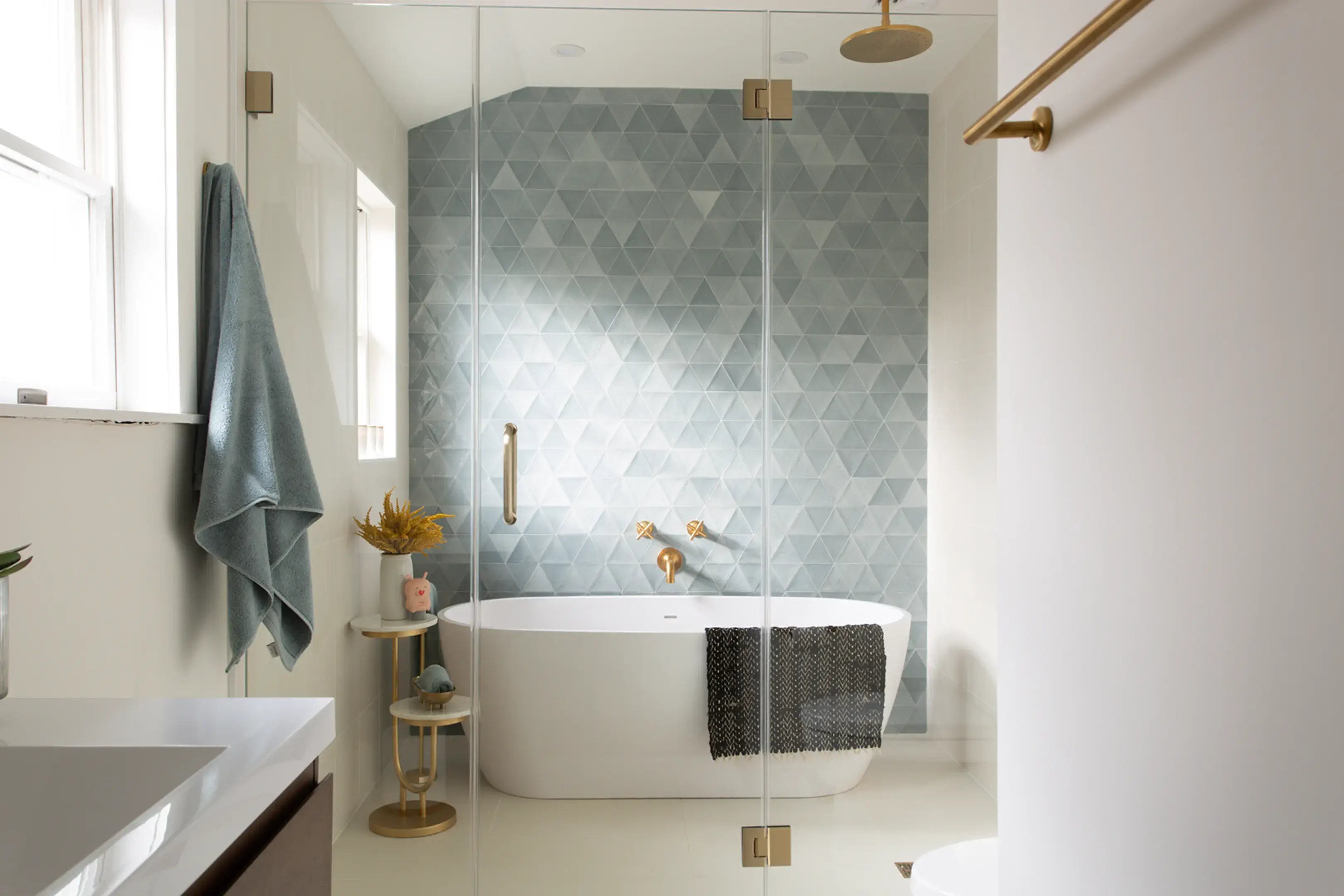
     Modern bath with blue triangle tiles and brass hardware.

    How much space you actually need for a separate bathtub and shower

    Most layout failures in this project come down to clearance, not total square footage.

    Freestanding tub clearance

    A freestanding tub alone is not especially large. Most range from 55 to 72 inches long and 27 to 32 inches wide. But a tub sitting flush against a wall with no room to walk around it loses much of its appeal. A freestanding tub needs a minimum of 6 inches of clearance on all accessible sides, though 12 inches is where it actually starts to look like a design choice.

    Shower enclosure clearance

    A separate shower enclosure requires a minimum footprint of roughly 36 by 36 inches, though 36 by 48 inches is far more comfortable. Factor in clearance in front of the shower door, at least 24 inches to swing open freely, and you start to understand why this layout asks for a bathroom of at least 80 to 100 square feet to feel functional, and ideally 120 square feet or more.

    Wet room clearance

    For a wet room configuration, the math is a little more forgiving. Because the tub and shower share a zone, you are not carving out two entirely separate footprints. A well-planned wet room can work in a bathroom as small as 60 to 70 square feet if the layout is tight and the plumbing lines up.

    The reality check: meeting the minimum is not enough

    Just because your bathroom hits the minimum square footage does not mean this layout is right for it. A cramped tub-and-shower bathroom is worse than a thoughtfully designed bathroom with just one of the two. The freestanding tub loses its entire visual argument when it is wedged into a corner with no breathing room.

    Ultimately, this is the reason that Bostonians Luiza and Marco Rossi decided against placing a freestanding tub next to their shower. “We really wanted to, but our interior designer suggested we look at 3D renderings, first,” says Luiza. “That mockup showed us exactly how crowded the bathroom would feel, even though we technically had enough room. We ended up choosing to install an extra-large shower, instead.”

    Talk to your contractor about drain placement; it’s surprisingly important

    One thing to nail down before anything else is the drain location. Where your freestanding tub drain sits in the floor determines the tub's position, which determines the tile layout, which affects the entire visual logic of the room. A contractor who quotes this project without addressing drain placement is skipping the decision that controls everything else about your layout.

    Design a Home That’s Uniquely Yours

    Block can help you achieve your renovation goals and bring your dream remodel to life with price assurance and expert support.

    Get Started
    Making the space look cohesive

    • Carry one material throughout. The fastest way to unify a tub-and-shower bathroom is to use the same tile on both. This does not mean identical treatments everywhere. A subtle variation in bathroom tile size or layout pattern between the shower interior and the tub surround can add visual interest while still reading as a single design language.
    • Match your metals, not your fixtures. The tub filler, shower fixtures, and any other hardware in the room should share a finish: matte black, brushed nickel, unlacquered brass, whatever fits the overall aesthetic. The fixture shapes and styles do not need to be identical. In fact, slight variation between the tub filler and the showerhead often looks more considered than buying a matching set. Our article Luxury Bathroom Brands for Fixtures & Accessories should give plenty of ideas.
    • Think about sightlines. When you walk into the bathroom, what do you see first? In most well-designed tub-and-shower layouts, the freestanding tub is the visual anchor. It reads as the focal point, and the shower recedes slightly. Positioning the tub so it is visible from the doorway, or framing it against a feature wall, reinforces that hierarchy. If the shower enclosure is the first thing you see, the freestanding tub loses its impact.
    • Use level changes sparingly but effectively. Raising the tub on a small platform, as shown in Block's Purchase project, is a classic move that adds drama and helps visually separate the tub zone from the rest of the room. Keep the platform height modest: four to six inches is usually enough. Make sure the step detail is clean and well-finished. A sloppy platform edge can undermine an otherwise well-executed room.

    The indulgences worth building in

    • View your choice of tub through the lens of indulgence. When a freestanding tub is paired with a shower, it’s the shower that will get the most use for bathing. That means that the tub becomes the place of relaxation; lean into this with a design meant for this very purpose. This could be a Japanese soaking tub, with its deeper basin and upright soaking position. Or perhaps a jetted tub or jacuzzi for a daily dose of hydrotherapy. For more inspiration, look to our guide to cool tub ideas.
    • A freestanding floor-mount tub filler. Wall-mount tub fillers are functional, but a floor-mount filler standing alongside a freestanding tub is a far stronger look. It reinforces the tub as a standalone sculptural object rather than something that needs the wall to function. Budget for this from the start: retrofitting a floor-mount filler after the fact means cutting into a finished floor.
    • Heated floors. In a bathroom where you are stepping from a hot shower onto bare tile or stone, radiant floor heating is one of the most impactful upgrades you can add. Retrofitting radiant heat into a finished floor costs several times more than installing it during construction.
    • A rain showerhead paired with a handheld. In a shower that shares space with a soaking tub, a dual shower system reinforces the sense that both fixtures belong to the same elevated experience. A ceiling-mount rain head and a separate handheld on a slider bar give you flexibility and look intentional together.
    • Natural light, where possible. A skylight above the tub zone is a recurring feature in the most striking tub-and-shower bathrooms. If your layout allows for it, it is worth having a serious conversation with your contractor about feasibility. Even a small skylight does more for the room than any lighting fixture.

    What to know before you build

    • Plumbing access is everything. A freestanding tub requires a water supply line and a drain that reach the tub's location on the floor, not the wall. If your tub is moving away from the existing plumbing wall, you are looking at opening up the subfloor to reroute supply lines and a drain. This is entirely doable, but it adds cost and should be scoped and priced explicitly before you commit to a tub placement.
    • Waterproofing in a wet room is non-negotiable. In a shared tub-and-shower wet room, the entire floor and lower wall area needs to be properly waterproofed, not just the shower pan. Membrane systems like Schluter Kerdi or similar products are the standard, and cutting corners here will cause water damage that will not be visible until it is already serious. Make sure your contractor specifies the waterproofing system by name in the project scope.
    • Freestanding tubs are heavier than they look. A cast iron freestanding tub filled with water can weigh over 500 pounds. Before selecting a tub material, confirm that your subfloor can support it. In older homes, or on upper floors, a structural assessment may be warranted. You’ll also want to prepare for increased installation costs compared to other tubs.
    • Access panels matter. Floor-mount tub fillers and any plumbing supply that runs through the floor needs to be accessible for future repairs. Work with your contractor to plan a discreet access panel into the design so that a plumbing issue five years from now does not require tearing up your finished floor.
    • Ventilation has to keep pace with the space. A larger wet room or a bathroom with two major water features needs adequate exhaust fan capacity. The standard calculation is 1 CFM per square foot of bathroom space, but in a room with a soaking tub and a large shower, err higher. An undersized exhaust fan is one of the most common and most avoidable mistakes in bathroom renovations.

    Finding the right contractor for this project

    A bathroom with a freestanding tub and a separate shower requires a contractor who has built one before. The gap between someone who has and someone who hasn't will show up in your finished product.

    Block Renovation connects homeowners with thoroughly vetted, licensed contractors who are matched specifically to their project type, scope, and location. Every contractor in Block's network has passed background checks, license verification, and workmanship reviews. When you work with Block, you also get a project planner who can review contractor proposals side by side, flag missing line items, and help you understand what you are paying for before work begins.

    Remodel with confidence through Block

    Happy contractor doing an interview

    Connect to vetted local contractors

    We only work with top-tier, thoroughly vetted contractors

    Couple planning their renovation around the Block dashboard

    Get expert guidance

    Our project planners offer expert advice, scope review, and ongoing support as needed

    Familty enjoying coffee in their newly renovated modern ktchen

    Enjoy peace of mind throughout your renovation

    Secure payment system puts you in control and protects your remodel

    Get Started