



-1.webp?width=640&name=5301c89b-3165-4f83-af34-a6b02eaa6c48%20(1)-1.webp)
Shower
Shower vs. Tub: How to Choose for Your Bathroom
07.06.2026
03.18.2026


In This Article
The bathtub is having a moment. After years of homeowners ripping tubs out in favor of walk-in showers, the pendulum has swung back—and today's modern bathtub ideas look nothing like the builder-grade models that fell out of favor. Freestanding sculptural silhouettes, warm natural materials, bold color, and spa-inspired soaking depths are redefining what a tub can be and how it makes you feel.
Whether you're in the early stages of a bathroom renovation or just gathering ideas for someday, this guide is packed with fresh bathtub designs to inspire your next move. We'll start with the fun part—the ideas themselves—and then walk through the practical considerations that will help you pick the right tub for your space, your budget, and the way you actually live.
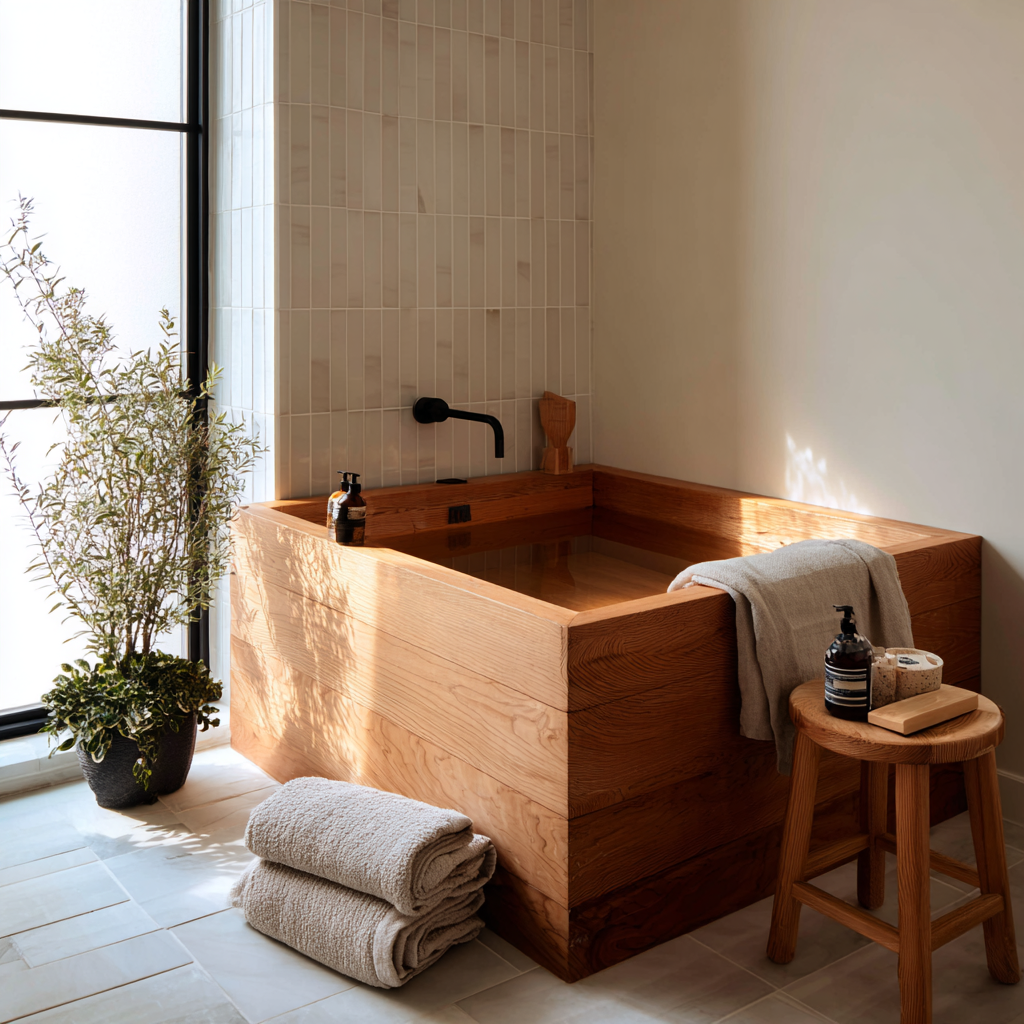
Inspired by the traditional ofuro, the Japanese soaking tub is designed for deep, upright immersion rather than reclining. These tubs are typically shorter in length but significantly deeper than standard models, allowing you to sit comfortably with water up to your shoulders.
Crafted from warm hinoki or cedar wood, a Japanese-style tub brings a natural, grounding quality to the bathroom—especially when paired with minimal fixtures, soft lighting, and organic textures like stone tile or linen towels. While the aesthetic is overall very traditional, this cool tub idea aligns well with modern design principles.
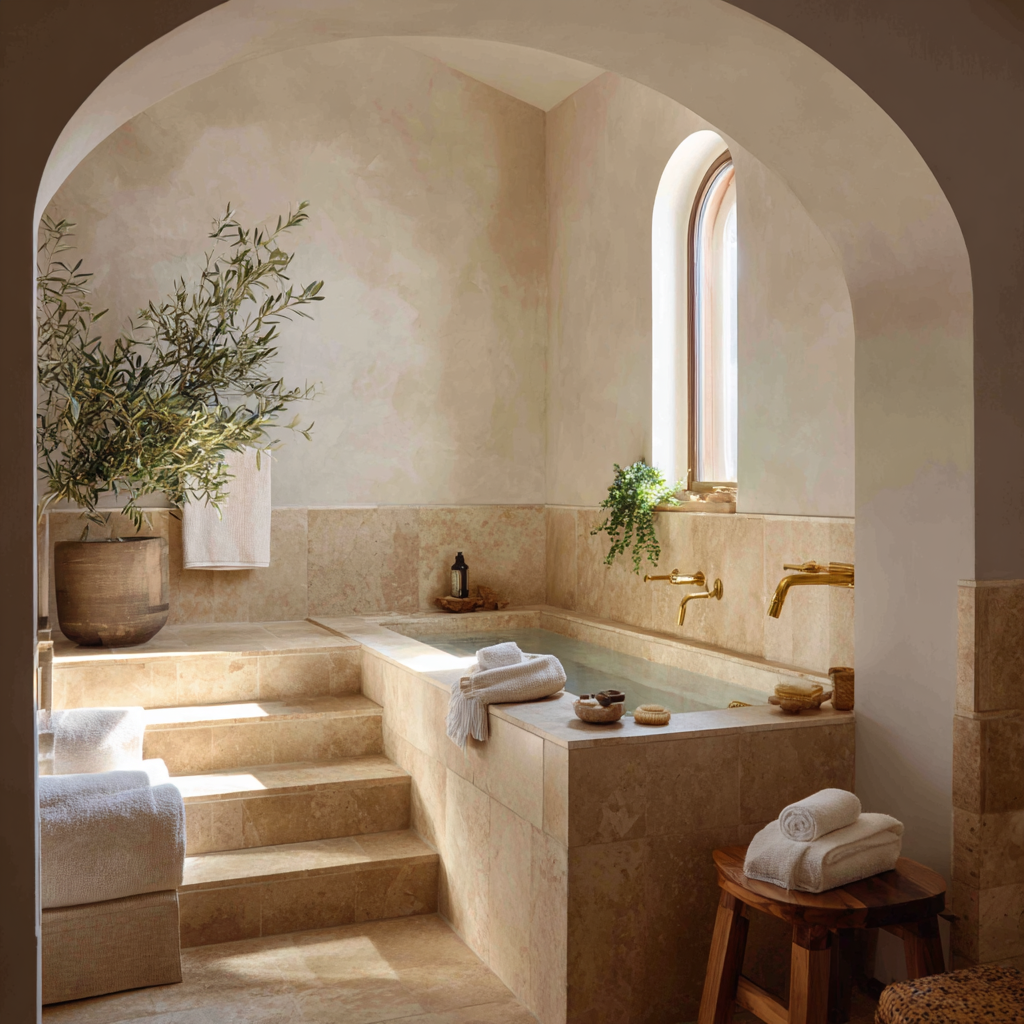
There's something undeniably dramatic about stepping down into a tub. Sunken bathtub designs, clad in natural stone like travertine or limestone, create an architectural moment in the bathroom that feels both ancient and entirely modern. The look works beautifully in larger primary bathrooms where you have room for a few steps and a generous surround.
Paired with warm-toned plaster walls, an arched niche, and brass hardware, a sunken stone tub can make the whole room feel like a destination.
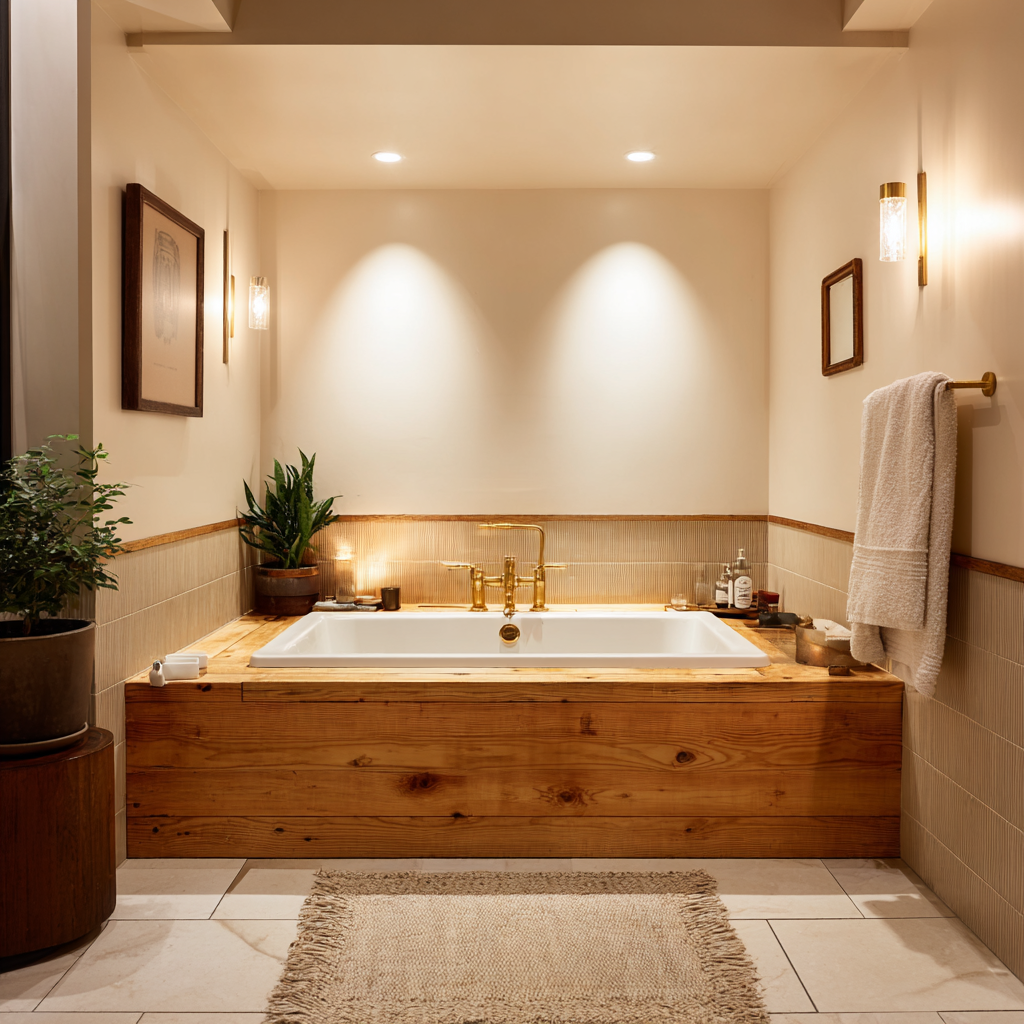
The classic drop-in tub gets a modern refresh when you swap out the standard tile surround for rich, warm wood paneling. Reclaimed timber, teak, or walnut planking around a clean white basin creates a beautiful contrast between rustic and refined—cozy without being kitschy. This bathtub design works well in homes that lean toward transitional or organic modern aesthetics, and it's a great way to add texture and warmth to a bathroom without a full structural overhaul.
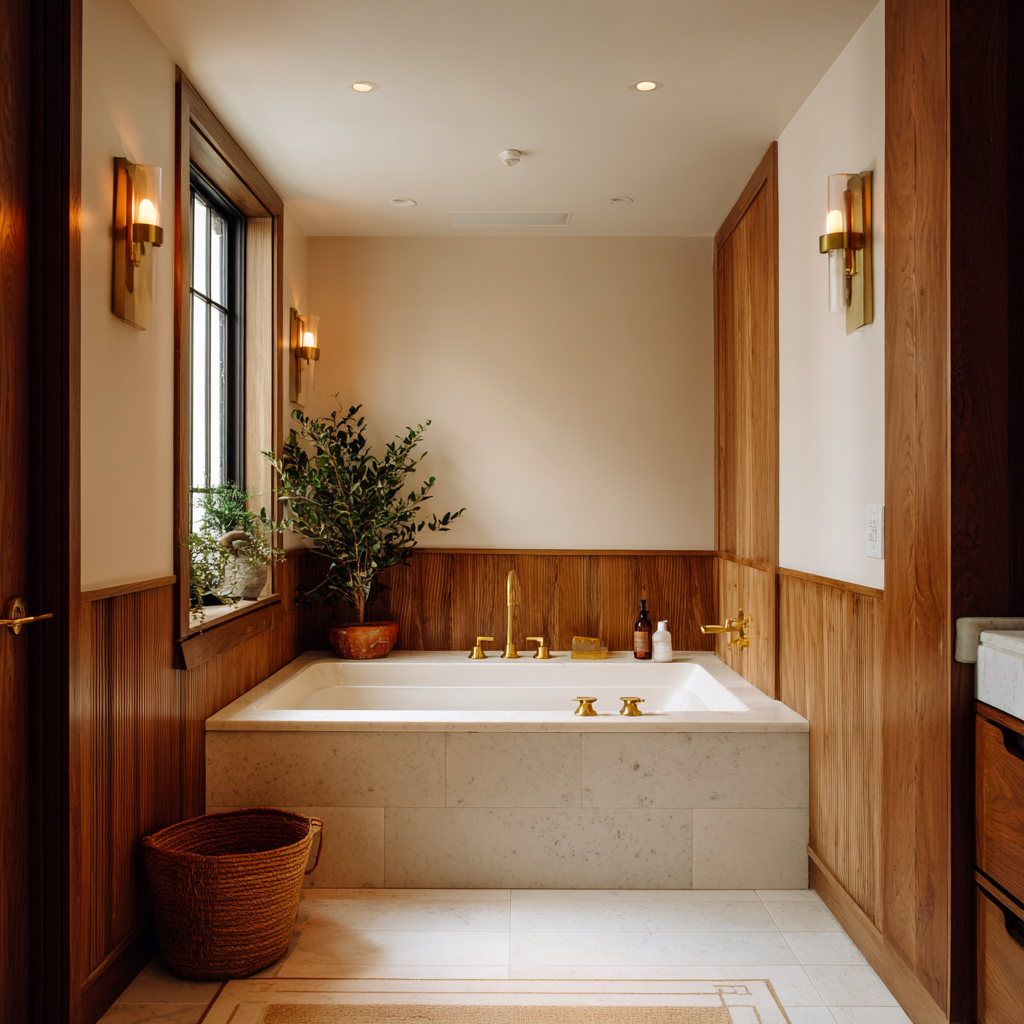
If you love the warmth of natural materials but have a standard three-wall alcove to work with, consider pairing a deep soaking tub with floor-to-ceiling wood paneling and a stone or marble deck. The combination of materials elevates a simple alcove layout into something that feels intentional and considered. Brass or unlacquered gold fixtures add a layer of richness, and the overall effect is a bathroom that feels handsome and collected—like it's always been there.
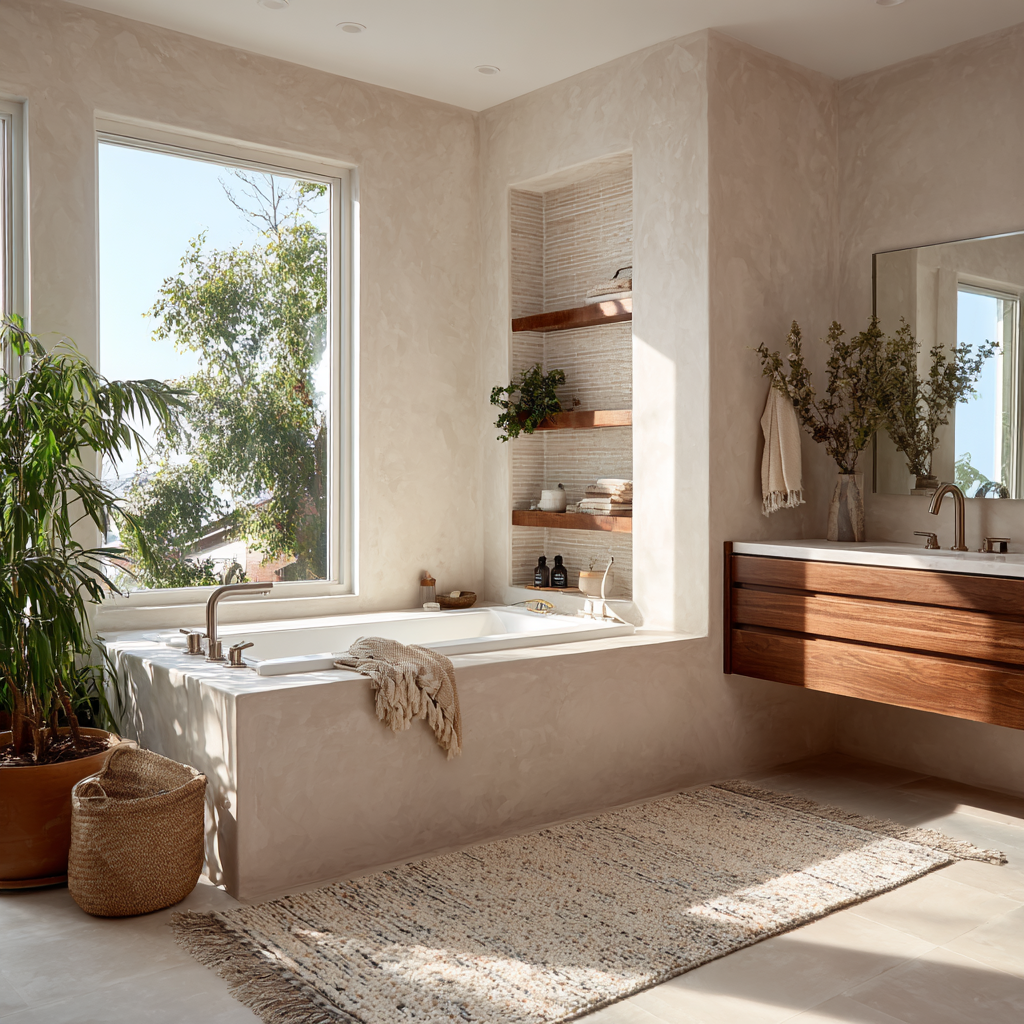
For homeowners who gravitate toward clean lines and quiet palettes, a solid-surface tub in a matte plaster-like finish might be the perfect fit. These tubs have a smooth, monolithic quality—almost like they've been carved from a single block. Set against matching plaster or microcement walls with a floating wood vanity and open shelving, the look is calm, cohesive, and effortlessly modern. It's a cool bathtub design that lets the architecture of the room do the talking.
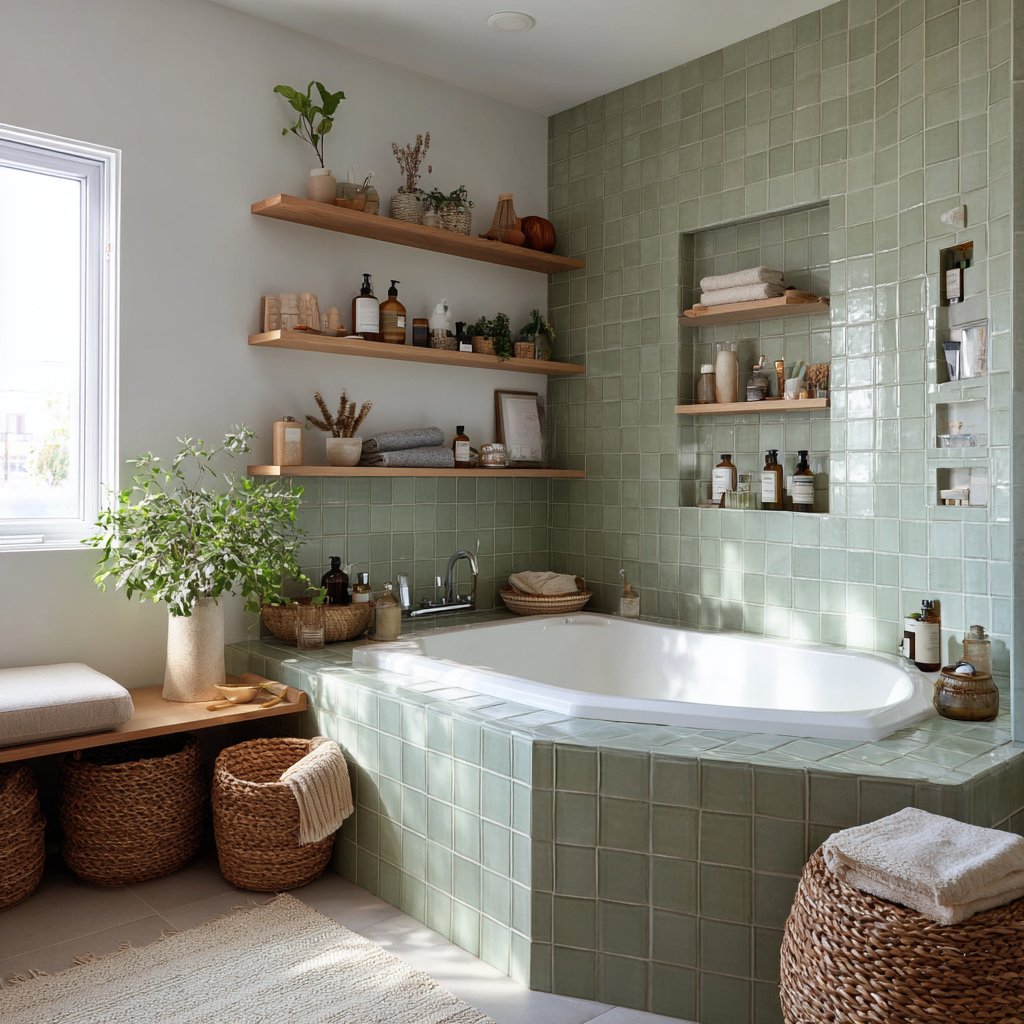
Corner tubs have been around for decades, but the latest versions feel entirely fresh. Wrapping a deep corner basin in handmade zellige or glazed ceramic tile—especially in an earthy color like sage green, terracotta, or warm cream—gives it real personality.
Add floating wood shelves above for storage, a built-in niche for bath products, and woven baskets below, and you've got a bathtub nook that's equal parts functional and beautiful. This is an especially smart bathtub idea for bathrooms with an awkward layout or limited square footage.
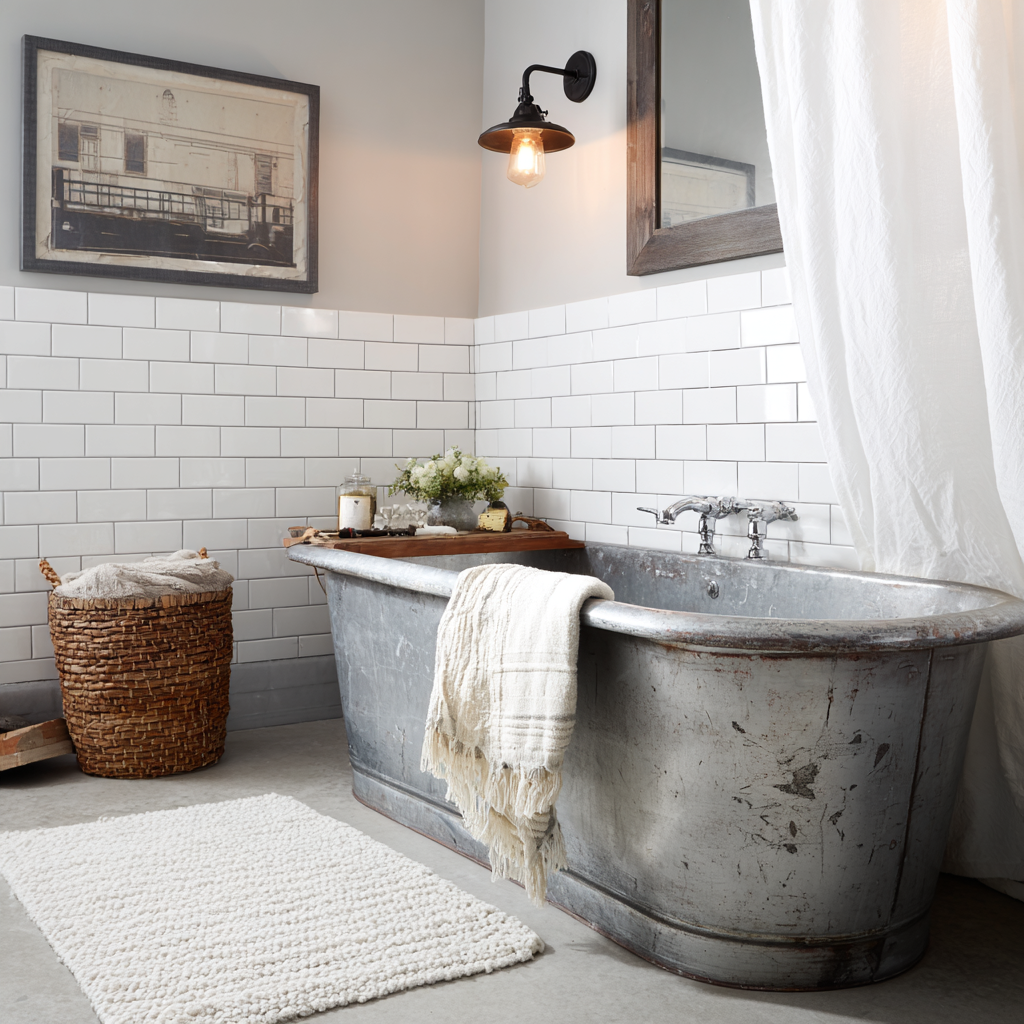
If your style leans farmhouse, industrial, or eclectic, a galvanized metal tub brings instant character. The weathered, patinated surface tells a story on its own, and it looks right at home against classic white subway tile, concrete floors, and exposed bulb lighting.
While reproduction galvanized tubs are available for easier installation, some homeowners seek out authentic vintage pieces for the real thing. It's not for every bathroom, but in the right setting—like a themed short-term rental—this is one of the most memorable, cool bathtub designs you can choose.
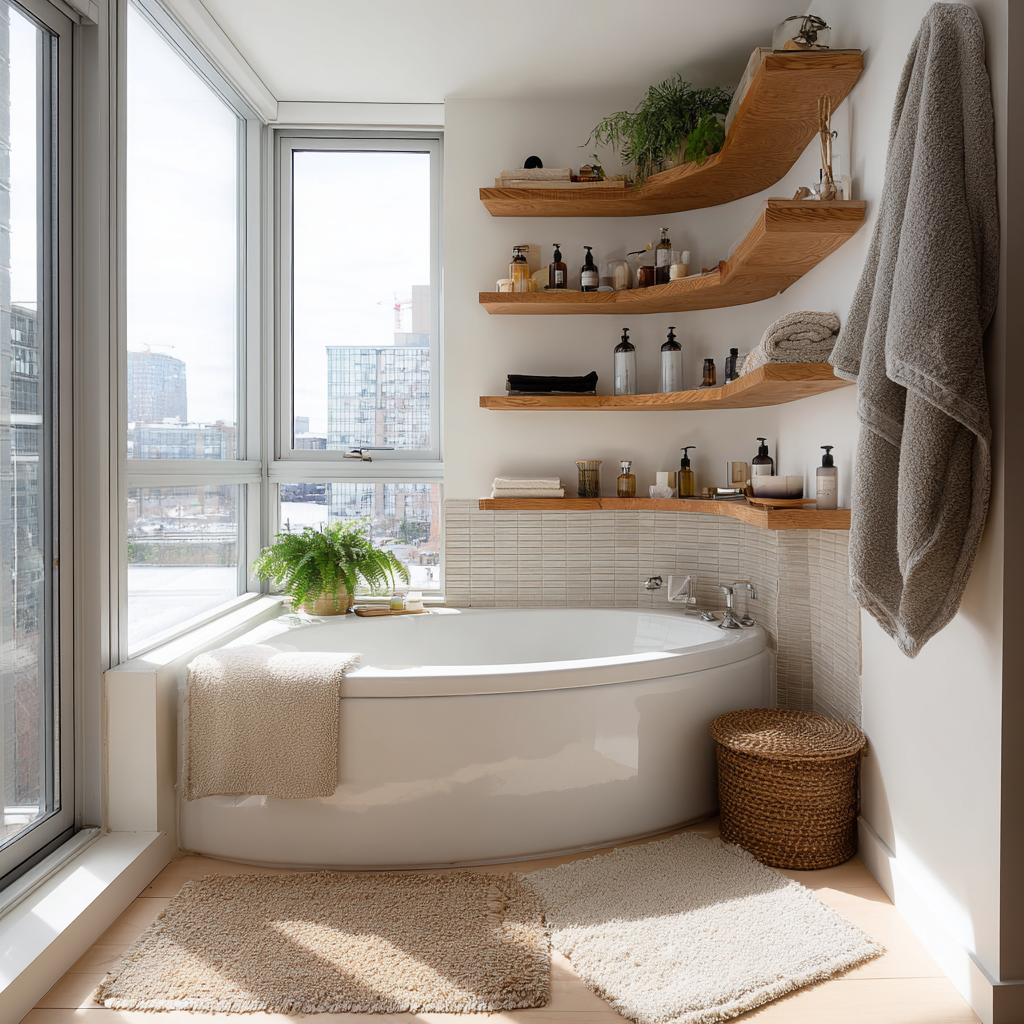
Space constraints don't mean you have to skip the tub entirely. A compact corner soaking tub, tucked beneath a window or into an unused angle, can deliver a real bathing experience in a surprisingly small footprint.
In a city apartment, positioning the tub near floor-to-ceiling windows means you get the light, the views, and the soak all at once. Curved floating shelves above make use of the vertical space for storage without visual bulk. For anyone who's assumed their apartment bathroom is too small for a tub, this design might change your mind.
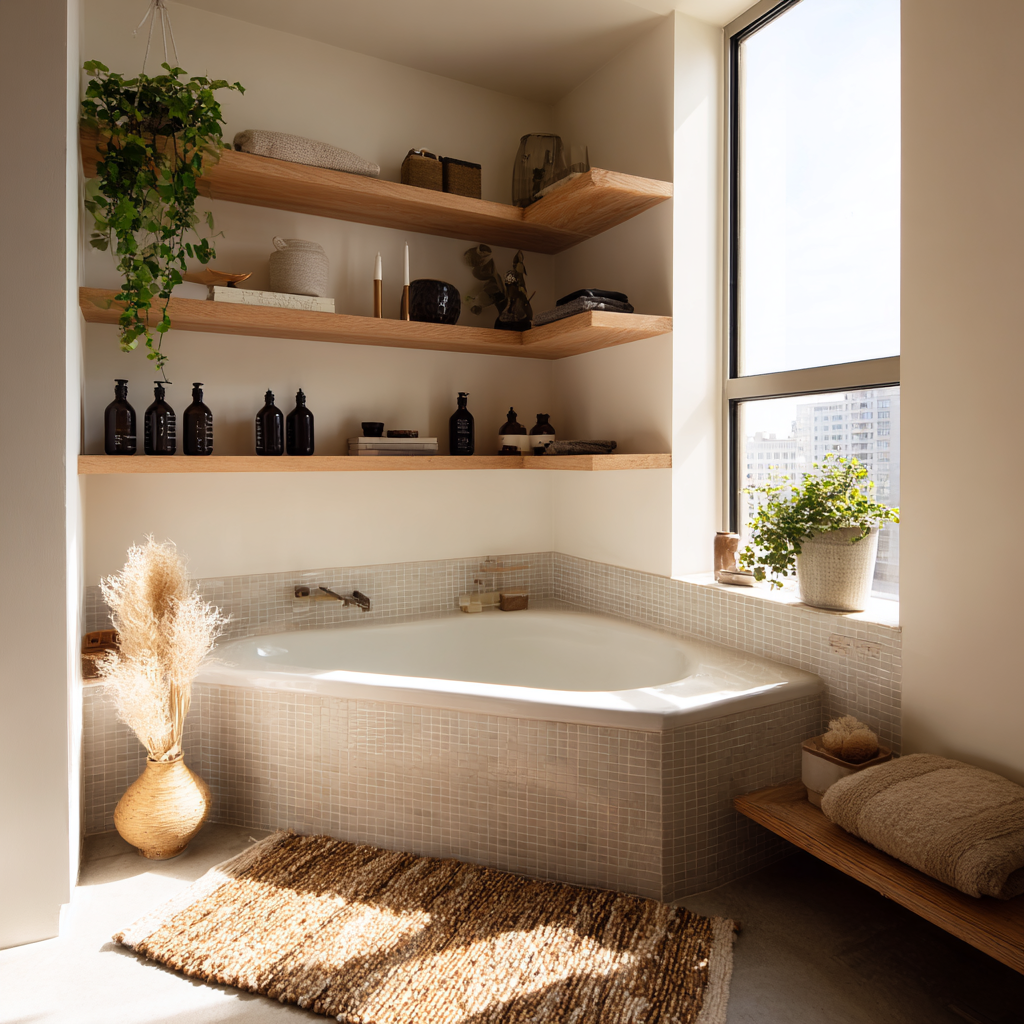
Taking the corner tub concept a step further, this design tucks the basin into a fully tiled nook with small-format mosaic tile wrapping the surround and deck. The effect is cohesive and intentional—like the tub was always meant to live right there. Warm, neutral tones keep it from feeling busy, while a simple wooden bench and a few curated objects make it personal. This is a cool bathtub idea that works particularly well in condo or co-op bathrooms where maximizing every inch matters.
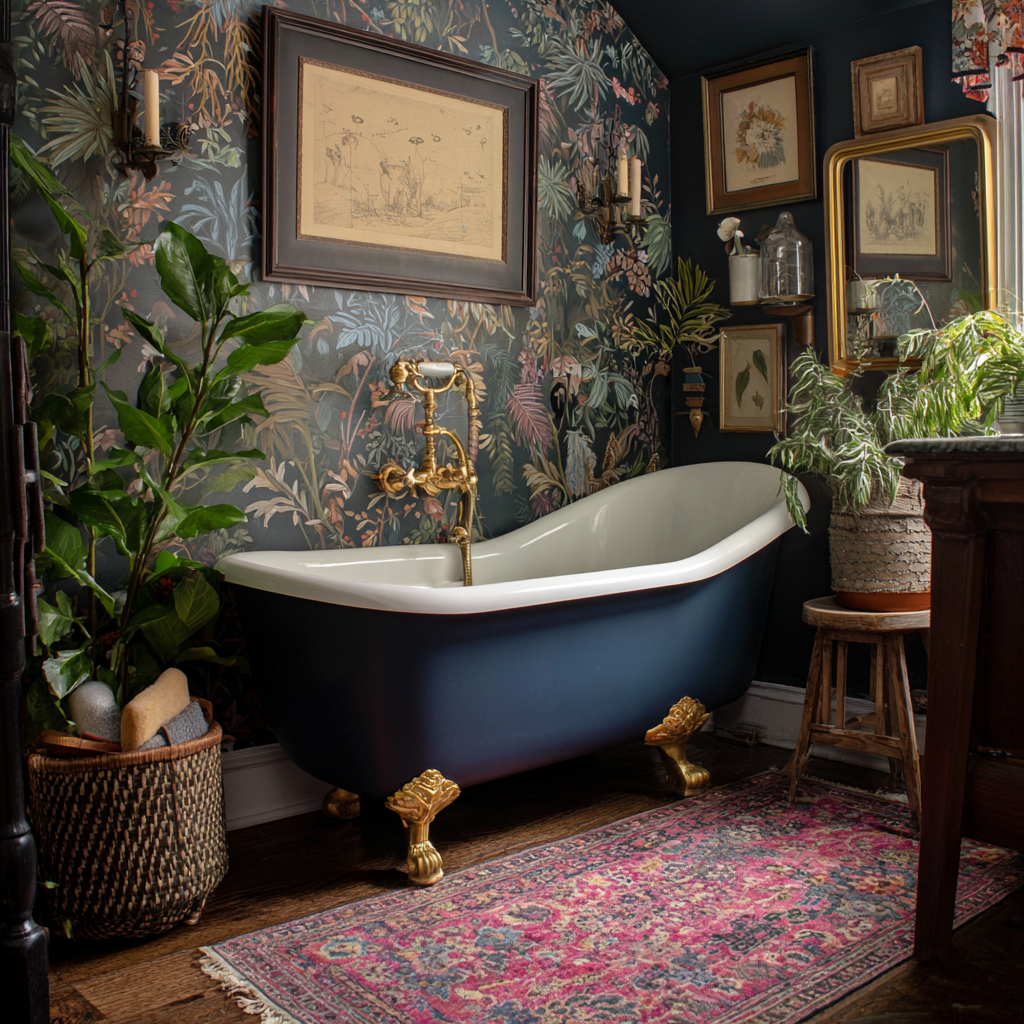
The clawfoot tub is a classic for a reason—but painting the exterior in a deep, saturated color takes it from charming to truly striking. A navy or emerald exterior with brass claw feet, set against bold botanical wallpaper and a gallery wall of vintage frames, creates a bathroom with real drama and personality. If you already have a clawfoot in decent structural shape, reglazing and repainting the exterior is a cost-effective way to make it feel brand new. It's proof that the best modern bathtub ideas don't always mean buying something new.
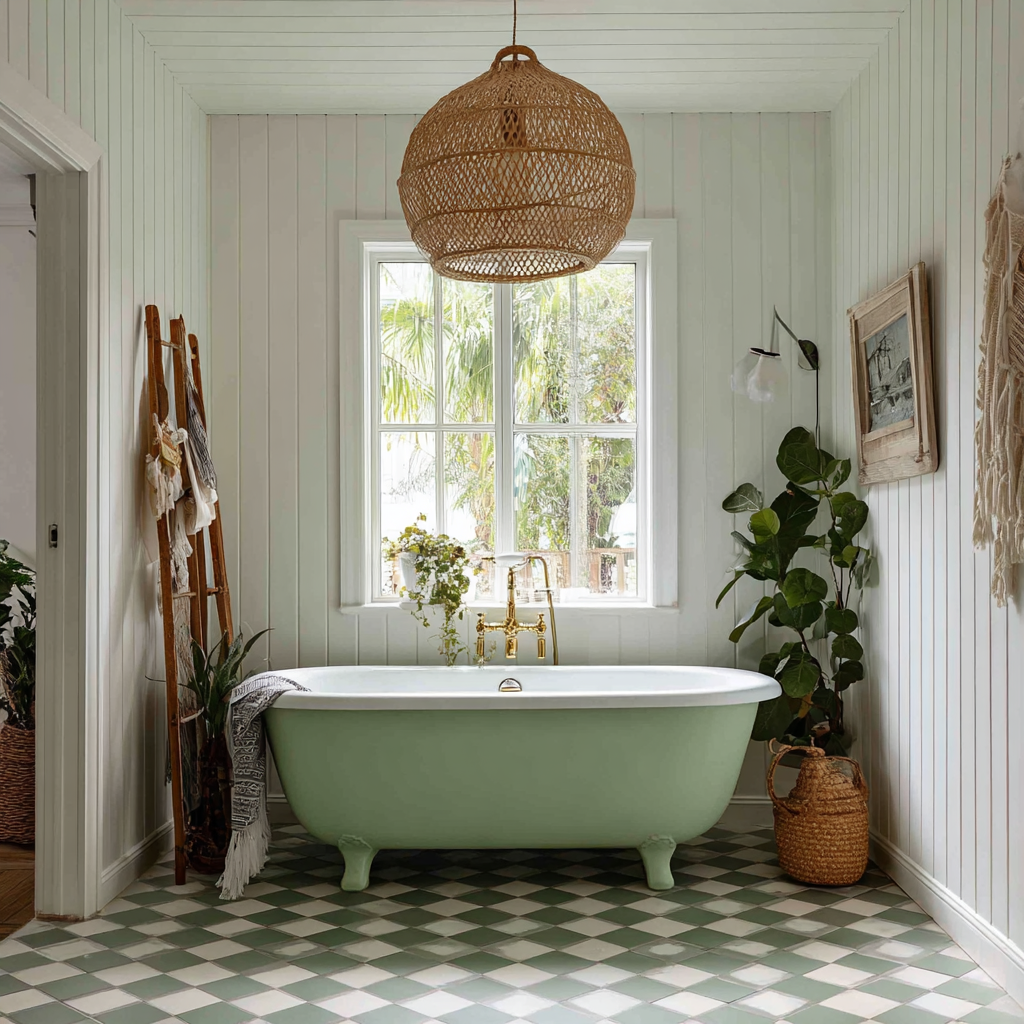
Color is making a confident return in bathroom design, and one of the most appealing ways to incorporate it is through the tub itself. A freestanding tub in soft sage green, blush pink, or sky blue becomes an instant focal point without overwhelming the room. Pair it with a patterned floor tile—like a classic checkerboard—beadboard paneling, and a woven pendant light for a look that feels fresh, playful, and full of character. It's a new bathtub idea that brings warmth and personality to spaces that might otherwise feel too minimal.
.png?width=1024&height=1024&name=u5821215421_A_statement_concrete_bathtub_with_rounded_edges_i_69d61226-c763-4b17-8f87-6b67ef610b5f_0%20(2).png)
Concrete bathtub designs have moved well beyond the industrial loft look. Today's versions feature smooth, rounded edges and organic shapes that feel more like sculpture than plumbing. A concrete tub anchors a bathroom with a sense of permanence and weight, and it pairs beautifully with softer elements: patterned cement floor tile, trailing plants, wood shelving, and art. Because concrete can be poured into nearly any form, it's also a strong option for custom shapes and sizes—ideal if you're working with an unconventional bathroom layout.
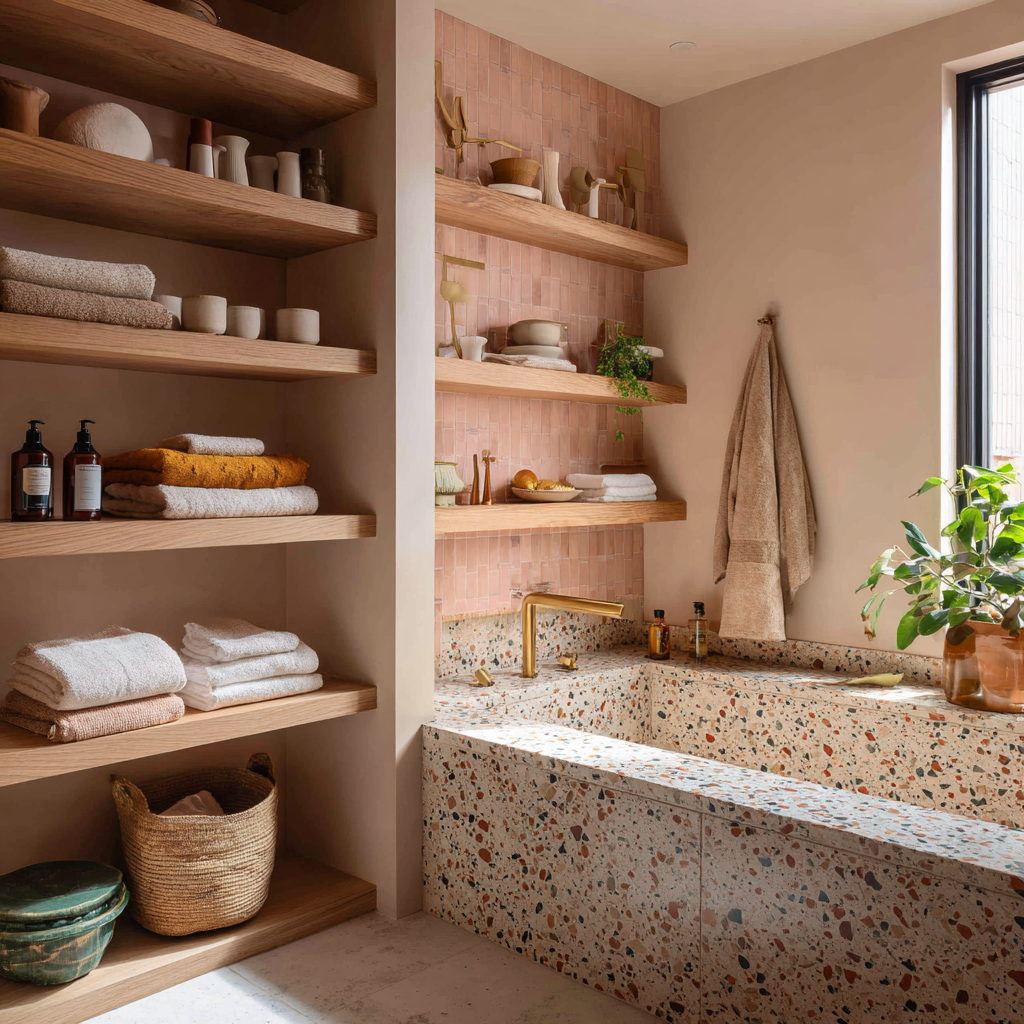
Terrazzo has made a full comeback, and one of the boldest applications is a built-in bathtub crafted from the material itself. The chunky, multicolored aggregate chips give the tub surface a sense of movement and visual interest that's impossible to replicate with a standard finish. Paired with a complementary tile—like a pink or blush zellige—and warm oak shelving, a terrazzo tub makes the bathroom feel artful and deeply personal. It's a custom approach that requires skilled fabrication, but the result is one of the most distinctive bathtub designs you'll find.
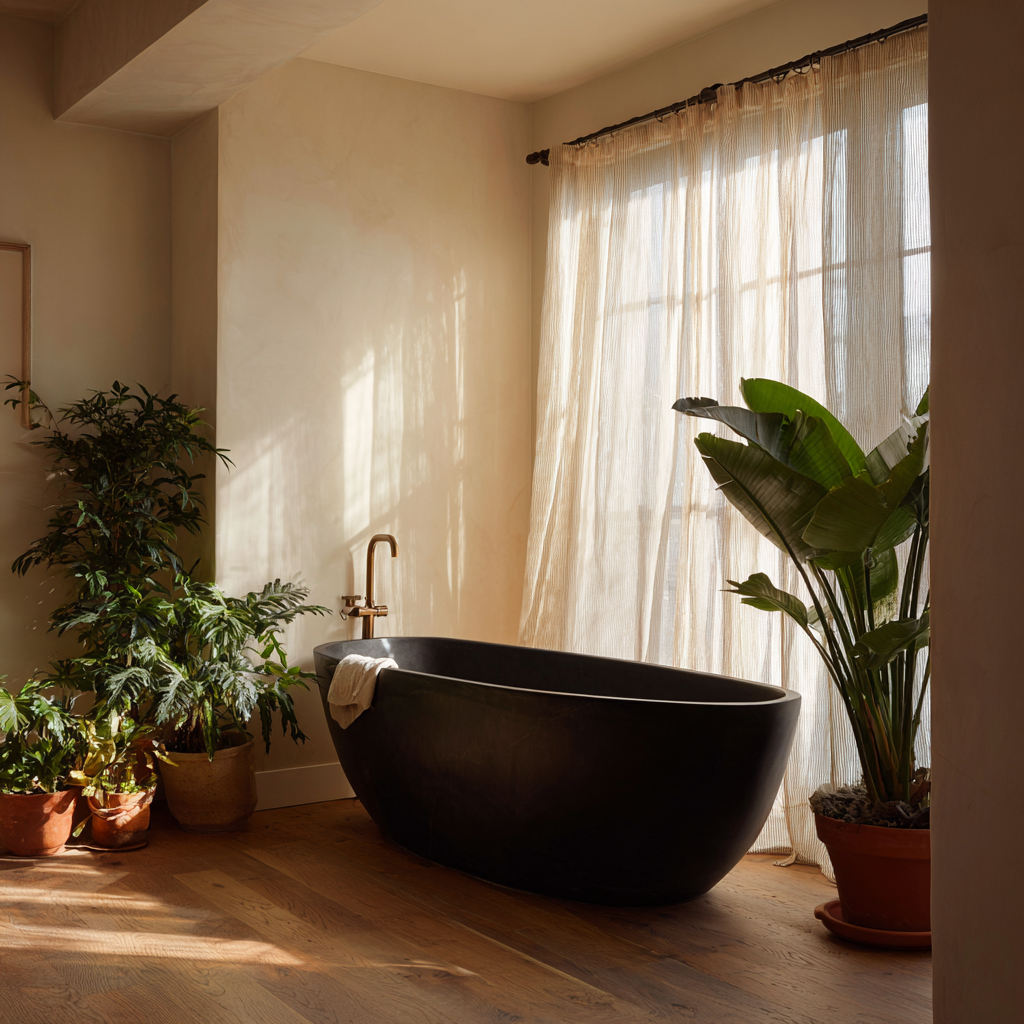
If you want your tub to make a statement with minimal effort, matte black is hard to beat. A sculptural freestanding tub in a deep, light-absorbing black finish becomes the undeniable center of the room—especially when set against warmer surroundings like hardwood floors, plaster walls in a soft terracotta or sand tone, and airy linen curtains. The contrast is striking without being harsh.
Copper or brushed bronze fixtures complement the black beautifully. This is a bathtub design for homeowners who want something bold but not busy.
All of these bathtub ideas look gorgeous in photos, but picking the right one for your actual bathroom requires thinking through a few practical questions. Here's what to consider before you commit.
Before falling in love with a specific tub, measure your bathroom carefully—not just the floor space where the tub will sit, but also the doorways, hallways, and stairways it needs to pass through during delivery. Freestanding tubs in particular can be surprisingly large when you try to get them into the room.
Think about how you actually bathe
A deep Japanese soaking tub is incredible if you love long, meditative baths—but less practical if you primarily need a tub for bathing young kids. A wider, shallower tub with a flat bottom might be a better fit for families, while a sculpted freestanding model works well for adults who want the tub to double as a visual centerpiece. Be honest about your habits before you invest.
|
Material |
What to know |
|
Acrylic |
Lightweight, affordable, retains heat well. Widest range of shapes and sizes. Can scratch over time but is easy to repair. |
|
Cast iron |
Extremely durable and excellent heat retention. Heavy—may require floor reinforcement. Classic look, especially for clawfoot styles. |
|
Stone (marble, granite, travertine) |
Stunning and substantial. Very heavy and typically custom-fabricated. Requires sealing and more maintenance. |
|
Solid surface (composite resin) |
Smooth, seamless, matte finish. Can be molded into custom shapes. Mid-to-high price range. Warm to the touch. |
|
Concrete |
Highly customizable in shape and size. Extremely heavy. Needs professional sealing. Makes a strong design statement. |
|
Wood (hinoki, cedar, teak) |
Warm and aromatic. Requires diligent maintenance to prevent warping or mold. Best suited for dedicated soaking tubs. |
|
Copper or metal |
Develops a natural patina over time. Excellent heat retention. Heavier than acrylic but lighter than cast iron. Distinctive character. |
This is especially important in older homes and apartment buildings. A cast iron clawfoot tub can weigh 300–400 pounds empty, and significantly more when filled with water and a person. Stone and concrete tubs are even heavier. If there's any question about whether your floor can support the weight, your contractor or a structural engineer should assess the subfloor before installation.
A dramatic, oversized freestanding tub in a small bathroom can feel cramped rather than luxurious. Conversely, a compact corner tub in a sprawling primary suite might look like an afterthought. The best bathtub designs feel intentional—like they belong in the room. Consider not just the tub's footprint but also the visual breathing room around it.
The tub itself is just one line item in a longer list. Prices range widely depending on type — a standard alcove model might cost $250 to $800, while a freestanding tub runs $600 to $3,000, a deep soaking tub $700 to $2,500, and a premium material like copper can climb past $10,000.
But the costs beyond the tub add up quickly. Labor alone runs $500 to $1,500 for a straightforward swap where plumbing stays in place, and $1,500 to $3,500 or more for installs that involve relocating pipes, reinforcing the subfloor, or fitting a specialty model. From there, you'll also want to budget for old tub removal and disposal ($200 to $500), plumbing modifications ($300 to $1,000+), wall and tile repairs ($400 to $1,500), flooring work around the new footprint ($400 to $1,500), and permits ($50 to $300). For a fuller perspective, check out our guide to new tub installation costs.
A great tub can transform the entire feel of your bathroom—but getting from inspiration to installation takes the right team. Use Block's free Renovation Studio to explore layouts, materials, and real-time cost estimates.
Block Renovation connects you with vetted, licensed contractors who specialize in bathroom projects of every scope. With expert scope review, side-by-side proposal comparison, progress-based payments, and a one-year workmanship warranty, you can move forward knowing your renovation is in good hands.

Renovate confidently with Block
Easily compare quotes from top quality contractors, and get peace of mind with warranty & price protections.
Shower
Shower vs. Tub: How to Choose for Your Bathroom
07.06.2026

Bath Tubs
Shower-to-Tub Conversion Cost and Planning Guide
06.05.2026
.webp?width=640&name=5301c89b-3165-4f83-af34-a6b02eaa6c48%20(1).webp)
Shower
Freestanding Tubs & Showers - How & Why
04.16.2026
.webp?width=640&name=u5821215421_A_statement_concrete_bathtub_with_rounded_edges_i_69d61226-c763-4b17-8f87-6b67ef610b5f_0%20(2).webp)
Bath Tubs
Freestanding Tub Installation Costs & What Most Guides Leave Out
04.01.2026
Bath Tubs
Cool New Tub Ideas for Modern Bathrooms
03.18.2026