



Bathroom
Walk-In Tub vs. Walk-In Shower for Seniors
09.16.2026
05.22.2026


.webp?width=640&name=f55ee650-d34a-11eb-9d1d-3514adcc0bb1%20(2).webp)
In This Article
Doorless walk-in showers used to live mainly in master baths and high-end remodels. They've spread into mid-range renovations over the last few years, and walk-in shower no door designs now show up in projects of every size. They make the bathroom feel bigger and the shower easier to step into. Plenty of contractors will quote you one. Fewer will install one correctly.
Not every bathroom can become a doorless shower without significant structural work. The basics:
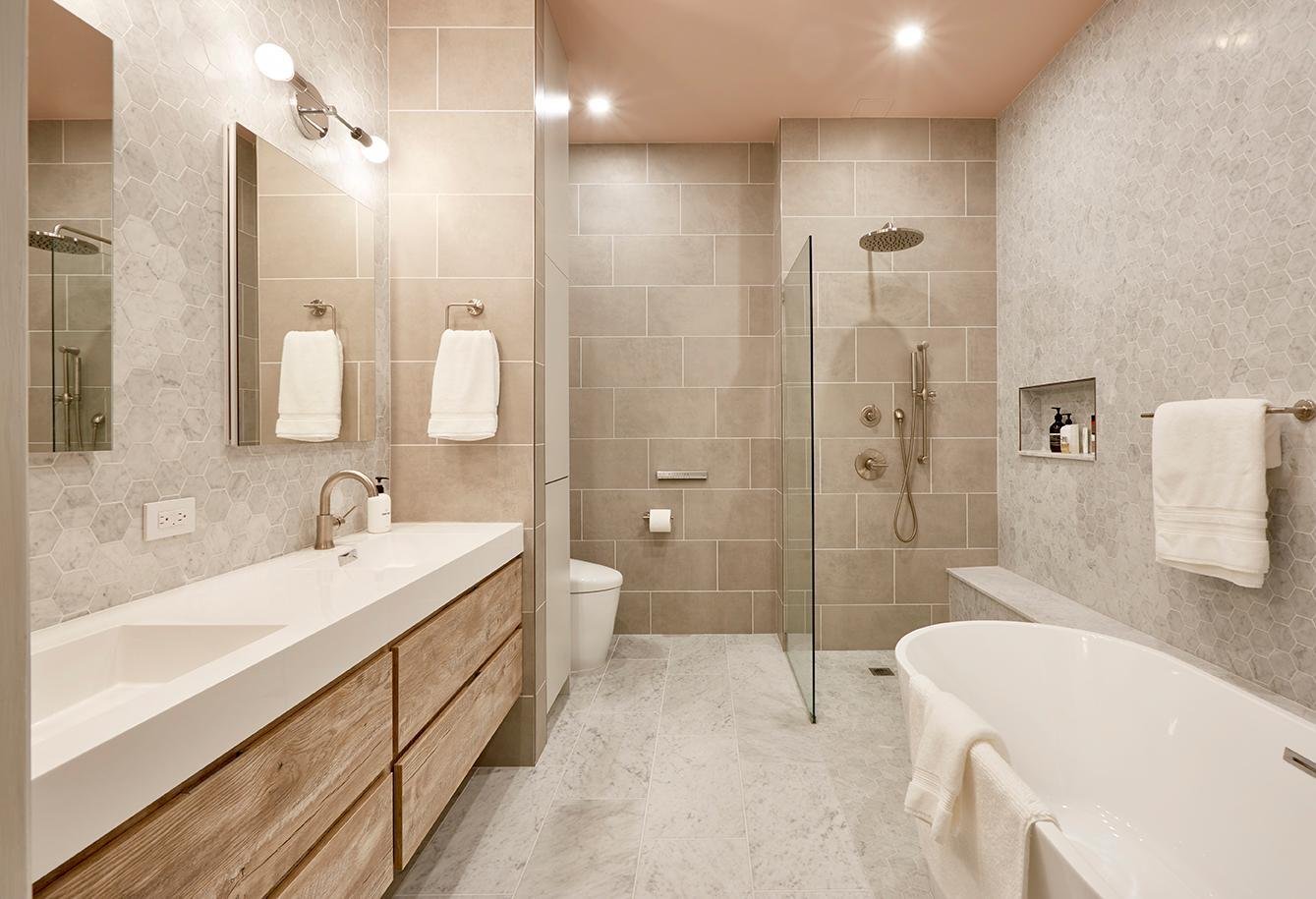
In this Block Renovation bathroom from New York City, a chest-height glass panel separates the doorless shower from the freestanding tub a few feet away. That panel isn't decorative. Without it, spray from the rain showerhead would reach the tub, the towel ring on the far wall, and eventually the rug at the center of the room. With it, the splash stays inside the shower zone and the tub stays dry between baths.
The right height usually runs 36 to 48 inches, tall enough to block waist-level spray but short enough to keep the room visually open. Go taller and it feels like a door without the swing, and anything under 36 inches is mostly decorative.
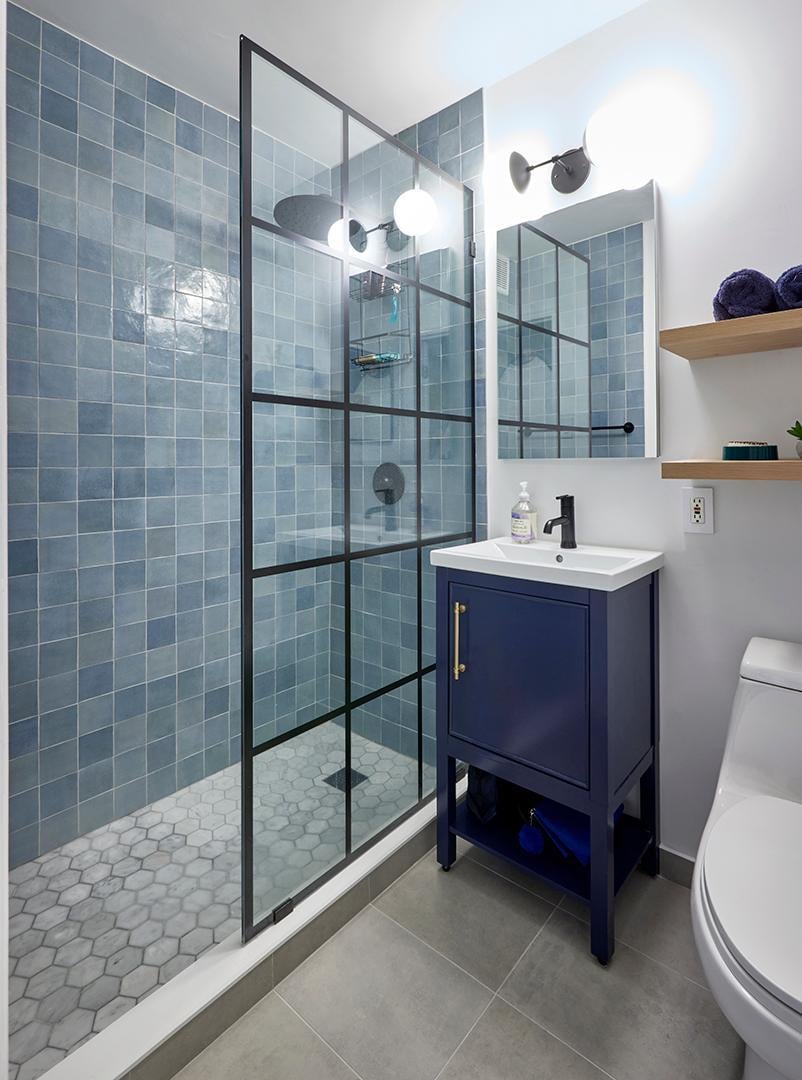
This Block bathroom keeps the doorless aesthetic without the structural lift of a true curbless entry. A framed glass screen runs from a small curb to the ceiling, and you walk around it to enter the shower. No door, but a small step over.
Lowering the subfloor for a curbless shower means cutting into the joists, which can run $3,000 to $8,000 in additional structural work and sometimes triggers an engineer's review. In a small bathroom, or in a co-op or condo where structural changes aren't always permitted, the curb-plus-screen approach gives you most of the visual openness at a fraction of the cost.
A 4-inch curb breaks the floor's visual line. The shower feels like a separate enclosure rather than part of the bathroom. Plenty of homeowners don't mind. The ones who do tend to pay for the structural work to go fully curbless.
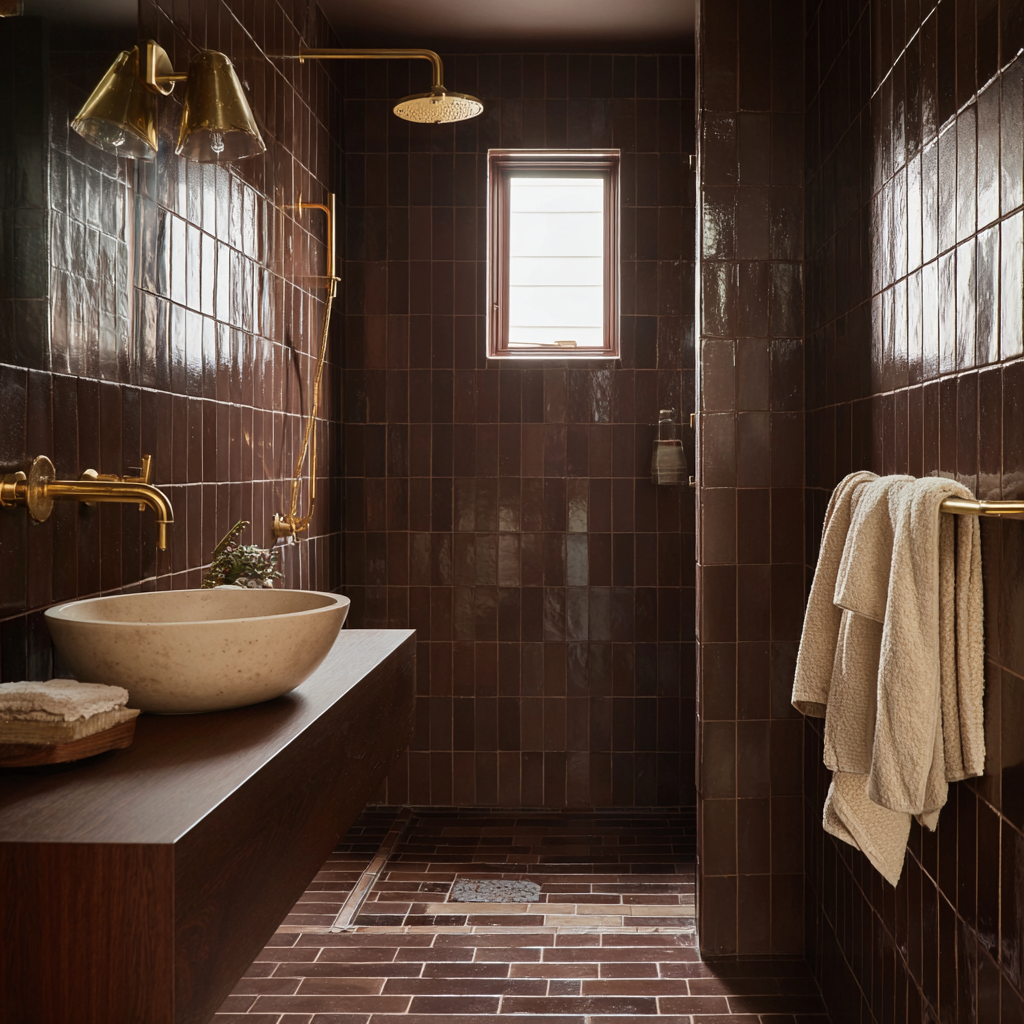
This design takes the doorless concept to its endpoint: no glass anywhere, the shower opens directly into the rest of the bathroom, and the whole room is built and waterproofed as one continuous wet zone. The look is dramatic. The build cost is too.
Waterproofing a full bathroom envelope, not just the shower zone, adds roughly $3,000 to $7,000 to a renovation depending on square footage. The whole floor needs membrane underneath the tile. The lower walls, usually 24 to 36 inches up from the floor, need the same treatment. Every transition (floor to wall, wall to wall, around the drain, around the toilet flange) has to be sealed continuously.
Every fixture and surface in the bathroom has to handle constant humidity. Wood vanities need marine-grade finishes or solid teak construction. Mirrors fog more often. Toilet paper has to live in a closed niche or it turns to mush within a day. The bathroom becomes a wetter, more cared-for space, and that's the implicit deal of going full wet-room.
The shortcut version, where waterproofing stops at the visible shower zone, is where most wet-rooms fail. Water travels further than people expect, and the surfaces that look dry are usually the ones that aren't protected.
Design a Home That’s Uniquely Yours
Block can help you achieve your renovation goals and bring your dream remodel to life with price assurance and expert support.
Get Started
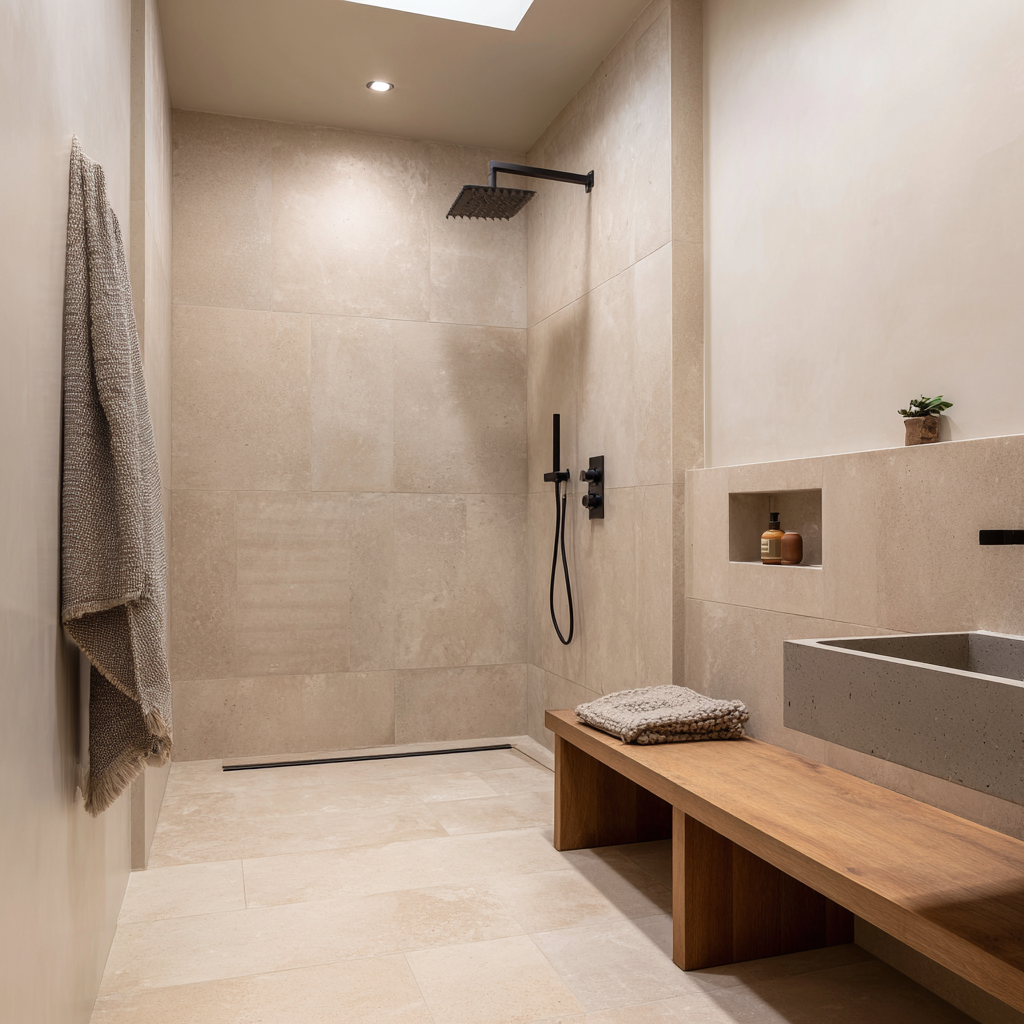
The large-format stone walls in this bathroom make the case for spending up on tile. In a doorless design, the wall material is part of the bathroom's main view and is completely unobstructed. Any investment in an upgraded tile or shower wall material won’t go unnoticed.
A standard ceramic subway tile runs $2 to $8 per square foot installed. Stone-look porcelain in large formats runs $15 to $30 per square foot. Real natural stone (travertine, limestone, marble) can hit $40 to $75 per square foot or more. The price gap is significant, but in a doorless layout the upgrade is on display every time you walk in.
Large-format tile (24x48 inches or bigger) does more work than just looking expensive. Fewer grout lines mean less visible maintenance. The tile feels continuous, which makes a small bathroom feel calmer. And for the shower wall specifically, the lack of grout reduces the spots where water and mineral buildup show up over time.
If the budget has to bend somewhere, bend it here. Hardware can be replaced. Light fixtures can be swapped. Wall material is permanent without a full demo. This is the line item that defines the room's feel for the next 15 to 20 years.
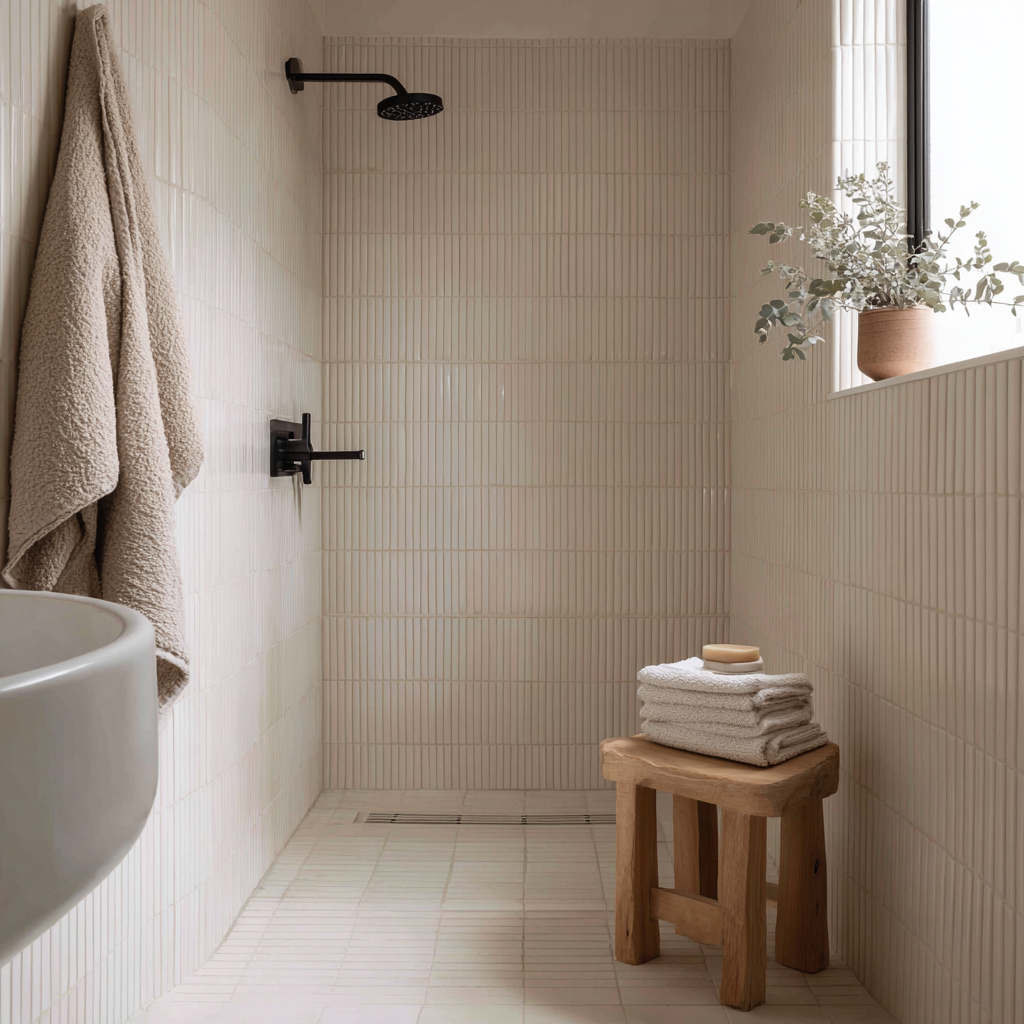
The minimalism in this bathroom isn't decorative. A doorless shower without a glass panel rewards stripped-down styling because anything that hangs, projects, or holds standing water becomes a maintenance task.
The shifts: recessed niches instead of caddies, since caddies catch spray and grow mold underneath. Hooks instead of towel bars, because bars in the splash zone stay wet. Wall-mounted fixtures instead of freestanding ones, since the floor needs to be as clear as possible for drainage. Anything wood (stools, shelves, vanity legs) has to be sealed teak or hardwood rated for marine environments, or it warps within a year.
This is part of why doorless designs look minimalist in inspiration photos. The decor doesn't survive otherwise.
The upside is that minimal bathrooms photograph well, clean quickly, and stay clean for longer. There's less stuff to wipe down and fewer surfaces collecting limescale. If you like a packed bathroom, this design will fight you. The flip side: a space that more or less cleans itself.
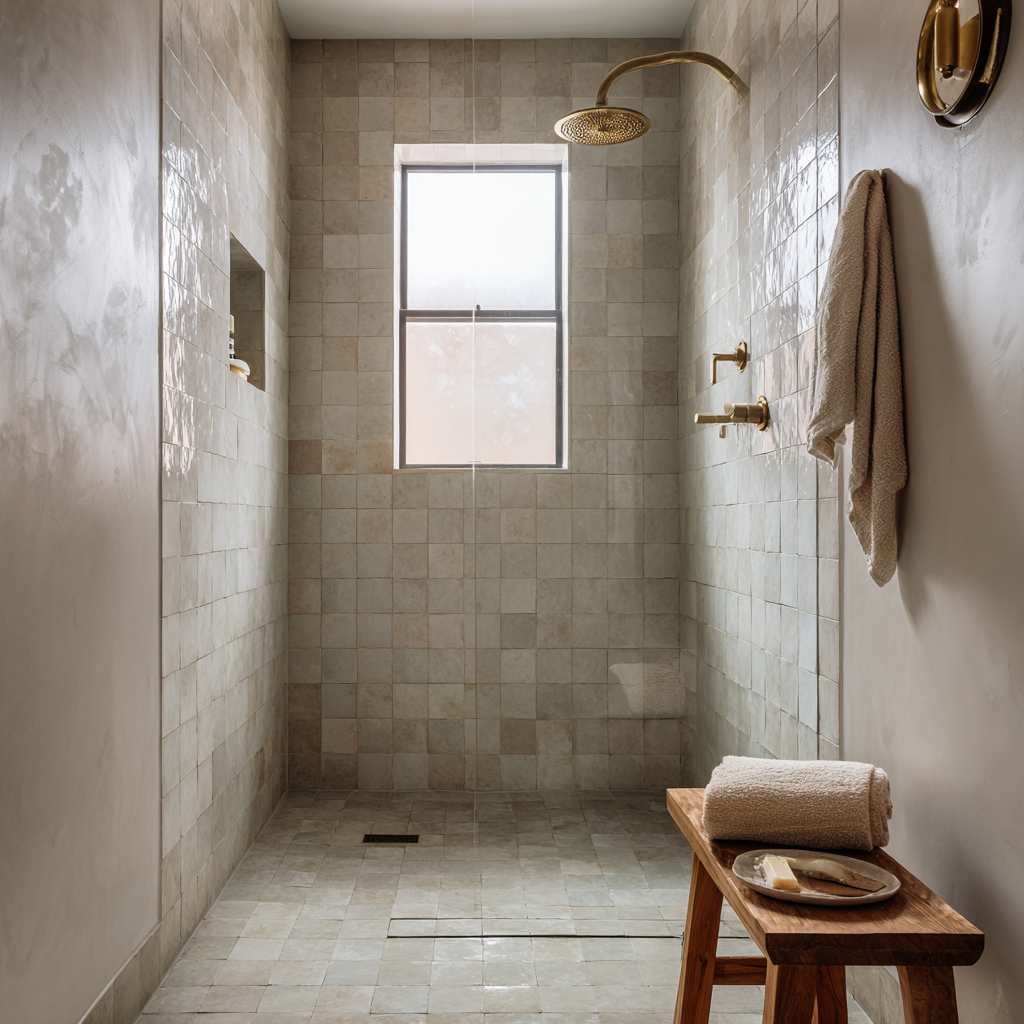
The plaster-and-zellige design here goes fully glass-free. For most homeowners, though, a half-glass panel offers a better balance, and it's worth considering before committing to no glass at all.
A half-glass panel is a single fixed pane, usually 36 to 48 inches tall, mounted to the floor with a base channel or U-clip and running vertically against a wall or partial wall. There's no door hardware, no hinges, no header track. The glass itself is typically 3/8" or 1/2" tempered, which runs $400 to $800 installed for a panel of this size.
A half-height panel disappears visually compared to a floor-to-ceiling enclosure. You see through it. The bathroom feels like a single space rather than a shower carved out of it. And the panel handles the practical job, keeping water from reaching the vanity or the dry side of the bathroom, without committing to a full wall of glass.
For wet-rooms designed without glass, a half-panel can be added later as a retrofit. If you're not sure how splashy your daily shower habits actually are, building the wet-room first and adding the panel only if needed is a reasonable order of operations. It's easier to add glass than to undo a full enclosure.
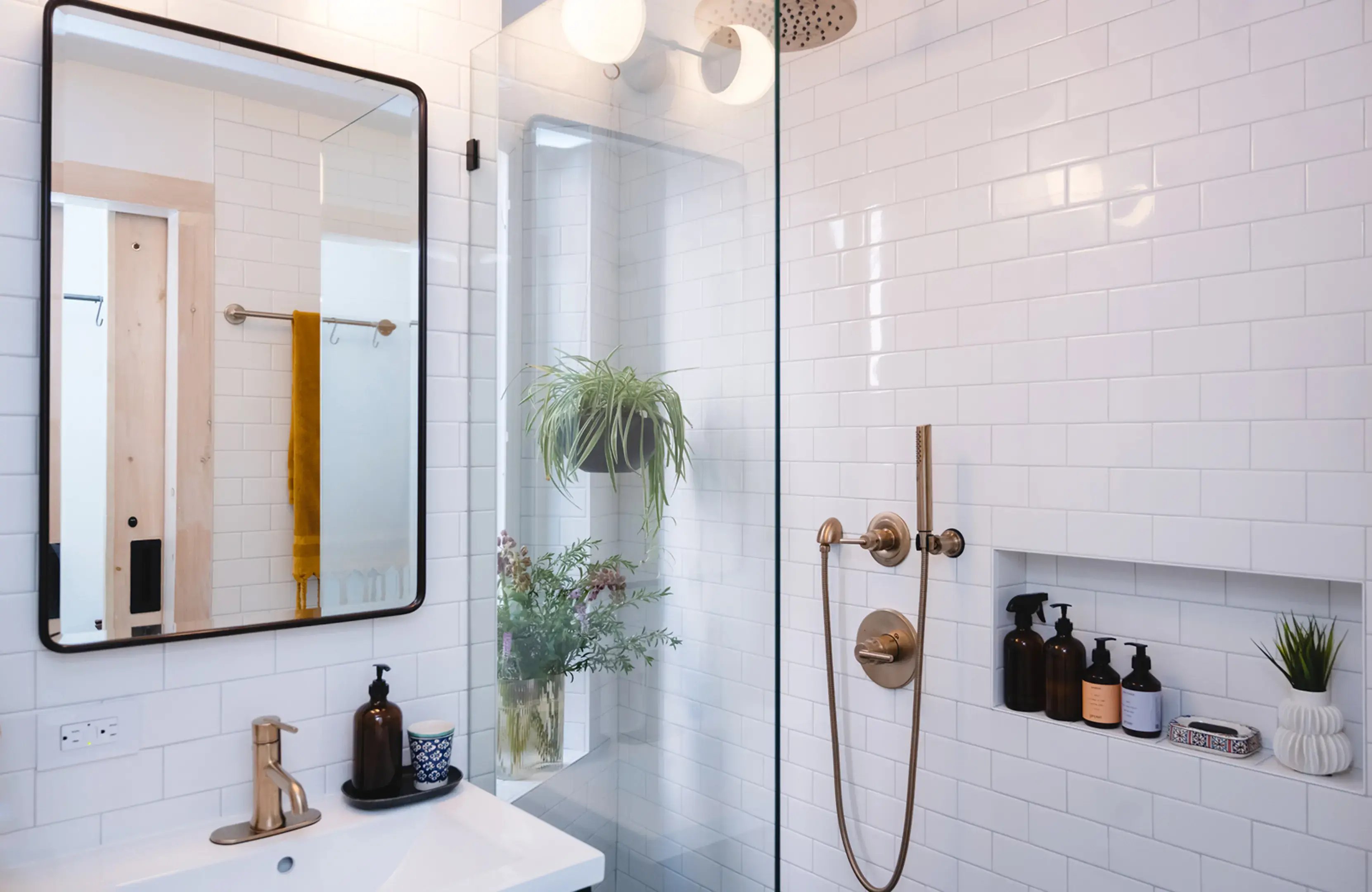
Hanging spider plants live inside the doorless shower zone of this Block bathroom, alongside flowers in a vase tucked into the corner. The humidity that ruins everything else (paper goods, untreated wood, certain fabrics) is exactly what tropical houseplants want. A doorless shower is one of the few rooms in the home where the biggest maintenance problem is also a plant's ideal climate.
What works: spider plants, pothos, philodendron, ferns (especially Boston and maidenhair), and prayer plants. They handle the humidity, tolerate moderate light, and forgive irregular watering since they absorb moisture from the air. Hanging arrangements work best because they keep soil out of standing water and don't take up counter or floor space that's already tight.
What doesn't work: succulents, cacti, snake plants, or anything that wants dry conditions. They'll rot from the inside. Same for any plant with delicate flowers; constant moisture collapses the blooms within days.
One placement note: keep plants out of direct shower spray. Constant impact damages leaves and waterlogs soil. Hanging from a corner ceiling, sitting on a high shelf, or tucking into a window niche is usually the move.
Steam fills the whole room, and water reaches further than the shower itself. The bathroom is effectively a wet room, even if it doesn't look like one.
The shower zone, the surrounding floor, and the lower walls all need proper waterproofing membranes underneath the tile. Most contractors use a sheet membrane like Schluter Kerdi or a liquid-applied system like RedGard. Whichever system gets used, the membrane has to run continuously, with no breaks at corners, transitions, or drain connections. Any gap is where a leak starts.
Expect waterproofing to add $1,500 to $4,000 to your renovation budget depending on square footage and the system your contractor uses. Skipping or skimping here is the most common cause of leaks, mold, and tile failure down the line. The damage usually shows up well past the standard one-year workmanship warranty, and the repair almost always means tearing out the new tile to fix what should have been done right the first time.
A doorless shower releases steam into the whole bathroom every time it runs, and a standard 50 CFM exhaust fan is rarely enough. Most projects step up to 80 to 110 CFM with a timer that keeps the fan pulling humidity after the shower ends. The space also cools off faster without glass to trap warmth. For a typical 50 square foot bathroom, electric radiant floor heating runs $600 to $1,200 installed. In a cold-weather climate, you'll feel it in January.
Linear drains have become the standard for walk in tiled shower designs no door. They allow a single-direction slope across larger tile (12-inch or larger formats stay flat), and they handle higher water volume than a center point drain. Expect to pay $400 to $900 more than a traditional drain, plus the labor to set the slope correctly.
A curbless entry, which is what gives the design its open feel, requires either lowering the bathroom subfloor or raising the rest of the floor, so water still slopes toward the drain. This is often the most expensive structural piece of the project, and it's the line item that gets missed in casual estimates.
The tile carries the design. Larger format tiles (12x24 or bigger) reduce grout lines and look cleaner, but they need to be installed by a contractor who knows how to handle slope without creating lippage. For the shower floor itself, smaller mosaic or textured tiles give you the slip resistance the larger tiles cannot. Look for a Dynamic Coefficient of Friction (DCOF) rating of 0.42 or higher on any surface that gets wet underfoot.
The difference between a doorless shower that looks like the inspiration photo and one that becomes a maintenance headache is mostly hidden behind the tile. A contractor who has never done one will miss the line items that make it work.
With Block, you're matched with vetted local contractors who have completed walk-in shower projects before, and every scope is reviewed by Block experts ahead of construction. That review is where missing waterproofing items get flagged and where the realistic cost shows up before you sign anything. Payments stay with Block until each milestone is approved, so contractors get paid for work that's actually done.
If a doorless shower is on your renovation list, the next step is getting matched with contractors who have completed projects like it.
Remodel with confidence through Block

Connect to vetted local contractors
We only work with top-tier, thoroughly vetted contractors

Get expert guidance
Our project planners offer expert advice, scope review, and ongoing support as needed
Enjoy peace of mind throughout your renovation
Secure payment system puts you in control and protects your remodel

Renovate confidently with Block
Easily compare quotes from top quality contractors, and get peace of mind with warranty & price protections.
Bathroom
Walk-In Tub vs. Walk-In Shower for Seniors
09.16.2026
Shower
Best Shower Wall Panel Brands: Composite, Acrylic, and Solid Surface
08.12.2026
Design
Bathtub to Shower Conversion: Cost, Ideas, Examples & More
08.11.2026
Shower
Shower Panel Types: Costs, Materials & How to Choose
08.11.2026
Shower
Glass Shower Enclosure With a Half Wall: What to Know
07.28.2026