



Bathroom Floor Plans
Single Wall Bathroom Layout: Pros, Cons, and Tips
07.22.2026
03.23.2026


In This Article
Sixty-four square feet is a lot of potential. An 8x8 bathroom is large enough for a freestanding soaking tub, a double vanity, a walk-in shower, and a toilet. Not all of them together, but any one of them beautifully, and often two or three without compromise.
What works in your favor here is the shape. Square rooms distribute space evenly, so no single wall has to carry all the weight. A freestanding tub can float in the center. A double vanity can claim an entire wall. A shower can anchor a corner without crowding the rest of the room. That kind of flexibility is rare in bathroom design, and it's worth taking seriously when you plan your layout.
The decisions that matter most at this size are not about what fits. They are about what fits your life. How many people share the space? Do you actually use a bathtub, or would a generous shower serve you better? Do you need serious storage, or just a place to get ready in the morning? The layouts that work best are the ones built around honest answers to those questions.
Turn your renovation vision into reality
Get matched with trusted contractors and start your renovation today!
Find a Contractor
An 8x8 bathroom calls for all the same trades as any full bath: plumbing, electrical, tile, and finish work. With 64 square feet of floor and wall area, material costs carry more weight here than in a smaller room. Fixture choices at this size also tend to be more ambitious, whether that's a freestanding tub, a frameless glass enclosure, or a double vanity with stone countertops.
Basic refresh: $10,000 to $18,000. New tile, updated fixtures and hardware, a fresh vanity, and paint. The tub, toilet, and plumbing stay put. You are updating the feel of the room without opening walls or moving anything.
Mid-range renovation: $18,000 to $35,000. Better tile, a vanity upgrade with stone or quartz, improved lighting, and potentially one fixture relocation, such as converting an alcove tub to a freestanding model or swapping a single vanity for a double. Plumbing changes at this level typically add $1,500 to $4,000 depending on how far the new fixture is from the existing rough-in.
High-end renovation: $35,000 to $55,000+. Custom tilework, a frameless glass shower enclosure, a freestanding soaking tub, premium fixtures, heated floors, and a full layout reconfiguration. At this level, you are gutting to the studs and rebuilding from scratch, including a new subfloor, waterproofing membrane, and upgraded supply lines. Permit costs typically run $500 to $2,000 depending on your municipality.
To dive deeper into bathroom project pricing, check out our guides to the cost of replacing a toilet, shower installation, and average tiling expenses.
Renovate with confidence every step of the way
Step 1: Personalize Your Renovation Plan
Step 2: Receive Quotes from Trusted Contractors
Step 3: Let Us Handle the Project Details
.png?width=4001&height=2251&name=Block_Block_Plans_Bathroom_8x8-17%20(1).png)
This layout is built around two distinct experiences: soaking on the left, getting ready on the right. The tub has room to breathe in the upper-left corner, accessible from the front and side without another fixture in the way. The toilet shares the left wall but sits at a remove, making it the least prominent feature in the room.
The double vanity is the heart of this layout. A full wall of counter, two sinks, and a mirror above make it exceptional for a shared primary bath. Mornings become easier when two people have their own space to get ready without bumping into each other. The open floor between the tub and the vanity keeps the center of the room light and easy to move through.
This is the most feature-rich layout in the set, and the plumbing budget reflects that. Running lines to both a freestanding tub and a double vanity, especially if the vanity moves to a new wall, typically adds $3,000 to $6,000 over a single-fixture relocation.
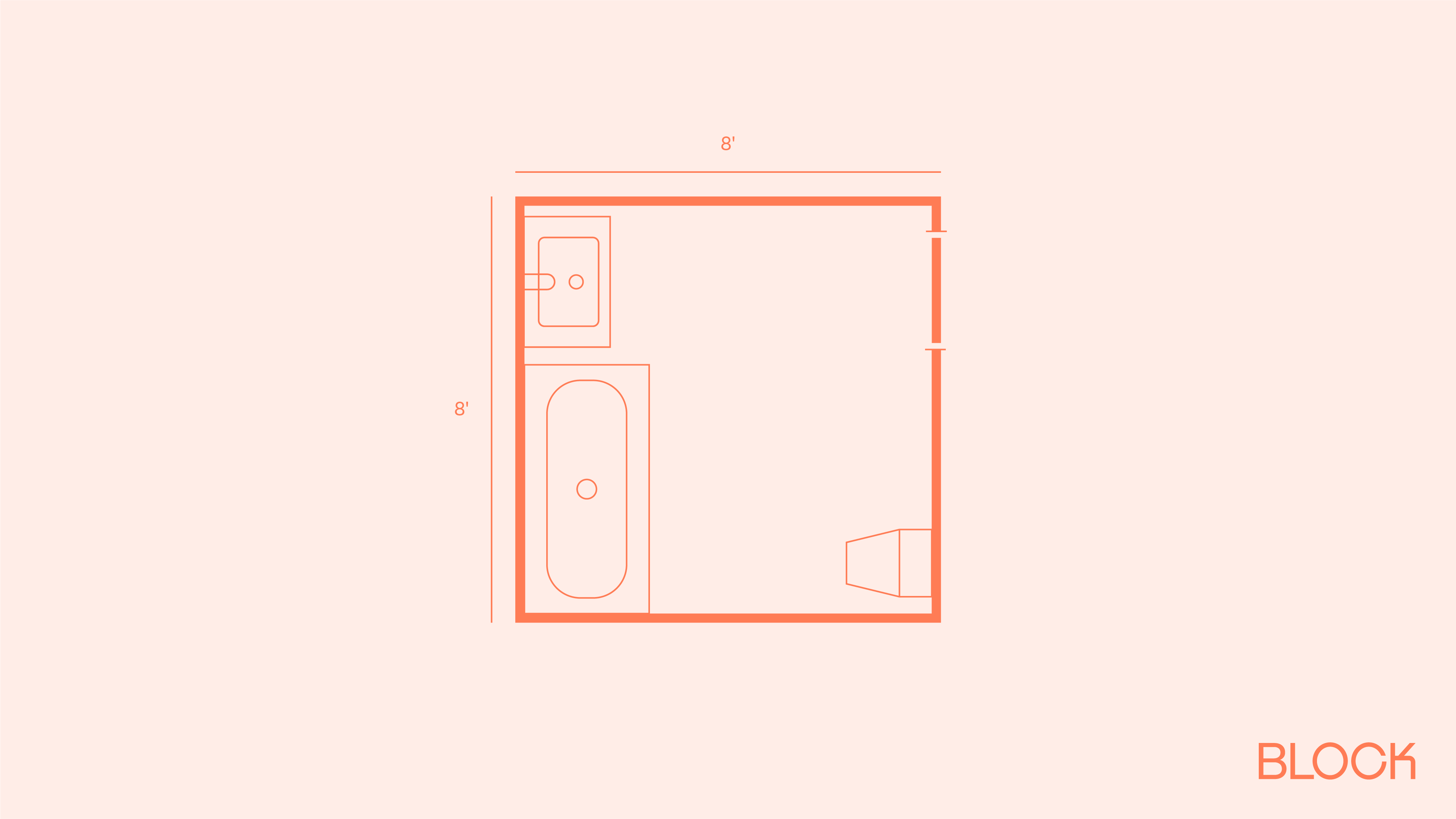
A tub earns its keep when it has space around it. This layout gives it exactly that. The tub is the first thing you see when you walk in, set apart from everything else, with enough clearance to step around it comfortably from any angle. If a soaking tub is the reason you are doing this renovation, this is the layout that does it justice.
The toilet and vanity are grouped along the lower wall, which keeps plumbing lines concentrated in one zone and the rough-in costs manageable. The open floor near the entry feels generous and unhurried, more like a room than a utility space.
One honest note: there is no shower here. This layout works best as a primary bath where a separate shower exists nearby, or as a secondary bath designed primarily for soaking. If a shower is a daily requirement, a different configuration will serve you better.
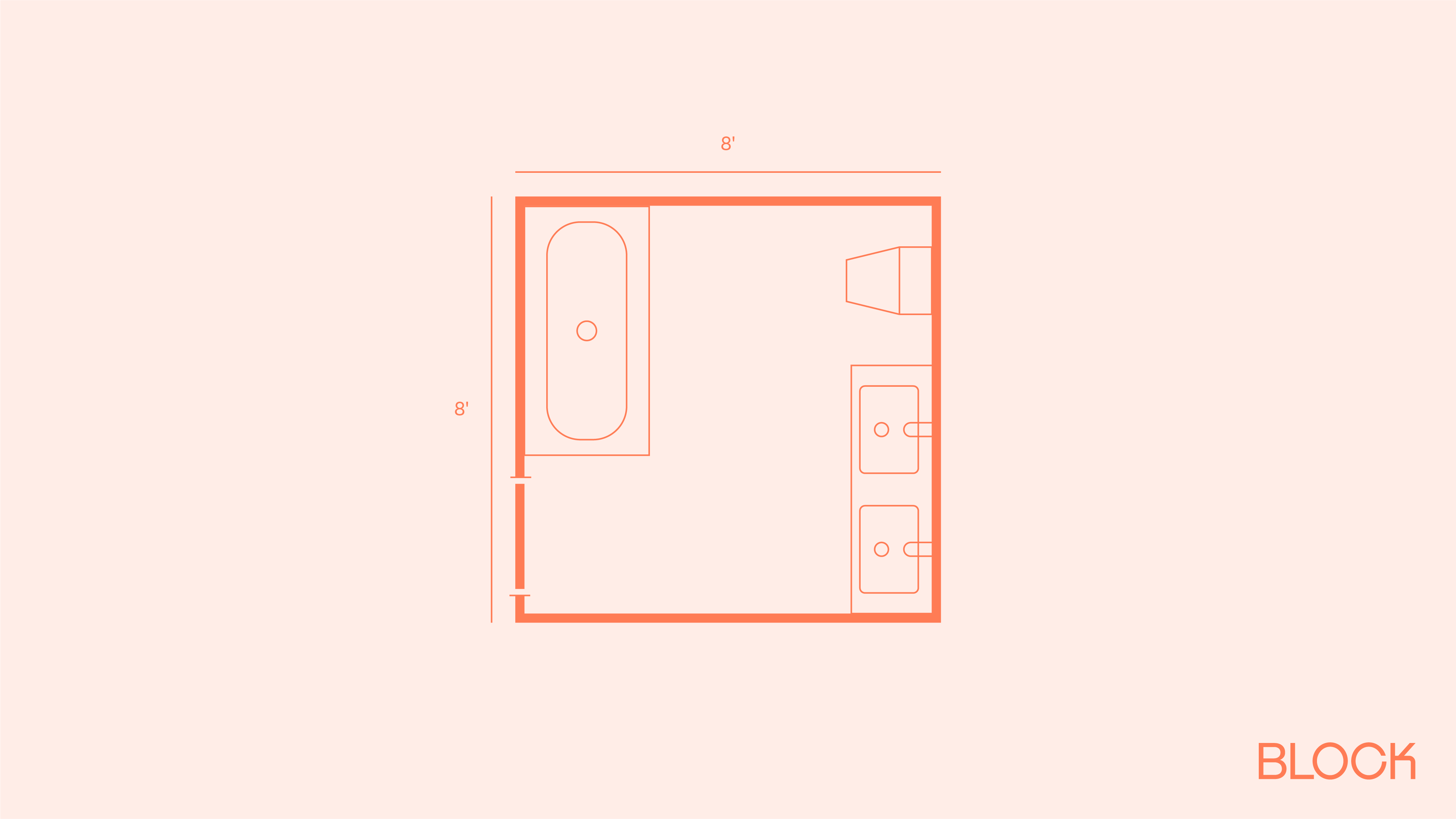
This is a focused layout that does two things well: it gives the tub room to be a tub, and it keeps the everyday fixtures together where they are easy to use. The vanity and toilet share the right wall in a stacked arrangement, both accessible from the open floor that runs down the center of the room.
From a plumbing standpoint, this is one of the more efficient configurations. Both the vanity and toilet are on the same wall, which keeps supply and drain lines in a tight zone. Proper clearances still matter: at minimum 15 inches from the center of the toilet to any obstruction, and 21 inches of clear floor in front of the vanity.
For a primary bath shared by one person, or a guest bath where the tub takes center stage, this layout is confident without being overreaching.
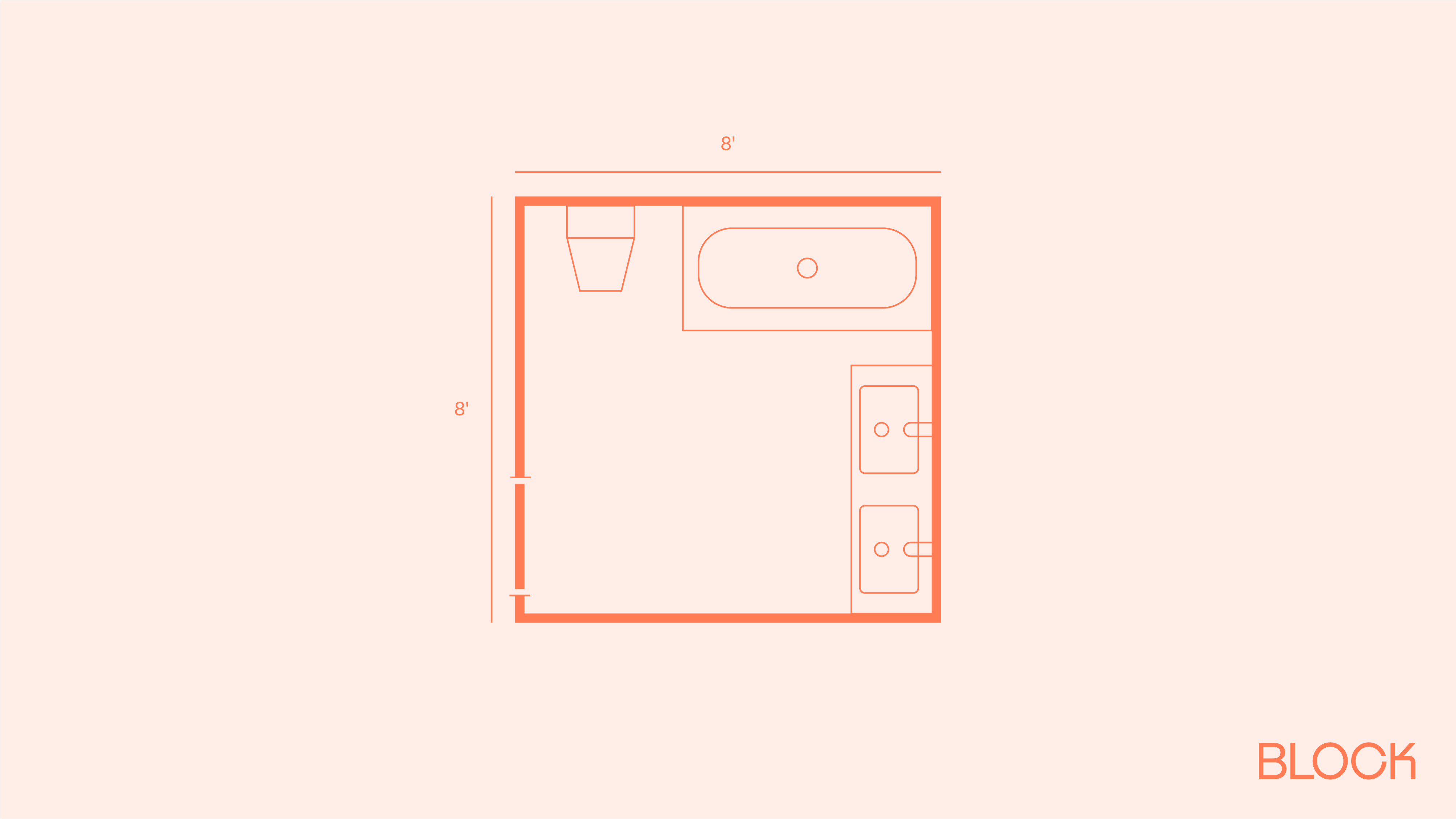
Positioning the tub against a wall rather than floating it is a practical decision that pays off in livability. You give up a bit of the sculptural drama, but you gain a large open zone in the center of the room and a cleaner path between every fixture. The double vanity along the lower wall means two people can get ready comfortably without the tub ever getting in the way.
What makes this layout stand out is how well the perimeter arrangement works at 64 square feet. Every fixture is pushed to the walls, and the center of the room becomes a genuinely open floor rather than a clearance space. For a shared primary bath that needs to function well every single morning, this is one of the strongest options in the set.
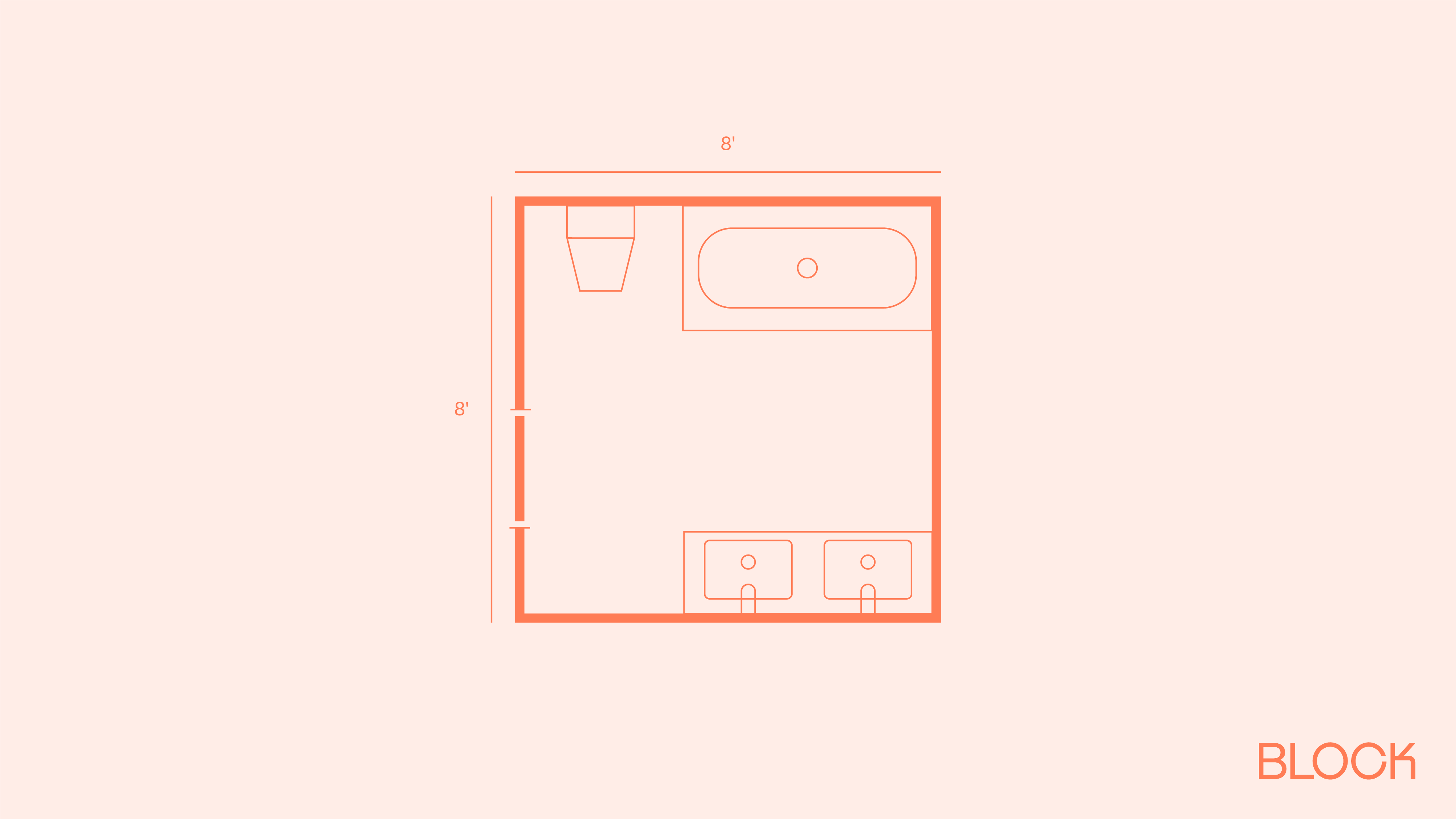
This layout balances visual ambition with everyday practicality. The tub reads as a centerpiece from the doorway, flanked by open floor with nothing obstructing it. The toilet and double vanity share the right wall, divided cleanly: toilet above, vanity below, each with its own clearance zone.
Grouping the toilet and vanity on one wall is smart from a plumbing standpoint. Both fixtures share the same supply zone, which keeps rough-in costs lower than layouts that distribute plumbing across multiple walls. The door position on the left opens into an unobstructed view of the tub, which is the kind of first impression that makes a bathroom renovation feel worth it.
Good storage does not announce itself. It just means you always know where things are, your counter stays clear, and the room looks the way you want it to. In an 8x8 bathroom, you have four full walls to work with and enough square footage to be intentional about where storage lives. Here's how to use it well.
Before you commit to a layout or set a budget, it helps to see your options clearly. How does a freestanding tub change what's left for the vanity? What does the same tile look like at $4 per square foot versus $14? How much does moving one plumbing fixture actually add to the total?
Block's free Renovation Studio is built to answer exactly those questions. Input your bathroom dimensions, test different fixture arrangements, and swap materials while watching the cost estimate update in real time. It takes the guesswork out of planning and helps you walk into contractor conversations knowing what you want and what it should cost.
For an 8x8 bathroom, where the range of possible layouts is wide and the budget differences between them are real, that clarity makes a meaningful difference.
Perfect Every Detail of Your Bathroom
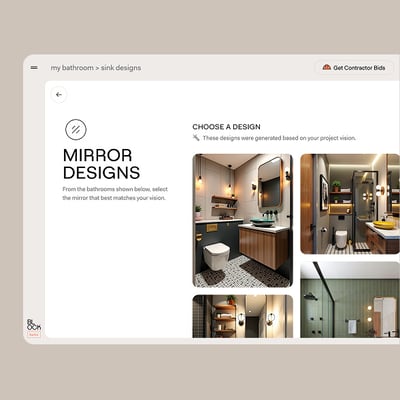
A well-planned 8x8 bathroom renovation produces a room that feels personal, not just updated. The square footprint gives you options that narrower bathrooms don't, and 64 square feet is enough to be genuinely ambitious about the fixtures and finishes that matter to you.
The best outcomes come from making those decisions before the work begins: which layout reflects how you actually use the space, which fixtures earn their place, and where the budget is worth stretching. That kind of preparation is not just helpful. It's the difference between a renovation you love and one you revisit too soon.
Block Renovation matches you with thoroughly vetted local contractors who provide detailed, comparable proposals. Every project includes progress-based payments, expert scope review to catch red flags early, and a one-year workmanship warranty so you can renovate with real confidence.
Remodel with confidence through Block
Connect to vetted local contractors
We only work with top-tier, thoroughly vetted contractors

Get expert guidance
Our project planners offer expert advice, scope review, and ongoing support as needed
Enjoy peace of mind throughout your renovation
Secure payment system puts you in control and protects your remodel

Renovate confidently with Block
Easily compare quotes from top quality contractors, and get peace of mind with warranty & price protections.
Bathroom Floor Plans
Single Wall Bathroom Layout: Pros, Cons, and Tips
07.22.2026
.jpg?width=640&name=5301c89b-3165-4f83-af34-a6b02eaa6c48%20(2).jpg)
Bathroom Floor Plans
Long, Narrow Bathroom Floor Plans: Layouts That Work
07.21.2026
.jpg?width=640&name=2a430d6c-5cf0-4596-9a89-601f3d2d6391%20(7).jpg)
Bathroom Floor Plans
Square Bathroom Floor Plans & Layout Tips
07.18.2026
Bathroom Floor Plans
300 Sq Ft Bathroom: 7 Large Master Bath Layouts
06.05.2026
Bathroom Floor Plans
100 Square Foot Bathroom Layout: Make It Work
06.02.2026