




Kitchen Floor Plans
Galley Kitchen Floor Plans and Ideas That Work | Block
07.15.2026
04.26.2026


In This Article
A 12x18 kitchen layout (12 feet by 18 feet, or 216 square feet) sits just below the U.S. average of around 225 square feet. Whether the room gets described as 12x18 or 18x12, it's the same 216 square feet of working space, and it's roomy enough to do almost anything you'd want a kitchen to do. A real island. A walk-in pantry. A banquette. A peninsula. A full-size dining table. The problem is that "almost anything" isn't a plan. The plan is deciding which appliances go where, and what that choice costs you in money, walking steps, and cabinet space.
What follows is five ways to design a 12x18 kitchen layout using the same footprint. Each version moves the sink, the stove, or the fridge to a different spot. Each one solves for a different kind of cook. The differences come down to two things: how tight the work triangle is, and who else is in the room while you cook.
The work triangle is an old kitchen-design idea that still holds up. Connect the sink, the cooktop, and the refrigerator with imaginary lines, and those lines should form a triangle where each leg runs between 4 and 9 feet, with the three sides adding up to no more than 26 feet. The National Kitchen and Bath Association also recommends that major household traffic not cross through the triangle, and that work aisles (the space a cook actually stands in) be at least 42 inches wide for one cook and 48 inches for two.
Nobody fails an inspection over a long work triangle. But the cook lives with it. A stranded fridge means every meal starts with a long walk. A sink across the room from the stove means carrying a boiling pot of pasta water through a dining area.
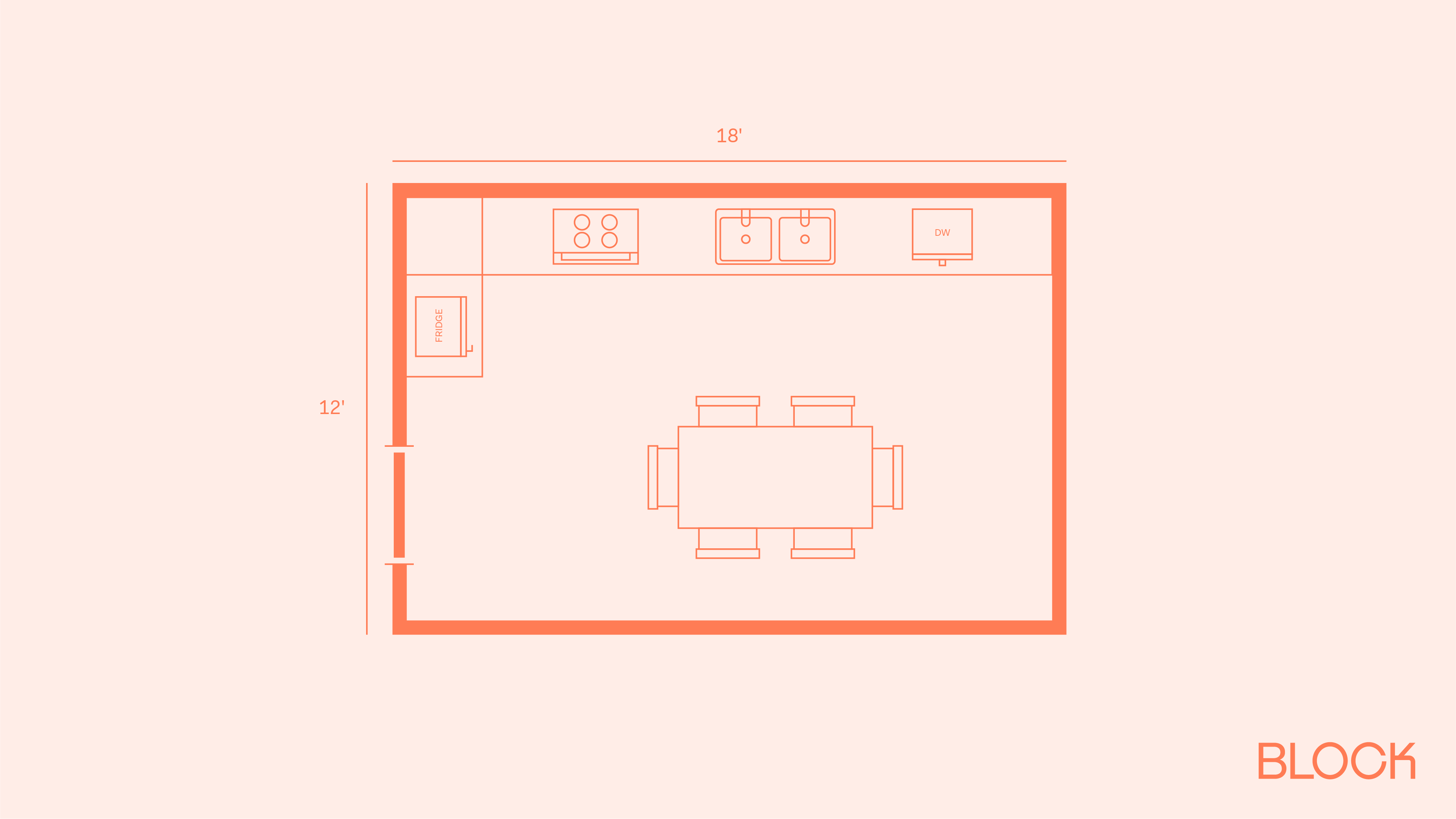
All three major appliances, plus the dishwasher, run along one long wall. The fridge steps out of line on a short perpendicular stub. The rest of the room holds the dining table.
This is the cheapest version to build. Plumbing, gas, and venting all stay on one wall, which means one shared chase and one exterior penetration for the range hood.
The tradeoff is that the work triangle collapses into a near-straight line. You walk sideways from fridge to sink to stove instead of pivoting. For a solo cook who mostly reheats or makes simple weeknight meals, it's fine. For anyone who hosts or cooks with a partner, it's a lot of steps.
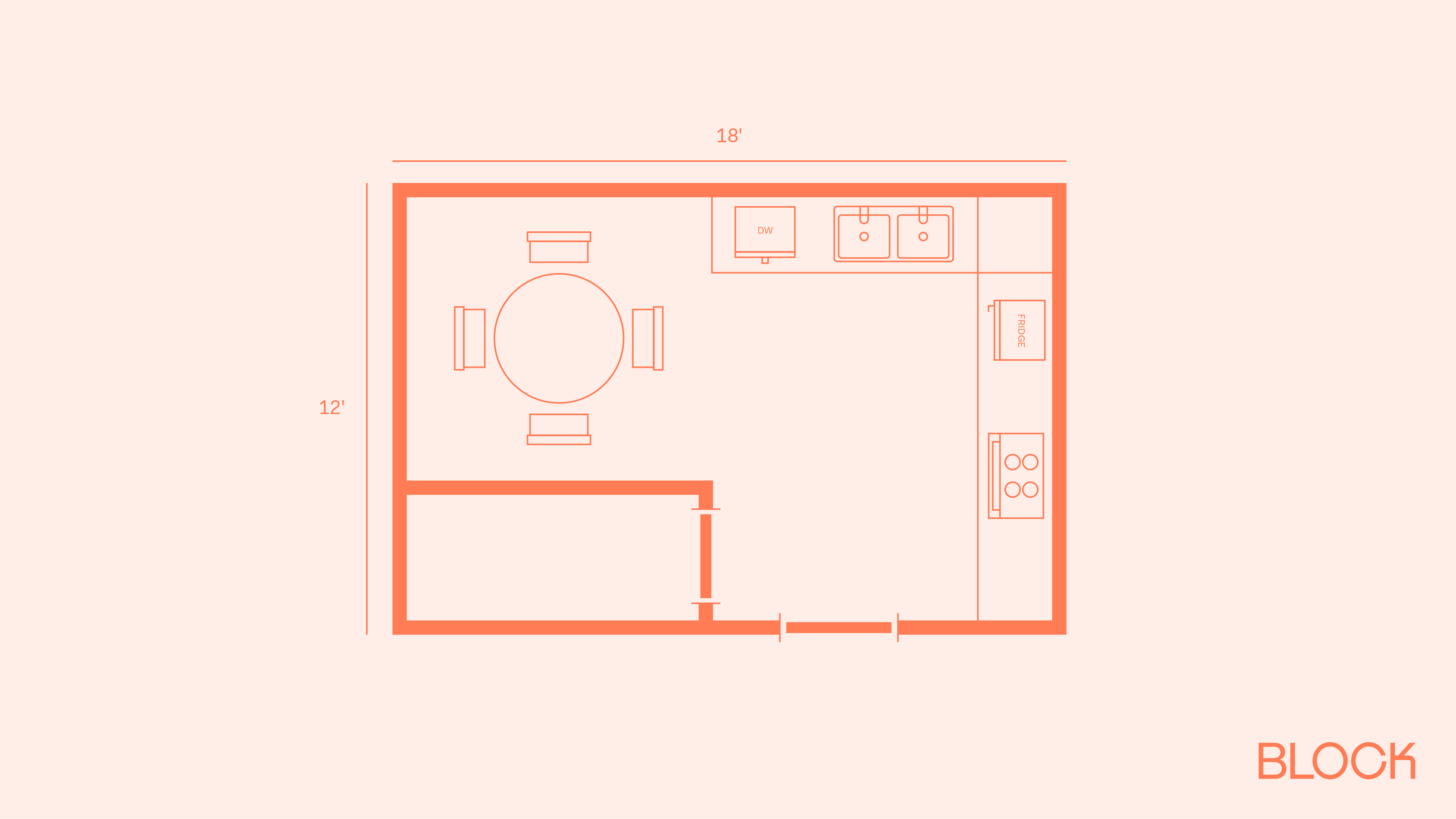
The L runs along the top and short right walls. The Sink and dishwasher sit on the long counter. Fridge and cooktop anchor the short wall. A small enclosed pantry tucks into the bottom-left corner, and the dining table sits in the open center of the room.
This is the strongest layout of the five. The triangle is tight, with each appliance within a few steps of the others. The sink is on an exterior wall, which keeps the plumbing straightforward. The cooktop is also on an exterior wall, which means the range hood can vent directly outside without running duct through the ceiling. The enclosed pantry turns dry storage into its own zone and frees the main cabinet runs for everyday dishes and cookware.
The main cost adder here is the pantry itself, which is framing plus drywall plus a door. For most homes that's a few thousand dollars of carpentry. Many homeowners decide it pays for itself the first time they don't have to choose between the stand mixer and the pasta maker.
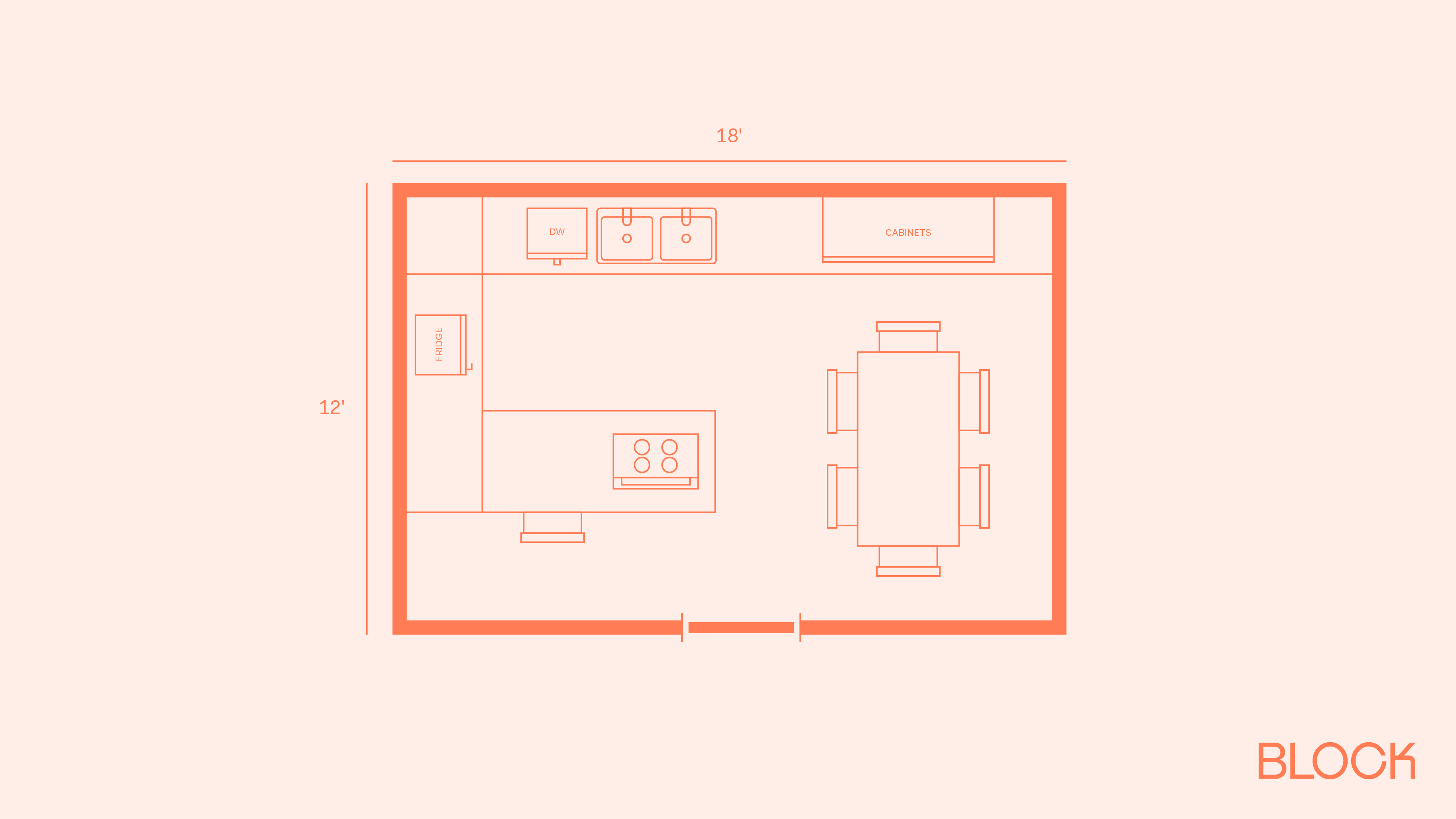
The L stays on the back and side walls, but the cooktop moves off the perimeter and onto an island in the middle of the room. This is the 12x18 kitchen layout with island that most homeowners picture first. Sink and dishwasher stay on the long wall. Fridge lives on the short wall. The dining table and the island share the center.
Most kitchen projects start with a homeowner asking for an island. You face the room while you cook. Guests lean on the island with a drink while dinner comes together. Knife work happens on a surface big enough for three cutting boards.
The costs are real, though. An island cooktop needs a range hood, and venting an island hood up through the ceiling and out through a roof or exterior wall is genuinely expensive. Depending on the duct run, budget an extra $1,500 to $4,000 over a wall-mounted hood, before the hood itself. A downdraft vent avoids the ceiling duct but eats cabinet space under the cooktop and usually moves less air. Electrical also has to come up through the floor, which means cutting the subfloor.
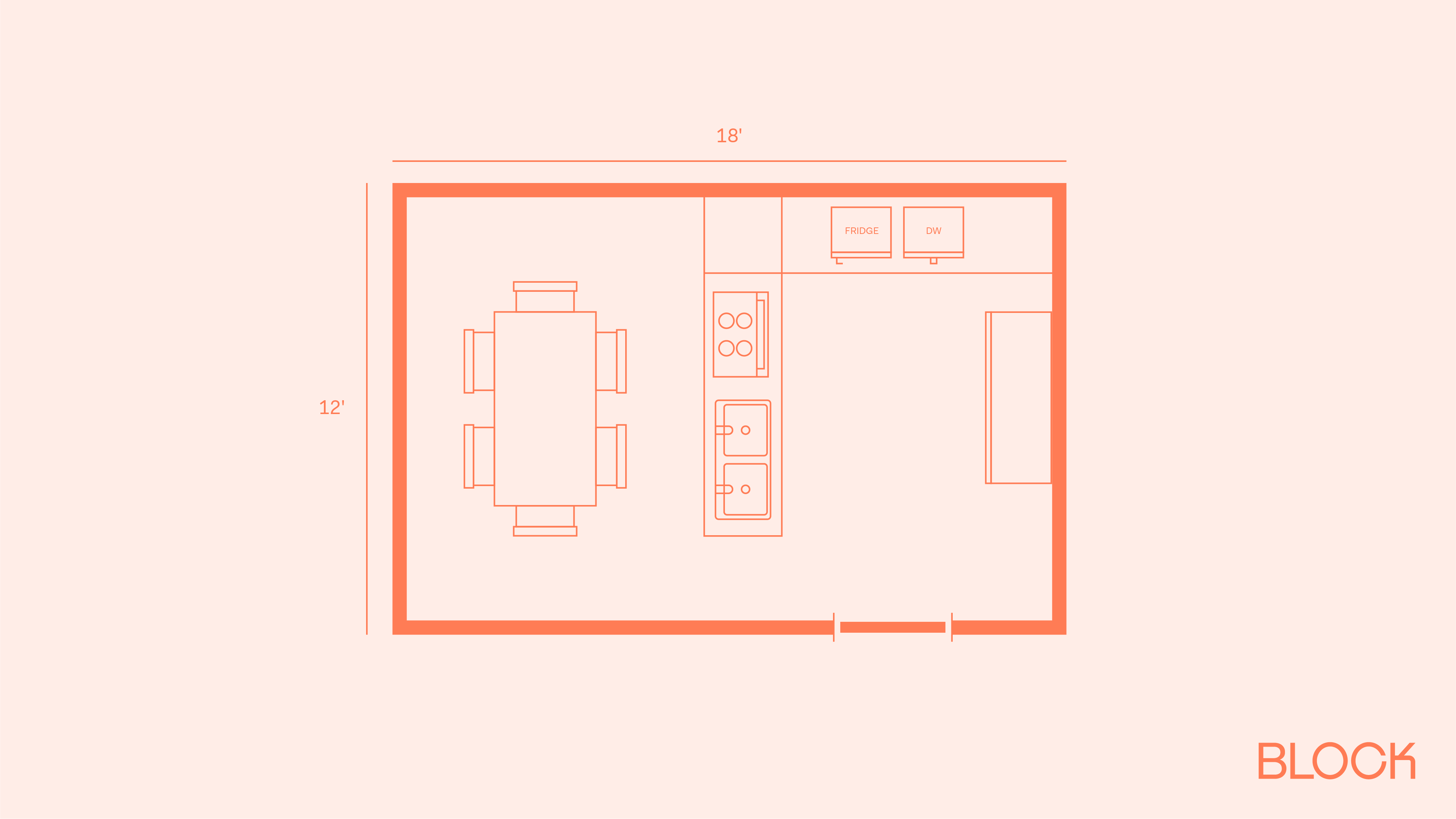
The L-shape gets replaced by a peninsula, a counter run attached to one wall at one end and floating at the other. In this version the peninsula holds both the sink and the cooktop. Fridge and dishwasher stay on the top wall.
A peninsula is often described as a cheaper island, and in most cases that's true. Plumbing and electrical extend from the attached wall, not through the floor, which reduces structural costs. Peninsulas typically range from $1,500 to $5,000, compared to $3,000 to $10,000 or more for a kitchen island.
Putting both the sink and the cooktop on the same peninsula is where this particular version gets expensive again. You now need a drain line, a supply line, gas or a dedicated circuit, and a hood, all on a single 8-to-10-foot run. The hood still has to vent, and since the peninsula sits near the middle of the room, that duct usually goes through the ceiling. The savings over a true island are narrower than they look on paper.
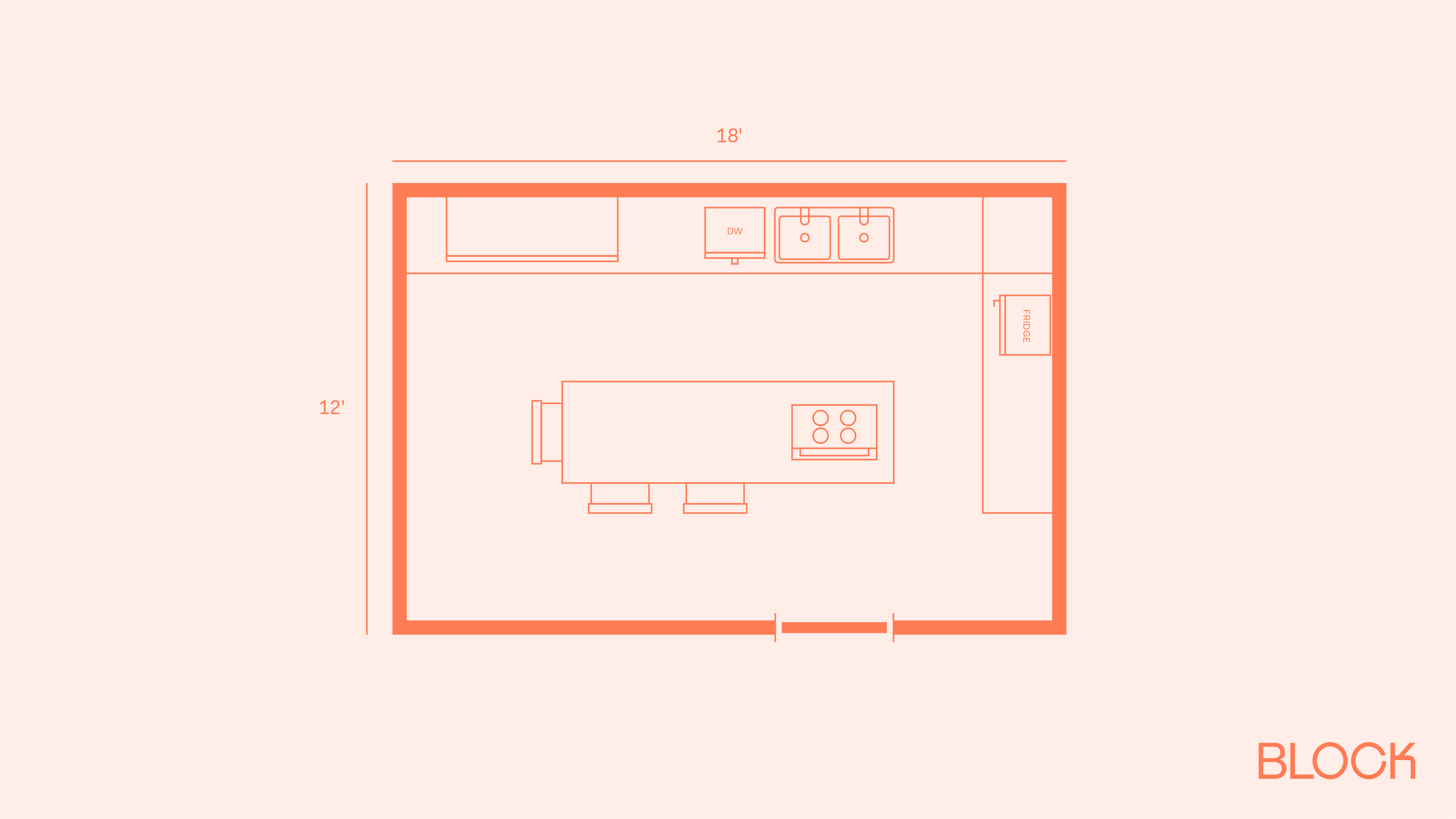
Layout 5 is another 12x18 kitchen layout with island, this time with the perimeter run as a galley instead of an L. The top wall holds the sink and dishwasher. The right wall holds the fridge on its own. The cooktop sits on a long island in the middle of the room, with seating on one side.
This layout is the most social. A cook on one side of the island faces a dining table on the other. The island doubles as the main prep surface, and two people can work at it without bumping elbows.
The cost profile is similar to Layout 3, with the added wrinkle that the fridge is a long walk from the sink and the cooktop. Measured against the 4-to-9-foot-per-leg guideline, the fridge-to-cooktop leg in this version runs close to the outer edge of what's considered efficient. That translates to back-and-forth when you're unloading groceries or grabbing cold ingredients mid-cook. It's a layout that photographs better than it cooks.
Kitchen renovations in 2026 generally run $150 to $250 per square foot for a mid-range full remodel that updates everything except the structural layout. Premium markets go higher, with $200 to $350 per square foot in premium regions and $250 to $400 or more per square foot for luxury finishes. For a 216-square-foot kitchen, that puts the all-in numbers at roughly:
Cabinetry is usually the single largest line item, running 30% to 40% of most kitchen budgets. Labor typically accounts for 25% to 40% of total kitchen renovation costs. Permits land between $500 and $2,000 depending on project complexity. Metro markets add another layer on top. Kitchen remodels in coastal California metros consistently run 40% to 60% above national averages.
One more number worth flagging. A 25% tariff on imported kitchen cabinets remains in effect through 2026, with a planned increase to 50% delayed until January 2027. If you're comparing imported and domestic cabinet lines, the gap has shifted from a few years ago.
A realistic contingency is 10% to 20% of the total budget. For a $50,000 kitchen, that's $5,000 to $10,000 held back for whatever demo turns up.
Each layout carries cost implications that show up separately from the finishes. The biggest swings:
A homeowner who chooses an island cooktop, a second sink in the island, and premium cabinets can easily spend $20,000 more than one who puts the same appliances on the perimeter.
Compare Proposals with Ease
It's worth being honest about how the kitchen will get used. A single-wall layout is a fine choice for a household that mostly orders in, reheats leftovers, or cooks weeknight meals without an audience. It costs the least to build and leaves the most floor for a big table.
An L-shape with a pantry rewards households that cook from scratch a few nights a week. The short work triangle, the ample storage, and the perimeter plumbing all work in favor of the person doing the cooking. It's also the layout that handles holidays best, because dry storage stops competing with counter space.
An island layout suits households where the kitchen is a social space. When people design a 12x18 kitchen layout with an island in mind, they're usually planning for how the room lives during a dinner party. Islands add cost and complicate venting, but they change the geometry of hosting. Guests who arrive early always end up leaning on the island.
A peninsula is the middle path. More social than a single wall, cheaper than a freestanding island, and a good fit for smaller households or for footprints where 42 inches of clearance on all sides of an island just isn't available.
The best layout isn't the most expensive or the most photographed. It's the one that fits how the household cooks and hosts, given the money on the table.
Block Renovation's free Renovation Studio lets homeowners visualize different kitchen materials and finishes, and see cost estimates update in real time as they make choices. You can try an L-shape, swap it for an island, move the sink to a peninsula, and watch the price move with each decision. The point is to answer the "what if" questions before construction starts, not after. Creating an account saves style picks and renders, so you can come back to the design later instead of starting over.
After the design is roughly where you want it, Block matches the project with vetted local contractors who compete on your exact scope. Every scope is reviewed by Block experts and AI-enabled tools to catch missing line items and red flags early. That review is the best defense against change orders, which are the mid-project price revisions that tend to blow kitchen budgets. Payments run through Block's secure system and release to the contractor as the work progresses, not up front. For a renovation the size of a kitchen, that structure is often the difference between a project that stays on budget and one that doesn't.
Remodel with confidence through Block

Connect to vetted local contractors
We only work with top-tier, thoroughly vetted contractors

Get expert guidance
Our project planners offer expert advice, scope review, and ongoing support as needed

Enjoy peace of mind throughout your renovation
Secure payment system puts you in control and protects your remodel


Renovate confidently with Block
Easily compare quotes from top quality contractors, and get peace of mind with warranty & price protections.
Kitchen Floor Plans
Galley Kitchen Floor Plans and Ideas That Work | Block
07.15.2026
.webp?width=640&name=King%20-%20Final%20Kitchen%20(1).webp)
Kitchen Floor Plans
AI Floor Plan Generator: Best Free & Paid Software
06.26.2026
Kitchen Floor Plans
U-Shaped Kitchen Layouts & Floor Plans: 8 Designs
05.28.2026

Kitchen Floor Plans
Kitchen Floor Plans With Islands: 6 Layouts That Work
05.14.2026

Kitchen Floor Plans
12x10 Kitchen Layouts: 5 Designs That Work
04.26.2026