



.webp?width=640&name=King%20-%20Final%20Kitchen%20(1).webp)
Kitchen Floor Plans
AI Floor Plan Generator: Best Free & Paid Software
06.26.2026
02.19.2026


.jpg?width=640&name=bc8d1e7b-a3cb-4561-9c15-8d72848f8d49%20(1).jpg)
In This Article
An 11x12 kitchen gives you 132 square feet—a footprint that sits in a productive middle ground. It’s noticeably roomier than a 10x10, but it hasn’t crossed into territory where the layout plans itself. You have enough space to seat a family at a real table, run cabinetry along two walls without the room closing in, and separate cooking from eating in a way that actually feels intentional.
You’ll find this size in a lot of mid-century ranches, Cape Cods, two-story colonials, and postwar split-levels—homes where the original builder gave the kitchen a bit more elbow room than the standard but stopped short of generous. It’s also common in apartments and condos where previous owners knocked out a closet wall or absorbed a pantry to pick up a few extra feet.
The 12-foot wall is your primary working surface. That’s where the sink, stove, and fridge typically land, and at 12 feet you’ve got room for all three plus counter on both sides of the sink—something that a 10-foot wall can’t always deliver. The 11-foot depth gives you room for a dining table, a second row of cabinets, or an L-shaped return—but not all three. The choices you make in that depth are what separate a kitchen that feels right from one that feels like it’s trying to do too much.
An 11x12 kitchen is roughly 32% larger than the industry-standard 10x10 benchmark. That translates to more material in every category—flooring, cabinetry, countertops, backsplash—but also more room for upgrades that weren’t feasible in a smaller footprint. The budget question at this size isn’t just how much, it’s where to direct the money.
Renovate with confidence every step of the way
Step 1: Personalize Your Renovation Plan
Step 2: Receive Quotes from Trusted Contractors
Step 3: Let Us Handle the Project Details
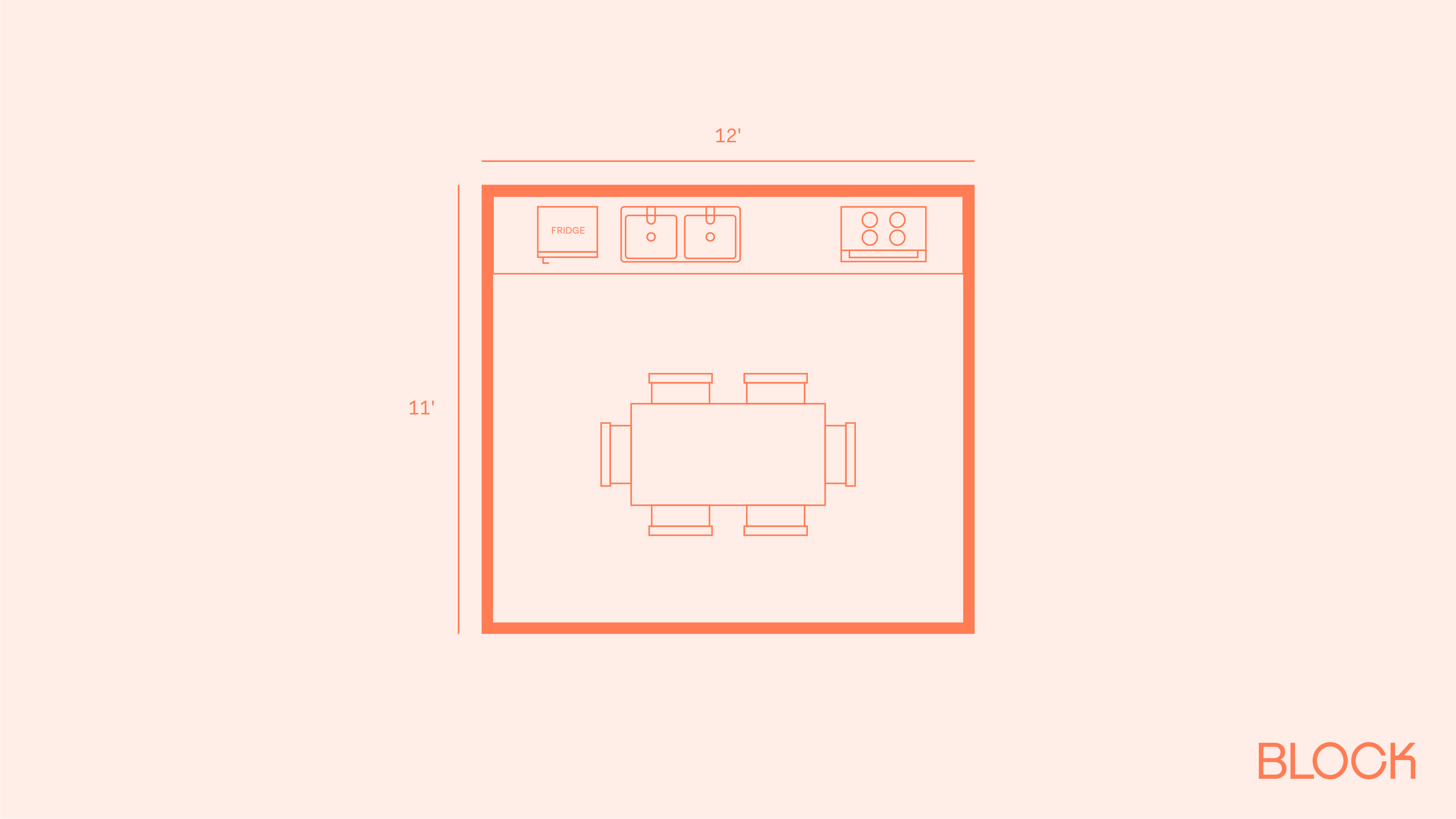
The fridge, double sink, and stove line the 12-foot upper wall. A dining table with seating for six occupies the center and lower portion of the room.
This is the most straightforward layout in the set, and for a lot of households it’s also the most practical. The 12-foot wall holds every major appliance with counter space between each one—no forced adjacencies, no skipped landing zones. You get a clear, unbroken cooking run that lets you move from fridge to prep area to stove without reversing direction.
The dining table has real breathing room here. With 11 feet of depth and no competing cabinetry on the opposite wall, the table sits in a zone that feels like its own area rather than an afterthought wedged between counters. That’s a distinction that matters at mealtimes—the person sitting closest to the stove isn’t dodging a hot pan.
From a budget standpoint, this is the leanest option. All plumbing and electrical stays on one wall, cabinetry quantities are the lowest in the set, and the dining furniture is a separate purchase you can upgrade on your own timeline.
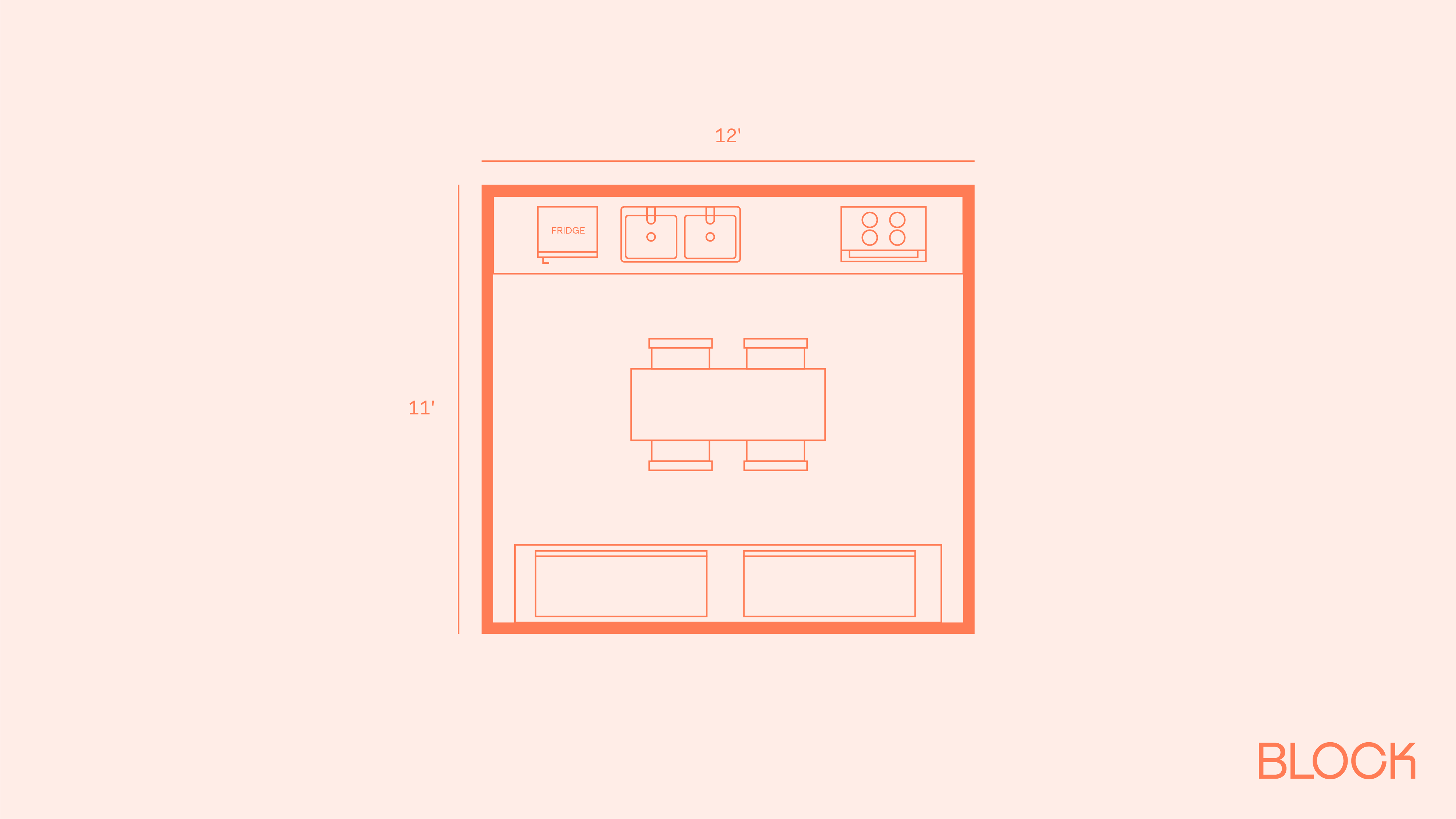
The fridge, double sink, and stove line the upper wall. A dining table with seating for four sits in the center of the room. Two runs of base cabinetry line the lower wall, adding storage without introducing a full second cooking zone.
This layout builds on the single-wall concept by solving its biggest weakness: storage. A 12-foot single-wall kitchen gives you roughly 8–10 linear feet of base cabinets after the appliances take their share. That’s tight for a household that cooks regularly. The lower-wall base cabinets add another 6–8 linear feet of storage without any plumbing or electrical work, since they’re purely for dry goods, cookware, and small appliances.
The dining table drops from six seats to four in this configuration, but the seats that remain are comfortable—there’s clearance on all sides for pulling chairs out and walking past. If storage is the thing your current kitchen is missing and you don’t need to seat a crowd, this layout addresses the problem directly.
The additional base cabinets and countertop surface add roughly $3,500–$7,000 compared to the pure single-wall version at the same finish level, with no extra plumbing or electrical required. That’s one of the better cost-to-function returns in an 11x12 kitchen.
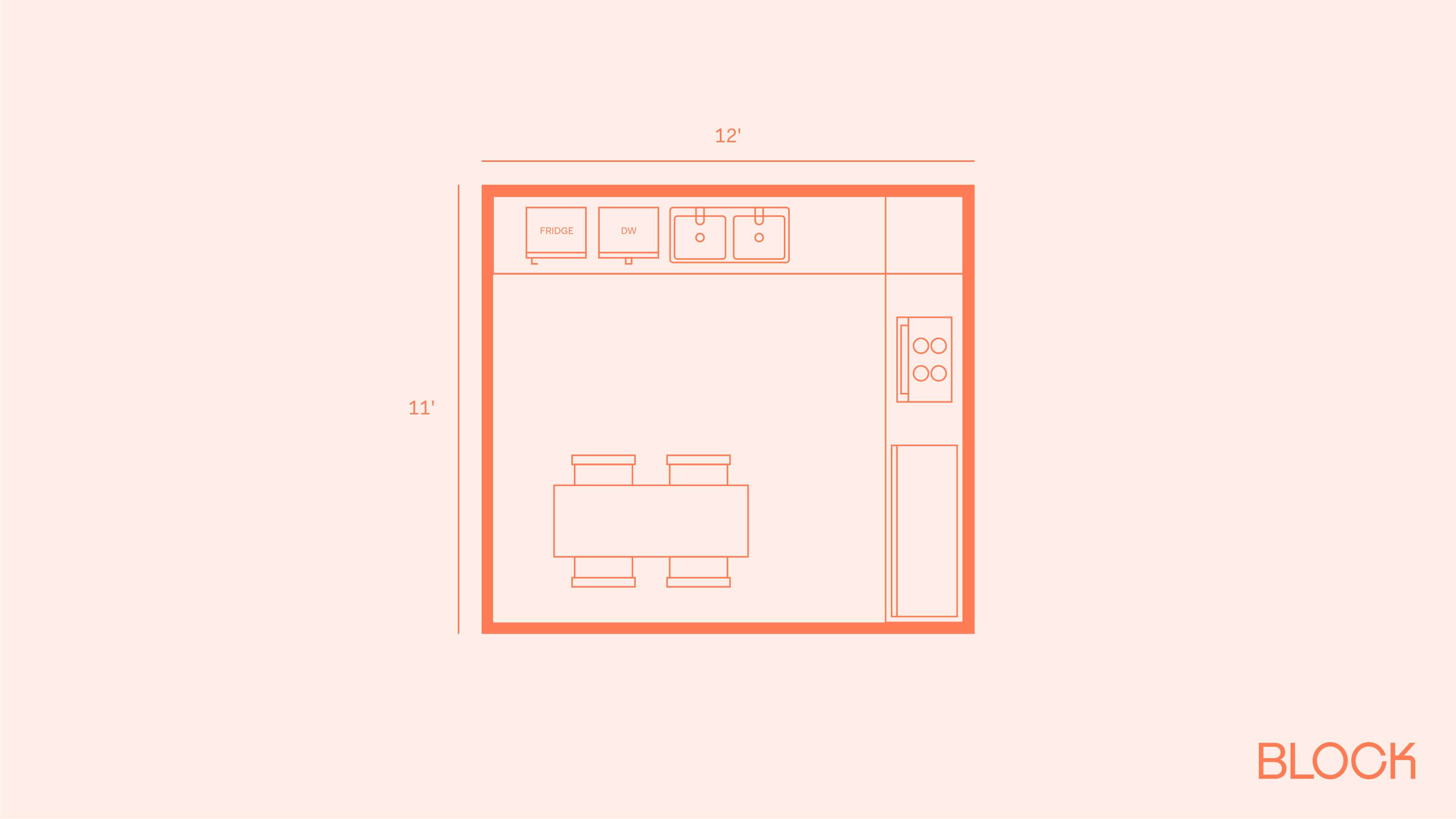
The fridge and dishwasher sit on the upper wall alongside the double sink. The stove anchors the right-hand wall with cabinetry extending below. A dining table with seating for four occupies the open floor on the left side of the room.
Moving the stove off the main wall and onto its own surface changes how cooking feels. Instead of working along a single line, you’re operating within a compact triangle—a few steps from sink to stove to fridge—which cuts down on the back-and-forth that adds up over the course of making a meal.
The stove’s position on the right wall also gives it a dedicated backsplash surface and a natural spot for a range hood above. That combination—stove, hood, and the cabinetry flanking it—creates a visual anchor on that side of the room that reads as intentional rather than incidental.
The dining table shares the room comfortably. It’s positioned on the opposite side from the stove, so cooking activity and eating don’t overlap. Expect the L-shaped cabinetry to add 25–35% in material costs over a single-wall layout, plus an electrical run for the stove on its new wall.
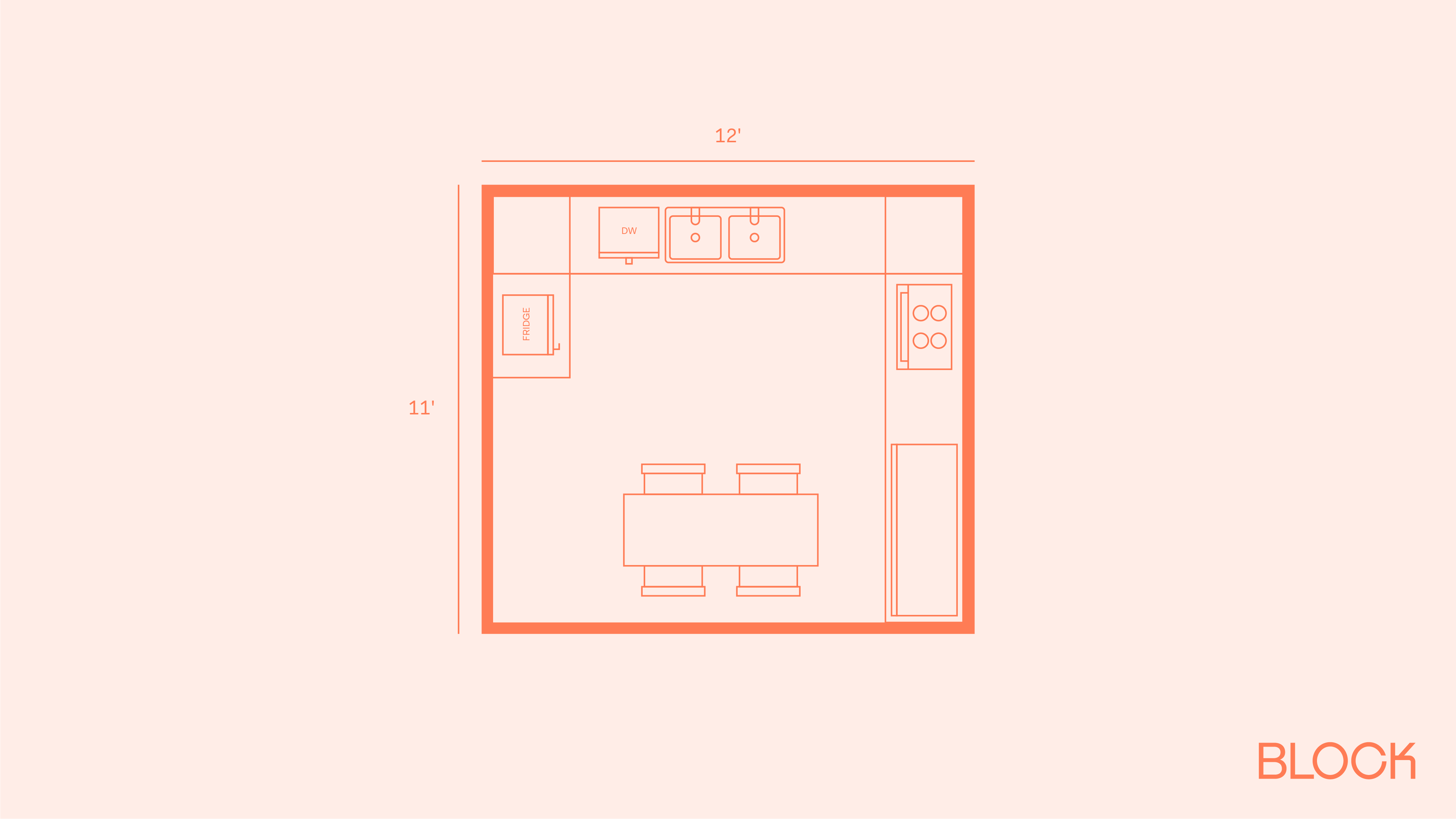
The dishwasher and double sink line the upper wall. The fridge sits freestanding on the upper-left side wall. The stove anchors the right-hand wall with cabinetry extending down. A dining table with seating for four fills the lower-center portion of the room.
Pulling the fridge off the main wall and onto a side wall is a small move that creates a real advantage: the upper wall gets a longer, uninterrupted counter run between the sink and the end of the cabinetry. That stretch of clear counter is the best prep surface in the set—room for a cutting board, a mixing bowl, and ingredients laid out side by side.
The freestanding fridge placement also means you’re not constrained by a cabinet surround. You can choose a wider, deeper, or taller unit based on how much cold storage your household actually needs, without worrying about whether it fits a predetermined opening.
The cost profile is similar to the other L-shaped layouts, with one addition: if your fridge has an ice maker or water dispenser, relocating it to a side wall may require extending a water line, which typically adds $500–$1,500 to the plumbing budget.
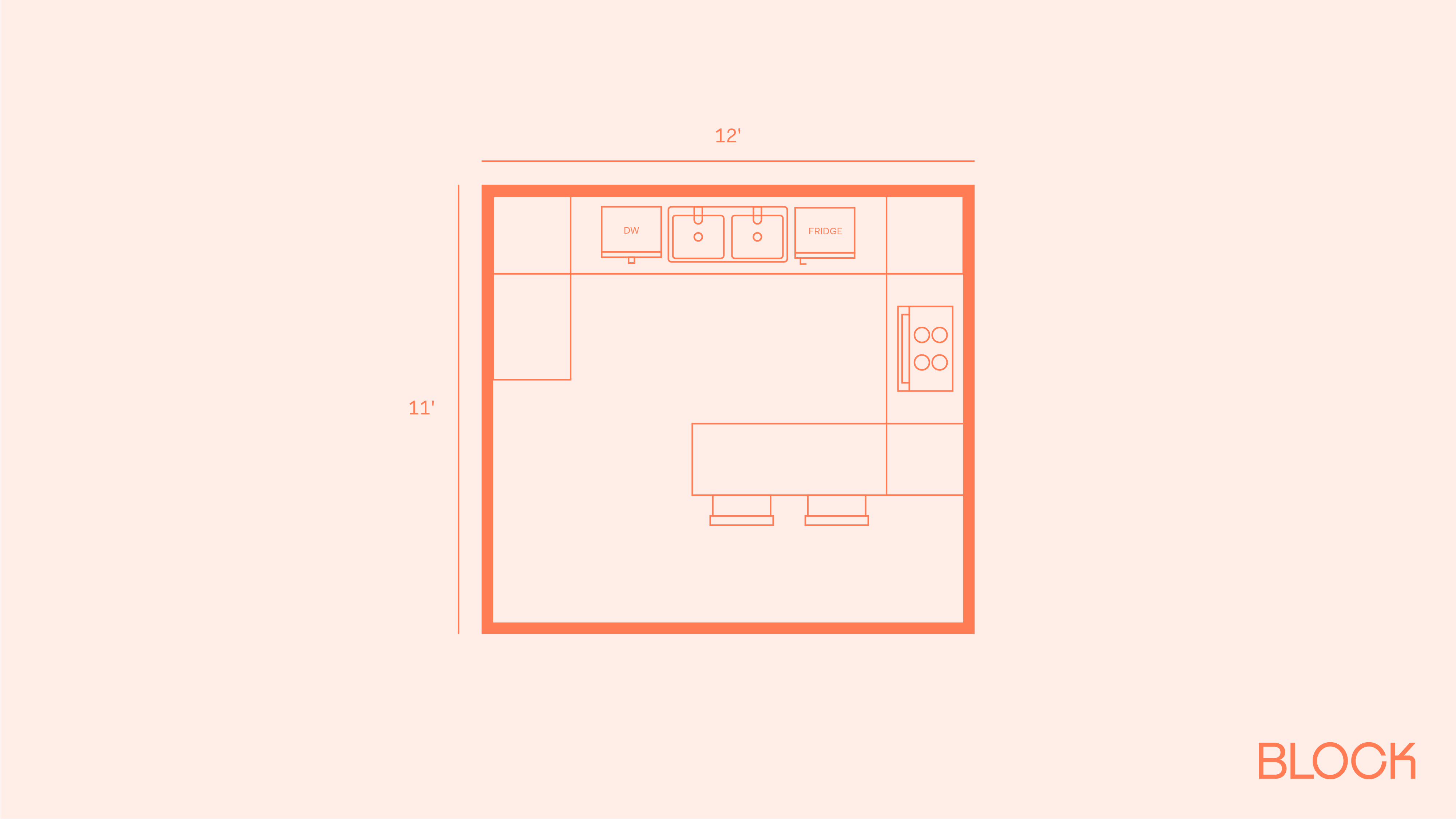
The dishwasher, double sink, and fridge run along the upper wall. The stove sits on the right-hand wall with cabinetry extending below. A peninsula with bar-height seating for two extends from the left side, and a table with two seats occupies the center-lower area.
This is the layout for households where the kitchen doubles as a gathering spot. The peninsula gives you counter space, base storage, and a place for someone to sit and talk to the cook—all in a single construction move that doesn’t require island plumbing or its own electrical circuit.
The stove on the right wall keeps the work triangle tight, and the upper wall holds the rest of the appliances in a clean run. The peninsula bridges the cooking and social zones without creating a physical barrier—you can walk around it on either side.
A basic peninsula with cabinetry, countertop, and a seating overhang runs $2,000–$4,500 installed. Because it extends from an existing cabinet run, it avoids the utility costs that come with a freestanding island. That makes it one of the most cost-effective ways to add function and seating in an 11x12 kitchen.
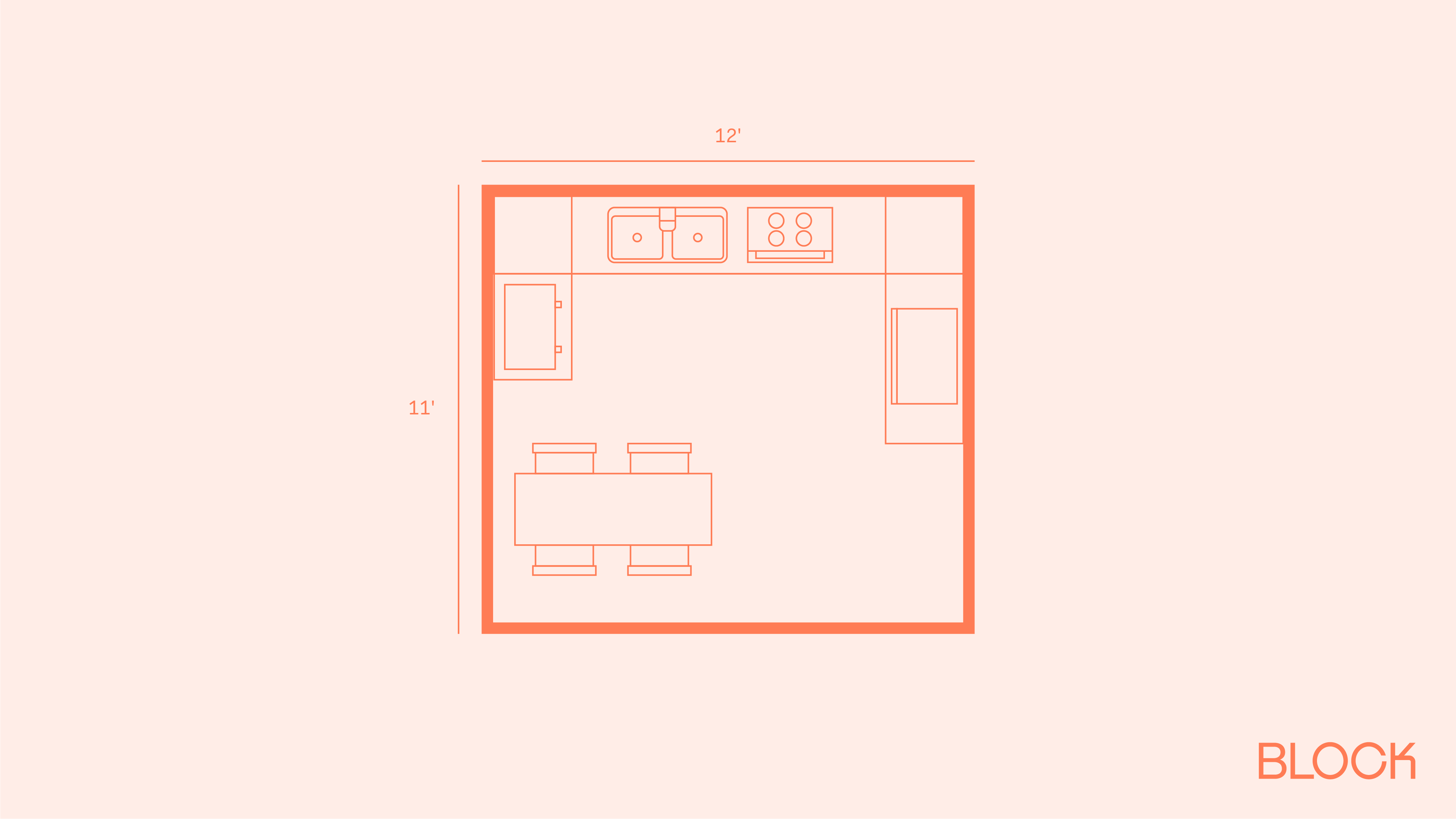
The double sink and stove share a shorter run on the upper wall. A freestanding cabinet or tall storage piece sits on the left-hand wall, and additional cabinetry lines the right. A dining table with seating for four to six fills the lower portion of the room.
This layout works well in 11x12 kitchens where the entry or a window constrains the upper wall. By concentrating the sink and stove into a tighter run, you free up the side walls for storage—a tall pantry column on the left, base cabinets on the right—without crowding the center.
The dining table gets the most floor area of any layout in the set. If your household eats most meals in the kitchen or you regularly have guests at the table, this configuration gives the eating area priority without shortchanging the cooking function.
Cost-wise, this lands in the same range as the other L-shaped options. The shorter upper run means less countertop and backsplash material on the primary wall, but the side-wall cabinetry offsets that savings. The net result is a layout that distributes storage around the room rather than concentrating it in one place.
Renovate with confidence every step of the way
Step 1: Personalize Your Renovation Plan
Step 2: Receive Quotes from Trusted Contractors
Step 3: Let Us Handle the Project Details
At 132 square feet, you’re past the stage where every decision is about fitting things in. You have room to direct your budget toward changes that genuinely affect how the kitchen performs day to day. Not every upgrade earns its price tag—but these consistently do.
Most kitchen renovations under budget lighting by a wide margin, and it’s the one upgrade that changes the room at every hour. Swapping a single ceiling fixture for a layered system—recessed cans for general light, LED strips under the upper cabinets for task lighting, and a pendant over the dining table or peninsula—gives you control over how the room feels from morning coffee to a late weeknight dinner. A full lighting plan for an 11x12 kitchen typically runs $2,000–$4,500 installed.
The difference between stock and semi-custom cabinetry isn’t just about how the doors look. It’s about how the drawers close, how the shelves hold up over years of daily use, and whether the interior is bare particleboard or fitted with pull-out trays, dividers, and soft-close slides. At 12–20 linear feet of cabinetry in an 11x12 kitchen, that quality gap shows up every time you reach for a pot or put away groceries. Semi-custom runs $200–$400 per linear foot installed versus $75–$150 for stock—a meaningful jump, but one most homeowners say they’d make again.
Put real ventilation above the stove
If you’re upgrading the cooktop, match it with a range hood that’s actually sized to handle the output. Proper ventilation keeps grease off your new cabinets, clears cooking odors before they settle into upholstery in the next room, and improves the air you’re breathing while you cook. Mid-range hoods run $500–$2,000 installed. In an L-shaped layout where the stove has its own wall, a chimney-style or canopy hood doubles as a visual focal point.
Give your backsplash some personality
In an 11x12 kitchen, the backsplash covers a visible enough area to function as a design element rather than just a protective surface. Stepping beyond basic subway tile ($800–$1,500 installed) into materials with more texture—zellige, handmade ceramic, large-format porcelain, or a natural stone slab—adds $1,500–$3,500 to the budget and changes the room’s character noticeably. For ideas, read guides like Non-Tile Kitchen Backsplashes—Alternative Ideas and Behind the Stove Backsplash Ideas: Balancing Style, Safety, and Practicality.
A tall pantry column (18–24 inches wide, 84–96 inches tall) with pull-out shelving keeps dry goods, spices, oils, and small appliances visible and accessible. In an 11x12 kitchen, there’s often a stretch of wall next to the fridge or on a side wall that can accommodate one without sacrificing counter or cooking space. Pull-out pantry cabinets run $800–$2,000 for the unit plus installation, and they change how you interact with storage on a daily basis.
An 11x12 kitchen is big enough to reward good decisions and small enough to punish careless ones. The layouts that work best at this size aren’t the most packed with features—they’re the ones where the cooking zone is efficient, the dining zone is comfortable, and every upgrade solves a problem you actually have.
With Block Renovation, you can explore different layouts, materials, and finishes through the free Renovation Studio—adjusting your plan and seeing how each choice affects the budget before construction begins. When you’re ready to build, Block matches you with vetted local contractors who deliver detailed, comparable proposals backed by progress-based payments and a one-year workmanship warranty.
Remodel with confidence through Block
Connect to vetted local contractors
We only work with top-tier, thoroughly vetted contractors

Get expert guidance
Our project planners offer expert advice, scope review, and ongoing support as needed
Enjoy peace of mind throughout your renovation
Secure payment system puts you in control and protects your remodel

Renovate confidently with Block
Easily compare quotes from top quality contractors, and get peace of mind with warranty & price protections.
Kitchen Floor Plans
AI Floor Plan Generator: Best Free & Paid Software
06.26.2026
Kitchen Floor Plans
U-Shaped Kitchen Layouts & Floor Plans: 8 Designs
05.28.2026

Kitchen Floor Plans
Kitchen Floor Plans With Islands: 6 Layouts That Work
05.14.2026

Kitchen Floor Plans
12x10 Kitchen Layouts: 5 Designs That Work
04.26.2026
Kitchen Floor Plans
12x18 Kitchen Layout with Island: 5 Designs Compared
04.26.2026