




Before and After
Kitchen Island Remodel: Before and After Inspo
06.26.2026
05.01.2026


In This Article
A 1920s house comes with plaster walls, quarter-sawn oak floors, a coal chute no one has opened in decades, and, almost certainly, knob-and-tube wiring that an inspector will flag the moment they see it.
Renovating a century-old home asks for a different mindset than renovating a new build. You're inheriting choices made by a builder in 1924, and the strongest 1920s house renovation projects find ways to honor those choices rather than erase them. The nine before-and-after projects in this guide show what's possible when original character meets modern systems, and each one offers a practical idea you can borrow for your own home.
Houses built during the 1920s share a surprising amount of DNA, whether they're bungalows in Pasadena, rowhouses in Philadelphia, or foursquares in the Midwest. Before you pick paint colors or chase inspiration, it helps to know what you're working with.
Renovate with confidence every step of the way
Step 1: Personalize Your Renovation Plan
Step 2: Receive Quotes from Trusted Contractors
Step 3: Let Us Handle the Project Details

Each example below shows a full room transformation, and each one points to a broader idea you can apply to your own 1920s house renovation.
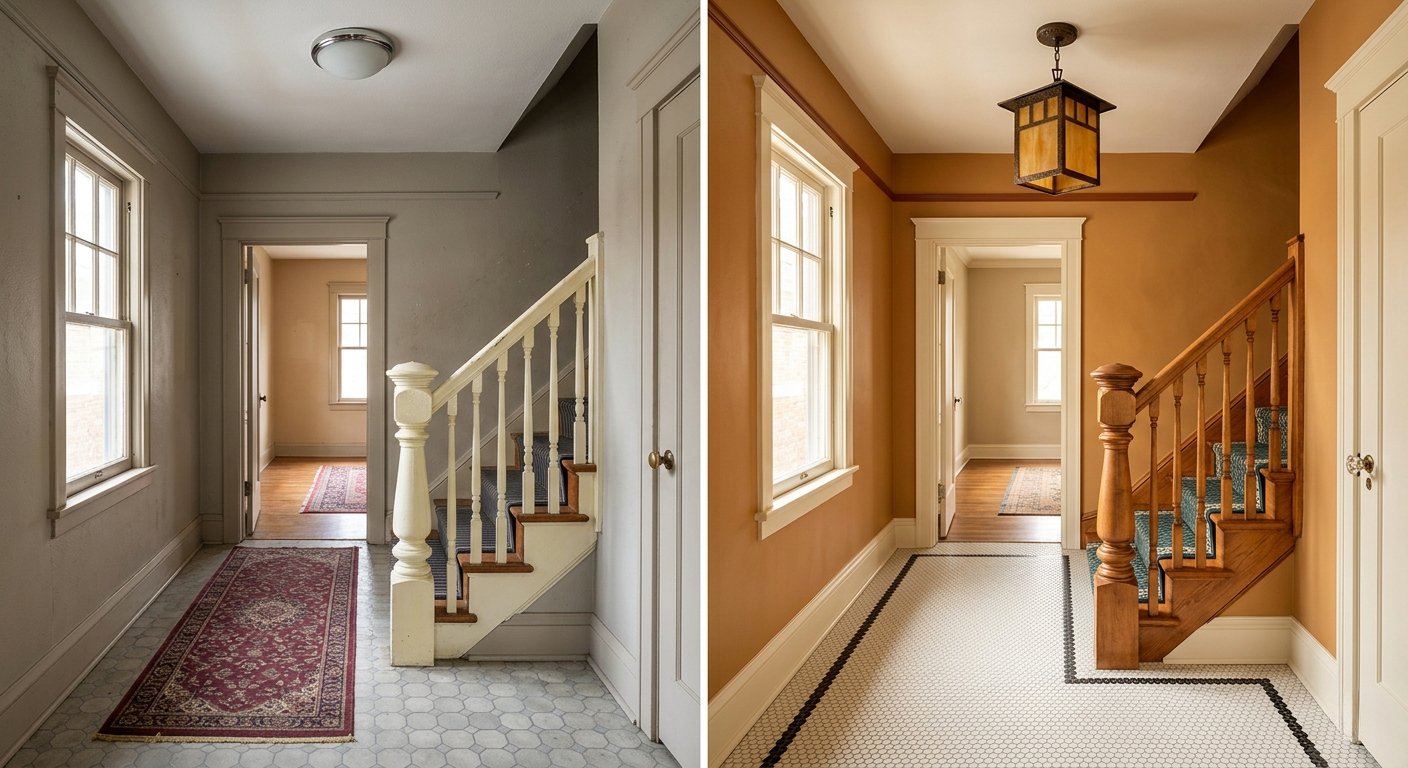
The foyer of a 1920s home sets expectations for everything else. Before the renovation, cool gray walls and a standard flush-mount fixture gave this entry the feel of a rental. After, warm terracotta paint, a mission-style lantern, and a decorative hex tile border pull the space back toward its craftsman roots without turning it into a museum.
A few moves do most of the work here:
None of those changes involve rebuilding stairs or reworking original trim. Paint and a new fixture do most of the visible work, with the tile border at the entry adding the period note.
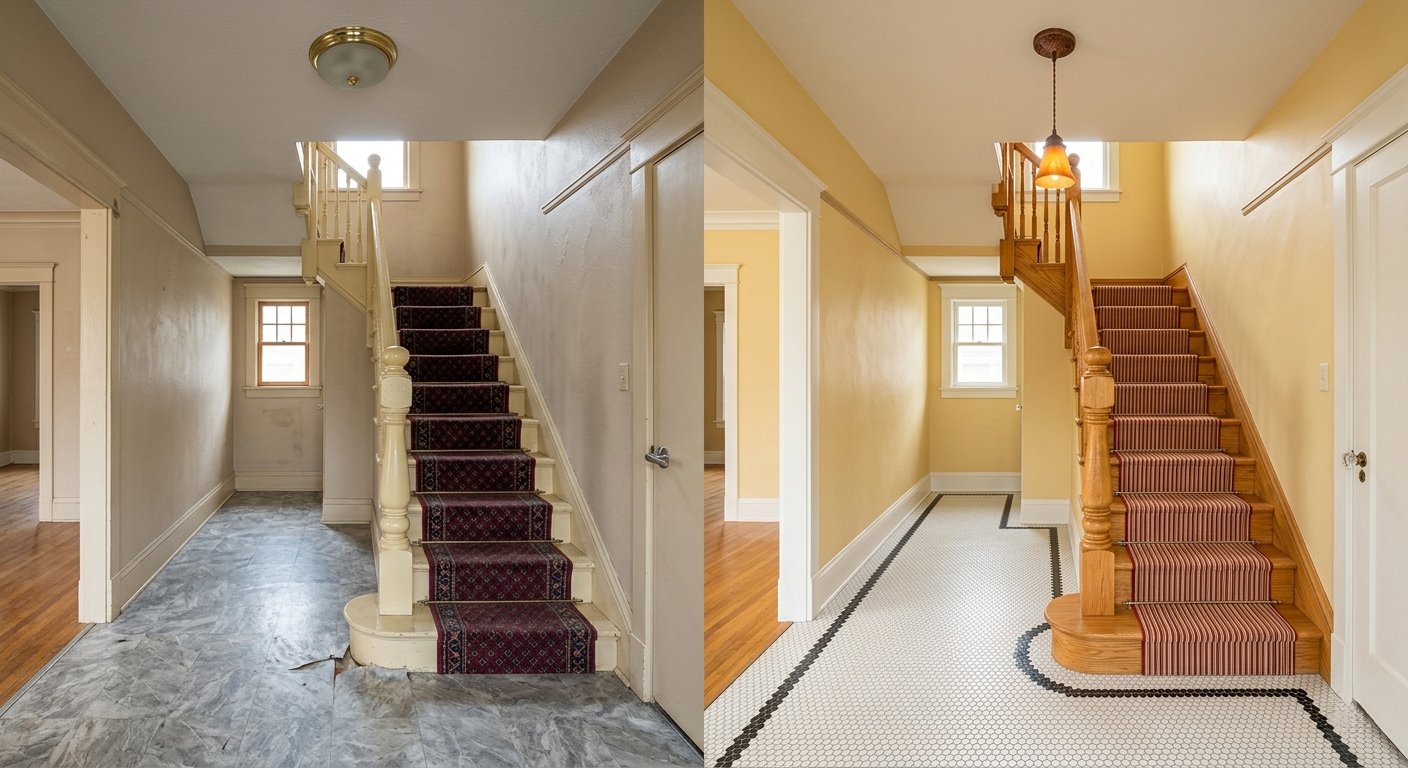
A carpeted or painted-over staircase is one of the most common 1920s renovation ideas to reverse. Underneath the old runner, the thick layers of paint, and decades of foot traffic, there's usually an oak or fir staircase worth bringing back.
The approach here: strip and refinish the treads, add a striped runner for sound and grip, and redo the entry floor in classic white penny tile with a black border. A period-appropriate banister and newel post usually only need sanding and refinishing to come back as focal points.
Before committing to a refinish, check with your contractor on:
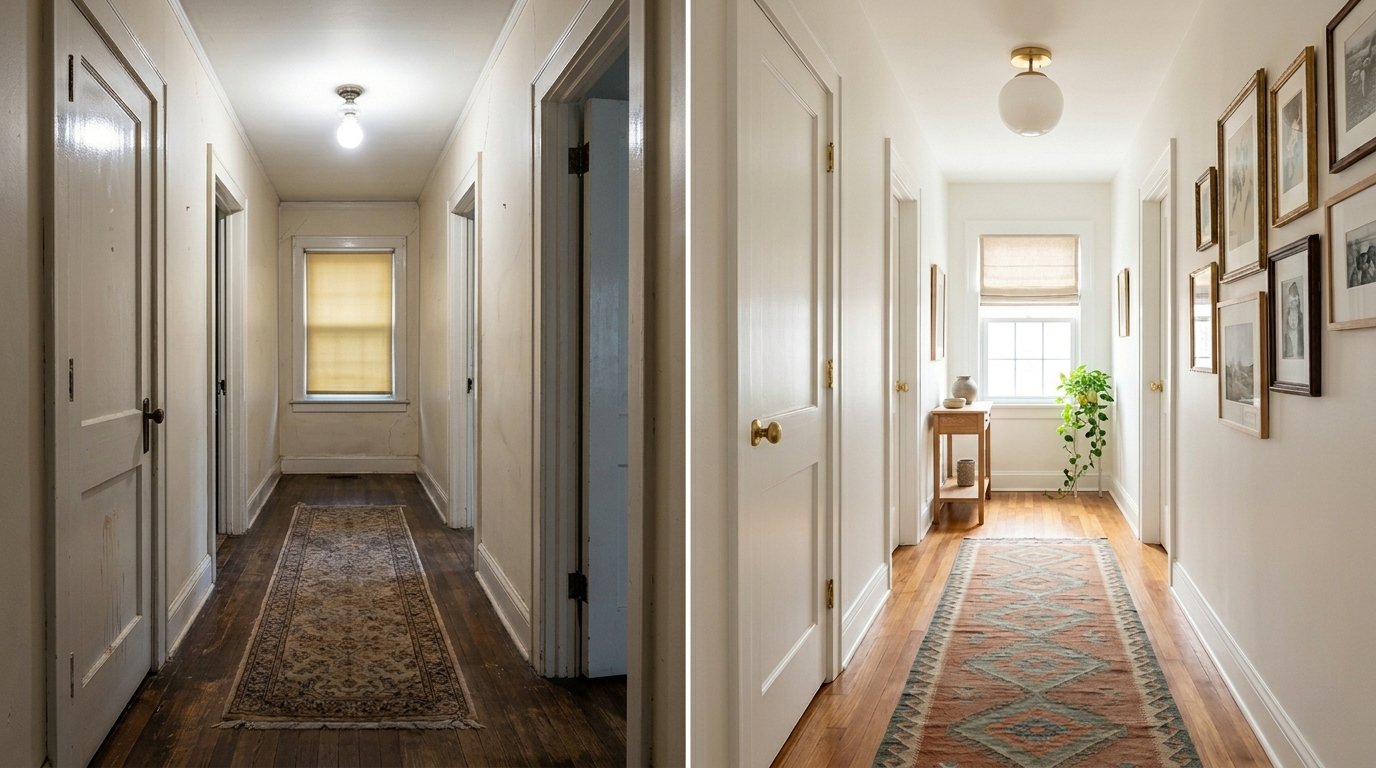
Hallways in 1920s homes tend to be long and narrow, lit by a single fixture and ignored during design decisions. That's a missed opportunity.
The dimensions and the single end-window stay the same. What changes: fresh white paint on walls and trim, refinished wood floors, a softer natural-fiber runner, a small console with a plant, and a densely hung gallery wall of vintage-framed prints. A pass-through becomes a destination.
A gallery wall works especially well in a 1920s hallway because the proportions of the space were designed for this kind of visual layering. If you're pulling together a wall of your own, mix frame finishes and sizes, and keep the bottom edges of the grouping roughly aligned. The top can be irregular. A picture-rail molding (common in this era) makes hanging and rearranging much easier, since you can swap frames without patching plaster.
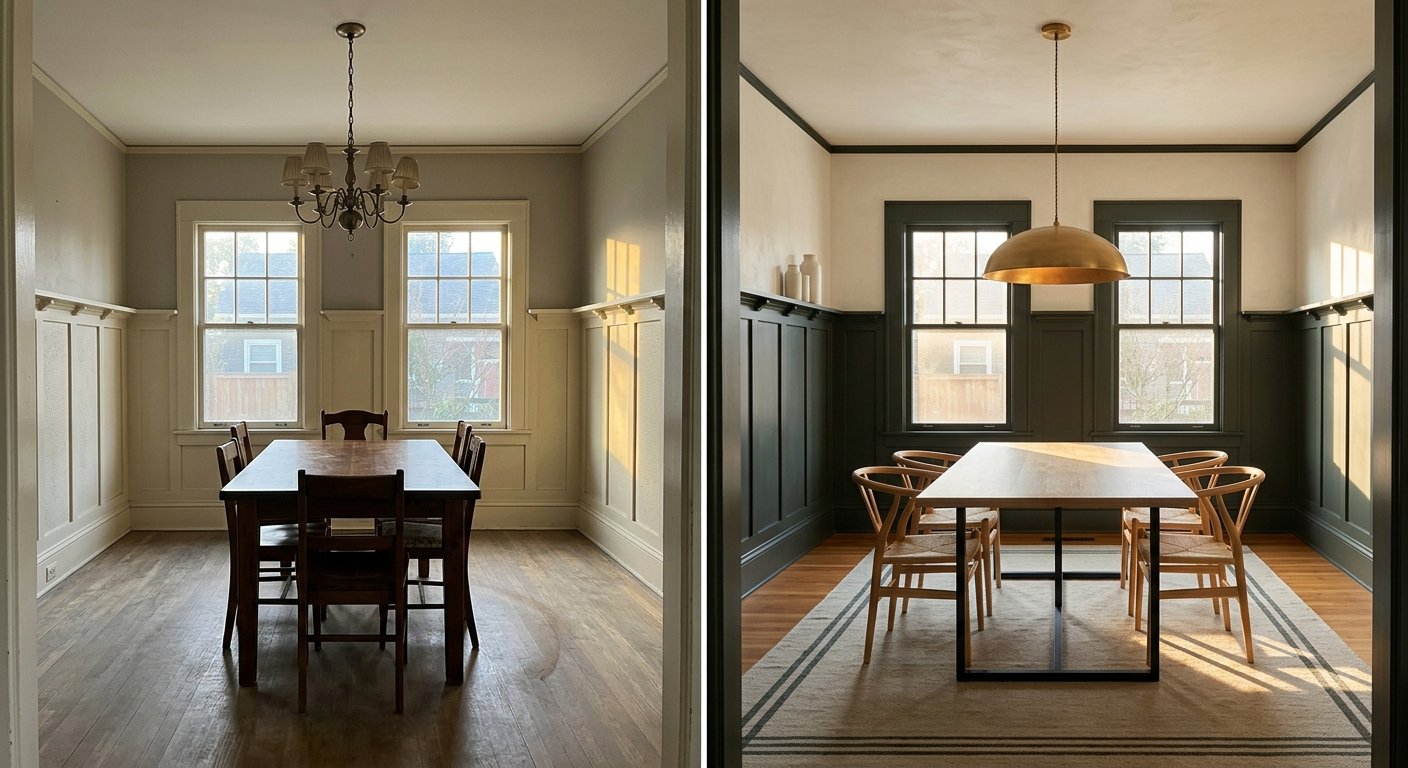
Original wainscoting, picture rails, and window casings are some of the best reasons to own a 1920s home. They're also often painted in a dated off-white that flattens the whole room.
Every piece of the original millwork stays, including the full-height wainscoting and the picture rail. The change is almost entirely color. Walls above the rail stay a warm neutral, while the wainscoting, trim, and window casings take on a deep forest green. A brass pendant and wishbone chairs replace the dated chandelier and heavy furniture.
Painting original trim is less controversial than it used to be, and in most cases it's reversible. A few guidelines:
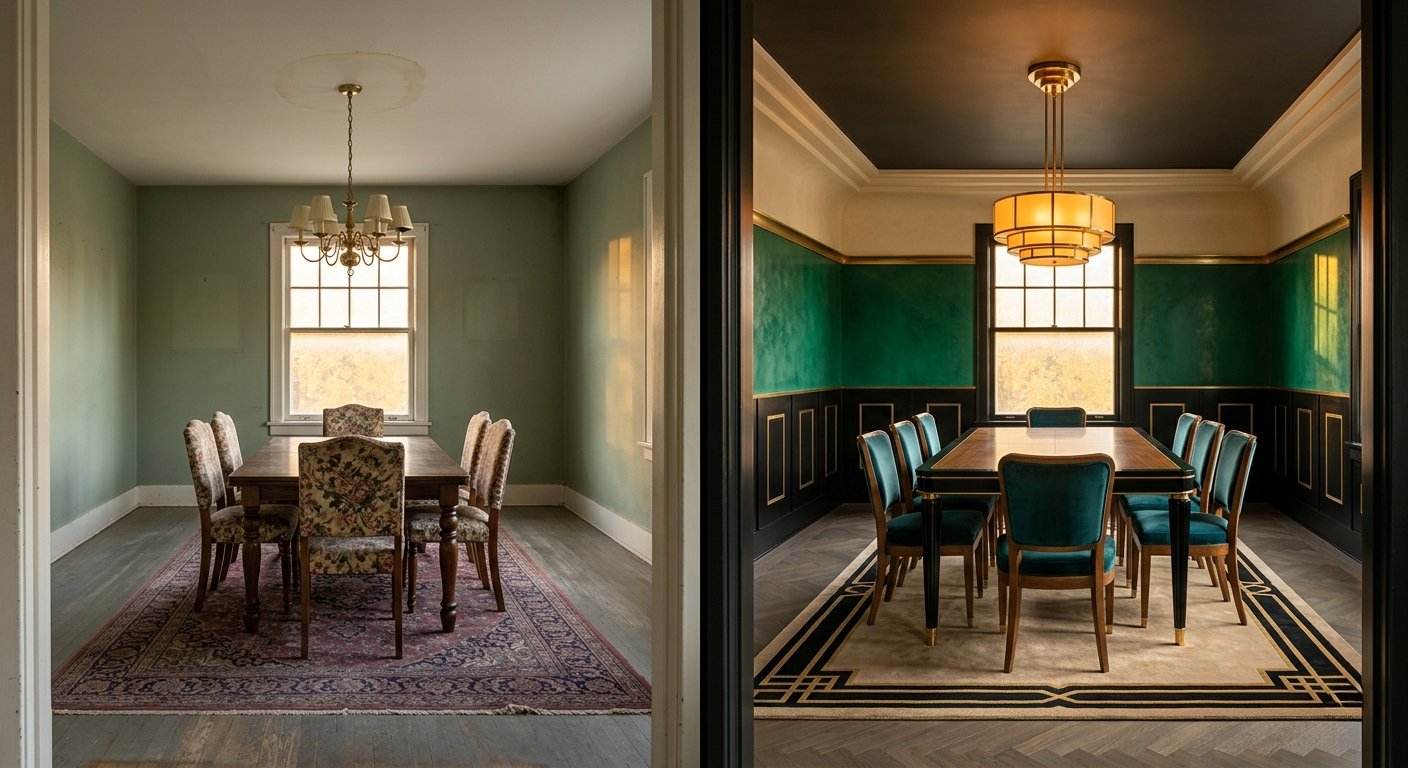
Most 1920s renovations lean toward a softer, traditional interpretation of the era. Some homes are better served by leaning into the decade's more dramatic design language instead.
The bolder option: a faded green room with mismatched upholstered chairs becomes an art deco showpiece with emerald lacquer walls, black paneling and gold inlay, herringbone floors, teal velvet chairs, and a stepped pendant light.
Art deco works in a 1920s house because it was the contemporary design style of the period. If you're drawn to this direction, the vocabulary is specific:
You don't have to commit the whole house to this style. Art deco works well in bathrooms, bedrooms, and dining rooms, among other spaces.
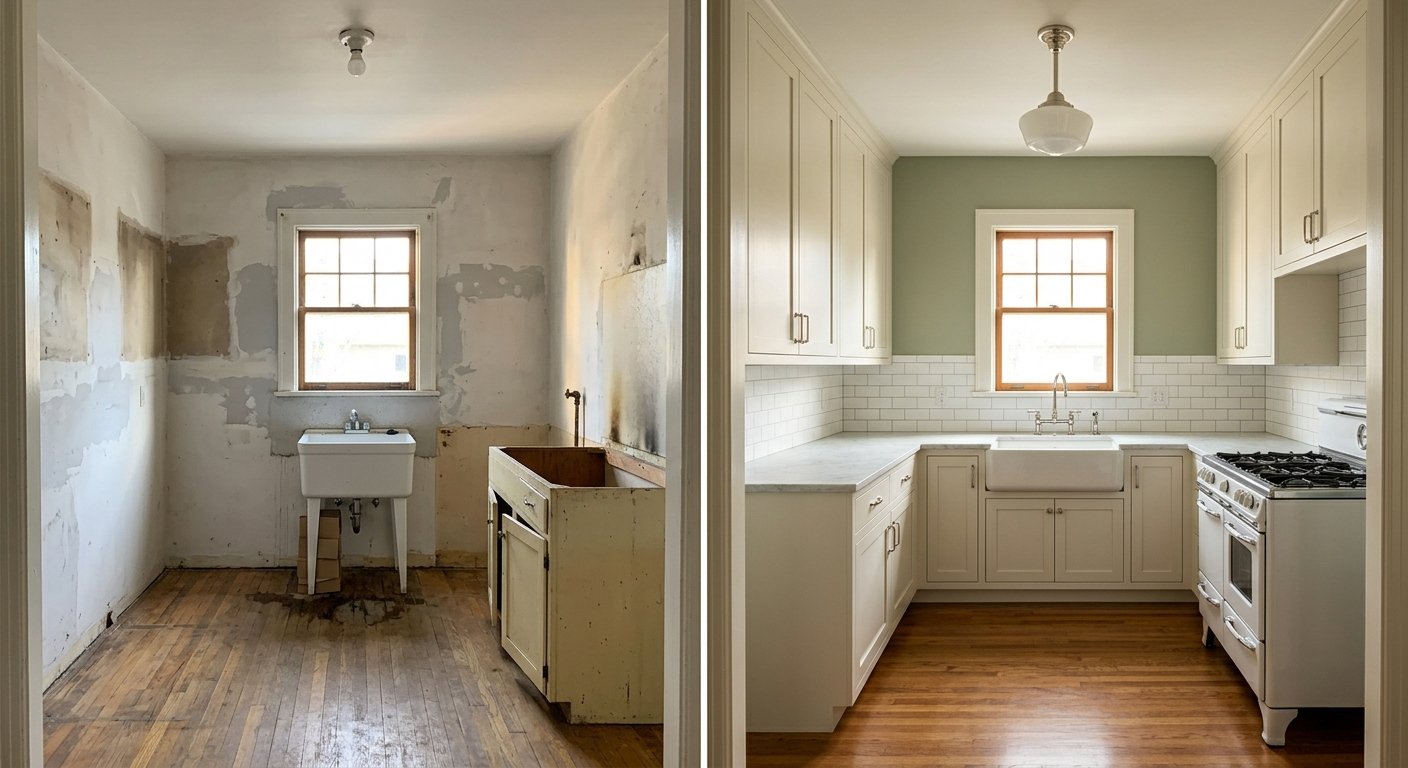
The kitchen is usually the largest line item in a 1920s house renovation, and it's also where the period-versus-modern question gets loudest. A true 1920s kitchen had a freestanding stove, a standalone sink, painted cabinets with visible hinges, and almost no counter space. A modern household needs a dishwasher, a full-size fridge, outlets on every wall, and real work surfaces.
The kitchen here balances both. Inset shaker cabinets in soft white, a farmhouse sink, honed marble counters, subway tile up to the ceiling above the sink wall, and a sage green accent wall feel genuinely of the era. The gas range on legs and the schoolhouse pendant reinforce the effect. Behind all of it sits a full modern layout with a dishwasher, full-size fridge, and contemporary electrical.
If you're planning a kitchen in a 1920s home, a few details carry most of the period feeling:
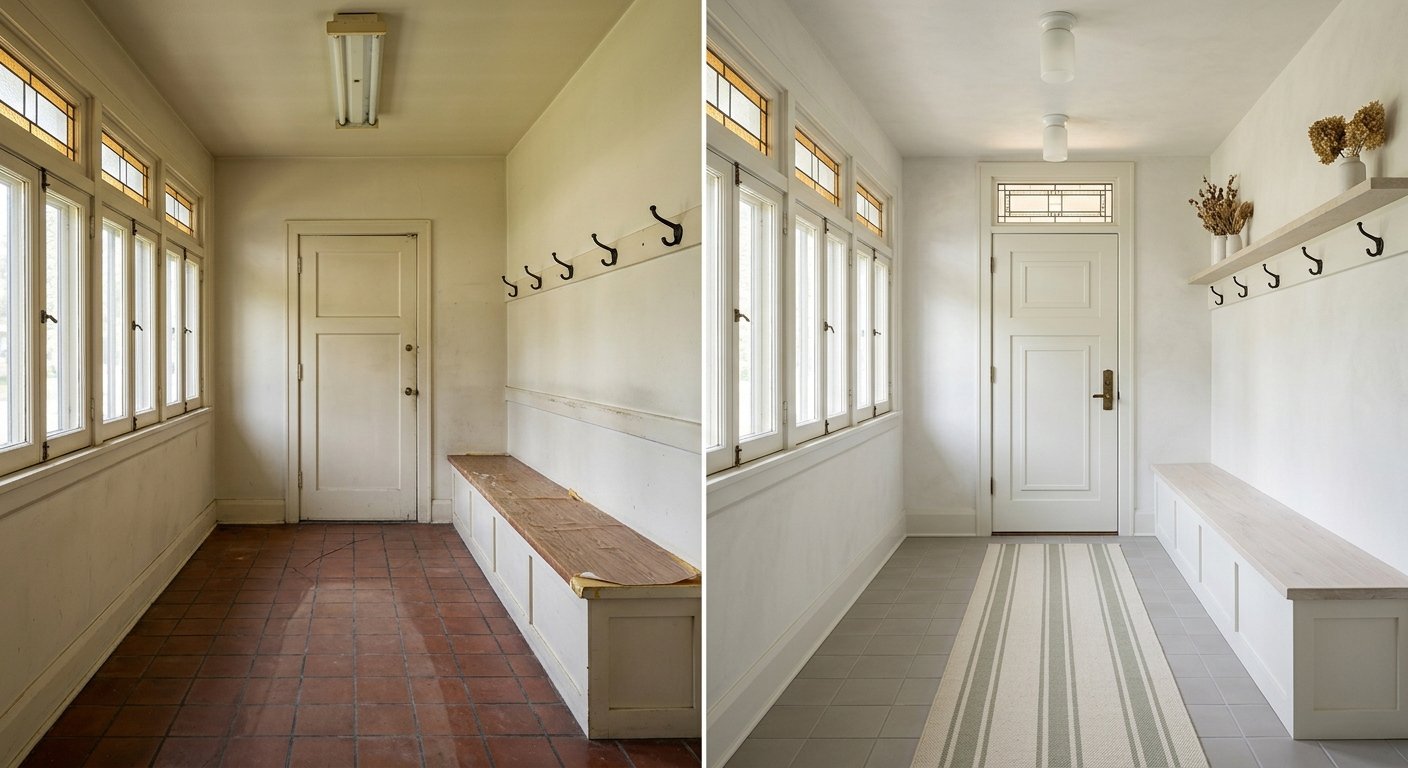
Mudrooms, back entries, and service hallways were working spaces in a 1920s home. They had tile floors, built-in benches, hooks at kid height, and transom windows to move air through the house. Most of those details are still there. They've usually just been covered up.
The original transom windows, the built-in bench, and the coat hooks all stay. The change is about finishes and light: fresh white plaster, a refinished bench top, cleaner wall hooks, a softer tile floor in place of the cracked terracotta, and a striped runner. None of that is structural work. It's the kind of scope a small contractor can finish in two to three weeks, and it's enough to make the back entry feel like part of the house again rather than the room you walk through on the way to the laundry.
Utility spaces are a good place to start a 1920s renovation because they're contained, practical, and relatively low stakes. A contractor can scope the work clearly, and a finished mudroom builds confidence for bigger projects later.
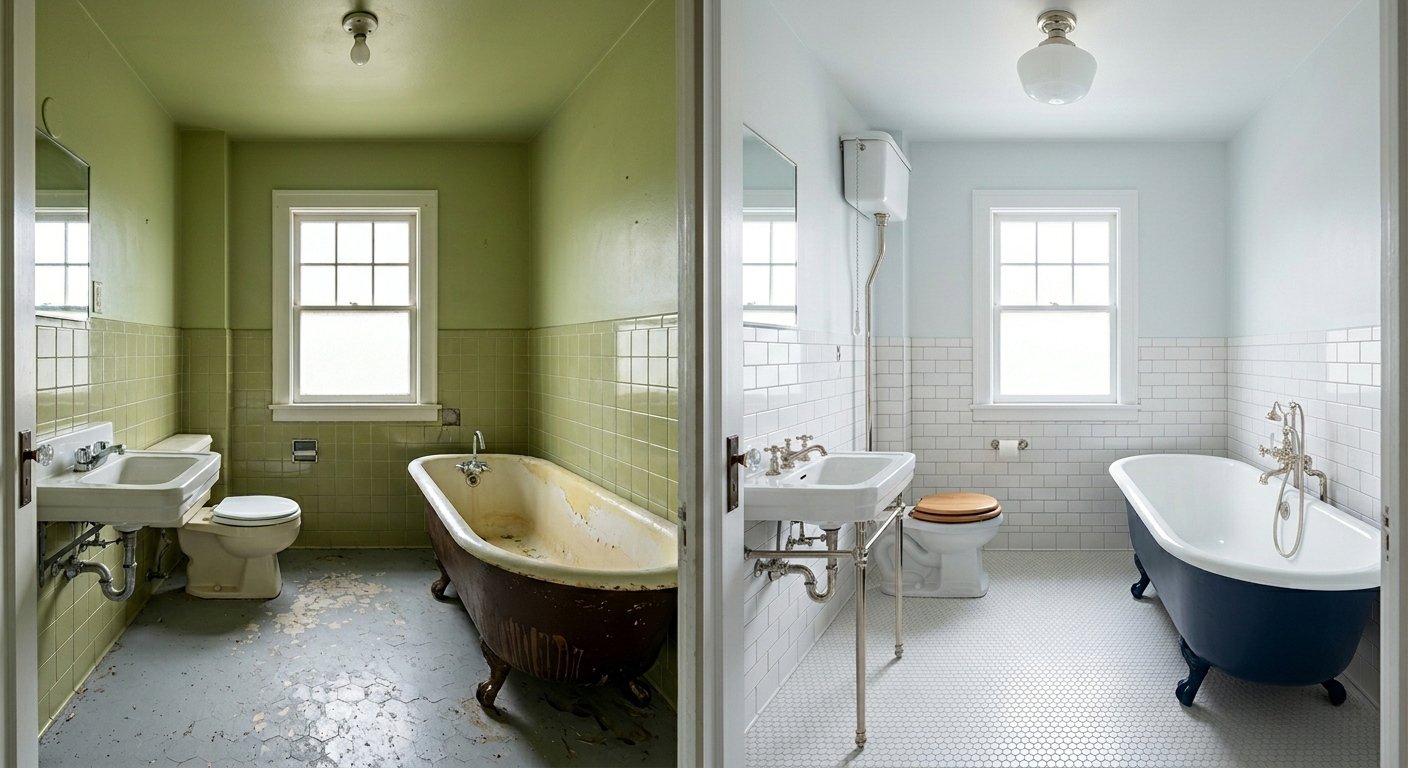
Almost every 1920s home has at least one bathroom that someone, at some point, "modernized" in the 1970s or 1990s. Peeling paint, chipped tile, a sagging tub, plumbing that creaks when anyone above stairs turns on a faucet. The temptation is to gut it down to the studs and start over. The better move is usually to save what's worth saving.
A reglazed clawfoot tub in deep navy, a console sink on chrome legs replacing the old wall-mount, and a wood-seat high-tank toilet pull the space back to 1924. Subway tile on the walls, penny tile on the floor, and a schoolhouse pendant finish the effect. What isn't visible: fully updated supply lines, a new drain stack, modern venting, and a waterproof pan under the tub.
Most of the individual moves here cost less than their gut-renovation equivalents. Reglazing a cast-iron clawfoot tub runs roughly $500 to $1,200 depending on condition. A console sink with exposed plumbing is often cheaper than a cabinet vanity with a stone top. In a 1920s bathroom, the period-correct option is frequently the budget-friendly one, not the luxury one.
A 1920s renovation rewards experience. Plaster repair, lead-safe practices, window restoration, and balloon-framing retrofits aren't general contractor skills. They're specialist ones, and the difference shows up everywhere from the first day of demo to the last coat of paint.
Block Renovation pairs each project with a vetted local contractor who has worked on pre-war homes, reviews every scope for the gaps that tend to show up in older houses (abatement line items, plaster repair allowances, realistic permit scope), and handles payments through a progress-based system so contractors are paid as milestones are approved, not before. Thousands of homeowners have renovated with Block, many of them in houses built before 1930.
Remodel with confidence through Block

Connect to vetted local contractors
We only work with top-tier, thoroughly vetted contractors

Get expert guidance
Our project planners offer expert advice, scope review, and ongoing support as needed
Enjoy peace of mind throughout your renovation
Secure payment system puts you in control and protects your remodel

Renovate confidently with Block
Easily compare quotes from top quality contractors, and get peace of mind with warranty & price protections.
Before and After
Kitchen Island Remodel: Before and After Inspo
06.26.2026

Before and After
Modern Farmhouse Kitchen Renovations Before and After
06.16.2026
Before and After
Limewash Brick Before and After: Photos and What to Know
06.10.2026
Before and After
Budget Small Kitchen Remodel: Before and After Ideas
06.08.2026
Before and After
Mid-Century Modern Exterior Before and After Ideas
06.04.2026