




Before and After
Kitchen Island Remodel: Before and After Inspo
06.26.2026
03.17.2026


In This Article
There's a reason 1950s bungalows have held their value—in every sense of the word—for decades. Built with honest materials and a commitment to modest, livable scale, they offer something newer construction rarely does: genuine character that rewards a thoughtful renovation rather than a wholesale reinvention.
But knowing what to preserve, what to update, and what to let go entirely is where most bungalow renovations succeed or fall short. Get it right, and you end up with a home that feels both rooted and current. Get it wrong, and you've spent significant money erasing the very things that made the house worth renovating in the first place.
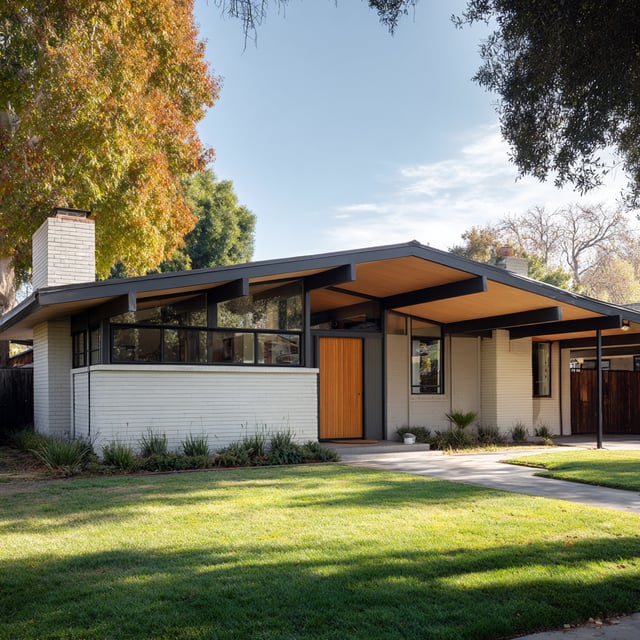
Post-war bungalows were built with a different philosophy than today's production homes. Rooms were smaller but purposeful. Materials—solid oak floors, brick fireplaces, plaster walls, wood-frame windows—were meant to last. The proportions were human-scale in a way that larger, open-concept homes often aren't. These are the elements that define a bungalow's identity. Removing or dramatically altering them tends to make the home feel anonymous. The renovations that hold up best over time are the ones where the homeowner understood which original details were structural to the home's character—and which were simply products of their era.
Original oak hardwood floors are one of the most valuable things in a 1950s bungalow, and one of the most frequently covered up or replaced. In many homes, they're still structurally sound underneath layers of vinyl, carpet, or laminate. Refinishing original floors—rather than replacing them—preserves both the material quality and the visual continuity of the home. The grain, the patina, even the slight variation between boards: all of it contributes something that new flooring can't replicate.
If your floors are exposed and in reasonable condition, work with your contractor to assess whether refinishing is sufficient. A lighter stain can modernize the feel without sacrificing the material itself. If replacement is necessary in isolated areas, matching the existing species and grain direction will make the transition nearly invisible. If you do need to replace your flooring, look into these scratch-resistant options to help ensure longevity.
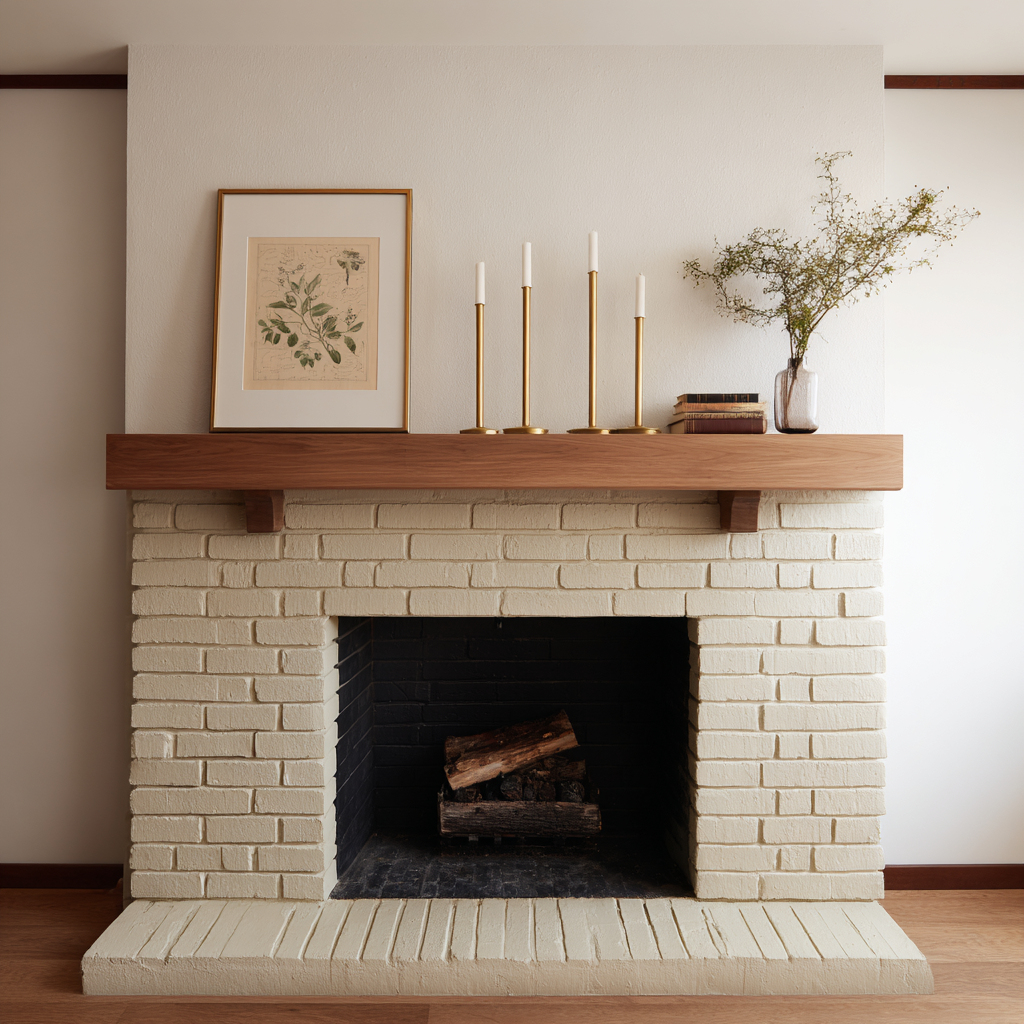
The original brick fireplace is one of the defining features of post-war bungalow design. Even when no longer functional, it anchors the living room in a way that no aftermarket fixture can. The renovation question isn't whether to keep the brick—it's how to update it on your terms.
Limewashing or painting the brick with a dry-brush technique—so the texture and relief of individual bricks still reads beneath—is an accessible, cost-effective update that transforms the feel without removing the structure.
Replacing a worn mantel shelf with a thicker piece of solid wood in a walnut or oak stain, supported by simple corbels, can make the whole surround look custom for a modest investment. The fireplace wall is often the right place to concentrate your living room renovation budget, because everything else in the room—furniture, rug, lighting—relates back to it.
Double-hung and casement windows are proportionally correct for bungalow architecture in a way that standard replacement windows often aren't. Before swapping them out entirely, have a contractor assess whether restoration is viable. New hardware, weatherstripping, and fresh paint can dramatically improve both performance and appearance at a fraction of the cost of full replacement. If replacement is necessary due to deterioration, look for profiles that match the original style rather than defaulting to whatever is most available.
Original plaster walls have a density and sound-dampening quality that drywall doesn't match. Crown molding, picture rail, and baseboard profiles that were standard in 1950s construction give rooms a sense of finish that takes real effort to replicate. These elements are almost always worth restoring rather than removing. Paint them the same color as the walls for a modern, tone-on-tone look, or in a bright white for a more classic contrast—but keep them.
Many 1950s bungalows were built with small alcoves, nooks off the living room, or recesses alongside doorways that often go unused or get treated as problems to solve. These are, in fact, among the most valuable spatial moments in the home—naturally framed opportunities for a built-in bench, storage, or a small reading area that would cost significantly more to create from scratch in a newer home. Lean into arched or rounded openings if your bungalow has them. Squaring them off to match modern construction loses something real and hard to quantify.
.jpeg?width=1024&height=1024&name=1950s%20Bungalow%20Example%20(1).jpeg)
What to update during your 1950s bungalow renovation
Every 1950s bungalow renovation reaches a point where preservation gives way to practical updates. These are the spaces where the post-war era shows most clearly—and where a well-executed renovation delivers the strongest return, both in livability and resale value.
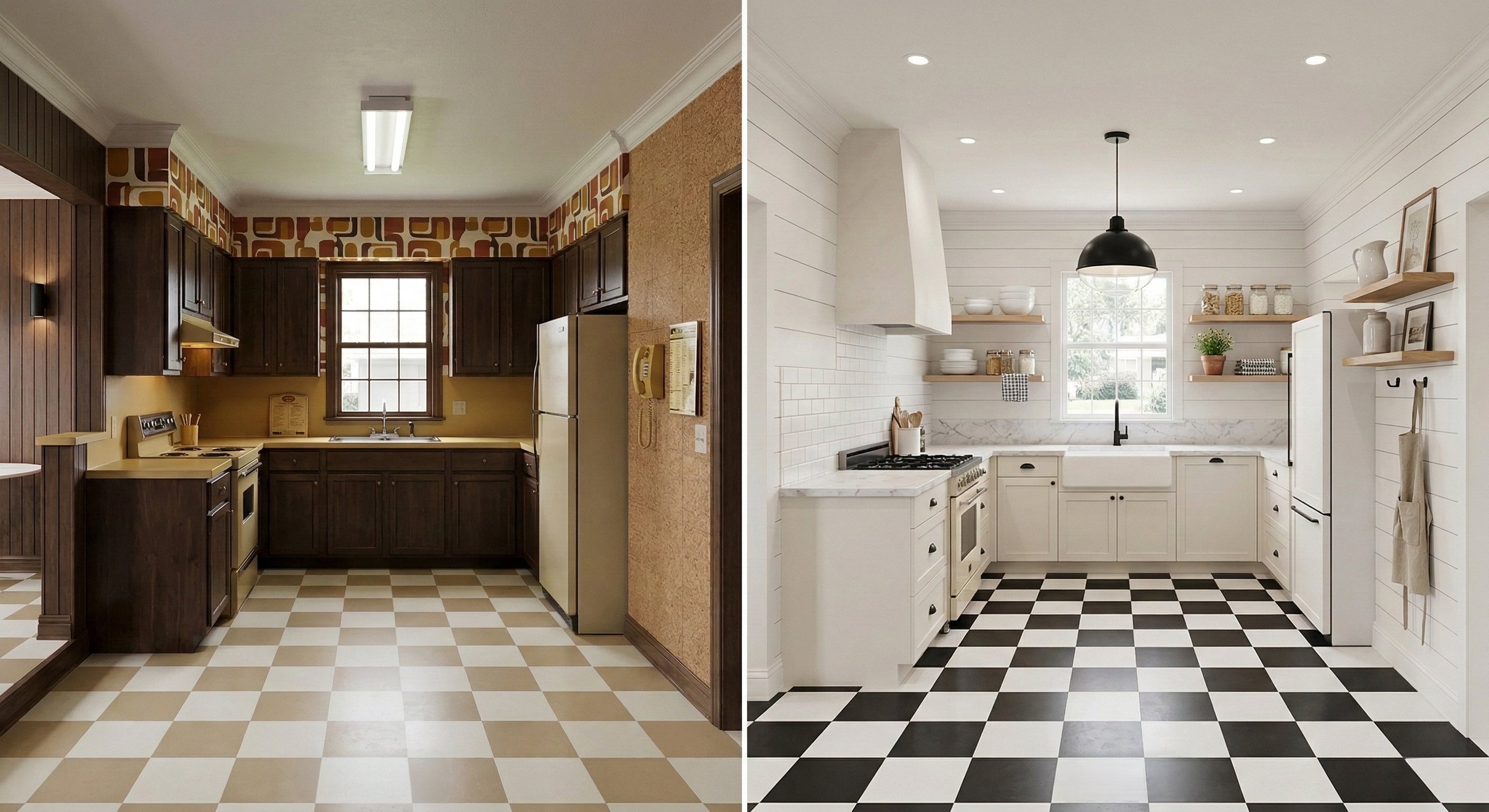
Post-war bungalow kitchens were typically closed off from the rest of the house, finished with dark cabinetry, and lit by a single overhead fixture that left work surfaces poorly lit. The materials—laminate counters, dated backsplash, worn vinyl flooring—rarely age well. But the layout is often more flexible than it first appears.
Removing a non-structural wall between the kitchen and dining area can open the floor plan substantially without touching plumbing or electrical rough-ins. New countertops, hardware, and a simple backsplash tile do most of the visual work at a fraction of the cost of a full gut renovation.
One design move that works particularly well in 1950s bungalow kitchen renovations: keep or reinterpret the original checkerboard floor. Many bungalows were built with black-and-white or two-tone tile patterns that, when updated to a sharper contrast—true black and crisp white—read as a deliberate design choice rather than a dated one. Preserving the floor pattern avoids one of the more expensive line items in a kitchen renovation while giving the updated room an immediate connection to the home's history.
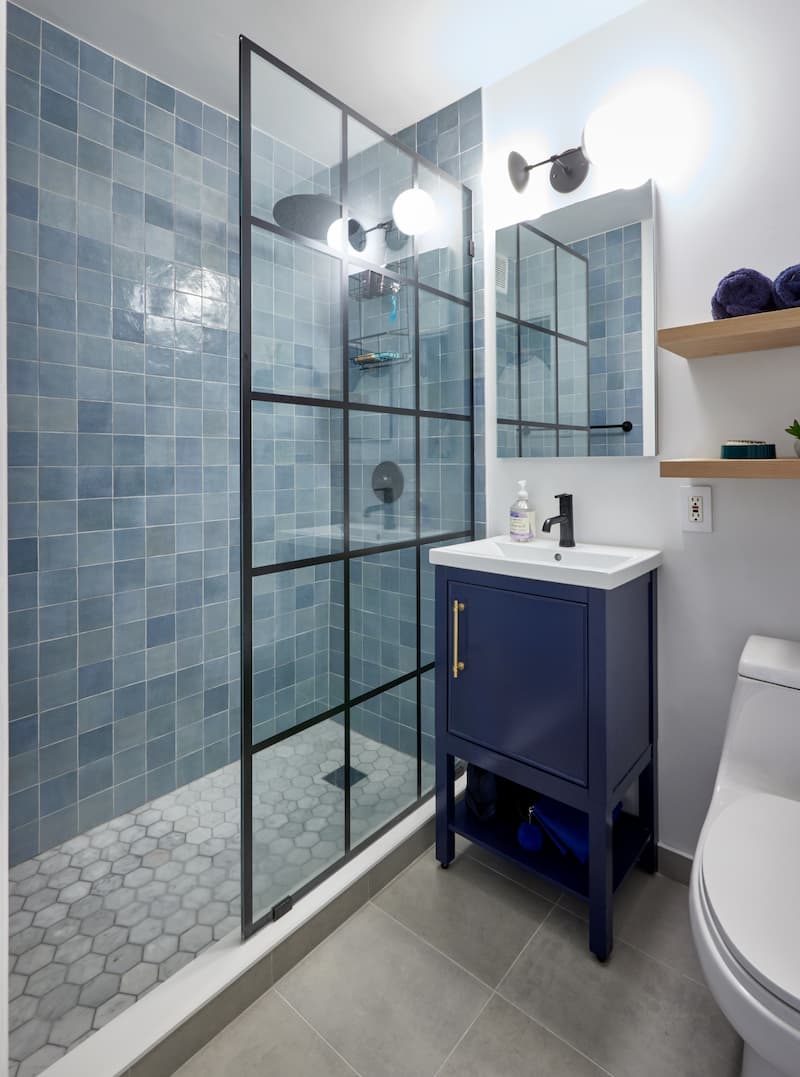
1950s bathrooms are often the most dated room in the house—pink or mint tile, wall-hung lavatories, matching colored fixtures, and terrazzo or linoleum floors that have seen better decades. Unlike the kitchen, where preserving the original layout usually makes financial sense, bathrooms frequently benefit from a more complete renovation.
The cast-iron or claw-foot tub, however, is worth a second look before replacement. Reglazing a cast-iron tub preserves both the weight and quality of the original fixture and can look like new at a fraction of the cost of a freestanding replacement. If you are replacing the full suite of fixtures, keep the window in its original location. Designing the new layout around it maintains the architectural continuity of the room without constraining your choices about tile, vanity, or tub placement.
For tile, scale matters more than color in a small bungalow bathroom. Large-format tile can actually be read as cramped. A classic subway tile, laid floor to ceiling in the shower and to wainscot height on the remaining walls, gives a bungalow bathroom a clean, confident look that respects the home's era without feeling tied to it.
.jpeg?width=2816&height=1536&name=1950s%20Bungalow%20Before%20and%20After%20(1).jpeg)
Original 1950s lighting fixtures—single ceiling-mounted globes, fluorescent kitchen strips, basic bath bars—were functional but rarely atmospheric. Replacing overhead fixtures with pendants, sconces, or recessed lighting is one of the highest-return updates in any bungalow renovation. It changes how rooms feel at every hour of the day without touching a single structural element.
Layered lighting—a combination of ambient, task, and accent sources—is worth the additional planning investment in kitchens and living rooms especially.
In smaller bungalow rooms, a single well-chosen pendant can do more for the space than almost any other change. It's also one of the few updates you can make without disrupting adjacent finishes, which makes it a natural early win in a phased renovation.
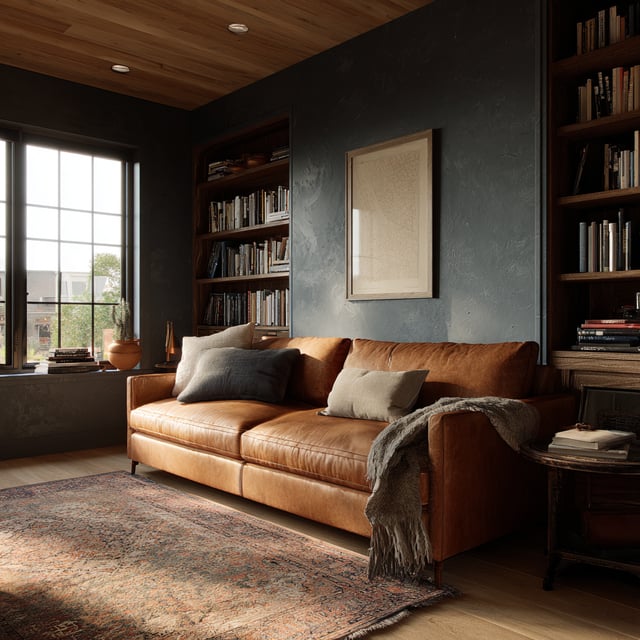
Fresh paint is the most cost-effective transformation in any renovation, and in a bungalow, where rooms tend toward modest scale, color carries real weight. Going lighter isn't the only option—it's simply the most impactful in rooms that feel dark or closed. A deep clay or terracotta in a bedroom can make a small room feel intentional and intimate rather than cramped. A warm sage in the living room pulls together original wood tones and brick without competing with them.
.jpeg?width=1024&height=1024&name=1950s%20Bungalow%20Example%20(2).jpeg)
For living areas, consider the picture rail and crown molding before reaching for a paintbrush. Painting trim the same tone as the walls—rather than the traditional bright white contrast—gives a bungalow interior a contemporary, cohesive look while keeping the original architectural detail in place.
One of the most popular ideas for a 1950s bungalow renovation is removing the interior walls that divide the kitchen, dining room, and living area into separate, closed-off rooms. Post-war bungalows were built when compartmentalized living was the standard, and by today's expectations those divisions can make modest homes feel smaller and darker than they need to be. Before committing to full removal, it's worth considering the alternatives. A half wall with counter seating preserves some sense of separation between spaces while opening sightlines and improving light. A wide cased opening—rather than a full wall removal—achieves a similar effect with less structural intervention and at lower cost.
.jpeg?width=2816&height=1536&name=1950s%20Bungalow%20Before%20and%20After%20(2).jpeg)
If your 1950s bungalow renovation includes an addition, design cohesion between old and new is where many projects quietly go wrong. The addition looks fine on its own, but something feels off when you move through the house.
The most reliable approach is to carry the original home's material language into the new space rather than treating it as a clean break. That means matching floor species and stain, continuing the original baseboard and trim profile, and keeping ceiling heights as consistent as the addition allows. Exterior materials—siding, roofline, window proportions—should respond to the original structure rather than ignore it.
You don't need to match everything exactly. But the decisions you make in the addition should feel like they were made by someone who understood and respected what was already there—because that's what makes a renovated home feel whole rather than assembled.
Design a Home That’s Uniquely Yours
Block can help you achieve your renovation goals and bring your dream remodel to life with price assurance and expert support.
Get Started
One of the most common places a 1950s bungalow renovation goes over budget isn't the kitchen or the bathroom—it's behind the walls. Homes built in this era were constructed to the standards of their time, which means several systems that look fine from the outside may need significant attention before or during your renovation. The more you understand going in, the fewer surprises will derail your timeline and budget.
1950s bungalows are concentrated in some of the most established neighborhoods in the country—from the tree-lined streets of Pasadena and the older suburbs of Chicago and Minneapolis, to craftsman corridors in Seattle, Portland, and Charlotte. Block Renovation works with homeowners in these markets and beyond, matching each project with thoroughly vetted, experienced contractors who understand the specific demands of older construction. Whether you're refreshing a fireplace wall, opening up a kitchen, or taking on a full-home renovation, Block pairs you with the right professional for your scope, your timeline, and your budget—and supports you through every step of the process.
Remodel with confidence through Block

Connect to vetted local contractors
We only work with top-tier, thoroughly vetted contractors

Get expert guidance
Our project planners offer expert advice, scope review, and ongoing support as needed
Enjoy peace of mind throughout your renovation
Secure payment system puts you in control and protects your remodel

Renovate confidently with Block
Easily compare quotes from top quality contractors, and get peace of mind with warranty & price protections.
Before and After
Kitchen Island Remodel: Before and After Inspo
06.26.2026

Before and After
Modern Farmhouse Kitchen Renovations Before and After
06.16.2026
Before and After
Limewash Brick Before and After: Photos and What to Know
06.10.2026
Before and After
Budget Small Kitchen Remodel: Before and After Ideas
06.08.2026
Before and After
Mid-Century Modern Exterior Before and After Ideas
06.04.2026