



porch
Front Porch With Gable Roof: Costs, Designs, and How It Gets Built
09.10.2026
04.30.2026


In This Article
The average ranch house has about eight feet of grass between the front door and the curb, and that's about it. No porch, no transition, no landing spot. Most ranches were built between 1950 and 1975 on a tight budget, and the original spec sheet skipped the porch to save cost and square footage. Adding one back is one of the highest-impact exterior projects you can take on, and the before-and-afters below show why.
A porch addition looks straightforward from the sidewalk, but the engineering and permitting behind it almost always take longer than the build itself. Before you get attached to a design, work through the planning checklist below.
A new front porch almost always requires a building permit, and depending on where you live, it may also trigger:
Budget four to eight weeks for permit approval in most markets, longer if design review is involved.
A porch can't just be bolted to the front of the house. Two structural questions drive the scope:
Neither of these is a DIY job. Both require a permit, an inspection, and usually an engineer's stamp.
Porch costs vary widely by region and material, but national averages for a finished, permitted front porch on a ranch tend to land in these ranges:
Set aside 10 to 20% as a contingency. On an 8x16 porch in the middle tier, that's $4,500 to $10,000. Older ranches almost always surface something during demo (rotted sheathing, undersized headers, a buried gas line) that wasn't in the original scope.
Permit to final inspection typically runs six to twelve weeks. The actual construction sequence is fast: footings, framing, roofing, and finish usually take two to four weeks of on-site work. The long pole is almost always permit review and inspection scheduling.
Looking to start other renovations on your ranch home? Look to our guides about ranch home additions and remodeling ideas. Homeowners looking to spruce up the insides will appreciate this before-and-after inspiration from 1960s ranch homes.
Each example below pairs a ranch home with a different approach to adding a porch, and each one points to a broader execution principle you can apply to your own house.
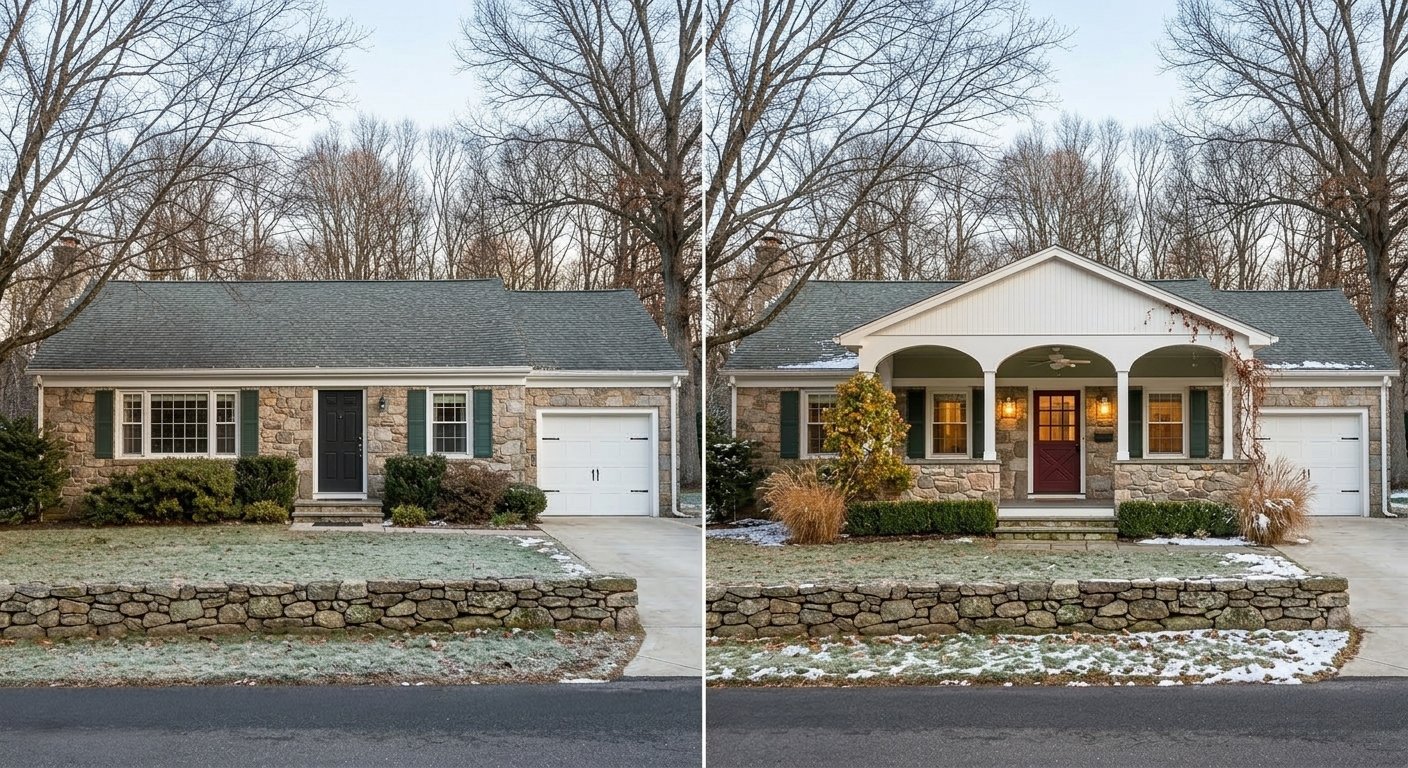
If the porch roof looks like it was pushed against the house and attached with screws, the whole project reads as an afterthought, no matter how nice the columns are.
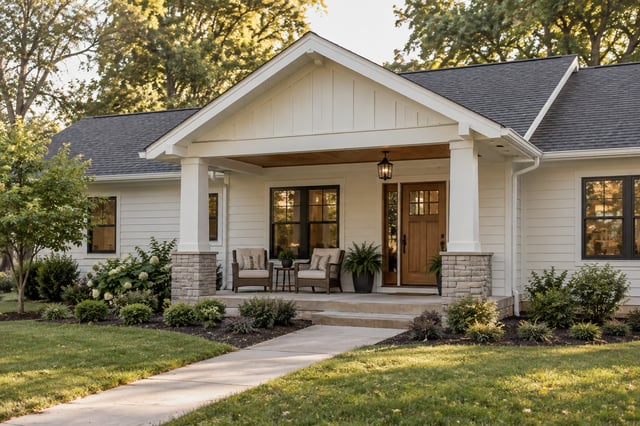
A gabled porch roof that projects forward from the existing eave line, with matching shingles and a proportional pitch, will almost always read as original. The technical move here is flashing and tying the new ridge into the existing roof properly, which is also where the work gets expensive. A good roofer will open the existing roof, install new step flashing and a cricket if needed, and blend the new shingles into the old.
Two practical notes:
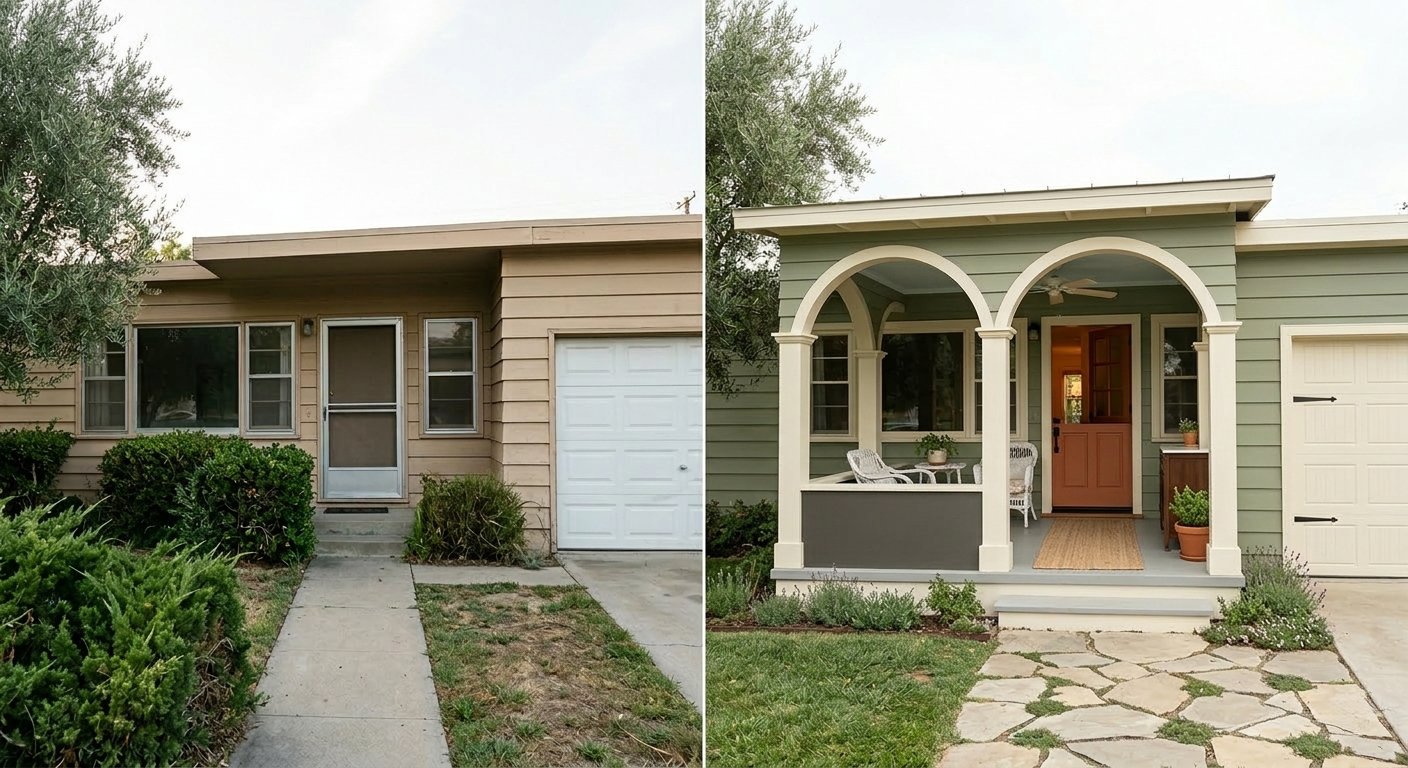
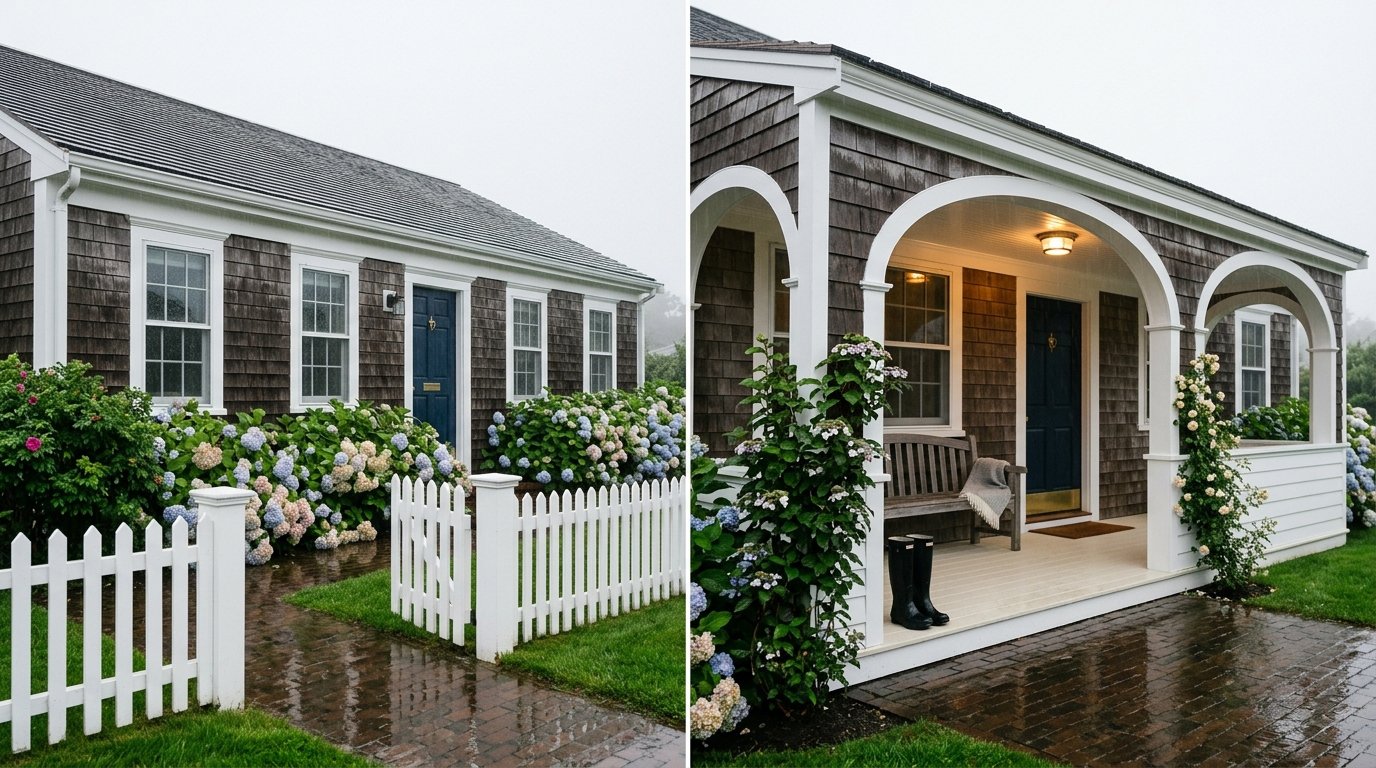
Ranch homes read as long and low. An arched porch opening is one of the few architectural moves that introduces a vertical, curved line without changing the roof or the footprint of the house.
Arches commit the whole front of the house to a specific style (Mediterranean, Spanish colonial, cottage revival), so the rest of the exterior needs to support it. A sage green or warm cream siding with flagstone or brick pavers below works; aluminum siding in builder-grade beige does not.
Execution notes:
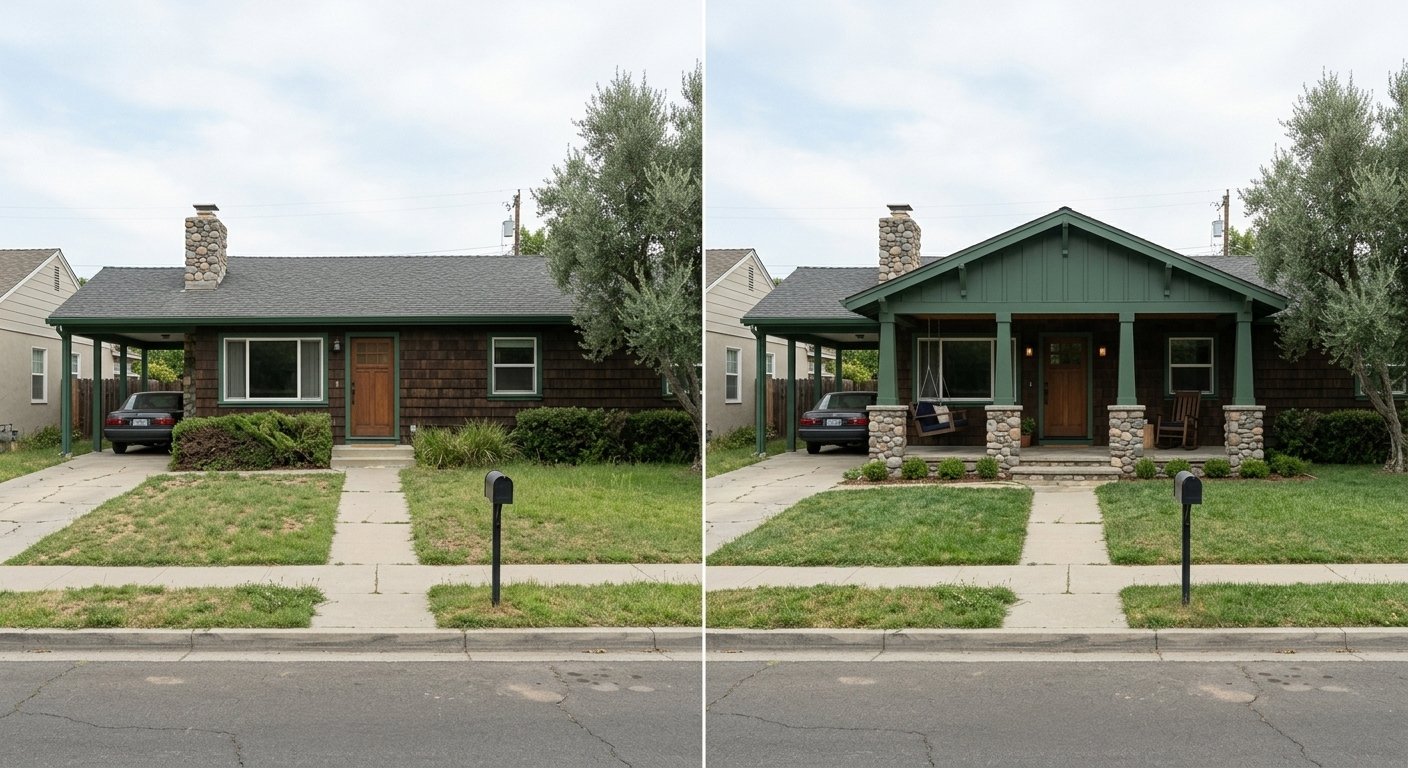
Mixed-style porches are where most additions go off the rails. A craftsman column on a colonial porch on a farmhouse gable reads as three separate decisions, not one house. Committing to a single style, and letting every detail flow from it, produces a more cohesive result even when individual choices are imperfect.
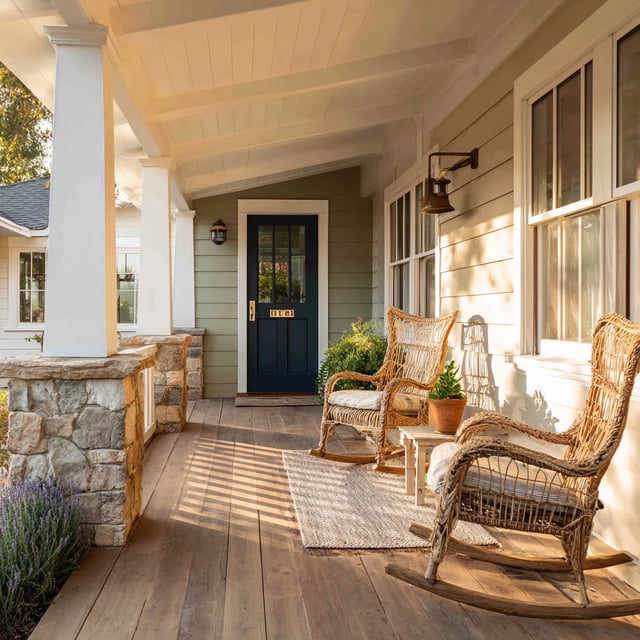
Craftsman is a particularly good fit for ranches because the two styles share design DNA: low rooflines, overhanging eaves, exposed rafter tails, and an emphasis on horizontal lines. Tapered columns on stone or brick piers, a board-and-batten gable, and visible brackets or knee braces will read as correct on most ranch footprints.
If you go this direction:
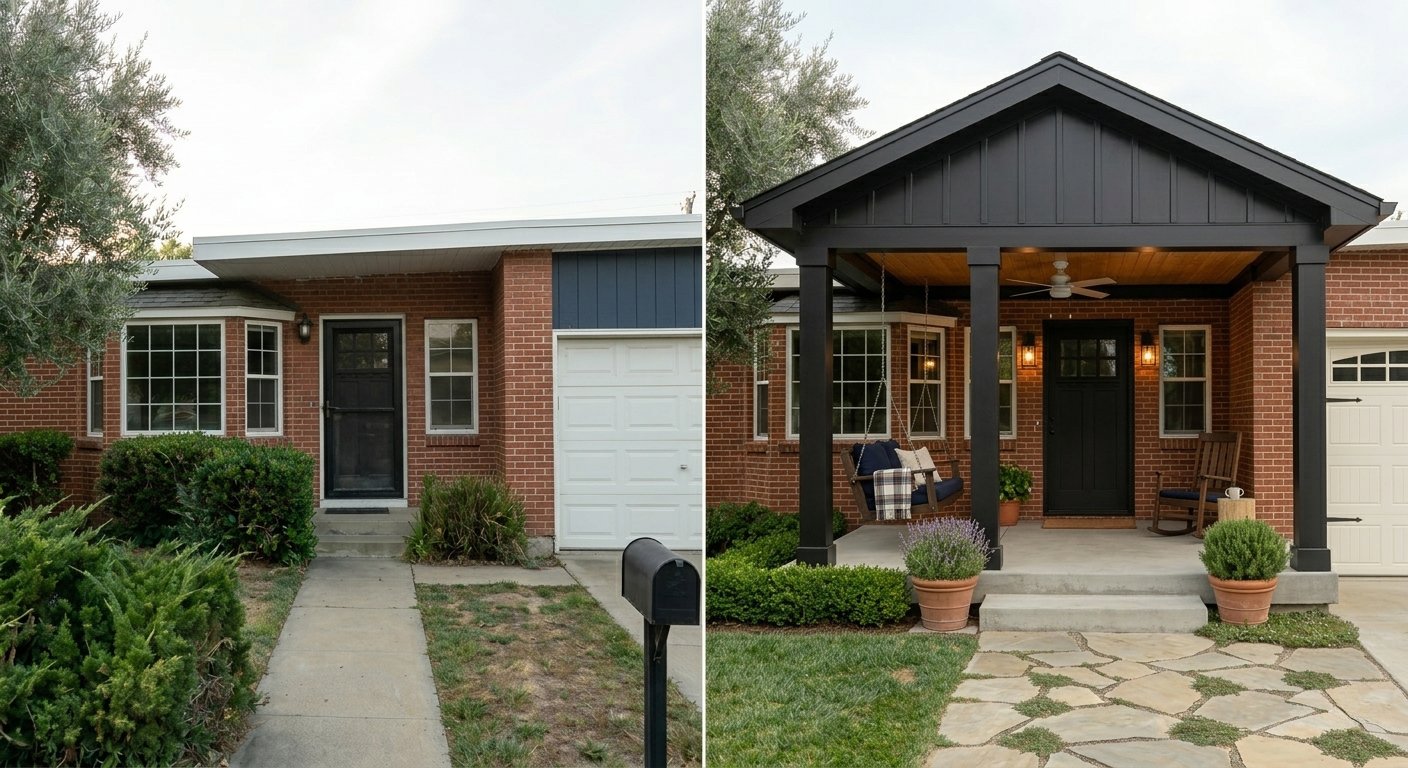
Dark porch elements (charcoal, black, deep navy, forest green) against a lighter main facade have become a signature of contemporary farmhouse and modern-traditional exteriors. The move works especially well on brick ranches, because the brick stays as the warm neutral and the dark porch reads as an applied architectural frame.
A few things to get right:
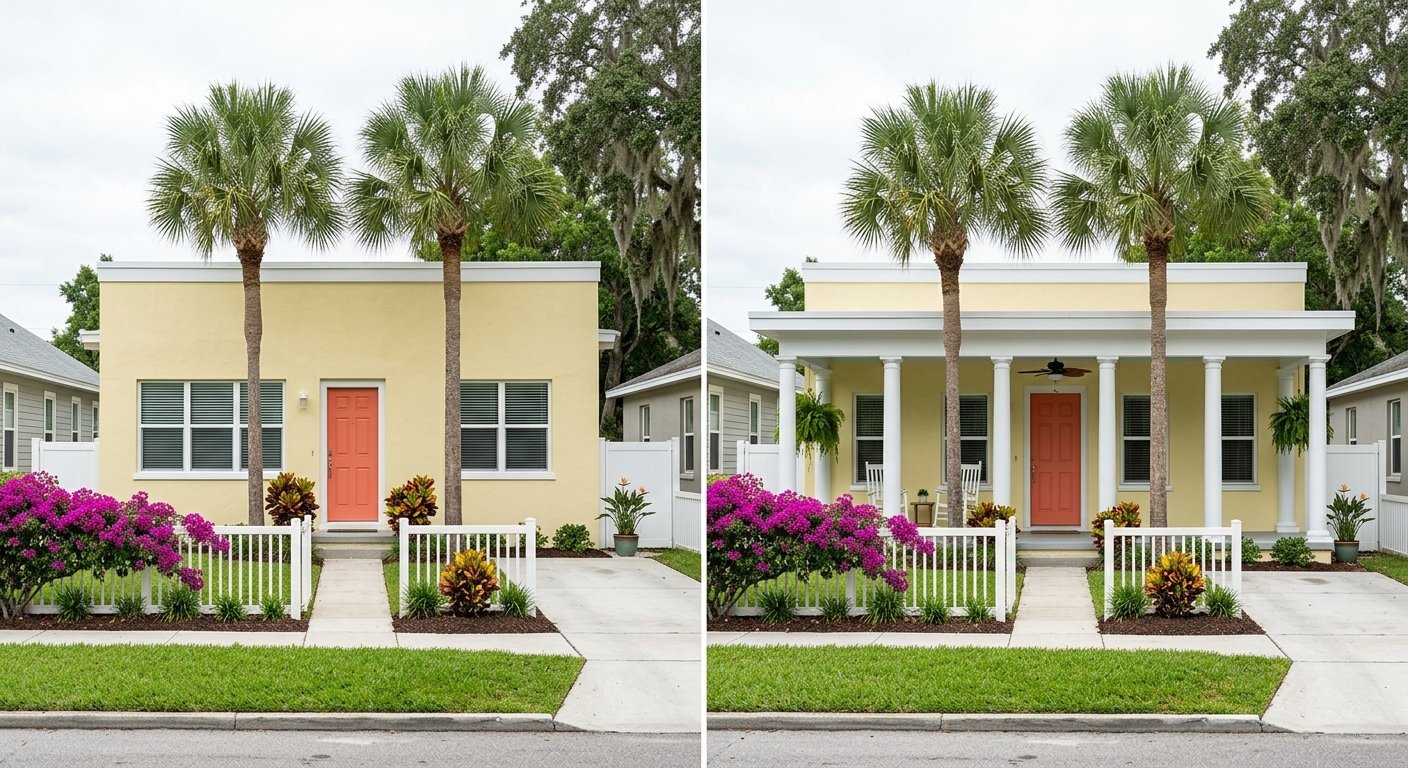
A porch that fits the Pacific Northwest will look out of place in central Florida. The best-looking porch additions use details drawn from their region: flat or shallow-pitch roofs with wide overhangs in hot climates, deep covered porches in the South, enclosed storm porches in the Northeast, and open farmer's porches in the Midwest.
A flat-roofed porch with substantial columns suits a Florida ranch because it references the classical and Caribbean-influenced architecture that's been built in that climate for a century. The same porch on a Minnesota ranch would look out of place and perform badly under snow load.
Before committing to a porch design, spend an afternoon driving the older neighborhoods in your town. The houses that have held up visually for 80 years are using details that work locally, and those are the details worth borrowing.
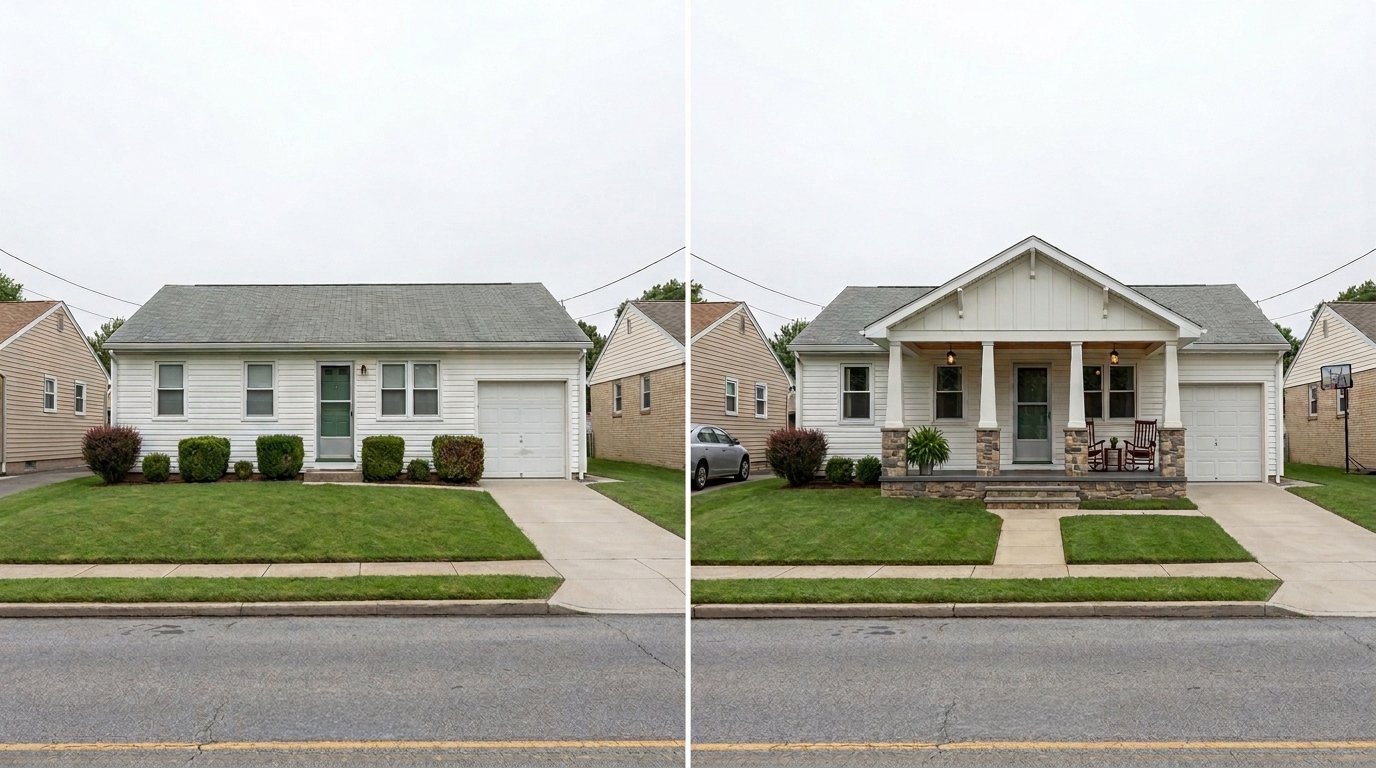
A porch that sits directly on decking, with wood columns rising straight from the floor, can look light and unanchored on a ranch. Stone or brick column bases (also called piers) solve that problem. They ground the columns, tie the porch to the earth, and give the eye something substantial at the base of the composition.
Stone bases also solve a functional problem: wood columns in direct contact with decking tend to wick water and rot at the base. A stone or brick pier keeps the column material up out of standing water and extends its useful life significantly.
Execution notes:
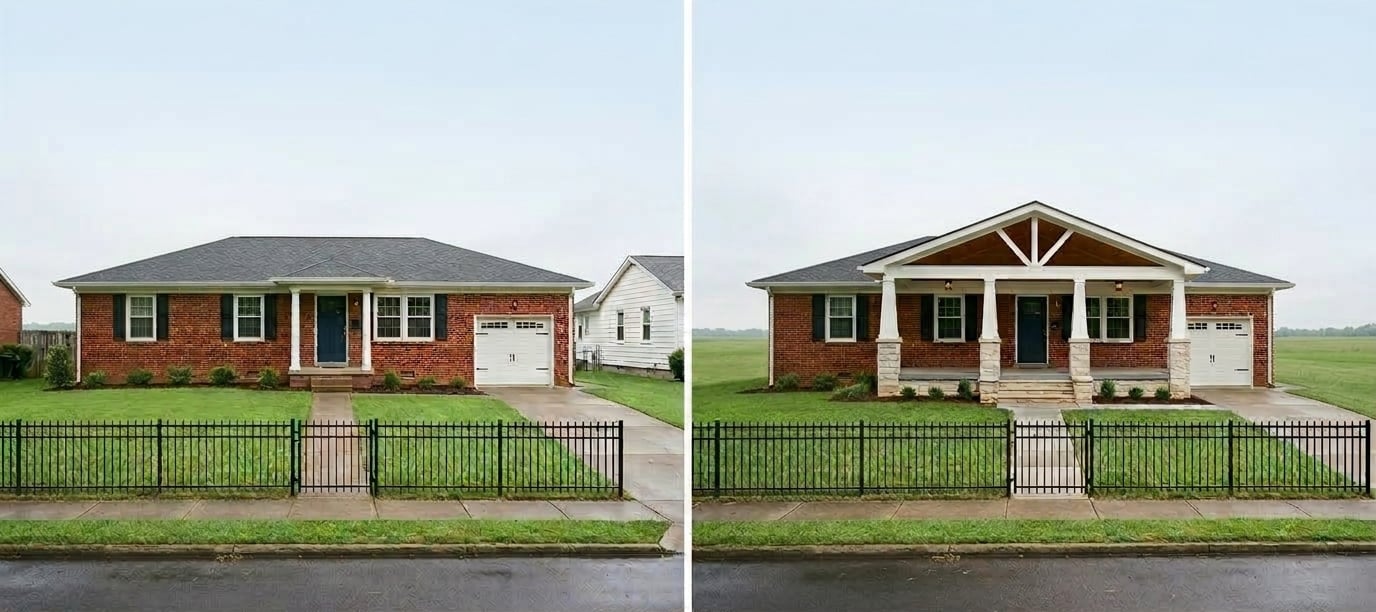
Exposed structural trusses in the porch gable are one of the most cost-effective ways to add architectural detail. The truss itself is often just decorative (a real truss would require engineering and different materials), but a well-proportioned faux truss reads as substantial and intentional.
This approach works particularly well on brick ranches because the truss introduces a wood element without requiring the whole facade to change. The contrast between the brick and the exposed wood becomes the defining feature.
A few practical notes:
Block Renovation matches each project with a vetted local contractor who has built porches on homes like yours, reviews every scope for the gaps that tend to show up in exterior additions (footings, flashing details, permit requirements), and handles payments through a progress-based system so contractors are paid as milestones are approved, not before. Thousands of homeowners have renovated with Block, and front porch additions are one of the most requested exterior projects on the platform.

Renovate confidently with Block
Easily compare quotes from top quality contractors, and get peace of mind with warranty & price protections.
porch
Front Porch With Gable Roof: Costs, Designs, and How It Gets Built
09.10.2026
Outdoor Spaces
Board and Batten with Brick - Perfecting This Look
08.19.2026
Outdoor Spaces
Deck Remodeling: Costs, Materials, and Structure
08.09.2026
Outdoor Spaces
Sunroom Roof and Glass Types: Finding the Right Style
07.13.2026

Before and After
Kitchen Island Remodel: Before and After Inspo
06.26.2026