




Outdoor Spaces
Board and Batten with Brick - Perfecting This Look
08.19.2026
04.10.2026


In This Article
Most homeowners who come to us thinking they want a four-season room end up building a three-season room. Not because we talked them out of it, but because once they understood the full picture, the math stopped making sense for their situation.
Four-season rooms are more expensive, more complicated to permit, and routinely oversold to people who will realistically use the space eight months of the year no matter how much insulation is in the walls. In the right climate, for the right homeowner, they're a smart investment. However, that homeowner is less common than the sunroom industry would have you believe.
Here's what you actually need to know.
|
Three-season room |
Four-season room |
|
|
Typical cost |
$15,000 to $50,000 |
$30,000 to $80,000 |
|
Usable months |
8 to 10 (climate dependent) |
12 |
|
Insulation |
Minimal to none |
Full, code-required |
|
HVAC |
None |
Required |
|
Counts as living space |
No |
Yes, if built to code |
|
Permitting complexity |
Moderate |
High |
|
Build timeline |
2 to 4 weeks |
6 to 12 weeks |
|
Best for |
Mild-to-moderate climates, seasonal use |
Cold climates, year-round functional space |
The difference sounds simple: one works in winter, one doesn't. But that single distinction cascades into everything else: how the room is framed, what permits you need, how long the project takes, and what it costs.
A three-season room is an enclosed addition with a permanent roof, large windows or convertible panels, and solid protection from bugs, wind, and rain. No insulation, no connection to your home's HVAC system. The framing is lighter, typically aluminum or vinyl, and the glass is single- or double-pane. It is not designed to hold heat.
When it gets cold outside, it gets cold in there. For most homeowners in most climates, that tradeoff is completely fine, and the room delivers exactly what they were looking for: a connected, light-filled space that extends the livable part of the house through the better part of the year. Many three-season rooms are built on existing decks or concrete slabs, which keeps foundation costs down and construction relatively straightforward.
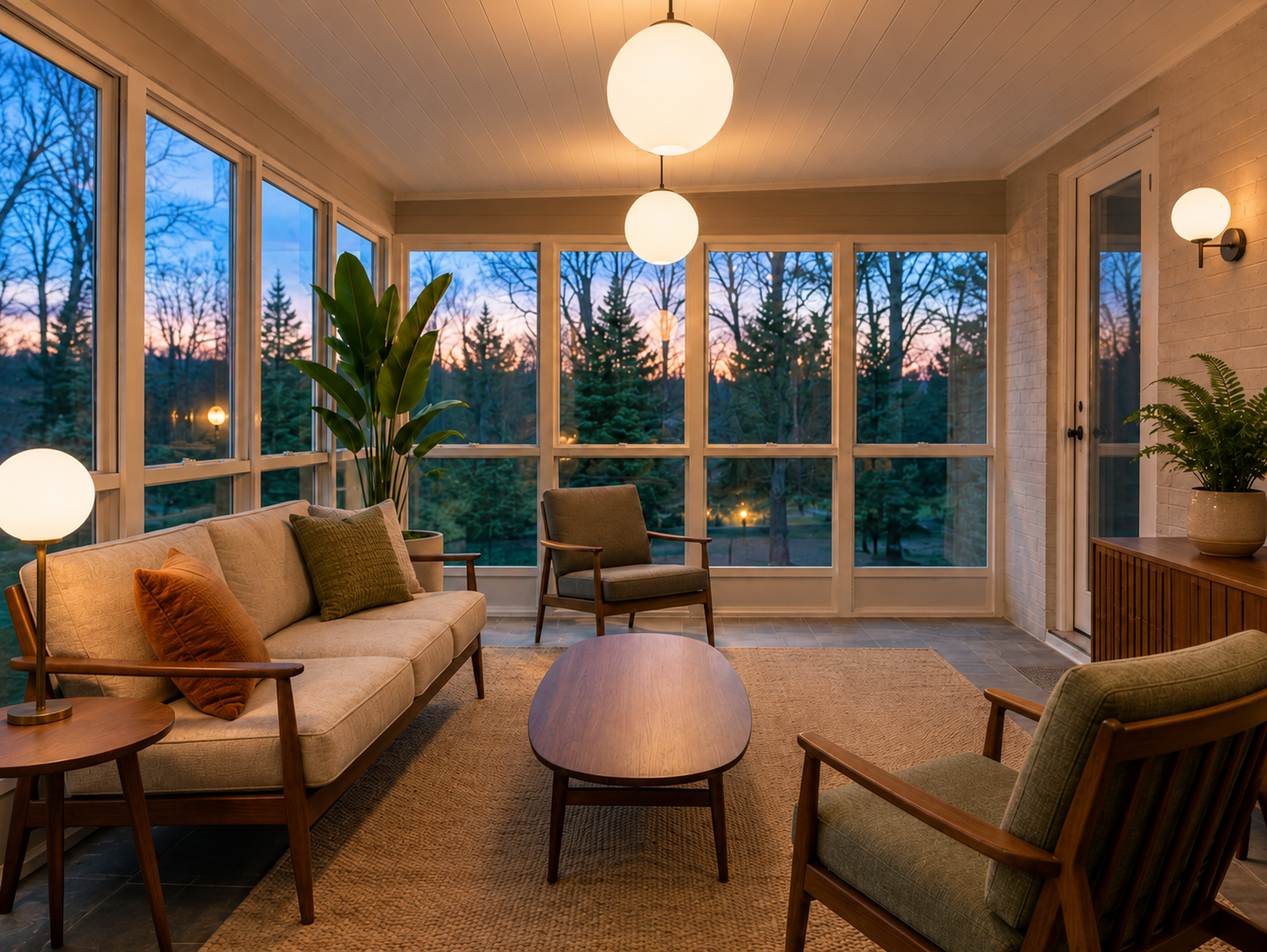
A four-season room is built to residential code as a full room addition. That means fully insulated walls with vapor barriers, thermally engineered framing, double- or triple-pane glass throughout, and a direct connection to your home's heating and cooling system. The foundation needs to extend below the frost line. The interior needs to be finished to the same standard as the rest of your home: drywall, flooring, trim.
The result is a room that functions exactly like any other room in your house, just with more glass and better views. It's usable in February. It's also reviewed, permitted, and inspected like any other room addition, which is where the cost and timeline differences really start to add up. More on that in the permitting section.
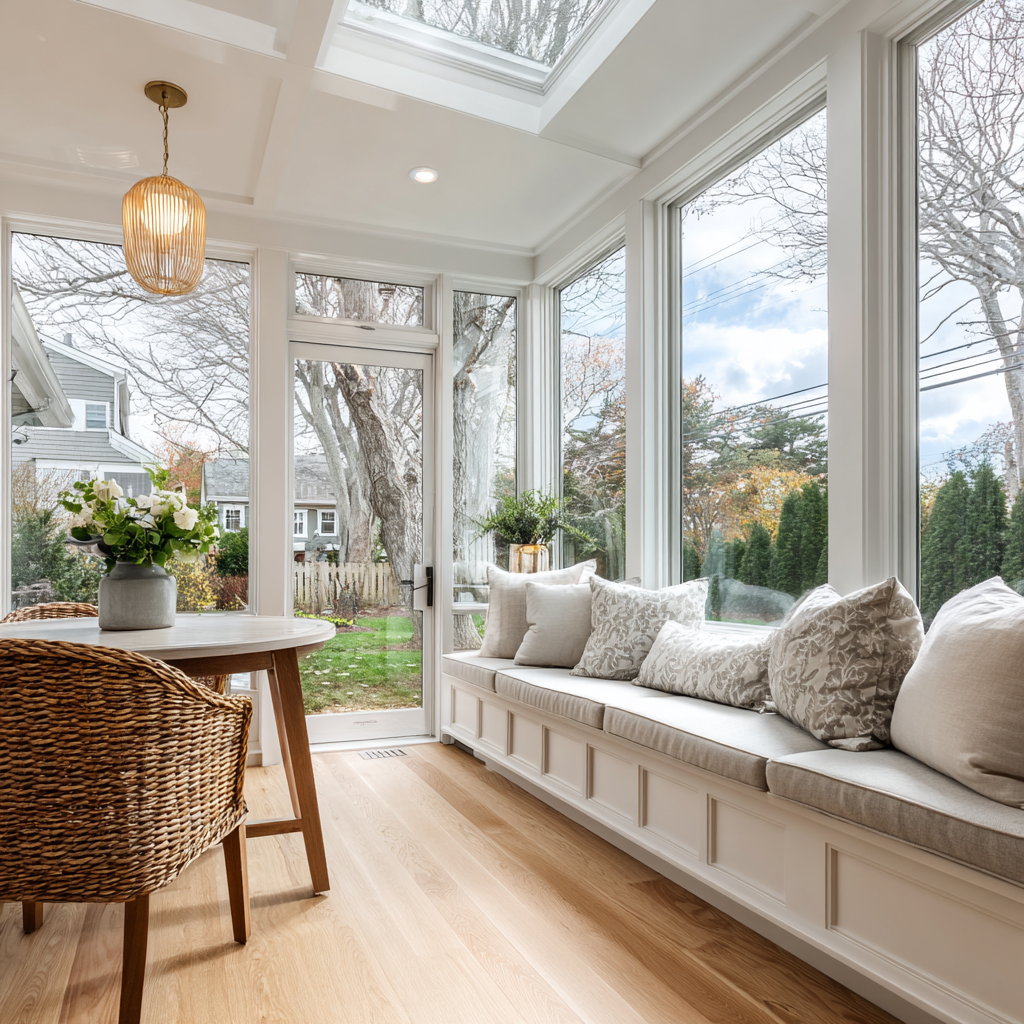
Before you decide, answer one question honestly: will you use this room in January?
The four-season room fantasy is a snow day, a cup of cocoa, and a glass-wrapped room with a view of a quiet backyard. However, this is just not how most people use their homes in winter. On the coldest days, people pile onto the couch closest to the heat. They use the kitchen, the living room, or the bedroom. The beautiful light-filled addition at the back of the house tends to become a place you walk past or use for extra storage.
Aerial Stein, a homeowner in Altoona, Pennsylvania, learned this the hard way. "We spent an extra $35,000 to make it a four-season room because we thought we'd use it year-round," she said. "We used it maybe four times last winter. The heating bill was real though."
Her experience is not unusual. If your honest answer is that you'd use the space from April through November and maybe a handful of mild winter weekends, a three-season room gives you nearly identical utility at roughly half the cost.
That said, there are situations where a four-season room is clearly the right call. They're just more specific than most contractors will tell you.
A vague intention to enjoy the room more is not a plan. A home office you'll sit in every morning, a dedicated workout space, a room with a daily function: those justify the added cost. The homeowners who get the most out of four-season rooms aren't the ones who wanted more light. They're the ones who needed more space and built for a specific purpose.
A properly permitted four-season room can be counted as conditioned living space in your home's appraisal. A three-season room cannot. If you're planning to sell within a few years and your market rewards square footage, that distinction has real dollar value. Worth confirming with a local real estate professional before you decide, since this varies significantly by market.
In Minneapolis, Buffalo, or similar climates, a three-season room goes dark from November through March. That's five usable months out of twelve. At that ratio, the math shifts and the investment in full insulation and climate control starts to make more sense. If your winters are short or mild, that calculus changes entirely.
In some neighborhoods and price points, a three-season room reads as an unfinished idea rather than a finished amenity. If you're in a market where buyers have come to expect year-round living space, building anything less could work against you at resale. A local real estate professional can tell you whether that's actually true where you live, and it's worth asking before you commit.
Turn your renovation vision into reality
Get matched with trusted contractors and start your renovation today!
Find a Contractor
Four-season rooms add conditioned square footage and carry a nominally higher resale value. True. They also cost roughly twice as much to build. That second part tends to get glossed over.
A well-designed, properly permitted three-season room that looks like it belongs on the house will outperform a mediocre four-season room every time.
Buyers don't pay a premium for a glass box that clashes with the home's architecture or feels like it was bolted on as an afterthought. They pay for spaces that feel intentional. The project that loses money, at either price point, is the one built cheap, designed without care, or permitted improperly.
A few things that protect your return regardless of which type of sunroom you build:
For a deeper look, read our insights into sunroom build costs.
Three-season rooms are treated as enclosed porch additions by most building departments. You'll need a building permit, a site plan showing setbacks, basic structural plans, and a licensed and insured contractor. If you're building on an existing deck, expect a structural review. With an experienced contractor, this process moves in a few weeks.
Four-season rooms are a different animal. Because they're conditioned living space, they go through the same review process as any new room addition. Depending on your municipality, that means:
If your home has an HOA or co-op board, add their approval process. Historic district? Add a landmarks review on top of that.
Plan review alone takes four to eight weeks in many jurisdictions. Stack contractor scheduling, inspection windows, and material lead times on top, and four to six months from planning to completion is a realistic expectation, not a worst case. A three-season room, by comparison, is often done in a month.
Skipping permits to move faster is not a shortcut. It's a problem you're deferring to the worst possible moment, which is when you're trying to sell.
Block Renovation's contractors know the permitting requirements in their markets and handle the documentation, submissions, and inspection coordination your project requires.
Three-season rooms take two to four weeks to build once permits are in hand. Four-season rooms take six to twelve weeks for construction alone, and four to six months when you account for the full process from permitting to punch list. When you are converting an existing outdoor space into a sunroom, this timeline will be shorter.
A good contractor will help you think through which type actually makes sense for your home, your climate, and how you live. Not just quote you the more expensive option.
Block Renovation matches homeowners with vetted, licensed contractors who have been evaluated on their workmanship and their experience with projects like this one. Tell us about your project and we'll connect you with contractors who will give you an honest picture of what your sunroom will cost, what it will take to permit, and whether the investment makes sense for where you live.
Remodel with confidence through Block

Connect to vetted local contractors
We only work with top-tier, thoroughly vetted contractors

Get expert guidance
Our project planners offer expert advice, scope review, and ongoing support as needed

Enjoy peace of mind throughout your renovation
Secure payment system puts you in control and protects your remodel


Renovate confidently with Block
Easily compare quotes from top quality contractors, and get peace of mind with warranty & price protections.
Outdoor Spaces
Board and Batten with Brick - Perfecting This Look
08.19.2026
Outdoor Spaces
Deck Remodeling: Costs, Materials, and Structure
08.09.2026
Outdoor Spaces
Sunroom Roof and Glass Types: Finding the Right Style
07.13.2026

Outdoor Spaces
Porch to Mudroom Conversion: Cost and Surprises
06.09.2026
Outdoor Spaces
Building a Pool House: Costs & Design Tips
05.21.2026