





Before and After
Kitchen Island Remodel: Before and After Inspo
06.26.2026
03.16.2026


In This Article
Remodeling a 1970s kitchen is always a labor of love—but when that kitchen sits inside a split level home, the project comes with its own set of quirks, constraints, and creative opportunities. From the moment you start peeling back avocado-green laminate, you quickly discover that these homes were built with a logic all their own. Understanding that logic is the first step toward transforming a dated galley into something you'll actually want to spend time in.
Here's what makes remodeling a 1970s split level kitchen uniquely challenging—and uniquely rewarding:
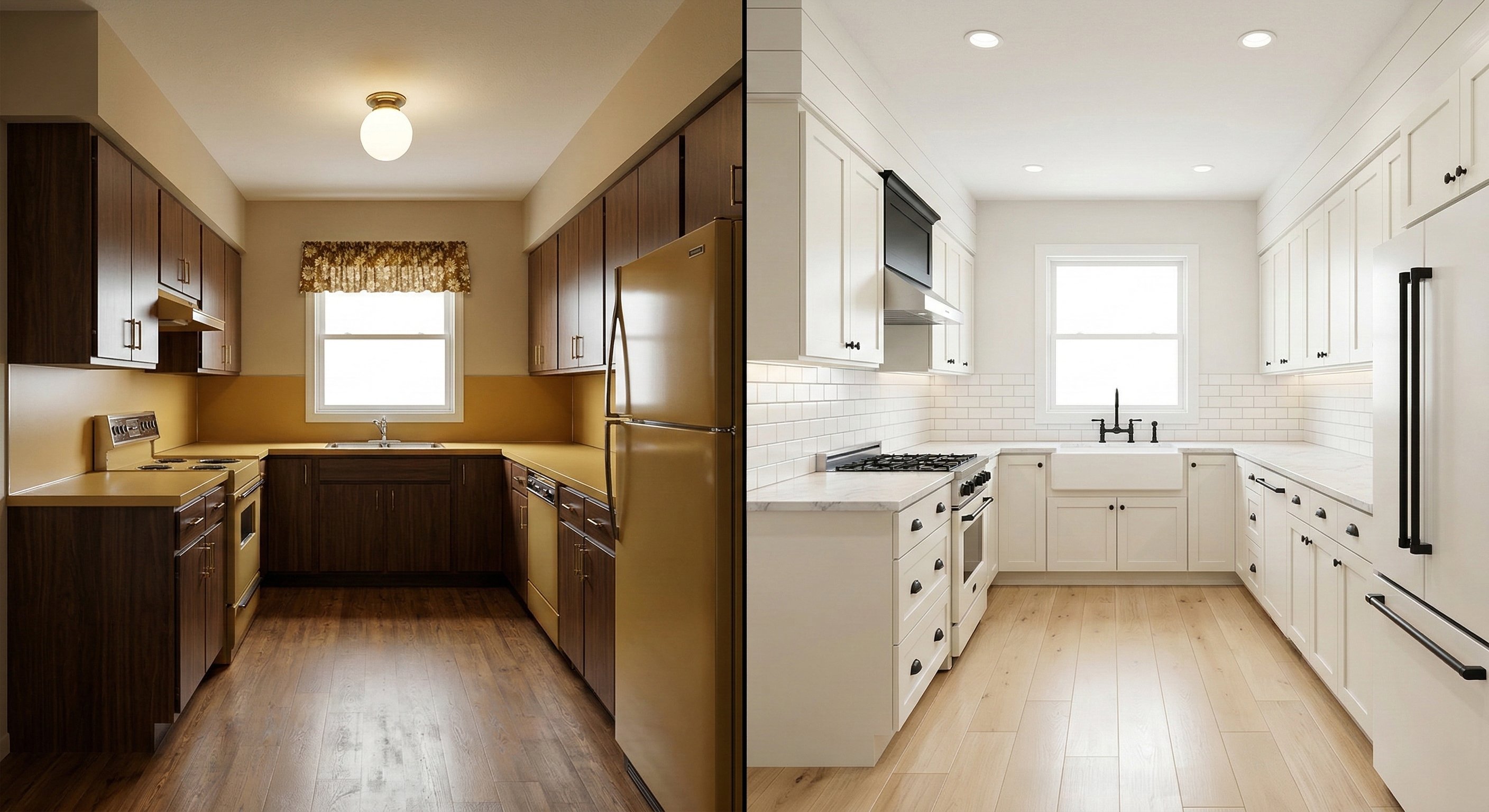
The cost of remodeling a 1970s split level kitchen varies widely depending on the scope of work, the materials you choose, and whether you're uncovering decades-old surprises behind the walls. Here's a breakdown of common line items—and what makes them particularly relevant in a 1970s split level context:
The before-and-afters below illustrate the range of directions a 1970s kitchen remodel can take from warm and earthy to bright and classic to moody and dramatic. Each project reflects a core design principle that can guide your own transformation.
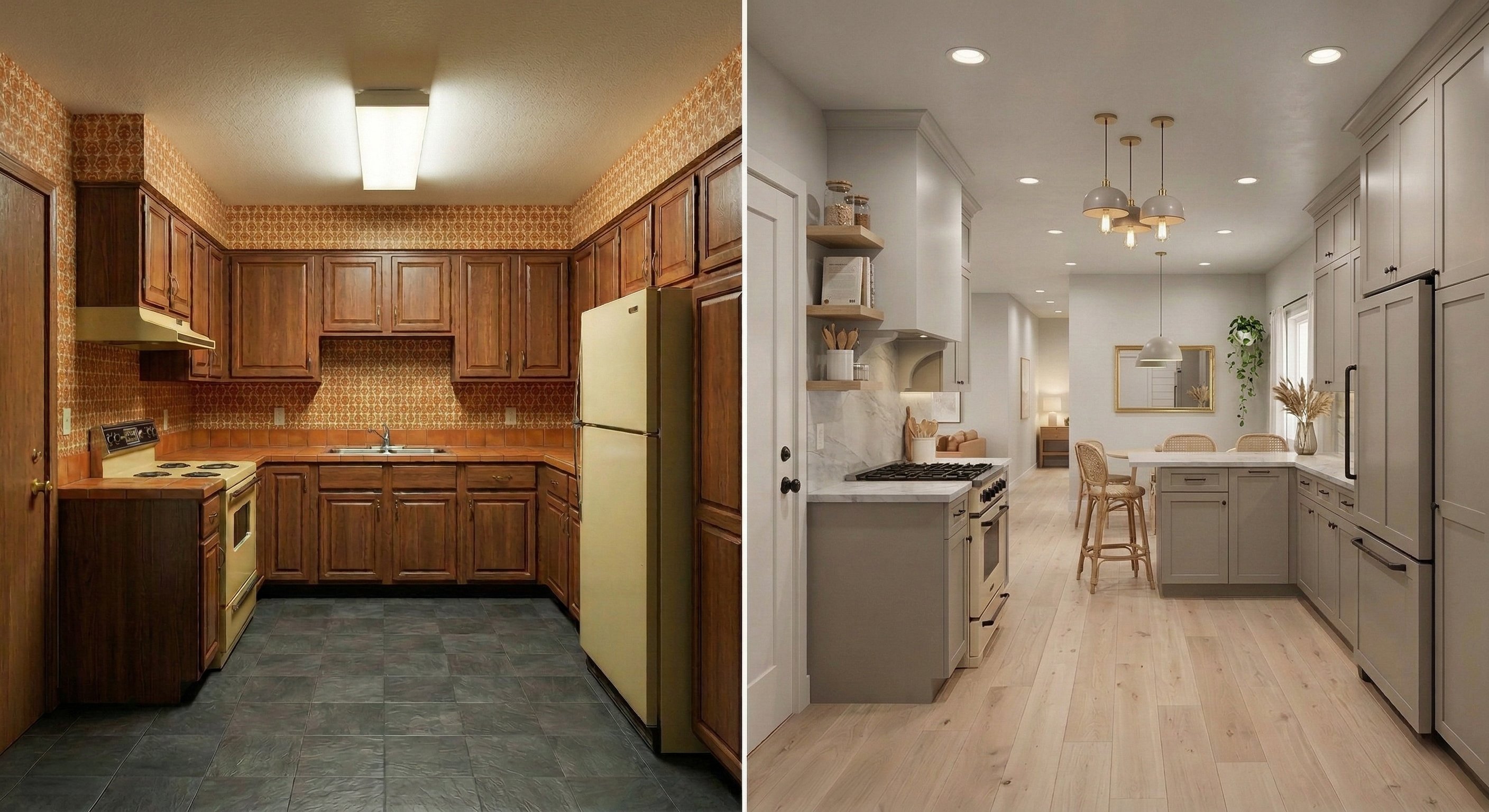
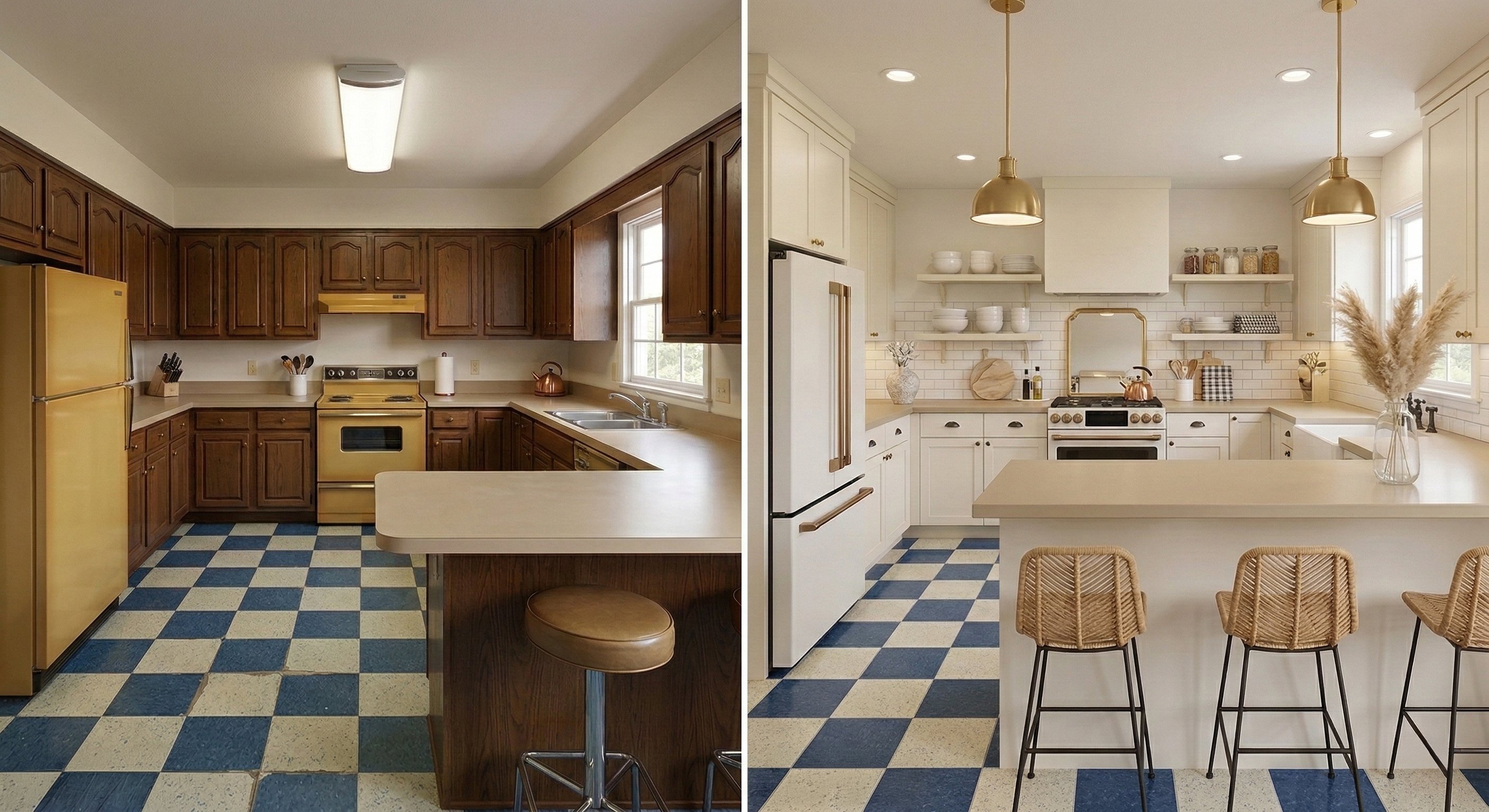
Sometimes the most powerful thing you can do in a dated kitchen isn't reconfiguring the layout—it's flooding it with light. This remodel traded dark wood and busy pattern for a pale cabinet finish, warm flooring, and layered lighting that makes the room read twice as large as it actually is. The island didn't exist in the original layout; it was made possible by opening the wall toward the adjacent living space.
In split level kitchens where adding windows isn't always an option, this approach—light cabinets, recessed lighting, and strategic wall removal—is often the fastest path from dark and enclosed to bright and welcoming.
.jpeg?width=2816&height=1536&name=1970s%20Split%20Kitchen%20Example%20(1).jpeg)
When a kitchen is covered in competing patterns and warm-toned surfaces, the renovation impulse is to go in the exact opposite direction—and it works. The after version here is an exercise in restraint. Every surface is quiet, which makes the room feel larger and lets the architecture itself do the talking.
For 1970s split level kitchens that feel visually chaotic, a near-monochromatic palette is enormously effective. It quiets the space and creates breathing room that no amount of rearranging the original layout ever could.
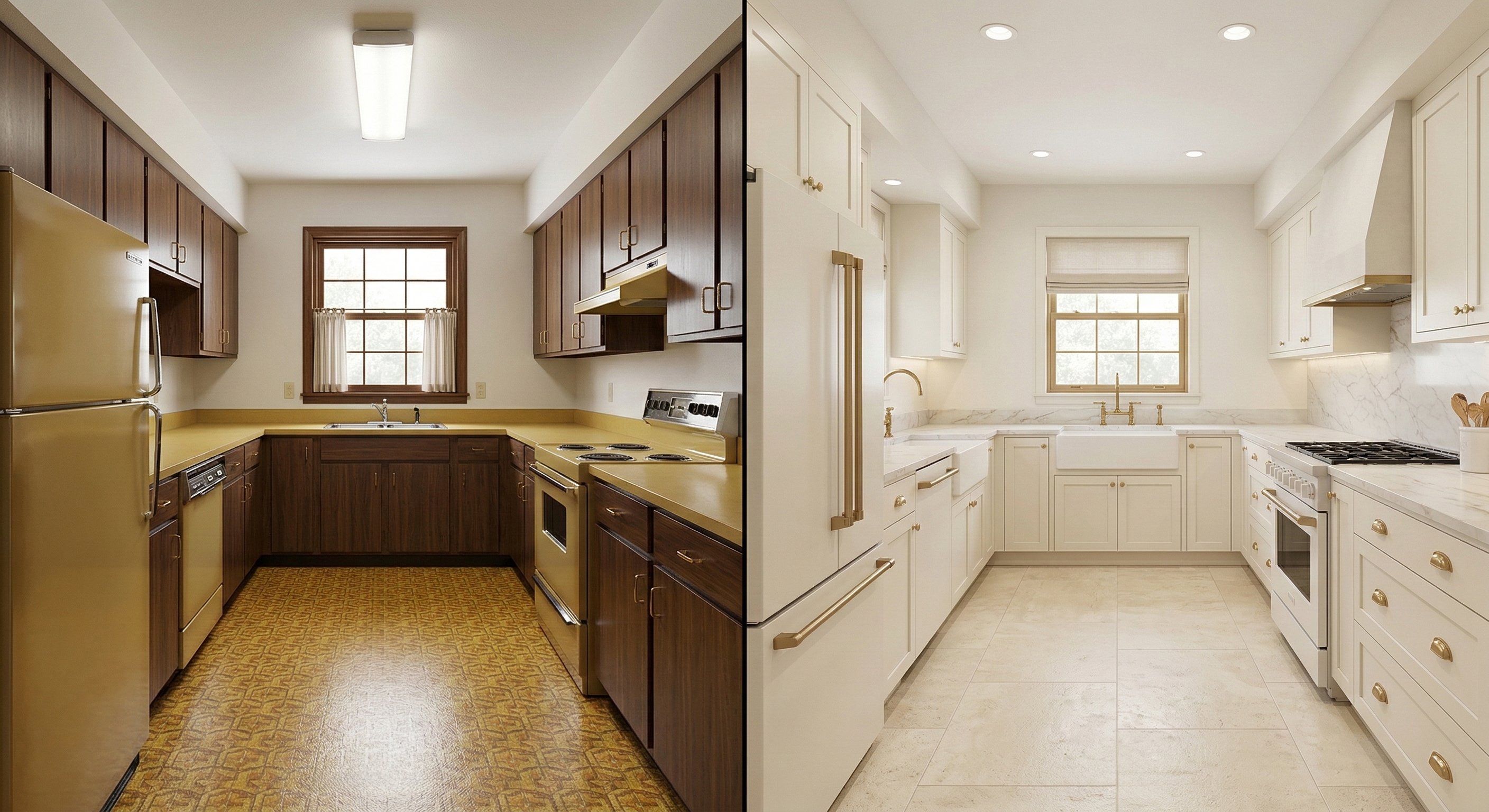
Not every 1970s kitchen remodel needs to go bold or modern—sometimes the right move is a studied refinement. This project kept the same U-shaped layout but replaced every surface. The result is a kitchen that feels like it could have always been there: classic, calm, and clearly well-made.
The design principle here is continuity. In split level homes where the kitchen connects visually to both upper and lower living zones, a warm white palette ties the space together rather than creating a harsh material break between levels.
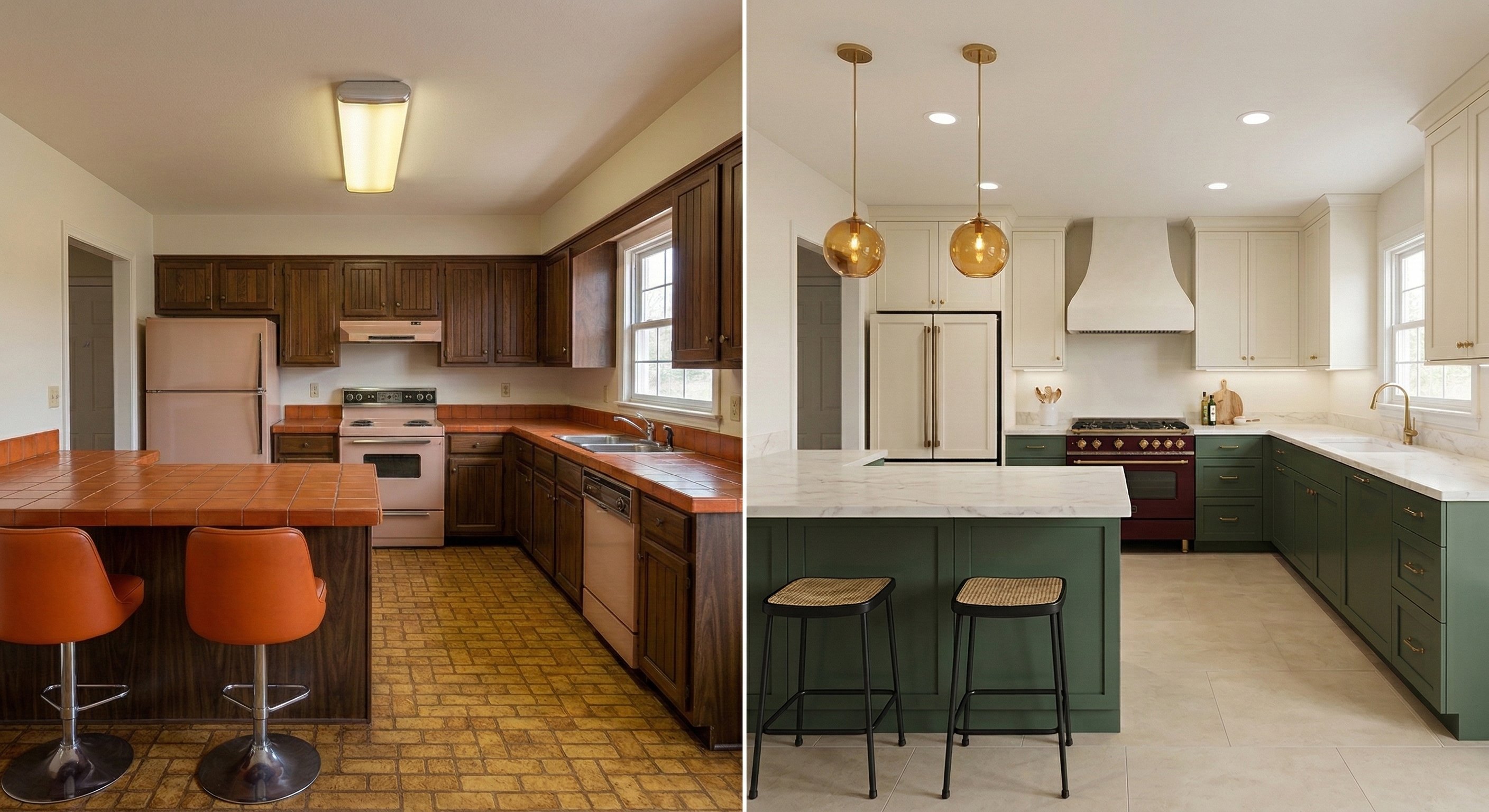
If there's one trend that transformed kitchen design over the past decade, it's two-tone cabinetry—and few before-and-afters illustrate its power better than this one. The original kitchen had bold surfaces everywhere with no visual hierarchy. The remodel solved that by making the island read as furniture and the perimeter read as architecture.
Two-tone cabinetry is particularly effective in 1970s split level kitchens with peninsulas or islands, because the color distinction gives the space a sense of intention and proportion that a single-color scheme rarely achieves in a smaller footprint.
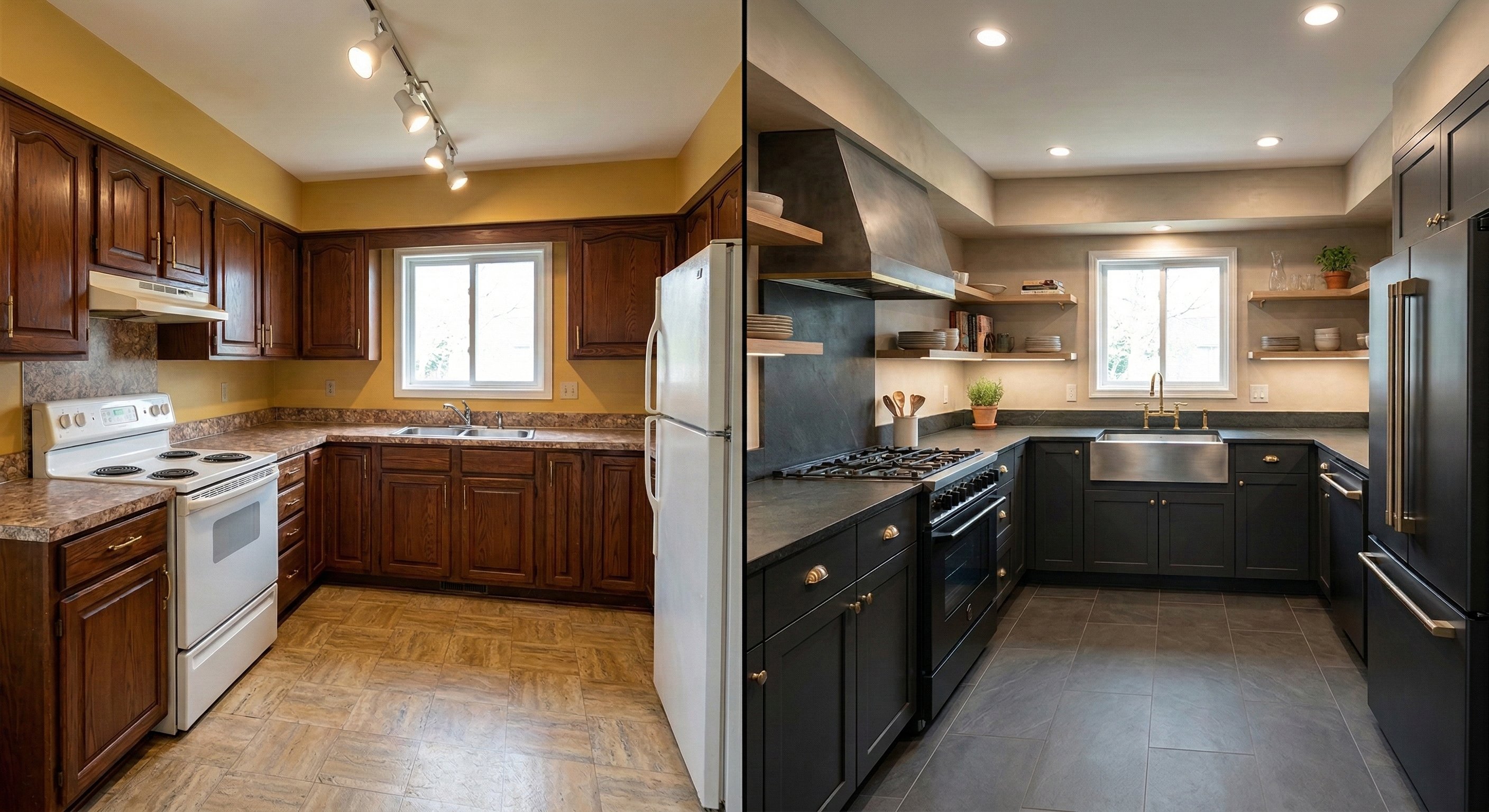
Most 1970s kitchen remodels reach for light, but this one went the opposite direction—and the result is striking. Every surface is dark and deliberate, and the kitchen feels less like a 1970s renovation and more like a Parisian bistro or a professional cook's workspace.
For split level homes where the kitchen sits lower than the main living level, darker finishes can actually make the space feel more intentional—like a deliberate destination rather than an afterthought. The floating shelves flanking the window are a particularly smart move for a room that needs storage without adding visual bulk.
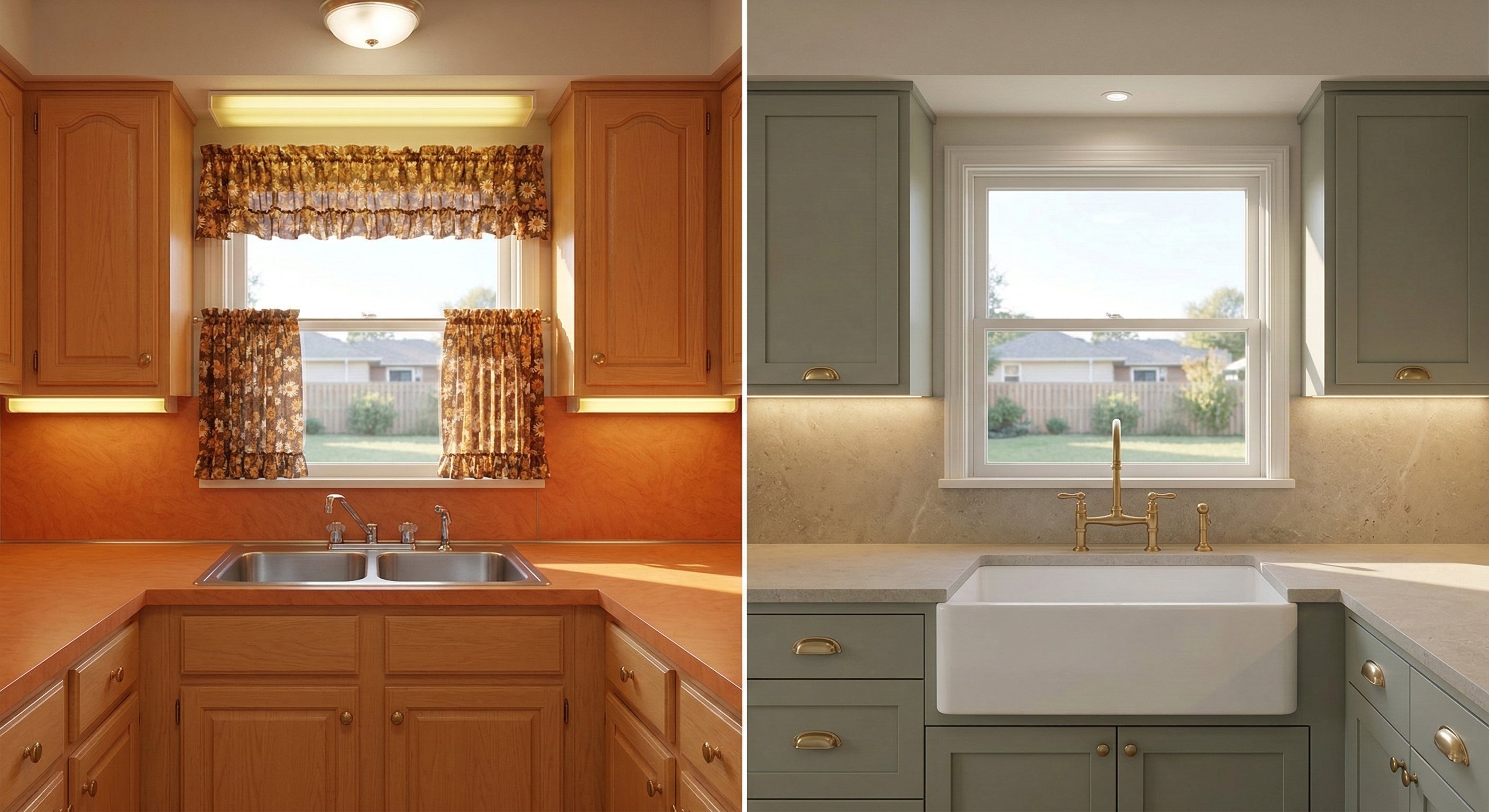
Not every remodel needs to gut the entire room. This transformation happens almost entirely at the sink wall—and the result looks like a complete renovation. The bones of the kitchen didn't change; the materials did.
This targeted approach is ideal for 1970s split level kitchens where the budget doesn't stretch to a full renovation. By upgrading the focal wall—typically the sink and window zone, which draws the eye from the adjacent living space—you get an outsized visual return without touching the layout, relocating plumbing, or doing any structural work.
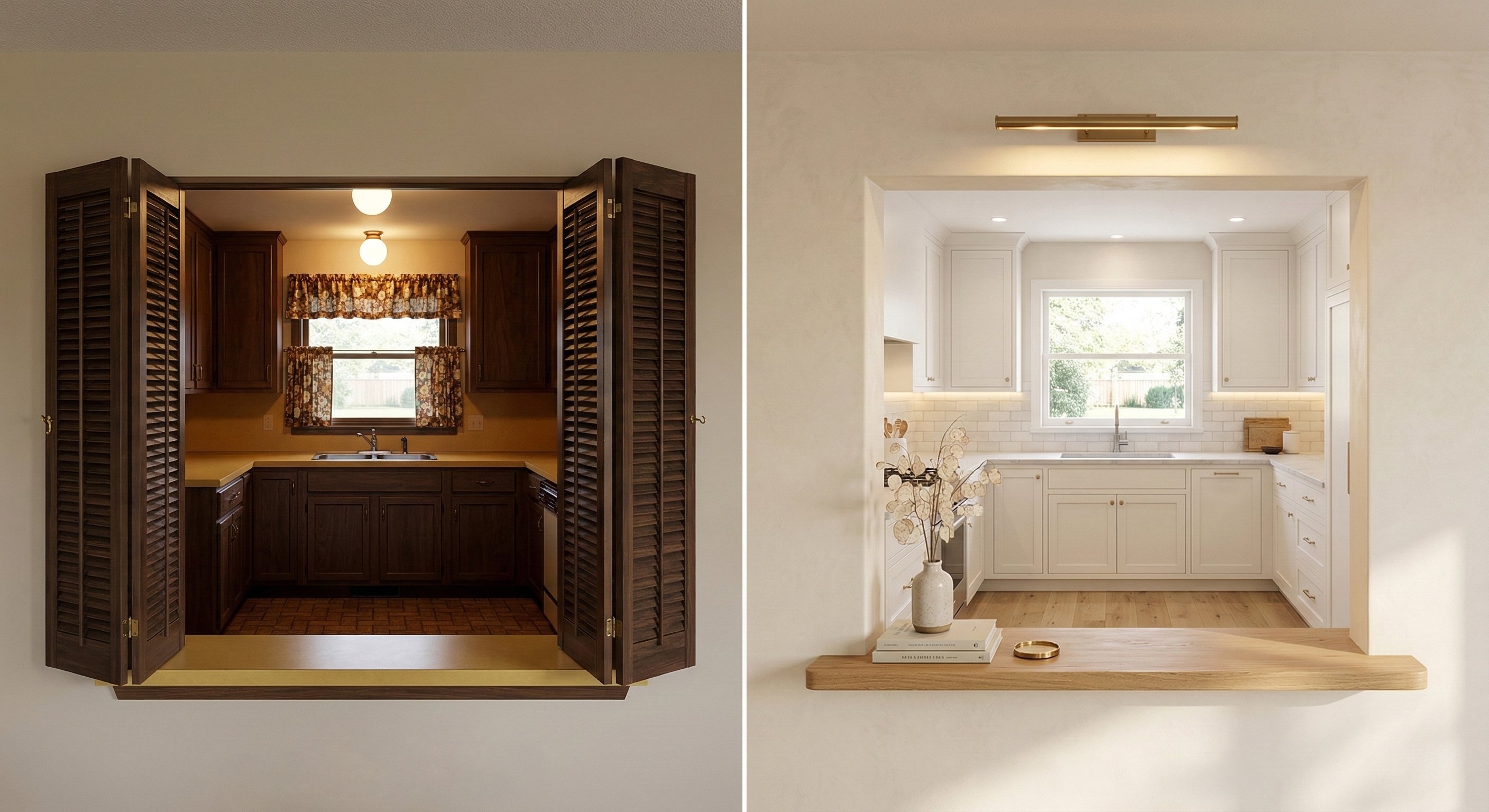
Split level homes often feature pass-through windows or serving openings between the kitchen and a lower-level family room—and these architectural details are goldmines for renovation. Here, the pass-through itself barely changed structurally. The transformation is entirely about material: replacing dated shutters with a warm oak ledge and refreshing everything visible through the opening.
The lesson is that the original split level pass-through—often dismissed as a relic—can become a defining feature when the materials around it are updated. The ledge reads as a casual bar, a staging surface, and a visual bridge between levels that feels intentional rather than vestigial.
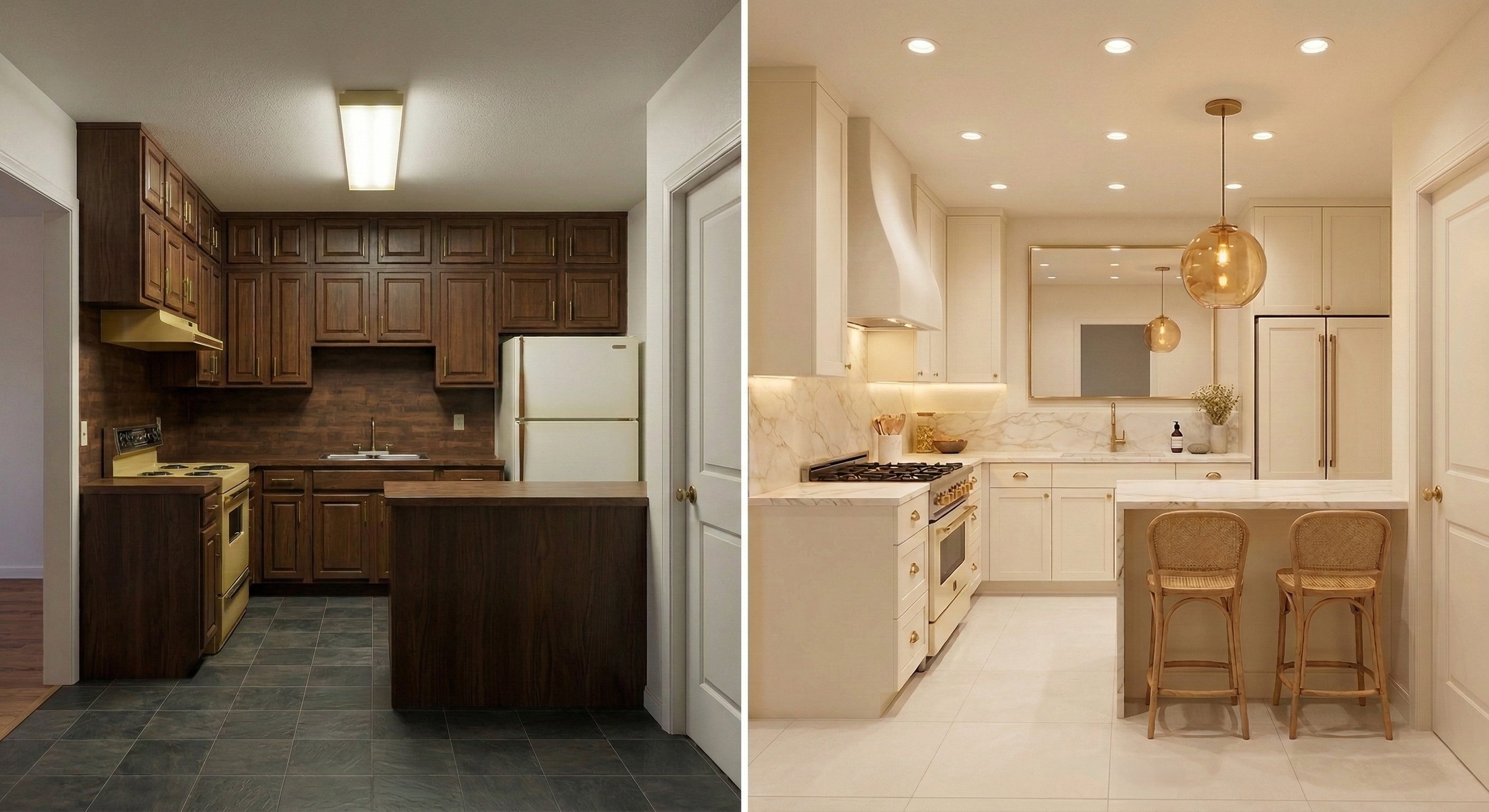
Square footage isn't the limiting factor in a beautiful kitchen—and this remodel proves it. The footprint barely changed. What changed was the material quality, the lighting, and the finish palette—and the result feels more like a luxury apartment kitchen than a compact split level remodel.
The design principle here is elevation over expansion. When you can't make the room bigger, you make every surface count. In split level kitchens where the floor plan is fixed by structural constraints. Rich materials, layered lighting, a cohesive palette, and upgraded luxury appliances are often the most effective path to a kitchen that feels genuinely custom.
In split level homes, walls between the kitchen and the adjacent dining or family room are often not just aesthetic choices — they were structural necessities of the original build. But in many cases, a structural engineer can approve removing or lowering them, replacing the load with a flush beam overhead. The result is transformative: what felt like a separate utility room becomes the center of the home.
The island positioned at the former wall line is the signature move here. It honors the original boundary — giving the kitchen a defined edge — while replacing a solid barrier with something permeable, social, and useful. In a split level, where the kitchen already sits on its own level, this kind of opening doesn't erase the home's layered character. It amplifies it.
Design a Home That’s Uniquely Yours
Block can help you achieve your renovation goals and bring your dream remodel to life with price assurance and expert support.
Get Started
One of the biggest challenges in any kitchen remodel—especially a 1970s split level—is translating inspiration images into a design that actually fits your specific space. Cabinet configurations that look stunning in a wide open modern kitchen can feel cramped in a split level's lower-ceiling footprint. Colors that work beautifully in a south-facing room can look flat in a north-facing one.
That's where Renovation Studio comes in. Our AI-powered visualization tool lets you upload a photo of your existing kitchen and see it transformed in real time with different cabinet finishes, hardware styles, countertop materials, and flooring options.
A 1970s split level kitchen remodel is one of the most rewarding projects a homeowner can take on—and one of the most complicated to execute without the right team. Between the structural quirks, the electrical and plumbing updates, the non-standard dimensions, and the permitting requirements that come with split level construction, there are a lot of places for a project to go sideways.
Block Renovation was built to take the chaos out of kitchen renovations exactly like this one. Here's how we make it different:
Remodel with confidence through Block

Connect to vetted local contractors
We only work with top-tier, thoroughly vetted contractors

Get expert guidance
Our project planners offer expert advice, scope review, and ongoing support as needed
Enjoy peace of mind throughout your renovation
Secure payment system puts you in control and protects your remodel


Renovate confidently with Block
Easily compare quotes from top quality contractors, and get peace of mind with warranty & price protections.
Before and After
Kitchen Island Remodel: Before and After Inspo
06.26.2026

Before and After
Modern Farmhouse Kitchen Renovations Before and After
06.16.2026
Before and After
Limewash Brick Before and After: Photos and What to Know
06.10.2026
Before and After
Budget Small Kitchen Remodel: Before and After Ideas
06.08.2026
Before and After
Mid-Century Modern Exterior Before and After Ideas
06.04.2026