





Bathroom Floor Plans
How to Find Your Ideal Bathroom Layout
10.11.2026
03.23.2026


In This Article
Forty-nine square feet is not a lot of room, but it is enough. A 7x7 bathroom can hold a tub, a toilet, and a vanity in a layout that feels considered and comfortable, as long as each fixture earns its place.
The square footprint helps. Unlike a narrow rectangle where one tight dimension creates a bottleneck at every turn, a 7x7 room gives you four walls of equal length, which means more options for where things go and more open floor when you get the arrangement right. The challenge is not the shape. The challenge is resisting the temptation to overload it.
At this size, the layouts that work are the ones that choose wisely: a tub or a shower, not both. A single vanity, not a double. A toilet tucked to the side, not planted in the middle of the room's best sightline. The five floor plans below show how those choices play out in practice, and what each configuration gives you in return.
Turn your renovation vision into reality
Get matched with trusted contractors and start your renovation today!
Find a Contractor
A 7x7 bathroom involves the same core trades as any full bath. Plumbing, electrical, tile, and finish work all apply, and at 49 square feet, material costs are meaningfully lower than a larger room. That said, labor minimums do not shrink with square footage, so the savings are real but not as dramatic as the room size might suggest.
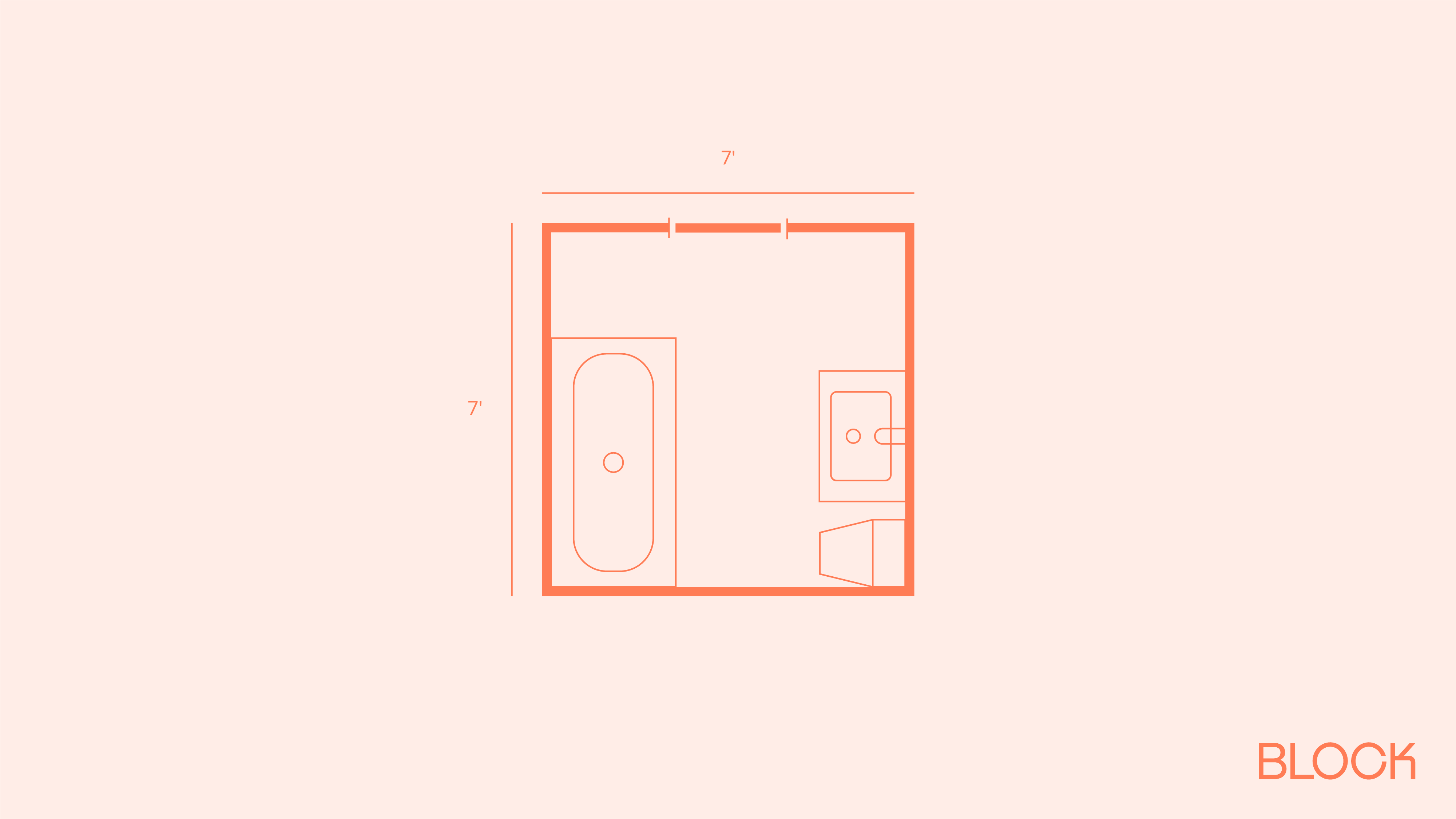
Placing the tub against the left wall is the right call at 49 square feet. It still reads as the room's focal point from the doorway, but it does not consume clearance that other fixtures need. The toilet and vanity share the right wall in a stacked arrangement, grouped together efficiently with their plumbing on the same side of the room.
The open floor in the center of the room is the layout's real asset. It gives you space to step out of the tub, dry off, and move to the vanity without feeling crowded. That kind of unhurried center clearance is what separates a 7x7 bathroom that works from one that just technically fits.
This is one of the more plumbing-efficient layouts in the set. Both the vanity and toilet share a single wall, which keeps supply and drain lines concentrated and the rough-in costs manageable.
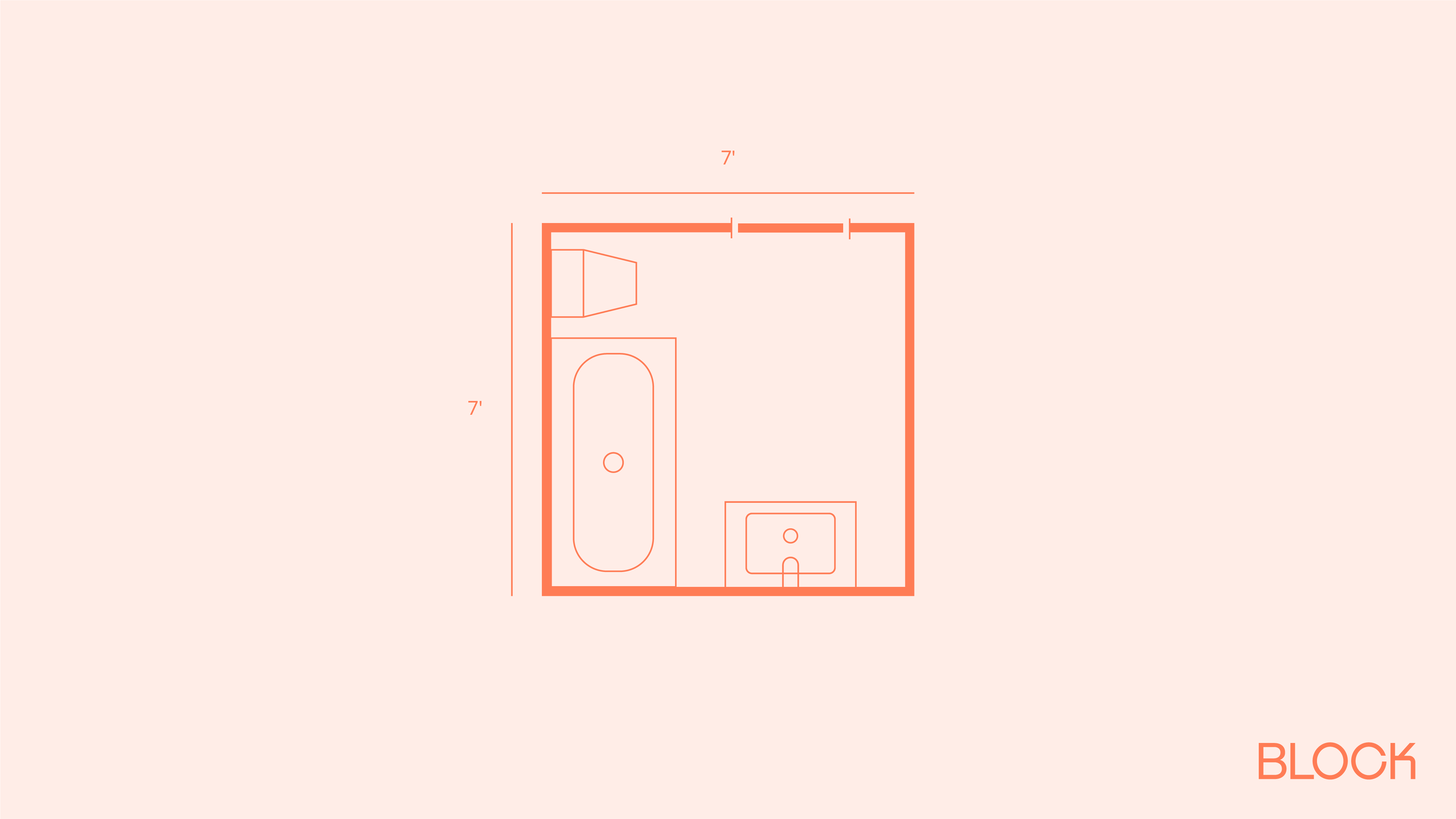
This 7x7 bathroom layout separates the toilet from the vanity more than any other configuration in the set, which creates a natural division between the functional zones of the room. The toilet is tucked into the far corner away from the entry, which keeps it out of the sightline as you walk in. The vanity faces you directly when you enter, framed by an open floor on either side.
The tub along the left wall anchors the room without demanding excessive clearance. Its position is visible from the doorway, which gives the room a quiet sense of occasion without requiring a larger footprint to pull it off.
One note on plumbing: the toilet and vanity are on different walls here, which means supply and drain lines will need to serve two separate zones. That typically adds $800 to $2,000 compared to a same-wall configuration. For a layout that gives this much visual breathing room, many homeowners find it worth it.
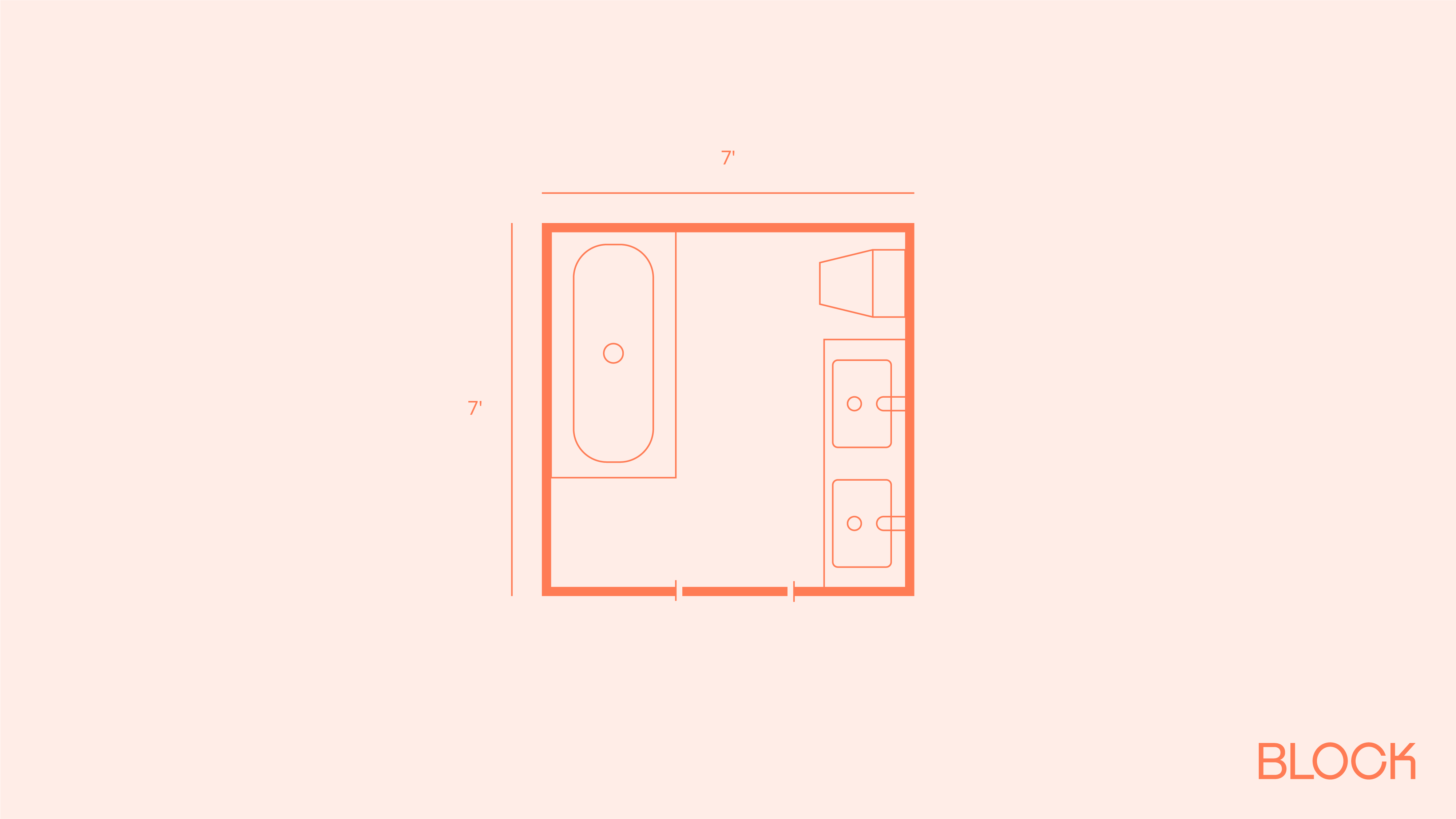
At 49 square feet, a double vanity is an ambitious choice, and this layout makes it work by keeping every other decision simple. The tub anchors the left side of the room. The toilet and double vanity share the right wall. The door opens at the bottom, which means the first thing you see when you enter is the tub along the left wall rather than the toilet in the corner. That is a meaningful improvement in how the room feels.
The double vanity here is modest in scale. At a 7x7 footprint, you are looking at a vanity in the 36 to 42-inch range rather than the 60-inch models that work in larger primary baths. Within those dimensions, you still get two sinks and dedicated counter space for two people, which is a genuine upgrade in a shared bathroom.
This layout requires the most plumbing work in the set. Running lines to the tub, vanity, and toilet across two separate walls adds cost. Expect plumbing modifications to run $2,000 to $4,000 over a basic same-wall configuration.
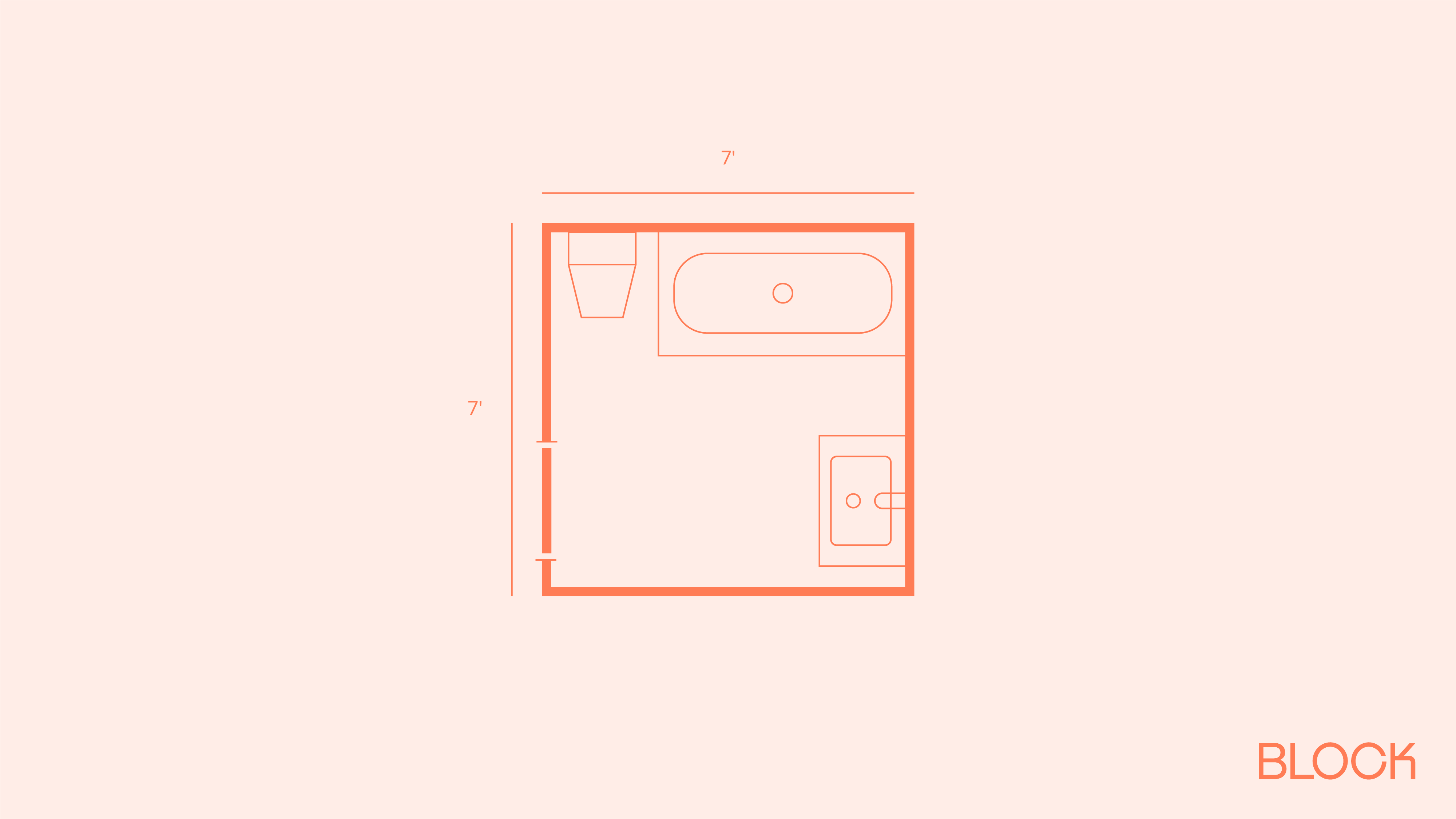
Orienting the tub along the upper wall rather than along a side wall changes the entire feel of the room. The tub and toilet share the upper wall as a unified wet zone, and the vanity sits alone on the lower wall with open floor between them. The result is a room that feels wider and more composed than the same 49 square feet arranged in a more conventional way.
This horizontal orientation works best with a compact tub in the 55 to 58-inch range, which fits comfortably within a 7-foot wall without pressing against the corners. The open lower half of the room gives you a generous landing area between the vanity and the door, which makes the room feel more spacious than it measures.
This is a strong option for a bathroom where the tub is a genuine priority and the vanity is used primarily for daily grooming. The single vanity keeps the lower half of the room open, and the tub gets a position of prominence that most 7x7 layouts cannot offer.
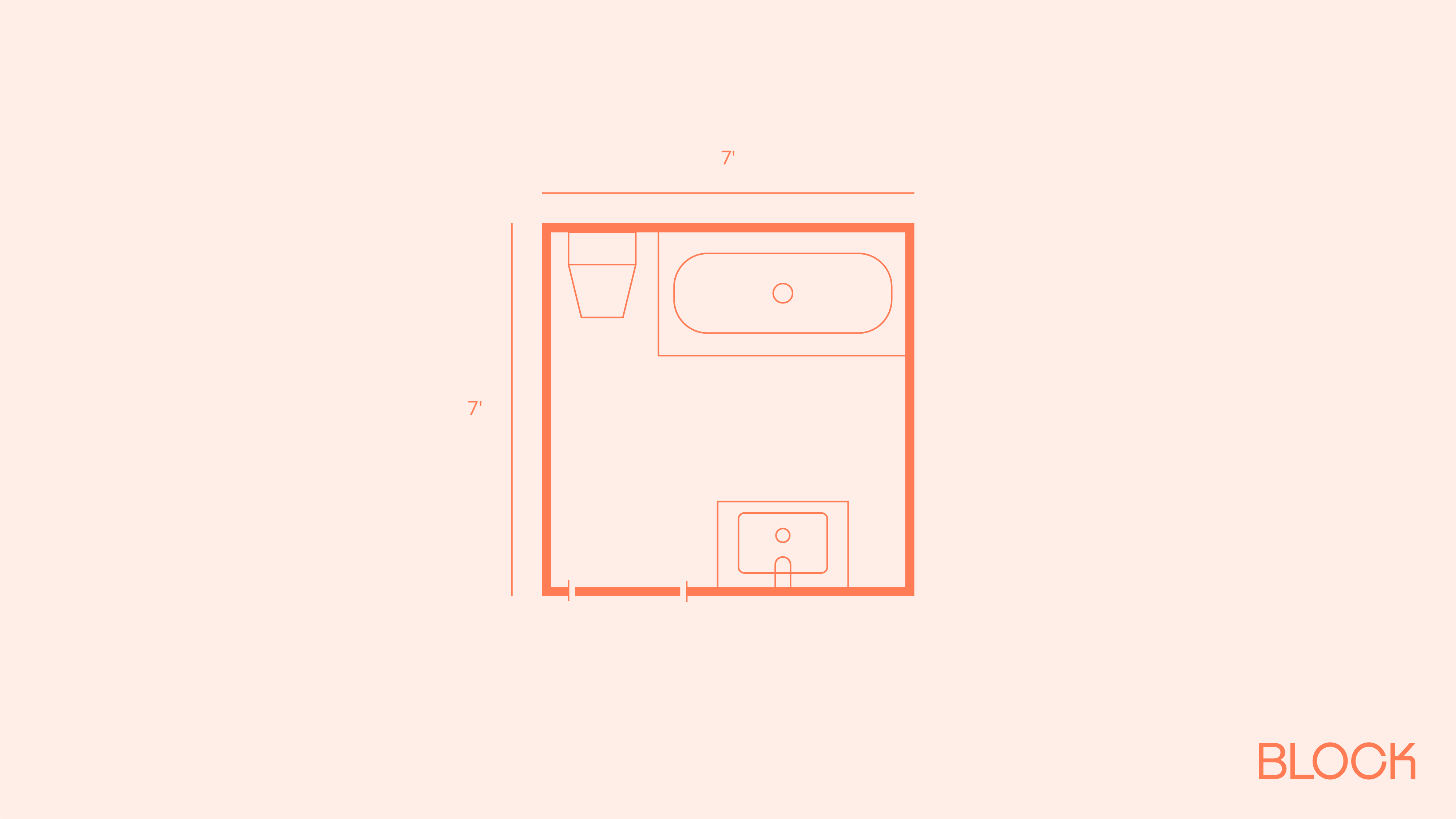
This 7x7 bathroom layout is a close sibling of the previous one, with one meaningful difference: the vanity is centered on the lower wall rather than positioned to one side. That centering creates a more symmetrical composition when you look at the room from the doorway, with the tub spanning the upper wall and the vanity anchoring the lower half directly opposite.
The centered vanity placement works especially well if you are investing in a statement mirror or a furniture-style vanity that you want to read as a design feature rather than a utility fixture. When the vanity is the first thing you see, it sets the tone for the whole room.
From a plumbing standpoint, this is one of the more straightforward layouts in the set. The toilet and tub rough-in share the upper wall, and the vanity drain runs to the lower wall. Running a single drain line to the center of the lower wall is not significantly more complex than running it to a corner, which keeps the plumbing budget comparable to the previous layout.
Renovate with confidence every step of the way
Step 1: Personalize Your Renovation Plan
Step 2: Receive Quotes from Trusted Contractors
Step 3: Let Us Handle the Project Details

Fixture choices carry more weight in a 7x7 bathroom than in a larger one. An oversized tub, a deep vanity cabinet, or a bulky toilet can take what should be a comfortable room and make it feel tight. The fixtures that work best at this size are the ones designed with proportion in mind, without sacrificing quality or style.
A standard alcove tub runs 60 inches long and 30 to 32 inches wide, which takes up a full wall in a 7x7 room. That can work, but it leaves very little clearance on the remaining three walls. If a tub is important to you, a compact model in the 55 to 58-inch range is worth exploring. Drop-in and alcove options at this length are designed for tighter footprints and fit more naturally into a 7-foot wall than a standard 60-inch tub would. If soaking is not a priority, a walk-in shower will free up considerably more usable floor space and is often the smarter functional choice at this size.
A 32x32-inch shower stall is the minimum comfortable size for a standing shower, and it fits cleanly into a 7x7 layout. A 36x36 stall is preferable if the layout allows it, giving you enough room to move without bumping the enclosure walls. For the enclosure itself, a frameless glass panel keeps the room feeling open by preserving sightlines across the full width of the space. A shower curtain, by contrast, visually cuts the room in half and makes both the shower and the rest of the bathroom feel smaller than they are.
A single vanity in the 24 to 36-inch range is the right choice for most 7x7 bathrooms. Wall-mounted vanities are worth considering here because they expose the floor beneath them, which makes the room feel lighter and easier to navigate. A floating vanity with a simple profile and a single undermount sink keeps the counter clean and leaves room for a properly sized mirror above. If you are hoping to fit a double vanity, a compact 36 to 42-inch model with two sinks is possible in layouts where the right wall has enough clearance, as shown in plan 26, but it requires careful coordination with the other fixtures in the room.
A standard toilet runs 28 to 30 inches from the wall in depth, which is a meaningful projection in a 49-square-foot room. A compact or short-projection toilet, typically 25 to 27 inches deep, recovers several inches of clearance in front of the fixture without any sacrifice in function. Wall-hung toilets go further, extending only 22 to 24 inches from the wall, and they expose the floor beneath for easier cleaning. Both options are worth discussing with your contractor if the layout is running tight on clearance between the toilet and the adjacent fixtures.
Before any decisions get locked in, it helps to see them clearly. Which tub actually fits in the layout you are considering? How does a frameless glass shower compare to a curtain-enclosed stall in terms of how the room feels? What does your tile choice look like at scale, across 49 square feet of floor and wall?
Block's free Renovation Studio lets you work through those questions visually and financially before you talk to a single contractor. You can input your bathroom dimensions, place fixtures in different configurations, and swap between materials and finishes while watching your cost estimate update in real time. The goal is for you to arrive at contractor conversations with a clear plan and a realistic budget, rather than figuring both out on the fly.
For a 7x7 bathroom, where every inch counts and fixture choices have an outsized impact on how the room feels, that kind of upfront clarity is especially valuable.
A 7x7 bathroom done well is one of the most satisfying renovation outcomes there is. The constraints force good decisions, and good decisions produce rooms that feel purposeful rather than arbitrary. Every fixture is there because it belongs. Every inch of open floor is there because something was left out that did not need to be there.
Getting to that result takes more than a good floor plan. It takes a contractor who understands tight-footprint work, who sequences trades carefully in a confined space, and who catches the details, like a vanity that projects half an inch too far or a toilet that sits too close to the shower entry, before they become problems.
Block Renovation matches you with thoroughly vetted local contractors who have real experience with bathrooms exactly like yours. You will receive detailed, comparable proposals with line-item pricing so you can evaluate your options clearly. Every project comes with progress-based payments, expert scope review to minimize change orders, and a one-year workmanship warranty.
Remodel with confidence through Block

Connect to vetted local contractors
We only work with top-tier, thoroughly vetted contractors

Get expert guidance
Our project planners offer expert advice, scope review, and ongoing support as needed

Enjoy peace of mind throughout your renovation
Secure payment system puts you in control and protects your remodel


Renovate confidently with Block
Easily compare quotes from top quality contractors, and get peace of mind with warranty & price protections.
Bathroom Floor Plans
How to Find Your Ideal Bathroom Layout
10.11.2026
Bathroom Floor Plans
4x10 Bathroom Floor Plans With Showers
08.26.2026
Bathroom Floor Plans
Bathroom With 2 Doors: Layout Ideas That Work
08.24.2026
Bathroom Floor Plans
Single Wall Bathroom Layout: Pros, Cons, and Tips
07.22.2026
.jpg?width=640&name=5301c89b-3165-4f83-af34-a6b02eaa6c48%20(2).jpg)
Bathroom Floor Plans
Long, Narrow Bathroom Floor Plans: Layouts That Work
07.21.2026