


Bathroom Remodel Materials List & Resourcing Tips

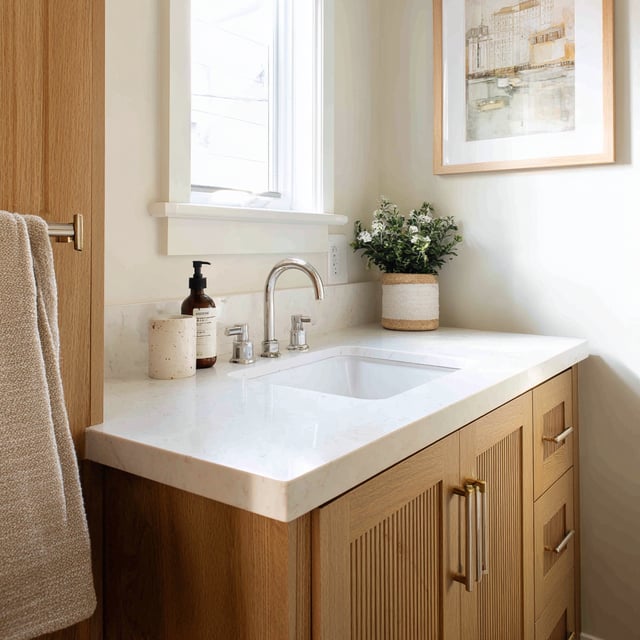
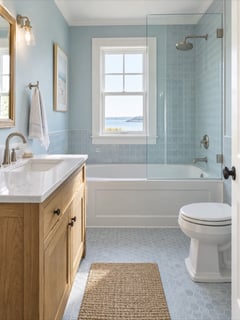
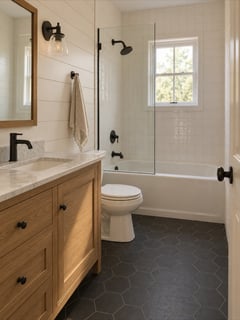
Light wood vanity with fluted cabinets and white marble top.

In This Article

    Buying your own materials for a bathroom remodel is one of the few ways to cut costs after you've hired a contractor. You skip the markup the contractor would add, and on finishes like tile and vanities, that markup is worth skipping.

    It only works on the right items, though. Buy the wrong ones, or order them at the wrong time, and a small savings turns into delays and warranty gaps.

    Does buying your own materials actually save money?

    Yes, but savings tend to be modest and there’s opportunity for things to go awry. Remember, labor is the larger half of most bathroom budgets. On a typical remodel it runs somewhere between 40 and 65% of the total, covering demolition, plumbing, electrical, tile setting, and finish work. Buying your own materials does nothing to that half. It touches only the materials you supply, and only the markup a contractor would have added to them.

    That markup varies more than most homeowners expect. Some contractors add under 10% to materials. Others, especially full-service firms that source, store, and deliver everything, add 20 to 35%. So the savings depend heavily on who you've hired and how much you buy. On a mid-range bathroom, self-sourcing the visible finishes might save a few hundred dollars, or it might save a couple thousand. It rarely changes the overall project cost dramatically, because the labor to install everything stays exactly the same.

    The mistakes that erase them are common:

    • Buying before you talk to your contractor. Some contractors price a job assuming they supply the materials, and some build that into the contract. Raise it before you sign, not after.
    • Buying an item that fails on you. If your contractor supplies a faucet and it leaks, they typically handle the replacement and the labor to redo the work. If you supplied that faucet, the labor to fix it usually falls to you. One defective fixture can wipe out the markup you saved.
    • Ordering late, or ordering short. Either way, the crew ends up waiting on a box that hasn't arrived.
    • Buying the wrong specification. A vanity that doesn't fit the rough plumbing, or a shower valve that doesn't match the trim kit.


    Bathroom remodel materials list, by project

    Most bathroom remodels are really a stack of smaller projects, and the materials you need follow from which ones you're taking on.

    Vanity and sink replacement

    Swapping the vanity is one of the most popular updates, and most of it is fair game for self-sourcing.
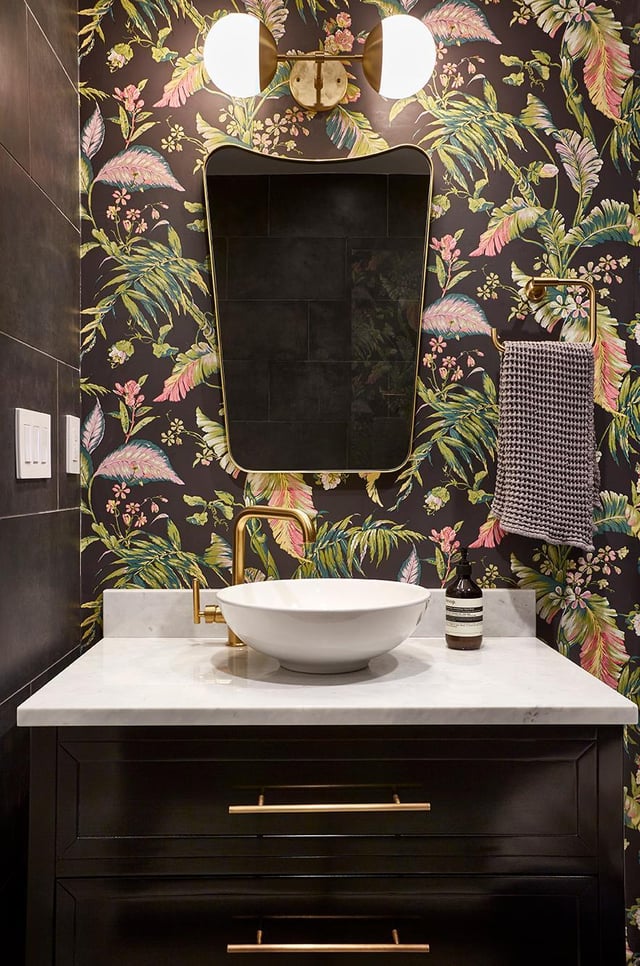
    • Vanity cabinet, sized to your existing rough plumbing location
    • Countertop and an integrated or drop-in sink
    • Faucet and drain assembly
    • Mirror or medicine cabinet
    • Cabinet hardware (pulls and knobs)
    • Supply lines, P-trap, and shutoff valves
    • Caulk and mounting hardware

    Shower or tub-to-shower conversion

    A shower is the most material-dense project in the room, and it splits cleanly into finishes you can buy and waterproofing you shouldn't.

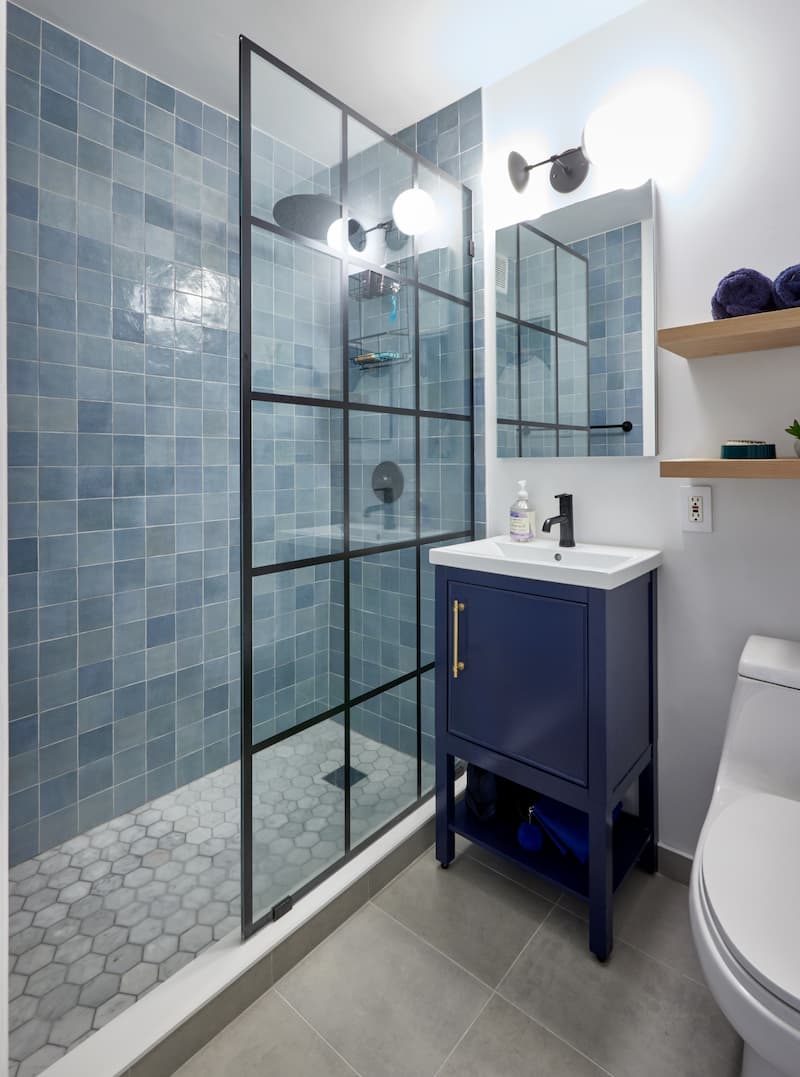
    • Wall and floor tile, or prefabricated wall panels
    • Shower pan or base
    • Waterproofing membrane and cement backer board
    • Thinset mortar and grout
    • Shower valve, trim kit, and showerhead
    • Glass door or enclosure
    • Drain, curb materials, and a recessed niche if you want one
    • Sealant

    Flooring

    New flooring ties the room together and is straightforward to spec, as long as you account for waste.

    • Floor tile, or luxury vinyl plank
    • Cement backer board or underlayment
    • Thinset, grout, and sealer
    • Transition strips where the bathroom meets the hallway

    Toilet replacement

    This is the simplest bathroom project on the list, and one almost any homeowner can buy for.

    • Toilet, either one-piece or a separate bowl and tank
    • Wax ring or rubber gasket, plus closet bolts
    • Supply line and a new shutoff valve
    • Toilet seat, if it isn't included

    For more specifics, check out our guide to replacing toilets.

    Lighting, paint, and finishing touches

    • Vanity light fixture and a properly rated exhaust fan
    • Bathroom-friendly paint and primer rated for high-moisture rooms
    • Towel bars, hooks, and a toilet paper holder
    • Outlet and switch covers
    • A window treatment or privacy film, if the room needs one

    Renovate with confidence every step of the way

    Step 1: Personalize Your Renovation Plan

    Step 2: Receive Quotes from Trusted Contractors

    Step 3: Let Us Handle the Project Details

    Get Started

    Materials to leave to your contractor

    Buy the finishes. Leave the structure and the systems to your contractor.

    Some materials are cheap enough that the markup you'd save is tiny, while the risk of supplying them yourself is large. A few categories belong with the contractor almost every time:

    • Waterproofing and substrate. Membrane, backer board, thinset, mortar, and grout cost relatively little, and they're the difference between a shower that lasts and one that leaks behind the wall. They also need to match the system your installer is using.
    • Rough plumbing. Pipe, fittings, and shower valve bodies have to match the contractor's specifications exactly. A mismatch here means reopening a finished wall. To dig deeper, read our guide to plumbing installation costs and other FAQs.
    • Electrical materials. Wiring, junction boxes, GFCI outlets, and the exhaust fan connection are code-sensitive and best handled by the licensed pro doing the work.
    • Anything special-order the contractor needs to schedule around. If a delivery date drives the whole timeline, the person managing the timeline should own the order.

    When a contractor supplies and installs a material, a defect is their problem to solve, labor included. When you supplied it, the workmanship warranty gets murky. If a leak develops behind tile and you bought the waterproofing membrane, you've made it genuinely hard to say whose responsibility the repair is. For the low-cost materials buried inside the wall, that trade is rarely worth it.

    How to order the right amount and time it right

    Tile is the material most homeowners under-order, because you can't simply run back for one more box that matches. Fireclay Tile and other suppliers recommend building a healthy overage into the order from the start:

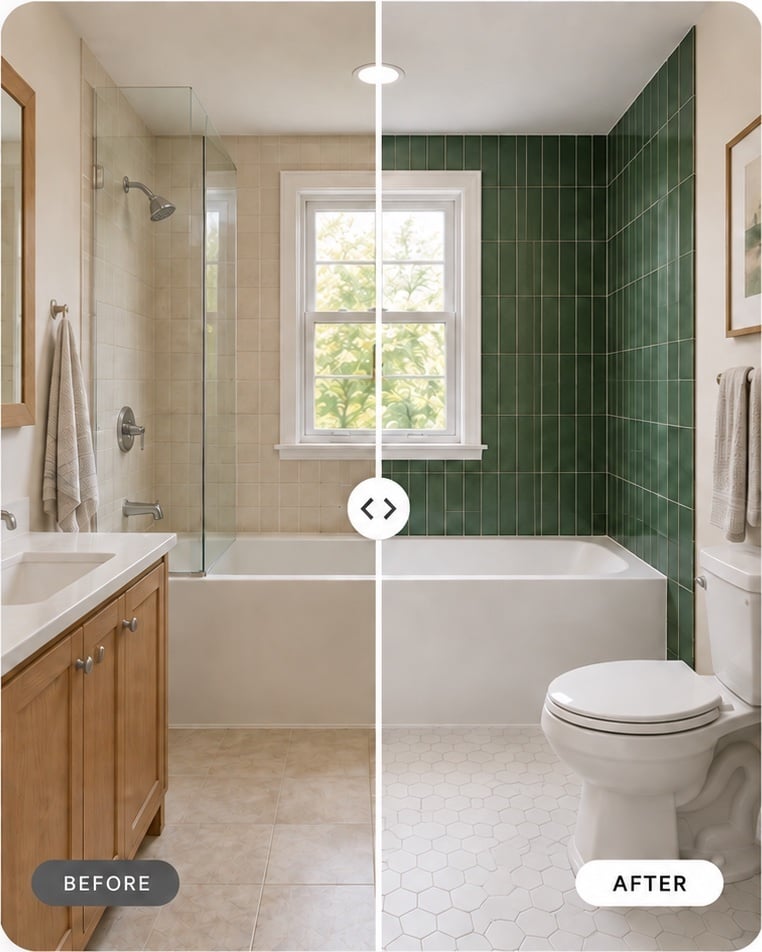
    • 10 to 15% overage for standard tile in a simple layout
    • Up to 20% for mosaics, patterns like herringbone, or specialty shapes that need more cuts
    • A few spare pieces beyond that, stored away, in case a tile cracks years later

    Tile is produced in batches, and a reorder almost never matches the original lot's exact shade and size. It also restarts the lead time and can carry a small-batch fee. Run short mid-installation and matching the new tile to the old can mean re-tiling a whole wall.

    Special-order vanities, custom or imported tile, and glass shower enclosures can take weeks to arrive. Order those the moment your scope is locked. A vanity that ships two weeks after demo finishes leaves a crew idle, or sent to another job and hard to get back.

    A few habits keep the schedule honest:

    • Confirm every material is on site, or has a firm delivery date, before demolition starts.
    • Buy all of one material in a single order so it comes from the same batch.
    • Coordinate delivery dates with your contractor so boxes aren't piling up weeks early or arriving late.
    • Inspect everything the day it arrives. Damage found early still has a replacement window. Damage found on installation day stops the job.

    Ways to save the most on bathroom remodel materials

    How much you save comes down to not only your materials list but also how well you shop. A few tactics stretch the savings on the materials you source yourself:

    • Get the exact specs from your contractor before you shop. With model numbers, dimensions, and finishes in hand, you can price the precise item instead of guessing and risking a costly return.
    • Put your effort into the big-ticket finishes. Tile, the vanity, the glass enclosure, and light fixtures are where a contractor's markup turns into real dollars, so that's where your own shopping pays off. A mid-range vanity alone can run $600 to $1,200, where the markup adds up faster than on any small item.
    • Consider look-alike materials. Porcelain tile that mimics marble, or quartz that stands in for natural stone, costs a fraction of the real thing and often holds up better in a bathroom.
    • Compare at least three sources for every item. A big-box store, an online retailer, and a specialty showroom rarely land on the same price, and tile and fixtures often run cheaper online. Order samples before you commit, since tile and finish colors on a screen rarely match what arrives in the box.
    • Check clearance, floor models, and discontinued lines. Discontinued tile is frequently half off or more. Just confirm enough of one lot is in stock to cover the job plus your overage.
    • Time fixture and lighting purchases around major sale weekends. Memorial Day, Labor Day, and Black Friday tend to bring the steepest markdowns of the year.
    • Ask whether you can buy through your contractor's supplier account. Some contractors will pass their trade pricing on to you, which can beat retail even on items you would have sourced yourself. Not every contractor will agree, so ask early and don't build your budget around a yes. When the contractor orders a material, they also tend to stand behind it, which keeps the warranty cleaner than if you had supplied it yourself.

    Partner with Block Renovation to remodel your bathroom

    Buying your own materials works best when the rest of the project is on steady ground. That's what Block is built around.

    Block's Renovation Studio is a free tool to design your bathroom and get real-time cost estimates, so you can see what your project will cost before committing. When you're ready to build, Block matches you with vetted local contractors who compete for your project, and every scope is reviewed by Block experts to catch missing line items early. That review is also where questions about owner-supplied materials get settled before they cause problems. Payments run through a secure, progress-based system, so your contractor is paid as the work gets done.

    Remodel with confidence through Block

    Happy contractor doing an interview

    Connect to vetted local contractors

    We only work with top-tier, thoroughly vetted contractors

    Couple planning their renovation around the Block dashboard

    Get expert guidance

    Our project planners offer expert advice, scope review, and ongoing support as needed

    Familty enjoying coffee in their newly renovated modern ktchen

    Enjoy peace of mind throughout your renovation

    Secure payment system puts you in control and protects your remodel

    Get Started

    Will my contractor let me buy my own materials?

    Will my contractor let me buy my own materials?

    Most will, but the time to ask is before you sign the contract. Some contractors price a job assuming they supply everything, and some prefer to handle specific materials for warranty reasons. A good contractor will tell you plainly which items they're glad to have you source and which they'd rather control.

    What happens if a material I bought is defective?

    This is the most important question to settle in advance. If the contractor supplied a faulty item, they typically replace it and cover the labor to redo the work. If you supplied it, the replacement part may be covered by the manufacturer, but the labor to remove and reinstall it is often your cost. Get this in writing before work starts.

    How far ahead should I order materials?

    Order long-lead items as soon as your scope is final, since custom vanities, special-order or imported tile, and glass enclosures can take weeks to arrive. Stock items can be bought closer to the start date, but everything should be on site or scheduled for delivery before demolition begins.

    Can I return the tile I didn't use?

    Sometimes. Many suppliers accept unopened boxes within a return window, but policies vary, and custom or special-order tile is often non-returnable. Ask about the return policy before you buy, and keep your receipts and lot numbers.